Experts Matter. Find Yours.
Connect for media, speaking, professional opportunities & more.

Goizueta Faculty Member Uncovers Impact of Remote Learning on Educational Inequality
In 2020, the world went into lockdown. Learning in school became learning from the couch. Rather than listening to teachers in-person behind a desk, high school students had to find a computer to stream their lectures and lessons. What happens to educational inequality in a digital-first, remote-learning environment? Whereas students are traditionally bound by their brick-and-mortar schools and the limitations of funding in those areas, what happens when the walls are removed and students have access to the teachers, knowledge, and peers from other areas? Ruomeng Cui and co-researchers, Zhanzhi Zheng from University of North Carolina at Chapel Hill and Shenyang Jiang from Tongji University, decided to find out. In their 2022 paper, currently under review, Cui and her colleagues looked at the performance of high school students in developing and developed regions of China. We thought that remote learning might reduce the inequality gap in education because when students are learning off-line, they’re restricted by their local resources. “It’s quite obvious that developing regions don’t have good resources, experienced teachers, or competitive peers—they often have inferior educational resources in comparison to developed regions,” explains Cui, associate professor of information systems and operations management. “We thought the accessibility of remote learning could help reduce this knowledge gap and help students in developing regions improve their learning outcomes.” Analyzing Education in Developed and Developing Areas The idea for the paper, “Remote Learning and Educational Inequality,” published earlier this year, stemmed from another of Cui’s papers, which looked at the academic productivity of women as a result of the COVID-19 lockdowns. “We wanted to study whether the switch to remote learning impacts educational inequality. Does it make it better or worse?” says Cui. “We are the first ones to offer empirical evidence on such a granular level about a large-scale data set.” The group analyzed the Chinese college entrance exam from 2018 through 2020, which students take during the last few weeks of high school; the test score is a requirement for undergraduate admission in China. It’s common for high schools to announce the number of students who scored 600 or higher (out of 750 total points). Using 1,458 high school exam results from 20 provinces, the group found that in 2020, when remote learning became the norm, “the number of students scoring above 600 points in developing regions increased by 22.22 percent,” in comparison to developed regions. Remote learning significantly improved learning outcomes of students in developing regions. We should think about encouraging the adoption of remote learning in education However, Cui and her co-researchers wanted to go a step further. Because the entrance exams are summaries of student data, they surveyed 1,198 students to drill down and ensure that these results came from remote learning rather than other factors. Respondents were asked to rate aspects of their remote-learning experience, such as access to digital devices, their proficiency in using software, how reliable their internet was, how they interacted with peers and teachers, and their access to online educational resources. The researchers found that students in developing regions were able to better connect with peers and teachers, and the students believed that “their learning efficiency was greater” because of the remote learning. Education inequality is not only a problem in China. It’s everywhere. It’s across the world. Having access to better educational resources online can be applied anywhere. However, the one caveat to their findings: Remote learning is beneficial, but students need devices and the infrastructure to support online learning, which is often lacking in developing regions or underserved areas. “We need to support, build, and develop the digital technology capability that enables the effectiveness of remote learning,” says Cui. Are you a reporter looking to know more about the impact COVID had on education and how inequality plays a role in how we educate students during a pandemic? Then let us help with your coverage and questions. Ruomeng Cui is an Associate Professor of Information Systems & Operations Management at Emory University's Goizueta School of Business. Ruomeng is available to speak with media regarding this topic - simply click on her icon now to arrange an interview today.


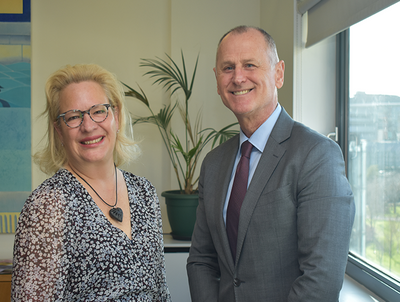
Aston University welcomes Mexican Ambassador to campus during Global Trade Conference
Her Excellency Josefa González-Blanco, Mexican Ambassador to the UK visits West Midlands for the Global Trade Conference The ambassador met with representatives of British industry including University Vice-Chancellor Professor Aleks Subic Josefa González-Blanco was appointed as Mexico's representative in London in 2021. Mexican Ambassador to the UK, Her Excellency Josefa González Blanco Ortiz Mena, has visited Aston University during a high-profile visit to the city to attend the Global Trade Conference and meet with representatives of British industry. The Global Trade Conference (15 February) is an annual event hosted by the Greater Birmingham Chambers of Commerce which offers businesses the opportunity to build relationships and grow their network. During her visit to campus, she met with Vice-Chancellor Professor Aleks Subic, executive director of business engagement Mark Smith, and Lloyd Broad, head of international affairs at Birmingham City Council. Ambassador González Blanco said: “I was thrilled to visit Aston University and to meet the Vice-Chancellor and Chief Executive, Professor Aleks Subic. “We had a chance to review our academic links towards intensifying the research collaboration already in place between Aston Business School, Tecnológico de Monterrey, Conacyt México and Instituto Nacional de Astrofísica.” Professor Aleks Subic said: “It was a pleasure to welcome Her Excellency Josefa González Blanco Ortiz Mena to Aston University. “We are immensely proud of our international collaborations, and meetings such as this one, are crucial in deepening our understanding of areas of common interest and priorities as we work together to advance global partnerships and trade. “I look forward to working further with relevant higher education institutions and industries in Mexico and around the world in line with our 2030 strategy focused on creating a globally relevant university that can make substantial contributions to innovation and trade at international level.”


ChristianaCare Launches Supplier Diversity Program
Making the organization more reflective of the patients and communities we serve To advance its commitment to diversity and inclusion, ChristianaCare has launched a supplier diversity program – the first among hospitals in Delaware – that supports greater equity among suppliers and provides equal access to purchasing opportunities at the health system. The new program opens the door for small and diverse businesses owned and operated by ethnic minorities, women, veterans, service-disabled veterans, LGBTQ+ individuals and persons with disabilities to do business with ChristianaCare. “ChristianaCare’s commitment to expand and strengthen our partnerships with diverse vendors and suppliers is integral to our strategic plan to embed equity throughout our operations and culture,” said Jennifer Garvin, vice president of Supply Chain at ChristianaCare. “As the largest private employer in Delaware, we want to continue to grow and develop our diverse network of suppliers and vendors and obtain the best products at the best price. “This program gives us a platform to connect with smaller, historically disadvantaged firms. “We often look to the suppliers and business partners in our supply chain to bring new ideas and fresh insights to the table – and we believe everyone should have a seat at that table,” Garvin said. “By formalizing our commitment to supplier diversity, we are making ChristianaCare more reflective of the patients and communities we are privileged to serve.” By emphasizing a culture of diversity throughout their business operations, organizations tend to attract and retain top talent, increase employee satisfaction, outperform competitors and make better business decisions, according to research published by McKinsey & Company on the impact of diversity on businesses. “By being purposeful where we purchase our goods and services, we can make a meaningful, measurable and lasting impact on the wellbeing of our neighbors and our local economy,” said Etmara Offe, senior program manager of Supplier Diversity at ChristianaCare, and the first person to hold a position dedicated to supplier diversity at a health system in Delaware. “We want to ensure that a wide range of diverse suppliers and vendors have opportunities to work with us by growing and developing our network through outreach and educational programs,” she said. Offe said that plans are in the works for a supplier mentoring program and outreach events in the year ahead. For more information, visit ChristianaCare Supplier Diversity – ChristianaCare. Diverse businesses can apply using the Potential Supplier Intake Form on the website.


#ExpertPerspective: Did the Covid-19 Pandemic Change Perspectives on Inequality?
Did the COVID-19 pandemic have a silver lining? According to Professor Andrea Dittmann and an interdisciplinary team of researchers, the answer is, “Yes.” In 2020, when it became clear that the COVID-19 pandemic would upend daily life, Andrea Dittmann decided the research she’d been doing could wait. Typically, Dittmann, Assistant Professor of Organization & Management, studies the sources of—and solutions to—inequality in the workplace. “The pandemic is a very distressing thing, but from a research standpoint it’s fascinating to study,” Dittmann said. “The pandemic laid bare all of the inequalities that I’ve been studying for years.” Dittmann, along with colleagues Ellen Reinhart and Hazel Rose Markus from the Department of Psychology, Stanford University; Rebecca Carey, Department of Psychology, Princeton University; Nicole Stephens, Management and Organizations, Northwestern’s Kellogg School of Management; and Hannah Birnbaum, Organizational Behavior Area, Olin Business School at Washington University in St. Louis, decided to study how experiencing personal harm as a result of the Covid-19 pandemic influenced people’s attitudes and behaviors towards equality. In their paper, “Personal Harm from the Covid-19 pandemic predicts advocacy for equality,” published in the January 2023 issue of Journal of Experimental Social Psychology, the researchers write that experiencing greater personal harm in the early stages of the pandemic was “associated with increased advocacy for equality one year later.” These findings are noteworthy. For decades, psychologists have studied Americans’ tendency to rationalize existing inequality as a consequence of individual or “internal” attributes (e.g. differences in work ethic) rather than as a product of larger structural, external, and uncontrollable factors such as bad luck, discrimination, or differences in educational opportunities. “Americans tend to explain people’s life outcomes as free from the constraints of history, other people, and social systems. Instead, life outcomes are seen as a product of individuals’ personal preferences, choices, or enduring characteristics,” they write. Lessons from Firsthand Experience While previous studies have shown that increasing a person’s exposure to inequality—for instance, working in an under-served school or participating in a poverty simulation—can increase people’s endorsement of external attributions for inequality, the COVID-19 pandemic presented the researchers with a real life opportunity to test their hypothesis: that an individual’s firsthand experience of personal harm due to an external force beyond his or her control “will be associated with an increase in their advocacy for equality over time,” they write. Firsthand exposure to inequality confronts people with information contrary to the dominant narrative; it demonstrates how forces beyond individuals’ control can shape people’s opportunities. To conduct their study, the authors recruited a balanced sample (in terms of gender and educational level) of approximately 1500 U.S. citizens between the ages of 18-70. Over the course of a year, they surveyed the participants three times—in May 2020, October 2020 and May 2021. Participants were asked whether they had experienced personal harm as a result of the pandemic (such as disruptions to sleep, poor mental health, financial difficulties, contracting the disease, or having a friend/family member die from the disease) and whether or not experiencing such harm was associated with greater endorsement of external attributions for inequality. Increased Advocacy: A Silver Lining To measure attitudinal and behavioral advocacy for equality, the study included questions about whether there should be universal healthcare, whether the government should provide stimulus checks to help people meet basic needs, and whether or not participants had done anything to combat inequality as a result of the personal harm they had experienced. Had they contacted a public official to express support for reducing social or economic inequality? Had they posted or shared content online that related to reducing social or economic inequality? Even when we ran the most conservative statistical tests, we were still seeing this meaningful relationship between experiencing personal harm and changing your attitude towards inequality and being more willing to stand up and do something about inequality. It speaks to the importance of having direct experience with something that has a disproportionate effect on your life. Dittmann doesn’t know if these attitudinal shifts will be permanent, but she believes the results of the study suggest that research interventions, like asking people to think about people they know who are affected by “large, external shocks” such as climate change or a natural disaster, “could be a way, experimentally, to get more people to see the link, to make these external attributions,” she explained. “While it’s of course awful that so many people experienced this harm due to the pandemic, if there is one good thing that came of it, people were able to shift their attitudes towards inequality. And very importantly, as someone who has done a lot of social psychological research, you don’t expect these effects to persist this long over time. They tend to be more transient. But this study suggests that these could be relatively long term effects.” Looking to know more? Then let us help with your media coverage or research. Andrea is an Assistant Professor of Organization & Management at Emory University's Goizueta Business School. She studies diversity and inequality, particularly employees' social class backgrounds, aiming to promote equity and inclusion at work. Andrea is available to speak with media - simply click on her icon now to arrange an interview today.

AI-Generated Content is a Game Changer for Marketers, but at What Cost?
Goizueta’s David Schweidel pitted man against the machine to create SEO web content only to find that providing an editor with bot-generated content trounces the human copywriter every time. Good news for companies looking to boost productivity and save cash, he says. But could there be other hidden costs? In December 2022, The New York Times ran a piece looking back on the year’s biggest consumer tech updates. The review was mixed. Ownership shifts in the world of social media garnered special mentions, but hardware innovations had been largely “meh,’ mused the Times. There was one breakthrough area that warranted attention, however: AI-powered language-processing tech capable of generating natural-looking text, the same technology that powers familiar chatbots. And one such technology could well be poised to “invade our lives in 2023.” Earlier in December, AI research lab OpenAI, released the latest update to its Generative Pre-Trained Transformer technology, an open source artificial intelligence. It’s latest iteration, ChatGPT, immediately went viral. Here was an AI assistant that sounded intelligent. Not only could it answer any question thrown its way without supervised training, but when prompted, it could also write blog posts, as well as find and fix bugs in programming code. ChatGPT could draft business proposals and even tell jokes. All of this at a speed that beggared belief. Since its first release in 2020, OpenAI’s GPT technology has powered through a slew of updates that have seen its capabilities leap forward “by light years” in less than 24 months, says Goizueta Professor of Marketing, David Schweidel. For businesses looking to harness this rapidly-evolving technology, the potential is clearly enormous. But aren’t there also risks that industry and consumers alike will need to navigate? Schweidel is clear that the academic community and initiatives such as the Emory AI Humanity Initiative have a critical role in asking hard questions—and in determining the limitations and dangers, as well as the opportunities, inherent in tech innovation—because, as he puts it, “these things are going to happen whether we like it or not.” Man Versus Machine To that end, Schweidel and colleagues from Vienna University of Economics and Business and the Modul University of Vienna have put together a study looking at how well natural language generation technologies perform in one specific area of marketing: drafting bespoke content for website search engine optimization, better known as SEO. What they find is that content crafted by the machine, after light human editing, systematically outperforms its human counterparts—and by a staggering margin. Digging through the results, Schweidel and his colleagues can actually pinpoint an almost 80 percent success rate for appearing on the first page of search engine results with AI-generated content. This compares with just 22 perfect of content created by human SEO experts. In other words, the AI content passed to a human is roughly four times more effective than a skilled copywriter working alone. Reaching these findings meant running two real-time, real-world experiments, says Schweidel. First, he and his colleagues had to program the machine, in this case GPT 2, an earlier incarnation of GPT. GPT relies on natural language generation (NGL), a software process that converts manually uploaded input into authentic-sounding text or content—comparable in some ways to the human process of translating ideas into speech or writing. To prepare GPT-2 for SEO-specific content creation, Schweidel et al. started with the pre-trained GPT-2, and then let the machine do the heavy lifting: searching the internet for appropriate results based on the desired keyword, scraping the text of the websites, and updating GPT-2 to “learn” what SEO looks like, says Schweidel. We partnered with an IT firm and a university to run our field experiments. This meant creating SEO content for their websites using GPT-2 and actual human SEO experts, and then doing A/B testing to see which content was more successful in terms of landing in the top 10 search engine results on Google. So this was an opportunity to put the AI bot to the test in a real-world setting to see how it would perform against people. The results point to one clear winner. Not only did content from GPT-2 outperform its human rivals in SEO capabilities, it did so at scale. The AI-generated content scored a daily median result of seven or more hits in the first page of Google search results. The human-written copy didn’t make it onto the first result page at all. On its best day, GPT showed up for 15 of its 19 pages of search terms inside the top 10 search engine results page, compared with just two of the nine pages created by the human copywriters—a success rate of just under 80 percent compared to 22 percent. Savings at Scale The machine-generated content, after being edited by a human, trounces the human in SEO. But that’s not all, says Schweidel. The GPT bot was also able to produce content in a fraction of the time taken by the writers, reducing production time and associated labor costs by more than 90 percent, he says. “In our experiments, the copywriters took around four hours to write a page, while the GPT bot and human editor took 30 minutes. Now assuming the average copywriter makes an annual $45K on the basis of 1,567 hours of work, we calculate that the company we partnered with would stand to save more than $100,000 over a five-year period just by using the AI bot in conjunction with a human editor, rather than relying on SEO experts to craft content. That’s a 91 percent drop in the average cost of creating SEO content. It’s an orders of magnitude difference in productivity and costs.” But there are caveats. First off, there’s the quality of the machine-generated content to consider. For all its mind-boggling capabilities, even the newly released ChatGPT tends to read somewhat sterile, says Schweidel. That’s a problem both in terms of Google guidelines and brand coherence. Human editors are still needed in order to attenuate copy that can sound a little “mechanical.” “Google is pretty clear in its guidelines: Content generated by machines alone is a definite no-no. You also need to factor in the uncanny valley effect whereby something not quite human can come off as weird. Having an editor come in to smooth out AI content is critical to brand voice as well as the human touch.” Asking the Big Questions Then there are the moral and metaphysical dimensions of machine learning and creativity that beg an important question: Just because we can, does that mean we should? Here, Schweidel has grave reservations about the future of ChatGPT and its ilk. The potential of this kind of technology is extraordinarily exciting when you think about the challenges we face from productivity to pandemics, from sustainable growth to climate change. But let’s be very clear about the risks, too. AI is already capable of creating content—audio, visual and written—that looks and feels authentic. In a world that is hugely polarized, you have to ask yourself: How can that be weaponized? At the end of the day, says Schweidel, the large language models powering these generative AIs are essentially “stochastic parrots:” trained mimics whose output can be hard to predict. In the wrong hands, he warns, the potential for misinformation—and worse—could well be “terrifying.” “Shiny new tech is neither inherently good nor bad. It’s human nature to push the boundaries. But we need to ensure that the guardrails are in place to regulate innovation at this kind of pace, and that’s not easy. Governments typically lag far behind OpenAI and companies like them, even academics have a hard time keeping up. The real challenge ahead of us will be about innovating the guardrails in tandem with the tech—innovating our responsible practices and processes. Without effective safeguards in place, we’re on a path to potential destruction.” Covering AI or interesting in knowing more about this fascinating topic - then let our experts help with your coverage and stories. David Schweidel is the Rebecca Cheney McGreevy Endowed Chair and Professor of Marketing at Emory University's Goizueta Business School. Simply click on David's icon now to arrange an interview today.


Aston University to help power Indonesia with affordable energy made from rice straw
Project to convert unwanted rice straw into cheap energy on a commercial scale Most rice straw in Indonesia is burned causing pollution and health problems Project will almost double affordable energy captured from waste. Scientists at the Energy and Bioproducts Institute at Aston University are to start a project to convert Indonesia’s unwanted rice straw into low-cost energy on a commercial scale. Each year the country produces 100 million tonnes of the rice waste, of which 60% is burned in open fields, causing air pollution and has even been linked to lung cancer. The amount burned is equivalent to approximately 85 Terawatts of electricity, which is enough to power Indonesia’s households 10 times over. A consortium which includes Aston University aims to develop processes to capture more affordable energy from rice straw than ever before - and demonstrate that it can be done on a commercial scale. Part of the process involves a biomass conversion technology called pyrolysis. This involves heating organic waste materials to high temperatures of around 500 °C to break them down, producing vapour and solid products. Some of the vapour may be condensed into a liquid product called pyrolysis oil or pyrolysis bio-oil. Both the pyrolysis vapour and liquid bio-oil can be converted to electricity. Current methods convert just 35% of the thermal energy of rice straw to affordable electricity. However, a newly patented combustion engine designed by consortium member, UK-based Carnot Limited, could see that doubled to 70%. Energy extracted this way could help low and middle-income countries create their own locally generated energy, contribute to net zero by 2050, create new jobs and improve the health of locals. The project will help develop a business model which could support companies and local authorities to produce local, cheap energy in Indonesia, and other countries with biomass capacity. Three academic experts from different disciplines at Aston University are involved in this initial project, which focuses on Indonesia’s Lombok Island. Dr Jude Onwudili, Dr Muhammad Imran and Dr Mirjam Roeder are based at Aston University’s Energy and Bioproducts Research Institute (EBRI). Dr Jude Onwudili who is leading the team said: “This project has huge potential - commercialisation of this combined technology will have significant economic benefits for the people of Indonesia through direct and indirect job creation, including the feedstock supply chain and electricity distribution and sales. “About one million Indonesian homes lack access to energy and Indonesia's 6,000 inhabited islands make sustainable infrastructure development challenging in areas such as Lombok Island. “The new techniques being explored could reduce environmental pollution, contribute to net zero and most importantly, provide access to affordable energy from sustainable local agricultural waste. “Aston University is a global leader in bioenergy and energy systems, and I am delighted we received funding to explore this area.” Over a power plant’s life, the project team have calculated that biomass produces cheaper electricity (approx. $4.3$/kWh) compared to solar (approx. $6.6/kWh), geothermal (approx. $6.9/kWh), coal (approx.$7.1/kWh), wind (approx. $8/kWh) and subsidised gas (approx.$8.4ckWh). The project will start in April 2023 with a total of £1.5 million funding for the four partners from Innovate UK. Alongside Carnot Limited, the Aston University scientists will be working with two other UK-based businesses to deliver the project, PyroGenesys and Straw Innovations. PyroGenesys specialises in PyroChemy technology which will convert 70% of the rice straw into vapour or bio-oil for electricity production, with the remainder converted into nutrient-rich biochar, which can be sold back for use as fertiliser on the rice farms. Straw Innovations will contribute their rice straw harvesting and collection expertise, with their many years of similar operations in Asia.



Aston University appoints new pro-vice-chancellor and executive dean of business and social sciences
Professor Zoe Radnor has been appointed as Pro-Vice-Chancellor and Executive Dean of the College of Business and Social Sciences She has had a successful career in higher education for over 25 years Professor Radnor will be joining Aston University in Spring 2023. Aston University has appointed Professor Zoe Radnor as the new Pro-Vice-Chancellor and Executive Dean of the College of Business and Social Sciences. Professor Radnor will succeed Professor George Feiger, who will be standing down after 10 years of leadership of Aston Business School and the College of Business and Social Sciences. With a successful career in higher education spanning over 25 years, Professor Radnor will be joining Aston University from The University of Law (ULaw), where she is currently Provost and Deputy Vice-Chancellor, specifically focused on leading the diversification of the academic portfolio, including building an academic model for the provision of high quality, innovative teaching and thought leadership. In addition, she is leading the TEF submission at the institution Prior to her executive role at ULaw, she was Vice-President for Strategy and Planning; Equality, Diversity and Inclusion and Professor of Service Operations Management at City, University of London, leading the development of the University EDI strategy. In this role she also led the creation of the new enabling Civic Strategy and established the new institution-wide Change Support Unit. Before City, Professor Radnor was the founding Dean of the School of Business at the University of Leicester, and prior to that, as Associate Dean Teaching and Learning, she led the development of new curriculum offerings for the Loughborough University campus in London. Professor Zoe Radnor is a Fellow of the Academy of Social Sciences (FAcSS) and the British Academy of Management (FBAM). She is also a member of the Athena Swan Governance Committee for Advance HE. Her main research interests are in performance, process improvement and service value within public sector organisations. She has led research projects for a number of Government and healthcare organisations, evaluating the use of ‘lean’ and associated techniques and continues to maintain a strong ongoing research profile. Professor Aleks Subic, Vice-Chancellor and Chief Executive of Aston University, said: “I am looking forward to welcoming Professor Radnor to the Executive Team at what is a hugely exciting period of development for the University and to working with her as we shape our Aston University 2030 Strategy. Zoe brings significant leadership experience to the team and ambition in line with our bold vision. “I would also like to take this opportunity to acknowledge the significant contribution made by Professor George Feiger during his leadership of Aston Business School and the College of Business and Social Sciences over the last 10 years.” Professor Radnor said: “I am delighted to be joining such a prestigious and forward-thinking University and College. “The reputations of the College of Business and Social Sciences and of Aston University generally and the strategic vision of the new Vice-Chancellor and University leadership are what attracted me to this exciting role. I can’t wait to get started working with so many talented and innovative new colleagues.” Professor Radnor will be taking up her post in Spring 2023.

Aston University research to support SMEs and mid-sized companies to be ‘future ready’
‘Future readiness’ is defined as a set of capabilities and orientations that enable companies to thrive in the future Researchers say SMEs and mid-sized companies’ leadership should focus on bridging their resilience gap and exploiting their high level of agility The report found circular economy can combat environment and social impact without sacrificing economic performance. A new report from Aston University has highlighted opportunities for small and medium sized enterprises (SMEs) and mid-sized companies to develop strategies and pathways to increase their future readiness. The report defines future readiness as “a set of capabilities and orientations that enable companies to thrive in the future”. For SMEs and mid-sized businesses to be future-ready, they must be successful on the three pillars of long-term growth, societal impact and adaptive capacity. Experts say they must be able to generate lasting financial strength driven by innovative business models, products and/or services, to affect society positively in line with environmental, social and governance (ESG) goals and to develop high levels of resilience and agility, which enables them to bounce back in difficult times and to identify and seize opportunities as they emerge, creating disruption in business models for the future. The report aims to support leadership teams and the wider ecosystem in understanding how they can help increase the capacity for smaller companies to thrive and positively impact the economy and environment, as well as aid the recovery from the pandemic. Experts also say that circular economy adoption, where the ‘make, use and throw away’ supply chain is converted to ‘take, make, distribute, use and recycle’, in SMEs and mid-sized companies creates a win-win situation for every supply chain stakeholder through sustainability measures to achieve economic, environment and social performance. The World Economic Forum will use the insights generated in this report to further support SMEs and mid-sized companies in their future readiness journey. This will be done through the creation of additional resources, including the continuous development of the Forum’s self-assessment and benchmarking tool on future readiness, the creation of a platform for informal peer-to-peer learning between companies and meet ups with key experts. Prasanta Kumar Dey, professor in operations and information management at Aston Business School and lead author of the report, said: “The post-COVID-19 era is significantly more challenging than most people had initially hoped. Heightened geopolitical tensions, the energy crisis, supply chain disruptions, hyperinflation and extreme weather events are just a few of the difficulties that will make the next decade a demanding one. “SMEs and mid-sized companies’ leadership should try to focus on bridging their resilience gap and exploiting their high level of agility, afforded by their smaller size, as a competitive advantage. “Future readiness capability building should not be developed as ad-hoc initiatives but should be embedded into key corporate strategies and decision-making processes, ideally from the beginning, so that it becomes part of the fundamental building blocks of the company. “While smaller companies can go a long way in building their future readiness, it is important to recognise the direct and important impact that their wider policy environment has on their ability to thrive. It is therefore crucial for policymakers, investors and other stakeholders to do what is in their capabilities to contribute to building the future readiness of this segment of the economy. “One of the high-impact areas of intervention at the system levels revolves around digital trade and includes implementing targeted measures to harmonize and drive trade data interoperability across borders and supply chains. This would greatly contribute to making it easier for smaller companies to trade internationally.” You can find out more about the report findings here.


It reflects the University’s strong and longstanding relationship with the accounting industry The University’s graduates achieved the fourth highest global pass rate in CIMA Operational Level exams It is the second year in a row the University has been recognised in this way. Aston University’s Accounting Department has won a Chartered Institute of Management Accountants (CIMA) Global Excellence Award at the CIMA Excellence Awards for the second year running. The annual Awards recognise institutions and individuals across the world going above and beyond to shape the next generation of Chartered Global Management Accountants and lead the accounting profession into the future. The Accounting Department has been awarded Global High Distinction - CGMA Campus of the Year 2022, reflecting the strong and longstanding relationship it has with the accounting industry and the professional bodies in accounting which benefits students throughout Aston Business School. The award reflects the University’s graduates achieving the third highest number of CIMA exams taken over the previous 12 months per university campus globally with above average global pass rate as well as the fourth highest global pass rate in CIMA Operational Level exams. Andy Lymer, professor of taxation and personal finance and head of department of accounting in Aston Business School, said: “Ensuring our graduates are well prepared for long and successful careers in the accounting profession is a key focus of our approach to designing and delivering our accounting degrees, and where we work on other degrees with our accounting teaching. “To be recognised for doing this at the level of one of the top three or four Universities in the world by one of the major global accounting professional bodies is clearly great news for our students - current, past and future. “It is also wonderful recognition for the great teaching team we have here that this award underlines are genuinely world class at what they do.”

:quality(70)/d1hfln2sfez66z.cloudfront.net/11-12-2020/t_153988229cf34ae380f9746b321a82db_name_WDW_RESERVATIONS_OPEN_430pm_frame_3082.jpg)
Is the sun set to shine again on a rebounding Florida tourism economy?
It was a tough couple of years for the Florida tourism industry. With flights restricted, travel discouraged and theme parks closed or limiting the number of guests, Florida felt the full economic brunt of the pandemic when the tourists stopped coming. To put it in perspective: In 2020, Walt Disney World took a $7 billion loss. But with COVID all but a memory, the rebound already is in full swing with visitors and their disposable income returning to the Sunshine State. Florida tourism exploded to record numbers as the state has welcomed 104.5 million visitors so far this year, a 15.3 percent increase over the same time period in 2021, according to the offices of Gov. Ron DeSantis and Visit Florida. In the third quarter alone, Florida welcomed 35.1 million tourists – a 6.9 increase from the same period in 2021 and the fifth quarter in a row that saw overall visitation surpassing pre-pandemic levels. About 32.6 million domestic visitors traveled to Florida in the third quarter period of 2022. Islander News - December 2022 But still after such a slowdown, should we be cautious? What can tourism operators, hoteliers and the rest of the hospitality industry expect for 2023? With COVID no longer a deterrent, will a shaky economy be the next shoe to drop? Or, after being stuck at home for so long, will visitors help places such as Disney, Universal and LEGOLAND become recession-proof? These are great questions, and if you are a journalist covering the 2023 tourism season in Florida, let us help. Peter Ricci, Ph.D., is a clinical associate professor and director of the Hospitality and Tourism Management program in Florida Atlantic University’s College of Business. He is a hospitality industry veteran with more than 20 years of managerial experience in segments including food service, lodging, incentive travel and destination marketing. Peter is available to speak with the media about space-travel tourism as well as other topics, including the labor shortage in hospitality and tourism. Simply click on his icon to arrange an interview.