
Experts Matter. Find Yours.
Connect for media, speaking, professional opportunities & more.

The research looked into the means for achieving higher sustainability performance through circular economy adoption The project was led by Professor Prasanta Dey and Professor Pawan Budhwar from Aston Business School Data was gathered from around 100 SMEs from Greece, France, Spain and the UK. New findings from an Aston University-led study have found Small and Medium Sized Enterprises (SMEs) are likely to achieve higher environmental performance through circular economy (CE) adoption. CE is a systemic approach to economic development designed to benefit businesses, society, and the environment. In contrast to the 'take-make-waste' linear model, a circular economy is regenerative by design and aims to gradually decouple growth from the consumption of finite resources. The project was led by Professor Prasanta Dey and Professor Pawan Budhwar from Aston Business School along with Soumyadeb Chowdhury (Toulouse Business School), Krishnendu Saha (Birmingham City University), Debashree De (University of Essex) and Chrysovalantis Malesios (Agricultural University of Athens). Data was gathered from around 100 SMEs from each of the four selected countries – Greece, France, Spain and the UK using a survey to study the current state of CE adoption, and subsequently, focus groups were organised which involved SMEs owners and managers, policymakers, SMEs' customers and suppliers, in each country to derive means for improving sustainability performance. The study reveals that SMEs in all the participating countries are likely to achieve higher environmental performance through CE adoption. SMEs in France were likely to achieve higher overall sustainability performance than other participating countries. It also found products, processes and facilities design is likely to help SMEs most in all the participating countries to adopt CE, while their waste management all needed improvement. Professor Budhwar, head of Aston Business School, said: “Although from prior research there is evidence of SMEs achieving superior environmental performance by adopting CE, economic and social performances are not assured. This motivated us to undertake empirical research to reveal the means for achieving higher sustainability performance (economic, environmental, and social) through CE adoption”. “The findings of this research enable us to continue CE adoption not only in other European countries but also in India, Thailand, Vietnam and Kenya”. Professor Dey, a professor in operations and information management at Aston Business School, said: “SMEs in the EU countries are likely to have sustainable design practices aligned with the CE philosophy. On the contrary, SMEs in the participating countries are likely to have worst recover function. “This implies that customers' pressure works for SMEs to adopt CE principles as design function in most of the SMEs' businesses is governed by SMEs' customers. Whereas effective recover function depends on SMEs' self-motivation and policymakers’ pressure.” “CE adoption needs a structured approach of analysing current state of CE through analysing correlation of organisational value functions with sustainability performance, identifying issues and challenges, and suggesting means for improvement across value functions.” You can read the full report here.


Aston MBA students take top prize at Universities Business Challenge Global Masters 2022
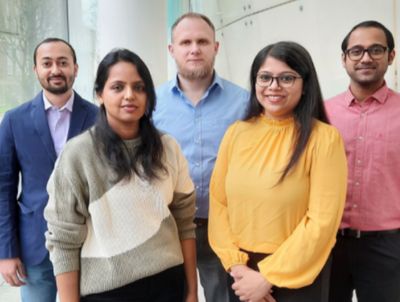
The competition helps develop the skills needed to move into corporate/public sector life The Grand Final took place in Liverpool where 10 teams from different universities competed for the title They were assessed on their team strengths and presented a one-minute pitch on a creative social business idea to an entrepreneur. A team of Aston MBA students has taken the top prize at the Universities Business Challenge (UBC) Global Masters 2022. Team GE7, which included Aishwarya Nagath Menon, Nashit Khalifa, Vasilijs Garbacevics, Divya Krisitipati led by Mithun Joy and mentored by Aston Business School’s Dr Julius Stephan, will receive a trophy on campus on 12 May. The competition offers postgraduate students a unique opportunity to develop the skills that you will need when moving into the working world and consists of 80 teams, drawn from a wide range of UK and Irish universities. The UBC Global Masters is a team-based business simulation event that provides participants with the opportunity to act as a board of directors, who have taken responsibility for improving the performance of a company. The finals took place in Liverpool where 10 teams from different universities, including two from Aston University, competed against each other tasked to run a simulated business under difficult trading conditions and also introduce an innovative idea to link the business to a social or environmental cause. The teams were assessed on their team strengths and presented a one-minute pitch on a creative social business idea to an entrepreneur. Mithun Joy, an Aston MBA student and team winner, said: “I am really proud to be part of the first Aston Business School team to win this competition. “It was a really competitive event against other universities, including the UBC's defending champion.” Clive Kerridge, course director at Aston Business School, said: “Although an Aston University MSc team made the podium in 2022, we are delighted to have our first ever winners of this excellent competition. “Taking part in the UBC Global Masters Challenge has been a great opportunity for our students to apply their theoretical knowledge to a complex, yet highly practical and topical business setting. “It allows for personal and professional development that is intellectually challenging and practically relevant, equipping participants with essential skills. Working in competitive teams enables peer to peer learning and interaction.” Find out more about the competition here.

Aston University expert to talk on gender diversity and inclusion at major cyber security event
The Ethnic Minority in Cyber (EMiC) network's flagship event is supported by the Department for Digital, Culture, Media and Sport Attendees will hear from inspirational speakers looking at current and future initiatives to increase diversity in the cyber sector Dr Anitha Chinnaswamy from Aston University will be presenting a talk on gender diversity and inclusion in cyber. An Aston University expert and founding group member of Ethnic Minority in Cyber (EMiC) is set to present a talk at a major cybersecurity event on 28 April 2022. The EMiC network's flagship symposium is supported by the Department for Digital, Culture, Media and Sport and will take place at Edgbaston Park Hotel in Birmingham. Attendees will hear from inspirational speakers looking at current and future initiatives aimed around increasing diversity in the cyber sector and will also be able to provide feedback into the initiative and policies going forward. The symposium will consist of a keynote speech, invited talks, panel sessions and round table workshops. Dr Anitha Chinnaswamy from the Cyber Security Innovation (CSI) Centre at Aston Business School will present a talk on gender diversity and inclusion in cyber and the outreach work of the Centre with schools to increase representation. Simon Hepburn, CEO UK, Cyber Security Council is the keynote speaker. The EMiC network, of which Aston University is a founding member, is a pilot network for Black, Asian and Ethnic Minority cyber academia, professionals and businesses, with the long-term aim of significantly improving representation across the cyber sector. Dr Anitha Chinnaswamy, lecturer in cyber security management at the CSI Centre at Aston Business School, says: “I am looking forward to speaking at such an important event about an ever-important topic in cyber. “While there is a growing cyber security skills gap and high shortage in the UK cyber sector, a recent survey found that only 17 per cent of cyber professionals are from ethnic minority backgrounds across all cyber roles. “The cyber sector remains relatively nondiverse in terms of gender. Just 16 per cent of the workforce across these firms is female, compared to 28 per cent in other UK digital sectors. “Those filling senior roles, typically with six or more years of experience, are particularly nondiverse across a range of characteristics including gender, ethnicity, disability and neurodiversity. “For example, just three per cent of senior roles are filled by women.” Aston University’s CSI centre, led by Professor Vladlena Benson, is the only female-led cyber security centre in the Midlands region and serves on the UK Cyber Security Council (UKCSC), alongside Simon Hepburn its CEO, to promote professionalism standards in cybersecurity. Professor Benson, director of the CSI Centre at Aston Business School, said: “Aston University CSI is actively involved in shaping diversity policy, such as with the launch of the NCS22 strategy in Birmingham and enabling the Cyber Explorer programme as a first schools’ engagement for girls from diverse backgrounds. “As ambassadors we are passionate about working towards closing the gender gap. This will help pave the way for a future of gender diversity, and hopefully other types of diversity, in the cyber security field. “Our work with female students in a highly diverse Midlands’ landscape highlights the challenges that are yet to overcome with the levelling up agenda.” To find out more about the event please visit the site here.


With an estimated 1.5-million faculty in the US and a near 50,000 growth in UK-based academics in the last decade (to 225,000), universities and colleges have a whole range of interests and expertise on offer. In fact, despite rumours to the contrary, academia is a large and growing global ‘industry’. If you’re responsible for external relations, communications, marketing, civic engagement, knowledge exchange - or any other aspect of external engagement or “connectedness” in a university or college - then the ability to choose which faculty experts you selectively promote and publicise can be a very tough assignment. I’ve had first-hand experience with this. I was once in that very position - trying to keep up with the opportunities and the expectations afforded by 800 academics at just the one mid-sized UK institution where I worked. With the benefit of that firsthand experience and having since worked with more than 100 higher education institutions in the UK, Europe and North America, here are a few observations and also a few tips on how to organize your expertise: Approach #1: The Focus on Expertise Clusters An approach taken by some universities nowadays is to promote their expertise as a group of “grand challenges” or “beacons of excellence” - drawing together as many areas of research expertise under (usually) three or four headings. While identifying “token clusters” of expertise for focus and prioritisation may seem logical, this approach doesn’t really work. It may help with internal politics but it fails to generate enough precision to be relevant to various communities such as the media and industry. Approach #2: Selectively Promoting Key Experts One trap that universities can also fall into is to focus on a small group of academics who appear to be more suitable to promote. The reasoning for this approach is often driven by the need to have a manageable number for internal communications/press office staff to work with. The easy route to take is to just work with academics who are more keen to work with comms staff in promoting their work and who are already at ease in speaking to the media. Selection of experts on these factors, while important, isn’t the optimal way to build up the profile for the institution with key audiences. First off, this approach often doesn’t yield the diversity that audiences such as journalists and potential student and faculty recruits want to see represented. This approach will also miss the mark if it just plays to popular disciplines or hot topics. Being more inclusive to promote a wider range of disciplines and specialized topics is better value all round. Approach #3: The Faculty “Expertise Audit” I’ve seen institutions make many mistakes in positioning their faculty as experts, given it’s a proven way to differentiate brand, build profile and reputation. That’s why I’ve started to work with several universities on what I refer to as a “faculty expertise audit”. This brings a more structured process that helps prioritize key areas of research expertise and identify specialist experts. The audit also looks at the resources and overall capacity that universities have available to support an “expertise marketing” program that optimizes all these elements to significantly boost performance. Start with The Business Case for Expertise At the heart of this more structured, targeted audit approach is ensuring you are generating “return-on-investment” and “value-for-effort.” A good starting point is to ask: Where is the budget coming from? Where is current and expected demand for your programs? When starting this assessment, you have to think longer than a year out. Instead, look very hard and in detail at the next three to five years (the typical cycle of research investment and university strategies) and identify which expertise is most likely to solve the problems and consequential explorations that governments, industry, benefactors/donors, and funding agencies will want to support. I’m not saying that research areas without such sizable levels of predicted investment should be ignored - far from it - but we are in a competitive climate and universities now have to secure ‘orders’ (for applied and contracted expertise) that will ensure institutional sustainability and success. In turn, that success will allow investment in other areas that are socially vital but financially a weaker bet as regarded by funding sources. Having proven where research funding is most available, pressing and externally directed, then the audit is designed to identify and match the institution’s research talent to these requirements. These audits involve shortlisting, enlisting and then coaching the appropriate academic experts. The best results come from one-to-one sessions with academics which create buy-in and yield a more detailed marketing plan to leverage your experts. While more inclusive, this is an efficient process designed to create a “shared roadmap” for where the university and the academic both want to take their expertise. A large part of this roadmap then covers off other important activities such as creating a more discoverable and engaging online presence with enriched academic profiles that perform far better than the traditional “faculty directory.” Keeping online academic profiles fresh, content-rich, jargon-free, and compelling makes the job of expert ‘mining’ so much easier. Developing a sustained program of content with an organized lead generation process is also necessary. These extra steps are where many universities miss the mark. The result is a significant loss of inbound opportunities for research grants, consulting revenues, academic collaborations as well as local and global media coverage. I recently spoke with a Vice Chancellor of a prominent UK University who admitted that they as an institution deserved a failing grade when it came to promoting their faculty research achievements, saying that he “doubted any of their academics would be happy with the way their work was being promoted online.” This is an important aspect of the faculty audit. As a consultative process, it is non-threatening and we’re listening to staff and academics. That not only enriches the information the University has to promote its brand better, it also helps to enlist the support of the academic community who see that the university cares and that it is getting their input to put together a plan – both for the university and for individual academics. The academic is happy (they understand the value for them personally and for their institution); the University is happy (it is able to focus and prioritise its expertise in an evidence-based manner), and Communications and press office staff are happy (they have so more to work with in connecting the work of the University to a variety of local and global communities). The Benefits of A Faculty Audit Having completed many of these, I’ve seen very clearly, the results of a well run Faculty Audit process that without exception yield an excellent return on investment. Here are just some of the benefits to consider: Greater Insights: Gain a deeper understanding of the hidden strengths and opportunities within your academic ranks. Better Planning: A detailed report from a Faculty Audit enables a more strategic approach to planning where faculty research and expertise can support various programs within the University - such as industry engagement, media coverage and recruitment. Building Trust: When conducted by a third-party, a Faculty Audit is seen as more credible and less prone to perceptions of internal bias. More Engaged Faculty: Increased collaboration with faculty is gained through a more consultative process that builds “shared awareness” and enables more proactive support of their research. Increased Capacity: Producing more proactive content with faculty yields better results in terms of media coverage, research engagements, etc. Demonstrate Diversity: A better understanding of expertise that goes beyond the “usual suspects” to engaging a more diverse set of faculty to promote the University. News Coverage: Positioning your faculty and their research in a more relevant way aligns with the interests of the outside world and what's on the mind of outsiders. Less Stress: A more proactive, well structured plan helps everyone to synchronise activities better versus scrambling too much to meet deadlines in the “here and now.” Is a Faculty Audit Right for Your Institution? Here are some key considerations when evaluating the value of a Faculty Audit for your institution. You are ideally suited to undertake a faculty expertise audit if: You have a stretched workload where there's little capacity for proactive comms. You're tending to turn to the same academics for expert commentary in the media or elsewhere. You tend to get complaints (or mild mutterings) about not supporting academics enough. You don't have time to get to know the range of academic experts in your institution - especially new arrivals or eager early career academics. You've adopted an 'inside out approach' rather than one that engages with the interests of the outside world and what's on the mind of outsiders. There's weak management of expectations with the academic community - and a need for clarity and shared pathways for publicity. You're operating too much in the here and now and don't have the time to plan for future events, milestones and opportunities. You want to be more strategic in your comms and engagement - and make a real difference via attracting interest, income and investment. You don't have an integrated approach to comms (where content can be repurposed and recycled). You want more global reach and presence and can exploit digital tools to enable this. Additional Resources Academic Experts and the Media (PDF) This report, based on detailed interviews with some of the most media-experienced academics across the UK and United States draws on their experiences to identify lessons they can share in encouraging other academics to follow in their path. Download the UK Report Here Download the US Report Here The Complete Guide to Expertise Marketing for Higher Education (PDF) Expertise Marketing is the next evolution of content marketing. Build value by mobilizing the hidden people, knowledge and content you already have at your fingertips. This win-win solution not only gives audiences better quality content, but it also lets higher ed organizations show off their smarts. Download Your Copy Click Here for Additional Resources



Ask an #Expert - Is there any way to temper America's boiling housing market?
U.S. HOUSING PRICES STILL RISING ALONG WITH MORTGAGE RATES When mortgage rates rise, home prices tend to level off or decline because fewer people can afford to buy. Experts are counting on that adage to help cool the nation’s torrid housing market. But the latest analysis of the most overvalued markets shows prices still are climbing despite the increasing mortgage rates, which last week reached their highest level in more than three years. In all 100 markets surveyed by researchers at Florida Atlantic University and Florida International University, buyers continue to pay higher premiums – that’s the difference between where home prices should be based on historical trends and where they are now. Two months ago, Los Angeles, Provo, Utah and other metro areas in the Western part of the country developed “pricing crowns,” an indication that those housing markets could be slowing. But home values have since reaccelerated, prompting concern that a looming downturn in some areas could be worse than expected. “Eventually mortgage rates will slow down home prices, but it hasn’t happened so far,” said Ken H. Johnson, Ph.D., an economist in FAU’s College of Business. “We should not see rapid upticks in prices as mortgage rates rise. It’s that kind of exuberance that led to past housing downturns.” Boise, Idaho is the nation’s most overvalued housing market, as it has been since the researchers first released their rankings last summer. At the end of February, Boise buyers were paying an average price of $513,849, even though historical trends indicate the average price should be $291,389. That 76.34 percent premium is well ahead of No. 2 Austin, Texas (64.80 percent). The full rankings with interactive graphics can be found here. Charlotte, North Carolina entered the top 10 overvalued markets for the first time with a premium of 50.14 percent. February’s average home price in Charlotte was $353,106, although a history of past sales suggests that price should be $235,188. “Charlotte’s significant and rapidly growing premium is similar to other Southern metros that are all experiencing fast price appreciation,” said Eli Beracha, Ph.D., of FIU’s Hollo School of Real Estate. “The drivers of this appear to be large population increases in these areas combined with a significant shortage in housing inventory.” Each month, Johnson and Beracha rank the most overvalued housing markets of America’s 100 largest metros, similar to the popular S&P CoreLogic Case-Shiller home price index. Johnson and Beracha incorporate average or expected price changes and provide an estimate of how much a market’s housing stock is over- or undervalued, relative to its historic pricing. The data covers single-family homes, townhomes, condominiums and co-ops. Six Florida metros, led by Lakeland, all rank among the nation’s 25 most overvalued markets with premiums of more than 40 percent. The Miami metro, with a premium of nearly 25 percent, remains the least overvalued market in the Sunshine State. As the U.S. housing market cools, metros with strong population gains and shortages of homes for sale will fare best, although those markets will continue to struggle with affordability, the researchers predict. Metros with flat or falling populations and more available homes for sale could face price declines, making those areas more attainable for young families and first-time buyers. Johnson said consumers could be taking big risks if they jump into the U.S. housing market now. “We are near the peak of the current housing cycle, and you never want to buy near the top of the market,” he said. “Consumers need to pause if their main motivation is to buy because they fear prices will rise even higher. Prices are high now, but they always moderate back toward a long-term pricing trend. Perhaps staying where you are now and letting this irrational market settle would be one of the best decisions you could make.” Ken Johnson is the associate dean and professor in the College of Business at Florida Atlantic University. Ken is available to speak to media about this topic – simply click on his icon to arrange an interview and time.


Aston University sets Meritics on course to become market leader in the bio-pharmaceutical sector
Aston University has completed a knowledge transfer partnership with Meritics Ltd to develop the company’s capability and underpinning knowledge to measure the size, concentration and distribution of biological entities, such as liposomes and exosomes, using proprietary particle analysers. The project will enable Meritics to enter the fast-growing biologics sector with their particle analysis instruments and services to significantly increase company turnover. It represented a significant change in direction for the company and focused on systems that would have the largest impact. Results provided Meritics with significant data and proof-of-concept applications required to widen the company’s product range into the biological market. It also broadened the company’s knowledge of biological applications and helped bridge gaps between the areas of interest and the limitations of the analysers. Meritics Ltd supplies and provides service support for a range of particle characterisation instrumentation to industrial, research and academic institutions in the UK. Additionally, it offers a range of consumables, analysis services and consultancy. A knowledge transfer partnership (KTP) is a three-way collaboration between a business, an academic partner and a highly qualified graduate, called a KTP Associate. The UK-wide programme helps businesses to improve their competitiveness and productivity through the better use of knowledge, technology and skills. Aston University is the leading KTP provider within the Midlands. The project was led by Dr Alice Rothnie and Dr Alan Goddard from Aston University’s Aston Centre for Membrane Protein & Lipid Research (AMPL), a specialist research group with a track record of biological particle characterisation. Dr Rothnie has over 14 years of experience working with liposomes, viral and cellular systems, while Dr Goddard brought over a decade of experience in biological membranes and nanoparticles ¬– mainly focusing on liposomes. Also working on this partnership as KTP Associate was Dr Megan Cox, whose proven expertise in biochemistry drove the innovation and research behind the project. Following the completion of the project, Dr Cox has been employed by Meritics as a Technical Specialist, using biological expertise to assess instrument parameters for biological entities. Brian Miller, founding managing director of Meritics, said: “The project has sped up the company’s plan to move into more biological application areas and widen our customer base. Aston University’s extensive knowledge in biology and biological entities is crucial for our wider sales and technical staff and provided invaluable visibility of the biological markets”. Dr Alan Goddard said: “Working in partnership with Meritics has allowed us to transfer our extensive experience of biological particles into industry. We have formed an exciting partnership which has continued past the end of the formal project, enabling cutting-edge research to be performed at Aston using the latest equipment.”


Global award for international human resource management expert at Aston Business School
Professor Pawan Budhwar has been recognised by the International Federation of Scholarly Associations of Management (IFSAM) He is a joint recipient of its award for exceptional service to the management field worldwide Professor Budhwar has been recognised for his outstanding leadership. Professor Pawan Budhwar has been named by the International Federation of Scholarly Associations of Management (IFSAM) as a joint recipient of its Award for Exceptional Service to the Management Field Worldwide. Dr Budhwar, a professor of international human resource management and head of Aston Business School, has been recognised for his outstanding leadership in building collegiality, community, and capacity in the British Academy of Management and in the Indian Academy of Management (an affiliate of Academy of Management), where he served as co-founder and first president. Pawan is also an associate pro-vice chancellor international (India), the joint director of Aston India Centre for Applied Research at Aston University and the co-editor-in-chief of Human Resource Management Journal. He received his PhD from Manchester Business School. He has published over 150 articles in leading journals on topics related to human resource management and performance, with a specific focus on India. He has also written and/or co-edited 26 books on HR-related topics for different national and regional contexts. On this occasion, the award, which recognises significant and enduring service to the management scholarly community worldwide, has been jointly bestowed to Professor Budhwar and Professor Emeritus Jean-François Chanlat, PSL Université Paris-Dauphine, France. Professor Budhwar said: “I am truly honoured and humbled to receive this award from the International Federation of Scholarly Associations of Management. It is satisfying to receive an acknowledgement of my on-going service to our academic community from global peers. Thank you IFSAM for considering me for this.”

Aston Business School to host information session on government’s flagship programme for SMEs
Businesses can find out how to boost performance, productivity and growth with the national government-backed Help to Grow: Management course The information session will be delivered face-to-face at Aston Business School on 4 April Business leaders will be able to ask questions about the course, which is delivered by leading business schools across the UK. Aston University is set to host an information session on the government’s flagship Help to Grow: Management programme, launched by Chancellor of the Exchequer Rishi Sunak at Aston Business School in August 2021. The 12-week management training programme is 90% funded by the Government and participants can complete it alongside full-time work, giving 30,000 SMEs access to world-class business expertise on everything from financial management to marketing. The information session, in collaboration with NatWest Group, will be delivered face-to-face at Aston Business School on 4 April from 09:30 to 11:00. Businesses will be able to find out how to boost performance, productivity and growth as well as ask questions about the course. Laura Barratt, managing director of The Malted Waffle Company and previous participant of the program, will share her experience of taking part and the benefit it has had on her company. Kate Angel, head of business support operations, Aston Centre for Growth, said: “The information session will provide a great opportunity for business leaders to hear about the value of the course from past participants, network with fellow company leaders and find out how Help to Grow: Management can help drive growth in their organisation.” This event is free and open to all, not just NatWest customers. You can register for the information session here. Find out more about the Help to Grow: Management course here.

Technical training, exposure to multiple industries and an open and inclusive culture help IT Associates innovate across CCG. They are often the quiet contributors to a project, taking a business idea from concept to delivery to allow strategic business endeavours to get off the ground. What they do and how they do it can be mysterious to many, with technical jargon, architectural details and complex processes at play. To succeed in IT requires incredible technical knowledge, a solid understanding of business processes, and innovative mindset with a natural curiosity to understand how multiple industry business systems all work together. Most importantly what’s needed is the desire for continuous learning. The IT department at CCG has enjoyed an incredible period of growth and development over recent years. In the last decade alone, CCG has undergone a major technology transformation, replacing every major business system required to support the different lines of business under the CCG umbrella including CAA Insurance, Orion Travel Insurance, CAA Travel, Membership and Emergency Roadside Services, while also implementing industry-leading innovations like CAA MyPace. We spoke to three tenured Associates to uncover their secret to success working in IT. What drives the culture of a team that often works behind the scenes but is vital to the success of all organizational projects? Lindsay Lamothe Typically, IT Associates have exposure to many business areas, giving them a well-rounded view of the various industries in which CCG operates. At first glance, one might think that this kind of exposure helps drive innovation and growth. But, while this is true for many, Lindsay Lamothe, Senior Business Systems Analyst for CCG’s Roadside Product Management, explains it’s more nuanced. “I think working in multiple lines of business at the organization led me down the path towards IT. I have no formal training in IT but having exposure to the business side of things gave me insights that continue to be valuable now that I work in a business enablement area,” shared Lamothe. “Being exposed to multiple industries while working in IT is a valuable opportunity to grow knowledge, but I think anyone who can learn more about the multiple industries we operate in would be well-positioned to do well in IT.” Lamothe started at CCG as a summer student to pay for university and eventually came on full-time working in auto travel, helping Members with TripTiks. She worked on the frontlines for ten years before shifting into IT and roadside assistance and has now been at the company full-time for 18 years. Her sense of purpose comes through very clearly when you speak to her about the impact of her work. “I am proud to work in IT at CCG because I am passionate about roadside operations. What we do saves lives,” said Lamothe. “If each code fix or enhancement that we work on gets us to the Member even five seconds sooner, that could be a matter of life or death. I know that we are making a difference in people's lives.” Voytek Bialkowski Voytek Bialkowski, just accepted a promotion to a director position in Enterprise Resource Planning. He also started his career at CCG and credits the technical learning opportunities offered for his continued success. Next month he marks the impressive milestone of 15 years with the company. “CCG is unparalleled in the marketplace in terms of professional growth and learning opportunities,” shares Bialkowski. “Our senior leaders have created a true knowledge culture by encouraging and celebrating professional development, certification, and lifelong learning. In my time with the IT department, I have earned four SAP certifications that furthered my technical skillset. I have also leveraged many of the programs available for Associates, such as the Lean Six Sigma White Belt and the Queens mental health certificate.” What truly sets CCG’s IT department apart is the emphasis on technical training that many Associates can receive right out of school or with little prior knowledge. Bialkowski explains, “CCG has provided me with multiple avenues for technological growth. Working on best-in-class systems and learning their functional and technical components has allowed me to become intimately familiar with SAP’s software suite, Greenfield SAP strategies and methodologies, data quality and data migration, application management, software development and testing lifecycle, as well as SQL and other query languages.” It's clear through the experiences of Lamothe and Bialkowski that learning opportunities and a broad array of opportunities to contribute to different areas of the business are key drivers of the success of CCG’s IT Associates. While hard skills and insights are essential, equally important is the culture of a team and the people that one works with to get things done. John Zhao John Zhao, Manager Quality Assurance in IT App Development & Architecture, shared his take on CCG’s culture and how that plays a role in delivering exceptional service to CCG’s business areas. “Collaboration and mutual respect underpin everything we do in IT. This is a big part of how we continue to learn and support each other,” shares Zhao. “Beyond these two values, we are encouraged to apply innovation to our daily process and products.” Innovation, being care-driven, leading by example, and collaboration are values that define CCG’s corporate culture across departments. Still, it is evident in speaking to Zhao that with tight deadlines and often unexpected challenges, they are especially engrained in the culture and approach of the IT department. Zhao’s experience at CCG aligns with Bialkowski and Lamothe’s, showcasing how fostering and developing technical knowledge internally and maintaining a broad perspective that can connect the dots across multiple industries are standard features of our IT approach. All three Associates underscore how the innovative and best-in-class approach of our IT department starts at the top. From Jay Woo, our CEO, to Apra Sekhon, our Chief Innovation Officer and Kin Lee-Yow, our Chief Information Officer, and their leaders. Together, they set the bar on integrating technology and innovation to ensure everyone aligns on promoting growth and knowledge to drive success for CCG’s IT Associates. As technology and innovation continue to grow, it’s valuable for all Associates to understand how this hardworking group of individuals support the essential work we do at CCG.


Market jitters making you anxious? Our expert might have the remedy to calm your nerves.
So far, 2022 has been, in a word, volatile. With the emergence of omicron, supply chain issues choking the economy, inflation the highest it has been in decades and now the war drums beating in Europe, investors are getting nervous and the markets are showing the strain. As political guru James Carville once said, "It's the economy, stupid!" Following that sage advice, Augusta University’s Wendy Habegger is here to offer expert perspective to journalists looking to figure out just what’s going on with the markets and what investors and the public can expect in the coming months. Q: What's the best advice to give people when the stock market is on such a roller coaster ride? “Frankly put, if one can't stomach when the roller coaster drops, don't get on the ride. If one does not have much tolerance for risk, they should not invest in the stock market. If one is already invested in the stock market and breaking into a cold sweat every time they look at their stocks, then they need to take a cash position, meaning cash out of the stock market. The market does not reward anyone based upon their level of anxiety. What good is making gains on stocks if one will turn around and spend those gains treating their ulcers? I liken it to pro sports athletes who don't retire when they are still healthy. What good is all the money they earned if they are only going to be spending it on medical treatments for the rest of their lives? What kind of quality of life is that?" Q: With the market trending down right now, if people can invest, is this the best time to do so? “Whenever the market trends down, it is always a great time to buy stable companies with solid cash flows and certain commodities. Look for those companies and commodities that always do well regardless of what is happening in the economy. But remember my response to the above question. One should do this if and only if they can tolerate risk.” Q: Should people look at safer places to put their money for the time being, and what would some of those places be? “Again, this depends upon their level of risk tolerance. If they are risk tolerant, they should shift into less risky investments. If they are not risk tolerant, cash out and put it in their savings accounts or CDs.” Q: Does the emergency fund rule of thumb still come in to play, maybe now more than ever? “Yes, but I don't go by the standard rule of thumb for emergency savings – having three to six months of expenses saved. I teach students their goal should be to have 12 months of expenses saved. The three to six months rule is obsolete. We saw this with the recession of 2007-09 and with the pandemic. People need to be able to live without employment longer because there is no definitive time frame for when one will find gainful employment and the government should not be relied upon to support the mass population in the meantime. Also, even when the government does provide assistance, not everyone receives it and some still never recover from the aftermath. “ The economy is front and center for just about every American business, investor and household – and if you’re a reporter looking to know more, then let us help. Wendy Habegger is a respected finance expert available to offer advice on making the right money moves during volatile times. If you’re looking to arrange an interview, simply click on her icon now to arrange an interview today.

