
Experts Matter. Find Yours.
Connect for media, speaking, professional opportunities & more.
Aston University wins share of £118m funding to accelerate its research impact
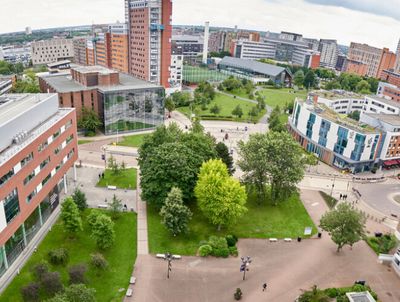
The Impact Acceleration Account (IAA) investment over three years focuses on maximising impact, knowledge exchange, translation and commercialisation potential within research organisations Funding allows researchers to unlock the value of their work, including early-stage commercialisation of new technologies The University will receive over £580,000 ‘to accelerate UK bright ideas into global opportunities'. Aston University has won a share of £118m in UK Research and Innovation (UKRI) funding. The Impact Acceleration Account (IAA) investment over three years focuses on maximising impact, knowledge exchange, translation and commercialisation potential within research organisations. Funding allows researchers to unlock the value of their work, including early-stage commercialisation of new technologies and advancing changes to public policy and services such as NHS clinical practice. UKRI, a government body responsible for delivering £8bn research and innovation funding each year, is investing £118 million in the latest round of IAAs to translate research across 64 universities and research organisations. Aston University was successful in gaining both Engineering and Physical Sciences Research Council (EPSRC) and Biotechnology and Biological Sciences Research Council (BBSRC) IAA funding – the latter one of only 15 IAA full awards nationally. Luke Southan, technology transfer manager at Aston University, said: “This funding will be transformational for Aston University’s capacity to get the best good from the research it carries out. “We have a pipeline of world-changing inventions, medical treatments, net-zero initiatives and spinout companies that we can give the greatest chance of success through these highly prestigious pots of funding.” UKRI director of commercialisation, Tony Soteriou, said: “The UK is home to some of the brightest, most innovative and creative research teams in the world. They have the ideas and they have the entrepreneurial energy to create businesses and services that could turn sectors on their head. “What they need, what every great commercial idea needs, is support in the critical early stages. The Impact Acceleration Account is the catalyst that allows projects to grow to the next level, attracting investment, forging partnerships and creating jobs. “The breadth of UKRI allows us to work right across the UK’s world-class research and innovation system to ensure it builds a green future, secures better health, ageing and wellbeing, tackles infections, and builds a secure and resilient world.”


School to provide increased access to preventative health services for young students so they can learn, grow and thrive To address health issues at the earliest and most preventable stages, provide whole child health, and advance health equity in the community, ChristianaCare opened a new school-based health center at Kuumba Academy Charter School in Wilmington on Friday, May 6th. The creation of the center, made possible through ChristianaCare’s partnership with the Community Education Building (CEB), which houses Kuumba Academy, means that students at the kindergarten-through-8th grade school will have increased access to an array of health services. “At ChristianaCare, we recognize the comprehensive health needs of adolescents in our community and are committed to partnering and using our resources wisely and effectively to expand our school-based health centers,” said Bettina Tweardy Riveros, J.D., chief health equity officer and senior vice president of Government Affairs and Community Engagement at ChristianaCare. “We know that childhood trauma adversely affects the ability of children to learn and build healthy relationships and it increases their risk of mental health issues and lifelong chronic disease. The opening of our school-based health center at Kuumba Academy means that ChristianaCare can support medical and behavioral health services and wraparound social care our children need, so we can positively influence their health, their education and their futures.” With the latest opening, ChristianaCare now operates 21 school-based health centers throughout the First State, in partnership with the Delaware Department of Health & Social Services, the Delaware Division of Public Health and several school districts. Kuumba Academy students, who spoke at an event Friday to celebrate the grand opening, will have access through its school-based health center to the following: Comprehensive behavioral health services. Crisis intervention and suicide prevention. Substance use disorder treatment. Tobacco cessation. Nutrition and weight management. Physical examinations. Health screenings. Treatment for minor illnesses and injuries. Reproductive health. In addition, Kuumba Academy students also will have access to resources that help their families surmount obstacles such as transportation, challenging appointment times, and worries about cost and confidentiality. “Kuumba Academy remains committed to meeting the needs of the whole child and family,” said Sally Maldonado, head of school at Kuumba Academy, the mission of which is to provide an innovative learning environment for the whole child from kindergarten through eighth grade. “The opening of this school-based health center means that our students and families will have daily access to the high-quality behavior and health services that they deserve, and we are grateful to ChristianaCare and CEB for their partnership. We are beginning to see ourselves on the other side of this pandemic and we are energized to emerge with these newfound partnerships focused on health and wellness for our village.” ChristianaCare has partnered with CEB and Kuumba Academy on community-focused health initiatives in the past. In February 2021, ChristianaCare provided more than 800 vaccinations to community members and staff at CEB. On February 7th of this year, ChristianaCare vaccinated 38 people, including 19 children, against COVID-19. This added to the more than 6,000 vaccinations that ChristianaCare Community Health has administered since 2021. “At CEB, we understand the importance that health plays on a child’s ability to learn and succeed,” said Linda Jennings, CEO at CEB. “We are beyond excited to partner with Kuumba and ChristianaCare to launch the Kuumba Academy School-Based Health Center at CEB and add to the list of holistic and integrated support we provide to students and their families.” Today’s event coincides with Better World Day, an annual, national event on the first Friday in May. During Better World Day, students showcase their learning about initiatives that they believe will have a positive impact on their community and the world. Through collaboration and acts of service, students learn the power of their voice to make change. About ChristianaCare Headquartered in Wilmington, Delaware, ChristianaCare is one of the country’s most dynamic health care organizations, centered on improving health outcomes, making high-quality care more accessible and lowering health care costs. ChristianaCare includes an extensive network of primary care and outpatient services, home health care, urgent care centers, three hospitals (1,299 beds), a freestanding emergency department, a Level I trauma center and a Level III neonatal intensive care unit, a comprehensive stroke center and regional centers of excellence in heart and vascular care, cancer care and women’s health. It also includes the pioneering Gene Editing Institute. ChristianaCare is nationally recognized as a great place to work, rated by Forbes as the 2nd best health system for diversity and inclusion, and the 29th best health system to work for in the United States, and by IDG Computerworld as one of the nation’s Best Places to Work in IT. ChristianaCare is rated by Healthgrades as one of America’s 50 Best Hospitals and continually ranked among the nation’s best by U.S. News & World Report, Newsweek and other national quality ratings. ChristianaCare is a nonprofit teaching health system with more than 260 residents and fellows. With its groundbreaking Center for Virtual Health and a focus on population health and value-based care, ChristianaCare is shaping the future of health care. About Kuumba Academy Charter School Kuumba Academy Charter School’s mission is to provide an innovative learning environment for the whole child from kindergarten through eighth grade. Our directors, staff, and families share the core belief that parents are children’s primary educators. KACS parents, in partnership with teachers and administrators, believe that every child can maximize his or her learning potential given the opportunity to do so. In response to the outcry from Wilmington parents looking for a high-quality public education and increased access to arts education for their children, Christina Cultural Arts Center leaders, parents, and community supporters took action and were granted a Department of Education charter to create Kuumba Academy Charter School (KACS) in 2001. KACS was the first school model in the state that partnered a public charter school with a nonprofit community organization. Christina Cultural Arts Center (CCAC) and KACS form a unique nonprofit/public school partnership committed to educational excellence. Through the innovative union of academics, arts, technology, and family engagement, each KACS student’s individual learning style is nurtured—resulting in creative learners who are agents of positive change in the community. The CCAC/KACS model is regarded by many as the single most significant achievement in Wilmington’s post public school desegregation history. About the Community Education Building (CEB) CEB was established in 2012 after Bank of America donated the former MBNA Bracebridge IV building to The Longwood Foundation. Living up to its commitment of increasing access to education, the Longwood Foundation created CEB as an independent entity, and transformed the space into an ecosystem to support the social, emotional, physical, and academic development of Wilmington’s youth. CEB is an innovative co-location and shared services model. Focused on supporting the entire family, CEB offers vibrant programs and support systems that provide a sound foundation for each student. It serves as a hub for families by offering services such as healthy meals, life coaches, and mental health services. This model leads to deeper family engagement in their child’s learning and allows schools to focus on teaching and learning, not operations and overhead. CEB is an educational ecosystem that holistically integrates programs and resources for students and their families, ensuring that every student has an equitable opportunity to succeed.


Georgia Southern now one of nation’s Top Ten Military Friendly® Schools
Georgia Southern University has earned a 2022-2023 Top Ten Military Friendly® distinction by Viqtory. Georgia Southern ranked at number nine on the Top Ten list. Being named a Military Friendly School is nothing new for Georgia Southern University, having earned a gold-level distinction for the past 10 years. “We are extremely proud to be recognized as being among the 10 most military friendly universities in the country, especially after learning that more than 1,800 schools participated in the survey,” said Georgia Southern University President Kyle Marrero. “With our connections to Fort Stewart, and the fact that about 10% of our student body is military-connected, we have a responsibility to ensure our people and our processes are attuned to the needs of those who are serving selflessly, who are retired or who are related to a veteran or active-duty service member. My thanks to all our faculty and staff who have worked hard to earn this recognition.” Institutions earning the Military Friendly® School designation were evaluated using both public data sources and responses from a proprietary survey. More than 1,800 schools participated in the 2022-2023 survey with 665 earning special awards for going above the standard. Georgia Southern University has a strong and proud history of supporting veterans, current-serving military personnel and their families, and has accumulated many awards for its dedication to the military community. Information and resources are available on the Military and Veteran Services webpage. “We are honored to receive such a significant recognition as a Top Ten Military Friendly® institution,” said retired Col. George Fredrick, Ed.D., director of Military and Veteran Services. “Georgia Southern University maintains strong ties to the military forces in our region, specifically Fort Stewart, Hunter Army Airfield, the Marines, the Georgia National Guard, the Air Force, and the Coast Guard. We proudly serve our veterans and their families while on their academic journeys. We are indebted to our faculty, staff, students and communities for their continued support of our military-connected student population.” Methodology, criteria and weightings were determined by Viqtory with input from the Military Friendly® Advisory Council of independent leaders in the higher education and military recruitment community. Final ratings were determined by combining the institution’s survey scores with the assessment of the institution’s ability to meet thresholds for student retention, graduation, job placement, loan repayment, persistence (degree advancement or transfer) and loan default rates for all students and, specifically, for student veterans. “Military Friendly® is committed to transparency and providing consistent data-driven standards in the designation process,” said Kayla Lopez, national director of Military Partnerships, Military Friendly®. “Our standards provide a benchmark that promotes positive outcomes and support services that better the educational landscape and provide opportunity for the Military Community. This creates a competitive atmosphere that encourages colleges to evolve and invest in their programs consistently. Schools who achieve awards designation show true commitment in their efforts, going over and above that standard.” The 2022-2023 Military Friendly® Schools list will be published in the May and October issue of G.I. Jobs magazine and can be found at www.militaryfriendly.com. Retired Col. George Fredrick is available to answer your questions - simply reach out to Georgia Southern Director of Communications Jennifer Wise at jwise@georgiasouthern.edu to arrange an interview today.


Aston University appoints new Vice-Chancellor
Aston University is delighted to announce that Professor Aleks Subic has been appointed as its next Vice-Chancellor and Chief Executive. He succeeds Professor Alec Cameron, who stepped down after five years in December 2021. He will take up the post in August 2022, until which time Saskia Loer Hansen will continue in her role as Interim Vice-Chancellor. Dame Yve Buckland, Pro-Chancellor of Aston University, said “I am absolutely delighted at Professor Aleks Subic’s appointment. He joins the University at an exciting time and his wide experience of leadership across both academia and industry makes him a perfect fit for Aston University’s needs and ambitions.” Professor Subic said “I feel privileged at being given the opportunity to lead Aston University at this time. The University is renowned for its commitment to graduate employability, translational research and its engagement with business. “I look forward to continuing the momentum built up by Professor Alec Cameron and Saskia Loer Hansen, and I am ambitious to see Aston University continue to build on its reputation for high quality teaching, research and business engagement locally, nationally and internationally.” Saskia Loer Hansen, Interim Vice-Chancellor of Aston University, said “I should like to congratulate Professor Subic warmly on his appointment. His credentials as a leader, both in industry and in higher education, equip him for guiding Aston University to even greater success. “I am sure he will work rigorously to build on our achievements, promote the University worldwide and further strengthen our reputation as a leading university for business and enterprise.” Professor Subic is currently the Deputy Vice-Chancellor (STEM) and Vice President (Digital Innovation) at RMIT University, where he is responsible for leading the STEM College and Digital Innovation portfolio in Australia and globally. Prior to this appointment he was the Deputy Vice-Chancellor (Research & Enterprise) at Swinburne University of Technology, responsible for research, graduate studies, engagement and partnerships, advancement, innovation, enterprise, and commercialisation, leading the research transformation of the university towards top 2% in the world. Before that, he was the Executive Dean of Engineering at RMIT University, one of the largest engineering faculties in Australia, ranked in top 1% in the world and renowned for industry-partnered education and research. Concurrent with his academic appointments, Professor Subic has held notable appointments on the Australian Prime Minister's Industry 4.0 Taskforce and the Australian Advanced Manufacturing Council Leaders Group (Australian Industry Group). Previously he was the Director and Deputy Chair of the Australian Association of Aviation and Aerospace Industries, Director of Oceania Cybersecurity Centre Governing Board, Director of the Society of Automotive Engineers Australasia Board, Director of National Imaging Facility Governing Board, Director of Australian Housing and Urban Research Institute Governing Board, and Director of the Victorian Centre for New Energy Technologies Governing Board. He has served on a number of national and international research committees and expert panels, including as Chair of the European Research Council Expert Panel for Physical Sciences and Engineering, Technology Group of the Global Federation of Competitiveness Councils, Forbes Technology Council, Defence Materials Technology Centre, Editor and Associate Editor of international scholarly journals.

What the Basque Country tells us about 'levelling up' | Aston Angle
What the Basque Country tells us about using local governance to level up By Dr Caroline Gray Lecturer in Politics and International Relations School of Social Science and Humanities January 2022 In a recent interview on his vision of ‘levelling up’, Michael Gove, Secretary of State for Levelling Up, Housing and Communities, cited the Basque Country as one example of where ‘things have been done well’. The Basque Country, an industrial region of northern Spain with a population of just over two million, is widely admired for having undergone a remarkable, industry-focused economic transformation since it was hit by the decline of heavy industry in the 1980s. It is now one of the leading regions in Europe not only in terms of GDP per capita, but also in having a low percentage of population at risk of poverty or social exclusion. Within Spain itself, critics usually attribute this to the way the Basque fiscal autonomy model works, enabling the region to keep more of its own wealth to itself than other similarly prosperous regions in Spain – a form of internal ‘levelling up’ at the expense of other regions. This, however, is not the only contributing factor to the Basque Country’s economic transformation. Effective governance has also played a key role. What takeaways from the Basque experience might be relevant to levelling up in the UK and the devolution framework needed to facilitate it? Through my research on the Basque governance systems, I’ve discovered that some of the most valuable lessons relate to how multi-level governance works within the Basque region itself and how that contributes to economic and social transformation. Devolution does not stop with the powers devolved to regional governments or authorities; the relationship between different stakeholders and layers of governance within a region or locality is equally important. If the UK government wants to learn from what the Basque Country has done well, it should consider the following: 1. Devolution beyond metropolitan areas needs to be flexible and adaptable to place-based specifics In his July 2021 Levelling Up speech, Boris Johnson announced that levelling up would involve extending devolution beyond cities with new deals for the counties. The government must stick to the commitment it made then to shape new devolution deals with local input, avoiding one-size-fits-all approaches. The Basque Country provides valuable evidence for why it’s beneficial to shape governance approaches to the economic geography of an area. As one of Spain’s 17 regions called ‘autonomous communities’, the Basque Country is, in turn, divided into provinces (Araba-Álava, Bizkaia and Gipuzkoa) and municipalities. Counties, which don’t have an administrative body, but which do house county development agencies, make up an additional level between the provinces and municipalities. The economic activity of two of the provinces (Araba-Álava and Bizkaia) is typical of metropolitan areas in that it is centred heavily on their capital cities (Vitoria and Bilbao, respectively), where the provincial councils are based. However, in the third, Gipuzkoa, economic activity is more distributed across different hubs in the province. As a result, in Gipuzkoa, the county development agencies, created in the late 1980s, have acquired a particularly important role, as interviewees from the Basque Institute of Competitiveness explained to me. The counties map particularly well onto the different industrial areas in the province, thanks to the fact that they were designed with the bottom-up input of municipal leaders working together with the provincial council. The county development agencies have, in turn, become a key channel via which the provincial council in Gipuzkoa can reach SMEs more easily, as they are closer to the firms. Such local networks are particularly important in non-metropolitan areas where economic activity can be more dispersed. This is why the UK government must make sure any new devolution framework it designs is flexible enough to allow for local input and adaptations to place-based considerations. 2. Bottom-up, collaborative dynamics are essential to the design and implementation of placed-based strategies Basque economic development has undoubtedly benefitted from the fact that the regional government draws upon input from different levels of administration and a range of other public and private stakeholders in the region when designing its industrial policies. Experiments in collaborative governance have become increasingly innovative over the years, not only at regional but also provincial and local level, designed to reach beyond the largest firms and to engage wider society. The county development agencies in Gipuzkoa, for example, used to provide services to SMEs in an essentially one-way direction – for example, advising them on how to apply policy – but have since evolved more into facilitators of networks for cooperation and mutual learning among public and private actors at county level. This not only facilitates more efficient implementation of regional policies, but also channels local feedback upwards into the policy-making process, adding value. Collaboration among different tiers of governance and different areas, rather than competition, has been the goal of such approaches. Therefore, the UK government needs to reconsider the increasingly competitive dimension of current devolution arrangements. Having areas compete against one another for centrally controlled, often short-term pots of money doesn’t facilitate the formation of robust, collaborative partnerships that could ultimately add value and increase efficiency. Finally, institutional stability is important. From the Regional Development Agencies (RDAs) to the Local Enterprise Partnerships (LEPs), which are now under review, there has been frequent chopping and changing in the institutions and policies meant to tackle the UK’s place-based inequalities in recent decades. The Basque Country shows what can be achieved with a more stable, longer-term institutional and policy framework and vision. If it is to have a meaningful impact in tackling inequalities, the Levelling Up White Paper must provide the basis for a longer-term devolution framework that goes well beyond the current government term, with a clear allocation of resources and responsibility.


Japan House: Fifty Years Ago Today
Joshua W. Walker, Ph.D., President and CEO, Japan Society This September we're celebrating the 50th anniversary of Japan House, Japan Society's landmarked headquarters building. Let's jump in our time machine and go back to 1971, when Japan Society was only 64 years old. At that time, U.S.-Japan relations were deeply embroiled in trade frictions while the ending of the U.S. embargo of China had just begun to impact East Asia. 1971 snapshots In the United States: Richard M. Nixon is President; Apollo 14 lands on the moon; massive protests are held throughout America against the Vietnam War; Walt Disney World opens in Orlando, Florida; Joe Frazier defeats Muhammad Ali in 15 rounds at Madison Square Garden; the first Starbucks opens in Pike Place Market, Seattle. In Japan: Eisaku Sato is Prime Minister; the U.S. and Japan sign an accord to return Okinawa to Japan; NHK TV implements colorization of all programs; Kamen Rider TV series begins broadcasting; the 48th reigning Sumo champion Yokozuna Taihō announces his retirement; McDonald's opens its first store in Ginza, Tokyo; Nissin creates the first "cup noodle." Japan House Meanwhile in New York City, Japan Society had occupied eight different locations since its founding in 1907, and by the mid-1960s, a dedicated building had become necessary to house the Society's rapidly expanding initiatives. Japan Society President John D. Rockefeller 3rd made a very generous pledge by donating the land for the building site and Japanese modernist architect Junzo Yoshimura was confirmed to design the building. On September 16, 1969, John D. Rockefeller 3rd and Japanese Foreign Minister Kiichi Aichi broke ground at a formal ceremony. Construction proceeded on schedule and staff moved in during the spring of 1971, with Executive Director Douglas Overton noting, "Each day we have found some new and delightful feature which has come off the drawing board as an unexpectedly brilliant success. Japan House will be a national important building worthy of its high purposes." Opening Week—five star-studded days of celebratory events—began on September 13, 1971 with Their Imperial Highnesses Prince and Princess Hitachi at the ceremonies. The Prince brought Japan's best wishes to the Society "for a new chapter, both rich in content and wide in scope." The Gallery opened its first exhibition, Rimpa: Masterworks of the Japanese Decorative School and the Tokyo String Quartet performed in the new auditorium. Junzo Yoshimura wrote about Japan House, "People the world over used to build their houses with local and traditional materials. Today, however, contemporary buildings all over the world use the same basic materials—concrete, steel and glass—yet different characters and nationalities can still be perceived among them. In designing Japan House I have tried to express in contemporary architecture the spirit of Japan." With the formal opening of the Society's headquarters a new era had begun. Their Imperial Highnesses Prince and Princess Hitachi and Japan Society chairman John D. Rockefeller 3rd view the first Japan Society Gallery exhibition Rimpa: Masterworks of the Japanese Decorative School. Photo © Thomas Haar. The next 50 years Fifty years later, we are at another inflection point. The novel coronavirus pandemic has taught us just how interconnected we are as a global community while placing new importance on our homes and transforming the nature of work. This unprecedented global crisis has also illuminated the strengths and weaknesses of our organization, providing new opportunities for envisioning the future. Just as the opening of Japan House shaped the Society's last 50 years, today we are reimagining how we use our space, from the physical to the digital, forging broader connections or kizuna for U.S.-Japan and for the world. We embrace our mission for the years to come, reaching out far beyond our building, to our city, country, and world as we seek to connect American and Japanese people, cultures, and societies through a global lens. Like a hike up Mt. Fuji, Japan Society’s nearly 115-year-long journey itself defines us far more than our current destination. Beginning in 1907, the first iteration of Japan Society focused on business relations between the U.S. and Japan. For its 1952 post-Occupation reconstitution under the leadership of John D. Rockefeller 3rd, the Society dedicated itself to arts, culture, and education, with an emphasis on supporting Japanese students in New York as well as spreading the word about Japan through significant cultural milestones such as partnerships with The Metropolitan Museum of Art and Lincoln Center, with traveling exhibitions and outreach on both sides of the Pacific. With the opening of Japan House in 1971, politics was reintroduced into the mix, the business and policy communities energized, and Japanese popular culture landed large—nearly 50,000 people came to the Grand Sumo Tournament at Madison Square Garden co-sponsored by Japan Society and the Asia Society in 1985! Today at Japan House we present Japan and U.S.-Japan as a way to engage with history and tradition, on the one hand, and innovation and the future on the other. As in 1971, the time to act is now and our opportunities are as great as the challenges of 2021. It's up to us to work together on new, critical connections to take us through the next 50 years. I'll be there with you. Joshua Walker (@drjwalk) is president and CEO of Japan Society. Follow Japan Society on Twitter, Instagram, Facebook, and LinkedIn. The views expressed in this article are the writer's own.


Aston University celebrates launch of first wave of Institutes of Technology
"There remains a significant national skills shortage for engineering and we are pleased to be helping to address this through the provision of courses for young people wanting to progress to higher technical education, adult learners and people who want to develop their engineering skills." Professor Sarah Hainsworth Pro-Vice Chancellor and Executive Dean of the College of Engineering & Physical Sciences Aston University Institutes of Technology (IoTs) are collaborations between further education (FE) providers, universities and employers IoTs focus on the specific technical skills needs required in their local area They provide employers with a skilled workforce and students with a clear route to technical employment Aston University is joining in a nationwide celebration to mark the launch of the first wave of 12 Institutes of Technology on Thursday 8 July. Institutes of Technology (IoTs) are collaborations between further education (FE) providers, universities and employers. They specialise in delivering higher technical education (at Levels 4 and 5 – equivalent to the first and second year of a degree) with a focus on STEM (science, technology, engineering and mathematics) subjects, such as engineering, digital and construction. IoTs focus on the specific technical skills required in their local area. They will provide employers with a skilled workforce and students with a clear route to technical employment. By bridging skills gaps, these new institutions will drive growth and widen opportunity. Gillian Keegan, minister for apprenticeships and skills, said: “Institutes of Technology are the pinnacle of technical education, helping to develop the highly-skilled talent pipeline employers will need for the future. “By bringing together Further Education colleges, universities and businesses, Institutes of Technology are unique partnerships which will help to tackle skills shortages in vital sectors, from marine engineering to healthcare, cyber security to agri-tech. “Institutes of Technology are also playing a vital role in our multi-billion Plan for Jobs, which is helping to level up opportunities and support people to get the skills they need to get good jobs as we recover from the pandemic.” The Greater Birmingham and Solihull IoT has brought together the most innovative education providers within the Greater Birmingham and Solihull Local Enterprise Partnership area with leading industry stakeholders to create a powerhouse for advanced manufacturing and engineering. The consortium is led by Solihull College & University Centre, Aston University and Birmingham City University, working alongside South and City College Birmingham as a core partner and supported by BMET College, University College Birmingham and the University of Birmingham. The partnership will jointly design, develop and widen education and training opportunities aligned to the latest skills needs of leading-edge employers and the local, regional and national economy. The group will target under-represented learners, facilitating clear opportunities for progression from school to high-level occupations. In this new video, partners and employers explain what the IoT means to them: The following passage was included in the recent Government Skills for Jobs white paper, with the GBS Institute of Technology highlighted as an example of good practice: Government Skills for Jobs white paper Building work has started on the GBSIoT Hub at Aston University. It will be completed at the end of 2021 and will be an innovative hub, providing a fabulous resource for students and learners from across the region. Andy Street, mayor of the West Midlands, said: “The Greater Birmingham and Solihull Institute of Technology is all about two things: economic growth and prosperity. The Greater Birmingham and Solihull Institute of Technology is going to give us wonderful new skills in the sectors of the economy that are really growing fast here.” Professor Sarah Hainsworth, pro-vice chancellor and executive dean of the College of Engineering & Physical Sciences at Aston University, said: “We are delighted to be working with our partners on the Greater Birmingham and Solihull IOT for Advanced Manufacturing. It has been really exciting to see the work progressing on delivering the new Hub for students and learners on the campus at Aston University. "There remains a significant national skills shortage for engineering and we are pleased to be helping to address this through the provision of courses for young people wanting to progress to higher technical education, adult learners and people who want to develop their engineering skills. "The Hub will be home to a new cyber physical manufacturing rig which will create a simulated working environment linked to advancing Industry 4.0 technology and state of the art digital facilities and I really look forward to when it becomes the new home for our IoT students.” Find out more about the Greater Birmingham and Solihull Institute of Technology at www.gbsiot.ac.uk

Experts explore the gap between research and practice in disaster management
The COVID-19 pandemic has attracted public attention to crisis management globally, writes Aston University's Oscar Rodriguez-Espindola. Although authorities and international organisations are still actively and diligently trying to mitigate the impact of the pandemic, some of the attention is shifting towards understanding the decisions made and learning from our experience. Indeed, this experience has inadvertently shown different areas for improvement for emergency management systems. The experience gained during the pandemic should lead governments and organisations to refine crisis management processes to prepare for challenges ahead. Leveraging research and specialist groups have been essential to support and inform decisions, as these can provide key insights guiding policy decisions. However, the integration of research and practice should not take place at the response stage only, but as part of the core crisis management system at every stage. It is crucial to maintain and strengthen the relationships between research and practice forged during the pandemic for different emergencies in the future. With the increasing number of different disasters happening and the threats stemming from climate change, it is not surprising that between 1994 and 2013 around 1.35 million lives have been claimed annually by natural disasters. Therefore, the value of partnerships between research and practice needs to be strengthened and implemented globally. Academics from Aston University in the UK and the Universidad Autónoma de Occidente in Mexico have investigated the current status of the integration of research and practice for crisis management. A systematic literature review of decision models for humanitarian logistics has been used to understand the way these models have reflected the real conditions experienced by decision-makers and catered to their priorities. Afterwards, interviews with two civil protection authorities of the state of Sinaloa, Mexico, have been undertaken to understand the conditions faced by them for crisis management, their processes and their view of decision models to support crisis management in the country. Next, a multicriteria decision analysis was used to capture their preferences regarding the objectives set for humanitarian operations to develop an analysis of their priorities. Practice needs to be informed by research, but for that guidance to be impactful, research needs to have a thorough understanding of the conditions and challenges faced by practice. The literature focused on models for humanitarian logistics has shown that the engagement of academics with practitioners in the design of solutions to support decision-making has been declared in less than a quarter of the contributions, as shown in Table 1. That means the design of solutions is based on prior secondary information or founded on a theoretical basis, which is not necessarily reflecting the current reality faced by authorities. It is noteworthy that there is an increasing trend in the number of articles involving practitioners in recent years, with more than half of them published in the previous three years. Despite that growth, however, the relative percentage of contributions incorporating practitioners has never been beyond 40% of all the models published in any year, which highlights that there is still a long way to go to support research development. Table 1: Involvement of practitioners in the design of models for humanitarian logistics Our interviews highlighted that authorities perceive the potential of systems to improve information management forecasting and decision-making, but they also unveiled the concerns about these systems providing unrealistic or unfeasible solutions. Optimisation models are formulations in which a metric is maximised or minimised subject to a series of constraints. If the objective does not reflect the objectives and priorities of decision-makers, then results can be less relevant for decision-makers. For instance, models solely aiming to minimise cost would struggle to give useful solutions to authorities focused primarily on providing support to all the victims equally. Therefore, the lack of involvement from decision-makers can lead practitioners to be cautious about using decision-making models. To examine the link between contributions in the literature and the objectives and priorities of authorities, data about them was gathered and analysed using a technique known as Fuzzy-TOPSIS. The purpose was to identify the importance given to different objectives by authorities for different activities in order to rank them based on importance as shown in Table 2. Although humanitarian logistics are characterised by a focus on the overarching ideas of saving lives and reducing suffering, it is still surprising to note that cost was the least important objective for authorities. Conversely, more than three-quarters of the models surveyed are using cost as the main objective function, which makes it the most prominent objective in humanitarian logistics. As preferences from authorities seem considerably more focused on maintaining a reliable flow of support, with high levels of service and ensuring to reach the most affected population, our findings suggest a misalignment between research and practice. Hence, neglecting to incorporate practitioners in decision-making models for humanitarian logistics can lead to omitting their needs and priorities, rendering the models less effective to provide workable solutions. Table 2: Ranking of objectives from civil protection authorities Additionally, it is important that research guides and influences practice in relevant aspects for further development. For instance, understandably, the chaotic and urgent conditions faced by authorities in humanitarian logistics force them to prioritise response over any other considerations. Our interviews confirmed this, as they mentioned that even though sustainability is becoming a crucial element in regular times, it is undermined by the urgency of the response and only included in recovery activities. This is an aspect worth looking into because research has shown that sustainability can be integrated into crisis management, even with the potential to provide improvements in terms of efficiency. Hence, a more thorough integration between research and practice would allow to positively influence activities on the field based on findings and results proposed and tested by cutting-edge investigations. Overall, our findings suggest that despite the increasing remarks about the intention of joining research and practice, there is still a significant divide between them. Reducing that divide can be beneficial for both sides. More practice-informed research can allow to development of feasible solutions that can enhance the support provided to disaster victims in practice, whereas more research-informed practice can provide stronger foundations for effective decision-making and guide research to focus on key aspects to make it more impactful. Therefore, it is essential to put more emphasis on integrating research and practice from the roots, to make their interaction more fruitful. Current trends seem to be going towards that direction, especially with the current focus on the impact on research, but further efforts are required to motivate researchers and practitioners to work together to improve crisis management. This article was co-written by Oscar Rodriguez-Espindola, Pavel Albores, Hossein Ahmadi, Soumyadeb Chowdhury, Prasanta Dey from Aston University and Diego Chavira and Omar Ahumanda from the Universidad Autónoma de Occidente. This work was supported by an Institutional Links grant, ID 527666998, under the Newton UK-Mexico partnership. The grant is funded by the UK Department for Business, Energy and Industrial Strategy and delivered by the British Council. For further information, please visit www.newtonfund.ac.uk

New York and Tokyo: Global Cities as Essential Hubs for Our Collective Future
Throughout, cities have faced repeated pronouncements of their demise. Yet, as centers of soft power, cities adapt, persevere, and ultimately, reinvent themselves to thrive. Photo: Orbon Alija / Getty Images On August 24, 2020, in the dog days of the New York summer and at the peak of the COVID-19 pandemic, comedian Jerry Seinfeld wrote an op-ed for The New York Times titled "So You Think New York Is 'Dead' (It's not.)" The king is dead, long live the king! "Real, live, inspiring human energy exists when we coagulate together in crazy places like New York City," wrote Seinfeld. Cities change, "They mutate. They re-form. Because greatness is rare. And the true greatness that is New York City is beyond rare." In fact, megacities around the world have been experiencing similar trends related not just to the novel coronavirus--climate change, natural disasters, population shifts, and transformations in business, infrastructure, and transportation will all shape the contours of the 21st century. New York City's own history--when and why it has been pronounced "dead" during the last century--is instructive in and of itself. Other megacities of consequence should take note and take heart, especially Tokyo, which will be under the microscope in a new way as it prepares to host the Olympic Games in today's unprecedented environment. History repeats itself In the tensions of living in the present time, it's easy to forget New York City's long history of disaster, recovery, growth, and innovation--the 1918-19 influenza epidemic, the seasonal threat of polio, the scourge of HIV-AIDS, and the current pandemic, all define the city's history. In October 1975, New York City, America's largest and wealthiest city, narrowly averted bankruptcy. Refused rescue by the federal government and President Gerald Ford, the city was saved only through the beneficence of the city's own Teacher's Retirement System pension fund, which made up a $150 million shortfall. The next day, the Daily News headline shouted "Ford to City: Drop Dead." We survived, and we thrived! Then there was 9/11, 20 years ago this September, when the U.S. rallied around the city. New Yorkers cheered as heavy equipment driven from across America arrived to help clear the devastation, and were joined by the entire nation in mourning those who were lost. Along came the 2008 financial crisis, sounding another death knell for New York. Today, we know from past history that what has closed will reopen, or be reborn in a different form. And we'll be here to celebrate. Global cities generate soft power Like Tokyo, London, or Paris, New York is a global center for arts and culture, a place where diverse creative arts flourish and inspire people in close proximity, where there is always space for tradition and innovation, and a place, too, for those who come for entertainment. But whether in Japan, Europe, or America, whether in the arts, innovation, or civil society, the soft power of a global city is so much more than the sum of its parts. It is a treasure trove of history, a platform for the future, a home for diversity, and an incubator for social change. What is soft power and why do we need it? The term "soft power" was crafted by Harvard political scientist Joseph Nye in the 1980s, and is now widely used in a foreign policy context. As a 2004 Foreign Affairs review of Nye's book, Soft Power; The Means to Success in World Politics noted: "Nye argues that successful states need both hard and soft power--the ability to coerce others as well as the ability to shape their long-term attitudes and preferences... But overall, Nye's message is that U.S. security hinges as much on winning hearts and minds as it does on winning wars." Almost two decades later, soft power--the cultural, intellectual, and social bonds that bring diverse countries and societies together for mutual understanding--has become a critical component of American foreign policy. This is especially important for the U.S.-Japan alliance, as most recently evidenced by Hideki Matsuyama's thrilling Masters Tournament win and President Biden hosting Prime Minister Yoshihide Suga as the first head of state to visit the White House during his tenure. As I've written before, based on my experience from the State Department, "innovative and entrepreneurial partnerships based on shared objectives--economic growth, stability, and more--will be the engine for increased security and prosperity." In other words, the future of diplomacy will not only be national, but subnational, where megacities like Tokyo and New York will shape their own destinies based on the partnerships that their leaders--political, business, and civil--can forge together in the best interests of their constituents. Japan Society and New York As the President and CEO of Japan Society, my work is to take the Society's mission into its second century, to be the deep connection, or kizuna, that brings the United States and Japan together through its peoples, cultures, businesses, and societies. From our New York headquarters, which opened to the public 50 years ago, we are looking toward the next half century knowing that we will be defined not so much by our now-landmarked building but by our digital and ideational impact. Our future can only be enhanced by continuing to exchange with our friends in Tokyo and beyond. Long before soft power was defined, in the radical days of 1960s New York, Japan Society supported international exchange in the arts between Japan and the U.S. through fellowships and grants to Japanese artists and students, among them Yayoi Kusama, Yutaka Matsuzawa (Radicalism in the Wilderness: Japanese Artists in the Global 1960s), Shiko Munakata (Improvisation in Wood: Kawamata x Munakata, fall/winter 2021), and many others who made history in the arts in both the U.S. and Japan. Now, performing arts commissions and gallery exhibitions at Japan Society build on and evolve U.S.-Japan cultural exchange even as Japanese traditional and contemporary artists have been mainstreamed into New York's major cultural institutions. Our work continues--in arts and culture, education, business, and civil society. Even as the COVID pandemic recedes through continued social distancing practices and increasing vaccinations, the changes it has wrought on the ways we work and communicate are here to stay. Remote work, flexible schedules, and collaboration and connectivity across time zones all predate the pandemic but were scaled up at a rate that was previously unimaginable. While physical borders closed to travelers, virtual ones opened --and technology has allowed us to engage and convene with those near and far like never before. We at Japan Society are committed to finding new connections and building new bridges outside of New York City, starting with Tokyo and then the rest of the world. Our 37 other Japan-America sister societies across the United States have much to offer even as New York remains an essential global stage and financial platform. Partnerships will ultimately define the future of which global hubs thrive and where populations gravitate post-COVID. As we continue our mission for the future of the world, and for the U.S.-Japan alliance, I'm incredibly optimistic for Japan Society and for New York City's long-term evolution. This article was originally published in the Tokyo Metropolitan Government.
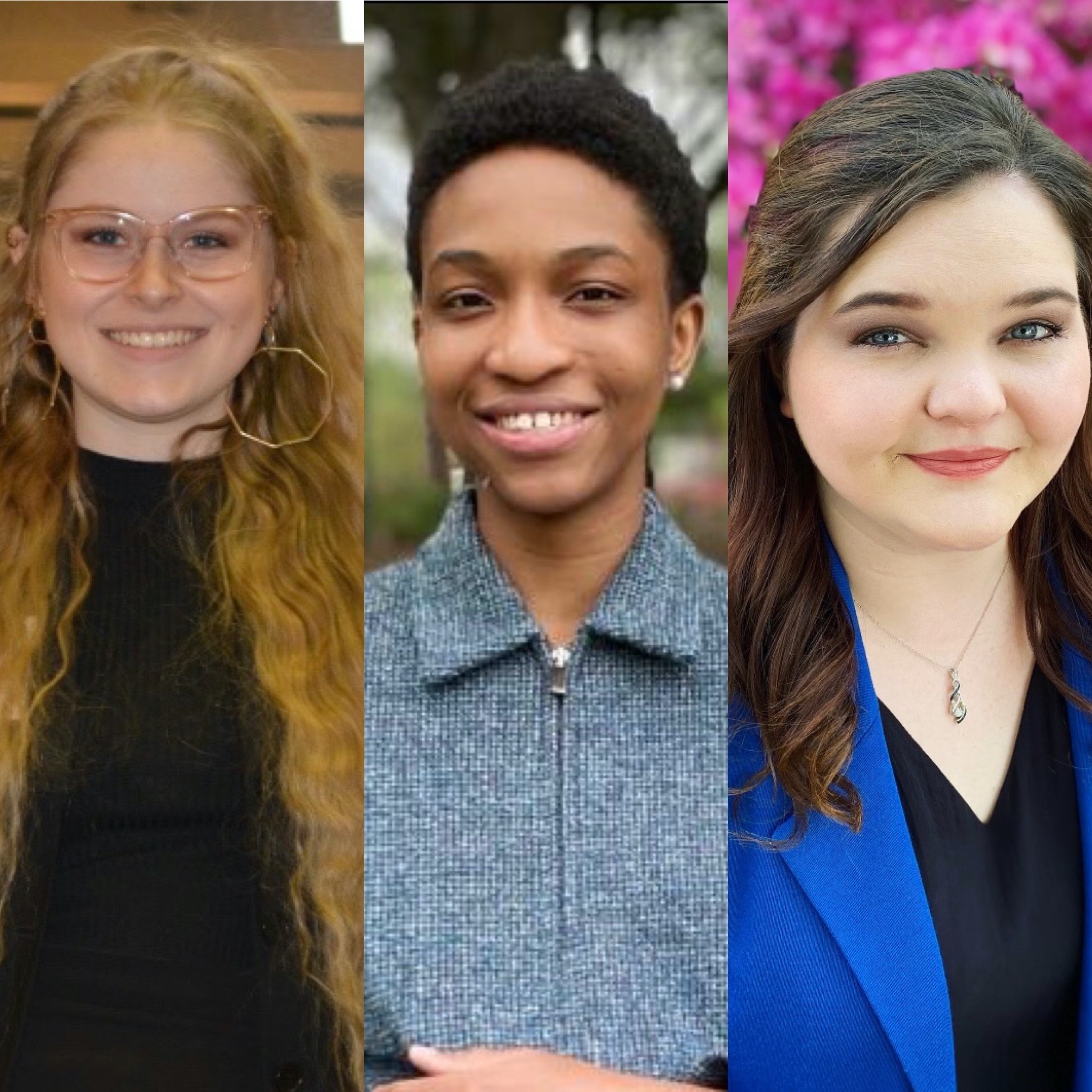
Ambitious student research collaborations with faculty members often lead to much more than good grades. The mentorships encourage professional growth, confidence and creativity, even in the midst of a pandemic. Georgia Southern University’s Spring 2021 Honors Research Symposium, which is being held virtually April 26 through April 30, will showcase faculty-student partnerships through a broad range of scholarly and creative research projects produced by more than 100 honors students across multiple disciplines on the Statesboro and Armstrong campuses. A few of the presenters include: Chelsea Riley, a triple major in international studies, political science and Spanish, worked with political science and international studies professor Srobana Bhattacharya, Ph.D., on her thesis, “The Culture Gap: The Role of Culture in Successful Refugee Settlement.” History and English major Jacey Thomas, mentored by associate professor of history Alan Downs, Ph.D., will present, “Irish Rock Music amid a Time of Troubles: Thin Lizzy and U2 as a Bridge During a Time of Division.” Biology major Susan Ihejirika’s presentation, “A Forward Genetic Screen to Identify Human Genes of Interest and Their Roles in Ovarian Cancer,” was guided by biology assistant professor Dongyu Jia, Ph.D. The Honors College, as the university-wide center for excellence in undergraduate education, plays a crucial role with undergraduate research at Georgia Southern. Since the beginning of the College, students have been required to complete honors theses or capstone projects. The faculty-mentored projects have spanned traditional research models, applied research and creative activities in all academic colleges and majors. “Through faculty-mentored research and scholarly activities, honors students create new knowledge and the Honors Research Symposium is the venue where we share it with the broader scholarly community,” said Honors College Dean Steven Engel, Ph.D. “ I am proud of the fact that they have been able to complete these projects despite the challenges of the past year.” Presentations will be posted on YouTube and the comments section will be open for audience engagement with presenters. If you're a journalist looking to learn more about this year’s Honors Research Symposium — simply reach out to Georgia Southern Director of Communications Jennifer Wise at jwise@georgiasouthern.edu.