Experts Matter. Find Yours.
Connect for media, speaking, professional opportunities & more.
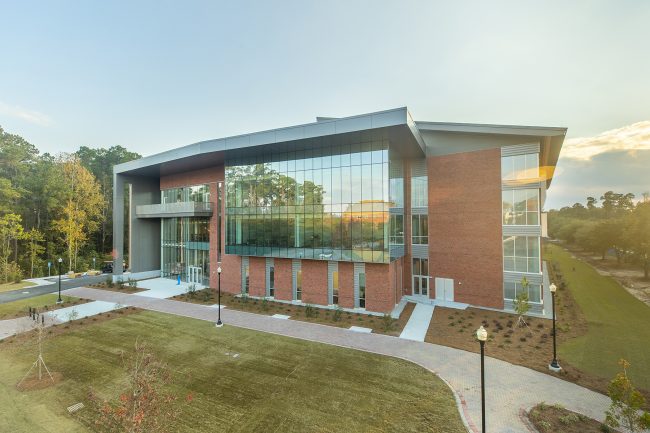
Last Friday, Georgia Southern officially opened its new Engineering and Research Building for students and researchers, a facility that will serve as the epicenter for engineering excellence and innovation in southeast Georgia. The building is designed to facilitate academic and institutional partnerships, inspire creative engineering and accelerate academic success for students in the College of Engineering and Computing. Through the instructional research labs and academic spaces that bridge theory and practice, students will be prepared to solve today’s challenges and to make tomorrow’s discoveries. “Today marks the culmination of years of forethought and investment from a number of state leaders, industry leaders and local advocates, who paved the way for us to be here,” said Georgia Southern President Kyle Marrero. “Leaders who, dating back to the 90s, could see the future of a growing industry, a state on the precipice of being a national leader in technology and innovation, and a critical need to develop talent in applied engineering across south Georgia.” The Engineering and Research Building’s sleek, contemporary environment defined by glass and natural light, soaring high-bay ceilings and modern, industrial feel is strengthened by new, industry-relevant equipment, instrumentation and technology that encourage active learning and sustainability. The highly efficient facility includes sustainable features that complements existing spaces on campus. The three-story building houses applied research spaces with a strong focus on manufacturing engineering, civil engineering, electrical and computer engineering, and mechanical engineering. The workspaces can be easily reconfigured for various uses, projects and applications and provide students with access to industry-grade equipment as well as expanded opportunities for undergraduate research. “The investment of the Engineering and Research Building solidifies Georgia Southern University’s commitment to students in providing a world-class education in the engineering field, while providing the space and resources necessary to facilitate such,” said student Kristifer Bell. “I am enthusiastic to continue my research work and look forward to the interdepartmental collaboration that will be encouraged through the housing of new student and faculty labs under one roof.” The full media release about this historic occasion is attached – and if you are a journalist looking to know more about this facility or Southern Georgia University -- simply reach out to Georgia Southern Director of Communications Jennifer Wise at jwise@georgiasouthern.edu to set and time and date.


TORONTO, ON., May 29, 2020 — International Data Corporation (IDC) Canada announced today the release of 20 new research reports to help vendors understand the impact of COVID-19 on the Canadian ICT market, including five new forecast documents. In addition, most analysts have created an additional report analyzing the impact of COVID-19 on their specific technology patch, providing our clients with additional details on the impact and guidance for vendors in that market. IDC Market Forecasts help technology suppliers identify market drivers and size, measure current performance, analyze leading market indicators, as well as plan for future opportunities and growth. The five forecast reports are listed below: Canadian Communications Services Forecast, 2020–2024: COVID-19 Turns Telecom Inside Out (IDC# CA45063520 ). This IDC study presents IDC Canada's five-year forecasts for communications services spending by market and customer segments, company size, industry sector, and region for 2020–2024 based on the annual update of IDC Canada's Communications Market Model and replaces our previous comprehensive spring and fall 2019 forecasts. "Communications providers are largely recession proof and fortunately investments in next-gen network technologies and architectures are allowing communications service providers to cope with unrivalled demand," says study coauthor Lawrence Surtees, vice president of Communications Research and principal analyst at IDC Canada. "But the duration of the COVID-19 pandemic is still a great unknown and its associated economic shocks could dramatically impact the current forecast." Canadian IT Professional Services Forecast, 2020–2024 (IDC# CA45064220 ). This IDC study provides the spring 2020 market size and forecasts for the Canadian IT professional services market. The professional services market is made up of four submarkets: Custom application development, IS consulting, Network consulting & integration, and Systems integration. "The Canadian IT professional services market relies on discretionary capital spending budgets, which are typically suspended or curtailed in times of economic uncertainty. 2020 will be a challenging year for professional services firms due to the COVID-19 pandemic, but the market is expected to recover as the Canadian and global economies recover and businesses reinstate capital spending for IT projects," says Jim Westcott, research manager, Professional Services, IDC Canada. Canadian Infrastructure Outsourcing Services Forecast, 2020–2024 (IDC#CA45058420). This IDC study provides IDC's forecast for the Canadian infrastructure outsourcing services market for 2020–2024. It is an update of the previous forecast published in Canadian Infrastructure Outsourcing Services Forecast, 2019–2023 (IDC #CA43804019, May 2019). "The infrastructure outsourcing market continues to change, and COVID-19 will likely accelerate change. The decline in 1st and 2nd Platform technologies is leading to slow outsourcing spending on these areas, while the growth in 3rd Platform technologies to support digital transformation are increasingly incorporated into outsourcing and managed service engagements," says Jason Bremner, research vice president, Industry and Business Solutions. Canadian Consumer Wireless, Internet, and Wireline Voice Services Forecast, 2020–2024 (IDC# CA45059520). "In an already-competitive consumer market in the middle of great technological change, the global Coronavirus pandemic and the precautionary restrictions it has placed on Canadians has not only caused drastic socioeconomic changes but has forced consumers to weigh out the value proposition of each consumer service," says coauthor Manish Nargas, senior analyst for Consumer Services and Mobility. "Survival of the fittest is the call of the hour, and it seems that some consumer services will fare better than others after the dust has settled. While easier said than done, service providers need to think beyond the today's losses in order to plan for tomorrow's win." Canadian Consumer TV Services Forecast, 2020-2024 (IDC#CA45059620). This IDC study examines the forecast for Canadian consumer TV services subscribers and revenue. It also addresses the factors shaping the market as well as the key drivers and inhibitors underlying the forecast. "TV service providers will have to bring out their A game as they look to harness their next-gen TV service capabilities and create symbiotic, seemingly 'complementary' partnerships with OTT video providers to keep consumer eyeballs on their TV service platforms all the while combating economic ill effects of COVID-19 restrictions in the short term," says coauthor Manish Nargas, senior analyst, Consumer Services and Mobility at IDC Canada. "Based on our forecasts from May 1, 2020, we’re looking at an unprecedented 5.4 per cent decline for the year for the combination of telecom and IT spending in Canada. The cumulative impact of trade restrictions, supply chain impairments, commodity price declines, significant lay-offs and freefalling consumer and business confidence has led to a more dramatic impact on the overall ICT market than we had predicted in early April," says Nigel Wallis, vice president, IoT & Industries at IDC Canada. IDC develops detailed forecasting reports and analysis for major technology markets in Canada, which are published annually during the month of May. IDC's Forecast Scenario Assumptions for the Canadian ICT Market, 2020 and Beyond (IDC# CA46217620 , May 20 20 ) supports the underlying macroeconomic assumptions for each of the ICT market forecast reports. We also recently released a new interactive Canadian COVID-19 IT Impact Dashboard tool to help our clients visualize the impacts, in partnership with Rel8ed.to, which is available for everyone to use. For our clients that need to know the impact of the pandemic on ICT Spending beyond Canada’s borders, IDC created our global COVID-19 Resources microsite which contains more research reports, webinars, press releases and blog posts from around the world. We’ve also done a series of free webcasts for our clients with the first one on April 2 and the second one on May 6. Our third webcast in this series will occur on June 4th. Register today for COVID-19 Impact: Preparing for Recovery in the Canadian Tech Market. Here’s the list of our recently published Canadian-based COVID-19 research reports to help our clients meet the challenges from the pandemic, anticipate market changes and keep business moving: COVID-19 Impact on the Canadian ICT Market (IDC#CA46134820) Canadian Datacenter Infrastructure Action Item, Q2 2020: The Impact of COVID-19 (IDC#CA45057420) Impact of COVID-19: Canadian IT Services Market (IDC#CA46166120) All Priorities Aside: The Canadian Government's Singular Response to COVID-19 (IDC#CA46166920) The Impact of COVID-19: Canadian Security Solutions Market (IDC#CA46166520) Canadian Communications Service Provider Capex Spending, 2019–2020 (IDC#CA45063820) Canadian Government Wireless Price Policy - Ill-conceived and Horribly Timed (IDC# CA45663920) COVID-19 Business Impact: Hierarchy of Needs; Moving from Pandemic Risk Management to Organizational Agility (IDC# CA46228420) How is the Pandemic Crisis Impacting Digital Transformation in Canada? (IDC# CA46235620) Impact of COVID-19: Canadian Software as a Service Market (IDC# CA46166620) COVID-19 Impact: What’s Next for the Canadian Tech Market (IDC# CA46281820) COVID-19 Impact: Canadian Retail & Wholesale Market (IDC# CA45674020) COVID-19 Leadership: Canadian CIOs Strategize on Responses to COVID-19 (forthcoming) Critical Networks Provide Critical Care: Role of Communication Networks to Treat and Prevent COVID-19 (forthcoming) COVID-19 Impact: Canadian Vertical Markets Overview (forthcoming) For more information about the market forecast reports, the COVID-19 related reports, or to arrange a one on one interview with any of the report authors, please contact Cristina Santander at AskIDC@IDCcanada.com.


On average, teachers across the U.S. spend approximately $479 on classroom supplies each year, according to a 2018 study by the National Center of Education Statistics. The Institute for Interdisciplinary STEM Education (i2STEMe) at Georgia Southern University is helping reduce this burden for teachers in southeast Georgia with the School Outreach Program, a lending membership program that provides STEM and social studies materials for K-12 classrooms. i2STEMe, housed in the College of Education, serves as an outreach center for the university, regional educators and the broader community. The School Outreach Program provides STEM and social studies supplies, including consumable and non-consumable materials, equipment, and teaching aids to member teachers, schools and districts. Members can request items and materials that will be delivered to and picked up from their school location. Annual membership for the program can be purchased by entire school districts, schools or individual teachers. The project was recently featured on WTOC 11 where viewers were given a first-hand look at how local teachers and students are benefitting from the program. Alisa Leckie, Ph.D., the interim assistant dean of Partnerships and Outreach at Georgia Southern was on hand to explain how Georgia Southern is making sure students have access to the resources they need to further their learning in areas like STEM. Are you a journalist looking to learn more or cover the School Outreach Program and how institutions like Georgia Southern University are helping teachers, students, and schools across the state? If so – then let our experts help. Leckie's research is focused in the areas of education of language minority students, and analyzing policies impacting education. She is available to speak with media regarding this program – simply click on her icon to arrange an interview.


Working with Faculty Experts to Build Reputation and Market Visibility
The Baylor University Playbook Featured in CASE Currents Magazine PHOTO CREDIT: BAYLOR UNIVERSITY MEDIA COMMUNICATIONS As traditional and social media organizations such as Facebook race to expose and disrupt the onslaught of “fake news”, a major opportunity exists for higher education institutions to more prominently feature their research and expert opinion to quell this steady flow of misinformation. We know that the gold standard of news reports and social media posts are substantiated with expert research and opinion. What gets in the way of comprehensive reporting and dialogue? It’s often the lack of input from great institutions and their experts. More than ever, traditional media organizations need to provide a steady flow of credible information to trump the influx of unsubstantiated content. But the media (from local mainstream editors to award-winning international investigative journalists) struggle with big challenges: growing editorial demands, small budgets, little time, limits to accessing information – all restricting their ability to pursue new research, data and expertise. So how do they get around this and cut through the clutter? A lot of the responsibility falls on organizations to be more approachable to journalists to help them with expert sources. Schools doing this well are already boosting their reputation with media and other key audiences by showing the relevance of their institution and faculty. In this month’s CASE Currents magazine, a feature article titled “Are Your Professors Ready for Their Close-Up?” Eric Eckert, Baylor University’s Assistant Director of Media Communications and Faculty Development, shares with other institutions the process his team took to prepare its faculty experts for the media spotlight with an in-house training program and the necessary tools to succeed. the Baylor playbook is a great read for any organization looking to boost media coverage and build reputation. Eckert, whose list of responsibilities at the university includes “Faculty Experts”, notes: “We demonstrate our commitment to this program by investing in tools that spread awareness of our researchers’ work. In addition to the time we devote to training and promoting our faculty members, in 2017 our office started using ExpertFile, a content marketing platform that includes the capability to create dynamic faculty profiles that expose our professors to a wider audience of journalists. We can also manage media inquiries through the platform. The software has reduced the time we spend updating faculty profiles. We can quickly add photos, videos, and links to an expert’s media hits and create faculty spotlights—a feature that helps us rapidly promote a professor’s expertise to take advantage of breaking news.” ExpertFile worked with Baylor to develop a searchable platform and content placements for their experts integrated into the Baylor website. To extend the reach beyond the website, Its experts are now also synchronized with the ExpertFile global experts directory and are also visible to thousands of newsrooms throughout the world through our partnerships with the Associated Press and Dejero. Eckert goes on to explain his organization’s use and success with ExpertFile Spotlight. Spotlight is a unique content hub solution that is growing in popularity with marketing teams looking to quickly feature their experts in the context of breaking news, emerging stories, valuable research and newsworthy events. Virtually all of our clients are seeing the importance of providing relevant story angles that can be produced to help journalists on same day deadlines. Eckert goes on to speak of his experience with Spotlights: “In September 2017, we created a spotlight to distribute a Baylor law professor’s comments on President Donald Trump’s decision to withdraw authorization for the Deferred Action for Childhood Arrivals program. A media inquiry received through ExpertFile resulted in a guest appearance on a nationally syndicated radio program in Canada.” Other coverage generated recently by the Baylor team includes: Are you ‘phubbing’ right now? What it is and why science says it’s bad for your relationships The Washington Post You might be cheating on your spouse with your smartphone The Toronto Star Four bad habits that executives should nix The Economist Can ‘bedtime’ teas really help you fall asleep faster? Women’s Health The better way to take a break Fast Company The profile that experts develop through thought out programs such as Baylor’s can extend well beyond media to other key stakeholders, including potential research partners, funders, event organizers, student enrollment and employee recruitment. How are your marketing, communications and media relations’ teams working with your experts across the campus to build market visibility and reputation for your institution? We’d like to know. For more information on how ExpertFile Spotlight works or to read more success stories please drop me a line at Deanne Taenzer at dtaenzer@expertfile.com



Part 1: Collaborating with Faculty Experts: A How-To Guide for Marketing Departments & Deans
“I don’t have time to do this.” “I don’t think I’m the right expert.” “My subject area is too specific.” Have you ever approached a faculty member with an opportunity to speak to the media or perhaps speak at an event, only to hear responses like these? Asking certain faculty members to help serve as experts can be challenging. While it’s becoming more widely accepted by faculty that responding to such requests is a great way to build their personal reputation – as well as the institution’s – there is still work to be done in this area. With my experiences I wanted to share some useful tips to help you better collaborate with your faculty and get more results: 1. Walk the Halls: Stay Connected to Important Faculty Research & Publications Faculty play a key role in helping you tell compelling stories to a variety of audiences such as media, prospective donors and students. Yet it’s amazing how many communications people are disconnected from important discoveries their experts are working on. They get caught up in day-to-day events and struggle to find time to walk the campus. The first step in collaborating with your faculty is showing them you care. Make yourself approachable as a resource to help them communicate their stories and you’ll see dramatic results. While it may be tough, it is worth the time investment. 2. Take Inventory: Assess Which Experts Can Be Most Valuable in Helping You Engage Various Audiences With so many faculty members across the campus involved in a wide range of activities, it’s important to develop a framework that identifies who you should be working with. While faculty have deep subject-matter expertise, not all are suited to helping with certain engagements such as broadcast media interviews. To better assess your faculty look at these key factors: Credibility Does the expert have a deep understanding of their focus area? How respected are they among their peers? Have they conducted research in this area? Have they been published? Have they spoken at conferences or received awards for their work? Relevance Is their field of research relevant to various audiences such as Media, Prospective Students, Donors and Partners? Engagement How are their writing skills? Do they have experience with public speaking to various audiences? Can they conduct an interview with a reporter? Are they willing to participate or get media training? Responsiveness Do they understand the significant value they can contribute in helping you build your institution’s reputation? Are they comfortable with being in the spotlight? Can they be available on short notice (within hours) for media interviews? Are they interested in building their own personal brand? 3. Get Alignment: Get Senior Leadership on the Bus Consulting with Faculty Deans and other leaders on the campus will help you gain important support for your efforts to work more with faculty. Identifying their objectives at a program level will help you ensure that your work isn’t viewed as another “make work” exercise for faculty. Show them how your work with faculty experts will have potential to impact the following: Brand reputation in the community and among peers Media coverage Increased student enrolment Better Alumni engagement Increased donations to the school Government and research funding Corporate partnerships 4. Tap into Peer-to-Peer Power: Focus on Faculty Evangelists We all know who our “go-to” faculty are. The people who will enthusiastically help you try out some new approaches. These are the faculty who are doing great research but also can tell a great story and are respected among their colleagues. Identify a manageable group (a range of 3-6 experts is a good number to start). Assess them using the criteria we discuss in point #2. Then get these select experts to invest a little time with you to work on topic strategies and content development. Explain to them what you are trying to achieve and listen to their feedback. Getting their support, and helping them develop their content and stories is the key to success. As evangelists, they can be vital to getting buy-in across the campus. 5. “Opt-In” your Experts: Look for Different Types of Contribution While media coverage is a big focus for many organizations it often tends to dominate the discussion about experts. Think about the ways your experts can contribute and help you tell your story to a variety of audiences beyond media (see point #3). Faculty can be engaged in a broad spectrum of activities such as: Television Radio Print Research on specific topics Blog posts Podcasts Speaking at conferences Speaking at student recruiting events Attending or speaking at alumni events Attending or speaking at donor events Build a “Contributions List” that outlines activities where you may need support and get faculty to opt-in. Getting this agreement in advance allows you to better assess where you have “bench strength” to plan for specific projects. At the end of the day, you won’t get 100% of the faculty to jump on board, but we have seen that a good plan and collaborative communication raises engagement and participation. READ PART II of Collaborating with Faculty Experts: A How-To Guide for Organizations.


Part 1: How Duke University doubled their media hits by showcasing faculty
In the February 2015 issue of CASE Currents, Steve Hartsoe, a Senior Editor at Duke University and former Editor for the Associated Press, shares some powerful strategies for working with experts on campus. This article is a must read for any organization looking to build reputation through more focused media relations. Now you might be thinking that Duke is an already renowned university with an extensive network of media contacts so this stuff is easy for them. Not true. Doubling your media hits isn’t easy for any organization. Duke made some major improvements that set them up as a go-to destination for journalists to find credible, relevant sources. However, even implementing just a few of their ideas could drive some big results for your organization – without having to blow out the size of your marketing team or budget. Spoiler alert. The Duke strategy centers on being more strategic and collaborating better with faculty experts. The best practices that the Duke media relations team employed should inspire any organization that wants to generate more coverage. Whether you are looking for media visibility to help drive student enrolment, alumni giving, or corporate partnerships, there are valuable lessons to be found in this article. For the full article check out the January/February issue of CASE Currents at www.case.org. Please note you will need a subscription to view. So what’s going on at Duke that’s driving all this media coverage? To examine this further, our ExpertFile team weighs in below with the first five major rules of Expert Marketing for Schools and summarizes some insider tips they shared from their experience. Tune in next week for the finale! Rule #1: Organize a Team to Help Focus on Expert Marketing As with most initiatives, it’s vitally important to get the support of senior people in the organization when developing an increased focus on faculty experts. Gaining the support of a group of progressive deans within the school as well as notable faculty can be critical. Appoint a specialized team that can help you establish media visibility as a priority for your school. Build your case for an expert marketing program and ask for their support in developing your plan, then set up some regular meetings and make this team visible on the campus. It will help you develop a sense of collaboration and continuity. Insiders Tip: Duke built a “rapid response team” within their media relations department that had a clearly defined meeting schedule. They met twice a week and kept meetings to just 30 minutes in length. These regular check-ins helped identify breaking news opportunities and inspired a sense of priority and established momentum. Rule #2: Strategize with your Experts It’s amazing how many colleges and universities’ media relations departments we talk with that are disconnected from the interesting research conducted by their faculty. Ironically, it’s this research, as well the academic interests and passions of your faculty that feed the most engaging stories you can tell to the media. Make sure you have a good understanding of current and upcoming research that you can pitch. You should also identify what publications and books are being planned by faculty and see how you can collaborate with them. Insiders Tip: Duke invested the time to meet personally with faculty members to get a deeper understanding of their research and identify relevant topics that could be pitched to the media. They also invited some faculty to media meetings to brainstorm on potential news stories. It’s this kind of contact that helped make faculty more responsive to media opportunities and respond to deadlines. Rule #3: “Opt-In” your Experts for Different Types of Contributions It’s becoming more understood by faculty that media coverage can be a very good thing for their career and their organization. However, be careful of one size fits all approaches in recruiting faculty to contribute their expertise. Contribution from faculty comes in different forms. Faculty can be engaged in a broad spectrum of activities that run from broadcast TV interviews, blogging, and even helping speak at recruiting or alumni events. It’s good practice to create a master checklist of possible engagement types and to take an inventory of what your faculty experts may want to opt-in for. Having this inventory allows you to better plan for content development projects and also ensures that faculty clearly understand the duties that are expected of them in a media relations capacity. Insiders Tip: Duke’s media team recruited their experts for a range of contributions based on the level of interest and comfort level of faculty. And they made it clear that agreeing to be a media source meant responding promptly to incoming media inquiries. Rule #4: Provide Media Training and Support While every campus has it’s faculty “rockstars”, who can rise to the challenge of any breaking news opportunity, many experts on the campus can benefit from some form of media training. It’s critical to your media strategy’s success that you provide the experts with support and opportunities to practice their speaking skills in front of a camera. If you expect more experts to step up to the podium, it’s important to make the investment. However, make sure you design these programs to be engaging and don’t overwhelm your faculty by making them too exhaustive. Often they can be coordinated over lunch or in the early morning before classes start and can be focused on key areas such as: public speaking, blogging tips, video training, and social networking guidelines. Get a sense of where your key gaps are among faculty before you dive in. Also remember these sessions can provide valuable opportunities to shoot video interviews, B-Roll clips and even headshots that can be used to provide media assets for your website, alumni magazine and other properties. Insiders Tip: Duke invests in media training for its faculty experts and administrators offering a two and a half hour media training workshop each year to participating faculty, covering interview techniques via phone, video and social media. Rule #5: Meet Journalists on Their Terms Reporters appreciate media relations contacts that help them get their job done. Operating under tighter breaking news cycles they have less time to discover and research experts. In todays competitive media market what sells papers or builds ratings is often what gets covered. You have to focus your experts on helping journalists tell stories that matter to all those “eyeballs”. The best media relations professionals understand the value in building relationships with journalists. These connections are often essential in establishing your organization as a relevant, trusted source of expert commentary. Given the importance of these relationships, we’re also seeing the renewed popularity of industry conferences hosted by organizations such as the MAKI Network (www.thembasite.com) and Wynne Events – BAM Conference (www.wynneevents.com). These events give schools a unique opportunity to listen to and meet journalists from major news networks. ExpertFile sponsored both MAKI and Wynne events this past year, and we were impressed by the roster of global media attending. Insiders Tip: While Duke still distributes the requisite daily news on campus events and other university happenings, they don’t get mired in all of this content. They also focus a great deal of their activities on expert content that positions their university as a go-to source that is both credible and relevant to a variety of media audiences. READ PART II of How Duke University doubled its media hits by showcasing faculty experts.

Baylor Expert Shares Six Lessons We Can Learn From Mr. Rogers About Being a Good Neighbor
WACO, Texas (Nov. 14, 2019) – In this polarized time, when it requires little effort to tear a stranger apart on social media or lash out at a family member because of a difference of opinion, the gentle cadence of Fred Rogers singing a simple song about neighbors loving and helping each other is a welcome respite. The much-anticipated movie, “A Beautiful Day in the Neighborhood,” starring Academy Award-winner Tom Hanks as Rogers – known to generations simply as “Mr. Rogers,” the host of “Mister Rogers’ Neighborhood” – will be released in theaters on Nov. 22. The official movie trailer posted on YouTube has drawn nearly 12 million views. Civics education expert Brooke Blevins, Ph.D., associate professor of social studies education and chair of Baylor University’s department of curriculum and instruction, said the renewed focus on the beloved and soft-spoken TV personality, who died in 2003, might be coming at just the right time. “When you watch Mr. Rogers, time slows down, and you are able to take a deep breath as complicated issues become more understandable and the beauty of relationships is reinforced,” Blevins said. “Imagine if we all walked into the world with the belief that each person was inherently worthy. Imagine if our goal was to help each other recognize that we are worthy of being loved. Imagine if we sought to listen more than we spoke,” she said. “I imagine if this was the case, that our conversation would change, our understanding of those around us would shift, and our national conversations would be more civil.” Below, Blevins shares six lessons we can learn from Mr. Rogers about being better citizens. Each person is worthy to be loved and heard. Like Mr. Rogers, we must recognize that each person we interact with is worthy to be loved and listened to. We must recognize that each person has unique experiences, fears, losses and triumphs that shape the way they understand what’s happening around them. We need to do much more listening and far less talking. We should work together to tackle tough issues in reasoned and evidenced-based ways with civility and a genuine desire to understand those around us. Use your platform for good. Mr. Rogers was deeply committed to creating a better world. Mr. Rogers did not take his role on TV lightly. He saw it as an opportunity to help young people make sense of the world around them and to become more knowledgeable and engaged citizens. He saw television as an opportunity to create community and a shared sense of purpose. As he once noted, “The space between the television screen and whoever happens to be receiving it, I consider that holy ground. A lot happens there.” Lessons we often think are for children are for adults as well. Mr. Rogers was a teacher, a pastor and a friend. His lessons were drawn from the everyday experiences of children’s lives, from current political events to personal and emotional trials children experience. Not only were these lessons for children, but for their parents who were also watching. His lessons focused on cultivating civic discourse, reasoned judgment and evidence-based decision-making, but most importantly, his lessons cultivated understanding and empathy for one’s neighbor. In his conversations and examples, he drew on our shared humanity to help young people make sense of an ever-changing world. Slow down. In a time of fast-paced and often silly cartoons that were designed to move quickly from scene to scene, Mr. Rogers maintained a much slower and thoughtful pace. A pace that was compelling to both young and old alike. He explored issues slowly and with depth, without the silly antics that are so often used to keep children and adults’ attention. He used his time with viewers to develop a relationship that valued their experience and honored their emotional complexity. He sent the message that all people are inherently valuable and are capable of loving and being loved. It’s OK to discuss tough issues – even with children. But be civil and understanding when you do it. As an ordained minister and gifted musician, Mr. Rogers utilized his vocational skills to create a safe space in which difficult conversations could occur. He never shied away from the tough conversations. From issues such as divorce, death, assassination and even 9-11, Mr. Rogers’ helped young people navigate emotionally traumatic events with both knowledge and compassion. Mr. Rogers knew that by talking about our fears, losses and misunderstandings, we could work together to build a better future. As he wrestled with these issues, he asked questions, he inquired, he listened, and he had children do the same. He had a deep-rooted commitment to helping children navigate their world. Be a good neighbor. Being a good neighbor is caring about those around you. It’s not just about tolerance, but truly seeking to understand those in your community. Being a good neighbor means helping those around you recognize that they play an important part in making the world a better and more just place. It means working together to solve complex issues and cultivate a world in which all people can fulfill their true purpose. ABOUT DR. BROOKE BLEVINS Brooke Blevins, Ph.D., teaches both undergraduate and graduate courses in secondary education, social studies education and multicultural education. As a former secondary teacher, she has a passion for equipping teachers with the resources needed to engage in humanizing social studies education. Dr. Blevins also serves as the co-director for the iEngage Summer Civics Institute, for which she and co-founder Dr. Karon LeCompte have raised more than $250,000 in grant funding. Dr. Blevins’ research focuses on social studies education as a means to prepare active and engaged citizens. In her work, Dr. Blevins examines how to prepare teachers to develop both political clarity and pedagogical content knowledge that encourages them to engage in transformational based and humanizing social studies education. In addition, Dr. Blevins also is interested in how to educate and empower young people to become active civic participants through participation in action civics and digital technologies. ABOUT BAYLOR UNIVERSITY Baylor University is a private Christian University and a nationally ranked research institution. The University provides a vibrant campus community for more than 17,000 students by blending interdisciplinary research with an international reputation for educational excellence and a faculty commitment to teaching and scholarship. Chartered in 1845 by the Republic of Texas through the efforts of Baptist pioneers, Baylor is the oldest continually operating University in Texas. Located in Waco, Baylor welcomes students from all 50 states and more than 90 countries to study a broad range of degrees among its 12 nationally recognized academic divisions. ABOUT BAYLOR SCHOOL OF EDUCATION Founded in 1919, Baylor School of Education ranks among the nation’s top 20 education schools located at private universities. The School’s research portfolio complements its long-standing commitment to excellence in teaching and student mentoring. Baylor’s undergraduate program in teacher education has earned national distinction for innovative partnerships with local schools that provide future teachers deep clinical preparation, while graduate programs culminating in both the Ed.D. and Ph.D. prepare outstanding leaders, teachers and clinicians through an intentional blend of theory and practice. Visit www.baylor.edu/soe to learn more.


The World Needs More MBAs! Let an expert from WGU explain how partnerships can make it work.
Recently, much talk has centered on the closing of business school programs, and the extreme debt that many students take on to achieve a business degree. New data from Bloomberg Businessweek reported that nearly half of students polled from 126 universities across the world finance $100,000 or more for their MBAs. “Bloomberg Businessweek surveyed more than 10,000 2018 graduates of MBA programs from 126 schools about the amount of debt they piled on earning their degrees. The survey found that almost half of students at leading business schools around the world borrowed at least $100,000 to finance their MBA. According to the survey, at minimum 40% of MBA graduates from U.S. News & World Report’s top-ranking business programs — those at Duke, Dartmouth, University of Michigan, Cornell and University of Chicago — reported incurring at least $100,000 in debt.” July 09 – CNBC MBAs have been widely accepted by employers, and the return on investment for students has historically been high. Over the years, business programs have adapted to the needs of employers, and the basic design of the MBA, combining a broad scope of valuable business skills, has remained relevant despite massive changes in the business world. But with the rise of tuition costs, rapid changes in technology, and a higher value being placed on specialization, the long-standing value proposition of the MBA is changing. Cost, flexibility of delivery and open-loop, customized micro-learning are more likely to meet the needs of students and employers going forward. At WGU, we live and breathe the mission of supporting student academic success and expanding opportunities with affordable, valuable and relevant degree programs. Collaborations with companies which are equally committed to provide their employees the opportunity to sharpen their skills, advance in their careers, and better their lives, are one step in this evolution of business education. An evolution not in the future, it’s here. Dr. Rashmi Prasad is Dean and Academic Vice President of Western Governors University's College of Business. Dr. Prasad is available to speak with media regarding the need for higher education and how partnerships will bolster MBA programs and help graduates find success after they leave school – simply click on his icon to arrange an interview.

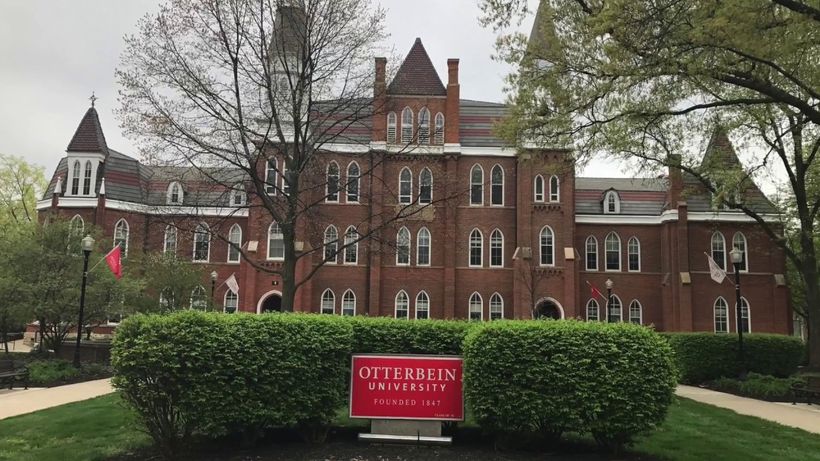
This year, 26 students from Columbus (Ohio) City Schools (CCS) walked across the stage to receive their Otterbein degrees as part of the Class of 2019. It was a result of a partnership between two great educational institutions that is ensuring post-secondary education is accessible to students in central Ohio. “(The event) was a great example of how two educational institutions can come together and make an impact on the lives of young people and the larger community,” said Tanya L. McClanahan, supervisor of higher education partnerships for CCS. For some time now, Otterbein and CCS have been working together to provide several academic options and initiatives to students from Ohio’s largest school district. Since 2014 the Urban Districts Initiative has been working with Columbus City Schools, as well as South-Western City Schools, Westerville City Schools, Whitehall City Schools and Cristo Rey, all districts with more than 35%of students living in poverty. The Initiative is an enhanced need-based aid model that reduces the gap between aid and expected family contribution to the smallest amount possible and has driven significant increases in enrollment of low-income students at Otterbein, as well as sparking a significant increase in student success. The Seniors-to-Sophomores program, where Otterbein offers a summer College Credit Plus course for CCS students that pairs an academic course with a for-credit study skills course. The University also has a STEM skills refresher course for entering students funded through a grant from Nationwide. Otterbein offers Professional Learning Communities (PLCs) for district teachers and Otterbein faculty. In PLCs, teachers and faculty come together to discuss issues related to pedagogy and serving students to enhance the work of both institutions. Recently, Otterbein introduced a scholarship for the dependent children of CCS district (benefits eligible) employees that reduces the cost of an Otterbein education to the average of the state supported universities in Ohio. There are a lot of great things happening in Otterbein’s financial aid and recruitment models that are seeing positive outcomes in the Otterbein and central Ohio communities - and if you need to know more, that’s where our experts can help. Jefferson Blackburn Smith is the Vice President for Enrollment Management and is an expert in financial aid, scholarships, politics, and higher education. He is available to speak to media regarding these topics – simply click on his icon to arrange an interview. To learn more, click the link below: https://www.otterbein.edu/news/cohort-of-columbus-city-schools-alumni-to-graduate-from-otterbein-university-sunday/


The link between corporate alliances and returns
Strategic alliances are agreements between two or more firms to pursue a set of agreed upon objectives while remaining independent organizations. Alliances are formed for a number of reasons, including licensing, marketing or distribution, development or research, technology transfer or systems integration, or some combination of the above. Tarun Chordia, R. Howard Dobbs professor of finance, and coauthors Jie Cao (Chinese U of Hong Kong) and Chen Lin (U Hong Kong) find evidence of return predictability across alliance partners. If the alliance partner or partners have high (or low) returns this month, then the firm has high (or low) returns over the next two months. Using a sample of alliances over the period 1985 to 2012, the authors find that a long-short portfolio sorted on lagged one-month returns of strategic alliance partners provides a return of over 85 basis points per month. This long-short portfolio return is robust to a number of specifications, including different adjustments for risk, controlling for different proxies for cross-autocorrelations, and excluding partnerships with customer-supplier relationships, as well as controls for industry returns. They theorize, “If investors are fully aware of the impact of strategic alliances on returns and pay attention to the firm-partner links, then the stock price of a firm should quickly adjust to price changes of its partners’ stocks.” The evidence suggests that investor inattention may be the source of a firm’s underreaction to its partners’ returns. Source: