
Experts Matter. Find Yours.
Connect for media, speaking, professional opportunities & more.

Grip Strength of Children Gives Clues about Their Future Health, Study Finds
Measuring hand grip can help identify youths who could benefit from lifestyle changes to improve health, Baylor researcher says Adolescents with a strong hand grip — an indicator of overall muscle strength — have better odds of being healthy over time, according to a two-year study of 368 elementary school children. While other studies have shown that muscle weakness as measured by grip strength is a predictor of unhealthy outcomes — including cardiovascular and metabolic diseases, disability and even early mortality — this is the first to do so for adolescent health over time, a Baylor University researcher said. “What we know about today’s kids is that because of the prevalence of obesity, they are more at risk for developing pre-diabetes and cardiovascular disease than previous generations,” said senior author Paul M. Gordon, Ph.D., professor and chair of health, human performance and recreation in Baylor’s Robbins College of Health and Human Sciences. “This study gives multiple snapshots over time that provide more insight about grip strength and future risks for developing diabetes and cardiovascular disease,” he said. “Low grip strength could be used to predict cardiometabolic risk and to identify adolescents who would benefit from lifestyle changes to improve muscular fitness.” The study — "Grip Strength is Associated with Longitudinal Health Maintenance and Improvement in Adolescents" — is published in The Journal of Pediatrics. It was conducted by researchers at Baylor University, the University of Michigan and the University of New England. Students tracked in the study were assessed in the fall of their fourth-grade year and at the end of the fifth grade. Using the norms for grip strengths in boys and girls, researchers measured the students’ grips in their dominant and non-dominant hands with an instrument called a handgrip dynamometer. Researchers found that initially, 27.9 percent of the boys and 20.1 percent of the girls were classified as weak. Over the course of the study, boys and girls with weak grips were more than three times as likely to decline in health or maintain poor health as those who were strong. Researchers also screened for and analyzed other metabolic risk factor indicators, including physical activity, cardiorespiratory fitness, body composition (the proportion of fat and fat-free mass), blood pressure, family history, fasting blood lipids and glucose levels. “Even after taking into account other factors like cardiorespiratory fitness, physical activity and lean body mass, we continue to see an independent association between grip strength and both cardiometabolic health maintenance and health improvements,” Gordon said. While much emphasis has been placed on the benefits of a nutritious diet and aerobic activity, this study suggests that greater emphasis needs to be placed on improving and maintaining muscular strength during adolescence. If someone with a strong grip develops an even stronger grip, “we don’t necessarily see a drastic improvement in that individual’s health,” Gordon noted. “It’s the low strength that puts you at risk. “Given that grip strength is a simple indicator for all-cause death, cardiovascular death and cardiovascular disease in adults, future research is certainly warranted to better understand how weakness during childhood tracks into and throughout adulthood,” he said. “Testing grip strength is simple, non-invasive and can easily be done in a health care professional’s office. It has value for adults and children.” *An estimated 17.2 percent of U.S. children and adolescents aged 2 to 19 years are obese and another 16.2 percent are overweight, according to the National Center for Health Statistics. Excess weight carries a greater lifetime risk of diabetes and premature heart disease. While the World Health Organization and the U.S. Department of Health and Human Services recommend that youths perform at least 60 minutes of moderate to vigorous physical activity daily — including vigorous activity at least three days a week — fewer than a quarter of U.S. children do so, according to a report by the nonprofit National Physical Activity Plan Alliance. ABOUT THE STUDY The data source was the Cardiovascular Health Intervention Program (CHIP), supported by a subcontract from the Children’s National Medical Center in Washington, D.C., which was funded from The Clark Charitable Foundation. Co-researchers were lead author Mark D. Peterson, Ph.D., assistant professor, University of Michigan Department of Physical Medicine and Rehabilitation in Ann Arbor, Michigan; Baylor graduate Sonja Smeding, B.S. (Biology), ’18; and Paul Visich, Ph.D., professor and chair, University of New England’s Department of Exercise and Sport Performance in Biddeford, Maine. ABOUT BAYLOR UNIVERSITY Baylor University is a private Christian University and a nationally ranked research institution. The University provides a vibrant campus community for more than 17,000 students by blending interdisciplinary research with an international reputation for educational excellence and a faculty commitment to teaching and scholarship. Chartered in 1845 by the Republic of Texas through the efforts of Baptist pioneers, Baylor is the oldest continually operating University in Texas. Located in Waco, Baylor welcomes students from all 50 states and more than 80 countries to study a broad range of degrees among its 12 nationally recognized academic divisions. ABOUT THE ROBBINS COLLEGE OF HEALTH AND HUMAN SCIENCES The Robbins College of Health and Human Sciences at Baylor University was established in 2014, a result of identified priorities for strengthening the health sciences through Baylor’s strategic vision, Pro Futuris, which serves as a compass for the University’s future. The anchor academic units that form the new College – Communication Sciences and Disorders, Family and Consumer Sciences and Health, Human Performance and Recreation – share a common purpose: improving health and the quality of life. The College is working to create curricula that promote a team-based approach to patient care and establish interdisciplinary research collaborations to advance solutions for improving the quality of life for individuals, families, and communities. For more information visit Robbins College of Health and Human Sciences.

Baylor Researchers Awarded Grant to Develop Diabetes Mobile Health App for Use in India
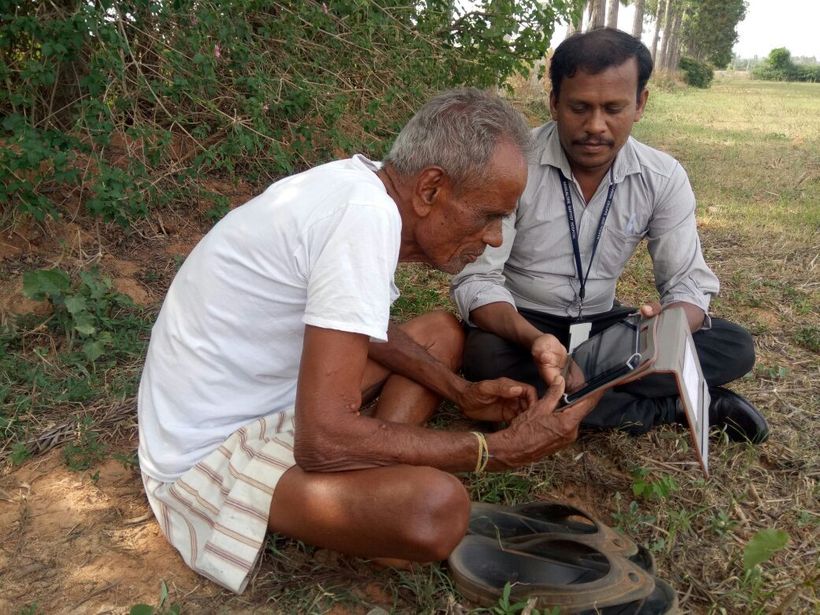
An interdisciplinary team of Baylor University researchers – from nursing and business information systems to art and video game design – and physicians from Bangalore Baptist Hospital in Bengaluru, India, were awarded a 21st Century Knowledge Initiative Grant from the U.S. India Education Foundation (USIEF) to develop a diabetes mobile health app to boost awareness and educate those in India who are most at risk for diabetes. The team is led by Shelby Garner, Ph.D., R.N., assistant professor in Baylor’s Louise Herrington School of Nursing, who has worked in India over the past six years to develop technological health resources. She cited statistics from the World Health Organization that show life expectancy in India is among the lowest in the South East Asian Region and is largely attributed to growing rates of non-communicable diseases, such as diabetes. Contextualized health education is one key to help raise awareness in the country, she said. “There is a need for culturally appropriate health education materials in India,” Garner said. “Our early research showed that technology, such as smartphones and internet accessibility, are widely available in India among health providers, but most technological educational resources were developed in the West and do not effectively translate to the Indian context.” Physicians from Bangalore Baptist Hospital will provide cultural context and help identify important medical content to be included in the app. “Our diabetes app will feature an interactive 3D animated video with gaming features to help educate patients at risk for diabetes,” Garner said. “Answers to questions addressed in the app include: What is diabetes? What happens if I have diabetes? How do I prevent and treat diabetes? What do I do now?” The app also serves as a data collection tool to help researchers determine if the video is improving participants’ knowledge on diabetes. Community health workers employed by Bangalore Baptist Hospital will use the app as they visit with people in rural villages and urban slums during door-to-door health education visits, Garner said. The research team will compare the app’s effectiveness with standard health educational resources previously used. Garner said the USIEF grant was awarded, in large part, due to the success of an earlier project that led to the development of a hypertension app. “Earlier this year, we tested the hypertension app among 346 people in one of the largest slums in Bengaluru, India, and in several rural villages surrounding Bengaluru,” she said. “The app was significantly effective in improving knowledge among participants. We used these results to justify the need to design more resources and applied for funding from the U.S. India Education Foundation.” From previous experience developing and employing the hypertension app, Garner said she knew this new project would require input from a variety of perspectives. “I’ve realized some of the ‘big picture’ challenges in health education, and it will take a team of experts to make this happen,” she said. Team members are: • Shelby Garner, Ph.D., R.N., assistant professor in Baylor’s Louise Herrington School of Nursing • Dr. Carol Elizabeth George, community health physician, Bangalore Baptist Hospital • Dr. Gift Norman, community health physician, Bangalore Baptist Hospital • Dr. Kingsly Victor, internal medicine physician, Bangalore Baptist Hospital • Hope Koch, Ph.D., associate professor of business information systems, Baylor’s Hankamer School of Business • Phil Young, Ph.D., assistant clinical professor of business information systems, Baylor’s Hankamer School of Business • Julia Hitchcock, M.F.A., associate professor of art, Baylor’s College of Arts & Sciences • Matthew Fendt, Ph.D., lecturer in computer science, Baylor’s School of Engineering and Computer Science The grant also will fund exchange teams of researchers and faculty from India to come to the U.S. and for Baylor team members to go to India to collaborate on the research for the next two years. The first team from India is due in late October. “We are really excited about the work we will do together with our Indian partners over the next two years,” Garner said. ABOUT BAYLOR UNIVERSITY Baylor University is a private Christian University and a nationally ranked research institution. The University provides a vibrant campus community for more than 17,000 students by blending interdisciplinary research with an international reputation for educational excellence and a faculty commitment to teaching and scholarship. Chartered in 1845 by the Republic of Texas through the efforts of Baptist pioneers, Baylor is the oldest continually operating University in Texas. Located in Waco, Baylor welcomes students from all 50 states and more than 80 countries to study a broad range of degrees among its 12 nationally recognized academic divisions. ABOUT LOUISE HERRINGTON SCHOOL OF NURSING The Baylor University Louise Herrington School of Nursing (LHSON) located in Dallas was established in 1909 as a diploma program within Baylor Hospital in Dallas, which is now Baylor University Medical Center, and in 1950 became one of the six degree-granting schools of Baylor University. The first Baccalaureate degrees were granted in 1950 establishing the school among the earliest baccalaureate nursing programs in the United States. In 1999, the School was renamed the Baylor University Louise Herrington School of Nursing after Louise Herrington Ornelas, a 1992 Baylor Alumna Honoris Causa, who made an endowment gift to the school. Accredited by the Commission on Collegiate Nursing, LHSON offers Bachelor of Science in Nursing (B.S.N.) degrees through a traditional program and FastBacc (one-year accelerated program). LHSON also offers an online Master of Science in Nursing (M.S.N.) Leadership and Innovation program, as well as Doctor of Nursing Practice (D.N.P.) programs to include Family Nurse Practitioner (F.N.P.), Nurse-Midwife (C.N.M.) and Neonatal Nurse Practitioner (N.N.P.). LHSON was featured in U.S. News & World Reportfor the 2018Best Graduate Schools ranking the D.N.P.program in the top 50 U.S.nursing schools at No. 46. The Baylor M.S.N.program is ranked at No. 56and the Nurse Midwifery Program ranked No. 10. Baylor’s M.S.N. in Nursing Leadership andInnovation Online Program ranked No. 39 in the 2018U.S. News Best Online Graduate Programs. For more information, www.baylor.edu/nursing.

Dubious loan origination and the housing collapse
Gonzalo Maturana, assistant professor of finance, and coauthor John M. Griffin (U of Texas) argue that securitization was not the only factor in the recent housing crisis. Their new research indicates that questionable mortgage origination practices played a significant role in the distortions in the 2003 to 2012 real estate boom and bust. Specifically, the underreporting of the true risk profiles of borrowers, including the misreporting of second-liens, helped to drive housing demand and, ultimately, contributed to the crisis. They note, “The process of underreporting key loan attributes can have the by-product of facilitating credit to borrowers who have little ability to repay.” The researchers tested their theory by using county deed records, securitized loan information, house price statistics, and home loan application data from a number of reliable sources to detail the 2003 to 2006 run-up of housing prices and its subsequent 2007 to 2012 collapse. After controlling for securitization, they determined that “originator malfeasance” in certain areas also served to raise the credit supply. Maturana and Griffin concluded that dubious originator practices helped to cause house prices in certain zip codes to increase relative to other areas and eventually led to larger price crashes. Source:

Microsoft Working to Close the STEM Gap
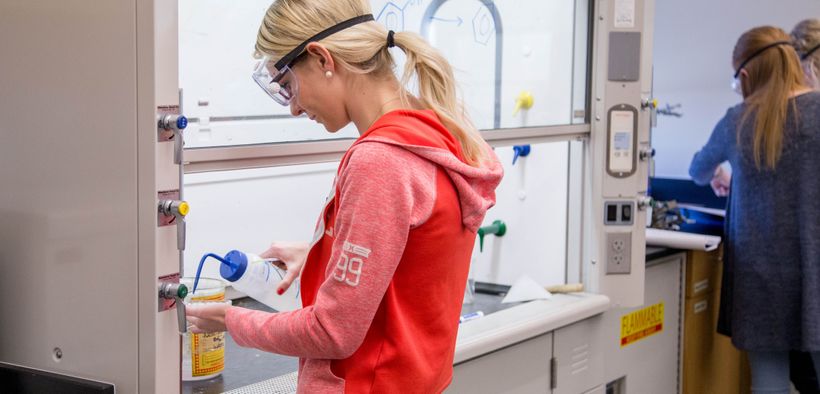
Even with a higher priority placed on science, technology, engineering, and math (STEM) throughout education in the US, only a fraction of girls are likely to pursue a STEM career. According to the National Center for Education Statistics, while more than 57 percent of college undergraduates are women, only 18 percent progress into STEM careers. With a clear gap, Microsoft set out to better understand what causes girls and women to lose interest in STEM subjects and careers, as well as what strategies have the greatest potential to reverse the trend. According to Microsoft, the goal of the study “was to inform our work in this area and to share learnings with schools, government leaders, nonprofits, employers and others. What we learned is that conditions and context can make a significant difference to girls, young women and their interest in STEM. And the solution doesn’t necessarily require a curricula overhaul.” Dr. Shalini Kesar, Associate Professor of Information Systems at Southern Utah University and advocate for women in technology, has known for years that girls and young women are a critical missing part of STEM studies and careers. “The stubborn gender disparity in STEM fields has sparked important debates on the underlying reasons,” said Kesar. “Some attribute the gender disparity to social and infrastructural factors, lack of mentors and role models, and lack of awareness about what these fields offer in terms of educational and career opportunities. Others point to studies that indicate traditional mindsets of computing as ‘boring’ and ‘only for boys’ as a major reason why girls and young women do not consider a degree or career in this field.” The study found that “we may be able to make significant strides just by showing girls and young women how STEM knowledge is applicable outside of the classroom, and how it can power their aspirations to make the world a better place.” “Recently, I was invited to collaborate with Microsoft on research which quantifies many of my observations from over 20 years of working to reduce the gender gap in STEM and computing,” said Kesar. “This work is an essential step forward in helping us learn more about how girls and young women currently perceive STEM.” Dr. Kesar was recently recognized by the Women Tech Council, receiving the Education Excellence Award at the 2016 Women Tech Awards. She is familiar with the media and available for an interview. Simply visit her profile.


National Nutrition Month - Eat better, save money, live longer
March is National Nutrition Month and it couldn’t come any quicker. After a long winter and spring around the corner, many Americans are ready to start eating healthier. Healthy eating is not merely about shedding pounds. Good nutrition often leads to financial savings and enables us to reduce waste. One way to eat healthier is by cooking at home instead of eating out. Unfortunately, according to the Bureau of Labor Statistics, the average household spends about $3,008 per year on dining out and the food consumed is usually high in trans-fats, sodium and calories. Eating out is an expensive and often times unhealthy habit. That habit is also becoming an addiction – in 1900, only two percent of U.S. meals were eaten outside the home. Recently, that number has climbed to more than 50. It’s not always easy forgoing eating out, but the reward is truly worth the effort. Cost savings aside, cooking at home and eating as a family has proven to make people happier and feel more connected. RD Natalie Allen, clinical instructor of biomedical science at Missouri State University, can share insights about cooking home-cooked meals that are tasty, healthy, cost-effective and don't take a lot of time. Contact her for an interview. Source:


“After insurmountable evidence against the use of this approach to converting one of people’s most core identities, we cannot forget that some in the world would still call this painful and potentially life-threatening experience ‘therapy.’” — Assistant Professor Jeremy Goldbach, director of the USC LGBT Health Equity Initiative Source:


Women in the Workplace – Still an Unfair Playing Field
It’s a trend that has many reeling and wondering how to correct: many women working in the financial services industry on Wall Street today don't believe there are opportunities to advance to the most senior positions. This comes as corporate, academic and government leaders push for greater gender diversity at American companies. A study by Lean In released today showed some startling statistics. Women in the Workplace 2017 took pipeline data from 222 companies employing more than 12 million people. As well, more than 70,000 employees completed a survey designed to explore their experiences regarding gender, opportunity, career and work-life issues. The results were not good. The report showed: “Women remain significantly underrepresented in the corporate pipeline. From the outset, fewer women than men are hired at the entry level. At every subsequent step, the representation of women further declines, and women of color face an even more dramatic drop-off at senior levels. This disparity is not due to company-level attrition or lack of interest: women and men stay at their companies and ask for promotions at similar rates.” In fact, from entry level, women represent 47 percent of all entry level hires, but only one in five women will become a C-Suite leader. For women of color, that number diminishes to one in 30. The report also shows that women are less likely to be promoted, receive raises or be supported throughout their careers. So, what will it take to reverse this trend and make corporate America an equal playing field for all? What barriers need to be removed and what policies need to be changed? Is this a cultural shift, should it be regulated and can it be done? The situation is clearly unfair and there are many questions to be asked. Yet answers and solutions are by no means simple or easy to come by. That’s where experts from Missouri State University can help. Dr. Shannon Wooden is a gender studies expert. She is also a published author. Dr. Wooden can speak about the gender pay gap and why companies need more female representation in senior and board levels. Click on her icon to contact her. Source:

One Child Dies Every Two Minutes from Malaria – VCU Experts Are Working to Stop Statistics Like This
Did you know 91 countries reported ongoing malaria transmission in 2015? In fact, in that year, according the World Health Organization there were 429,000 malaria deaths and 212 million new cases. While the numbers are astounding – some progress is being made. In fact, according to the World Malaria Report 2016, the rate of new malaria cases fell by 21% globally between 2010 and 2015. Malaria death rates fell by 29% in the same period. However, malaria still claims one child every two minutes. At the Virginia Commonwealth University School of Engineering, the Medicines for All Initiative is helping address the crisis of diseases like malaria by increasing global access to lifesaving medications. Medicines for All develops processes that reduce the cost of active pharmaceutical ingredients (APIs) - a major cost driver in treating infectious diseases in the developing world. VCU is helping find solutions that utilize the lowest-cost raw materials and most efficient tools available. Medicines for All is bringing essential drugs to patients who need them most. VCU’s experts are available to speak regarding the devastating consequence of disease around the world and how VCU's Medicines for All Initiative is saving lives, promoting health and transforming pharmaceutical engineering. B. Frank Gupton, Ph.D., is a professor and the chair of the Department of Chemical and Life Science Engineering at the VCU School of Engineering. He leads the Medicines for All project and is an award-winning researcher and an expert in his field. Simply click on his icon to arrange an interview. Source:



Payday loan rollovers do not harm some borrowers’ financial welfare
Research by a Kennesaw State University professor has found that there is a potentially limited adverse relationship between repeated refinancing and credit scores for those at the lowest end of the credit spectrum, casting doubt on the claims of payday loan critics that extended refinancing of these loans is universally harmful to consumers' financial welfare. Jennifer Priestley, a professor of applied statistics and data science and author of the 2014 study, says that "payday loans may not only fail to harm borrowers, but may actually contribute to an improvement in borrower welfare for some customers on the lower end of the credit continuum." Source:


Humber Experts Available to Provide Insight into Canadian Economic Forecast
Professor Alvina Cassiani is available to provide commentary on the current Canadian economic forecast. Source:

