
Experts Matter. Find Yours.
Connect for media, speaking, professional opportunities & more.
Trump’s Threat is His Destruction of the Republican Party
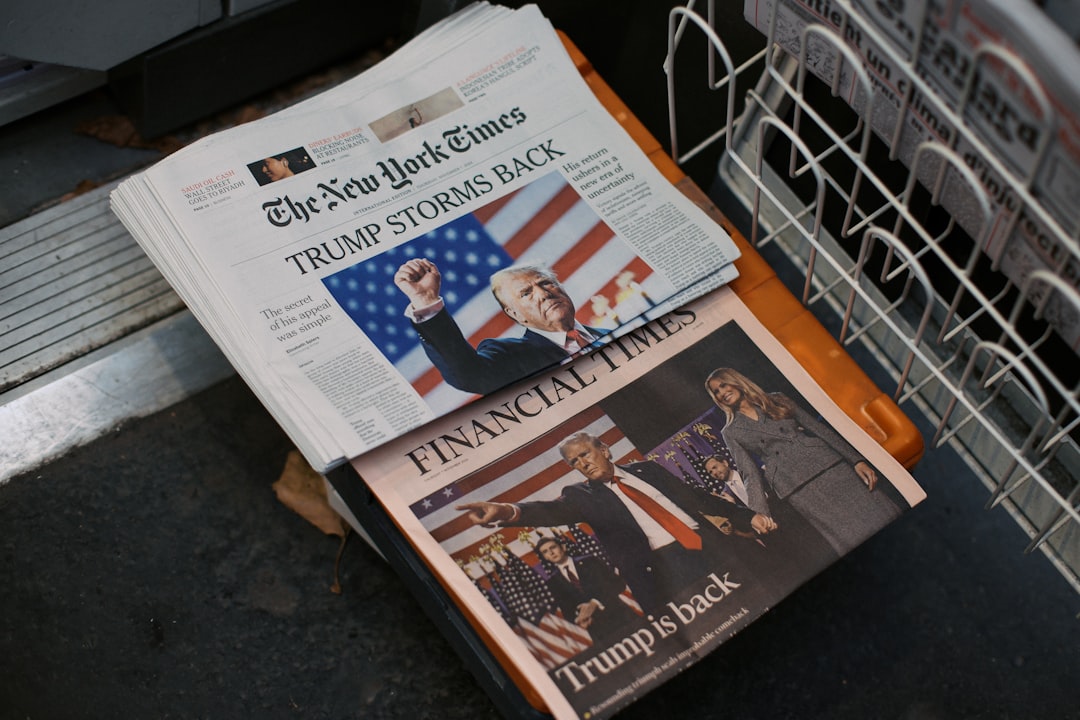
In All the King’s Men, Robert Penn Warren describes Willie Stark’s final victory. “And there wasn’t any Democratic party. There was just Willie, with his hair in his eyes and his shirt sticking to his stomach with sweat. And he had a meat ax in his hand and was screaming for blood.” Warren’s description is darkly poetic and metaphorical. Stark, the populist governor of a fictional state, did not murder his rivals, but he did destroy them, along with the political party he rode to power. Like Stark, Donald Trump has carved up the Republican Party of old, and in its place, there is just Trump. This is not the first time a politician has remade a political party, but the death of the G.O.P. threatens to unbalance our political system. We are defined by close elections, tight legislative majorities, and polarized preferences. Neither side in the cultural conflict can achieve core objectives, so the temptation to put more hope and power into the Executive, to skew the system, is mounting. We can argue about the degree to which past Republicans were truly restrained, especially in government spending, but at least the G.O.P. used to advocate for two seatbelts to keep the body politic safe from accidents: character to govern the self and constitutionalism to limit what government can do to others. As the G.O.P. grew to rival Democratic power, in the 1980s and 1990s, the New Deal coalition fractured, along with the assumption that simply more power, expertly applied, could solve our problems. Democrat Bill Clinton conceded “the era of big government is over.” Justice Elena Kagan recognized, “we’re all textualists now.” The tug of war between an evolving progressivism and a robust conservatism may not have made for an ideal way to solve problems, but it did encourage humility, born of the recognition that radical actions, even if successful, would be punished. Dr. Mark Caleb Smith serves as Professor of Political Science and the Director of the Center for Political Studies at Cedarville University. He teaches courses in American Politics, Constitutional Law, and Research Methodology/Data Analysis. His primary research interest is in the field of religion and American politics. View his profile Those days are over. Donald Trump’s Republicans are no longer a restraint of any kind. The seatbelts of the past have been snipped by the same leaders who claimed to buckle them in place. The Epstein Files are the exception of congressional pushback that proves the rule of the party’s degradation. But what of the appointment of unqualified and incompetent leaders in the F.B.I., H.H.S., Homeland Security, and the Department of Defense? Illegal and extra-judicial killings in the Caribbean? An unexplained and unauthorized military buildup in the same region? Shakedowns of universities and media outlets? Crypto corruption? Tariffs? Strong-arming law firms and firing career civil servants for seeking justice in our courts? The Republican response has mostly been crickets. There is no longer a major party that pretends to restrain the president through the law out of principle. The real disagreement between Trump Republicans and Biden Democrats is not about should the president abuse his power, but how. Unless something dramatic happens, the politics of the meat ax will come for us all. Mark is available to speak with the media regarding the state of politics in America. Simply click on his icon now to arrange an interview.


President Puts the Heat on U.S. CEOs
The Wall Street Journal interviewed Dr. Meena Bose about President Donald Trump upping public pressure on CEOs and telling them how to conduct their business. Recently he called for Intel’s chief executive to resign and told Detroit carmakers not to raise prices. Dr. Bose explained that this level of interference is highly unusual. “This is certainly not an approach the United States has seen in modern American politics,” she said. “It’s government bending economic interests.” Dr. Bose is a Hofstra University professor of political science, executive dean of the Public Policy and Public Service program, and director of the Kalikow Center for the Study of the American Presidency.


New National UMass Amherst Poll Finds President Trump’s Job Approval Gap Slides 6 Points Since April
Topline results and crosstabs for the poll can be found at www.umass.edu/poll Public approval of Donald Trump’s presidency has dropped by 6 percentage points since April and his approval rating is now 20 points underwater, 38-58, according to a new national University of Massachusetts Amherst Poll of 1,000 respondents conducted July 25-30. “Six months into his second term as president, Donald Trump looks to be on the ropes with the American public,” says Tatishe Nteta, provost professor of political science at UMass Amherst and director of the poll. “Trump’s approval ratings, already historically low for a newly elected president, continue to sink with close to 6-in-10 Americans (58%) expressing disapproval of the job that Trump is doing in office. While Trump remains a popular figure among Republicans and conservatives, Trump’s time in office is viewed more negatively across genders, generations, classes and races, with majorities of each of these groups disapproving of Trump’s performance. With over three years left in the Trump administration, there is still time for him to right the ship and fulfil the promises that catapulted him to the presidency, but the president is not off to the start he or his supporters envisioned.” In the previous UMass Poll, conducted as Trump approached the three-month anniversary of his return to the White House, Trump held a 44-51 approval rating, buoyed by a positive overall approval on his handling of immigration. The new poll, however, has found a significant shift in views on this issue. “Immigration has been central Trump’s political campaigns and his strongest issue in his first few months in office, but the percentage of people who say he is handling it well has dropped substantially from 50% four months ago to just 41% today, a 9-point drop,” explains Raymond La Raja, professor of political science at UMass Amherst and co-director of the poll. “Trump came into the presidency promising change, and he’s made significant alterations in many areas of federal policy,” says Jesse Rhodes, professor of political science at UMass Amherst and co-director of the poll. “He came into office believing that he had limited time to make the changes he promised his most ardent supporters, and moved with unparalleled speed to enact these changes, including sometimes by legally questionable means. Now, it seems, he’s reaping the consequences as a large majority of Americans don’t like these changes. Clear majorities say that Trump has handled his key issues – immigration (54%), inflation (63%), jobs (55%) and tariffs (63%) – not very well or not well at all. With so many Americans grading his handling of public policy poorly, it’s no wonder they disapprove of his presidency.” Rhodes also notes that the president is seeing an erosion in support from one of his most reliable groups of supporters: men. “Trump has cultivated a ‘masculine’ reputation and sought to build support among American men but, strikingly, we find that support for Trump has deteriorated most substantially among members of this group,” says Rhodes. “In April, Trump enjoyed approval from 48% of men, compared with 39% of women. Now, only 39% of men express approval of Trump, compared with 35% of women. “In addition to losing support among men, Trump has seen approval for his presidency crumble among political independents, a critical swing constituency,” Rhodes adds. “While 31% of independents approved of his presidency in April, that number is now down 10 percentage points to 21%. This is really bad news for Trump, and for Republicans who depend on support from independents in close elections.” “Polarization has changed the interpretation of presidential approval ratings,” says Alexander Theodoridis, associate professor of political science at UMass Amherst and co-director of the poll. “Partisans just aren’t willing to evaluate presidents from the other side positively and are reluctant to say negative things about presidents from their own party. So, approval numbers fluctuate within a narrower range. Gone are the days when George H. W. Bush and George W. Bush both achieved approval numbers over 90%. This is certainly true for Trump, who is likely the most polarizing figure in modern American politics. Even in this polarized environment, though, Trump’s approval ratings are low by any standard – he is very close to the practical floor. Especially noteworthy is that nearly half of Americans say they strongly disapprove of Trump and the percentage of Americans who say they strongly approve of Trump has decreased substantially. Even among Republican respondents, only half strongly approve of the president. The GOP should be concerned about these numbers heading into the odd-year elections in 2025 and, especially, the midterm elections in 2026. It is very difficult for a party to win when its leader is this unpopular.” Americans’ views on Epstein and Trump Of all issues surveyed in the latest University of Massachusetts Amherst Poll, one appears to be the greatest drag on Trump’s presidency: Jeffrey Epstein and Trump’s handling of the evidence gathered in the federal investigation of the accused sex-trafficker and his long-time friend. “The Epstein scandal remains a serious vulnerability – indeed, quite possibly, the most serious vulnerability – for Trump right now,” Rhodes says. “Fully 70% of Americans believe he has handled this issue ‘not too well’ or ‘not well at all,’ and nearly two-thirds (63%) believe his administration is hiding information about Epstein. The Epstein scandal is also likely undermining public confidence in Trump more broadly. Indeed, we find that nearly two-thirds of Americans believe that Trump is corrupt and nearly 70% believe he is dishonest. Critically, these numbers mean that many Republicans and conservatives are disappointed with Trump’s handling of the Epstein situation. Republican frustration with Trump’s handling of the Epstein case could erode enthusiasm for his presidency and for Republicans in 2026.” “If Trump and those around him have been wishing the Jeffrey Epstein story would disappear, their wishes have not been granted,” Theodoridis says. “Most Americans (77%) tell us they have heard a lot or some about the Epstein case. In addition to believing that the Trump administration is hiding important Epstein case information, the vast majority of respondents say that a special prosecutor should be appointed to investigate the Trump DOJ’s handling of the Epstein case (59%), that Donald Trump was good friends with Epstein (67%), and that a list of Epstein’s clients exists (70%). Even substantial numbers of Trump voters believe these things. And, when it comes to an Epstein ‘cover-up,’ it seems the buck stops with Trump himself. While a lot of Americans blame Attorney General Pam Bondi (59%), FBI Director Kash Patel (49%), and House Speaker Mike Johnson (47%) for hiding information about the Epstein case, a whopping 81% blame President Trump.” “The controversy over the handling of the Epstein files by the Trump administration has – interestingly – brought Americans together,” Nteta adds. “While on most issues, we see clear and persistent generational, class and racial divisions; on Epstein, Americans across these divides speak with one voice. This controversy has even resulted in agreement across partisan lines as majorities of Democrats and Republicans support a special prosecutor and believe a list of clients exists, and disapproval of Trump’s handling of the whole matter is surprisingly seen among members of Trump’s base, as 43% of Republicans and conservatives indicate that Trump has not handled this issue well.” “Where Trump faces his poorest rating in our poll is on perceived corruption and dishonesty,” adds La Raja. “A clear plurality (49%) sees Trump as ‘very dishonest,’ with an additional 20% saying that he is ‘somewhat dishonest.’ And 45% see him as ‘very corrupt,’ with an additional 20% as ‘somewhat corrupt.’ Only about one-third reject those labels entirely. Trump also gets low ratings on transparency – a majority (52%) say Trump is not at all transparent, his weakest score after dishonesty. Only 23% believe that he’s very transparent. For a candidate who brands himself as a truth-teller and disruptor, this appears to be a credibility gap.” “Strength is Trump’s strongest attribute,” La Raja explains. “Fifty-eight percent see him as very or somewhat strong, indicating appeal among his base and possibly swing voters who value ‘toughness.’ However, views on his competence are split evenly, with 52% saying he’s competent to some degree, while 48% say not at all.” Voter Regret? “Since President Trump took office, a number of reports of regretful Trump voters have been covered in the nation’s leading media outlets,” Nteta says. “From voters upset with Trump’s immigration policies to supporters who take issue with the president’s unwillingness to release the files associated with the Epstein case, there seemed to be a wellspring of regret among Trump’s once loyal base. Our results suggest that while there are, in fact, areas where the president is weak, most notably on his handling of the economy and the Epstein controversy. When asked directly, close to 9-in-10 (86%) would vote for Trump again if given the opportunity to revisit their 2024 presidential vote choice. These results indicate that the number of regretful voters covered in the mainstream press may be overblown, as the overwhelming majority of Trump voters remain in the president’s camp.” “Only 1% of Trump voters say they regret their vote and would choose differently, 2% say they ‘might’ choose differently and 3% say they wish they hadn’t voted at all,” Theodoridis says. “When we simply ask voters how they would vote if they could go back and recast their ballot, 6% of Trump voters tell us they would vote for Harris, while only 2% of Harris voters say they would switch to Trump. There is clearly more erosion in support among Trump voters than among Harris voters and, in what is likely small consolation to Harris and her campaign team, significantly more 2024 non-voters who say they wish they had voted indicate they would now cast a vote for the former vice president. In a relatively close election, shifts of these magnitudes might have been decisive, but there are no ‘take-backs’ in electoral politics, so these numbers are best used to inform choices going forward.” “Our results are not wholly positive for President Trump, and there exist areas of concern for his team moving forward,” Nteta warns. “Since April, the number of Trump voters expressing strong confidence in their vote for Trump has declined by 5 percentage points. Additionally, we find small increases in the number of Trump supporters who have mixed feelings about their vote and who indicate that they would ‘rather not have voted.’ Finally, 14% of Trump voters indicate that they would not vote for Trump if given the chance to revisit, while only 8% of Harris voters express a similar sentiment. Time will tell whether the growing number of disaffected Trump voters are the canaries in the coal mine, indicating a larger problem among the Trump coalition and the MAGA movement more generally.” “We do find a meaningful percentage – 31% – of Trump voters unwilling to say they feel very confident they made the right choice,” Theodoridis adds. “Nineteen percent of Trump voters tell us they are still confident but have concerns, and 6% tell us they have mixed feelings about their vote. Given what we know about the psychological predispositions against admitting to having been wrong, these numbers suggest some softening in support for Trump among the very voters who returned him to the White House last November. This should certainly be alarming for Republican politicians. However, for Democrats or journalists looking for a mass mea culpa from Trump voters, our numbers are, perhaps, sobering.” Methodology This University of Massachusetts Amherst Poll of 1,000 respondents nationally was conducted by YouGov July 25-30. YouGov interviewed 1,057 total respondents who were then matched down to a sample of 1,000 to produce the final dataset. The frame was constructed by stratified sampling from the full 2023 American Community Survey (ACS) one-year sample with selection within strata by weighted sampling with replacements (using the person weights on the public use file). The matched cases were weighted to the sampling frame using propensity scores. The matched cases and the frame were combined, and a logistic regression was estimated for inclusion in the frame. The propensity score function included age, gender, race/ethnicity, years of education, region, and home ownership. The propensity scores were grouped into deciles of the estimated propensity score in the frame and post-stratified according to these deciles. The weights were then post-stratified on 2020 and 2024 presidential vote choice as ranked on gender, age (4-categories), race (4-categories) and education (4-categories), to produce the final weight. The demographic marginals and their interlockings were based on the sample frame. The marginal distribution of 2020 presidential vote choice and its demographic interlockings were based on a politically representative “modeled frame” of US adults, using the 2019 American Community Survey (ACS) public use microdata file, public voter file records, the 2020 Current Population Survey (CPS) Voting and Registration supplements, the 2020 National Election Pool (NEP) exit poll, and the 2020 CES surveys, including demographics and 2020 presidential vote. The marginal distribution of 2024 vote choice was based on official ballot counts compiled by the University of Florida Election Labs and CNN. Demographic interlockings for 2024 vote choice were based on CNN’s 2024 Exit Polls. The margin of error of this poll is 3.5%. Topline results and crosstabs for the poll can be found at www.umass.edu/poll






President’s Discussion of Conspiracy Theories Have “No Parallel in American Politics”
Peter Baker, the chief White House correspondent for The New York Times, interviewed Dr. Meena Bose about conspiracy theories that appear to be consuming the Trump administration. “The president’s repeated discussion of multiple conspiracy theories, most recently about the 2016 election, has no parallel in American politics,” said Dr. Bose. “Presidential allegations that have no factual basis undermine public confidence in the political system and present dangerous challenges to constitutional principles and the rule of law, particularly if they are not subject to checks by other institutions.” Dr. Bose is Hofstra University professor of political science, executive dean of the Public Policy and Public Service program, and director of the Kalikow Center for the Study of the American Presidency.

What is Immigration and Customs Enforcement (ICE)?
Immigration and Customs Enforcement (ICE), one of the most controversial federal agencies in the United States, plays a central role in enforcing immigration laws and maintaining national security. Created in the aftermath of 9/11 as part of the Department of Homeland Security (DHS), ICE was established to consolidate and streamline immigration enforcement. Over the past two decades, it has become a lightning rod for political and ethical debate—raising urgent questions about border control, civil liberties, and immigration reform. As the national conversation around immigration intensifies, understanding the origins, structure, and impact of ICE remains critically important. Key story angles include: The Origins of ICE Post-9/11: Tracing the agency’s creation in 2003 under DHS and its intended role in counterterrorism and immigration enforcement. How ICE Operates Today: Breaking down ICE’s structure, including Enforcement and Removal Operations (ERO) and Homeland Security Investigations (HSI). Controversies and Public Backlash: Investigating high-profile incidents, including family separations, detention center conditions, and deportation raids that have sparked widespread protest. The Politics of Immigration Enforcement: Exploring how ICE has become a partisan issue, with calls for its reform, defunding, or abolishment emerging from activists and lawmakers. The Human Impact of ICE Actions: Highlighting stories of immigrants, asylum seekers, and communities affected by ICE policies and practices. Future of Immigration Enforcement: Examining policy proposals for reforming ICE, improving transparency, and addressing legal and ethical concerns in a changing demographic landscape. As immigration remains one of the most urgent and divisive issues in American politics, ICE stands at the heart of the debate—making its history, purpose, and evolving role a vital topic for journalists and the public to understand. Connect with our experts about the origins and role of ICE : Check out our experts here : www.expertfile.com


The election is over, and Republicans have swept the White House and Congress
The race for the White House is over, and the Republicans have been swept into power with historic gains in Congress and control of the executive branch. What will their policy priorities be and how will the new political landscape mold the direction of the new Trump administration? What will the Democrats, now a minority opposition party, do? Can they adapt to a winning strategy in time for the midterms in two years? If you are covering American politics, how do you make sense of all the changes? How do you know what issues are going to drive decisions in Washington, D.C.? What can polling tell us about what happened? Where did the polls fall short? What will pollsters be looking at moving forward? We have an expert who can help. Kevin Wagner, Ph.D., is Florida Atlantic University’s renowned political science expert and co- executive director of Florida Atlantic University Political Communication and Public Opinion Research Lab (PolCom Lab) —the university’s extensive and nationally covered polling operation. View profile View some of Kevin Wagner's recent media here: ABC News Florida Atlantic University professor of political science Kevin Wagner says Florida’s shift started several years ago and it’s due to a variety of factors. "Certainly, there was some pretty good evidence that we had people moving from states like California and New York looking for a more conservative environment, and they brought their politics with them when they came to Florida," Wagner said. "That influx of more conservative voters certainly mattered. It's not the only thing that mattered." WINK Some voters believe the 60% mark is too high to make constitutional changes. For the threshold to change, it has to be put on the ballot for voters to decide and would need at least 60% of the vote. “Getting 60% of the voters to agree on anything is really hard and when it’s something that’s highly contested. It makes it even harder,” Florida Atlantic University Political Science Professor Kevin Wagner said. THE PINNACLE GAZETTE Political analysts point to various factors contributing to Florida’s Republican shift. Kathryn DePalo-Gould, a political scientist from Florida International University, aptly stated, “It’s now so solidly Republican it is crimson.” This sentiment was echoed by Kevin Wagner from Florida Atlantic University, highlighting how previously competitive races have now become predictable Republican wins. Indeed, Trump’s haul of 61 out of 67 counties stands as a testifier to this changing political tide. Looking to connect? He is here to answer all your questions and is available for interviews. Simply click on his icon now to arrange an interview today.


Ask the expert: The constituencies who will determine Michigan’s election results
When it comes to how Michigan has voted in modern presidential elections, a majority of voters have voted for the Democratic nominee for president. In recent years, however, Michigan has become more competitive as a key swing state. In 2016, former President Donald Trump won by just over 10,000 voters and in 2020 President Joe Biden won by just over 150,000 voters. After Vice President Kamala Harris replaced President Biden as the Democratic nominee, she has had a thin lead over Trump and, now, many pundits are saying Michigan is a toss-up. For Harris to win the presidency, she likely must carry Michigan and that includes needed margins with key voter groups such as young voters, as well as Arab American and Black voters. Nazita Lajevardi is an associate professor in the Department of Political Science in the College of Social Science. She is an expert in American politics, and her work focuses mainly on issues related to race and ethnic politics, political behavior, voting rights and immigration. Here, she answers questions on key groups of voters and the issues they care about that could determine who wins Michigan — and likely who will win the presidency. Responses and excerpts are from an article published in Brookings. Where does the election stand in the final days? Since Biden stepped down at the end of July, Harris has enjoyed a steady — albeit at times uncomfortably thin — lead over Trump in Michigan. However, polling from the end of September onward suggests that Harris comfortably winning the state on Nov. 5 is not a foregone conclusion. With just three weeks left to go in the 2024 presidential race, the polling website FiveThirtyEight indicates that as of Oct. 24, 2024, Kamala Harris is ahead of Donald Trump in Michigan by only 0.6 points — 47.6 compared to 47.0. This narrowing of the race appears to be closing the gap that Harris gained over Trump in August. Diving deeper into specific polls feeding into these estimates, it becomes clear that while Harris maintained a solid and consistent lead over Trump by between one and up to eight percentage points in the middle half of September, polls from the third week of September onward have either had Trump leading the state, Harris winning the state by a slim margin, or the two of them being evenly split. What issues do Michigan voters care about? A September 2024 New York Times/Siena College poll found that the three issues Michigan voters cared most about were the economy (24%), abortion (17%) and immigration (14%). Trump, for one, has campaigned heavily in recent weeks about two of these three issues. For instance, he has appealed heavily to Michiganders whose jobs were lost to globalization and automation by promising to revive the American car industry and bring back car factories that have closed in recent years. Groups like Duty to America are highlighting Trump’s strengths on illegal immigration by airing ads across Michigan arguing that it has hurt white people who have been “left behind.” And, while Harris, on the other hand, has great strengths on abortion rights, success in the 2022 elections in amending the state constitution to secure the right to abortion and other reproductive health services may have reduced abortion’s importance as a central voting issue in the state. What impact will Black voters have on Michigan’s result? Among Black voters, experts have identified an enthusiasm gap between those who are part of the “Black leadership class” and deeply connected to the Democratic Party and those Black Michiganders without those same connections, who are more working class, poorer, more fatigued, less interested, and therefore more susceptible to sitting out elections. Many Black voters are also deeply concerned about the economy, and as Michigan State University political scientist Meghan Wilson has noted, Harris could attract Black business owners and holders of student debt by discussing plans to infuse capital into small businesses. The Harris campaign appears to agree. Recently, Harris not only unveiled economic proposals appealing to Black voters but also traveled to Detroit to participate in a radio town hall with Charlamagne tha God, whose program The Breakfast Club has a nationwide audience, much of whom is Black. But attention should be paid to one particular effort to stifle Black turnout. Recently, it was revealed that Tom Barrett, a GOP candidate for the U.S. House, ran a newspaper advertisement in the Black-owned newspaper Michigan Bulletin that incorrectly informed the readership, most of whom are Black, to vote on Nov. 6, when Election Day is Nov. 5. What impact will Arab American voters have on Michigan’s result? Harris is in a deeply precarious position vis-à-vis Michigan’s Muslim and Middle East/North Africa, or MENA, electorates. Without a doubt, these groups will have an outsized impact in deciding how Michigan’s 15 electoral college votes will be cast. According to political scientist Youssef Chouhoud, Michigan is home to more than 200,000 Muslim registered voters. Over the past year, Muslims’ support for the Democratic Party has plummeted. In a recent poll fielded between Aug. 25 and Aug. 27, the Council on American Islamic Relations found that Jill Stein is leading Muslim voters in Michigan; 40% of Muslims surveyed in that poll supported Stein, 18% supported Trump and only 12% supported Harris. And, as Harris’ support for Israel remains steadfast while Israel continues its assaults on Gaza and now Lebanon, she has arguably alienated these voters who could have been a reliable source of electoral support for her. What will the role of youth voters be in Michigan’s outcome? Young voters in Michigan present a potential stream of untapped support for the Democratic Party. Though young voters have historically turned out at lower rates than older Americans, young voters in Michigan stand out from their peers. Fifty-four percent of Michiganders 18 to 29 years old voted in the 2020 election, a 20% increase from 2016. In the 2022 midterms, when young voters aged 18 to 29 in Michigan recorded the highest voter turnout in all the country, they demonstrated how impactful their votes were in enshrining abortion and voting rights in the state constitution. That year, about 75% of students who were registered voters at the University of Michigan and Michigan State University cast ballots. This year, however, how successful Harris has been in activating the youth vote remains to be seen. Certainly, young Michiganders are more enthusiastic about her candidacy than they were Biden’s, but recent analyses by Michigan State University political scientist Corwin Smidt indicate that so far youth turnout in Michigan’s November 2024 election lags behind their 2020 levels. What’s more, young voters were a key part of the “uncommitted” coalition who sent a strong message to then presidential nominee Biden over his enabling of the Israeli war in Gaza during the February 2024 primary election. But Harris is making strides to connect with young voters by establishing offices at campuses across the state. Importantly, young voters could not only shape the outcome of the presidential election, but also the partisan balance in Congress, given that young voters at Michigan State University will have the opportunity to cast a ballot in the race for Michigan’s 7th Congressional District, which is among the 26 toss-up districts in the country. It will be all eyes on Michigan Tuesday - and if you are covering, Nazita Lajevardi is available to help. Simnply click on her profile below to arrange an interview today.


It's neck and neck and our expert is here to help with your election coverage
The tight race for the White House is approaching the home stretch as U.S. Vice President Kamila Harris and former U.S. President Donald Trump appeal to voters across the country. With assassination attempts and U.S. President Joe Biden dropping out of the race, this election has already proven to be a unique historical event in American politics. If you’re covering the race, how do you make sense of the twists and turns? How do you know what issues are driving voters in this tight race? What is going on with the “down ticket” races? Can polls help you predict what’s coming? We have an expert who can help. Kevin Wagner, Ph.D., is Florida Atlantic University’s renowned political science expert and co-executive director of Florida Atlantic University Political Communication and Public Opinion Research Lab (PolCom Lab)—the university’s extensive and nationally covered polling operation. View some of Kevin Wagner's recent media here: Newsweek: "Kevin Wagner, a political science professor at Florida Atlantic University, told Newsweek via email on September 2: "Both Harris and Trump have some potential to attract independents or voters from the opposing party, though this cross-party appeal is likely to be limited given the high levels of partisan polarization in recent elections." Forbes: “If they’re going to hit that 60%, the supporters of the amendment are probably going to have to reach a few more Republicans or have a particularly Democratic-leaning electorate, which sees a challenge in a presidential election year,” said Kevin Wagner, a Florida Atlantic University political scientist, according to a report from the South Florida SunSentinal." New York Post: "On the whole, there does appear to be a solid base of support for Harris in the Democratic Party,” said Kevin Wagner co-director of FAU’s PolCom Lab and professor of political science. “But there is still substantial uncertainty. Some Democratic voters are still looking for another candidate. Harris has time to unify the party before the convention, but she needs to move quickly, or this could potentially spin out of control for the Democrats.” Looking to connect? He is here to answer all your questions and is available for interviews. Simply click on his icon now to arrange an interview today.

The race for the White House is on - and Georgia Southern experts are here to help
The upcoming election has been dominating headlines for months. With the recent change at the top of the Democratic ticket from Joe Biden to Kamala Harris has reenergized the campaign and put several states like Georgia and North Carolina back 'in-play' for the Democrats. Georgia has been identified as a key battle ground state for any candidate looking to win in November and it's why both Democrats and Republicans are frequent fliers to the Peach State with rallies and visits already. Those visits are also getting a lot of media attention and Georgia Southern University's experts are front and center assisting with the coverage. Joshua Kennedy, Ph.D. Associate Professor Department of Political Science and International Studies Areas of Expertise : Political Institutions, Congress, Presidential Power, Federal Bureaucracy, American Politics, American Presidency, Inter-Branch Relations, State Politics. The principal area of study and teaching for Joshua Kennedy, Ph.D., is in American politics, with a more particular focus on the presidency and the federal bureaucracy. Kennedy has presented his work at numerous conferences, including the Annual Meeting of the American Political Science Association and the Annual Meeting of the Midwest Political Science Association. His research has appeared in such outlets as American Politics Research, Research and Politics and Presidential Studies Quarterly. View profile and connect here Recent media: Joshua Kennedy has recently been interviewed by media such as WTOC 11, ABC News and Fox 28 in Savannah, Georgia, as well as various other local and regional media outlets when covering politics in Georgia. *** Kimberly Martin Tecklenberg, Ph.D. Assistant Professor Department of Political Science and International Studies Areas of Expertise: American Politics, Research Methods, Leadership, Public Policy, Education Policy, State Politics, LGBTQ+ Policy. Kimberly Martin Tecklenberg, Ph.D., teaches courses in American politics, research methods, leadership and public policy. Before pursuing her graduate degree, she worked as the Special Assistant for Secretary of Education Belle Wheelan and former Gov. Mark Warner of Virginia. While at the University of Florida, she worked with former Senator and Gov. Bob Graham to establish the Bob Graham Center for Public Service. After graduation, she moved to Tennessee where she served as Assistant Director of Research at the Tennessee Higher Education Commission. Her past experiences have influenced her current research interests, which focus on education policy, political leadership, state politics and LGBTQ+ policy. View profile and connect here Recent media: Kimberly Martin Tecklenberg has recently been interviewed by media such as NBC, FOX, Al- Jazeera and Courthouse News Service, in addition to various other local, regional and national outlets when covering politics in Georgia. If you're covering the election - our experts are here to help all the way to Nov. 5 and beyond. Visit our Expert Center for a full directory of Georgia Southern experts. Simply click on any expert's icon now to arrange an interview today.


University of Delaware's Center for Political Communication unveils new vision, goals and leadership
The University of Delaware's Center for Political Communication (CPC) is excited to announce a transformative new chapter with the unveiling of its updated vision, goals and leadership for 2024 and beyond. Since its founding in 2010, the CPC has been at the forefront of innovative public opinion research on politics and media, always with an eye towards protecting and improving American democracy. With this new chapter, the CPC is actively integrating political psychology (the study of how and why people make political judgments and form political beliefs) into the study of public opinion and media effects. “Our vision is responsible democracy-centered journalism informed by our rigorous research on Americans’ thoughts, feelings, knowledge and behaviors,” says Dr. Dannagal Young, incoming Director of the Center for Political Communication. “In a few weeks, will be releasing new data on Americans’ knowledge and beliefs about abortion – an issue on which there are widespread misperceptions. Later this fall we are also launching an interdisciplinary initiative to understand the relationship between Americans’ personal wellbeing and their support for democratic institutions and norms.” By producing high-quality research at the intersection of media, politics and psychology, the CPC strives to elevate public conversations and inform news coverage to improve democratic health. Additionally, the Center seeks to serve as a vital resource for journalists, offering expert commentary and empirical data to encourage democratically responsible journalism. With this new direction comes new leadership, bringing together a team of esteemed scholars from Political Science, Communication and Journalism: Director Dr. Dannagal Young, Professor in the Departments of Communication and Political Science and International Relations, TED speaker, and author of Wrong: How Media, Politics, and Identity Drive our Appetite for Misinformation (Johns Hopkins, 2023) and Irony and Outrage: The Polarized Landscape of Rage, Fear, and Laugher in the U.S. (Oxford, 2020). Areas of Expertise: Misinformation, Political Satire, American Politics, the Psychology of Media Effects. Associate Director Dr. Erin Cassese, Professor in the Departments of Political Science and International Relations, Communication, and Women and Gender Studies, co-author of Abortion Attitudes and Polarization in the American Electorate (Cambridge, 2024). Areas of Expertise: Gender, Abortion, Public Opinion, Campaigns and Elections. Director of Research Dr. Phil Jones, Associate Professor in the Department of Political Science and International Relations, current Editor-in-Chief at Public Opinion Quarterly. Areas of Expertise: Electoral Politics and Public Opinion. Director of Engagement Dr. Lindsay Hoffman, Associate Professor in the Departments of Communication and Political Science and International Relations, and research leader for the American Council of Trustees and Alumni two-year Braver Angels project funded by the John Templeton Foundation. Areas of Expertise: Communication across Difference, Media Technologies, and Political Participation. Delaware Politics Director Dr. Paul Brewer, Professor in the Departments of Communication and Political Science and International Relations, co-author of Science in the Media: Popular Images and Public Perceptions (Routledge, 2021), former editor of the International Journal of Public Opinion Research. Areas of Expertise: Delaware Politics, Media effects, Political and Science Communication, Public Opinion, and Perceptions of Science. Delaware Debate Director: Nancy Karibjanian, Director of the University of Delaware’s Journalism program, faculty member in the Department of Communication, and former Director of the CPC with 30 years of broadcast experience. Areas of Expertise: Broadcast Journalism, and Delaware Debates. The CPC’s goals reflect its commitment to a vibrant and collaborative research environment that engages scholars and students at all levels. The CPC will continue to spearhead interdisciplinary research across the domains of communication, political psychology, public opinion, media effects, and public policy. The Center offers applied research opportunities for both graduate and undergraduate students in communication and political science, as well as an undergraduate minor in political communication, thus mentoring the next generation of scholars and practitioners. The CPC is proud to put its academic research to work in service of American democratic health.

