
Experts Matter. Find Yours.
Search experts on 50,000+ topics. Or browse by topic category.
- Recent Searches


Featured
Global experts with a broad range of areas of expertise.



Janet Lenaghan
- Title
- Dean, Frank G. Zarb School of Business, Professor of Management and Entrepreneurship
- Role
- Hofstra University
- Expertise


Alice Ba
- Title
- Associate Chair and Professor, International Relations and Comparative Politics
- Role
- University of Delaware
- Expertise


Connecting credible expert sources & academic research
ExpertFile is a trusted resource for journalists, industry, funding agencies and government policymakers looking for fresh perspectives and innovative academic research.


Spotlights
Read expert insights on a wide variety of topics and current events.

Twice a year, Americans are made to gain or lose one hour of sleep to accommodate an age-old custom of dubious origins. But that may soon change. On July 14, 2026, Democrats and Republicans in the U.S. House of Representatives joined together to approve the Sunshine Protection Act, a bill that would effectively eliminate seasonal clock adjustments and institute permanent daylight saving time. Currently, this legislation is stalled in the Senate, but pressure is steadily mounting for the act’s passage before clocks once again “fall back” at the beginning of November. Amid the push, many researchers who specialize in sleep science and medicine hope Congressional lawmakers continue biding their time—and time in general—and weigh a different approach to the nation’s wakeup call conundrum. “Both the general public and the medical and scientific communities seem to largely support eliminating the practice of changing the clocks twice a year,” says Elizabeth Pantesco, PhD, assistant professor of Psychological and Brain Sciences and head of the Sleep and Heart Health Lab at Villanova University. “However, while political and public opinion often seem to slightly favor permanent daylight saving time, the sleep medicine and circadian science communities generally support permanent standard time.” As Dr. Pantesco explains, this support largely stems from experts’ understanding of circadian health. Permanent standard time would produce earlier morning light and earlier evening darkness, which is generally considered more favorable for optimizing the body’s 24-hour internal rhythms, than permanent daylight saving time. “Under permanent daylight saving time, reduced morning light and increased evening light exposure could shift the circadian clock later, while work, school and other social schedules remain fixed,” says Dr. Pantesco. “This can result in more difficulty falling asleep at night while still needing to get up at the same time in the morning, increasing the likelihood of circadian misalignment, poorer-quality sleep and shorter sleep.” Based on research and historical evidence, the consequences of this restlessness could extend far beyond bleary eyes and midday yawns. While permanent daylight saving time has never been analyzed in controlled trials, the existing literature on sleep restriction and circadian misalignment indicates that the policy change could have significant health and safety ramifications over an extended period. “Circadian misalignment and insufficient sleep have been associated with increased risks for cardiovascular and metabolic disease, as well as depression and other psychiatric outcomes. Long-term circadian disruption, particularly in research on shift work, has also been linked with certain cancers. More immediate consequences can include daytime sleepiness, impaired attention, reduced productivity and an increased risk of errors and motor vehicle crashes.” Dr. Pantesco also notes the possibility of some drawbacks with permanent standard time, which would shift an hour of daylight from evening to morning during the months currently on daylight saving time. Among the resultant pitfalls are that it could limit “opportunities for outdoor and social activities after work, affect businesses that benefit from evening activity and potentially increase risks for certain types of crime and for evening pedestrian or cyclist accidents.” Still, while the communal and societal effects of a permanent standard time have yet to be fully understood, the health benefits are strongly supported by circadian biology. As the American Academy of Sleep Medicine (AASM) contends, its institution could eliminate the chronic sleep disruption caused by seasonal clock changes while creating a “natural synchrony [optimal] for health, mood, performance and safety.” Among U.S. lawmakers, there is a contingent that wholeheartedly agrees, working to enshrine permanent standard time through a Sunshine Protection Act alternative—the Sunshine for Our Kids Act. Whether they will be able to convince their Congressional cohorts of the benefits of permanently “springing forward” over permanently “falling back” remains to be seen, however. As with most things, only time will tell.

How should journalists cover politics when democracy is at stake
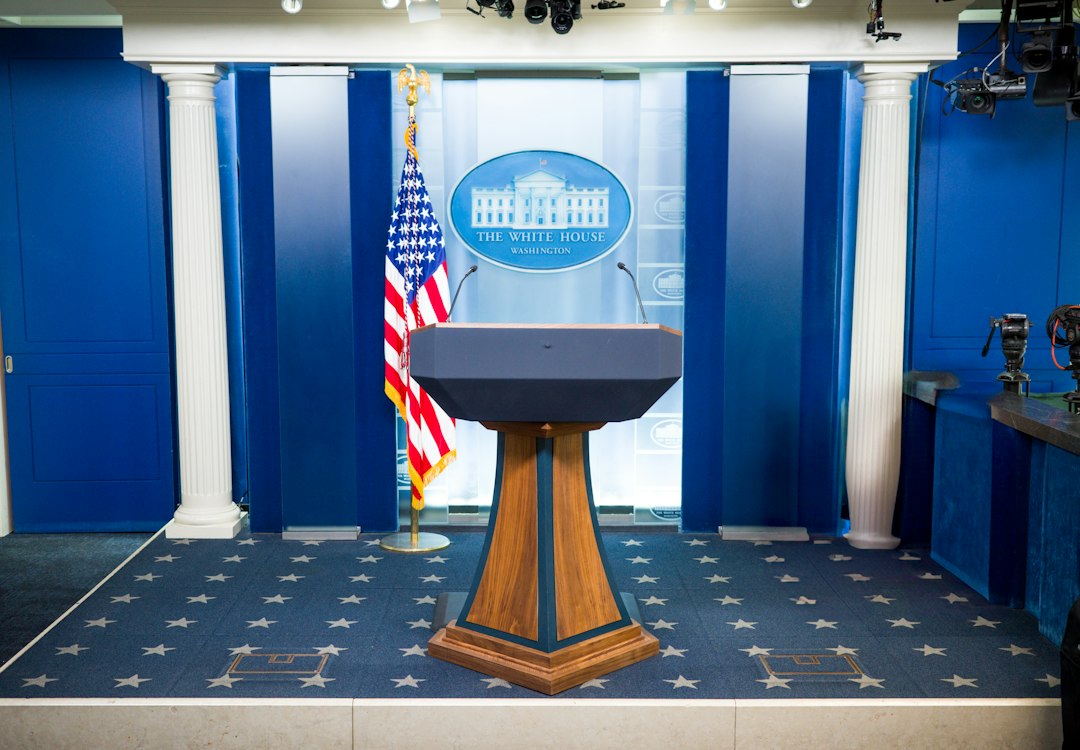
Political coverage often centers on the president, but according to the University of Delaware’s Dannagal Young, journalists can sometimes provide more meaningful coverage by focusing more on democracy and less on the commander in chief’s every movement. Young calls this approach “democracy-centered reporting.” Instead of treating every presidential announcement or provocative statement as the central event, democracy-centered reporting asks how political actions affect democratic institutions, constitutional principles and Americans’ ability to exercise their rights as citizens, Young says. Young, professor of communication and director of UD’s Center for Political Communication, says “access journalism” has an important role, but an overreliance on access can also make political leaders the organizing principle of coverage. In moments when executive power is expanding, she argues, journalists should consider whether their coverage is inadvertently amplifying the power they are trying to scrutinize. Young can discuss: • How journalists can cover presidents without making the president the center of every story • The benefits and risks of access journalism • How coverage of political conflict affects public understanding of democracy To arrange an interview with Young, visit her profile and click on the "contact" button. Interested reporters can also send an email to MediaRelations@udel.edu.



Got Expertise to Share?
ExpertFile works with leading organizations with trusted experts. We help make their expertise more discoverable, structured, and actionable for AI-driven discovery, strategic outreach, and real-world opportunities.

Public health risks after a major flood
Floodwaters may recede quickly, but the health consequences of a major disaster can last for months or even years, says University of Delaware epidemiologist Jennifer Horney. Horney, an expert in disaster recovery and public health, can discuss the longer-term health challenges communities face after major flooding events, including the Aug. 26 flash floods in Nepal that resulted in 1,450 deaths, with 6,000 people still missing. Horney can talk about: • How damage to health infrastructure can make it more difficult for people to access medical care after a disaster, and what communities can do to prepare for and reduce longer-term health consequences following flooding and other disasters. • How contaminated water and food can increase the risk of infectious disease, and how standing water left behind by floods can create breeding grounds for mosquitoes that transmit diseases such as dengue, malaria, encephalitis and chikungunya. • The impact disasters have on physical and mental health well after the immediate emergency has passed. To arrange an interview, visit Horney's profile and click on the contact button. Interested reporters can also send an email to MediaRelations@udel.edu.


When Brand Activism Meets the Bottom Line
Should companies speak out on political issues? When does taking a stand become a business risk? University of Rochester political scientist and professor of business administration David Primo studies the tension between corporate strategy, free expression, and consumer backlash. His insights have become indispensable for journalists covering the CEOs, sports owners, and brands that increasingly find themselves at the center of public controversies. Primo was recently quoted in The Boston Globe about the fallout from New England Patriots owner Robert Kraft’s intervention in Ed Sheeran’s stadium tour after rapper Macklemore was dropped as an opening act. While Kraft had the legal right to regulate speech on private property, Primo argued, the larger business question is whether companies benefit from policing the political views of performers, employees, or partners. “You’re not going to be a successful arena owner if you start checking people’s politics before you book them,” Primo told The Globe. His expertise extends beyond concerts and stadiums. Primo researches corporate political activity, regulation, governance, and the strategic decisions organizations make when navigating contentious public issues. He has been a source in news stories about boycotts involving big brands like Harley-Davidson and Target. Primo can discuss: • Brand activism and corporate political speech • When companies should — or shouldn’t — take public positions • Consumer backlash and reputational risk • CEO activism and its business consequences • Corporate governance and political decision-making • The intersection of free expression and private businesses As debates over corporate values, sponsorships, employee activism, and executive leadership continue to shape headlines, Primo offers evidence-based insight into how businesses weigh the costs — and potential benefits — of entering the political arena. Connect with him by clicking on his profile.


A Rare September Nor’easter Takes Aim at the East Coast
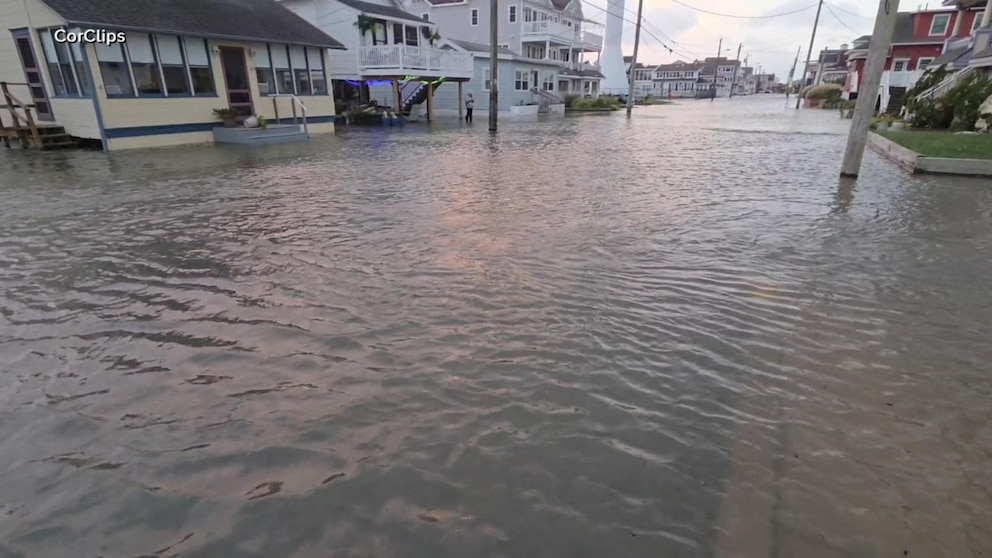
A rare September nor’easter is developing along the East Coast, bringing the potential for heavy rain, strong winds, dangerous surf, coastal flooding and beach erosion from the Mid-Atlantic into the Northeast. ABC News reports that the storm is expected to intensify off the coast this week, although its ultimate impacts will depend heavily on its track and how close it comes to shore. The storm arrives as El Niño continues to strengthen in the Pacific. NOAA's Climate Prediction Center says there is now a greater than 90% chance of a very strong El Niño this fall and winter, adding another important element to questions about what kind of weather the Northeast could experience in the months ahead. Jase Bernhardt, PhD, associate professor of geology, environment and sustainability and director of Hofstra University’s meteorology program, can discuss the developing nor’easter, the factors influencing its track and intensity, and how strong El Niño conditions could shape weather patterns across Long Island and the Northeast. View his profile Covering the storm? We can help. Bernhardt can provide perspective on: Why a September nor’easter is unusual and what is driving this week's storm The potential for strong winds, coastal flooding, heavy rain and beach erosion Why small changes in a nor’easter's track can dramatically change local impacts How a strong El Niño can influence fall and winter weather patterns Whether the region could see more coastal storms later this fall and winter How residents should interpret and respond to severe-weather warnings Bernhardt's research also explores how people respond to warnings about dangerous weather. He has developed virtual reality simulations designed to demonstrate the risks associated with events including hurricanes, flash floods and snow squalls and to study whether immersive experiences can improve public response to severe-weather warnings. To arrange an interview today, simply click on his profile below



Professor Julian Ku Discusses U.N.’s Role in Global A.I. Debate
Hofstra Law Professor Julian Ku was quoted in a recent New York Times article examining the United Nations’ efforts to influence global discussions about artificial intelligence as the United States and China continue to lead the technology’s development. Professor Ku explained that the United Nations has historically struggled to shape how global powers use technologies unavailable to most other nations, including nuclear weapons and advanced cybertools. He said the organization may have greater success helping countries share in the benefits of A.I. than influencing the actions of the United States and China directly. “The U.N. can’t really shape the actions of those who have the power directly,” Ku said, but it can represent countries without that power.


White House Pushes Back on Calls for Broader AI Safety Guardrails
As calls grow from technology leaders, researchers and lawmakers for stronger artificial intelligence safety rules, the White House is signaling a different priority: keeping the United States at the forefront of AI innovation. The administration has pushed back on proposals that could slow development or create sweeping federal approval requirements for new models, arguing that excessive regulation could weaken America’s competitive position—especially against China. That does not mean the administration is ignoring AI-related risks. Its approach emphasizes national security, cybersecurity and enforcement against criminal misuse of AI. Recent White House action has encouraged voluntary collaboration between government and AI developers to assess the cyber capabilities of advanced models, protect critical infrastructure and strengthen defenses against malicious actors. But the framework specifically avoids mandatory licensing or government preclearance before companies develop or release new AI systems. The debate raises important questions for business leaders, policymakers and the public: How can innovation move quickly without sacrificing security, privacy and public trust? And where should responsibility rest—within individual companies, through voluntary government-industry partnerships or through enforceable federal safeguards?


MEDIA RELEASE: 2026 CAA EV Circuit: EVs go the distance, but charging, efficiency and costs vary
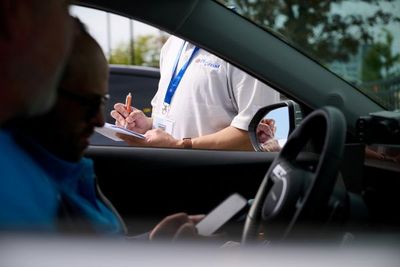
The question for Canadians considering an EV may no longer be how far it can go, but how efficiently it uses energy, how quickly it charges and how much it costs to recharge. Results from the 2026 CAA EV Circuit found significant differences across vehicles in all three areas. “Range anxiety has long dominated the conversation about electric vehicles, but these results suggest the discussion can shift to more personalized considerations for drivers,” says Kaitlynn Furse, director, corporate communications, CAA Manitoba. “For many of today’s EVs, the question is becoming less about whether you can complete a trip and more about how efficiently you can make it, where you will charge, how long charging will take, and what it will cost.” All 22 electric vehicles participating in the CAA EV Circuit completed the same 230-kilometre route without needing to charge, including the vehicle with the shortest advertised range. A 15-minute charging test was completed at the end to capture further data. The route started in Blue Mountain, ON and ended in Vaughan, ON. On average, the vehicles used only 40 per cent of their battery charge over the route. EVs demonstrate a significant energy-efficiency advantage over traditional gasoline-powered vehicles The electric vehicles in the Circuit used the energy equivalent of approximately two litres of gasoline per 100 kilometres. By comparison, the average Canadian passenger vehicle consumes roughly eight to 10 litres of gasoline per 100 kilometres. Energy consumption among the participating EVs ranged from 11.43 kilowatt-hours per 100 kilometres to 28.91 kilowatt-hours per 100 kilometres, illustrating the variation among vehicle sizes, weights and designs. A more efficient EV generally requires less electricity to travel the same distance, which can contribute to lower charging costs and less time spent charging. A notable finding was that the vehicles in the September 2026 CAA EV Circuit consumed approximately 40 per cent less energy, on average, than the vehicles evaluated during the February 2025 CAA EV Winter Test. While the tests were conducted under different conditions and with different vehicles, the difference highlights the significant impact that temperature can have on EV efficiency. A short charging stop can meaningfully extend a trip When it comes to charging experience, during the standardized 15-minute charging session, participating vehicles added an average of 110 kilometres of displayed range. Almost two-thirds of the vehicles added at least 100 kilometres, demonstrating that a brief charging stop can provide a meaningful boost during a longer journey. Results differed significantly among vehicles. The displayed driving range added during the 15-minute session varied from 58 kilometres to 178 kilometres. Charging performance can be affected by the vehicle, charger, battery temperature, battery state of charge and conditions at the time of charging. These results also highlight the effect of Canadian climate variations. Vehicles tested in the September 2026 CAA EV Circuit added approximately 15 per cent more displayed range during the charging session than the group evaluated during CAA’s 2025 EV Winter Test. “For Canadians planning longer drives, knowing a vehicle’s total range is only part of the equation,” continues Furse. “Drivers should also understand how their vehicle charges and recognize that the number of kilometres added during a stop can change depending on the vehicle and the charging conditions.” Public fast-charging costs are not the same for every EV The Circuit found that the average cost of a 15-minute charging session at the public fast chargers used in the test was $13.45, but individual vehicle results ranged from $7.28 to $24.39. All vehicles were charged at Tesla charging stations to ensure a consistent charging experience, so it is important to note that Teslas receive preferred pricing at Tesla charging stations. The test was designed to reflect a higher-cost road-trip charging scenario, using premium public fast chargers operating at full capacity. It does not represent the typical cost of powering an EV. CAA’s National EV Driver Survey found that public fast charging accounts for only eight to 18 per cent of charging, meaning most EV drivers generally charge under lower-cost circumstances like at home or work. “Just as Canadians compare fuel economy when buying a gasoline-powered vehicle, they should compare energy efficiency and charging performance when considering an EV,” says Furse. “Where and how often someone expects to charge can make a substantial difference to their experience and road-trip costs.” Complete vehicle findings and additional information about the 2026 CAA EV Circuit are available at 2026 CAA EV Circuit: Complete Vehicle Findings -30- About the CAA EV Circuit The CAA EV Circuit was conducted on September 16, 2026, with 22 electric vehicles travelling the same 230-kilometre route from Blue Mountain to Vaughan, Ontario, across city streets, rural roads and highways. Using a neutral data-driven methodology, all vehicles followed the same route, operated under consistent settings and participated in a standardized charging session. Performance data was collected throughout the drive and validated by CAA’s business intelligence and automotive experts. Data Snapshot Most kilometres gained in a 15-minute charging session Lucid Gravity, 178 km Hyundai IONIQ 5, 136 km Mercedes-Benz CLA 350 4MATIC Electric, 135 km Cadillac LYRIQ, 131 km Nissan LEAF, 126 km Least kilometres gained in a 15-minute charging session Lucid Air, 58 km Chevrolet Equinox EV, 71 km Chevrolet Silverado EV, 80 km GMC HUMMER EV SUV, 90 km Tesla Model Y, 97 km Lowest cost per 100 kms of charge added Tesla Model 3, $7.28 Tesla Model Y, $8.23 Nissan LEAF, $10.13 Kia EV4, $10.25 Hyundai IONIQ 5, $10.68 Highest cost per 100 kms of charge added GMC HUMMER EV SUV, $24.39 Chevrolet Silverado EV, $19.05 Rivian R1T, $17.85 Tesla Cybertruck, $15.61 Volkswagen ID. Buzz, $15.48 Lowest energy consumption (kWh/100 km) Toyota bZ 11.43 kWh Tesla Model Y 11.81 kWh Tesla Model 3 11.85 kWh Kia EV4 11.89 kWh Nissan LEAF 12.48 kWh Highest energy consumption (kWh/100 km) Lucid Gravity 28.91 kWh GMC HUMMER EV SUV 23.55 kWh Tesla Cybertruck 23.41 kWh Rivian R1T 19.96 kWh Cadillac LYRIQ 19.1 kWh


MEDIA RELEASE: 2026 CAA EV Circuit: EVs go the distance, but charging, efficiency and costs vary
The question for Canadians considering an EV may no longer be how far it can go, but how efficiently it uses energy, how quickly it charges and how much it costs to recharge. Results from the 2026 CAA EV Circuit found significant differences across vehicles in all three areas. “Range anxiety has long dominated the conversation about electric vehicles, but these results suggest the discussion can shift to more personalized considerations for drivers,” says Kaitlynn Furse, director, corporate communications, CAA South Central Ontario. “For many of today’s EVs, the question is becoming less about whether you can complete a trip and more about how efficiently you can make it, where you will charge, how long charging will take, and what it will cost.” All 22 electric vehicles participating in the CAA EV Circuit completed the same 230-kilometre route without needing to charge, including the vehicle with the shortest advertised range. A 15-minute charging test was completed at the end to capture further data. The route started in Blue Mountain, ON and ended in Vaughan, ON. On average, the vehicles used only 40 per cent of their battery charge over the route. EVs demonstrate a significant energy-efficiency advantage over traditional gasoline-powered vehicles The electric vehicles in the Circuit used the energy equivalent of approximately two litres of gasoline per 100 kilometres. By comparison, the average Canadian passenger vehicle consumes roughly eight to 10 litres of gasoline per 100 kilometres. Energy consumption among the participating EVs ranged from 11.43 kilowatt-hours per 100 kilometres to 28.91 kilowatt-hours per 100 kilometres, illustrating the variation among vehicle sizes, weights and designs. A more efficient EV generally requires less electricity to travel the same distance, which can contribute to lower charging costs and less time spent charging. A notable finding was that the vehicles in the September 2026 CAA EV Circuit consumed approximately 40 per cent less energy, on average, than the vehicles evaluated during the February 2025 CAA EV Winter Test. While the tests were conducted under different conditions and with different vehicles, the difference highlights the significant impact that temperature can have on EV efficiency. A short charging stop can meaningfully extend a trip When it comes to charging experience, during the standardized 15-minute charging session, participating vehicles added an average of 110 kilometres of displayed range. Almost two-thirds of the vehicles added at least 100 kilometres, demonstrating that a brief charging stop can provide a meaningful boost during a longer journey. Results differed significantly among vehicles. The displayed driving range added during the 15-minute session varied from 58 kilometres to 178 kilometres. Charging performance can be affected by the vehicle, charger, battery temperature, battery state of charge and conditions at the time of charging. These results also highlight the effect of Canadian climate variations. Vehicles tested in the September 2026 CAA EV Circuit added approximately 15 per cent more displayed range during the charging session than the group evaluated during CAA’s 2025 EV Winter Test. “For Canadians planning longer drives, knowing a vehicle’s total range is only part of the equation,” continues Furse. “Drivers should also understand how their vehicle charges and recognize that the number of kilometres added during a stop can change depending on the vehicle and the charging conditions.” Public fast-charging costs are not the same for every EV The Circuit found that the average cost of a 15-minute charging session at the public fast chargers used in the test was $13.45, but individual vehicle results ranged from $7.28 to $24.39. All vehicles were charged at Tesla charging stations to ensure a consistent charging experience, so it is important to note that Teslas receive preferred pricing at Tesla charging stations. The test was designed to reflect a higher-cost road-trip charging scenario, using premium public fast chargers operating at full capacity. It does not represent the typical cost of powering an EV. CAA’s National EV Driver Survey found that public fast charging accounts for only eight to 18 per cent of charging, meaning most EV drivers generally charge under lower-cost circumstances like at home or work. “Just as Canadians compare fuel economy when buying a gasoline-powered vehicle, they should compare energy efficiency and charging performance when considering an EV,” says Furse. “Where and how often someone expects to charge can make a substantial difference to their experience and road-trip costs.” Complete vehicle findings and additional information about the 2026 CAA EV Circuit are available at 2026 CAA EV Circuit: Complete Vehicle Findings -30- About the CAA EV Circuit The CAA EV Circuit was conducted on September 16, 2026, with 22 electric vehicles travelling the same 230-kilometre route from Blue Mountain to Vaughan, Ontario, across city streets, rural roads and highways. Using a neutral data-driven methodology, all vehicles followed the same route, operated under consistent settings and participated in a standardized charging session. Performance data was collected throughout the drive and validated by CAA’s business intelligence and automotive experts. Data Snapshot Most kilometres gained in a 15-minute charging session Lucid Gravity, 178 km Hyundai IONIQ 5, 136 km Mercedes-Benz CLA 350 4MATIC Electric, 135 km Cadillac LYRIQ, 131 km Nissan LEAF, 126 km Least kilometres gained in a 15-minute charging session Lucid Air, 58 km Chevrolet Equinox EV, 71 km Chevrolet Silverado EV, 80 km GMC HUMMER EV SUV, 90 km Tesla Model Y, 97 km Lowest cost per 100 kms of charge added Tesla Model 3, $7.28 Tesla Model Y, $8.23 Nissan LEAF, $10.13 Kia EV4, $10.25 Hyundai IONIQ 5, $10.68 Highest cost per 100 kms of charge added GMC HUMMER EV SUV, $24.39 Chevrolet Silverado EV, $19.05 Rivian R1T, $17.85 Tesla Cybertruck, $15.61 Volkswagen ID. Buzz, $15.48 Lowest energy consumption (kWh/100 km) Toyota bZ 11.43 kWh Tesla Model Y 11.81 kWh Tesla Model 3 11.85 kWh Kia EV4 11.89 kWh Nissan LEAF 12.48 kWh Highest energy consumption (kWh/100 km) Lucid Gravity 28.91 kWh GMC HUMMER EV SUV 23.55 kWh Tesla Cybertruck 23.41 kWh Rivian R1T 19.96 kWh Cadillac LYRIQ 19.1 kWh