
Experts Matter. Find Yours.
Search experts on 50,000+ topics. Or browse by topic category.
- Recent Searches


Featured
Global experts with a broad range of areas of expertise.








Andrew Brandt, JD
- Title
- Executive Director, Jeffrey S. Moorad Center for the Study of Sports Law | Charles Widger School of Law
- Role
- Villanova University
- Expertise

Maurice Suckling
- Title
- Assistant Professor, Games and Simulation Arts and Sciences
- Role
- Rensselaer Polytechnic Institute
- Expertise


Connecting credible expert sources & academic research
ExpertFile is a trusted resource for journalists, industry, funding agencies and government policymakers looking for fresh perspectives and innovative academic research.


Spotlights
Read expert insights on a wide variety of topics and current events.

Holiday Spending in 2026: Are Americans Buying More or Just Paying More?
The holiday shopping season is underway, and Americans are preparing to spend billions on gifts, celebrations and family traditions. But with prices remaining a concern for households, an important question is emerging: Are consumers spending more because they're buying more, or simply because everything costs more? The National Retail Federation forecasts holiday retail sales will surpass $1 trillion in 2026, while other industry projections point to consumers becoming increasingly selective about where and how they spend their money. Behind those forecasts are larger questions about inflation, consumer confidence, household debt and the strength of the American economy. Dr. Anoop Rai, Professor of Finance at Hofstra University, is available to help journalists examine the economic forces influencing this year's holiday shopping season and what consumer behaviour could signal heading into 2027. View his profile Rai can provide perspective on several timely issues: Holiday spending forecasts: What do projected increases in retail sales actually tell us about the health of the economy? Inflation and purchasing power: Are Americans buying more, or are higher prices inflating holiday spending totals? Consumer confidence: How are economic uncertainty and household financial pressures influencing purchasing decisions? Credit cards and holiday debt: Are consumers increasingly relying on borrowing to maintain their holiday traditions? Black Friday and Cyber Monday: What can the year's biggest shopping events reveal about consumer demand and retailer performance? Looking ahead to 2027: What might holiday spending patterns tell us about the economic outlook for the coming year? As retailers compete for holiday dollars and families balance tradition with affordability, Rai can help put the latest economic forecasts into perspective, explaining what the numbers mean for consumers, businesses and the broader economy. For journalists covering holiday shopping, inflation, consumer spending or the economic outlook, connect with Dr Anoop Rai by visiting his profile below.



Should Kids Use AI Companions? Three Questions for Parents This Holiday Season
Nearly half of US children aged 9 to 12 have used an AI chatbot or companion, Common Sense Media reported Oct. 27. Eli Singer, founder of Offline.now, says the first question for parents is what the companion will replace in their child's day. He starts with how teens spend their screen time in 2026. Who is using them Common Sense Media's 2026 Census asked 1,211 children aged 9 to 17 about their media use (Common Sense Media, 2026). Among tweens, 49% had used an AI chatbot or companion. Among teens, 77% use AI tools in their free time. Many companion apps set a minimum age of 13 or 18, so younger children are getting past the age limits. "Many kids have already tried an AI companion. The most useful thing a parent can do now is talk with their child about it, and try it together." Eli Singer, founder of Offline.now What the rules and research say Character.AI ended open-ended chat for anyone under 18 on Nov. 25, 2025 (Fortune). Apple said on Nov. 2 that apps with romantic chatbot features will be rated 18+ (The Verge). California's SB 243, in force since Jan. 1, requires companion chatbots to remind minors to take breaks (Perkins Coie). The research is early. A survey of 843 young adults in China who used companion AI found that heavier use went with more loneliness, partly because it took time from friends and family (Xiao, Frontiers in Psychology, 2026). The survey cannot show which came first. A paper in Current Psychiatry Reports warns that chatbots built to agree with the person using them can keep people talking longer (Hopkins and colleagues, 2026). "An AI companion is built to keep a child talking. Friends and family will end a conversation when it's time. That difference matters for kids." Eli Singer Three questions to ask first What is it for? Help with homework is different from a chatbot your child talks to like a friend. Does it end conversations? Sit with your child for one session and see whether it finishes or keeps asking questions. What will it replace? The Census found a typical teen spends about eight hours a day on screens for entertainment. Time with a companion comes out of something else. Singer wrote in February about how much of our phone time is already spent with AI. "The same questions apply to adults. The holidays are when many people, parents included, try an AI companion for the first time." Eli Singer Where to start Lasting change runs on confidence, not willpower. Two questions find your starting place: Find Your Starting Place. Every family is different. Use what fits and consider professional support if conflict or distress feels severe. Story angles for reporters The story: AI companions have reached children faster than the rules or the research. Half of US tweens have already tried one, and new devices and apps arrive over the holidays. The age-limit gap. Why so many 9- to 12-year-olds use apps that set a minimum age of 13 or 18. Tool or friend. How families tell homework help apart from a chatbot a child talks to like a friend. Adults, too. Who tries an AI companion over the holidays, and what they want from it. About the expert Eli Singer is the founder of Offline.now, a directory of therapists and coaches who work on screen and phone use. He created the Offline.now Matrix and wrote Offline.now: A Practical Guide to Healthy Digital Balance. He is available to comment through the holidays on children, phones and AI companions: eli@offline.now, or the Contact button below.



Got Expertise to Share?
ExpertFile works with leading organizations with trusted experts. We help make their expertise more discoverable, structured, and actionable for AI-driven discovery, strategic outreach, and real-world opportunities.

Higher Education Grapples With The Ramifications Of AI
Michelle Trim of UMass Amherst wouldn’t call herself an AI enthusiast, but rather positions herself in the middle of the conversation, acknowledging that AI tools can be useful and even fun, but they take good governance to use appropriately, especially on a university campus. In a recent BusinessWest interview, she said, “Early on, people asked, ‘Use AI or don’t use AI?’ That’s an insufficient question.”



Growing Economy, Squeezed Budgets: Why Americans May Not Feel the Expansion
The U.S. economy is still expanding, but the latest business survey highlights why growth does not necessarily translate into financial relief. S&P Global’s preliminary November survey, released Nov. 23, showed private-sector business activity growing at its slowest pace in four months. Its composite output index fell to 54.6 from 55.9 in October. Readings above 50 indicate expansion, meaning the economy’s businesses continued moving forward even as their momentum weakened. The slowdown affected both manufacturing and services. High prices weighed on new orders, while capacity constraints limited how quickly businesses could complete work. Companies continued adding employees, but shipping disruptions complicated their ability to fulfill orders. Together, those findings illustrate an economy where demand remains substantial while businesses face obstacles to meeting it efficiently. For households, continued expansion does not automatically restore purchasing power. Slower inflation means prices are rising less quickly; it does not mean earlier price increases have disappeared. A family can experience a growing economy through steady employment while still struggling to cover everyday expenses. Businesses face a related challenge: Higher operating costs can squeeze profits, but raising prices further risks discouraging customers who are already watching their budgets. The November findings also complicate the outlook for monetary policy. Persistent price pressures can strengthen the case for keeping borrowing costs elevated, while slowing growth raises questions about how much financial strain consumers and businesses can absorb. The preliminary survey offers an early signal rather than a final verdict on the economy. How long can businesses keep expanding if affordability limits new orders? And which indicators best reveal whether economic growth is improving Americans’ financial well-being?


Measles Cases Near 6,000 as Sustained Outbreaks Test Public Health Response
U.S. measles cases are approaching 6,000, raising questions about why outbreaks continue to spread and how public health officials can communicate the risks effectively. In its Nov. 20 update, the Centers for Disease Control and Prevention reported 5,838 confirmed cases through Nov. 19, compared with 2,289 during all of 2025. With 96% of this year’s cases linked to outbreaks, the figures underscore the challenge of interrupting transmission once the virus reaches susceptible communities. Measles spreads easily through the air, and infected people can transmit it for four days before the characteristic rash appears. The virus can remain infectious in the air for up to two hours after an infected person leaves an area, complicating efforts to identify exposures before additional infections occur. Communities with lower vaccination coverage are particularly vulnerable, even when statewide vaccination rates appear relatively high. The consequences extend beyond a rash and fever. Measles can cause pneumonia, brain inflammation and other serious complications, with young children, pregnant women and people with weakened immune systems among those at greater risk. According to the CDC, two doses of the measles, mumps and rubella vaccine are approximately 97% effective at preventing measles. Containing outbreaks also requires prompt recognition, reporting, isolation and coordination between health care providers and local health departments. The communication challenge is translating national statistics into clear, practical information for individual communities. Families need to understand where exposures have occurred, who may be vulnerable and what steps health officials recommend. How can public health leaders explain a highly contagious disease without creating confusion or unnecessary fear? And how can physicians, nurses, pharmacists and community leaders address questions in ways that strengthen trust and support an effective response?


Talking Turkey: Villanova Economist Unpacks 2026 Thanksgiving Pricing Trends
As Thanksgiving draws closer, shoppers throughout the United States are flocking to stores and markets in search of holiday staples like stuffing, cranberries and pumpkin pie. With nearly 300 million Americans set to celebrate, retailers and producers are expected to receive a welcome, if often overestimated, financial boost. The outlook for shoppers looking to cut costs, however, is a bit more complex, albeit not without its positives. Peter Zaleski, PhD, is a professor of Economics in the Villanova School of Business and a frequent commentator on food prices and consumer issues. In examining this year’s holiday shopping trends, he maintains a gravy boat-half-full perspective. “Aside from overall inflation not taming, the short-run focus has been on gasoline, and maybe beef,” Dr. Zaleski says. “The items in the typical Thanksgiving meal aren’t really making headlines because their prices have been pretty tame. If there’s any cutting back this year, it’s only because budgets are tighter for some.” To Dr. Zaleski’s point, the Wells Fargo Agri-Food Institute contends that the average price of a Thanksgiving meal for 10 will cost 0.4% less than last year. Meanwhile, the American Farm Bureau Federation projects a 6.3% increase, but notes that the inflation-adjusted price remains stable and below the peaks seen in 2022 and 2023. Those looking for lumps in the market’s mashed potatoes may point to reports of higher prices for Thanksgiving’s traditional main course, with Fox Business estimating a 12% rise in wholesale turkey prices nationwide. Dr. Zaleski, however, believes the spike to be less dramatic, with supplies improving, inflationary pressures easing and avian influenza a non-factor. “Higher turkey prices made headlines last year due to avian flu, but the story right now is that there are no major problems in the turkey market,” he says. “Prices are up, but turkey is relatively inexpensive, and there are always deals.” As Dr. Zaleski notes, consumers can consistently achieve significant savings by turning to store-brand products over those associated with national brands, or by capitalizing on targeted discounts and “loss leader-type” offerings. Perhaps most significantly for budget-conscious shoppers, many of the items that make up a traditional Thanksgiving meal remain relatively affordable year in and year out. “Turkey is typically very inexpensive,” says Dr. Zaleski. “For reference, filet mignon is over $30 a pound on average, and turkey around $1. Turkey prices could double, and it’s still a bargain.” So, while consumers may see an uptick at the register when certain products are rung up this year, those willing to compare prices and take advantage of seasonal promotions should still find checkout costs manageable—no wishbone-induced luck necessary.


Iran War Funding Dispute Tests Congress’s Power of the Purse
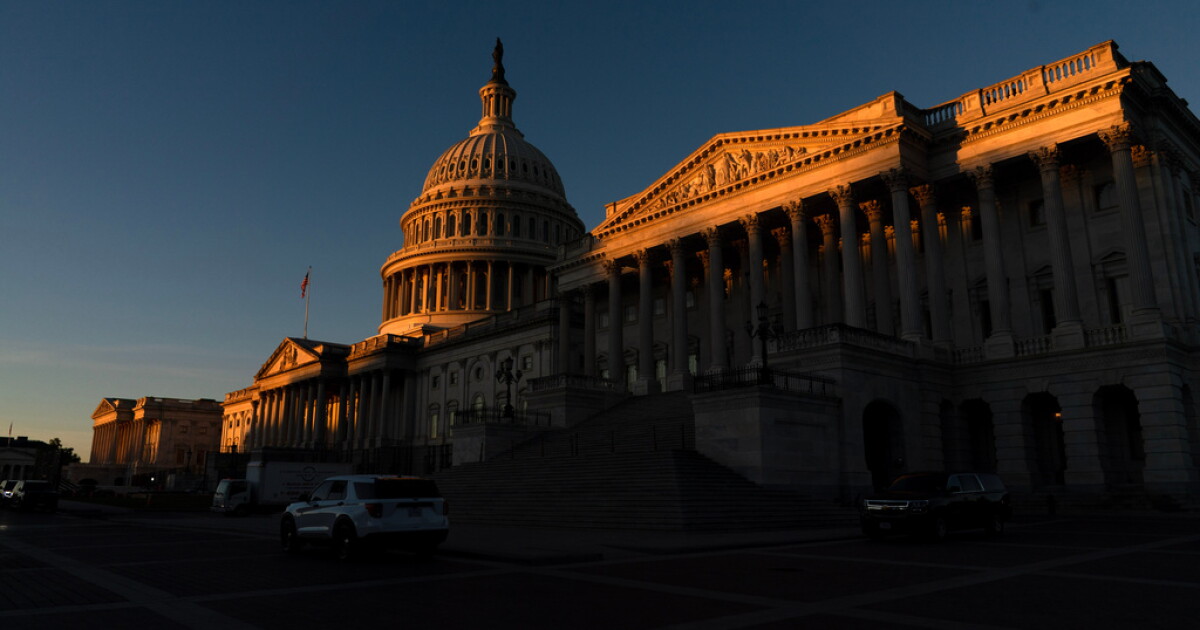
Congress faces a Dec. 11 deadline to keep federal agencies operating, but negotiations have become entangled in a larger struggle over the war in Iran. Some Democrats want the next spending agreement to restrict funding for the conflict, while President Donald Trump is seeking $350 billion in additional Pentagon spending. With no agreement reached, lawmakers must navigate competing demands over military operations and government services before the holiday season. The dispute highlights Congress’s “power of the purse”—its authority to determine how federal money may be spent. Through spending legislation, lawmakers can provide funding, impose conditions or prohibit particular uses of money, giving them a powerful tool for influencing foreign policy. Those restrictions must become law to take effect, however, and disputes can arise over whether particular conditions infringe on the president’s constitutional authority. The wording of any proposed Iran restrictions would therefore matter as much as the political agreement behind them. Democrats are divided over how aggressively to use that leverage. Some favor withholding support for a temporary funding bill unless it limits war spending. Others, including House Appropriations Committee ranking member Rosa DeLauro, oppose a shutdown as a strategy for ending the conflict. Republicans warn that tying government funding to restrictions on military operations could derail an agreement. The disagreement raises a practical distinction: a government shutdown does not automatically halt every federal activity, making a funding lapse different from an enacted prohibition on specific military expenditures. As the deadline approaches, the negotiations raise questions about both constitutional authority and political effectiveness. How precisely can Congress limit military spending while maintaining other government operations? And can lawmakers turn spending leverage into a change in foreign policy without allowing the broader funding dispute to disrupt public services?

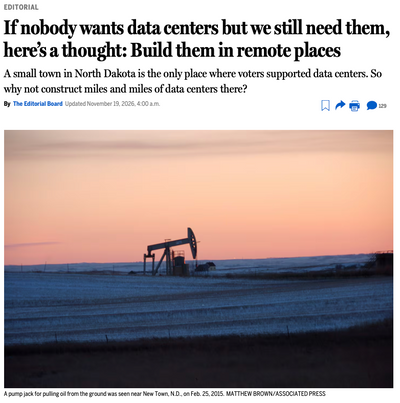
Boston Globe Editorial on Data Centers
When the dust was still settling after November’s election, Elon Musk posted on X that “data centers in space looking pretty appealing right now.” This might sound like a crazy idea. But is it? The Boston Globe turned to Mohammad Hajiesmaili of UMass Amherst's Manning College of Information and Computer Sciences for perspective.

Who Will Lead the U.S. Senate? Gerald Gamm Can Explain the Stakes.
Sen. Chuck Schumer of New York is facing a challenge from Sen. Chris Van Hollen of Maryland for the position of Senate majority leader, setting up an unusual contest over who will lead Democrats as they prepare to take control of the chamber. University of Rochester political scientist and historian Gerald Gamm is uniquely positioned to lend insight on the negotiations, the gamesmanship, and what the outcome could mean for the Senate and the Democratic Party. Gamm is co-author of Steering the Senate (Cambridge University Press, 2025), a study of the history, evolution, and institutional power of Senate leadership. The book has been called “essential reading for all who care — or worry — about the past and future of institutional leadership and capacity on Capitol Hill” “the best book we have about the organizational development of the Senate,” and “a masterpiece . . . that unearths new information on the emergence of leadership institutions and the role of parties and showing their relevance for the Senate of today.” He can discuss: • What makes this leadership challenge historically unusual and what it reveals about the Democratic caucus. • The power and influence wielded by the Senate majority leader and how that power is exercised. • The competing political and ideological interests shaping the contest. • What the fight reveals about the Democratic Party’s priorities and its approach to governing. • How the outcome could affect the Senate’s legislative agenda and its relationship with the White House. Gamm’s research focuses on American politics, political parties, and institutional developments and historical change, legislatures, and political parties. Connect with him by clicking on his profile.