
Experts Matter. Find Yours.
Connect for media, speaking, professional opportunities & more.

What Coronavirus Means for the Workplace
As the World Health Organization (WHO) has declared the coronavirus (COVID-19) a pandemic, organizations, schools and large public events have been scrambling in an effort to figure out what will happen next. But what if your employer doesn't have a formal work from home (or remote) policy? "Given that a high percentage of families have two working parents, managers need to understand that their usual expectations for productivity are going to have to adjust," says Narda Quigley, PhD, professor of management in the Villanova School of Business. In addition, it will be a completely different dynamic for the manager-employee relationship. Deadlines and tasks will need to be fluid in a more virtual workday, Dr. Quigley says. "It is impossible to expect that there wouldn't be an extreme impact on the processes that organizations depend on for day-to-day functioning, and so the goals have to change accordingly. Productivity goals and expectations probably need to be tabled (or at least dramatically decreased) until more about COVID-19 is understood. The organizations that are able to be nimble in the face of an unknown and developing situation, yet understanding of the urgency of public health directives and the needs of their employees, will emerge from this situation with valuable experience that may help them weather the next unexpected situation." Dr. Quigley also notes that women may be negatively impacted by an extended work from home period. "As work transitions to the home sphere, one question to consider is whether this disruption will have a longer-term adverse impact on the careers of women, rather than men. Given the continued prevalence of traditional gender roles and expectations around caretaking in many American families, women will likely be expected to focus less on work when they are working from home, particularly if they have children at home or individuals in their families who are sick. "Upon transitioning back into their regular working lives, women may find themselves further than ever from their next promotion. Organizations must be cognizant of this and understand that there are likely 'hidden' ways that women are contributing to their ongoing ability to operate—and without this activity, their ability to continue with business-as-usual would grind to a halt. However, this would require a fundamental, culture-wide rethinking of how we value what stands as work in this society, as American cultural norms are so strongly gender-specific."



FAU Experts Available to Speak on Coronavirus and its Impact Worldwide
Coronavirus has now earned global attention and Florida Atlantic University experts are available to speak with media about the impact of coronavirus on areas related to this worldwide epidemic, including hospitality, tourism, employment sick leave, and politics. If you are a journalist covering the progress of this virus and how it is impacting various sectors and segments of society – then let us help with your stories, questions and ongoing coverage. LeaAnne DeRigne, Ph.D., MSW, associate professor in FAU’s Phyllis and Harvey Sandler School of Social Work LeaAnne DeRigne is an expert on paid sick leave and its impact on the health and financial security of individuals, families and public health in general. Her recent research on the importance of paid sick leave benefits has received wide press coverage,and has been cited around the country by policy makers, lobbyists, and advocates pushing cities and states to mandate sick leave coverage. Key findings from the study, which are representative of the nation, showed that regardless of income, age, race, occupation, full-time or part-time work status, health status or health insurance coverage, workers without paid sick leave were three times more likely to delay medical care than were workers with paid sick leave. She also conducts research on other workplace benefits such as flexible work, vacation time and pensions. Peter Ricci, clinical associate professor and director of the Department of Marketing and Hospitality Management in FAU’s College of Business Peter Ricci is a hospitality industry veteran with more than 20 years of managerial experience in segments including food service, lodging, incentive travel, and destination marketing. While filling the role of hotel general manager for almost a decade, Ricci served as a part-time educator before entering academia full time as both a clinical associate professor and administrator. Kevin Wagner, Ph.D., professor and chair of FAU’s Department of Political Science in the Dorothy F. Schmidt College of Arts and Letters Kevin Wagner’s research and teaching interests include presidential and judicial politics, political behavior and legislative behavior. He is also a research fellow of the FAU Business and Economics Polling Initiative (BEPI). Wagner has lectured extensively on American politics and has served as an expert in many leading newspapers including the New York Times, Boston Globe, New York Newsday, the Dallas Morning News, and the Miami Herald. He has been featured as the political analyst for CBS 12 in West Palm Beach and on national television including NBC’s “Today.” All of the experts listed above are ready and available to speak with media. To arrange an interview simply click on an expert’s profile or email Lisa Metcalf at lmetcalf@fau.edu.




Truce with the Taliban - will it hold and is it possible?
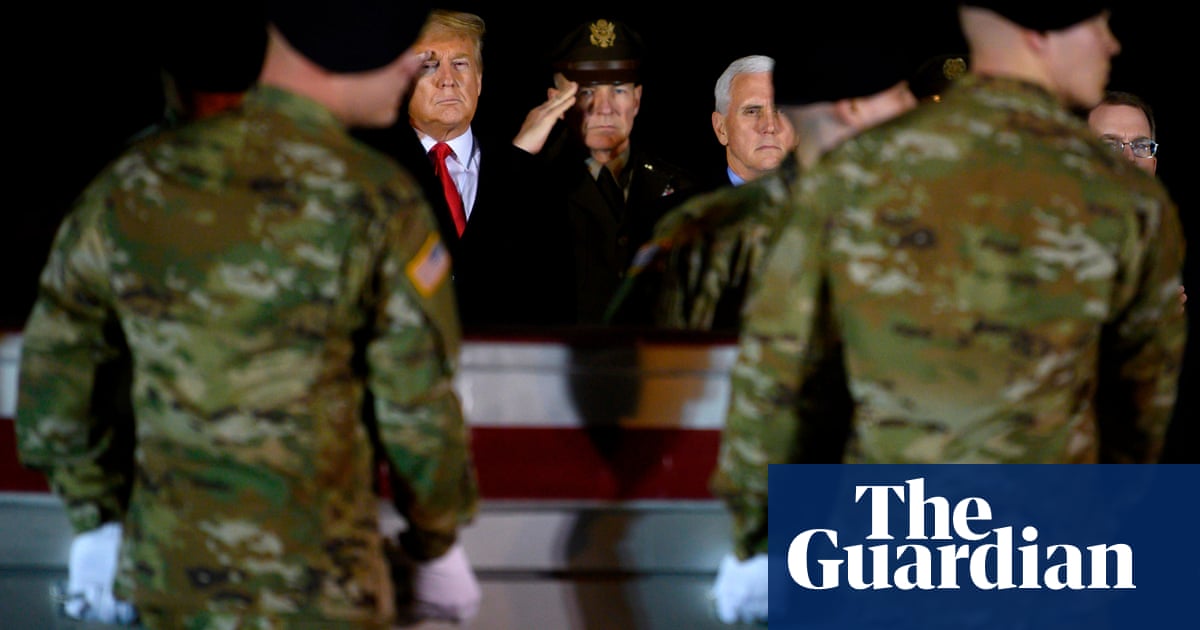
It’s been nearly two decades of war that has taken thousands of lives and cost American taxpayers trillions of dollars. And late last week, a temporary truce with the Taliban was finally reached after 18 years of fighting and if that holds, a more permanent resolution is expected to be signed on February 29. If successfully implemented, the weeklong “reduction in violence” agreement, which came into force at midnight Friday local time (1930 GMT, 2:30 p.m. EST), will be followed by the signing of the peace accord on Feb. 29, wrapping up America's longest-running conflict and fulfilling one of President Donald Trump's main campaign promises. Friday's announcement of an agreement on terms for a peace deal follows months of negotiations between the two sides that have broken down before. Yet both parties have signaled a desire to halt the fighting that began with the U.S. invasion after the September 11, 2001, attacks by Osama bin Laden's Afghanistan-based al-Qaida network. Should the truce stand, the U.S.-Taliban deal would be followed within 10 days by the start of all-Afghan peace talks that could result in the formation of a new government in Kabul, a pledge from the Taliban not to allow terrorist groups to operate in the country, and the phased withdrawal of U.S. and other foreign troops over 18 months. February 21 – US News and World Report It’s a historic moment for all involved, but there’s a lot of questions to be asked. Does an agreement like this have a chance of succeeding? What will happen to the area once all U.S. and other troops finally withdraw? Is this potentially the first sign of peace in the region? What protection does Afghanistan’s fragile government have if left to stand on its own? There are a lot of scenarios to consider, and if you are a journalist covering this vent, that’s where our experts can help with your questions, stories and ongoing coverage. Dr. Craig Albert is a leading expert on war, terrorism and American politics and has testified to the U.S. Congress on Islamic Extremism. He is also the Director of the Master of Arts in Intelligence and Security Studies at Augusta University. He has experience with all forms of local and national news organizations and is available to speak to media regarding this latest development between America and the Talban. Simply click on Dr. Albert’s icon to arrange an interview or to learn more about his expertise.


Entrepreneurship expert: New Americans vital to U.S. economy
In the United States, there is a long history of marginalized communities being extremely entrepreneurial. These communities were driven, in large part, by the desire to meet their own ethnic, religious, and cultural needs, according to Christine Beech, D.M., the Dr. Jon and Betty Kabara Endowed Chair in Entrepreneurship and Innovation at Saint Mary’s University of Minnesota. In the mid-19th century, more than 100 hospitals were founded by the Jewish community to fight anti-Semitism in medical school appointments and meet patient needs of having kosher options during the hospital stay.These opportunities were not available in the existing network of mainstream hospitals. Similarly, in the beginning of the 20th century, Irish Catholic immigrants began establishing a network of parochial elementary schools as a way to preserve their faith and culture and allow children to learn about their faith in school, Dr. Beech said. These two initiatives, led by immigrant groups, helped establish networks of schools and healthcare institutions that served a social good in their communities while generating jobs and stimulating the economy. In addition, there is a long line of entrepreneurs in the African-American community who combatted racial discrimination through new businesses because they were marginalized from the mainstream economy, Dr. Beech said. Examples of these entrepreneurs include Madam C.J. Walker, who invented a line of hair care products to serve the needs of her community, and Charles Clinton Spaulding, who developed the largest African-American business in the early 20th century specifically serving the insurance needs of the African-American community. In modern times, one of the largest marginalized communities in the U.S. is comprised of new Americans, many of whom are immigrants and have developed culturally responsive businesses. Although current policies are set in place to curtail U.S. immigrants, it is important to remember that the country could potentially lose an entire segment of the population that has been vital to the economy, Dr. Beech said. Beech pointed to a 2015 study from the Kauffman Foundation which mentioned that 40% of the Fortune 500 in 2010 were companies founded by an immigrant or the child of an immigrant. Nearly 30% of all new businesses started in 2014 were started by immigrants, Dr. Beech said, according to a related study from the same foundation. “We've been able to see constant growth and diversity within our economy that's been very healthy for us,” said Dr. Beech, who also serves as the executive director of the Kabara Institute for Entrepreneurial Studies at Saint Mary’s. “There's a narrative that says that the immigrant community is coming here to find work. But in fact, when we look at the data, a significant portion of them are actually creating jobs and starting businesses.” Dr. Beech added three primary reasons for these continued statistics indicating significant immigrant entrepreneurship: The drive to be independent A desire to meet their communities culturally specific needs A response to societal biases that hinder success within the mainstream workforce “Those migrant communities often develop their own businesses, almost like a subset of the economy, where they can't be marginalized, where they're actually taking charge of their own economic well-being,” said Dr. Beech. When it comes to knowing the overall impact of the immigration policies on the economy, there will be a natural lag in the data — possibly as long as five years — given how much time it typically takes for immigrants to establish businesses after arriving in a new country, Dr. Beech said. Are you a journalist covering this topic and interested in an interview? That’s where we can help. Christine Beech, D.M., has had a career that encompasses academics, entrepreneurship, military service, and consulting. She has been a faculty member in the business department at Saint Mary’s University since 2017 and is the executive director of the Kabara Institute for Entrepreneurial Studies. Before joining Saint Mary’s University, Dr. Beech owned her own consulting business in the Washington, D.C., area for many years. Before that, she worked as a corporate entrepreneur where she led the development of a multimillion-dollar business line for a global consulting firm. Dr. Beech is an expert in entrepreneurship, social entrepreneurship, and women entrepreneurs. She is available to speak with the media. To arrange an interview with her, simply click on her photo below to access her contact information.


Unprecedented levels of partisanship vitriol threatens the health of democracy in U.S., globally
Voter-based political parties have played an integral role in American politics since their formation in the 1790s, yet it is difficult to remember any other time in history — other than perhaps the 1850s — when the level of divisiveness was this high and the polarity this profound between Republicans and Democrats. To add more fuel to the fire, the anti-democratic actions against the rule of law by President Donald Trump have become a primary threat to democracy in the U.S., said David Lynch, Ph.D., a professor of History and Social Sciences and Political Science program coordinator at Saint Mary’s University of Minnesota. The same action are also threatening how the government works and delegitimizing and undermining institutions that make and enforce laws,Lynch added. Those institutions include formal ones such as Congress and the political parties themselves, as well as less formal entities, such as the traditional news media. “You have to have free, fair, open media in order to have a democracy. If you do not have a free press, you do not have a democracy,” Dr. Lynch said. “And similarly, you need to have the rule of law where laws are carried out not for political ends, but based on the laws.” The recent impeachment proceedings were an attempt to curtail these actions, but the partisan response to the Senate’s impeachment trial allowed the violation of democratic norms to be rewarded, said Dr. Lynch. Furthermore, politicians who react strongly to anti-democratic actions threaten to further delegitimize the government, such as Trump’s refusal to shake the hand of House Speaker Nancy Pelosi, a Democrat, at his most recent State of the Union address and her subsequent action of tearing up his speech. “That helps both sides reinforce their own position that the other side is less legitimate and that we shouldn't cooperate with somebody like that,” Dr. Lynch said. Dr. Lynch pointed to how the indices that measure the health of democracy both in the U.S. and abroad have all gone down since Trump won the 2016 election. In addition, the most recent Economist Intelligence Unit’s Democracy Index reflected the worst registered global democracy score since its inception in 2006. In that report, the U.S. received a score of “flawed democracy.” Traditionally, the U.S. democratic system has been able to regulate such extreme partisanship before election day by not nominating candidates that violate democratic norms or are far from the ideological center. On election day, overly partisan candidates are vulnerable in swing districts and swing states. That ability for the public to express its collective voice, though, has eroded over the years as the number of swing districts has dwindled. "When people view through a partisan lens, it changes the incentives that elected officials have because they may be rewarded for partisan but anti-democratic actions,” Dr. Lynch said. “It also changes how average people view this whole debate.” To demonstrate the current political scene in the U.S., Dr. Lynch alluded to a 2017 study conducted by a group of political scientists at Yale University in which experimental surveys were sent to Venezuelans to see to what degree they would be willing to accept a less democratic candidate if he or she was a member of the political party they affiliated themselves with. The answer was quite a large degree. “The big message here is you can't necessarily rely on the public just to vote out an anti-democratic candidate because they might get a partisan advantage from that anti-democrat,” Dr. Lynch said. Are you a journalist covering this topic and interested in an interview? That’s where we can help. David Lynch, Ph.D., professor of History and Social Sciences and Political Science program coordinator, has taught political science at Saint Mary’s University of Minnesota since 1996. Dr. Lynch has also written over a dozen chapters on international relations, international political economy, and American foreign policy, including the chapter on trade in the United Nations Association of the USA’s “A Global Agenda” from 1996 to 2005. Dr. Lynch is an expert in political science, political economies, and international relations. He is available to speak with the media. To arrange an interview with him, simply click on his photo below to access his contact information.
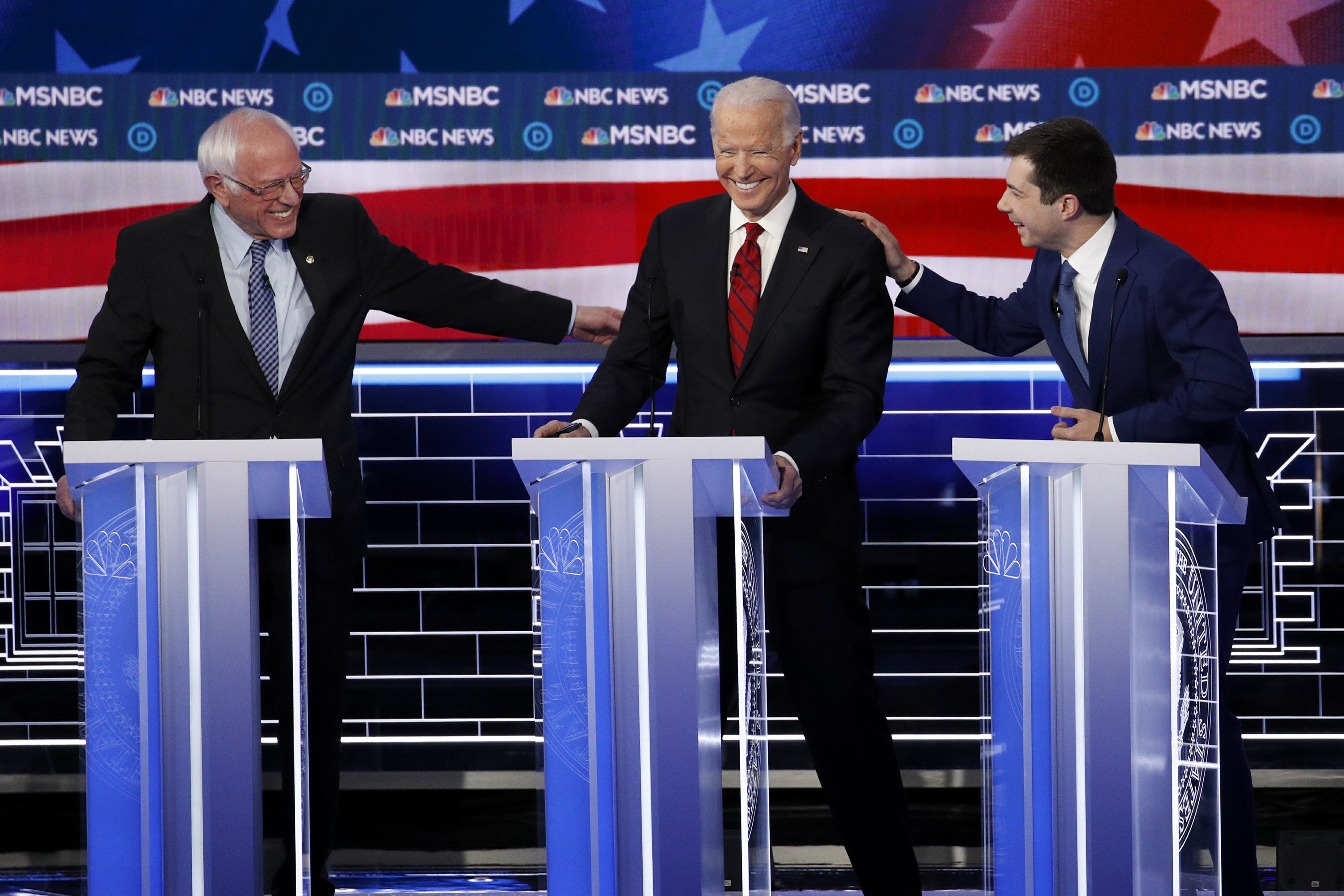
Well it’s obvious now – the gloves are off. The Nevada debate on NBC was the closest thing to a prize fight the network has aired in decades. No punches were pulled, it got personal quick for newcomer Michael Bloomberg. In fact, if anyone thought that the contest to lead the Democrats against Donald Trump in November was going to be a polite conversation abut ideas and policy, was proven dead wrong. Here are just a few of the memorable moments captured by media: Warren labeled Bloomberg “a billionaire who calls people fat broads and horse-faced lesbians.” Sanders lashed out at Bloomberg’s policing policies as New York City mayor that he said targeted “African-American and Latinos in an outrageous way.” And former Vice President Joe Biden charged that Bloomberg’s “stop-and-frisk” policy ended up “throwing 5 million black men up against the wall.” Watching from afar, Trump joined the Bloomberg pile on. “I hear he’s getting pounded tonight, you know he’s in a debate,” Trump said at a rally in Phoenix. “I don’t think there’s any chance of the senator beating Donald Trump,” Bloomberg declared before noting Sanders’ rising wealth. “The best-known socialist in the country happens to be a millionaire with three houses!” And ongoing animosity flared between Buttigieg and Klobuchar when the former Indiana mayor slammed the three-term Minnesota senator for failing to answer questions in a recent interview about Mexican policy and forgetting the name of the Mexican president. Buttigieg noted that she’s on a committee that oversees trade issues in Mexico and she “was not able to speak to literally the first thing about the politics of the country.” She shot back: “Are you trying to say I’m dumb? Are you mocking me here?”Later in the night she lashed out at Buttigieg again: “I wish everyone else was as perfect as you, Pete.” February 19 – Associated Press There’s a long way to go, but the next couple of weeks could be crucial as Super Tuesday approaches. And if you are a journalist looking for a media-ready expert who can provide insight, perspective and objective opinions about who will win, who needs to drop out and who is the best possible challenger for the Whitehouse – let us help. Mark Caleb Smith is the Director of the Center for Political Studies at Cedarville University. Mark is available to speak with media regarding the DNC Primary and the upcoming election. Simply click on his icon to arrange an interview.


Does the height of a person really matter? In America, if you are running for office, it might. Augusta’s Dr. Gregg Murray was on CNN this weekend discussing how height can play an advantage in American politics. Murray does confirm how a candidate’s height (or perception of) does make a difference in the minds of voters. "Yes, there does seem to be some sort of relationship between an elected leader's height and how her or she is perceived, "says Murray. Here’s the segment: As the long road to November winds and weaves along the campaign trail, there are going to be many, many different factors that candidates look to capitalize on to gobble up every available vote. And if you are a journalist covering the election – that’s where our media-ready experts can help. Dr. Gregg R. Murray, professor of political science at Augusta University, is available to talk about the upcoming election and all aspects surrounding each campaign. Murray’s research focuses on political behavior and psychology with specific interests in voter mobilization and turnout. He is also executive director of the Association for Politics and the Life Sciences.

With Brexit looming, more is unknown than known with British economy, trade agreements
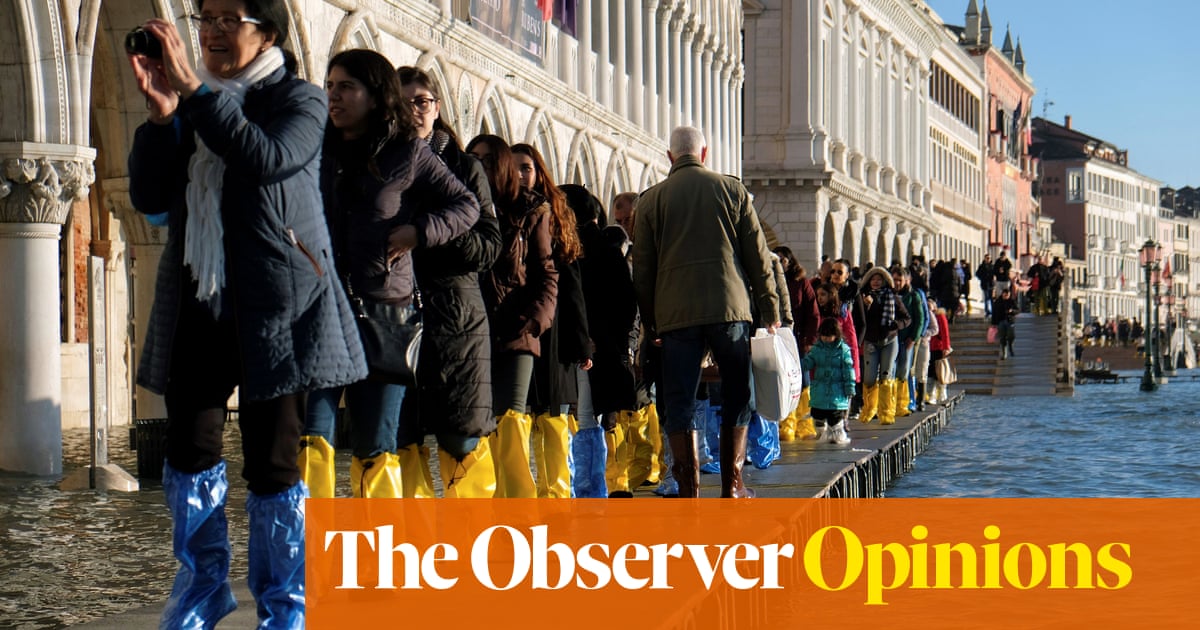
Although it has been in the works since June 2016, the transition phase of Great Britain’s decision to leave the European Union (EU) — more commonly known as “Brexit” — is set to take place on Jan. 31. It is a date that will most likely leave a ripple of economic uncertainty in the United Kingdom in its wake as the British prepare for total independence at the end of the year. “Brexit has created so many new unknown variables. It can be profoundly disruptive to England as we know it today,” says Ralf “Don” Keysser, D.B.A., an associate professor in the MBA program at Saint Mary’s University of Minnesota. Keysser predicts a negative short-term impact to the British economy, whereas the long-term perspective is still hard to predict until new free trade agreements with Europe and the rest of the world are established. Keysser does not see a clear-cut benefit to the U.S. establishing a free trade agreement with the U.K., simply based on the lack of British imports in the American market, other than maintaining political closeness. “It’s going to be a shock to the system. England will not be the England that it has been. There’s a lot of speculation, because we’ve never had a country pull out of the EU before, so it’s kind of an unknown. And it’s so highly politicized that it’s hard to get an objective analysis of what it’s going to look like.” Keysser points to a Toyota plant in South Derbyshire that supplies most of its output to countries in the EU through a tariff-free treatment. With Brexit going into effect, the factory may have to vastly reduce its output. Still, the workers in that community overwhelmingly voted to leave the EU. “This is a good example of how people will vote against their economic self-interests for ideological reasons,” Keysser says. “There’s a lot of ideology behind the Brexit vote: anti-immigrant, anti-Europe, pro-nationalist views that very much echoed President Trump’s appeal.” There are a few reasonably good projections, Keysser says, to make about the impact on inflation, unemployment, and economic trends — and none of them look good for Britain. One just has to look at the British pound, which has steadily been losing value to the dollar and euro over the years. In addition, several banks decided to either move from London or expand into other markets within the EU as soon as the Brexit results were announced, which could cost the British capital its status as of the world’s premier financial centers. “I see a gradual diminution of the financial business that’s been a mainstay of London,” Dr. Keysser says. On top of that, there is a real fear of Scotland and Northern Ireland wanting to leave the U.K. in favor of establishing their own independence and returning to the EU. The last time Scotland voted to leave the U.K. in 2004 it only passed 55% to 45%. “That could be the beginning of the end of the United Kingdom as we have known it,” Keysser says. The news might not be entirely bad out of Brexit. For international tourists, especially those from the U.S may be able to take advantage of the dollar’s exchange rate with the declining pound. Do you want to know more about the possible economic ramifications of Brexit? Are you a journalist covering this topic and interested in an interview? That's where we can help. Ralf Keysser, D.B.A., has been an active investment banker and business finance consultant for 35 years. He also serves an associate professor for the MBA program at Saint Mary’s University of Minnesota. To book an interview with him, simply click on his icon above to access his contact information.
Containing the coronavirus – Can it be done?
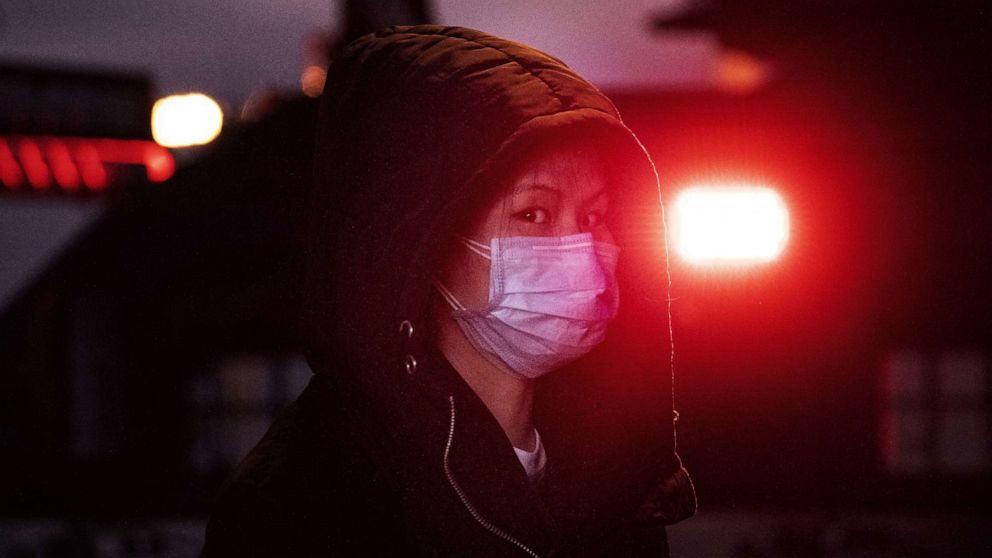
As of January 21, America had its first confirmed case of coronavirus. The virus that presents with flu like symptoms and is slowly making its way around Asia has finally found a host on American soil. The news of this has health officials scurrying and the world on edge with concerns of another SARS-like epidemic on the way. "As it stands, nearly 440 cases of the new coronavirus have been reported in China, Thailand, Japan, South Korea, Taiwan and the United States, with the overwhelming majority in China. All cases reported internationally were exported from Wuhan. Nine deaths have been reported in Wuhan. What should I know about the cornonavirus case in the U.S.? The first case of coronavirus reported in the U.S. is in a patient in his 30s from Washington state, the CDC said Tuesday. Laboratory testing at the CDC in Atlanta confirmed the patient was infected with it. He's currently hospitalized, in good condition, health officials in Washington said. Although the patient had traveled to Wuhan, he said did not visit the market at the center of the outbreak." January 21 - ABC News As this story develops, there remains a lot of questions to be asked getting the right information and facts will be essential given this is a matter of public health and concern. How is the virus transmitted? Can we expect more cases to appear on U.S. soil? Is there a vaccine and are there any preventable actions people can take? And, can health authorities stop the spread of Coronavirus before it becomes an epidemic? If you are a journalist covering this topic – that’s where our experts can help. Dr. Jose Vazquez is an expert in the realm of infectious diseases. He studies and treats infectious diseases, including antibiotic-resistant superbugs and fungal infections. A leader in his field and a go-to expert for media regarding this topic, Dr. Vasquez is available to speak with media regarding Immunization Awareness Month. Click on his icon to arrange an interview.


By early afternoon Friday, the Centers for Disease Control and Prevention had confirmed a second case of the new coronavirus on American soil. With cases now being detected in Europe and across Asia, the world is watching and worrying about the potential spread of this dangerous virus. There are 63 cases being monitored in the U.S. that stretch across 22 states, including the first patient in Washington state and the new case in Illinois, said Dr. Nancy Messonnier, director of the National Center for Immunization and Respiratory Diseases. Officials said the new patient, a woman in her 60s, is doing well and is in stable condition. She remains isolated in a hospital as a precaution, U.S. health officials said on a conference call with reporters. The Illinois patient traveled to China in late December and began experiencing symptoms when she returned to the U.S. last week, officials said. She did not have symptoms while flying, they said. “She was not symptomatic when flying. And based on what we know now about this virus, our concern for transmission before symptoms develop is low, so that is reassuring,” Dr. Allison Arwady, Chicago’s public health commissioner, said on the call. January 24 – CNBC As this story progresses – there are a lot of questions journalists are asking. How is this virus spread? How worried do Americans need to be about the coronavirus? Are there warning signs or methods to prevent the spread? And how far away are we from a vaccination? If you are a journalist covering this developing issue – let our experts help. Dr. Jian Zhang has worked with the Chinese Centers for Disease Control and Prevention, and the World Health Organization prior to moving to the United States. He obtained a Doctorate in Public Health from the Arnold School of Public Health, University of South Carolina before he joined the faculty of Jiann-Ping Hsu College of Public Health at Georgia Southern University. He is available to speak with journalists regarding the coronavirus and its origins and its potential to spread across America – simply click on his icon to arrange an interview.

