
Experts Matter. Find Yours.
Connect for media, speaking, professional opportunities & more.

The Gun Control Debate is at a Stalemate. Can Smarter Weapons Help to Solve it?
The gun control debate is at a stalemate. America seems incapable of finding common ground on background checks, waiting periods, weapons registries and restrictions or bans on select weapons. Shooting after shooting has resulted in decades of debate but little substantive change. But Professor Selmer Bringsjord from Rensselaer Polytechnic Institute, who recently weighed in on the issue, presented a concept that could turn the entire topic on its head by using artificial intelligence. Bringsjord accepts that America won’t get rid of its guns – so why not just make our guns smarter? Ethically AI-enabled weapons can put American politicians back to work by shifting the debate from the weapons we should ban, to the targets we will accept. Do we allow guns to kill school children, shoppers, concert-goers? The technology of ethical AI changes the conversation. His idea was just recently published in the Times Union: “Yet there is a solution, a technological alternative to the fruitless shouting match between politicians: namely, AI — of an ethical sort. Guns that are at once intelligent and ethically correct can put an end to the mass-shooting carnage. Consider the rifle apparently used by the human killer in the El Paso Walmart shooting. But now suppose that time is turned back to before his shots were fired on Aug. 3, and that his rifle, radically unlike the stupid one that killed, is both intelligent and ethical. This alternate-future rifle would know that it's approaching the Walmart by car and would accordingly know that it has no business being used anytime soon. Move forward in time a bit; the rifle is now in the hands of the aspiring, ear-muffed killer outside his car; but his weapon has fully disengaged itself and is locked into a mode of utter uselessness with the finality of a sealed bank vault. On the other hand, the guns in the hands of law enforcement officers who have dashed on scene know in whose hands they rest, and accordingly know that if they are trained on the would-be killer, they have every right to work well, if this criminal reveals some new threat. Notice: If people who don't actually pose a threat sufficient to warrant being shot by police can't be shot by smart, ethical guns, a fact that could lead to the welcome evaporation of a different but also vitriolic political shouting match.” -Times Union, August 16, 2019 Could AI be the answer to America’s gun problem? It’s truly a new perspective on an old issue. If you are a reporter covering this topic, let our experts help with your story. Dr. Selmer Bringsjord is the Chair of the Department of Cognitive Science expert in logic and philosophy, specializing in AI and reasoning. Dr. Bringsjord regularly speaks with media about AI and is available to speak about the concept of intelligent, ethical guns. Simply click on his icon to arrange an interview.



Racial segregation and National Parks – UMW experts are lending their expertise to the project
It’s a time of American history that is still raw and painful – segregation. It is, however, even more important to remember and preserve these moments so the country can move forward and learn from its past. It’s a project that University of Mary’s Washington’s Erin Devlin has taken on in collaboration with federal government. “The National Park Service has installed a wayside exhibit outside the Fredericksburg Battlefield Visitor Center on the history of segregation at Fredericksburg and Spotsylvania National Military Park. The exhibit highlights a former garage that in the 1930s and 1940s housed segregated restrooms for African American visitors. One of those restrooms is still in use and retains the original tile and fixtures. The larger building is now the park’s gift shop and bookstore. The new exhibit was a collaborative effort between the National Park Service and the University of Mary Washington to highlight surviving historic resources related to the local and national story of racial segregation at national parks. Erin Devlin, assistant professor of history and American studies at UMW, is working with the NPS to develop a historic resource study that will examine the practice of racial segregation in Virginia’s national parks during the first half of the 20th century.” August 06 – Fredericksburg.com Are you a journalist covering American history, or the place racial segregation has played in our country’s history? If so – let our experts assist with your stories. Erin Devlin's research focuses on race, public memory, and social justice, and she offers courses in both history and American studies. She is currently working on a historic resource study with the National Park Service focused on segregation and African-American visitation in Virginia’s national parks. Dr. Devlin is available to speak with media regarding this topic – simply click on her icon to arrange an interview.



Nutrition Science Is Increasing Our Life Spans
Consumers are inundated daily with the latest nutrition findings popping up in their newsfeed or in advertisements touting the benefits of the latest food trend. Yet, in a recent magazine cover story, "Why Everything You Know About Nutrition is Wrong," the takeaway is that the science behind dietary guidelines is not an exact one. It can lead to confusion for the general public regarding topics such as the use of vitamins, eating wholegrain foods, low-saturated fat and low-carb foods, for example. "Nutrition science, and the interpretation of it, is not without its flaws," says Rebecca Shenkman, MPH, RDN, LDN, director of the MacDonald Center for Obesity Prevention and Education at Villanova University's M. Louise Fitzpatrick College of Nursing. "While we would like to believe that eating healthy is a straightforward concept, it is far from it." Many variables affect nutrition science—both the fundamental research and then consequently how it is communicated to the public—which is different from other forms of science, says Shenkman. The U.S. Department of Health and Human Services (HHS) reports that about half of all American adults have one or more preventable, diet-related chronic diseases, including cardiovascular disease, type 2 diabetes and obesity. The HHS' 2015-2020 Dietary Guidelines are recommendations to combine healthy foods from all four food groups while paying attention to calorie limits. Nutrition science is relatively new, and while vitamin and mineral deficiencies were discovered starting in the mid-1800s, it was not until the 1970s that research began linking diet and specific elements of the diet (i.e., cholesterol) to health risks and chronic disease. "The nutrition field is a young and evolving science," Shenkman says. "And without the field's advancements, we would not see longer life spans or fewer public health concerns related to nutrient deficiencies." Eating a healthful diet can mean something different for each person, and it is important to find the right food balance that works best for one's body, lifestyle and emotional well-being. While there is evidence to support that a diet rich in fruits, vegetables, whole grains, healthy fats and limited red meat can promote health and prevent diet-related chronic diseases (e.g., type 2 diabetes, hypertension and obesity), many variables go into food choices, and it is necessary for healthcare providers, governmental agencies and the public health community to help make the healthy choice the easy choice. Shenkman offers these simple tips: Focus on the quality of food, not on the amount of food. And try to slow down and eat with purpose. Eat food such as fresh vegetables, fruits and whole grains. These non-processed foods are found on the perimeter of most supermarkets. Try not to skimp on sleep. Proper sleep, in combination with other healthy lifestyle habits, helps promote a healthy metabolism.


August is National Breastfeeding Month – Let our Experts Help with Your Coverage
It’s August…a month that celebrates breastfeeding and all the benefits that come with it. Breastfeeding is natural, healthy and cost-effective – and the American public is beginning to recognize a mother’s right to feed her child wherever and whenever she wants. Breastfeeding is a great benefit to the environment and society, according to the American Academy of Pediatrics. Breastfeeding families are sick less often and the parents miss less work. It does not require the use of energy for manufacturing or create waste or air pollution. There is no risk of contamination and it is always at the right temperature and ready to feed. A new website developed by researchers in Canada and Asia showed that the world could have saved $341 billion each year if mothers breastfeed their children for longer, helping prevent early deaths and various diseases, according to a July 12 article from Reuters. Known as the “Cost of Not Breastfeeding,” the online tool used data from a six-year study supported by the U.S.-based maternal and child nutrition initiative, Alive & Thrive. According to Augusta University Health’s Dr. Kathryn Strickler McLeod, breastfeeding protects against a variety of diseases and conditions in the infant, including diarrhea, respiratory tract infection, childhood obesity and much more. Additionally, there are also maternal health benefits to breastfeeding, including a decreased risk of breast and ovarian cancers. If you are covering this topic – let us help with your stories and questions. Dr. Kathryn Strickler McLeod is a nationally recognized expert in pediatric general and adolescent medicine. McLeod is available to speak with media – simply click on the icon to arrange an interview.


Central American Aid & Immigration
Assistant Professor Carmen Monico recently penned an article examining the Trump administration’s plan to use cuts in aid to El Salvador, Guatemala and Honduras to pressure those countries into curtailing the migration of their citizens to the U.S. The article, “Is Cutting Central American aid going to help stop the flow of migrants,” was first published by The Conversation, and has been picked up by a variety of media outlets. In her research and as a media resource, Monico draws from her work in Guatemala examining how programs to reduce crime and violence in the country can help retain at-risk youth who may feel pressured to leave their home country. She has extensively examined the forces that have compelled unaccompanied children and teens from Guatemala, Honduras and El Salvador to leave behind their homes and families. If Dr. Monico can assist with your reporting about these complex immigration issues, please reach out to Owen Covington, director of the Elon University News Bureau, at ocovington@elon.edu or (336) 278-7413. Dr. Monico is available for phone, email and broadcast interviews.

A global commitment to democracy
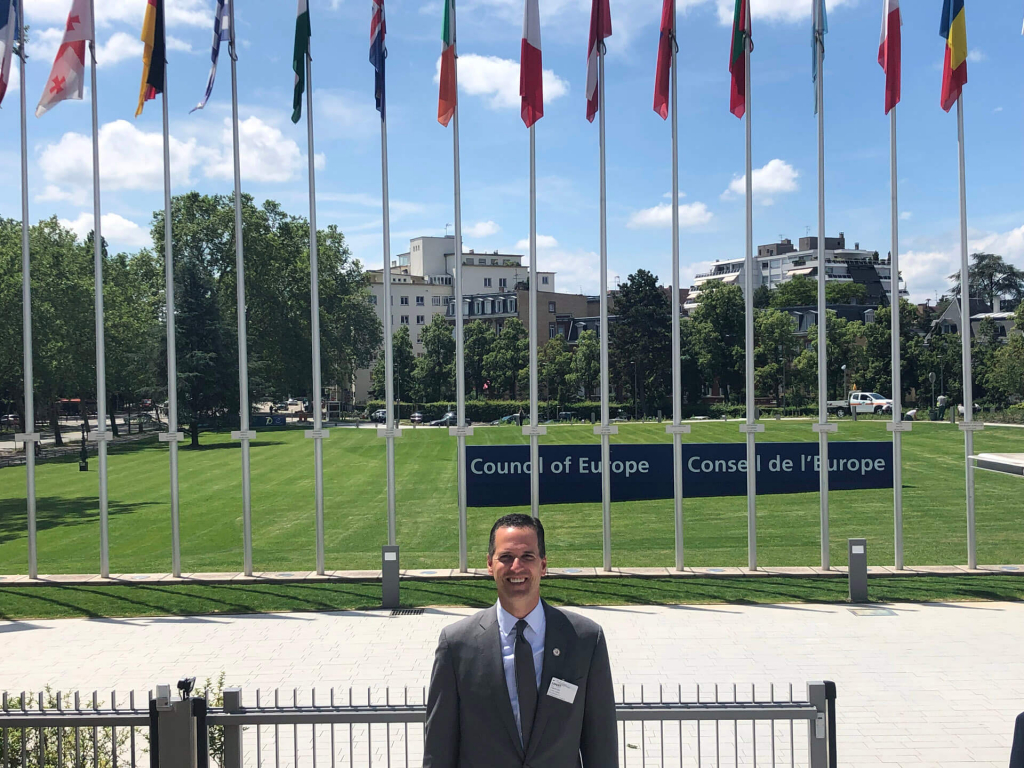
When I was invited to attend the Global Forum on Academic Freedom, Institutional Autonomy, and the Future of Democracy held this June in Strasbourg, France, I jumped at the chance. I was proud to add Otterbein’s support to a movement of global leaders committing to protecting democracy. I attended the forum along with more than 100 higher education leaders from around the world. Since its founding, Otterbein has stood for the rights of academic freedom and autonomy, as well as the freedom of speech of individuals, and we continue to stand resolute today. Otterbein believes that all voices from different walks of life must be represented, respected and valued, and we are committing to be a national and global leader in preserving democratic societies and values. The Global Forum was co-organized by the Council of Europe; the International Consortium for Higher Education, Civic Responsibility, and Democracy; the Organization of American States; and other partners, notably the International Association of Universities and the Magna Charta Observatory. It gathered higher education leaders and representatives of public authorities and NGOs from Europe and the United States, as well as smaller numbers from Australia, Asia, Africa, the Middle East and Latin America. - John Comerford Are you a journalist covering topics about democracy and how it is being threatened around the world? What role does higher education play in global democracy? And what countries or regions are the most at risk? There are a lot of questions regarding this topic – and that’s where we can help. John Comerford is an expert in higher education, regional and national topics. He is the President of Otterbein University and is available to speak with media regarding this issue and how higher-education needs to be made available to everyone in America regardless of income, family name or background. Simply click on his icon to arrange an interview.


Big trouble for big pharma – let our expert explain
Things are sunny and bright for the usually family-friendly image of Johnson & Johnson. In fact, as more and more evidence and details are presented in a landmark lawsuit between the corporate giant and the State of Oklahoma. The company could be facing financial calamity and its reputation might be a near impossible mission for any PR expert to recover. “As the state of Oklahoma’s multibillion-dollar lawsuit against Johnson & Johnson has unfolded over the past month, the company has struggled to explain marketing strategies its accusers say dangerously misrepresented the risk of opioid addiction to doctors, manipulated medical research, and helped drive an epidemic that has claimed 400,000 lives over the past two decades. Johnson & Johnson profited further as demand for opioids surged by buying poppy growing companies in Australia to supply the raw narcotic for its own medicines and other American drug makers. One expert witness at the forefront of combatting the epidemic, Dr Andrew Kolodny, told the court he had little idea about Johnson & Johnson’s role until he saw the evidence in the case. “I think it’s fair to characterize Johnson & Johnson as a kingpin in our opioid crisis,” he said. – The Guardian, June 19 But what is next? Will this lawsuit be duplicated in other states? Are other big-pharma companies liable or in similar trouble? And is this the gamechanger the industry needs? There are a lot of questions and that’s where we can help. Dr. Marc Sweeney is the Founding Dean of the School of Pharmacy at Cedarville University and is an expert in the fields of drug abuse, prescription drug abuse and Opioid addiction. Marc is available to speak with media regarding this growing issue. Simply click on his icon to arrange an interview.


The Increasing Tension Between the U.S. and Iran
Two oil tankers were attacked in the Gulf of Oman and an unmanned drone was shot down in the last two weeks, escalating tensions between the United States and Iran. After a last-minute bailout of a retaliatory airstrike, President Donald Trump announced additional sanctions against Iran on June 24. Lowell Gustafson, PhD, a political science professor, taught American foreign policy and a course titled "Theories of War and Peace" for several years. He says, with the talk of airstrikes and President Trump claiming there will be "obliteration like you've never seen before," Congress needs to step in. "Congress should immediately hold hearings and vote on exactly what conditions would need to be met before such an order was given. Before Congress makes an initial authorization to use force against Iran, the military should not follow any order to do so by the President. Our founders gave Congress the power to declare war since a single executive, whether monarch or president, should not have the authority to make such a weighty decision unilaterally." Dr. Gustafson noted that so far, sanctions have proven counterproductive and a "unilateral presidential decision to use force undermines American constitutional democracy." He said the president's failure to think systematically about this issue leaves us moving from tactic to tactic.


Otterbein’s engineering program focuses on adding diversity to the profession
In April, Otterbein granted degrees to its first class of engineering graduates. While it’s a historic moment for the school, the class is important for another reason: it exceeds the national graduation rate for women in engineering. Otterbein is working in an intentional way to recruit a diverse class of engineers in a field that is increasingly looking for well-trained professionals who bring diverse opinions and ideas to the table. According to the American Society of Engineering Education, the national average for females earning bachelor’s degrees in engineering is 19.9%. The average for minority students graduating with engineering degrees is just 7%. Amongst the 21 students graduating from Otterbein, 29% are female and 29% are minority students. The inaugural class was also the first class to study in The Point at Otterbein University, an experiential learning facility focused on collaboration with businesses, community makers and academics. At The Point, students have opportunities to pursue industry projects and on-campus internships with resident professionals from some of the country’s largest and most respected businesses, like JPMorgan Chase and Nestle, and locally based companies, like Worthington Industries, Nikola Labs and edgeThingZ. Of the 21 graduating students, several are pursuing graduate studies at The Ohio State University and Santa Clara University, while others have already accepted full-time jobs at companies like Honda and Williams-Sonoma. “The students in this class helped us develop a strong program and accomplished a lot during their four years,” said Mike Hudoba, assistant professor of engineering. “Looking back on what they started with, it’s such a neat legacy they get to leave behind. They’re all hardworking students who entered into this new program with us.” Are you covering or would you like to learn more about Otterbein University and its engineering program? Let our experts help. Michael Hudoba is an assistant professor of engineering at Otterbein University and he is available to speak to media regarding this historic time at the school. Simply click on his icon to arrange an interview. To learn more, click on the link below: https://www.otterbein.edu/news/first-engineering-class-a-highlight-of-otterbein-universitys-commencement-weekend/

It’s been 50 years since Stonewall…but has America really accepted gay rights?
It’s been a half-century since the Stonewall Uprising and the emergence of the gay pride movement. As cities across the world celebrate this month, it might also be time to look at where America stands today when it comes to gay rights. “From the perspective of veteran activists, the progress has been astounding. In 1969, every state but Illinois outlawed gay sex, psychiatric experts classified homosexuality as a mental disorder, and most gays stayed in the closet for fear of losing jobs and friends. “Today, same-sex marriage is the law of the land in the U.S. and at least 25 other countries. LGBT Americans serve as governors, big-city mayors and members of Congress, and one — Pete Buttigieg — is waging a spirited campaign for president.” June 17, ABC News But there is still a lot of work to do. LGBTQ people not only face discrimination in the workplace, in health care settings and even public restrooms, but can also suffer threats of violence. Just last month, the nation was shocked to learn of the chilling attack of an American woman and her partner overseas in London. The lesbian couple was violently assaulted by teens on a double-decker bus, leaving one of the women with a broken jaw, after they refused to publicly kiss one another in front of the group of young men who were harassing them. Are you covering this topic? There are a lot of questions about what needs to be done and that’s where our experts can help. Todd Powell-Williams, associate professor of Sociology at Augusta University, is an expert in social movements, social control, religion, police science and symbolic interactionism. Dr. Powell-Williams is available to speak with media about gay rights and where America stands 50 years after Stonewall. Simply click on her icon to arrange an interview.
