
Experts Matter. Find Yours.
Connect for media, speaking, professional opportunities & more.

Phasing out opioids – can it be done?
It’s a crisis that’s gripped America and has hit epidemic levels. More and more Americans are hooked on prescription painkillers, in fact, in 2017 close to 50,000 people in the United States died due to overdose from pills. And recently, it’s been suggested that perhaps phasing out and replacing these pills with less addictive and dangerous options is the only way to solve this issue? “FDA Commissioner Scott Gottlieb, who plans to leave his job at the agency next week, wants companies to develop pain drugs that could eventually allow older opioids to be restricted or to come off the market entirely. “Given the public health crisis we face, and that American families are still being destroyed by the opioids epidemic, I believe that the FDA should treat opioids, as a class, differently from other drugs,” Gottlieb told a Senate appropriations subcommittee on Thursday.” - Denver Post It's a bold statement from a bureaucrat leaving his post – but is it possible? · Will big pharma comply? · Is it a matter of money over morality or are more rigids rules required? · Or is the only aspect left legal and government intervention? There are a lot of questions to be answered and that’s where an expert from Cedarville University help. Dr. Marc Sweeney is the Founding Dean of the School of Pharmacy at Cedarville University and is an expert in the fields of drug abuse, prescription drug abuse and Opioid addiction. Marc is available to speak with media regarding this growing issue. Simply click on his icon to arrange an interview.


Call to Action for Looming Caregiving Crisis in the U.S.
Experts in the field of unpaid and paid caregiving for chronically ill or disabled adults are warning of a looming caregiving crisis in the United States—and say that innovation and entrepreneurship are desperately needed to avert that crisis. “We are calling for federal and state legislation for greater innovation and technology to avert unnecessary hospital admissions and visits to the emergency room, payment for family care givers, education and training for family caregivers and greater awareness and support among employers for workers who are also family caregivers—estimated to be between 15 percent and 20 percent of any employee population,” says Melissa O'Connor, PhD, MBA, RN, an associate professor at the M. Louise Fitzpatrick College of Nursing at Villanova. Dr. O'Connor specializes in geriatric nursing and home health care. An American Association of Retired Persons study showed that, in 2010, the caregiver support ratio was seven potential family caregivers for every person in the high-risk 80-plus cohort. In contrast, by 2030, the ratio is projected to be four to one. And by 2050, a sharp decline to fewer than three to one. Based on her years of research, Dr. O'Connor says more reimbursement for telehealth and other technologies that are proving to be very effective are needed. As a nurse educator, she also called for more training of clinical staff in caring for older adults. At a recent meeting of the Philadelphia Chapter of Aging 2.0, Dr. O'Connor and fellow panelists shared key points: Men and millennials are overtaking women as family caregivers; employers are often unaware of the economic consequences employee caregivers face and usually underestimate the percentage of employees with caregiving responsibilities; nearly 35 percent of employee caregivers have chosen or been forced by circumstances to leave the workforce because of caregiving responsibilities; and healthcare benefit costs for employees with caregiving responsibilities are eight percent higher than the rest of the employee population.


What Is Black Twitter and How Is it Changing the National Conversation? Baylor Expert Explains.
“Black Twitter” is a social media phenomenon that is changing the national conversation, but many people – including professional and strategic communicators – do not understand what it is or how it works, says Baylor University’s Mia Moody-Ramirez, Ph.D., professor of journalism, public relations and new media. Moody-Ramirez is a nationally recognized expert on mass media representations of minorities, women and other underrepresented groups. She coauthored the 2018 book From Blackface to Black Twitter: Reflections on Black Humor, Race, Politics, & Gender with Janette L. Dates, Ph.D., educator and critical commentator on the images of African-Americans in media. First things first, Moody-Ramirez said, Black Twitter is not a separate entity from Twitter. Black Twitter is a grassroots movement within Twitter that has provided a virtual community of mostly African-American Twitter users a collective voice on a variety of issues, including Black Lives Matter. Black Twitter users often identify themselves using the #blacktwitter hashtag or by focusing on issues related to the black experience. “We conclude [in our book] that alternative spaces, such as Twitter, offer a platform for ideas and concerns from a black perspective about social inequalities, politics and social justice, that were historically prohibited from taking root in other communication venues,” Moody-Ramirez said. In the following Q&A, Moody-Ramirez further explains Black Twitter. Q: When do you see the most Black Twitter activity? A: Much of the content on Black Twitter surfaces during a crisis that impacts black people such as race-related incidents that had less than favorable outcomes for the black community. As the saying goes, if society doesn’t handle it, then Black Twitter will step in to handle it. On a lighter note, Black Twitter users also collectively discuss media content such as TV shows, movies and award ceremonies from the black perspective. Q: How can people monitor what’s happening via Black Twitter? A: "Black Twitter" users often identify themselves using the #blacktwitter hashtag or other hashtags such as #BlackGirlJoy, #blackboyjoy, #blacklivesmatter, or any other hashtag focuses on issues related to the black experience. You can also monitor Black Twitter by following individuals who are known for sharing content about the black experience. Q: If someone outside the African-American community feels passionate about an issue or supports an issue raised by the Black Twitter community, how can they engage? Should they? A: As with any other platform, they should be considerate and proceed with caution. Anyone who is not a regular should make sure what they are sharing is appropriate. Q: Do you see Black Twitter or similar movements emerging on other social media platforms? A: Not to the same extent because Black Twitter is driven by hashtags and certain Twitter users who are trendsetters. Q: Is Black Twitter a reflection or an extension of other historical, social African-American grassroots movements? A: African Americans have used Twitter to share narratives on issues of interest to the black community, particularly in the United States. In her 2015 dissertation, Dr. Meredith Clark writes that African-American Twitter users have emerged as a subset of interest for two reasons – (1) their representation on Twitter has eclipsed that of White U.S. users; (2) because of their representation, they possess a unique ability to dramatically influence Twitter trends. Q: How do you feel Black Twitter will evolve? Will it? A: Scholars such as Feminista Jones and Dr. Meredith Clark have traced the history and content of Black Twitter, noting that the platform is used to share content on timely topics such as racial inequalities, politics, police brutality and women’s rights. In 2013, Feminista Jones described “Black Twitter” as a “collective of active, primarily African-American Twitter users who have created a virtual community that participates in continuous real-time conversations.” ABOUT BAYLOR UNIVERSITY Baylor University is a private Christian University and a nationally ranked research institution. The University provides a vibrant campus community for more than 17,000 students by blending interdisciplinary research with an international reputation for educational excellence and a faculty commitment to teaching and scholarship. Chartered in 1845 by the Republic of Texas through the efforts of Baptist pioneers, Baylor is the oldest continually operating University in Texas. Located in Waco, Baylor welcomes students from all 50 states and more than 80 countries to study a broad range of degrees among its 12 nationally recognized academic divisions. ABOUT THE COLLEGE OF ARTS & SCIENCES AT BAYLOR UNIVERSITY The College of Arts & Sciences is Baylor University’s oldest and largest academic division, consisting of 25 academic departments and seven academic centers and institutes. The more than 5,000 courses taught in the College span topics from art and theatre to religion, philosophy, sociology and the natural sciences. Faculty conduct research around the world, and research on the undergraduate and graduate level is prevalent throughout all disciplines. Visit www.baylor.edu/artsandsciences.


Empowered Storytelling Geared Toward Women Is a Winning Combo for Super Bowl Ads, Baylor Expert Says
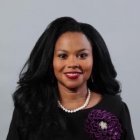
Television advertisers who have chosen to appeal to women fans and viewers during this weekend’s Super Bowl have committed their millions of dollars to a wise strategy, according to a Baylor University marketing and advertising expert. Tyrha Lindsey-Warren, Ph.D., clinical assistant professor of marketing in Baylor’s Hankamer School of Business, studies consumer behavior and attitudes, multicultural media and advertising, and movies and entertainment. Each year, she and her students analyze the Super Bowl ads. And each year, she said, she sees more ads geared toward women. In fact, AdAge reports that brands like Bumble, Toyota and Procter & Gamble's Olay are featuring women in lead roles in their Super Bowl commercials this year. “That’s smart,” Lindsey-Warren said. “The current and future market power of women – as a whole and by segments – is undeniable and truly cannot be ignored by marketers.” To make her point, she cited research showing that women influence more than 80 percent of all consumer spending; 89 percent of the financial decisions are made by women; and globally, women control more than $20 trillion in world-wide spending. In addition, nearly 24.3 million African American women are brand loyalists and cultural trendsetters who have influence over the $1.2 trillion dollars in black spending power. Forbes reported in 2018 that “women constituted about 49 percent of the 108 million-plus people who watched” that year’s Super Bowl – and paid closer attention to the ads. “Nowadays, whatever brands plan to do during the Super Bowl must be extremely strategic and well planned when commercials go for over $5 million dollars,” Lindsey-Warren said. “With the #metoo and #times up movements as well as the diversity and gender issues in advertising industry and more, I think brands struggle as to how they approach targeting women on such a global stage.” She said brands that use “empowered storytelling” – storytelling that exudes the emotion of empowerment – make a difference. Good examples, she said, are Always’ “Like a Girl” commercial in 2015 and Audi’s “Daughter” commercial in 2017. “In my research, especially among Millennials and Gen Z, this approach is a powerful combination for brands who want to increase purchase intentions for their products or services,” Lindsey-Warren said. “The emotion of empowerment is multidimensional and promotes encouragement and can be extremely motivational,” she said. “When one is empowered, it can be an ‘aha’ moment and very transformational in a positive manner. In addition, empowered storytelling is a proactive approach to storytelling that demands you keep the receiver of the story in mind at every stage of the process because, at the end of the day, you want the receiver of the story to be better in some way for having received the empowered narrative they just viewed or experienced.” And when consumers are empowered, they tend to tell others. In the digital space, this looks like sharing videos, posts, quotes and more on social media channels. “Essentially, empowered storytelling gives brands the opportunity to achieve the right balance of entertaining and encouraging and, ultimately, healing by showing that they care for their consumers through the motivational messages and narratives they are producing,” Lindsey-Warren said. ABOUT TYRHA LINDSEY-WARREN, Ph.D. Tyrha Lindsey-Warren, Ph.D., is a marketing scholar, business executive, artist and entrepreneur. As a consumer behavior scholar, her research is rooted in narrative transportation theory (i.e., storytelling) that exudes the emotion of empowerment and its impact on consumer attitudes, behaviors, purchase intention and message recall. She also studies health edutainment, multicultural media and advertising, as well as movies and entertainment. Lindsey-Warren is an expert in effective communications strategies for leaders, multicultural communications and marketing. Her latest research, “An Examination of Television Consumption By Racial and Ethnic Audiences in the U.S.,” was published in the Journal of Advertising Research. She will be discussing this study during panel discussions in New York City and Los Angeles for the Geena Davis Institute on Gender in Media. ABOUT BAYLOR UNIVERSITY Baylor University is a private Christian University and a nationally ranked research institution. The University provides a vibrant campus community for more than 17,000 students by blending interdisciplinary research with an international reputation for educational excellence and a faculty commitment to teaching and scholarship. Chartered in 1845 by the Republic of Texas through the efforts of Baptist pioneers, Baylor is the oldest continually operating University in Texas. Located in Waco, Baylor welcomes students from all 50 states and more than 80 countries to study a broad range of degrees among its 12 nationally recognized academic divisions. ABOUT HANKAMER SCHOOL OF BUSINESS AT BAYLOR UNIVERSITY Baylor University’s Hankamer School of Business provides a rigorous academic experience, consisting of classroom and hands-on learning, guided by Christian commitment and a global perspective. Recognized nationally for several programs, including Entrepreneurship and Accounting, the school offers 24 undergraduate and 13 graduate areas of study. Visit www.baylor.edu/business and follow on Twitter at twitter.com/Baylor_Business.


It seemed all of America tuned in Tuesday evening at 9 PM Eastern to hear just what President Donald Trump had to say as he spoke to a nation caught in the middle of a government shutdown. With federal services all but stagnant across the country, and those employees considered essential forced to work without pay, most expected a pitch to a nation that included a solution and ideally a moderated and mature speech. After all, there is a lot at stake for every American who is either employed by, engaged with or in need of the federal government. However, that was not the case. What did come was a short speech that was long on rhetoric, blame and ultimatums instead of resolution. In the past, when addressing the nation, a President would do so to share information of national importance, like Obama’s speech about the killing of Osama Bin Laden or Ronald Reagan speaking to America about the Iran-Contra Hearings. These were big deals with a significant message. Speaking with Canada’s national broadcaster, University of Mary Washington’s Stephen Farnsworth had this observation to share. “By taking such partisan swipes from the grandeur of the Oval Office during a prime-time address, Trump runs the risk of "overexposure," or of being accused of cheapening a time-honoured tradition, said Stephen Farnsworth, a political science professor with the University of Mary Washington who specializes in presidential communications. It's not clear whether the president's speech will have any impact on the border security stalemate. But Trump's speech may even have implications for future Oval Office broadcasts, Farnsworth said.” So, what was gained by the address? Did President Trump essentially ‘cry-wolf’ and cheapen the significance of a national address? Or did it serve his purpose and support his base? And, did the Democrats blow an opportunity to effectively respond? There will be a lot of analysis of Tuesday’s TV-time and that’s where the experts from the University of Mary Washington can help. Dr. Stephen Farnsworth is professor of political science and international affairs at the University of Mary Washington. A published author and a media ‘go-to’ on U.S. politics, he is available to speak with media regarding this issue. Simply click on his icon to arrange an interview.



Fundamental research hailed as new horizon in hypersonic flight
PHOTO Cutline: Mohamed Gad-el-Hak, Ph.D., professor emeritus in Virginia Commonwealth University’s Department of Mechanical and Nuclear Engineering. (Photo courtesy of the VCU College of Engineering) Mohamed Gad-el-Hak, Ph.D., Professor Emeritus in VCU’s Department of Mechanical and Nuclear Engineering, together with investigators at the University of Peking, China, has revealed an aerodynamic heating mechanism that sheds new light on the behavior of ultra-high-speed aircraft. Their discovery comes as news outlets including CBS, CNN and the Washington Post are reporting on the tightening race among China, the U.S. and Russia for dominance in hypersonic systems, aircraft and weapons that travel more than five times the speed of sound. Researchers previously thought sudden heat spikes, which make hypersonic flight impractical for many applications, occur when air flows reach maximum turbulence. However, Gad-el-Hak and his collaborators have demonstrated through theory, experiments and numerical simulations that temperatures actually jump just before turbulence sets in. The National Science Review has called their achievement “a major progression in hypersonic transition.” The American Institute of Physics said this investigation denotes “a new horizon” for future studies of hypersonic heating phenomena. The discovery is expected to accelerate applied military and commercial hypersonic research for the design of future spacecraft, intercontinental ballistic missiles and hypersonic vehicles. Gad-el-Hak emphasizes that such applications result from fundamental research. Unlike applied investigations, which set out to solve practical problems, fundamental research seeks to improve scientific understanding of the natural world. “I have two unflinching scholarly beliefs,” Gad-el-Hak said. “Fundamental science eventually, albeit in fits and starts, leads to a nation’s health, happiness and prosperity, and ‘walls’ between nations hinder that progress.”


Election 2018: Wake Forest University experts
From state constitutional amendments to immigration, Wake Forest faculty experts can comment on a variety of 2018 midterm election-related topics. ___________________________________________________________________________________________ John Dinan, professor of political science and international affairs North Carolina Politics State Constitutional Amendments Congressional Redistricting Author of the book, “State Constitutional Politics: Governing by Amendment in the American States,” Dinan is available to comment on amendments appearing on the 2018 ballot in North Carolina and in 28 other states. From voter ID to judicial vacancies, he can place particular amendments in nationwide and historical perspective. Based on his research, he can also address the arguments and issues that routinely surface in campaigns supporting and opposing various amendments. Dinan closely follows North Carolina political races and teaches courses on campaigns and elections, state politics and Congress and policymaking. ___________________________________________________________________________________________ Allan Louden, professor of communication Political Campaigns and Advertising Political Debates Social Media and Politics From presidential debates to political advertising, Louden has provided expert commentary and analysis for a wide range of national and regional media outlets. He follows political advertising and candidates’ debates in presidential, Senate, gubernatorial and high-profile House races. Under Louden’s leadership, Wake Forest University’s debate team won the national debate tournament. He can comment on political advertising strategies and how social media, including viral videos, impacts races. ___________________________________________________________________________________________ John Llewellyn, associate professor of communication Political Speeches Political Scandals Public Apologies Llewellyn focuses on political speeches and rhetoric. He is a scholar of rhetoric whose work includes analyzing persuasive language from the nation’s most prominent politicians, coaches and civil rights leaders. A former speechwriter and public information officer, Llewellyn also specializes in crisis communication, having studied the intersection of politics and public relations for nearly 30 years. He can also comment on political scandals and public apologies. ___________________________________________________________________________________________ Betina Wilkinson, associate professor of political science and international affairs Latina/o/x Voters Wilkinson can offer insights and commentary on Latino voters for the midterm elections. She is an expert on Latino political behavior in the U.S., studies Latinos in U.S. politics, national and local immigration policy, and racial attitudes among Latinos and other ethnic groups. She can discuss the demographics and election-related priorities of Latinos. Wilkinson authored a chapter “North Carolina Latinos: And Emerging Influential Electorate in the South” in the book “The Pivotal Role of the Latino Electorate in the 2012 Election.” She is also the author of “Partners or Rivals? Power and Latino, Black and White Relations in the 21st Century.” ___________________________________________________________________________________________ Katy Harriger, professor of politics and international affairs Young Voters Federal Special Prosecutor/Robert Mueller U.S. Supreme Court A leading national expert on the federal special prosecutor, Harriger can address the influence the Mueller investigation may have on the 2018 elections. She is the author of The Special Prosecutor in American Politics and is regularly interviewed by national media outlets on the use of federal special prosecutors in American government. Harriger also studies political participation and voting among young people (including college students) and is the co-author of “Speaking of Politics: Preparing College Students for Democratic Citizenship through Deliberative Dialogue.” She can provide expert commentary on the latest Supreme Court developments and how they will likely impact midterm elections. She co-authored the book “American Constitutional Law” published in 2017. ___________________________________________________________________________________________ Michael Pisapia, assistant professor of politics and international affairs Gender and Politics Teacher Protests Political Parties and Education Reform Women Running for Congress Gender Equality and Constitutional Law Kavanaugh Hearings Pisapia studies American political development with a focus on women, gender and politics and can comment on tensions between liberal and conservative social groups and the unprecedented number of women who are engaged in political movements, and who are seeking elective office this year. He can also address partisan polarization around education policy, religious freedom and, sex and gender equality in constitutional law, including the significance of the Kavanaugh hearings in the context of the #metoo Movement. Pisapia is working on a book titled, “Educating a Nation: Women’s Empowerment and the Shape of American Federalism. He won the 2013 Carrie Chapman Catt Prize for scholarship on women and politics. He teaches courses on American politics and political thought. ___________________________________________________________________________________________ Hana Brown, associate professor of sociology and Gale Faculty Fellow Immigration Brown studies the effects of immigration and racial divisions on policy outcomes and the micro-level effects of state actions on the lives of racial minorities and immigrants. Her research also focuses on the political origins and political consequences of social inequalities. She teaches courses on political sociology, social inequality, and race and ethnicity in politics. ___________________________________________________________________________________________


Can white evangelicals still swing the midterms?
Evangelicals overwhelmingly voted for Donald Trump in the 2016 election. And they overwhelmingly prefer Republican candidates in the midterms. They’re also reliable voters -- and support for Trump among white evangelicals remained at an all-time high with just days to go. Democrats, on the other hand, will rely on a less-certain electorate of young and diverse voters. This could make the difference in Tuesday's outcome. “Social conservatives could swing important races across the country if other voters don’t turn out in the numbers Democrats are hoping for,” writes Dylan Scott on Vox.com, which called white evangelicals “the sleeping giant of the midterms.” Still, according to The New York Times: “Young evangelicals are questioning the typical ties between evangelicalism and Republican politics. Many said it had caused schisms within their families. And many described a real struggle with an administration they see as hostile to immigrants, Muslims, L.G.B.T.Q. people, and the poor. They feel it reflects a loss of humanity, which conflicts with their spiritual call.” Emile Lester, assistant professor of political science at the University of Mary Washington, is an expert in religion and politics whose research published by the First Amendment Center has been featured in The New York Times, The American Interest, USA Today and on C-Span, NPR and various other media outlets around the nation. Emile is available to speak with reporters about the political behavior of evangelical Christian voters. Just click on his icon to arrange an interview.

How the Migration Caravan became so large?
Edith Cruz was sitting at home in central Honduras, scanning Facebook on her phone, when she saw the post about the caravan on a community news page. It was Oct. 12. She and her cousin had just opened a small business selling tortillas when they were confronted by a gang, threatened with death if they didn’t hand over half of their profits. She looked at the Facebook post: “An avalanche of Hondurans is preparing to leave in a caravan to the United States. Share this!” Within three hours, her bags were packed. The question of how the migrant caravan began has wound its way to the American midterm elections. President Trump and other Republicans have suggested that Democrats paid migrants to begin the journey. As the group continues to grow, the largest such caravan in recent years, its beginnings are being scrutinized: How did more than 5,000 migrants from across Central America find each other? As the caravan continues to move toward the United States, Dr. Glen Duerr, associate professor of international studies at Cedarville University, has been following the situation and can provide insight into the caravan and its impact on our election and country, in general.


“When in doubt, choose a different costume,” Baylor expert says Megyn Kelly, host of NBC’s “Megyn Kelly Today,” is facing national criticism for her suggestion during a roundtable discussion this week that it was OK for white people to dress in blackface for Halloween. After two days of backlash, media accounts reveal that the future of her career is in question. But the questions she raised regarding blackface and cultural appropriation should be addressed, especially as Halloween approaches, said Mia Moody-Ramirez, Ph.D., professor of journalism, public relations and new media in Baylor University’s College of Arts & Sciences. She is a nationally known expert on mass media representations of minorities, women and other underrepresented groups and coauthored the new book "From Blackface to Black Twitter: Reflections on Black Humor, Race, Politics, & Gender." Moody-Ramirez said people need to understand the historical significance of blackface to grasp its negative reception today. “When you know better, you do better,” she said. At its base form, she said, blackface is the use of makeup by a nonblack person to appear black. She added that many people do not understand why the seemingly simple act of a white person darkening his skin like a black person at Halloween – even if it’s an act to honor a favorite entertainer or sports figure – can be offensive. “Dressing in blackface during Halloween is inappropriate because the blackface tradition is founded upon the enactment of demeaning stereotypes of black people,” Moody-Ramirez explained. “Blackface has been frowned upon since the blackface minstrel shows of 18th and 19th centuries when various aspects of African/African American culture were appropriated and used for profit. Dressing up in blackface invokes representations of unflattering images of blacks as lazy, unintelligent and criminal in nature.” Yet the issue is bigger than blackface. Any cultural appropriation – defined as the adoption of elements of a minority culture by members of the dominant culture – can be deemed inappropriate and offensive. “Cultural appropriation is distinct from equal cultural exchange because of the presence of power inequities that are a consequence of oppression,” Moody-Ramirez said. “Cultural appropriation is important to consider during Halloween because this is the time of year when we are most likely to dress up in a costume that is representative of another culture.” Common cultural appropriation missteps include darkening one’s face, wearing ethnic garb and/or dressing up to provoke laughter rather than show respect for a group/person, she said. “When considering a costume, think of whether it would show honor or disrespect for a group/person,” Moody-Ramirez advised. “If you don’t know the meaning of the ethnic attire you are considering for Halloween, you shouldn’t wear it. For instance, tribal markings, headdresses and turbans would not be appropriate costume attire because they are tied to a specific ceremony or religious meaning.” Showing respect for other cultures should include honoring their traditions. “Some cultures have laws that ban or restrict individuals from wearing religious attire in public places. Other cultures save certain attire for special ceremonies and honors,” Moody-Ramirez said. Moody-Ramirez offered the following tips to consider when choosing a Halloween costume this year. Avoid dressing in a costume that will reflect another ethnicity or culture. Choose something that is fun and tasteful – animals, movie characters (without darkening your skin), ghosts, ghouls, etc. If you dress like someone of a different ethnicity/culture, don’t darken your face or emphasize features like eyes, teeth or noses. Think about whether the costume will be perceived as tasteful or tasteless. Use the grandmother test. If you post it on social media, would your grandmother be proud or disappointed? “When in doubt,” she said, “choose a different costume.” ABOUT MIA MOODY-RAMIREZ, Ph.D. Mia Moody-Ramirez, Ph.D., is the director of graduate studies, director of American studies and professor of journalism, public relations and new media in the Baylor University College of Arts & Sciences. Her research emphasizes mass media representations of women, minorities and other underrepresented groups. She recently coauthored the book "From Blackface to Black Twitter: Reflections on Black Humor, Race, Politics, & Gender." Other books include: “The Obamas and Mass Media: Race, Gender, Religion, and Politics (Palgrave Macmillan) with Dr. Jannette Dates, and “Black and Mainstream Press’ Framing of Racial Profiling: A Historical Perspective” (University Press of America). Ramirez is head of the Minorities and Communication division of the Association for Education in Journalism and Mass Communication (AEJMC), which is committed to advancing research, teaching and professional freedom and responsibility scholarship and initiatives that explore the relationship between racial and ethnic minorities and mass communication. In August, she was presented with AEJMC’s Lionel Barrow Jr. Award for Distinguished Achievement in Diversity Research and Education and also was recognized as one of nine Institute for Diverse Leadership in Journalism and Communication Fellows. ABOUT BAYLOR UNIVERSITY Baylor University is a private Christian University and a nationally ranked research institution. The University provides a vibrant campus community for more than 17,000 students by blending interdisciplinary research with an international reputation for educational excellence and a faculty commitment to teaching and scholarship. Chartered in 1845 by the Republic of Texas through the efforts of Baptist pioneers, Baylor is the oldest continually operating University in Texas. Located in Waco, Baylor welcomes students from all 50 states and more than 80 countries to study a broad range of degrees among its 12 nationally recognized academic divisions. ABOUT BAYLOR’S COLLEGE OF ARTS & SCIENCES The College of Arts & Sciences is Baylor University’s oldest and largest academic division, consisting of 25 academic departments and seven academic centers and institutes. The more than 5,000 coursestaught in the College span topics from art and theatre to religion, philosophy, sociology and the natural sciences. Faculty conduct research around the world, and research on the undergraduate and graduate level is prevalent throughout all disciplines. Visit www.baylor.edu/artsandsciences.