
Experts Matter. Find Yours.
Connect for media, speaking, professional opportunities & more.

Tuesday November 03, 2020 – it’s 17 months away. For most of us – that is two World Series and at least a one new iPhone released before the date even hits the calendar. But if you are a political junkie or a journalist – that date is the finish line for what is an expected election of historic proportions that is already underway. On the left, there are at least two dozen candidates vying to lead the Democrats. Some are brand name Washington players; some are rising stars and some are long shots – but each is trying to separate themselves from the peloton of politicians hoping to make that big splash in Iowa during the first week of February in 2020. And if Iowa doesn’t provide results – there’s always New Hampshire and then the Carolinas. On the other side, President Donald Trump has already declared his candidacy. He’ll rely on the economy and odds are...hoping his teflon that ensure nothing ever seems to sticks sustains through the next year and a half. Through it all there will be controversy, scandals, rhetoric, policies and promises. And if you are a journalist, you’ll need an expert to help you navigate through it all. That’s where we can help. Mark Caleb Smith is the Director of the Center for Political Studies at Cedarville University. Mark is available to speak with media regarding the long journey to lead the DNC in 2020 and the election. Simply click on his icon to arrange an interview.


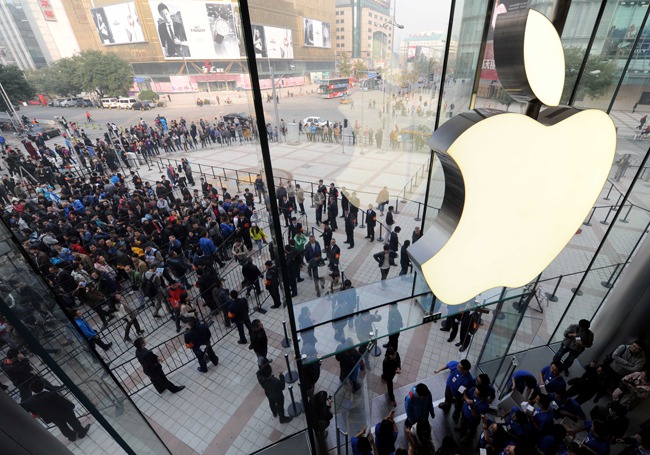
Apple continues to shine atop the Forbes Most Valuable Brands List
It’s a list that reads like the uniform of a NASCAR pit-crew. The top names and logos of some the most popular and well-known companies in the world. And this year, it’s once again Apple sitting on top of the list of Forbes World’s Most Valuable Brands. Rounding out the top 10 were also some of the heaviest hitters and most well-known names in the market. Here’s the list. 1. Apple 2. Google 3. Microsoft 4. Amazon 5. Facebook 6. Coca-Cola 7. Samsung 8. Disney 9. Toyota 10. McDonald’s Now building a bran in not easy. And one bad news story or misstep can taint a brand forever – just ask British Petroleum or the Weinstein Company. So, what does it take to build, maintain and preserve a brand for decades? It’s not as easy as you might think. If you’re covering or curious let one of our experts help. Professor Ryan Hamilton is a consumer psychologist, whose research investigates shopper decision making. In particular, he is interested in how brands, prices and choice architecture influence decision making at the point of purchase. Ryan is available to speak with media regarding brands and brand reputation – simply click on his icon to arrange an interview.



Empowered Storytelling Geared Toward Women Is a Winning Combo for Super Bowl Ads, Baylor Expert Says
Television advertisers who have chosen to appeal to women fans and viewers during this weekend’s Super Bowl have committed their millions of dollars to a wise strategy, according to a Baylor University marketing and advertising expert. Tyrha Lindsey-Warren, Ph.D., clinical assistant professor of marketing in Baylor’s Hankamer School of Business, studies consumer behavior and attitudes, multicultural media and advertising, and movies and entertainment. Each year, she and her students analyze the Super Bowl ads. And each year, she said, she sees more ads geared toward women. In fact, AdAge reports that brands like Bumble, Toyota and Procter & Gamble's Olay are featuring women in lead roles in their Super Bowl commercials this year. “That’s smart,” Lindsey-Warren said. “The current and future market power of women – as a whole and by segments – is undeniable and truly cannot be ignored by marketers.” To make her point, she cited research showing that women influence more than 80 percent of all consumer spending; 89 percent of the financial decisions are made by women; and globally, women control more than $20 trillion in world-wide spending. In addition, nearly 24.3 million African American women are brand loyalists and cultural trendsetters who have influence over the $1.2 trillion dollars in black spending power. Forbes reported in 2018 that “women constituted about 49 percent of the 108 million-plus people who watched” that year’s Super Bowl – and paid closer attention to the ads. “Nowadays, whatever brands plan to do during the Super Bowl must be extremely strategic and well planned when commercials go for over $5 million dollars,” Lindsey-Warren said. “With the #metoo and #times up movements as well as the diversity and gender issues in advertising industry and more, I think brands struggle as to how they approach targeting women on such a global stage.” She said brands that use “empowered storytelling” – storytelling that exudes the emotion of empowerment – make a difference. Good examples, she said, are Always’ “Like a Girl” commercial in 2015 and Audi’s “Daughter” commercial in 2017. “In my research, especially among Millennials and Gen Z, this approach is a powerful combination for brands who want to increase purchase intentions for their products or services,” Lindsey-Warren said. “The emotion of empowerment is multidimensional and promotes encouragement and can be extremely motivational,” she said. “When one is empowered, it can be an ‘aha’ moment and very transformational in a positive manner. In addition, empowered storytelling is a proactive approach to storytelling that demands you keep the receiver of the story in mind at every stage of the process because, at the end of the day, you want the receiver of the story to be better in some way for having received the empowered narrative they just viewed or experienced.” And when consumers are empowered, they tend to tell others. In the digital space, this looks like sharing videos, posts, quotes and more on social media channels. “Essentially, empowered storytelling gives brands the opportunity to achieve the right balance of entertaining and encouraging and, ultimately, healing by showing that they care for their consumers through the motivational messages and narratives they are producing,” Lindsey-Warren said. ABOUT TYRHA LINDSEY-WARREN, Ph.D. Tyrha Lindsey-Warren, Ph.D., is a marketing scholar, business executive, artist and entrepreneur. As a consumer behavior scholar, her research is rooted in narrative transportation theory (i.e., storytelling) that exudes the emotion of empowerment and its impact on consumer attitudes, behaviors, purchase intention and message recall. She also studies health edutainment, multicultural media and advertising, as well as movies and entertainment. Lindsey-Warren is an expert in effective communications strategies for leaders, multicultural communications and marketing. Her latest research, “An Examination of Television Consumption By Racial and Ethnic Audiences in the U.S.,” was published in the Journal of Advertising Research. She will be discussing this study during panel discussions in New York City and Los Angeles for the Geena Davis Institute on Gender in Media. ABOUT BAYLOR UNIVERSITY Baylor University is a private Christian University and a nationally ranked research institution. The University provides a vibrant campus community for more than 17,000 students by blending interdisciplinary research with an international reputation for educational excellence and a faculty commitment to teaching and scholarship. Chartered in 1845 by the Republic of Texas through the efforts of Baptist pioneers, Baylor is the oldest continually operating University in Texas. Located in Waco, Baylor welcomes students from all 50 states and more than 80 countries to study a broad range of degrees among its 12 nationally recognized academic divisions. ABOUT HANKAMER SCHOOL OF BUSINESS AT BAYLOR UNIVERSITY Baylor University’s Hankamer School of Business provides a rigorous academic experience, consisting of classroom and hands-on learning, guided by Christian commitment and a global perspective. Recognized nationally for several programs, including Entrepreneurship and Accounting, the school offers 24 undergraduate and 13 graduate areas of study. Visit www.baylor.edu/business and follow on Twitter at twitter.com/Baylor_Business.


Top 9 ROI Metrics for Expertise Marketing
When it comes to digital marketing, organizations are looking for data-driven solutions that are proven to support their bottom line. Here are 9 families of quantitative and qualitative metrics that will help you measure and track the success of your organization’s Expertise Marketing. (Taken from Chapter 5 of Expertise Marketing Whitepaper: Next Wave in Digital Strategy) REPUTATION Move Brand Metrics - Position research, client work, thought leadership perspectives and achievements in the context of relevant topics in the news. MARKET AWARENESS Move Search Metrics - Boost search-engine rankings and increase overall breath of search results. LEAD GENERATION Grow Inbound Leads - Increase the number of direct lead inquiries from the following audiences: Customers | Students | Patients | Donors | Patients | Media | Recruits | Conferences | Partners | Alumni | & More... AUDIENCE ENGAGEMENT Drive Engagement Metrics - A single familiar digital touchpoint provides access to all content marketing assets and encourages enhanced content browsing. Download our Free Whitepaper Expertise Marketing: The Next Wave in Digital Strategy TALENT DEVELOPMENT Boost People Performance - Better engage stakeholders, researchers & subject-matter experts in the development and distribution of content. INTERNAL COLLABORATION Improve Teamwork & Internal Efficiency - Better coordinate the knowledge and resources across internal communications teams and other departments as they engage experts. Provide a faster, more efficient way to generate content for breaking news and events. CONTENT CONTRIBUTION Expand Reach - Increase the size of the organization’s digital footprint by aggregating more content and distributing it contextually to multiple websites and third-party databases. EFFICIENCY Deliver More with Less - Help employees get their jobs done faster and more efficiently. Enable them to find information faster, speed up internal processes and foster collaboration among people in multiple locations. LEVERAGE CURRENT & FUTURE INFRASTRUCTURE Extract More Value From Existing Investments - Properly integrated, new technology investments should integrate seamlessly to leverage existing/proposed infrastructure such as content management systems (CMS). What’s most important to you? Get in touch with Deanne and start the conversation about how ExpertFile can begin moving that dial within 6 weeks. Get Your Copy and Get Started Expertise Marketing: The Next Wave in Digital Strategy About ExpertFile ExpertFile is the world’s first Expertise Marketing Platform that helps organizations solve the challenge of creating, managing and amplifying expert content. Our software platform and services help you showcase your people and their insights to the audiences that matter across a range of channels including distribution through the Associated Press to over 15,000 newsrooms. Learn more about ExpertFile.





Social media mentions of television advertising
Television advertising is an expensive proposition, so media planners and advertisers are devoting considerable attention to social media mentions of their advertising and the real-time feedback it can provide. David A. Schweidel, associate professor of marketing, and coauthor Beth L. Fossen 16PhD (Indiana U) study this trend by using data from actual television advertising on the broadcast networks and brand and program mentions of those same ads on Twitter. The pair found that television advertising does impact the volume of online word-of-mouth for the advertised brand and the program showing the ad. Ad and brand characteristics played a huge role in creating social media “chatter.” For instance, movie advertisements generated the largest increase in online word-of-mouth. Ads for phones, computers, notebooks, and tablets also created substantial increases in social media mentions. In contrast, apparel, dental care, nonprofit ads, and PSAs benefited the least in terms of online brand chatter. Higher rated programs resulted in more online chatter for the ads shown, likely due to the fact that these programs draw larger viewing audiences. Source:


Luxury retailers, customer experience, and brand desire
Consumers often complain that sales staff at luxury retailers ignore or reject average customers. Employees in the industry confirm that sales staff at luxury retailers do sometimes size up customers, choosing who to help and who to avoid based on what they wear. Conventional wisdom would suggest that the rejected consumer would choose not to buy the specific brand. Morgan Ward, assistant professor of marketing, and coauthor Darren W. Dahl (U of British Columbia) challenge this idea “by exploring how negative customer service experiences can, in some instances, facilitate more positive attitudes and customers’ desire for the brand.” The pair tested their theory by providing study participants with a variety of shopping scenarios involving being rejected versus receiving a neutral response from the salesperson while in a luxury retailer. Ward and Dahl discover that shoppers who “relate their self-concept to an aspirational brand” become more motivated to buy that luxury brand after a salesperson’s rejection, in order to be accepted by what they perceive as the in-crowd. Source:

The role of behavior in managing mergers
Despite corporate interest in M&As as a growth strategy, research indicates that financial returns on such deals often fall short of expectations. Corporate leaders spend considerable time looking at the financial and quantitative aspects of mergers and acquisitions; however, Sandy Jap, Sarah Beth Brown Professor of Marketing; A. Noel Gould (Texas State U); and Annie H. Liu (Texas State U) argue that factoring in people should also be a major consideration when it comes to a proposed deal. Their research indicates that better employee and customer management is especially critical to an organization’s M&A strategy and implementation success. The trio analyzed ANZ New Zealand’s horizontal merger with the National Bank of New Zealand to better understand the impact of employee and customer behavior on the deal. They contend that this brand and technology merger succeeded due to ANZ’s commitment to ensuring customer satisfaction and addressing employee concerns about the merger. ANZ New Zealand also focused on business efficiencies and rebranding efforts. Jap, Gould, and Liu note that collaboration became a big key to the success of the merger with ANZ’s financial, IT, marketing, and communications personnel working closely together to retain customers. Source:


Synergies between product placements and TV ads
As television watchers get inundated with commercials, the temptation to flip the channel grows. In the hopes of better connecting with consumers, advertisers are increasing their efforts to get product placements directly into TV shows. In a research study, David Schweidel, Goizueta Term Chair, Caldwell Research Fellow, and associate professor of marketing, and coauthors Natasha Zhang Foutz (U of Virginia) and Robin J. Tanner (U of Wisconsin) took a look at how the synergy between product placements and traditional commercials can keep viewers from flipping past the ad. The trio found that by simply putting a product in a television show and then immediately following it up with a commercial featuring the same product, viewers were more likely to stay tuned to the commercial. “The audience loss during the ad decreases by 5%,” they note. The effect was intensified when differing products from the same brand were shown in a program and then in a commercial immediately following the TV show. They write, “This indicates a positive synergy between the two activities that can reduce audience decline by more than 10%.” When products of different brands were featured in a television program and in a subsequent commercial, audience loss increased. Source:

Using social media to assess public sentiment
Large corporations, government agencies, and political campaigns increasingly are using social media listening platforms and software to monitor public sentiment online. According to research from David Schweidel, associate professor of marketing, and Wendy Moe (U of Maryland), the information gleaned from social media can provide useful insights for decision making, but only if the “comments are measured appropriately.” Since prior marketing research has focused on one social media venue or failed to acknowledge the differences in multiple social media venues, Schweidel and Moe discovered that these measurements of public sentiment fell short. Instead, they analyzed brand sentiment for an enterprise software company and a telecommunications business across a variety of social media platforms. Accounting for factors that varied across different social media platforms, the authors derived a measure of general brand impression (GBI). They showed that general brand impression was a leading indicator of shifts in brand tracking studies and stock price movements. Taken together, Schweidel and Moe’s “measure of GBI effectively captures movement in the underlying sentiment toward the brand.” Source:

A whole lot of problems facing Whole Foods?
In August, Amazon went on a binge and acquired high-end grocer Whole Foods for 13.6 billion dollars. Many wondered what changes would come and how the high-tech and modernized Amazon approach to retail would impact the grocery chain. A few months late, a look inside some stores shows the results aren't good. Shelves that once showed off fresh fruit and vegetables at a premium price are bare. And customers aren't happy. A new food ordering system called Order-to-shelf, or OTS may be the leading culprit. OTS is a tightly controlled system designed to streamline and track product. It allows outlets to carry items that move almost literally from daily delivery trucks to store shelves. Its goal is to reduce storage costs, waste and provide a cheaper and more efficient system of managing products. But is this effort for an almost militaristic efficiency costing Whole Foods customers, demoralizing employees and hurting the store's brand? Is this a matter of a learning curve that will sort itself out? Or did Amazon make a mistake implementing OTS? And will these empty shelves leave a lasting and negative impression on customers? There are a lot of scenarios and questions - that's where the experts from can help. Ryan Hamilton is a is a consumer psychologist and an expert in marketing, branding and consumer decision making. Ryan is available to speak with media regarding Whole Foods and the OTS system. Simply click on his icon to arrange an interview. Source: