
Experts Matter. Find Yours.
Connect for media, speaking, professional opportunities & more.

The truth behind federal disclosure of alien life
With the recent presidential comments on potential alien life, UFO enthusiasts have new hope that finally we’re going to get federal “disclosure” of UFOs, aliens and the great government conspiracy surrounding both. But, as a scientist who studies the search for life in the Universe, the question I have is much simpler: What would disclosure really need to disclose? What is required for actual, factual proof that aliens exist and they’ve been visiting Earth? We’ve already had three years of Congressional hearings on UFOs that have produced zero proof of anything. What we need now is simple: hard physical evidence. That is what disclosure needs to deliver. Not stories about alien spaceships being held by the government, but the actual spaceships themselves. Not stories about alien bodies but the actual icky, gooey bodies with their icky gooey tentacles. If disclosure provides physical evidence that independent laboratories and independent scientists all over the world can verify, then it will live up to its hype. That would make “Disclosure Day” truly history-making.



President’s Discussion of Conspiracy Theories Have “No Parallel in American Politics”
Peter Baker, the chief White House correspondent for The New York Times, interviewed Dr. Meena Bose about conspiracy theories that appear to be consuming the Trump administration. “The president’s repeated discussion of multiple conspiracy theories, most recently about the 2016 election, has no parallel in American politics,” said Dr. Bose. “Presidential allegations that have no factual basis undermine public confidence in the political system and present dangerous challenges to constitutional principles and the rule of law, particularly if they are not subject to checks by other institutions.” Dr. Bose is Hofstra University professor of political science, executive dean of the Public Policy and Public Service program, and director of the Kalikow Center for the Study of the American Presidency.


Yes, Ringo Starr just turned 85. Let that sink in. I read this in the Washington Post and felt like a bag of Beatles vinyl had walloped me. How is this possible? How can the mop-top drummer be 85 when I was dancing to “Yellow Submarine” in bell-bottoms with a brush for a microphone? More urgently: how old does this make me?! Ringo isn’t slowing down. He’s still touring with two bands, making music, flashing that cheeky Liverpudlian smile, and preaching peace and love as if he’s got nowhere else to be. No plans to retire. No plans to fade away. Just a rockstar with a great attitude... and maybe a titanium hip (unconfirmed). This made me realize that, as the birthday candles on my cake now need a fire permit, “attitude” plays a huge role in how we age. Based on the feedback I received from my last post, “What’s Your Brand, Boomer?”, it’s clear that many people are genuinely interested in managing their personal brand as they age. This week, I want to go deeper—because whether you’re 45 or 85, you are Old People in Training. That’s right. Every one of us is aging in real-time, and understanding the stages ahead—either for ourselves or our aging loved ones—helps us walk this path with humour, grace, and fewer surprises. So, here they are: The 8 (Unofficial but Uncannily Accurate) Stages of Aging 1. The Stand-Up-and-Forget-Why Stage (Kicks in around mid-to-late 50s) You walk into a room with purpose, then wonder: was I here to fold laundry, pay a bill, or practice my slow blink? Bonus points if you’re already wearing the glasses you’re hunting for. How it helps: Eases forgetfulness. It’s not early dementia; it’s early distraction. Keep a notebook or use Voice Memos. Or do what I do: shrug, laugh, and keep walking until something jogs the memory (usually coffee). 2. The “Senior? Not Unless There’s a Discount” Stage (Hits in your early 60s) You bristle at the word “senior,” unless it saves you $2.50 at the movies or 15% at Shoppers. Suddenly, age becomes a tool, not a label. How it helps: Celebrate the advantages! You’ve earned them. And remember: owning your age is the new anti-aging remedy. Confidence looks good on everyone. Remember, you are still that age, whether you admit it or not. You might as well save some money! 3. The “Yes, I Really Am That Age” Reminder Stage (Kicks in around 65) You find yourself saying your age out loud like it’s a riddle. "I’m 65. Sixty-five! Isn’t that wild?" You’re still trying to catch up with the numbers, or maybe you’re worried you’ll forget your age. How it helps: Accept the number without letting it define you. It’s not a limit — it’s a launchpad. Bonus: Use it as an excuse to do something you’ve always put off. 4. The Replacement Parts Stage (Hits in the early to mid-70s) Welcome to orthopedic roulette: knees, hips, maybe a shoulder. You collect joint replacements like frequent-flyer miles. Fortunately, modern medicine allows for joint replacements to be performed more quickly than ordering takeout. Still waiting for Staples to offer 3D-printed hips. How it helps: Embrace science instead of fighting it. Biology always prevails! Mobility equals independence. And nothing embodies “active aging” like beating your grandkids at pickleball with a shiny new titanium knee. 5. The “I’ve Run Out of F*cks to Give” Stage (Kicked in the late 70s into the early 80’s) You’ve earned the right to speak your mind—and wear socks with sandals. You say what you want, mean what you say, and anyone who doesn’t like it can take a number. Opinions? Too many! Filters? Deleted. Freedom? Glorious. Friends? Running for cover! How it helps: This is peak freedom. Use it wisely. Advocate, participate, mentor, and model what unapologetic living looks like. You’re the elder statesperson now—be bold, not bitter. 6. The Cataract Conspiracy Stage (Kicks in mid-to-late 70s) Lights appear like halos, and reading menus becomes an Olympic event. But don’t worry—cataract surgery is so common it’s practically an oil change. And voilà: brighter colours, more precise lines, less squinting. Spoiler Alert: You will now be able to see how poor your housekeeping skills are! How it helps: Get your eyes checked. Don’t delay. Seeing clearly again can literally brighten your outlook—and maybe even your attitude. 7. The “Say What?” Stage – The Hard-of-Hearing Stage (Late 70’s+) This one sneaks up like a whisper… which is ironic, because you probably won’t hear it. At some point, for most of us, hearing begins to decline like old payphones and eight-track tapes. It might start with missing parts of conversations in noisy restaurants or asking people to repeat themselves (just once… or five times). Eventually, it’s full-blown “Say what?” territory. Many avoid wearing hearing aids because—let’s face it—they feel like a flashing neon sign that says, "I’m old!" But here’s the real issue: pretending to hear is much worse. It can lead to social withdrawal, isolation, and even strained relationships. And we’re not just making this up for dramatic effect—studies at John Hopkins School of Medicine show that untreated hearing loss is linked to a higher risk of dementia, depression, and cognitive decline. There’s also the loud TV effect—when your neighbours across the street can hear your Netflix queue, it’s time to see an audiologist, not to mention the safety concern: driving with impaired hearing is risky; sirens, honking horns, or even a warning from a passenger might go unnoticed. So, if your “What?” count is rising and your TV volume is climbing towards aircraft-engine decibels, take action. Getting your hearing tested doesn’t mean you’re old—it means you’re informed (and honestly, more enjoyable to be around). Because nothing celebrates “vibrant aging” more than staying connected to the world—and actually hearing it. Stage 8: The Long Goodbye – When Friends Start to Leave the Stage I’ve heard from seniors about Stage 8… and without exception, they say it’s one of the toughest parts of aging. This is the stage when the long goodbye starts—quietly at first, then with increasingly frequent moments. Your phone rings less often. The chairs at the coffee group gradually empty. One day, you realize you’re not just losing friends—you’re outliving them. It’s part of the circle of life, for sure—but no Lion King soundtrack can ease the heartbreak. This stage exposes some of our deepest fears: Will I be next? Who will mourn me? Does anyone even know I’m still here? It’s a time of grief, loneliness, and silent despair. And while you can’t fast-forward through it, you don’t have to walk it alone. If you’re an “Old Person in Training” (which, reminder: we all are), listen up. This stage isn’t just something that happens to others—it’s your future self, waving from down the road. Learning about it now prepares you to guide others through it with grace and to soften your own landing when the time arrives. And if someone you love is already there? This is your cue. Show up. Don’t wait to be invited—grief rarely sends formal RSVPs. Phrases or clichés like “they’re in a better place” won’t suffice here. These are nothing burgers—all bun, no meat—empty calories in a moment that needs nourishment. Show up. Stay steady. Be the evidence that they are still recognized, still cared for, still part of something meaningful. What they truly need is presence, not presents. Time, not timelines. They need to feel they are not alone. Sit with them. Walk with them. Watch Jeopardy in silence if that’s what the day calls for. But whatever you do, don’t disappear. Because one of the most profound gifts we can give in this stage isn’t a cure—it’s companionship. Science Confirms It: Attitude Is a Lifespan Strategy Tongue-in-cheek aside, these aging observations are backed by science: Positive beliefs about aging can extend life by 7–8.5 years. (Source: PubMed – Levy et al.) Optimism correlates with lower heart disease, stroke, and a 70% greater likelihood of reaching age 85. (Source: Harvard Health) Positive mindset boosts recovery, brain health, and resilience after illness. (Source: Harvard Health) So, what can we learn from Ringo? Keep creating – Music, art, businesses, bad poetry. It keeps the brain limber and the soul alight. Stay curious – Sign up for that course. Take the trip. Ask questions. Enrol in the MBA. (Looking at you, 69-year-old rockstars.) Lean into joy – Laugh like nobody’s judging. Dance like your knees aren’t watching. Surround yourself with good vibes – Optimism costs nothing and glows brighter than Botox. Remember, it’s not your age—it’s your outlook. So next time you stand up and forget why you did, just grin and say: ‘I’m aging like a Beatle. Still standing. Still grooving. Still fabulous.” And if you ever need a pep talk, ask yourself: “What would Ringo do?” Don’t’ Retire Re-wire Sue


'Chemtrails' and other climate conspiracies: Florida Tech's expert sets the record straight
When Florida Today columnist Tim Walters wanted to 'clear the air' about a popular conspiracy theory, he connected with Michael Splitt, an assistant professor at Florida Institute of Technology's College of Aeronautics with a focus on meteorology. The "chemtrail" conspiracy follows the erroneous belief that condensation trails (contrails) that trail behind jets are actually being used on a large scale to manage radiation and combat global warming. In the column, Splitt argued against the conspiracy by explaining what might happen if that level of "climate engineering" was actually going on. I recently wrote a column about the “chemtrail” conspiracy theory, and to say it caused quite a stir would be a serious understatement. My motivation for writing the piece came because there is a bill being looked at by the Florida legislature to address concerns of people who think the skies are being seeded by commercial airplanes with poisonous, weather-manipulating substances. Some of those raising concerns claim there are vague amorphous operatives in the federal government leading this charge. I decided I’d try to find answers, and I did so by asking someone credible in the field of weather sciences. Answers from climate expert Can the climate be altered by humans? The idea of trying to manipulate weather is called “climate engineering.” There is a form of this called solar geoengineering. “We've been doing things like this for decades in terms of, for example, fog management products. People have used this kind of methodology of adding things to the air to help get rid of fog, like the ice fog problem in Salt Lake City. So, there are places where people try to manage a local cloud layer,” Splitt said. However, it’s not done to a scale that would impact the country or globe. That’s where conspiracy theorists take climate engineering a step too far. There are those who say commercial airliners are spraying other substances like aluminum and barium (and other metallic) nano particles to reflect the sun's heat to reduce global warming. Splitt said if this were real, it might have the opposite effect. “When you have more contrails, it actually ends up warming the planet. The cirrus clouds created by aircraft and their reflective power isn't as much as let's say, the warming impact from below, from infrared radiation, so they end up being warmer." March 20 - Florida Today In the full column, Splitt also takes on other common misconceptions such as, "Why do some contrails last longer than others?" And, "Are ‘chemtrails’ steering, strengthening storms?" It's a worthwhile read for those interested in meteorology or conspiracy theories. Are you curious or looking to know more about those chasing clouds? Michael Splitt is available to speak with media. Contact Adam Lowenstein, Director of Media Communications at Florida Institute of Technology, at adam@fit.edu to arrange an interview today.


Hurricane Milton: Second major storm in two weeks could multiply danger on Florida's Gulf Coast
Now a Category 5 hurricane, Milton is making a beeline toward Tampa Bay and other parts of Florida's western coast. But it will also hit some of the same areas that Hurricane Helene decimated less than two weeks ago, amplifying the danger and need for an on-point disaster response. Experts in the University of Delaware's Disaster Research Center can talk about several facets of this developing situation: Jennifer Horney: The mental and physical impacts of multiple disasters; environmental impacts of disasters and potential public health impacts for chronic and infectious diseases. She can talk about both Milton and Helene – Horney is a native of North Carolina and has done fieldwork in the state. Victor Perez: Can talk about known environmental justice issues in the Gulf Coast region that interact with climate change impacts, like hurricanes. Sarah DeYoung: Conspiracy theories and misinformation during disasters; pets in emergencies, infant feeding in disasters, decision-making in evacuation and community cohesion. DeYoung is from western North Carolina and can draw parallels from Milton to Helene. Jennifer Trivedi: Can talk about long-term recovery after large scale events – including compounding events – as well as challenges during disasters for people with disabilities, vulnerable communities and decision making. Tricia Wachtendorf: Evacuation decision-making, disaster response and coordination, disaster relief (donations) and logistics, volunteer and emergent efforts, social vulnerability. James Kendra: Disaster response activities, volunteers, and emergency coordination. A.R. Siders: Expert on sea level rise and managed retreat – the concept of planned community movement away from coastlines and flood-prone areas and the "expanding bullseye" that is contributing to the rising disaster costs in the U.S. Shanjia Dong: Research looks at smart and resilient urban systems; infrastructure systems, critical infrastructure protection, effective disaster preparedness and response, and equitable resilience planning and climate change adaptation. Joe Trainor: Post-storm housing decisions and insurance.



Election 2024: Providing insight during a pivotal campaign season
Voter behavior and emotion, civil discourse, the spread of misinformation, the role of gender and race in politics and conspiracy theories are among the many topics University of Delaware experts can comment on during this final stretch of the 2024 campaign. David Redlawsk Professor of Political Science and International Relations Expertise: Political psychologist who studies voter behavior and emotion, focuses on how voters process political information to make their decisions. He has written several books on politics, worked behind the scenes on campaigns and ran for local office. Dannagal Young Professor of Communication Director of the Center for Political Communication Expertise: The spread of misinformation in politics and the intersection of entertainment and information, with an emphasis on political satire, political media effects, public opinion and the psychology of political humor. Kassra Oskooii Professor of Political Science and International Relations Expertise: Focuses on the interplay between the contextual and psychological determinants of political opinions and behaviors of high and low status group members. Erin Cassese Professor of Political Science and International Relations Expertise: Explores the behavior of women as voters and candidates for political office, and studies political psychology, gender stereotypes, public opinion, elections and the intersection of religion and politics. Yasser Payne Professor of Sociology and Africana Studies Expertise: Research program also focuses on Black racial identity; street identity; economic and educational opportunity or the impact of structural violence. Tim Shaffer SNF Ithaca Director Stavros Niarchos Foundation (SNF) Chair of Civil Discourse Expertise: Civil discourse in politics; can talk about partisanship, polarization and their impact on media outlets. advancement of democratic practices by focusing on the role of civic professionals in institutional settings. Alice Ba Professor and acting chair, Political Science and International Relations. Expertise: Her work on the international relations of East and Southeast Asia examines the structures, processes, and systemic effects of regionalism and cooperative regime building, as well as relations between smaller and major powers. Joanne Miller Professor of American Politics, Research Methods and Political Psychology Expertise: Studies political psychology, with an emphasis on political propaganda, misinformation and conspiracy theories. Muqtedar Khan Professor of Comparative Politics, International Relations and Political Theory Expertise: Issues surrounding U.S. foreign policy in the Muslim World as well as national security and counter-terrorism. To speak with any of these experts, simply visit their profle and click on the "contact" button, which will send a message directly to them (while also copying UD's media relations team).


How misinformation spreads online and shapes behavior
With the Internet as a font of information, particularly during a major crisis or conflict, a simple Google search can produce a stream of conjecture, conspiracy and alternative facts. Then there’s the firehose of “news” flooding social media feeds. By headlines alone, it’s near impossible to separate wheat from chaff. Coupled with that user frustration is a vulnerability to bad actors who push agendas under the guise of news. Indeed, on its worst days, the internet is a disinformation machine. Understanding that dynamic and its impact on our moods and behavior is NJIT’s Julie Ancis, a behavioral psychologist who’s a pioneer in the field of cyberpsychology. Her research examines how disinformation spreads and shapes how we act online and in person. As she explains on her blog for Psychology Today: “The speed and flow of information online has enabled information to be transferred on a mass global scale, galvanizing social movements such as the Arab Spring, Occupy Wall Street and #MeToo. In short, the ways in which we consume information and communicate with others both locally and globally have fundamentally changed.” To interview Ancis, click on the button below.


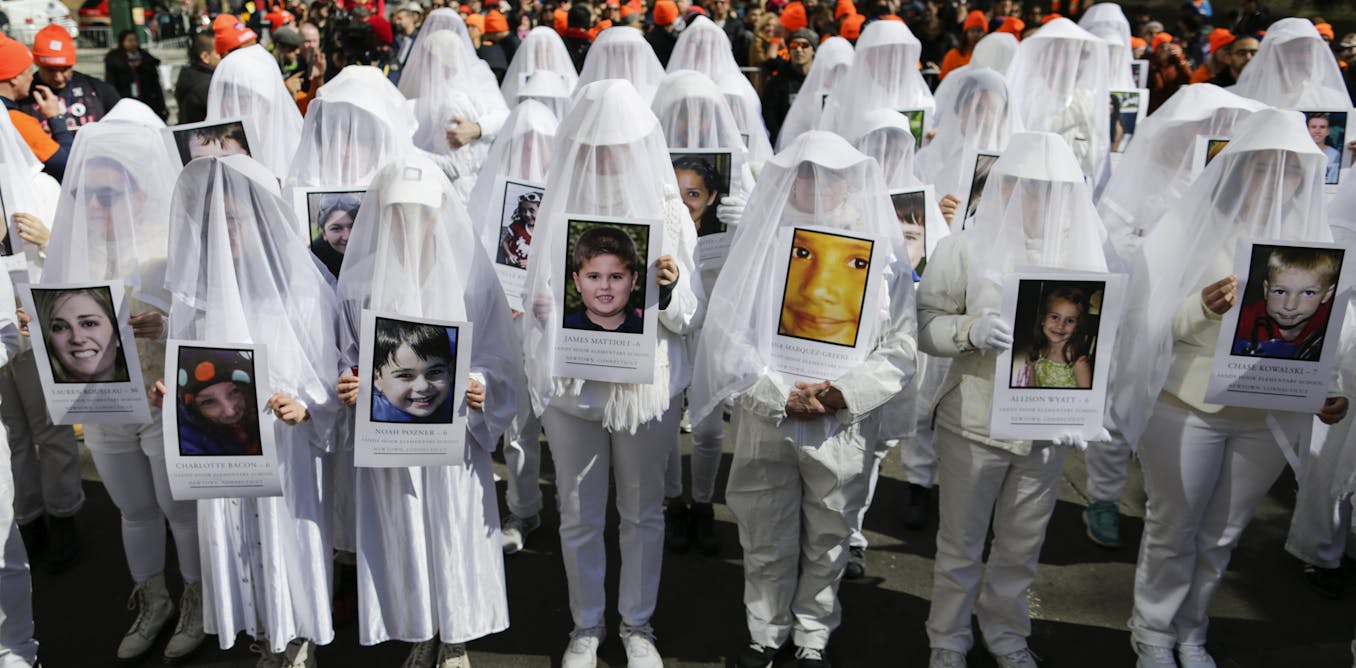
UConn Expert, 10 Years after Sandy Hook, on the Lies that 'Plague the U.S.'
UConn professor and journalist Amanda J. Crawford considers the misinformation that spread like wildfire after tragic school shooting at Sandy Hook Elementary School to be "the first major conspiracy theory of the modern social media age." Ten years after 26 young students and school staff were killed in the massacre, the impact of that day in 2012 continues to reverberate in America today. On this solemn anniversary, Crawford writes about the aftermath of Sandy Hook misinformation in a new essay for The Conversation: Conspiracy theories are powerful forces in the U.S. They have damaged public health amid a global pandemic, shaken faith in the democratic process and helped spark a violent assault on the U.S. Capitol in January 2021. These conspiracy theories are part of a dangerous misinformation crisis that has been building for years in the U.S. While American politics has long had a paranoid streak, and belief in conspiracy theories is nothing new, outlandish conspiracy theories born on social media now regularly achieve mainstream acceptance and are echoed by people in power. Recently, one of the most popular American conspiracy theorists faced consequences in court for his part in spreading viral lies. Right-wing radio host Alex Jones and his company, Infowars, were ordered by juries in Connecticut and Texas to pay nearly $1.5 billion in damages to relatives of victims killed in a mass shooting at Sandy Hook Elementary School a decade ago. Jones had falsely claimed that the shooting was a hoax. As a journalism professor at the University of Connecticut, I have studied the misinformation that surrounded the mass shooting in Newtown, Connecticut, on Dec. 14, 2012 – including Jones’ role in spreading it to his audience of millions. I consider it the first major conspiracy theory of the modern social media age, and I believe we can trace our current predicament to the tragedy’s aftermath. Ten years ago, the Sandy Hook shooting demonstrated how fringe ideas could quickly become mainstream on social media and win support from various establishment figures – even when the conspiracy theory targeted grieving families of young students and school staff killed during the massacre. Those who claimed the tragedy was a hoax showed up in Newtown and harassed people connected to the shooting. This provided an early example of how misinformation spread on social media could cause real-world harm. Amanda J. Crawford is a veteran political reporter, literary journalist, and expert in journalism ethics, misinformation, conspiracy theories, and the First Amendment. Click on her icon now to arrange an interview with her today.


What's next in Georgia's 2020 election saga?
All eyes are on Georgia once again, but this time it's not about an upcoming election. As we sort through the 2020 election aftermath that saw Georgia in a tug-of-war between lawyers, politicians and pundits, the actions a few important figures may now be coming to light. Rudy Giuliani, the former advisor to President Trump, may be in some serious trouble according to Augusta's leading political expert, Dr. Gregg Murray. "When politicians are involved, there are almost always political calculations," Murray said. "But there’s a lot of information suggesting there may be problematic behavior that he was heavily involved with. There are reports of investigations involving several possible Georgia law violations: solicitation of election fraud, making false statements to local officials, conspiracy, racketeering, violations of oath of office and involvement in violence or threats of violence, according to Voice of America." As for Sen. Lindsey Graham, he, too, has been summoned to appear and explain how he may or may not have attempted to influence the election outcome. A federal judge on Monday turned down Sen. Lindsey Graham’s bid to throw out a subpoena compelling him to testify before the Atlanta-area grand jury investigating Donald Trump’s effort to overturn the 2020 election. “[T]he Court finds that the District Attorney has shown extraordinary circumstances and a special need for Senator Graham’s testimony on issues relating to alleged attempts to influence or disrupt the lawful administration of Georgia’s 2022 elections,” U.S. District Court Judge Leigh Martin May wrote in a 22-page opinion rejecting Graham’s effort and sending the matter back to state courts for further proceedings. Politico, Aug. 15 According to Murray, defying the judge's request might be the likely choice for the senator. "It seems the Republican party is still clearly tied to Trump," Murray adds. "I don’t think he would be hurt politically by not showing up. It’s an interesting question if some people would hold it against him for showing up." This legal wrangling will be long and drawn out, so if you are covering this topic, let our expert help with your story. Dr. Gregg Murray is available to talk about the election audit and what it might mean for voters in Georgia and across the country. Murray’s research focuses on political behavior and psychology with specific interests in voter mobilization and turnout. He is also executive director of the Association for Politics and the Life Sciences. Simply click on Murray's icon to arrange an interview today.


UConn's Amanda J. Crawford on one Sandy Hook family's 'epic fight'
Since December 14, 2012, the families of 18 children and six adults murdered at Sandy Hook Elementary School have been forced to live amidst a tidal wave of conspiracy theorists and their constant lies, threats, and harassment. As lawsuits challenging some of the most vocal purveyors of that misinformation are working through the court system, the stories of the hardships faced by some of these families -- endured while they have tried to grieve their unimaginable loss -- have brought new attention to the profound and negative effects that the wildfire spread of misinformation has on the lives of the people most impacted. Amanda J. Crawford, an assistant professor with the UConn Department of Journalism who studies misinformation and conspiracy theories, offers the story of one family in an in-depth and heartbreaking, but critically important, story for the Boston Globe Magazine: Lenny knew online chatter about the shadow government or some such conspiracy was all but inevitable. When a neuroscience graduate student killed 12 and injured dozens of moviegoers with a semiautomatic assault rifle in Aurora in July, five months prior, there had been allegations about government mind control. When Lenny searched his son’s name in early January 2013, he was disgusted at the speculation about the shooting. People called it a false flag. Mistakes in news coverage had become “anomalies” that conspiracy theorists claimed as proof of a coverup. Why did the shooter’s name change? Why did the guns keep changing? Press conferences were analyzed for clues. Vance’s threat to prosecute purveyors of misinformation was taken as an indication they were onto something. But what concerned Lenny most was their callous scrutiny of the victims and their families. Some people claimed a photo of a victim’s little sister with Obama really showed the dead girl still alive. Others speculated the murdered children never existed at all. They called parents and other relatives “crisis actors” paid to perform a tragedy. And yet, they also criticized them for not performing their grief well enough. There were even claims specifically about Veronique. Lenny needed to warn her. “There are some really dark, twisted people out there calling this a hoax,” he told her. Veronique didn’t understand. There was so much news coverage, so many witnesses. “How could that possibly be?” “If you put yourself out there, people will question your story,” Lenny cautioned. Veronique thought he must be exaggerating a few comments from a dark corner of the Web. This can’t possibly gain traction, she thought. No, no, no! Truth matters. If I tell my story, people will be able to see that I am a mother who is grieving. Amanda J. Crawford is a veteran political reporter, literary journalist, and expert in journalism ethics, misinformation, conspiracy theories, and the First Amendment. Click on her icon now to arrange an interview with her today.