
Experts Matter. Find Yours.
Connect for media, speaking, professional opportunities & more.

A crowd of presidential candidates – who needs to surge and who needs to go?
To date, there are 25 registered and “serious” candidates vying to lead the Democratic Party in the 2020 election against President Donald Trump. To put it in perspective: If this were an NFL game, you’d have a full field and still three players left watching and waiting on the sidelines for their chance to touch the ball. It’s a lot of people. Odds are, given the enormous costs and time a campaign requires, it’s just not sustainable for most of the candidates. On July 30 and 31, CNN will be hosting two debates to try and introduce all these candidates to a national audience. Screen time will be limited and opportunities must be seized. It’s a crucial moment for most of the 25. So next week, some will emerge and likely, others will have to accept the reality that they just won’t be president. What will it take to emerge from the pack? Of the more popular candidates – who is at risk of losing relevance? Is there a dark horse who could upset the more usual suspects? There is a lot to know going into these debates and that’s where our experts can help. Dr. Gregg R. Murray, professor of political science at Augusta University, is available to talk about the current race to lead the DNC. Murray’s research focuses on political behavior and psychology with specific interests in voter mobilization and turnout. He is also executive director of the Association for Politics and the Life Sciences.


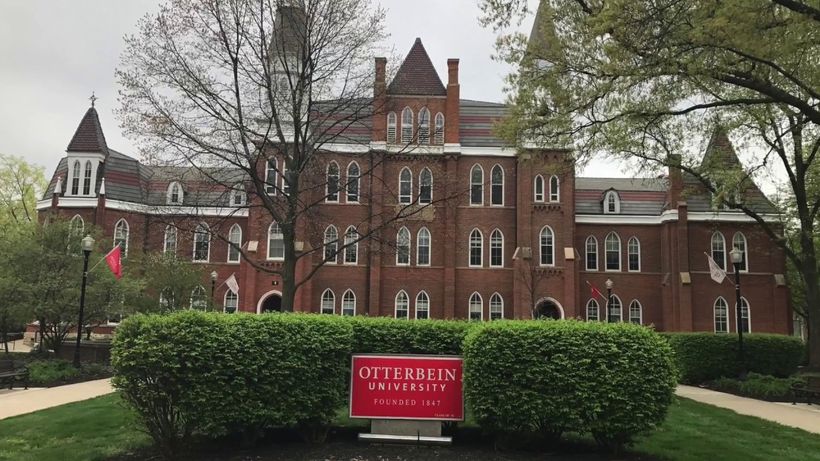
This year, 26 students from Columbus (Ohio) City Schools (CCS) walked across the stage to receive their Otterbein degrees as part of the Class of 2019. It was a result of a partnership between two great educational institutions that is ensuring post-secondary education is accessible to students in central Ohio. “(The event) was a great example of how two educational institutions can come together and make an impact on the lives of young people and the larger community,” said Tanya L. McClanahan, supervisor of higher education partnerships for CCS. For some time now, Otterbein and CCS have been working together to provide several academic options and initiatives to students from Ohio’s largest school district. Since 2014 the Urban Districts Initiative has been working with Columbus City Schools, as well as South-Western City Schools, Westerville City Schools, Whitehall City Schools and Cristo Rey, all districts with more than 35%of students living in poverty. The Initiative is an enhanced need-based aid model that reduces the gap between aid and expected family contribution to the smallest amount possible and has driven significant increases in enrollment of low-income students at Otterbein, as well as sparking a significant increase in student success. The Seniors-to-Sophomores program, where Otterbein offers a summer College Credit Plus course for CCS students that pairs an academic course with a for-credit study skills course. The University also has a STEM skills refresher course for entering students funded through a grant from Nationwide. Otterbein offers Professional Learning Communities (PLCs) for district teachers and Otterbein faculty. In PLCs, teachers and faculty come together to discuss issues related to pedagogy and serving students to enhance the work of both institutions. Recently, Otterbein introduced a scholarship for the dependent children of CCS district (benefits eligible) employees that reduces the cost of an Otterbein education to the average of the state supported universities in Ohio. There are a lot of great things happening in Otterbein’s financial aid and recruitment models that are seeing positive outcomes in the Otterbein and central Ohio communities - and if you need to know more, that’s where our experts can help. Jefferson Blackburn Smith is the Vice President for Enrollment Management and is an expert in financial aid, scholarships, politics, and higher education. He is available to speak to media regarding these topics – simply click on his icon to arrange an interview. To learn more, click the link below: https://www.otterbein.edu/news/cohort-of-columbus-city-schools-alumni-to-graduate-from-otterbein-university-sunday/


Why it just makes ‘cents’ to know your financial ABCs early in life – let our expert explain.
Managing money, understanding interest and how to avoid debt – all these elements make up some of the very basics of financial literacy. However, despite a humming economy and record low unemployment, more and more Americans are falling deeper into debt. Just recently, CBS News reported that roughly 4 in 10 Americans can’t cover an unexpected bill of 400 dollars. Something desperately needs to be done about not just how we are handling our money – but when we are taught the how banking, money and personal finances work. It’s a topic of concern and one that is gaining traction. Showbiz moguls Will Smith and Nas invested in a financial literacy app for teens (see attached article). The issue is finally on the radar of leaders in Washington and throughout the country as well, with 19 states now requiring financial education to graduate, according to the Council for Economic Education, up from 13 in 2011. Can these efforts make a real impact and reverse the tide of financial illiteracy? How did America get to this point? Is this about our spending habits and access to credit or a lack of education? And if we don’t correct the curse – what could it mean for our economy? There are a lot of questions and that’s where our experts can help! Professor Jonathan Clarke is an award-winning teacher and researcher in the fields of investment banking, finance and analysis. Clarke created a personal finance course that is offered to all Georgia Tech students that provides the importance of budgeting, basics of credit, as well as more advanced financial topics such as investing and trading. He’s an expert in the field and is available to speak with media about economics and the importance of financial literacy – simply click on his icon to arrange an interview. He has also developed a one-week summer course for high school students – Wall Street on West Peachtree and annually assists the Boy Scouts with obtaining their finance badge.


Big Brother is watching (literally)…let our experts explain the new social credit system
There’s a new way of life coming to China, and for most observers it feels a lot like the book 1984. As officially explained, China’s new ‘Social Credit System’ – it is designed to enforce accountability, keep the public safe and as the Chinese government put it – to create a “culture of sincerity” that will “restore social trust.” What it will do is shame, embarrass, hamstring and potentially ruin the social and economic opportunities for anyone who falls out of line with strict government regulations and rules. It sounds frightening to us, but according to Chinese officials, it’s just a concept Westerners are to ‘unsophisticated’ to comprehend. Here’s a snapshot from the article attached below outlining some of the social shaming and consequences: “And the punishments are shocking. The government algorithm will go as far as to install an “embarrassing” ring tone on the phones of laolai, shaming them every time they get a call in public. But an embarrassing ring tone, flight bans and slow trains are just the beginning of the dystopian nightmare that is now daily life in China for tens of millions of people. A low social credit score will exclude you from well-paid jobs, make it impossible for you to get a house or a car loan or even book a hotel room. The government will slow down your internet connection, ban your children from attending private schools and even post your profile on a public blacklist for all to see. According to Australia’s ABC News, the government has produced a “Deadbeat Map” via an app on WeChat, which shows a radar-style graphic identifying every laolai in the vicinity of the user. “Tapping on a person marked on the map reveals their personal information, including their full name, court-case number and the reason they have been labeled untrustworthy. Identity-card numbers and home addresses are also partially shown,” ABC reported.” New York Post It’s as astounding as it is almost Orwellian. And it is happening. Are you covering and do you need to know more? That’s where our experts can help. Dr. Glen Duerr's research interests include nationalism and secessionism, comparative politics, and international relations theory. Glen is available to speak to media regarding the rise of extremism – simply click on his icon to arrange an interview.


Many Americans already have enough “stuff,” and the gift-giving season sometimes adds to that collection of things we really don’t need. Instead of always receiving, how can we resolve to be more generous in the New Year? “Whatever our station, however much money or resources we have, we all have something to share and something to give,” says Andy Hogue, Ph.D., senior lecturer in Baylor’s Honors College who teaches a course on philanthropy and the public good. “I like the idea of thinking in terms of a New Year’s resolution, sort of resolving to be more generous and helping people to think in those ways.” Hogue offers four ways individuals and families can develop a spirit of generosity in the New Year. 1) Generosity starts with gratitude. “That is the very first step, just being grateful for what we have, but also realizing that to those given much, much is expected, and to begin thinking about not possessing things but stewarding things,” Hogue said. “Think of the many things we have that might benefit others, whether that is our time, our talents or our finances. There are so many things that we have at our disposal to be able to enrich communities and to help other people. Being able to think in those ways leads us down the path toward generosity and toward sharing.” 2) Generosity is more than just a transaction. “Think of philanthropy, generosity and giving as more than writing a check. Think of it as something that can be transformative and realize that there is no such thing as an unhappy generous person. It’s difficult to be unhappy when we are giving of ourselves.” 3) Generosity is a muscle you have to exercise. “If we can’t give of ourselves when we have limited means, what makes us expect that we would do it when we have more means?” Hogue said. “We all, in some way, are privileged and blessed and have resources that can be put to use for the benefit of someone else.” 4) Generosity can be creative. There are inspired ways to give birthday or Christmas gifts in honor of a family member or friend that bring about a beautiful thing Hogue likes to call the “philanthropy of collaboration.” “Imagine the many things that come together in this one simple act: you, the giver, are enriched by the series of events you set into motion while the person you honor with the gift appreciates your generosity and imagination. The beneficiary of the gift then takes your offering to enrich the lives of others,” Hogue said. It is, however, important to take cues from the person you honor and give a gift in support of the causes they hold dear. “You can go the traditional route – make a donation and give the person a piece of paper (acknowledging the gift) – or there are amazing web-based resources that can help people make very impactful gifts even with limited amounts,” Hogue said. “You give five dollars and with the magic of the Internet, the gift can go towards fighting disease in Africa, providing books for teacher’s classroom or buying someone in a poor country a goat or a cow or a pig that can be a source of generating income.” Baylor is among 19 universities that participate in the Fort Worth-based Philanthropy Lab, a hands-on philanthropy education program that sparks and expands students’ interest and participation in philanthropy. Since fall 2014, Hogue has taught a full-credit class of Baylor students, who have taken on a very tangible task: stewarding and giving away thousands of dollars – a total now more than $600,000 – in partnership with nonprofit organizations. Through this transformational undergraduate experience, Baylor students in the “Philanthropy and Public Good” class provide real funds for real needs in local, state and global communities while cultivating a philanthropic spirit and developing as innovative leaders poised for a lifetime of generosity.


Better Sleep - Not 'All-Nighters' - Helps Students on Final Exams
Students given extra points if they met “The 8-hour Challenge” — averaging eight hours of sleep for five nights during final exams week — did better than those who snubbed (or flubbed) the incentive, according to Baylor University research. “Better sleep helped rather than harmed final exam performance, which is contrary to most college students’ perceptions that they have to sacrifice either studying or sleeping. And you don’t have to be an ‘A’ student or have detailed education on sleep for this to work,” said Michael Scullin, Ph.D., , director of Baylor’s Sleep Neuroscience and Cognition Laboratory and assistant professor of psychology and neuroscience in Baylor’s College of Arts & Sciences. While students who successfully met the sleep challenge received extra points for the “mini-incentive,” the additional credit was not included in the analysis of how well they performed on the finals, emphasized Elise King, assistant professor of interior design in Baylor’s Robbins College of Health and Human Sciences. “They didn’t just perform well because they received extra points,” she said. “Students know that sacrificing sleep to complete school work is not a healthy choice, but they assume they don't have a choice, often remarking that there aren't enough hours in the day for coursework, extracurriculars, jobs, etc. “This removes that excuse.” Research participants included undergraduate interior design students and students in upper-level psychology and neuroscience classes. While the psychology classes emphasized education about sleep, the interior design students did not receive any formal training in sleep. Those who opted to take the challenge wore wristband sleep-monitoring devices for five days to ensure accurate study results. “The students didn’t need the extra credit to perform better, and they weren’t really better students from the get-go,” Scullin said. “If you statistically correct for whether a student was an A, B, C, or D student before their final exam, sleeping 8 hours was associated with a four-point grade boost — even prior to applying extra credit.” The collaborative interior design study — “The 8-Hour Challenge: Incentivizing Sleep During End-of-Term Assessments” — was published in the Journal of Interior Design. Scullin’s study of psychology students — “The 8-Hour Sleep Challenge During Final Exams Week” — was published in Teaching of Psychology. Poor sleep is common during finals as students cut back on sleep, deal with more stress, use more caffeine and are exposed to more bright light, all of which may disrupt sleep. Fewer than 10 percent of undergraduates maintain the recommended average of 8 hours a night or even the recommended minimum of 7 hours, previous research shows. But with incentives, “we can potentially completely reverse the proportion of students meeting minimum sleep recommendations — 7 hours a night — from fewer than 15 percent up to 90 percent,” Scullin said. “Half of students can even meet optimal sleep recommendations of 8 to 9 hours.” Here are the findings of the two studies: PSYCHOLOGY STUDENTS In the study of psychology students, 34 students in two undergraduate courses could earn extra credit if they averaged 8 hours of sleep during final exams week or at least improved upon their sleep from earlier in the semester. The 24 who opted to take the challenge averaged 8.5 hours of sleep, with 17 meeting the goal. On the final exam, students who slept more than 8 hours nightly performed better than those who opted out or slept less than 7.9 hours. The incentive was 8 points — the equivalent of 1 percent on a student’s overall class grade. “It’s worth noting that one student who had a D-plus grade before the final but slept more than 8 hours a week during finals week, remarked that it was the ‘first time my brain worked while taking an exam,’” Scullin said. INTERIOR DESIGN STUDENTS In the interior design study challenge, students earned credit if they averaged 8 or more hours a night but received no grade change if they averaged 7 to 7.9 hours a night. Of the 27 students enrolled in the program, 22 attempted the challenge. Compared with a group of 22 students who did not try for the extra points, very few (9 percent) averaged 8 hours or even 7 hours (14 percent). The 8‐hour challenge increased the percentage of 8‐ and 7‐hour sleepers to 59 percent and 86 percent respectively. Students who took part in the challenge slept an average of 98 minutes more per night compared to students who were not offered the incentive but were monitored. “Critically, the additional sleep did not come at a cost to project performance,” King said. “Students who showed more consistent sleep performed better than those who had less consistent sleep. And students who achieved the challenge performed as well as or better than those who did not take the challenge." In a study of sleep and creativity done in 2017, King and Scullin found that interior design students with highly variable sleep habits — cycling between “all-nighters” and “catch-up” nights — had decreased cognition in attention and creativity, especially with major projects. Design students customarily complete finals projects rather than final exams. “Whether or not they ‘pull an all-nighter,’ when students cut their sleep, the effects are obvious,” King said. “They have trouble paying attention during class, and they aren't as productive during studio time.” She noted that there is a cultural acceptability — at least in design professions — related to sleep deprivation, in part because of the notion of the "tortured artist" who finds inspiration in the wee hours. “Some fields might find it unprofessional, but for many years, in design, sacrificing sleep was viewed as a rite of passage. That's something we're trying to change,” King said. “Even during stressful deadline weeks, students can maintain healthy sleep habits.” “To be successful at the challenge, students need to manage their time better during the day. Getting more sleep at night then allows them to be more efficient the next day,” Scullin said. “By training students in their first year of college, if not earlier, that they can sleep well during finals week without sacrificing performance, we may help to resolve the ‘global sleep epidemic’ that plagues students in America and abroad.” *Co-researcher on the interior design sleep study was Christine Mobley, Ph.D., lecturer at the University of Kentucky.



Cybersecurity expert offers holiday shopping tips for protecting identity
Amid the many warnings this holiday season about protecting your identity while shopping online comes advice from Scott Shackelford, associate professor of business law and ethics in the Indiana University Kelley School of Businessand one of the nation's leading cybersecurity experts. "In some ways shopping online is getting safer," said Shackelford, also chair of the Kelley School's Cybersecurity Program in Risk Management and director of the Ostrom Workshop Program on Cybersecurity and Internet Governance. "For example, a few years ago it was relatively uncommon for many sites to use encrypted https technology, but that's become the norm. However, as may be seen by a quick scan of the news, data breaches continue. "The good news is that the cost of those breaches is going up with Federal Trade Commission and European Commission investigations ongoing into firms like Equifax and Facebook, and consumer patience is also wearing thin," he added. "One recent survey, for example, found that 20 percent of consumers would not shop again at a firm that experienced a data breach." Shackelford offers practical advice for holiday shoppers. In essence, there's a lot you can do to become harder targets for cyber criminals, including: Consider freezing your credit. You don't need it open unless you open a new credit card or loan, and even then you can unfreeze it for a short window to allow for the credit check. Install antivirus and antispyware software, use auto-update, and always enable multifactor authentication on all of your accounts. When using public Wi-Fi, use browsers like Tor to make it more difficult for hackers to spy on you. Keep all software up to date -- especially Windows, but also programs like Adobe Reader, Flash and Java, which are often convenient backdoors that can be closed through frequent updates. Use strong passwords of at least 14 characters, keep them secret, and change them often. Consider starting with a favorite sentence, and then just take the first letter of each word. Add numbers, punctuation or symbols for complexity. And be sure to change any default passwords on your new smart devices. Never turn off your firewall; it's an important software program that helps stop viruses and worms. Use flash drives cautiously; they are easily infected. In fact, one of the biggest breaches of U.S. military systems to date was due to a flash drive. Encrypt sensitive information on your computer. Be conscious of what you click on, both in emails and on the web. When in doubt, double check before accessing new files. Look for sites with "https" in the URL. Do not use banks or other sensitive websites that do not have the "s."


Dubious loan origination and the housing collapse
Gonzalo Maturana, assistant professor of finance, and coauthor John M. Griffin (U of Texas) argue that securitization was not the only factor in the recent housing crisis. Their new research indicates that questionable mortgage origination practices played a significant role in the distortions in the 2003 to 2012 real estate boom and bust. Specifically, the underreporting of the true risk profiles of borrowers, including the misreporting of second-liens, helped to drive housing demand and, ultimately, contributed to the crisis. They note, “The process of underreporting key loan attributes can have the by-product of facilitating credit to borrowers who have little ability to repay.” The researchers tested their theory by using county deed records, securitized loan information, house price statistics, and home loan application data from a number of reliable sources to detail the 2003 to 2006 run-up of housing prices and its subsequent 2007 to 2012 collapse. After controlling for securitization, they determined that “originator malfeasance” in certain areas also served to raise the credit supply. Maturana and Griffin concluded that dubious originator practices helped to cause house prices in certain zip codes to increase relative to other areas and eventually led to larger price crashes. Source:



Professor David Iglesias, a former U.S. Attorney in New Mexico who also served as chair of the border and immigration subcommittee under John Ashcroft, is available for interviews about President Trump's executive order ending family separations at the border. Iglesias, now a professor of politics and international relations at Wheaton College (Ill.) and director of the Wheaton Center for Faith, Politics & Economics (wheaton.edu/fpe) had called the policy "a moral outrage" in a recent comments (http://bit.ly/2MIIxtA), and, along with a bipartisan group of former U.S. Attorneys, called on Attorney General Jeff Sessions to end the policy. "The president did the right thing to rescind this policy," he says. "It's to the administration's credit that they pulled back." However, he says, the zero tolerance policy, which still remains in place, is "a terrible idea." Iglesias says it is likely to overload the courts with misdemeanors by first-time offenders. "Federal courts along the border will be overwhelmed with nothing but immigration cases, and serious crimes will languish under the weight of minor offenses," he says. "Federal courts on the southwest border will be reduced exclusively to handling immigration offenses and will essentially become federal traffic court." "Zero tolerance may make a catchy bumper sticker, but it is the very definition of bad public policy," Iglesias says. To request an interview with Professor Iglesias, e-mail media.relations@wheaton.edu. Source:


Controversy surrounding the VIX benchmark — this expert saw it coming
There are a lot of eyes on the VIX benchmark these days as regulators explore potential flaws in the Cboe Global Markets product. Focus is on the monthly process through which the price of VIX futures contracts is calculated. According to a recent article on Bloomberg, “That monthly auction has been the focus of intense scrutiny this year, spurred by wild price swings and a 2017 research paper alleging the process is rigged. The stakes are big. Billions of dollars of derivatives contracts and exchange-traded products are tied to the index.” But should this be a surprise to anyone? As the article points out, a Texas McCombs professor has been looking into the VIP benchmark for some time now: “John Griffin, the University of Texas professor whose 2017 paper written with a grad student caught traders’ attention, believes someone is artificially suppressing the price of S&P 500 contracts, then profiting when the VIX settlement price comes in much higher. A more than $200 million distortion in the market was seen during the April 18 auction, he argues. ‘Since the public release and publication of our academic paper last year, the settlement deviations have substantially increased,’ he wrote in this week’s column. [Griffin is a regular columnist for Bloomberg.] ‘We are concerned that market participants may be reading our paper as a how-to-manipulate manual.’” This is a complex issue with literally billions of dollars at stake. And if you need to know more, that’s where our experts can help. Griffin is an educator and researcher in the structured finance field with respect to mortgage-backed securities and collateralized debt obligations. His expertise also includes international finance, institutional investment, and forensic finance, and his recent research focuses on understanding the role that conflicts of interest and misreporting by credit rating agencies and investment banks played in the financial crisis.Griffin is available to speak with media. Simply click on his icon to arrange an interview today. Source:
