
Experts Matter. Find Yours.
Connect for media, speaking, professional opportunities & more.

Tuesday is World Beatles Day - And we've got the classic rock experts who can help with your stories
World Beatles Day celebrates the legendary British rock band, The Beatles, whose music and cultural impact have left an indelible mark on the world. This event matters to the public not only because of The Beatles' timeless music and influence on pop culture but also because it offers a lens through which to explore broader themes of social change, artistic innovation, and historical significance. Recognizing the band's role in shaping modern music, fashion, and societal values, World Beatles Day provides numerous compelling story angles for journalists to explore: The Beatles' Influence on Modern Music: Exploring how contemporary artists are inspired by The Beatles and the enduring relevance of their musical innovations. Cultural Revolution of the 1960s: Analyzing how The Beatles contributed to the social and cultural changes of the 1960s, including the counterculture movement. Beatlemania and Its Impact on Fan Culture: Examining the phenomenon of Beatlemania and its legacy in shaping modern fan culture and celebrity worship. The Beatles and Fashion Trends: Investigating The Beatles' influence on fashion and style, from the iconic "mop-top" haircuts to their psychedelic wardrobe. The Beatles' Contribution to Film and Media: Looking at The Beatles' ventures into film, such as "A Hard Day's Night" and "Yellow Submarine," and their impact on music videos and multimedia storytelling. Global Influence and Legacy: Assessing how The Beatles have left a lasting legacy on music and culture worldwide, including international fan communities and tributes. World Beatles Day serves as a reminder of the band's profound influence on music and culture, offering journalists rich and diverse story opportunities to engage audiences with both historical perspectives and contemporary connections. Connect with an Expert about the history of The Beatles: John Covach Professor of Music and Director of the Institute for Popular Music; Professor of Theory at Eastman School of Music · University of Rochester José Valentino Ruiz Assistant Professor · University of Florida Melissa Avdeeff Assistant Professor · Coventry University Henry Juszkiewicz Chairman and CEO · Gibson Guitar Corp. To search our full list of experts visit www.expertfile.com Photo credit: Fedor


The anniversary of the Watergate arrests marks a pivotal moment in American political history, symbolizing the enduring importance of accountability, transparency, and the role of the media in a democratic society. This event matters to the public because it highlights the critical function of investigative journalism and its impact on government oversight. The Watergate scandal fundamentally transformed American politics and media, providing numerous compelling story angles for journalists to explore: The role of investigative journalism in uncovering the Watergate scandal The impact of Watergate on American political culture and public trust in government Personal accounts from journalists, political figures, and historians who lived through the era The evolution of political scandals and their handling in the media since Watergate The influence of Watergate on contemporary issues of government transparency and accountability Educational initiatives and resources for teaching the significance of Watergate to new generations As we commemorate the anniversary of the Watergate arrests, journalists have an opportunity to delve into these multifaceted narratives, shedding light on the historical significance and lasting impact of this monumental event in American history. Connect with an Expert about the history of Watergate: Stephen Griffin W.R. Irby Chair and Rutledge C. Clement Jr. Professor in Constitutional Law · Tulane University Thomas Schwartz Distinguished Professor of History · Vanderbilt University Michael A. Genovese Professor of Political Science and International Relations · Loyola Marymount University Jim Riddlesperger Professor · Texas Christian University Walter Isaacson University Professor · Tulane University To search our full list of experts visit www.expertfile.com Photo credit: Library of Congress

Saturday is World Martini Day - let our experts explain the history of cocktails
The history of cocktails is a fascinating journey through time, reflecting cultural, social, and culinary evolution. This topic matters to the public as it encapsulates the artistry and innovation in mixology, the social rituals associated with drinking, and the broader historical contexts that shaped our favorite drinks. Exploring the history of cocktails offers numerous intriguing story angles for journalists to delve into, appealing to a wide audience: The origins of classic cocktails and their evolution over time The cultural and social significance of cocktails in different eras, from Prohibition to the present day The influence of global ingredients and international traditions on cocktail recipes Profiles of iconic bartenders and mixologists who have shaped the cocktail industry The rise of craft cocktails and the modern mixology movement The role of cocktails in popular culture, including literature, film, and music As we explore the rich history of cocktails, journalists have the opportunity to uncover the stories behind beloved drinks, the people who created them, and the cultural trends that continue to influence the world of mixology today. Connect with an Expert about the history of cocktails: Geoffrey Kleinman Editor · DrinkSpirits.com Howard (Shih-Ming) Hu Professor of Hotel, Resort, Hospitality Management · Southern Utah University Sheryl F. Kline Professor, Hospitality · University of Delaware Krystyn Moon Professor · University of Mary Washington To search our full list of experts visit www.expertfile.com Photo credit: Patrick Schöpflin

Covering the legacy of Nelson Mandela - let our experts help with your questions and coverage
It was on this day in 1964 - Nelson Mandela is sentenced to life in prison in South Africa. Nelson Mandela's legacy as a champion of freedom, justice, and human rights continues to inspire people worldwide. His life and work are not only historically significant due to his role in ending apartheid in South Africa but also for his broader impact on global movements for equality and social justice. Mandela's relevance today is underscored by ongoing struggles against racism, oppression, and inequality. Reflecting on his contributions offers valuable lessons for current and future generations. Key story angles include: Mandela’s Life and Legacy: Exploring the key milestones of Mandela's life, including his activism, imprisonment, presidency, and post-presidential work. Impact on South African Society: Analyzing how Mandela's efforts to dismantle apartheid and promote reconciliation have shaped modern South Africa. Global Influence: Investigating Mandela's influence on international human rights movements, his role as a global symbol of resistance and peace, and his impact on world leaders. Continued Relevance in Social Justice Movements: Examining how Mandela’s principles and strategies are applied in contemporary struggles against racial injustice, inequality, and political oppression. Personal Stories and Tributes: Sharing personal narratives from those who worked with Mandela, were inspired by him, or were directly impacted by his legacy. Educational and Cultural Contributions: Discussing Mandela's contributions to education, culture, and the promotion of peace, and how his legacy is preserved and taught worldwide. These angles offer journalists a comprehensive framework to explore the historical significance and enduring impact of these pivotal figures and events. Connect with an Expert about the legacy and life of Nelson Mandela: Frederick W. Gooding, Jr. Dr. Ronald E. Moore Professor in Humanities · Texas Christian University David Walton Assistant Professor of History and Director of the Global Black Studies Program · Western Carolina University John Aerni-Flessner Assistant Professor of African History · Michigan State University Stephanie Bangarth Associate Professor, Department of History · King's University College, University of Western Ontario Richard A. Wilson, Ph.D. Gladstein Distinguished Chair of Human Rights and Board of Trustees Distinguished Professor · University of Connecticut To search our full list of experts visit www.expertfile.com Photo credit: Gregory Fullard

Trillions of Cicadas are emerging ... let our experts explain what's happening.
It's an epic emergence ... and it's got everyone's attention. This year, we're seeing a historic double emergence of the 13-year and 17-year cicadas and i's why we've compiled a Spotlight to help if you're covering or just curious about all the 'buzz' happening across parts of America. The periodic emergence of cicadas is a natural phenomenon that captures public imagination and scientific interest alike. This event matters to the public not only because of its rarity and the sheer scale of cicada populations but also due to its significant ecological impact and cultural fascination. The emergence of cicadas offers numerous captivating story angles for journalists to explore, appealing to a broad audience: The biological and ecological significance of cicadas in their ecosystems The science behind the cicadas' unique life cycle and emergence patterns The impact of cicada emergence on local agriculture and ecosystems Cultural and historical perspectives on cicadas in folklore and tradition How climate change and environmental factors influence cicada populations Tips and advice for the public on managing cicada interactions and enjoying the spectacle As we witness the emergence of cicadas, journalists have an opportunity to delve into these multifaceted narratives, uncovering the wonders of this natural event and its broader implications for science, culture, and the environment. Connect with an Expert about the Cicada Emergence: John R. Cooley, MBA, Ph.D. Associate Professor in Residence · University of Connecticut David Rothenberg Distinguished Professor · New Jersey Institute of Technology Howard Russell Entomologist · Michigan State University Gary Parsons Academic Specialist · Michigan State University Keith Clay Professor and chair of the Department of Ecology and Evolutionary Biology · Tulane University To search our full list of experts visit www.expertfile.com Photo Credit: Bill Nino
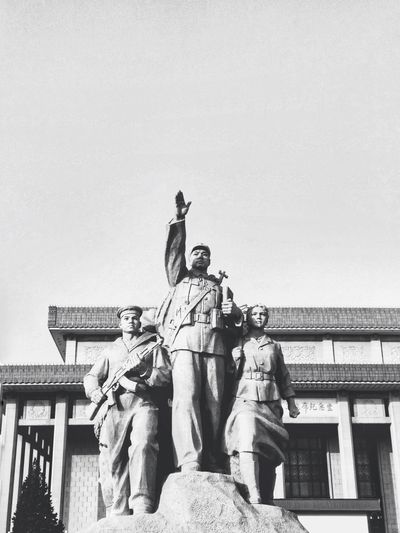
This day in history: May 16 Notification - Mao's Official Justification for the Cultural Revolution
The release of the May 16 Notification marks a significant moment in history, offering insights into Mao Zedong's rationale behind the Cultural Revolution in China. This event matters to the public as it provides a glimpse into a tumultuous period that profoundly shaped the country's political, social, and cultural landscape. As journalists consider coverage of this historical document, there are several compelling story angles to explore, appealing to a broad audience: The historical context and significance of the May 16 Notification in the context of the Cultural Revolution Analysis of Mao Zedong's motivations and objectives for launching the Cultural Revolution Personal narratives and experiences of individuals impacted by the Cultural Revolution The legacy and ongoing repercussions of the Cultural Revolution on contemporary Chinese society Reactions and interpretations of the May 16 Notification from historians and scholars Comparisons between Mao's vision for the Cultural Revolution and its actual outcomes As we reflect on the release of the May 16 Notification, journalists have an opportunity to delve into these complex narratives, shedding light on a pivotal chapter in China's history and its enduring ramifications. Connect with an Expert about China and the May 16 Notification : Wang Feng Professor of Sociology · UC Irvine Xuefei Ren Associate Professor · Michigan State University Linjie Chou Zanadu Founder of Global Foundation for Culture and Peace · Linjie Chou Zanadu Carrie Liu Currier Associate Professor and Department Chair · Texas Christian University To search our full list of experts visit www.expertfile.com Photo Credit: shark ovski

Aston University scientist to help make crop monitoring easier and cheaper
Photonics expert Dr Sergey Sergeyev to help make crop monitoring easier and cheaper with remote sensing The technology can be placed on drones and flown over crop fields to provide real-time information about crop health Remote sensing is an essential tool to provide real-time information about crops to estimate yields. An Aston University photonics expert has received a Royal Society Industry Fellowship grant to help make crop monitoring easier and cheaper with remote sensing technology. Dr Sergey Sergeyev of Aston Institute of Photonic Technologies (AIPT) has received £174,000 to improve polarimetric LIDAR, a technology that uses light to remotely observe plants. LiDAR, an acronym for Light Detection and Ranging, involves light sent from a transmitter which is reflected from objects. Devices with this technology can be placed on drones and flown over crop fields to provide real-time information about crop health to help farmers forecast the success of their crops. Polarimetric synthetic-aperture radars (SARs) and polarimetric LiDARs are the most advanced, cost-effective sensors for crop monitoring. They are often used onboard aircraft and satellites and have been in use for three decades. However, current polarimetric LIDAR systems have low spatial resolution, a slow measurement speed and use expensive components that limit their cost effectiveness. Dr Sergeyev will be working in collaboration with Salford-based digital and AI farming company Fotenix to meet farmers' need for a cost-effective solution to check if their plants are adequately watered and disease-free. The team will aim to advance recently patented AIPT technology of the polarimetric LIDAR, making it affordable for farmers in the UK and worldwide. The project, called POLIDAR, will run from 2024 to 2025. Dr Sergeyev said: “Aston University’s patented technique will be modified by using a laser emitting four time-delayed pulse trains with different states of polarisation. By comparing the input states of polarisation and states of polarisation of light reflected from plants, it will reveal information about the distance to plants and plants' leaf texture, such as water stress and pathogen infection. Unlike state-of-the-art solutions we suggest an all-fibre design with a minimum number of bulk components that reduces the footprint, cost and weight. Dr Sergeyev added: “My project's motivation is driven by the global and UK agenda on increased food production, requiring novel remote sensing approaches towards ICT farming. “As declared at the World Summit on Food Security in 2017, the growth in the world's population requires increased and more efficient agricultural production. “Remote sensing is an essential tool to systematically address the challenging task of enhanced agricultural efficiency by providing real-time information about crop traits for yield estimation.” The announcement coincides with UNESCO Day of Light which marks the role light plays in science, culture and art, education and sustainable development. It is held on 16 May every year, the anniversary of the first successful operation of a laser. ENDS World Summit on Food Security in 2017 The future of food and agriculture: Trends and challenges (fao.org) https://www.fao.org/3/i6583e/i6583e.pdf UNESCO Day of Light The International Day of Light is a global initiative that provides an annual focal point for the continued appreciation of light and the role it plays in science, culture and art, education, and sustainable development, and in fields as diverse as medicine, communications, and energy. The broad theme of light will allow many different sectors of society worldwide to participate in activities that demonstrates how science, technology, art and culture can help achieve the goals of UNESCO – education, equality, and peace. The International Day of Light is held on May 16th every year, the anniversary of the first successful operation of the laser in 1960 by physicist and engineer, Theodore Maiman. The laser is a perfect example of how a scientific discovery can yield revolutionary benefits to society in communications, healthcare and many other fields. About Aston University For over a century, Aston University’s enduring purpose has been to make our world a better place through education, research and innovation, by enabling our students to succeed in work and life, and by supporting our communities to thrive economically, socially and culturally. Aston University’s history has been intertwined with the history of Birmingham, a remarkable city that once was the heartland of the Industrial Revolution and the manufacturing powerhouse of the world. Born out of the First Industrial Revolution, Aston University has a proud and distinct heritage dating back to our formation as the School of Metallurgy in 1875, the first UK College of Technology in 1951, gaining university status by Royal Charter in 1966, and becoming The Guardian University of the Year in 2020. Building on our outstanding past, we are now defining our place and role in the Fourth Industrial Revolution (and beyond) within a rapidly changing world. For media inquiries in relation to this release, contact Nicola Jones, Press and Communications Manager, on (+44) 7825 342091 or email: n.jones6@aston.ac.uk


The Fatima Apparitions - Historical and Spiritual Significance
The Fatima apparitions hold profound importance for millions worldwide, representing a convergence of faith, spirituality, and historical events. This event matters to the public as it embodies themes of devotion, miracles, and the enduring power of belief. The story of Fatima offers numerous compelling angles for journalists to explore, appealing to a broad audience: The historical context and significance of the Fatima apparitions Personal testimonies and accounts of those who witnessed the events The impact of Fatima on religious practices and devotion Continuing pilgrimage and commemorative events at the Fatima shrine Interpretations and debates surrounding the messages conveyed at Fatima Cultural and societal influences of the Fatima apparitions on art, literature, and popular culture As we reflect on the Fatima apparitions, journalists have an opportunity to delve into these multifaceted narratives, uncovering the enduring legacy and spiritual resonance of this remarkable event. Connect with an Expert about the Fatima Apparitions: Timothy Matovina Chair, Department of Theology · University of Notre Dame Massimo Faggioli, PhD Professor of Theology and Religious Studies | College of Liberal Arts and Sciences · Villanova University Francis Beckwith, Ph.D. Professor of Philosophy & Church-State Studies, Affiliate Professor of Political Science · Baylor University Brett C. Hoover Associate Professor of Practical/Pastoral Theology & Graduate Director · Loyola Marymount University To search our full list of experts visit www.expertfile.com Photo Credit: Mateus Campos Felipe

Today is Victory in Europe Day (VE Day) - Our history #experts are here to help with your stories
Victory in Europe Day marks a monumental moment in human history, signifying the end of World War II in Europe and the dawn of a new era of peace and reconstruction. This event matters to the public as it commemorates the sacrifices made by millions and celebrates the triumph of freedom over tyranny. VE Day offers a plethora of compelling story angles that resonate with a broad audience: The human stories behind the victory: tales of courage, resilience, and sacrifice The significance of VE Day in shaping post-war geopolitics and international relations Commemorative events and ceremonies honoring veterans and their legacies Reflections on the lessons learned from World War II and their relevance today The cultural impact of VE Day on art, literature, and popular culture Continuing efforts for reconciliation and remembrance across generations As we mark Victory in Europe Day, journalists have an opportunity to delve into these rich narratives, shedding light on the enduring legacy of the Greatest Generation and the ongoing quest for peace and freedom worldwide. Connect with an Expert about WWII and Victory in Europe Day (VE Day): Colin Rafferty Associate Professor · University of Mary Washington Patrick Jung, Ph.D. Professor · Milwaukee School of Engineering Marc Gallicchio, PhD Professor and Mary M. Birle Chair in History | College of Liberal Arts and Sciences · Villanova University Kara Dixon Vuic LCpl. Benjamin W. Schmidt Professor of War, Conflict, and Society in 20th-Century America · Texas Christian University Stephen Sloan, B.B.A., M.A., PhD. Director of Institute for Oral History, Associate Professor of History · Baylor University To search our full list of experts visit www.expertfile.com Photo Credit: Galt Museum & Archives

Sunday is Cinco de Mayo. Do you know the history behind the day?
Celebrated annually on May 5th, Cinco de Mayo commemorates the Mexican army's victory over French forces at the Battle of Puebla in 1862. While often associated with festive gatherings and cultural celebrations, Cinco de Mayo also holds significant relevance beyond its historical origins, offering various story angles that appeal to a broad audience. Cultural significance and heritage preservation: Explore the historical context of Cinco de Mayo and its importance in Mexican culture, highlighting the traditions, food, music, and art associated with the holiday. Immigration and identity: Examine how Cinco de Mayo is celebrated in different parts of the world, particularly in the United States, and its role in shaping the Mexican-American identity and fostering cross-cultural understanding. Political implications and national pride: Investigate the political undertones of Cinco de Mayo, considering its significance in Mexican nationalism and its portrayal in international relations. Economic impact and tourism: Analyze the economic implications of Cinco de Mayo festivities, including the boost in tourism, sales of Mexican-themed products, and the commercialization of cultural heritage. Education and historical awareness: Discuss the educational value of Cinco de Mayo in schools and communities, examining how it promotes historical awareness, tolerance, and multiculturalism. Social justice and activism: Explore how Cinco de Mayo intersects with social justice movements, addressing issues such as immigration reform, cultural appropriation, and representation in media and politics. By covering these angles, journalists can provide their audiences with a deeper understanding of Cinco de Mayo beyond its surface-level festivities, fostering meaningful dialogue and engagement with the holiday's historical, cultural, and societal significance. Connect with an Expert about Cinco de Mayo: Margarita R. Ochoa Associate Professor and Associate Chair of History · Loyola Marymount University Timothy Matovina Chair, Department of Theology · University of Notre Dame Rodrigo Vargas Professor, Ecosystem Ecology and Environmental Change · University of Delaware Heather Chiero, PhD Associate Professor of History, Anthropology and Philosophy · Augusta University To search our full list of experts visit www.expertfile.com Photo Credit: Daniel Lloyd Blunk-Fernández