
Experts Matter. Find Yours.
Connect for media, speaking, professional opportunities & more.

The Commonwealth Cyber Initiative’s (CCI) Northern Virginia Node recently awarded a $75,000 grant to Supriyo Bandyopadhyay, Ph.D., professor in the Department of Electrical and Computer Engineering at the Virginia Commonwealth University (VCU) College of Engineering, to develop an ultra-subwavelength microwave polarization switch for secure communication. The one-year grant comes through the Cyber Acceleration, Translation and Advanced Prototyping for University Linked Technology (CATAPULT) Fund. It supports Bandyopadhyay’s project, “An ultra-subwavelength microwave polarization switch for secure communication,” which develops a nanomagnet-based antenna integrated with a piezoelectric component. This system can switch the polarization of electromagnetic beams at specific microwave frequencies to enable secret communication between two points without traditional encryption methods. “Secret communication sheds the need for encryption,” Bandyopadhyay said. “Any cryptography can be broken, but this scheme does not use cryptography for secret communication and does not suffer from this vulnerability. It is also entirely based on hardware and cannot be hacked.” The technology offers significant benefits for banking, healthcare and government communications where data security is critical because a hardware-based approach makes it immune to software hacking. Another result of the research is antenna miniaturization, with antenna sizes several orders of magnitude smaller than the radiated wavelength. This addresses limitations in algorithms, physical size and power requirements that current secure communication systems face. Bandyopadhyay is collaborating with two researchers from the Department of Electrical and Computer Engineering at Virginia Tech and Erdem Topsakal, Ph.D., senior associate dean for strategic initiatives and professor in the Department of Electrical and Computer Engineering at VCU. Students involved in the project will be trained in antenna engineering, microwaves and communication engineering, gaining skills increasingly vital in today’s connected world.

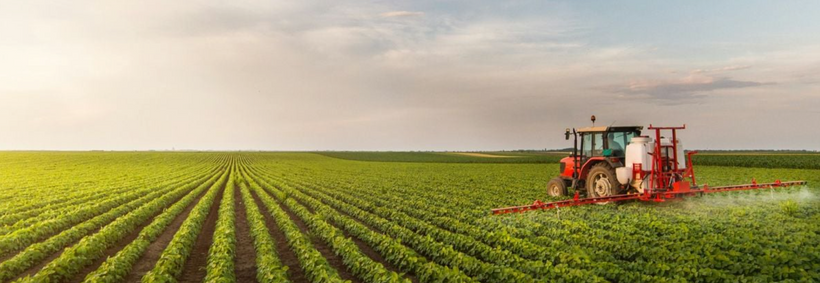
MSU team develops scalable climate solutions for agricultural carbon markets
Why this matters: Builds trust in carbon markets. This science-based baseline system dramatically improves accuracy, helping ensure carbon credits are credible and truly reflect climate benefits. Enables real climate impact by accounting for both soil carbon and nitrous oxide emissions, the approach delivers a full, net climate assessment. Scales across millions of acres. Tested on 46 million hectares in 12 Midwest states, this approach is ready for large-scale adoption, helping farmers transition to regenerative practices with confidence and clarity. New research from Michigan State University, led by agricultural systems scientist Bruno Basso, addresses a major problem in agricultural carbon markets: how to set an accurate starting point, or “baseline,” for measuring climate benefits. Most current systems use fixed baselines that don’t account for the soil carbon changes and emissions that would occur if business-as-usual practices were maintained on fields. Such inaccuracies can distort carbon credit calculations and undermine market trust. “The choice of baseline can dramatically influence carbon credit generation; if the model is inaccurate, too many or too few credits may be issued, calling market legitimacy into question,” said Basso, a John A. Hannah Distinguished Professor in the Department of Earth and Environmental Sciences, the Department of Plant, Soil and Microbial Sciences and the W.K. Kellogg Biological Station at MSU. “Our dynamic baseline approach provides flexible scenarios that capture the comparative climate impacts of soil organic carbon, or SOC, sequestration and nitrous oxide emissions from business-as-usual practices and the new regenerative system.” The research, published in the journal Scientific Reports, covers 46 million hectares of cropland across the U.S. Midwest, provides carbon market stakeholders with a scalable, scientifically robust crediting framework. It offers both the investment-grade credibility and operational simplicity needed to expand regenerative agriculture. Regenerative agriculture and carbon markets Regenerative agriculture includes practices like cover cropping, reduced or no tillage, diversified rotations, adaptive grazing and agroforestry. These methods restore soil health, enhance biodiversity, increase system resilience and help mitigate climate change by building SOC and reducing greenhouse gas emissions. Carbon markets offer a promising financial mechanism to accelerate regenerative transitions. By compensating farmers for verified climate benefits, they can act as either offset markets (for external buyers) or inset markets (within agricultural supply chains). However, the integrity of these markets hinges on reliable, science-based measurement, reporting and verification systems that integrate modeling, field data and remote sensing. A breakthrough multi-model ensemble approach To overcome limitations in traditional modeling, the MSU scientists and colleagues from different institutions in the U.S. and Europe deployed a multi-model ensemble, or MME, framework, using eight validated crop and biogeochemical models across 40,000 locations in 934 counties spanning 12 Midwestern states. The MME avoids model selection bias, lowering uncertainty in soil carbon predictions from 99% (with single models) to just 36% (with the MME). “This is a game changer for carbon markets,” said Basso. “It delivers a level of accuracy and scalability — from individual fields to entire regions — that current systems lack.” The MME platform also enables the creation of precalculated, practice-based dynamic baselines, reducing the burden of data collection and easing participation for producers. Improved mitigation assessments Unlike many approaches that consider only SOC, the MSU lead team’s study evaluates both SOC sequestration and nitrous oxide emissions to determine net climate impact. “This comprehensive assessment ensures that carbon credits represent true climate mitigation,” said Tommaso Tadiello, postdoctoral fellow in MSU’s Department of Earth and Environmental Sciences and co-author of the study. “A practice that increases soil carbon may improve soil health,” added Basso, “but it may not deliver actual climate benefits if it simultaneously increases nitrous oxide emissions. Our method provides a full accounting of the net climate effect.” The research team found that the combination of no-till and cover cropping delivered an average net mitigation of 1.2 metric tons of carbon dioxide-equivalent per hectare annually, potentially abating 16.4 teragrams of carbon dioxide-equivalent across the study area. This research was supported by the Michigan Department of Agriculture and Rural Development, U.S. Department of Energy’s Great Lakes Bioenergy Research Center, National Science Foundation Long-Term Ecological Research, Builders Initiative, The Soil Inventory Project, Generation IM Foundation, Walton Family Foundation, Morgan Stanley Sustainable Solutions Collaborative and MSU AgBioResearch.


Aston University researcher investigates safety risks of secondhand cosmetics sold online
As second-hand beauty products grow in popularity, so do questions about their safety. At Aston University, Dr Amreen Bashir, senior lecturer in biomedical science, is leading an academic investigation into the microbiological risks associated with pre-owned cosmetics being sold through online platforms like Vinted and Facebook Marketplace. The project, which has received ethical approval from the University’s Health and Life Sciences Ethics Committee, will assess the types of bacteria and potential contaminants found in used cosmetics – such as makeup and skincare – when they are resold and reused by new owners. “Second-hand beauty is trending for sustainability and affordability,” said Dr Bashir. “But very little research has explored what’s actually living in those products — and what kind of risk that might pose to everyday users.” Why this matters Pre-owned beauty items are often marketed as sustainable and cost-effective, but without careful handling they can harbour microorganisms – from bacteria to mould – that may cause infections, allergic reactions, or worse. Without knowing when a product was first opened or its expiry date, buyers could be unknowingly using unsafe cosmetics. Dr Bashir’s study will be among the first in the UK to analyse not just contamination, but also expiry timelines, and how low consumer awareness of these dates adds to the risk. The study will explore: • Types of microbiological contamination found in used products • Risks posed by product type (e.g., mascaras vs. powders) • Storage conditions and packaging integrity • Expiry dates and consumer awareness, for example: - Cosmetics have expiry timelines printed as either a date or a small jar symbol with a number (e.g., 6M, 12M, 24M, 36M), indicating months after opening. - Products can be contaminated long before the expiry date if not stored properly. - Dr Bashir’s previous research found that many makeup users didn’t know where to find the expiry date on the packaging and often kept products for years past their safe-use period. Potential to shape consumer safety and regulation With second-hand beauty sales on the rise, the findings could help shape public health messaging, consumer awareness campaigns, and online marketplace guidelines. Results could also support industry discussions on product labelling, returns, and hygiene standards. The project bridges the gap between digital consumer behaviour and health science, with implications for how individuals make purchasing decisions and how regulations adapt to a fast-changing beauty market. ⸻ Want to learn more or collaborate? Updates will be shared through academic publications and public-facing channels once data collection and sample testing are complete. Click on the icon below to connect with: Dr Amreen Bashir, senior lecturer in biomedical sciences Areas of expertise: Clinical microbiology, antimicrobial resistance, bacteria found in food, makeup products, food and water microbiology



Five storms predicted in the Gulf this season, says CoMET Lab
A composite of 500-mb temperatures from the seasonal weather model simulations used to generate the forecast. (The green outline shows the area averaged across for the Gulf of America.) The "-4.85C" is the temperature over the Gulf that ultimately fed into the equation to yield the prediction of 5 named storms. This hurricane season, five named storms are predicted for the Gulf, according to LSU’s Coastal Meteorology, or CoMET Lab, which issues a Gulf of America-specific forecast. Five represents a slight uptick in storm activity, said Paul Miller, the head of the CoMET Lab. Miller is an associate professor in the Department of Oceanography & Coastal Sciences, or DOCS. The seasonal average for the area is 3.7 storms. This forecast in elevated hurricane activity is in alignment with predictions for the Atlantic Ocean as a whole – NOAA has called for between 13 and 19 storms in the basin between the beginning of June and the end of November. CoMET Lab’s forecast works a little differently than the Atlantic-based predictions. Those models generally focus on ocean temperatures, among other factors. CoMET’s forecast, which was initially developed with Geography and Anthropology Professor Jill Trepanier, instead focuses on average atmospheric temperatures around the Gulf, approximately six kilometers, or four miles, above the ground. Miller said he and Trepanier considered a range of potential predictive factors when they first developed the forecast in 2021, before settling on atmospheric temperature. “What our data shows is that the warmer the temperature is, the fewer storms there should be. The colder the temperature is, the more storms,” Miller said. This link to cooler temperatures at high atmospheric altitudes may appear counterintuitive, but, he said, “think of a hot air balloon. It only works if it’s hotter than the air around it… If you go four miles above the ground, that tells you if you have a reservoir of potential buoyancy. If the air can make it to that altitude, it’s got a better chance of continuing to rise and forming [a storm].” Normally CoMET’s forecast utilizes temperatures throughout the month of May, but due to recent changes in data available from NOAA, Miller noted that this year’s forecast is based on readings from the last two weeks of the month. Article originally posted here.


New research reveals how religious tattoos reflect a cultural – and generational – shift in how faith is expressed through permanent body art. Dr. Kevin D. Dougherty, professor of sociology at Baylor University, brings a unique lens to this evolving phenomenon. An award-winning educator and active researcher, Dougherty teaches both undergraduates and graduate students in areas of sociology, including courses on religion, teaching and organizational life. His research explores religious affiliation, participation, racial diversity in congregations and the ways faith intersects with politics, work and community. In a recent study published in the Journal for the Scientific Study of Religion, Dougherty and his co-authors – Texas Tech sociology professors Jerome R. Koch, Ph.D. and Paticia Maloney, Ph.D. – examine how tattoos—once seen as rebellious—are now being embraced as spiritual markers, particularly among younger generations. The study used national data from the 2021 Baylor Religion Survey, administered by Gallup to a random sample of 1,248 U.S. adults. The findings reveal that nearly 10% of American adults have tattoos with religious or spiritual significance – suggesting a major cultural shift in how lived religion is publicly and permanently expressed. “What we’re seeing is that tattoos are becoming modern-day sacred objects,” said Koch. “They’re permanent, deeply personal and often worn as both a proclamation of faith and a private reminder of belief.” The research challenges longstanding stereotypes that religious individuals avoid tattoos. While highly religious adults remain slightly less likely overall to be tattooed, younger people with strong religious commitment were the most likely to mark their faith visibly and permanently on their bodies. The study also points to a broader evolution in faith practices. Tattoos are now joining other forms of spiritual expression like jewelry and clothing—but with one major distinction: permanence. “A religious tattoo doesn’t come off. It travels with you,” said Dougherty. “It encourages continuity, a lasting connection to what you believe.” Dougherty’s interest in the topic was sparked during a classroom assignment, where students were asked to document tattoos on campus. He was struck by how many were linked to religious themes. “Tattoos that once marked the fringes of respectable society are now being redeemed as testimonies of belief,” he said. “They’re a reminder that faith—like culture—is always adapting, always finding new ways to speak.” For media inquiries and to connect with Kevin, click the icon below.



Strategies for Minimizing Rising Risks to Mobile Apps from Privacy Laws
As mobile apps become more central to customer engagement, they’re also drawing closer scrutiny under global data privacy laws. In this expert-backed article, Antonio Rega, Managing Director at J.S. Held, and Ian Cohen, CEO of LOKKER, outline how businesses can identify hidden privacy risks—particularly those created by third-party SDKs and what steps they can take to stay compliant. What’s covered: • How data minimization and purpose limitation apply to mobile architecture • Real-time consent dilemmas and SDK-related exposure • Transparency gaps in mobile data flows • Upcoming enforcement trends and what they signal for app owners With decades of combined experience in digital forensics, risk, and data governance, Rega and Cohen bring sharp insight into a fast-evolving regulatory landscape. Whether you’re developing, auditing, or overseeing mobile platforms, this article breaks down what’s at stake and how to protect both users and your organization. Looking to connect with Antonio Rega? Click on his profile icon to arrange an interview or get deeper insights into data privacy, risk, and mobile app compliance. For any other media inquiries, contact : Kristi L. Stathis, J.S. Held +1 786 833 4864 Kristi.Stathis@JSHeld.com.


First AI-powered Smart Care Home system to improve quality of residential care
Partnership between Lee Mount Healthcare and Aston University will develop and integrate a bespoke AI system into a care home setting to elevate the quality of care for residents By automating administrative tasks and monitoring health metrics in real time, the smart system will support decision making and empower care workers to focus more on people The project will position Lee Mount Healthcare as a pioneer of AI in the care sector and opening the door for more care homes to embrace technology. Aston University is partnering with dementia care provider Lee Mount Healthcare to create the first ‘Smart Care Home’ system incorporating artificial intelligence. The project will use machine learning to develop an intelligent system that can automate routine tasks and compliance reporting. It will also draw on multiple sources of resident data – including health metrics, care needs and personal preferences – to inform high-quality care decisions, create individualised care plans and provide easy access to updates for residents’ next of kin. There are nearly 17,000 care homes in the UK looking after just under half a million residents, and these numbers are expected to rise in the next two decades. Over half of social care providers still retain manual and paper-based approaches to care management, offering significant opportunity to harness the benefits of AI to enhance efficiency and care quality. The Smart Care Home system will allow for better care to be provided at lower cost, freeing up staff from administrative tasks so they can spend more time with residents. Manjinder Boo Dhiman, director of Lee Mount Healthcare, said: “As a company, we’ve always focused on innovation and breaking barriers, and this KTP builds on many years of progress towards digitisation. We hope by taking the next step into AI, we’ll also help to improve the image of the care sector and overcome stereotypes, to show that we are forward thinking and can attract the best talent.” Dr Roberto Alamino, lecturer in Applied AI & Robotics with the School of Computer Science and Digital Technologies at Aston University said: “The challenges of this KTP are both technical and human in nature. For practical applications of machine learning, it’s important to establish a common language between us as researchers and the users of the technology we are developing. We need to fully understand the problems they face so we can find feasible, practical solutions. For specialist AI expertise to develop the smart system, LMH is partnering with the Aston Centre for Artificial Intelligence Research and Application (ACAIRA) at Aston University, of which Dr Alamino is a member. ACAIRA is recognised internationally for high-quality research and teaching in computer science and artificial intelligence (AI) and is part of the College of Engineering and Physical Sciences. The Centre’s aim is to develop AI-based solutions to address critical social, health, and environmental challenges, delivering transformational change with industry partners at regional, national and international levels. The project is a Knowledge Transfer Partnership. (KTP). Funded by Innovate UK, KTPs are collaborations between a business, a university and a highly qualified research associate. The UK-wide programme helps businesses to improve their competitiveness and productivity through the better use of knowledge, technology and skills. Aston University is a sector leading KTP provider, ranked first for project quality, and joint first for the volume of active projects. For more information on the KTP visit the webpage.
Shark Week: Ocean predators go from villains to heroes, helping to predict hurricanes
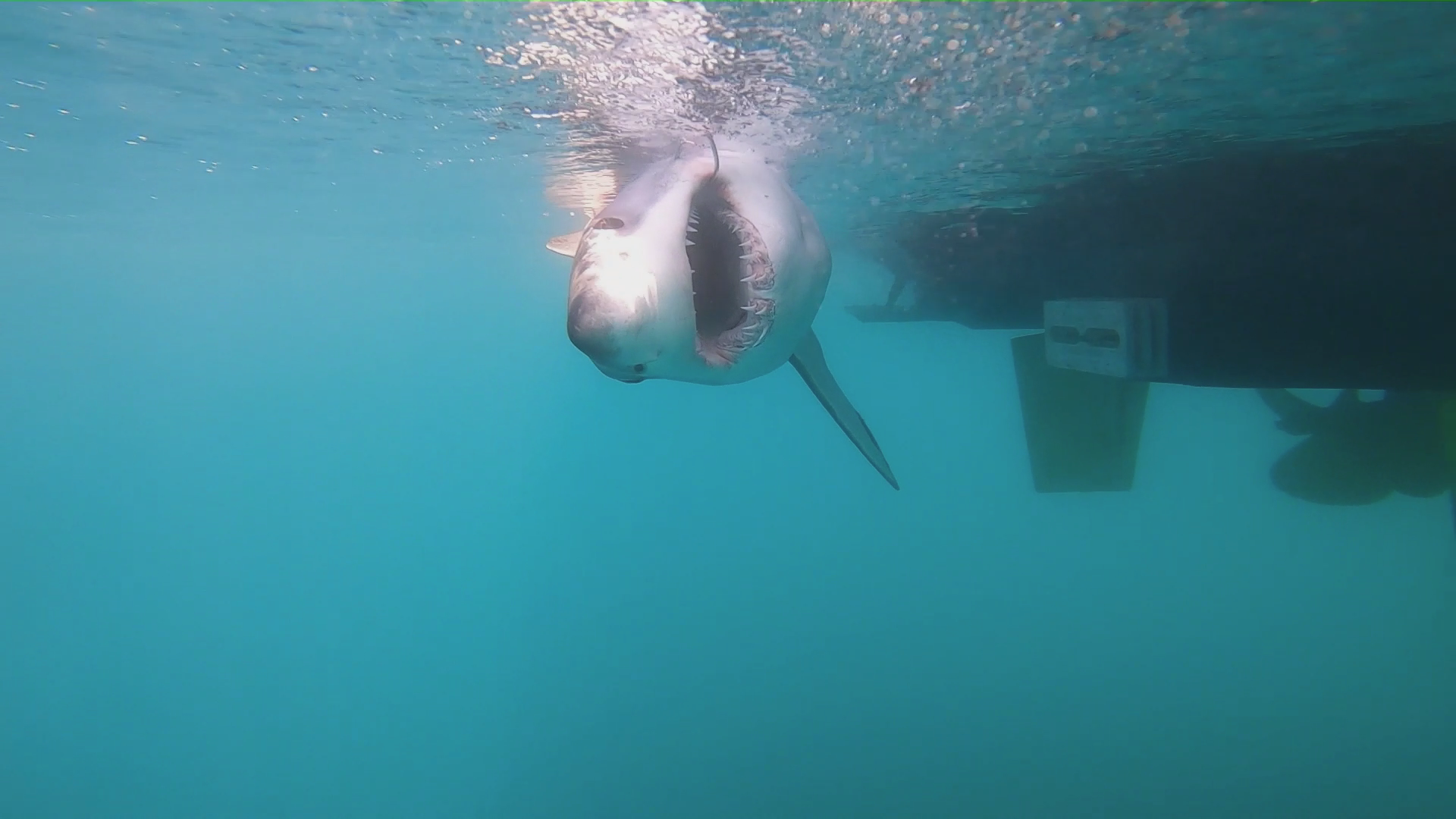
Just in time for Shark Week, the ocean's most famous predators are experiencing a redemption arc. Marine ecologists at the University of Delaware have fitted sharks with sensors and sent them out into the Atlantic Ocean to gather data that could help predict hurricanes. The research is led by UD professors Aaron Carlisle and Matt Oliver and PhD student Caroline Wiernicki. Enlisting sharks as amateur meteorologists comes at a critical time. The National Oceanic and Atmospheric Administration's capacity to forecast hurricanes has been hampered by federal cuts to staff and funding. Sharks also help speed things up. NOAA has partnered with UD and other Mid-Atlantic universities, which deploy gliders to the continental shelf to collect data that tell researchers what the water column looks like as hurricane season approaches. The gliders are effective but also slow moving and expensive to deploy and maintain. The researchers have successfully deployed three tags: two conductivity, temperature and depth (CTD) tags on two mako sharks (for oceanographic data collection); and a satellite tag on one white shark (to help evaluate if that species would be a good candidate for CTD tagging down the road). As of July 21, the white shark has been pinging the research team ever since he was tagged in May. He was recently tracked off Martha's Vineyard and has been surfacing every day – showing up in areas like Cape Cod and Long Island. The mako sharks were tagged off of the Delaware coast and swam south, bopping up and down between the Delmarva Peninsula and just north of Cape Hatteras. Carlisle, Oliver and Wiernicki are available for interviews. To reach Carlisle directly, visit his ExpertFile profile and click on the contact button. Interested journalists can also send an email to MediaRelations@udel.edu.


New findings from CAA South Central Ontario (CAA SCO) show that Automated Speed Enforcement (ASE) is changing driver behaviour. According to the research, ASE cameras are influencing habit changes in drivers in two ways: drivers are either slowing down or avoiding ASE cameras altogether. “When drivers choose to slow down or change their routes because of photo radar, it means the technology is doing what it’s meant to, reminding us to be more mindful behind the wheel,” says Michael Stewart, community relations consultant for CAA SCO. The data states that nearly a quarter (23 per cent) of Ontario drivers have received a ticket from an ASE camera, compared to 17 per cent in 2024. Although ticketing has increased, positive behavioural shifts have occurred because of ASE use. According to the survey, a majority of Ontario drivers (73 per cent) slow down when nearing an ASE camera and over half (52 per cent) shared that they are unlikely to speed up after they pass through an ASE zone; up from 44 per cent in 2023, demonstrating that the presence of ASEs is positively shifting driver behaviour in these areas. It also found that nearly half of drivers (46 per cent) avoid driving on roads with ASE in use. “These insights show how useful a tool ASE cameras can be,” says Stewart. “This technology isn’t about ‘gotcha’ moments; it’s about preventing real harm and changing driver behaviour.” Drivers support the use of ASE cameras in school zones Despite the increased ticketing in Ontario this year, many drivers support the use of ASE cameras, especially in school zones or areas with vulnerable road users. Nearly three-quarters of Ontario drivers (73 per cent) support the use of ASE in target areas such as school zones or near community centres. In fact, 76 per cent of Ontarians believe that cameras deter speeding altogether. “Our research shows that ASE continues to have strong public support and can be effective in getting drivers to change their behaviour. While speed cameras may not solve every road safety issue overnight, they play an important role in nudging driver behaviour in a safer direction,” adds Stewart. Public support for ASE use is no surprise, as speeding remains one of Ontario's most reported dangerous driving behaviours, with 40 per cent of drivers admitting to it in the past year. While ASE cameras are widely supported in community safety zones, CAA SCO recommends that any future expansion into other areas must be thoughtfully considered. “These cameras should never be used as a revenue generator, but rather, as a method to help protect road users and encourage safer driving habits,” says Stewart. “CAA SCO will continue to advocate for standardized practices across municipalities regarding ASE cameras to ensure effectiveness across our communities.” For more information on speeding and dangerous driving, please visit: https://www.caasco.com/speeding The online survey was conducted by DIG Insights from March 7 to March 19, 2025, with 1,500 Ontario drivers aged 18 and older. Based on the sample size of n=1,500 and with a confidence level of 95 per cent, the margin of error for this research is +/- 2%.)



Georgia Southern researchers survey flood-stricken area of Bangladesh
Cox’s Bazar is a bustling tourist destination located on the southeastern coast of Bangladesh. It’s home to more than 3 million people living along the longest naturally occurring sea beach in the world, extending into the Bay of Bengal. But during the monsoon season, the area is prone to flooding and frequent landslides due to its geographical location and low altitude. More than 7,000 people living in the region were displaced in 2024 after a particularly severe season that destroyed thousands of shelters, leaving three dead. Georgia Southern University Assistant Professor Munshi Rahman, Ph.D., knows the dangers and devastation monsoon season can bring to this area. As a native of Bangladesh, he has witnessed firsthand how environmental changes, urbanization and deforestation contribute to the devastation. This is why he is actively working to help his home country identify the most disaster-prone areas through the use of geographic information systems and surveys. In January, Rahman and junior geoscience major Emma Robinson traveled to Cox’s Bazar to survey and identify the areas most prone to landslides and flooding with a goal of providing data to local government and nongovernmental organizations that could help address disaster risks. Robinson says she was thrilled to gain experience in field research and engage in work she’s passionate about. “Dr. Rahman’s project really inspired me because I’ve always had a drive to help the environment,” she said. “I thought this would be a great first step into research, especially since geology and geography are so closely related.” The two used geographic information systems, GPS and community input to pinpoint vulnerable spots near residential areas and population centers. Specifically, they found that many homes and refugee camps were built on slopes. Aside from being geographically vulnerable, they observed that many of these dwellings, built from bamboo poles, tarps, and corrugated metal, lacked the infrastructure to withstand flooding. “The key findings reveal a serious environmental degradation on local landscapes exacerbating the frequency and severity of landslides and flooding events in the region,” Rahman said. He added that these insights highlight the urgency for sustainable ecosystem management and the adoption of inclusive disaster management to reduce social and environmental vulnerabilities Rahman and Robinson suggest that their findings, combined with additional socioeconomic research, could provide a more comprehensive understanding of the situation on the ground. This would enhance disaster preparedness while promoting sustainable land use. “Not too many undergrads have opportunities like this,” she said. “I know this will help me get a jump-start on my senior thesis and give me a whole new perspective for future research projects. It’s made me more confident overall as a student and researcher.” Rahman is similarly grateful for the opportunity to give his students experience in the field. “As a professor, I’ve always wanted to give my students as much real-world experience as possible,” he said. “I also give Emma full credit. Prior to this trip, she had never traveled outside the U.S. She showed incredible courage and a real talent for research.”
