Experts Matter. Find Yours.
Connect for media, speaking, professional opportunities & more.

Poll finds bipartisan agreement on a key issue: Regulating AI
This article is republished from The Conversation under a Creative Commons license. Read the original article here. In the run-up to the vote in the U.S. Senate on President Donald Trump’s spending and tax bill, Republicans scrambled to revise the bill to win support of wavering GOP senators. A provision included in the original bill was a 10-year moratorium on any state law that sought to regulate artificial intelligence. The provision denied access to US$500 million in federal funding for broadband internet and AI infrastructure projects for any state that passed any such law. The inclusion of the AI regulation moratorium was widely viewed as a win for AI firms that had expressed fears that states passing regulations on AI would hamper the development of the technology. However, many federal and state officials from both parties, including state attorneys general, state legislators and 17 Republican governors, publicly opposed the measure. In the last hours before the passage of the bill, the Senate struck down the provision by a resounding 99-1 vote. In an era defined by partisan divides on issues such as immigration, health care, social welfare, gender equality, race relations and gun control, why are so many Republican and Democratic political leaders on the same page on the issue of AI regulation? Whatever motivated lawmakers to permit AI regulation, our recent poll shows that they are aligned with the majority of Americans who view AI with trepidation, skepticism and fear, and who want the emerging technology regulated. Bipartisan sentiments We are political scientists who use polls to study partisan polarization in the United States, as well as the areas of agreement that bridge the divide that has come to define U.S. politics. In April 2025, we fielded a nationally representative poll that sought to capture what Americans think about AI, including what they think AI will mean for the economy and society going forward. The public is generally pessimistic. We found that 65% of Americans said they believe AI will increase the spread of false information. Fifty-six percent of Americans worry AI will threaten the future of humanity. Fewer than 3 in 10 Americans told us AI will make them more productive (29%), make people less lonely (21%) or improve the economy (22%). While Americans tend to be deeply divided along partisan lines on most issues, the apprehension regarding AI’s impact on the future appears to be relatively consistent across Republicans and Democrats. For example, only 19% of Republicans and 22% of Democrats said they believe that artificial intelligence will make people less lonely. Respondents across the parties are in lockstep when it comes to their views on whether AI will make them personally more productive, with only 29% − both Republicans and Democrats − agreeing. And 60% of Democrats and 53% Republicans said they believe AI will threaten the future of humanity. On the question of whether artificial intelligence should be strictly regulated by the government, we found that close to 6 in 10 Americans (58%) agree with this sentiment. Given the partisan differences in support for governmental regulation of business, we expected to find evidence of a partisan divide on this question. However, our data finds that Democrats and Republicans are of one mind on AI regulation, with majorities of both Democrats (66%) and Republicans (54%) supporting strict AI regulation. When we take into account demographic and political characteristics such as race, educational attainment, gender identity, income, ideology and age, we again find that partisan identity has no significant impact on opinion regarding the regulation of AI. State of anxiety In the years ahead, the debate over AI and the government’s role in regulating it is likely to intensify, on both the state and federal levels. As each day seems to bring new advances in AI’s capability and reach, the future is shaping up to be one in which human beings coexist – and hopefully flourish – alongside AI. This new reality has made the American public, both Democrats and Republicans, justifiably nervous, and our polling captures this widespread trepidation. Lawmakers and technology leaders alike could address this anxiety by better communicating the pitfalls and potential of AI, and take seriously the concerns of the public. After all, the public is not alone in its trepidation. Many experts in the field also have substantial worries about the future of AI. One of the fundamental political questions moving forward, then, will be to what degree regulators put guardrails on this emerging and transformative technology in order to protect Americans from AI’s negative consequences. Adam Eichen is a doctoral candidate in political science at UMass Amherst. Alexander Theodoridis is associate professor of political science and co-director of the UMass Amherst Poll at UMass Amherst. Sara M. Kirshbaum is a postdoctoral fellow and lecturer of political science at UMass Amherst. Tatishe Nteta is provost professor of political science and director of the UMass Amherst Poll at UMass Amherst.




Immigrants in the United States earn 10.6% less than similarly educated U.S.-born workers, largely because they are concentrated in lower-paying industries, occupations and companies, according to a major new study published July 16 in Nature, co-authored by a University of Massachusetts Amherst sociologist who studies equal opportunity in employment. The research—one of the most comprehensive global comparisons of immigrant labor market integration to date—analyzes linked employer-employee data from over 13 million people across nine advanced economies in Europe and North America. The U.S. results, drawn from a unique combination of Census Bureau, earnings and employer data, reveal that only about one-quarter of the wage gap is due to pay inequality within the same job and company. Instead, the majority stems from structural barriers that limit immigrants’ access to better-paying workplaces. “These findings are important because they show that most of the immigrant wage gap isn’t about being paid less for the same work—it’s about not getting into the highest-paying jobs and firms in the first place,” says Donald Tomaskovic-Devey, professor of sociology and founding director of the Center for Employment Equity at UMass Amherst Key U.S. Findings First-generation immigrants with legal status in the U.S. earn 10.6% less than comparable native-born workers. 3.4%, a third of that gap, is attributable to unequal pay for the same job at the same employer. No data was available on second-generation immigrants in the U.S., but other countries showed persistent but smaller gaps into the next generation. The study suggests that efforts to close immigrant wage gaps should focus on increasing immigrants’ access to better jobs and firms. Promising approaches include: Language and skills training Recognition of foreign credentials Access to professional networks Employer anti-bias interventions “Improving job access is essential,” says co-author Andrew Penner, professor of sociology at the University of California, Irvine. “This means addressing the barriers that keep immigrants out of the highest-paying firms and occupations.” As of 2023, immigrants constituted approximately 14% of the U.S. population, totaling over 47 million people. There are approximately 1 million new long-term permanent residents annually. U.S. immigration policy encompasses diverse pathways, including family-based migration, employment-based visas, the Diversity Visa Lottery and humanitarian protection. Immigration has been a defining feature of the U.S. population since its founding, with distinct waves shaped by economic needs, political developments and global conflicts. “For almost 250 years, we have been a nation of immigrants, and this pay gap indicates that we can do more as a country to help people following the paths of our forebears realize the American dream,” Tomaskovic-Devey adds. Global Comparison The study includes 13.5 million individuals in nine immigrant-receiving countries: the U.S., Canada, France, Germany, Denmark, Netherlands, Norway, Spain and Sweden. The U.S. had one of the smallest pay gaps (10.6%) among the nine countries studied. By contrast, Canada showed a 27.5% gap and Spain a 29.3% gap. The most favorable outcomes for immigrants were in Sweden (7% gap) and Denmark (9.2%). The authors identify two main sources of the immigrant-native pay gap: Sorting—Immigrants are more likely to work in lower-paying industries, occupations and firms. Within-job inequality—In all countries immigrants are paid less than natives doing the same job for the same employer, but these gaps are relatively small. Across the nine countries, three-quarters of the 17.9% average wage gap for immigrants was due to sorting; just one-quarter stemmed from unequal pay within jobs. In the U.S., this pattern was consistent: structural job access—not wage discrimination—was the dominant force. The study also exposes persistent disadvantages for immigrants from certain world regions, including Sub-Saharan Africa, Latin America and the Middle East. Across all countries, immigrants from these regions faced larger wage gaps than immigrants from Western or Asian countries. The international research is the latest in a series of high-profile publications from a team spanning over a dozen countries in North America and Europe that has been investigating the dynamics of workplace earnings distributions for the last decade.


If the first few frames are any indicator of a blockbuster movie, hold the 2035 Best Picture Oscar for the Vera C. Rubin Observatory and its ambitious new 10-year project. On June 23, 2025, scientists at the state-of-the-art facility in the mountains of north-central Chile gave the public its first glimpses into the capabilities of its 8.4-meter Simonyi Survey Telescope, equipped with the world’s largest digital camera—a 3.2 megapixel, 6,600-pound behemoth that can photograph the whole southern sky every few nights. Its task is a decade-long lapse record-called the Legacy Survey of Space and Time (LSST). The first shots on that journey have left both the general public and astronomical community in awe, revealing in rich detail a mind-boggling number of galaxies, stars, asteroids and other celestial bodies. “The amount of sky it covers, even in just one image, is unprecedented,” said David Chuss, PhD, chair of the Department of Physics, who viewed the first images with colleagues at an organized watch party. “It’s such high-precision, beautiful detail,” added Kelly Hambleton Prša, PhD, associate professor of Astrophysics and Planetary Sciences. “It’s just mind-blowing.” What Makes Rubin and LSST So Unique? Simply, this revolutionary instrument, embarking on an equally revolutionary initiative, will observe half the sky to a greater depth and clarity than any instrument ever has before. Consider this: "The Cosmic Treasure Chest" image released by Rubin contains 1,185 individual exposures, taken over seven nights. Each one of those individual exposures covers 10 square degrees of night sky, which is about the same as looking up at 45 full moons positioned around one another. It may seem like a small size, but click the image yourself, and zoom in and out. The amount of sky captured in that range—enough to show roughly 10 million galaxies—is astounding. Per the Observatory, “it is the only astronomical tool in existence that can assemble an image this wide and deep so quickly.” “At the end of 10 years, Rubin will have observed 20 billion galaxies, and each night in that time frame it will generate 20 terabytes of data,” Dr. Hambleton Prša said. “And, because Rubin has so many different filters, we get to see the same objects in so many different ways.” According to Dr. Hambleton Prša and Dr. Chuss, the power and precision of the Rubin LSST, combined with the shear area of the sky that will be observed, will allow for an incredibly in-depth study of myriad objects, processes and events in ways nobody has ever studied them before. “For example, in our galaxy, we expect to observe only two supernovae per century,” Dr. Hambleton Prša said. “But we're observing 20 billion galaxies. For someone studying this phenomenon, the number of supernovae that they’re going to observe will be off the charts. It is an exquisite survey.” It will also provide insight into the universe’s oldest and most puzzling enigmas. “Rubin is able to look back into our universe at times when it was much smaller during its expansion and really address some of these incredible mysteries out there, like dark energy,” Dr. Chuss said. “We know the universe is expanding and that this expansion is accelerating. Rubin will trace the history of that acceleration and, from that, provide insight into the physics of the mysterious dark energy that appears to be driving it.” To enhance the technological capabilities of its instrument, scientists were invited to contribute towards the selection of the observing strategy of the telescope. The Rubin team took into consideration continual input from the astrophysics community, separated into what they call “science collaborations.” To achieve this, the Rubin team generated proposed simulations for collecting observations, which the science collaborations then assessed for their specific science goals. “The Rubin team then iterated with the science collaborations, taking into account feedback, to ultimately obtain the best strategy for the largest number of science cases,” Dr. Hambleton Prša said. Dr. Hambleton Prša is the primary contact for the Pulsating Star Subgroup, which is part of the Transients and Variable Stars Science Collaboration, the science collaboration that focuses on objects in the sky that change with time. She was the lead author among 70 co-authors on the roadmap for this science collaboration, underscoring the significant scale of community participation for each of these areas. Joined Under One Sky Dr. Hambleton Prša, Dr. Chuss and other members of the Astrophysics and Planetary Sciences Department and Department of Physics at Villanova have a vested interest in Rubin and the LSST project. In April, the two departments joined forces to launch The Villanova One Sky Center for Astrophysics, co-directed by the two faculty members. With goals to elevate the University's longstanding record of research eminence in astronomy and astrophysics and create opportunities for more students to access the disciplines, the Center partnered with the Rubin Observatory to help realize the mission. Both Villanova and Rubin share a similar vision on expanding access to this broad field of study. Fortuitously, the launch of The Villanova One Sky Center coincided with the initial data released from Rubin. What will result, Dr. Chuss says, will be a “truly awesome impact on both our Center and institution.” Dr. Hambleton Prša will advance her own research of pulsating stars, and Andrej Prša, PhD, professor of Astrophysics and Planetary Science and the primary contact for the Binary Star Subgroup, will broaden his study of short-period binary stars. Joey Neilsen, PhD, associate professor of Physics, will expand his research in black hole astrophysics. Becka Phillipson, PhD, an assistant professor of Physics, who recently led a proposal for Villanova to join the Rubin LSST Discovery Alliance, aims to increase the scope of her study of chaotic variability of compact objects. Dr. Chuss, who generally works on infrared and microwave polarimetry, which is “outside the wavelength ranges of Rubin” is interested in its complementarity with other observations, such as those of the cosmic microwave background—the oldest light in the universe—and the evolution of the large-scale structure of the universe. Subjects, he says, which are “exactly in the wheelhouse for Rubin.” Other faculty members are interested in topics such as how Rubin’s observations may change the knowledge of both the history and structure of our solar system and the population of Milky Way satellite galaxies. That is not to mention, Dr. Hambleton Prša points out, the daily 20 terabytes of data that will become available for students and postdoctoral researchers under their tutelage, who will be heavily involved in its analysis for their own projects and ideas. “This partnership is going to greatly increase our opportunities and elevate our profile,” Dr. Chuss said. “It will make our program even more attractive for faculty, postdocs and students to come and to share their knowledge and expertise. “Together, we will all have access to an incredible movie of this epoch of our universe, and the knowledge and surprises that come with it along the way.”





Power Shift: How CMU Is Leading America’s Energy Evolution
Carnegie Mellon University, long known for its prowess in computer science and engineering, is now emerging as a key innovator within America’s energy landscape. As AI models grow more powerful, so too does their appetite for energy, straining an aging and outdated grid and prompting urgent questions about infrastructure, security and access. From reimagining AI data centers to modernizing and securing the electric grid, CMU researchers are working on practical solutions to pressing challenges in how the U.S. produces, moves and secures energy. Learn what CMU experts have to say about their Work That Matters.


L to R: Professor Helen Wood, Annika Allen and Nadia Afiari (Image: Simon Roberts Photography) Aston University’s Professor Helen Wood led the research for Black Leaders in TV, a company championing Black TV professionals Black in Focus is the first report of its kind and highlights the prevalence, with 92% of respondents reporting prejudicial or discriminatory experiences Recommendations for improvements include mid-career support, changing how Black stories are commissioned and tackling racism and bullying. Black television professionals in the UK’s television industry continue to face persistent barriers to career progression, with progress towards equity and inclusion very slow, according to new research led by Aston University academics. The report, Black in Focus, was produced in partnership with Black Leaders in TV, a company set up to champion Black professionals in the UK television and content creation industry, committed to bridging the representation gap and creating a more inclusive and innovative industry. The research group was led by Professor Helen Wood, a professor of media and cultural studies at Aston University. It also included Aston University’s Dr Killian Mullen and Dr Priya Sharma, alongside Dr Jack Newsinger, associate professor in cultural industries and media at the University of Nottingham. The researchers surveyed 164 Black mid-career television professionals to learn about their experiences. While entry-level diversity efforts have sparked positive change, the researchers say that respondents generally see this as performative, with little genuine progress at mid and senior levels. Of those surveyed, 92% reported experienced microaggressions at work, defined as subtle, often unintentional, comments or actions that express prejudice or discrimination towards them, such as being mistaken for a taxi driver or colleagues continually mispronouncing a name. 80% stated that their careers in television have negatively impacted wellbeing. Almost three-quarters (74%) of respondents said they had been ignored or excluded at work One of the biggest problems highlighted is a persistent ‘club’ culture with career progression often based on informal networks and hires. 91% of the survey respondents reported having no friends or family in the industry, blocking wider access and opportunity. Many Black television professionals still report being labelled as ‘diversity hires’, which negatively impacts their confidence and feeling of belonging in the industry. Black-Caribbean respondents and those from working-class backgrounds report heightened feelings of exclusion. Another major problem found by the report is in programme commissioning, with Black stories often viewed as commercially risky, leading to missed opportunities for richer, more authentic storytelling. The recommendations for improvement are grouped into four categories - breaking the mid-career bottleneck, commission, diversity initiatives, and racism, bullying and inclusion failures. To help with career bottlenecks, the authors’ suggestions include developing a national fellowship scheme to offer structured leadership training, shadowing, and commissioning exposure for Black professionals, setting up a centralised database for Black talent and supporting Black creatives though industry showcases. The television industry could tackle the problems with commissioning for example by incentivising Black-led narratives and requiring commissioning teams to complete anti-bias training. Diversity initiatives should move away from entry-level programmes towards structural change. This includes moving away from informal, network-based recruitment to structured, clear processes, and formalising promotion pathways. The television industry can tackle racism and bullying through zero-tolerance harassment policies, independent reporting mechanisms and sanctions, inclusive leadership training and developing mental health resources specifically tailored to Black professionals. Professor Wood said: “We can hear the voices of frustration in this survey and the data is clear about the problems. It’s time for the industry to use this evidence to take the next steps to deliver real, systemic change.” Black Leaders in TV founders Nadia Afiari and Annika Allen Gray said: “The findings make clear that, for UK television to truly reflect its diverse audiences and unlock creative innovation, the industry must move beyond surface-level diversity efforts. There needs to be support in place for Black professionals, greater transparency in recruitment and progression, and a fundamental shift towards inclusive, equitable workplace cultures.” Visit https://www.aston.ac.uk/sites/default/files/2025-07/Black_in_Focus_report.pdf to read Black in Focus in full.


Are China's New Policies Opening Up China?
For centuries China has been known as a closed country. When the Ming Dynasty (1368-1644) started enforcing immense cultural and political influence, it acted as a catalyst for China's closed country status. Then the Qing dynasty (1644-1912) made the closed country status official by expanding China's political, cultural and administrative structures. Now after over 600 years, China is announcing they may become more open than they have in past centuries. China is not fully becoming open, but there are two ways China is hoping to re-establish its reputation among other countries. In 2024 China announced they are enabling a temporary visa-free policy, that permits visitors from 43 countries to visit China without visas for short trips lasting only a few days. China installed this policy with hopes of promoting global goodwill and to encourage tourism and business travel. Now in 2025, China says they will implement policies that will promote stable foreign trade growth and improve services for enterprises. While this new policy is just beginning, the visa-free policy will end at the end of 2025. So, while China says they are becoming more open, they mean they are welcoming foreign businesses and investors. They are currently not becoming open religiously, politically, socially or economically. Citizens, even visitors, still remain under strict censorship, surveillance and political control. These policies also don't mean that foreign companies will no longer experience restrictions, forced partnerships with Chinese firms, data rules, and unexpected regulatory pressure. These things will still continue to occur. China is being selective on what these policies entail and how long they will last. Since the COVID lockdowns and now with the real estate crashes and youth unemployment, China has felt its economy slowing. It's their hope that these new policies will help boost China's economy. Economic Perspective: Dr. Jared Pincin is an expert on economics and is available to speak to media regarding China's economy – simply click on his icon or email mweinstein@cedarville.edu to arrange an interview. International Relations Perspective: Dr. Glen Duerr, professor of international studies at Cedarville University and a citizen of the United Kingdom, Canada, and the United States, is a nationally known expert on this subject and is available to speak to on China's new policies. To schedule an interview, email Mark D. Weinstein, executive director of public relations at Cedarville University at mweinstein@cedarville.edu or click on his icon.


Pandemic deepened health gaps for people with disabilities, study finds
A new peer-reviewed study published in the American Journal of Preventive Medicine reveals that U.S. adults with disabilities experienced significant declines in preventive cardiovascular screenings during the COVID-19 pandemic — and continued to face cost-related barriers to care, even after accounting for economic disruptions. Using nationally representative data from more than 150,000 adults between 2019 and 2023, the study highlights how routine care like blood pressure, cholesterol and glucose screenings dropped most sharply for those with cognitive, physical, or multiple disabilities. Adults with disabilities were also more likely to report delaying or missing care due to cost. These findings underscore persistent health inequities and the urgent need for inclusive public health strategies, especially for populations already at greater risk for cardiovascular disease. Why it matters: Cardiovascular disease remains the leading cause of death in the U.S. Adults with disabilities face higher risks and more barriers to care — making consistent preventive screenings essential. This study offers the first detailed, post-pandemic national look at how different disability groups were affected, with implications for future policy and healthcare reform. For more information on the study and to speak to experts, contact mediarelations@udel.edu.

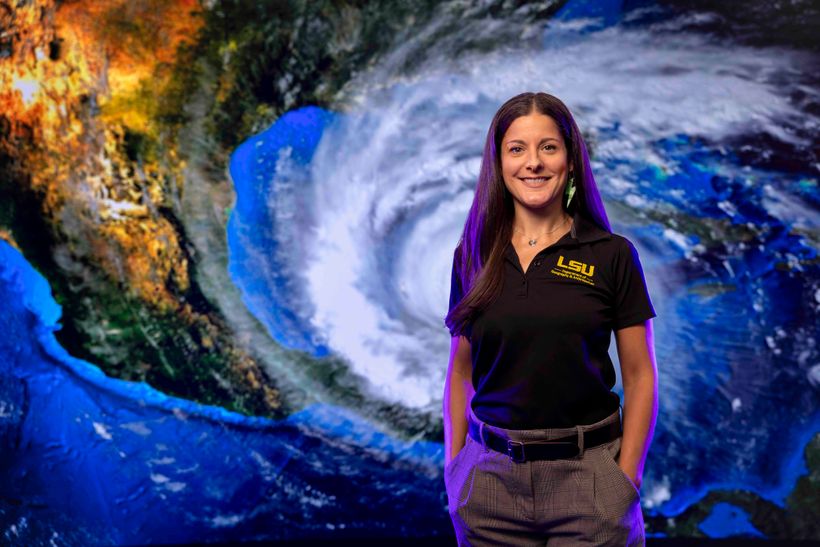
LSU’s Jill Trepanier Educating K-12 Louisiana Students About the Environment
What began in 2018 as a single rooftop weather station on LSU’s campus as a tool to help freshmen connect to the science happening around them, has grown into an educational network in the southern part of the state, connecting K-12 students with the sky through real-time data, interactive technology, and hands-on learning. Trepanier, a professor and department chair in LSU’s Department of Geography & Anthropology, leads a project that now includes 10 weather stations installed at or near K–12 schools from Lake Charles to Grand Isle. “The environment is harsh in Louisiana. Beautiful, but harsh,” Trepanier said. “The more students know about it, the better they can protect themselves and their families. For me, that’s what it is all about.” The project all started to help college students in Trepanier’s meteorology and physical geography classes connect more deeply with the material by using weather data collected from the air around them. “These were 400 freshmen every semester who were not geography majors, so they didn't really love the science of the atmosphere. But they were able to connect with the information because they could see the data on an app on their phone as they were living in it.” Installed across South Louisiana, each weather station is solar-powered and connected to a console that uploads data to an online web platform and displays it on a dashboard. Then an app shows the local students the current conditions and records for the day. “When we look at data from the community, it might be many miles from where you are. And most people live within a few miles or less of their schools. It allows them a close-up view of what is happening, instead of relying on something miles away,” she said. Teachers can use the data with certain lessons or during a passing storm. But the available data also educates them on things like solar radiation, “It also helps aid things like seasonality and our relationship with the sun. It extends well beyond just rain.” The material is also aligned with the Louisiana Student Science Standards for environmental and Earth sciences. “By allowing students to compare real data across space and time, it helps them to understand how systems are connected. And most of these science standards have them focusing on system theory, in one way or another,” Trepanier said. Read the full story here.



The Canadian Housing Market is a Mess
The Social Contract is Broken—And We Forgot to Tell Our Kids There was a time in Canada when the rules seemed straightforward: work hard, stick to the plan, and your kids would have an even better future than you did. That was the unspoken social contract—not legally binding, but deeply believed. A handshake between generations, sealed with maple syrup and mutual optimism. You purchased a modest home, stayed with one employer for 30 years, and retired with a gold watch, a pension, and a house you owned outright. Life wasn’t flashy, but it was fair. And your kids? They would climb even higher. Well… about that! The Housing Market: From Stepping Stone to Stumbling Block Homeownership used to be a rite of passage. Now it feels more like winning The Amazing Race: Toronto Edition. According to Statistics Canada housing data, in 1990, the average Canadian home sold for approximately $215,000. Fast-forward to late 2023–early 2024, and that number has ballooned to around $670,000–$700,000 on average —a more than 200–225% increase in just over three decades. Meanwhile, wages didn’t get the memo. Since 1990, they’ve only doubled. So, while home prices soared, incomes shifted to the kitchen for more instant noodles. It's not just a gap—it’s a canyon. Sure, there was a housing correction in the early ’90s. But if you’re under 40, you’ve never seen a price drop—only stable prices (on a good day). Meanwhile, boomers and older Gen Xers bought homes when down payments didn’t require a GoFundMe page. Boomers Rode the Rocket—Then Pulled Up the Ladder Let’s be honest: we did quite well. If you purchased property in the ’70s, ’80s, or ’90s, you benefited from a wave of equity that transformed retirement into a cruise ship brochure. For many, the house became the largest—and only—source of real wealth. We got used to it. Then we got protective. Then... well, a bit smug. • NIMBYism? Guilty. • Zoning restrictions? Voted yes. • Capital gains reform? Over my arthritic body. • Preferred Pronouns – Me, Myself and I We feared anything that could lower our property values. A 25% correction? Not in my golden years! But that might be what it takes to give our kids a fair shot. We told them to "work hard," then quietly reinforced a game they couldn’t win. We Told Them to Hustle—Then Rigged the Game Today’s young Canadians aren’t lazy; they’re exhausted. They’ve done everything we asked—degrees, careers, even side hustles—and still can’t afford a 500-square-foot shoebox in Toronto without cashing in their RRSPs or moving back into our basements. By the way, they’re doing this—not because they missed us, but because rent is eating up half their paycheque and still asking for dessert. Even worse? Many are looking abroad, not for a gap year, but for an economy in which they can participate—one where they might be able to afford a home and groceries in the same month. If the best and brightest are quietly packing their bags, it’s not wanderlust; it’s a policy failure. There’s now a whole ecosystem catalyzed by everything from consultants to cloud-based software and payment platforms that has aided a global movement of “creative-class” digital nomads. For those who want a more affordable cost of living and have the skills necessary to work remotely, this generation has options to move. In "Intelligent Money," author Chris Skinner envisions a future where AI-powered financial systems won’t just advise against homeownership—they’ll actively discourage it. Why commit to mortgage debt when you can rent flexibly, invest digitally, and maintain liquidity in your life? Not a dream, but a necessity. We told them to pull up their socks. They’re wondering if we sold their shoes. What Happened to Profit Sharing? Remember when companies used to share their success? Microsoft, Google, and yes, still Costco, offered profit-sharing or stock options that turned employees into unexpected millionaires. It wasn’t charity; it was a fair deal. Then gig work emerged, HR departments disappeared, and the only thing we shared was burnout. We need to restore fairness—perhaps even incentivize companies that value loyalty. Renter Equity Accounts: A Radical Concept—Equity You're not building wealth if rent is more than 30% of your income. You’re funding someone else’s retirement. So, here’s a thought: when rent exceeds 30%, why don’t we match the excess—25% to 50%—and deposit it into a locked “Renter Equity Account”? It grows tax-free and can be used for: • A down payment • Retirement savings • Student debt relief • Emergency funds Employers could contribute to REA plans. Governments could provide incentives, and renters could finally receive more than just a rent receipt and a pat on the back. It's Time for Bold, Practical Ideas We can’t rewind to 1990. (Although the fashion world is trying.) But we can fix what’s broken: Let Canadians earn their first $250,000 tax-free, provided it is used for a down payment or to eliminate student loans. That’s helping reduce overall debt. Ensure zoning reform is effective by linking federal infrastructure funding to genuine housing development. Establish public wealth tools - TFSA-style accounts for low-wealth, high-effort Canadians. Forgive student loans for public service, specifically for individuals filling positions such as nurses, teachers, early childhood educators, and tradespeople, with added incentives for those relocating to underserved areas. Invest in them, and they will reinvest in us. What Families Can Do—Right Now No, you can’t rewrite national policy from the kitchen table. (Unless you’re Chrystia Freeland.) But here’s what you can do: Start a down payment fund—consider using a TFSA or an investment account to help your kids build capital. Create an ADU—laneway homes, granny suites, legal basement rentals. Housing and support combined. Access your home equity—HELOCs or reverse mortgages can be lifelines, not luxury options. Create a rent-to-own family plan—turn monthly rent into future equity. Discuss finances—share your successes, warn against mistakes, and share the financial knowledge you’ve gained from hard lessons. An Apology—from the Heart To our kids and to the next generation, we should say we’re sorry. We didn’t plan for this outcome. We assumed the paths we walked would still be open for you, that the same rules would still apply, and that equity would be available to all. We forgot that a contract—even an unspoken one—still needs to be honoured. But it’s not too late. We can speak out. We can share our thoughts. We can change the policies, shift the mindsets, and reopen the doors that have been closed, because the future of this country shouldn’t be something you have to leave to find. Let’s fix this. So, you can stay. And thrive. And lead. Let’s rebuild the contract together. Deal? Don’t Retire … Re-Wire! Sue


Food is medicine, and this professor has the research to prove it
For more than 20 years, Dr. Allison Karpyn has worked to understand and address food insecurity in America and beyond — studying how communities access healthy food, how policy shapes those opportunities and how local partnerships can make meaningful change. A professor in the University of Delaware’s College of Education and Human Development and co-director of its Center for Research in Education and Social Policy, Karpyn has published extensively on topics including food deserts, healthy corner store initiatives, school nutrition programs and strategies to bring farmer’s markets to underserved areas. Her work, which blends rigorous research with community-based implementation, has appeared in leading journals such as Pediatrics, Preventive Medicine and Health Affairs. Karpyn has also worked directly with nonprofit organizations, government agencies and retailers to pilot and evaluate programs designed to increase access to high-quality food in low-income neighborhoods. Her focus is on actionable, data-informed solutions to persistent challenges — from childhood hunger to structural barriers in the food supply system. Now, Karpyn’s expertise is being tapped as part of Delaware’s new Food is Medicine Committee, a statewide initiative under the Delaware Council on Farm and Food Policy. The committee seeks to connect nutrition and health care to improve outcomes, lower costs and strengthen local food systems — goals that align closely with Karpyn’s career-spanning mission. For journalists exploring food policy, hunger, public health and the future of food access, Karpyn is a key source of insight, research and real-world perspective. She can be contacted by clicking her profile.