
Experts Matter. Find Yours.
Connect for media, speaking, professional opportunities & more.

Expertfile Spotlight on National Plan for Health Workforce Well-Being
ChristianaCare Participates in National Academy of Medicine National Plan for Health Workforce Well-Being and Calls for Collective Movement to Address Burnout Crisis The capacity and well-being of the U.S. health workforce has been under threat for years by an epidemic of burnout, and two years of the COVID-19 pandemic has further exacerbated this systems issue. Now at least 40% of nurses, 20% of physicians, and more than 25% of state and local public health department employees are considering leaving their professions. Recognizing that the function of the U.S. health system is at stake due to dangerously mounting health care system pressures, the National Plan for Health Workforce Well-Being by the National Academy of Medicine calls for immediate action to safeguard this precious national resource dedicated to protecting the country’s health. ChristianaCare is proud to have contributed this publication. “The NAM Clinician Well-Being Collaborative’s National Plan for Health Workforce Well-Being will drive urgently needed collective action to strengthen health workforce well-being and reverse existing alarming trends in burnout and turnover,” said ChristianaCare Chief Wellness Officer Heather Farley, M.D., MHCDS, FACEP. “ChristianaCare has served as a strategic network partner with the NAM to design this National Plan, which will coordinate action across several priority areas, including understanding the effects of COVID-19 on the health care workforce, recruiting of the next generation, and increasing access to much-needed mental health resources.” The National Plan calls on multiple actors to work together to drive policy and systems change to better support the health workforce and the health of all communities – including health care and public health leaders, government, payers, industry, educators, and leaders in other sectors. A draft of the National Plan was made available for public feedback and received nearly 2,000 constructive comments. To date the final Plan has received endorsements from over 25 organizations representing the diverse organizational membership of the Clinician Well-Being Collaborative and the various actors needed to collectively advance the practical strategies laid out in the Plan – including ChristianaCare. ChristianaCare has been engaged in all National Plan priority areas, such as: The creation and sustaining of positive work and learning environments and culture. Efforts in this priority area include development of the Center for WorkLife Wellbeing, which utilizes a comprehensive, multimodal approach to foster caregiver work-life meaning, connection, and joy. The Center offers multiple support services and culture change initiatives, including the implementation of resident well-being rounds, OASIS rooms for caregiver restoration, and opportunities for caregivers to develop long-standing mutual support systems. The support of mental health and reduction of mental health stigma, which included the championing of the physician mental health bill that became law this year. It also includes psychological first aid training that ChristianaCare has implemented for health system leaders and managers. Additionally, ChristianaCare offers free comprehensive behavioral health support services and an individual peer and group support program to help caregivers when they experience stress in the workplace. The commitment to well-being as a long-term value, which includes integration of caregiver collective well-being as a systemwide strategic goal. The National Plan visualizes that, when all actors take responsibility, we can create a health system in which care is delivered with joy and with meaning, by a committed care team, in partnership with engaged patients and communities. The National Plan identifies a range of actions for the near-, medium-, and long-term to achieve seven priority areas for health workforce well-being, clearly naming associated goals and responsible actors. Access the full National Plan here to learn more about the priority areas for action. For more information on the Action Collaborative on Clinician Well-Being and Resilience, of which ChristianaCare is a member, visit this site.


Planet 9 Doesn’t Exist, So Why Does It Matter How We Get There? Let Our Expert Explain.
Planet 9 is an oft-discussed hypothetical planet in the outer region of the solar system. A new study involving Florida Tech astrobiologist Manasvi Lingam helps illustrate how we could possibly get there. The study, “Can We Fly to Planet 9?” is from Lingam and researchers Adam Hibberd and Andreas Hein. The team discovered that using current, unmanned transportation methods, it would take 45 to 75 years to get to Planet 9, which is about 42 billion miles away from Earth. By comparison, Pluto, which is the ninth object from the Sun, is roughly three billion miles from Earth. The research and work of Lingam, Hibberd and Hein is also getting a lot of attention from websites like UniverseToday.com. The team also studied near-future transportation methods nuclear thermal propulsion and laser sails. Using nuclear thermal propulsion, it would take approximately 40 years to reach Planet 9. It would take merely six to seven years to reach Planet 9 using laser sail propulsion, which involves using light from lasers to propel the vehicle. In its research, the team used the principles of orbital mechanics, sometimes called spaceflight mechanics. They inputted the complex and nonlinear mathematical equations into a computer, and then solved those equations with some optimization constraints. “What I mean by the latter is that ideally you want to maximize or minimize some quantity as much as possible,” Lingam said. “You might say, ‘Well, I want to minimize the flight time of the spacecraft as much as possible.’ So, what we did is that we put in an optimization constraint. In this case, it happens to be minimizing the time of journey. You solve the mathematical equations for a spacecraft with this condition, and then you end up with the results.” Lingam is inspired by the trendsetting Voyager spacecraft missions of the late 1970s, and one of his goals is to gain additional information about other worlds in our solar system, in addition to Planet 9 Voyager still provides valuable information regarding the outer solar system, though by 2025 it is expected that there may no longer be sufficient power to operate its science instruments. “Any mission to Planet Nine would likewise not just provide valuable information about that hypothetical planet, but it would also yield vital information about Jupiter, because what we do in some of the trajectories is a slingshot or powered flyby around Jupiter,” Lingam said. “It could also provide valuable information about the Sun because we also do a maneuver around the Sun, so you would still be getting lots of interesting data along the journey. And the length of the journey is comparable to that of the functioning time of the Voyager spacecraft today.” If you're a reporter looking to know more - then let us help get you connected to an expert. Manasvi Lingam is an Assistant Professor in the Department of Aerospace, Physics and Space Sciences at the Florida Institute of Technology. He is an author and go-to expert for media when it comes to anything in outer space or out of this world - just recently he was featured in Astronomy.com where he was asked to answer the illusive question - Are we alone? Manasvi is available to speak with media - simply click on his icon now to arrange an interview today.


Aston University and ADInstruments Ltd (ADI) enter 24-month knowledge transfer partnership to develop ground-breaking animal telemetry system World-leading expertise in neuroscience to help bring game-changing system to market Outcomes of KTP will feed directly into the product hardware and software development, ensuring technological advantage for ADI. Aston University has teamed up with research software experts ADInstruments Ltd (ADI) through a knowledge transfer partnership to develop a revolutionary dual-function wireless telemetry system for neuroscience research that is set to transform how implanted biosensors are used for data generation in animals. Telemetry is the automatic recording and transmission of data from remote or inaccessible sources to an IT system in a different location for monitoring and analysis. ADI has an established reputation for developing, supplying and supporting its customers in specific areas of life science research, particularly in cardiovascular science. The company has recently acquired Kaha Sciences, which has developed ground-breaking telemetry technology that can be used to measure neuroscience-relevant signals in free-moving animals for research. The company is looking to use the KTP to harness the world-leading expertise of Aston University to build their reputation in neuroscience. Mark de Reus, head of support at ADInstruments, said: “The evidence-base of research papers, training and support materials from Aston University will be invaluable in improving the product design, identifying development opportunities and embedding a culture of neuroscience within the company.” A knowledge transfer partnership (KTP) is a three-way collaboration between a business, an academic partner and a highly qualified graduate, known as a KTP associate. The UK-wide programme helps businesses to improve their competitiveness and productivity through the better use of knowledge, technology and skills. Aston University is the leading KTP provider within the Midlands. The Aston University team features Professor Gavin Woodhall and Dr Stuart Greenhill from its Pharmacy School’s Pharmacology and Translational Neuroscience Research Group. Professor Woodhall is co-director of the Institute of Health and Neurodevelopment (IHN) and a neuroscientist who studies epilepsy and schizophrenia in rodent models of disease. Dr Stuart Greenhill is a member of IHN and senior lecturer in neuroscience, with a longstanding track record in developing and deploying novel and difficult mechanisms of recording from brain tissue both in vivo and in vitro. Dr Stuart Greenhill said: “It is a privilege to be involved in the development of this important technology, which will be invaluable to thousands of research groups across the globe, and we are delighted to be able to help the product team realise the potential of this device.”


Podcast: The partition of India: an ‘evil act’ or ‘rush to grant independence’?
Aston University academic discusses need to understand what resulted in up to two million deaths The partition formed part of a global pattern of expanding nation-states, fitting populations to borders, and decolonisation throughout the 20th century Debate now needed to find ways to accommodate human diversity rather than pulling people apart The partition of India at the end of the Second World War was not an “evil scheme” but a case of being “overtaken by events”, according to an academic at Aston University. Dr Volker Prott, a senior lecturer in modern history, spoke about the legacy of India and Pakistan’s independence in the latest episode of the ‘Society matters’ podcast series, presented by journalist Steve Dyson. Dr Prott said there was a “bitter irony” in “celebrating” the 75th anniversary of the partition and independence of India and Pakistan, granted on 15 August 1947. But he argued that now was the time to overcome divisions in society caused by Britain’s colonial past. He said: “Partition is very much an ambivalent event because, on the one hand, there is indeed grounds for celebration because it meant independence from British colonial rule for India and Pakistan … but at the same time partition was a reason for frustration and then, further on, it was a cause of violence.” Historians have estimated up to 20 million people were displaced in the years following partition, with the death toll “somewhere between 200,000 and two million people”, and possibly hundreds of thousands of girls and women suffering rape and abduction. Partition also led to a lasting long-term conflict between India and Pakistan involving several wars and the break-up of Pakistan in 1971. Dr Prott said Britain had come in for a lot of criticism due to the violence, with various historical studies regarding Indian partition as a “deliberate design” to weaken India and secure long-term British influence. But he argued that Britain was “overtaken by events” in the sense they underestimated “the dynamic for independence” and the huge potential for violence. “That’s the moment they rushed independence and rushed partition … a quick and easy exit option for the British Empire,” he said. As a result, no-one put mechanisms in place for refugee or minority protection, or to draw borders “in a sensible way”. Dr Prott said the partition of India was not an exception, but part of a larger historical pattern throughout the 20th century that also included new borders drawn that split Ireland, Palestine, Korea, Germany, Vietnam and Cyprus. This pattern comprised of three factors – the global expansion of the nation-state, “international stability” involving “fitting populations to borders”, and decolonisation leading to “friction and conflict”. He said: “We shouldn’t blame the British for plotting partition. It wasn’t an evil scheme they came up with.” But he stressed that the British did try to avoid assuming responsibility for more than a century of colonial rule in India, including “colonial violence, economic exploitation, and politicising religious identities of Muslims and Hindus” in particular. Dr Prott said the “starkest example” of a nation taking responsibility for the past was his own country, Germany, which committed the Holocaust, the “most extreme case of genocide in history”. Germany had come to terms with its crime and guilt, and accepted the need to work towards reconciliation. He said this was mostly seen as a historic problem in Germany, “but in Britain the legacy of colonialism is with us every day” with the Black Lives Matter movement, decolonising the curriculum in universities, changing street names, and removing controversial statues. He said: “We should see this dealing with our colonial past as an opportunity to bridge existing divides, to learn from each other. We need an open-ended debate.” Many people, he said, have very extreme views on the partition. Some praised the British Empire and said the violence was all because of racial hatreds, while others claimed people lived in harmony for centuries and problems were only caused by “evil British plotting”. “What we need to do is move away from these simplistic views of the past. History shows us that partitions very often cause more problems than they solve and we should try to find ways to accommodate human diversity rather than pulling people apart.” Aston University is marking the 75th anniversary of Indian partition by taking part in an exhibition at Birmingham New Street Station called ‘Children of the Railway: The Partition of India 75 Years On’, which opens on 6 September for three weeks. Dr Prott is also giving a public talk on partition at 5pm on 25 August at the Hockley Social Club.

The EU-UK Trade and Cooperation Agreement is costly, what does the UK need to do? | Aston Angle
As far as trade is concerned, the EU exit has been rather costly to the UK. At the Centre for Business Prosperity, we have been tracking the performance of UK trade in recent years. The UK’s trade dropped sharply during COVID. Like other nations, this was due to the global recession and supply chain disruptions. However, the UK failed to recover and enjoy the boom, despite the tariff-free terms of trade in goods set out in the EU-UK Trade and Cooperation Agreement (TCA). The UK now trades less with the EU, its largest trading partner, than in 2019. During the same period, Germany and the Netherlands grew trade with the EU by nearly a quarter, and US trade with the EU has also grown considerably. Reports suggest, including those from the British Chambers of Commerce, that exporting to the EU has become much more costly and in some cases, unviable. It appears that the “certainty” provided by the TCA has not reversed the declining trend of the UK-EU trade so far. Our new paper for the Enterprise Research Centre (ERC) has found that UK exports experienced a large, negative, statistically significant decline in 2021 at the end of the transition after the EU-UK Trade and Cooperation Agreement (TCA) was put into force. We estimate that this amounts to a 22% reduction in exports to the EU and a 26% reduction in imports from the EU over the first half of 2021, relative to the counterfactual scenario of the UK remaining in the EU. How did this happen? After all, the TCA ensures that goods moving between the UK and the EU have no tariffs or quotas, so long as the rules of origin are complied with. Rules of origin help you work out where your goods originate from and which goods are covered in trade agreements. Our research found that non-tariff measures (NTMs) were responsible for the adverse TCA effect on UK trade with the EU and that the magnitude of loss was significant. It was equivalent to a reduction of £12.4 billion in UK exports over the first six months period of 2021. This equals 16% of UK total exports in the first half of 2019 and 70% of the documented total reduction in the EU exports in the same period. A number of factors can be attributed to the decline of UK exports to the EU. In particular, the increased trade frictions that occurred mainly due to sanitary and phytosanitary (SPS) and technical barriers to trade (TBT) as a result of entering the TCA. Sanitary and Phytosanitary (SPS) measures refer to the EU controls to protect animal, plant or public health. And technical barriers to trade (TBT) refers to mandatory technical regulations and voluntary standards that define specific characteristics that a product should have, such as its size, shape, design, labelling/marking/packaging, functionality or performance. On average, for the first six months of 2021, a 1% increase in SPS resulted in a 13–15% reduction in exports to the EU, most notably in the food and drink, wood and chemicals sectors. Furthermore, a 1% increase in TBT led to a 2–3% reduction in exports, especially in metals, equipment, machines and miscellaneous industrial products. What next? Since the post-Brexit dysfunctions are now diagnosed, in theory we could move on. The UK can directly tackle the trade challenges, so long as other things, such as politics, do not stand in the way. Fundamentally, what needs to happen is the removal or relief of the root causes coded by the TCA – the trade barriers newly erected. This is a key task; it is challenging but not impossible. Trade frictions due to the SPS measures are an acute problem of Brexit. Reducing some of the non-tariff measures between the EU-UK would help by exploring other mechanisms such as equivalent SPS measures or other ways to reduce businesses burden to a minimum. The technical barriers to trade are more complicated and challenging and they could potentially cause significant damage to the UK economy. Despite its limitation, maintaining and broadening the established arrangements of the current TCA provision, through some form of mutual recognition of specific practices or international regulations for selected sectors, should be the ambition of UK government to help ease the TBT trade barriers. Future EU-UK co-operation is critical and mutually beneficial but requires political will and strong leadership. In the short and medium term, supporting firms should be the priority, especially small- and medium-sized firms that are productive enough to have exported to the EU in the past, but now face hurdles to continue exporting. These firms tend to be limited on resource but have the infrastructure and ambition to internationalise. Targeted support for specific challenges could be also fruitful. The UK Department for International Trade Export Support Service, the British Chambers of Commerce and local growth hubs have the expertise and experience to help firms export. Therefore, resources should be made available to allow for customised and responsive support with exports, as well as taking advantage of technologies that can identify and reach businesses who require support. Provision should also be made to collect feedback on the quality of the support provided, to enable further improvement. Helping businesses continue to access EU markets, while enabling the economy to take advantage of welfare-enhancing benefits from trade, remains imperative. Given the economic benefits of the roll-out, the new free trade agreements are expected to be limited and effective only in the long term. UK domestic policies should be the focus to improve the competitiveness of exporters and their ecosystem. By Professor Jun Du Director of the Centre for Business Prosperity Professor of Economics, Finance and Entrepreneurship, Aston Business School Lecturer in Politics and International Relations School of Social Science and Humanities Dr Oleksandr Shepotylo Senior Lecturer, Economics, Finance and Entrepreneurship, Aston Business School


UCI experts available to discuss Roe v. Wade ruling
With the Supreme Court set to rule on Roe v. Wade, UCI would like to provide experts you can reach out to for comment: • Michele Goodwin, Chancellor of Law at UCI’s School of Law, focuses on constitutional law, torts, health law, and feminist jurisprudence. An internationally renowned pioneer and pathbreaker, She has spoken often to media about reproductive rights issues and the Roe vs. Wade issue. Goodwin has helped to establish the field of health law and subspecialties in law and medicine, including biotechnology and biosciences and the law, as well as race and bioethics. Her scholarship has been cited by courts, congress, civil society organizations, and news media worldwide. If you are interested in speaking with Michele, you can reach her directly at (773) 543- 6160 or mgoodwin@law.uci.edu. • Aziza Ahmed, UCI professor of law, examines the intersection of law, politics, and science in the fields of constitutional law, criminal law, health law, and family law. Her work advances multiple scholarly conversations including those related to law and social movements, race and the law, and feminist legal theory. You can reach Aziza on her mobile at (510) 778-3031 or coordinate with our team for an interview. • Charles Anthony “Tony” Smith, UCI professor of political science and law, received his PhD from the University of California-San Diego and his JD from the University of Florida. His research is grounded in the American judiciary but encompasses work in both comparative and international frameworks using a variety of methodologies. The unifying theme of his research is how institutions, and the strategic interactions of political actors relate to the contestation over rights, law & courts, and democracy. He has published seven books and more than 30 articles on the history and politics of the Supreme Court. You can reach Tony via email casmith@uci.edu. • David Meyer, professor of sociology, political science, and planning, policy & design, can discuss the effect of the decision on political mobilization, especially the anti-abortion and abortion rights movements. He can also talk about those movements and the courts more generally. You can reach David via emaildmeyer@uci.edu.


Looking for a 'real' expert to explain the latest advances in virtual reality? We're here to help!
Virtual reality is quickly becoming an actual necessity in all facets of technology, education, entertainment and the workplace. It's a popular topic, and Augusta University's Lynsey Steinberg sat down to answer a few questions about how far VR has come and where it's going. VR is changing everyday life for many. What are the biggest advances you've seen in VR use? Virtual reality is rapidly evolving and expanding. It wasn’t too long ago we were excited for the idea of a wireless head set. Now there are companies such as Virtuix creating 360-degree treadmills to interact with your experience in VR and Hypnos VR (a product which releases scents in the air based on the experience in VR). There have been advances of adaptive and stress response simulations based on pupillometry measurements or even integration of physiological sensors for behavioral research. The biggest advancements are solutions that have been unimaginable before that are now entirely possible. It seems the medical field has been a big benefactor of VR. Is this giving students a better way to "learn" about anatomy and other aspects of the field? I believe all experience is valuable to learning. VR is unique in allowing an individual to view as if from their own perspective for virtual experiential learning. We often hear the phrase, “If you could imagine walking a mile in someone else’s shoes,” and now we can provide perspective, allowing another person to view the world as someone with a particular disease or simulate training in a low-risk environment. One example, Fire in the OR, is a VR simulation allowing medical professionals to train safely on how to remove fire danger in the operating room. I believe simulations like these are remarkable examples of how valuable VR can be in education, to remove elements of danger in everyday life. Their research showed 250% improvement rate on fire safety in the OR. A huge industry leader in surgical simulations is Osso VR, creating surgical training procedures for surgeons and hiring some of our Augusta University medical illustration graduates. How is this being applied at Augusta University? The Center for Instructional Innovation created modules with the Medical College of Georgia on handwashing hygiene health and end-of-life care scenarios with the College of Nursing. We encourage faculty to develop multiple methods of interactive modules for the benefit of all learning styles. VR certainly provides engaging and enriching materials for a low-risk environment in instruction. The Center for Instructional Innovation is currently working with the Academic Student Success Center to implement Oculus Quest head sets for anatomy and physiology students to benefit from application use in VR. Augusta University student Henry Oh and his 3D printed pottery from VR sculpture. How else has VR and its use changed the way we go about our daily lives? VR head sets are known in robotics, manufacturing, therapeutic modalities, gaming capabilities, technology in research and education. Any scene you can film in 360 degrees you can now watch in a headset and be fully immersed in the scene (ie: a theater production, a museum tour, an art exhibit, a temple historically preserved, etc). We have gone from telling a story to being immersed in a story. We have been able to utilize VR technology integration and innovation on campus to create enriching learning experiences. We collaborated with our Ceramics department (with Brian McGrath and Raoul Pachecho) to support students in virtual clay sculpting with Adobe Medium. Students 3D printed their works of art after exporting the files from the VR simulation. Where do you see the future of VR? The future developments for integrating systems for haptic feedback will be remarkable integrations. The continued development of behavioral research and integration of gamification is an exciting opportunity in VR as well as the continued development for protocols and appropriate safety procedures. The cross-platform and cross-disciplinary possibilities will allow for creativity to blossom in new world solutions. It is clear, the ongoing need for technical workforce required to create and support more VR and other high-impact technology is rapidly growing. VR is a fascinating topic and if you're a journalist looking to know more by speaking with Steinberg, then let us help. Steinberg is one of the 300 board-certified medical illustrators with experience in hands-on surgery in the operating room, utilizing development in virtual reality, 3D printing, animation, gamification and graphic design while working directly with students, faculty and physicians. Steinberg is available to speak with media -- simply click on her icon now to arrange an interview today.


As weather disasters mount, how prepared are we for the next hurricane?
With billion-dollar weather disasters mounting in the U.S., experts like Rima Taher at NJIT are reexamining how buildings are engineered and fortified to withstand damage, particularly from the high winds of hurricanes. Indeed, the frequency and magnitude of such disasters demand new engineering approaches and stronger safeguards. Between 1980 and 2021, the National Centers for Environmental Information recorded more than 300 weather and climate disasters that caused at least $1 billion in damage — an average of more than seven a year. The numbers peaked in 2019, when 22 such disasters cumulatively caused more than $100 billion in damage. Across the whole period, the top two types of disasters were severe storms (141) and tropical cyclones (56). Source: U.S. Billion-Dollar Disaster Events Taher, a licensed professional engineer who specializes in structural technology, structure stability, architectural cognizance and engineering standards, can answer a range of questions related to severe storm preparedness, including: What measures have been taken to mitigate mass flooding? Are buildings now better prepared? Have new building codes been implemented and are they effective? What areas, places or structures are still vulnerable to the fierce winds and massive amounts of water a Category 2 or 3 storm brings? To interview Taher, the author of “Building Design for Wind Forces,” simply click on the button below.


Aston University cyber expert to appear at FinTech event in Birmingham
'FinTech Secured – Next Generation' will showcase the work of leading stakeholders in the research and development of financial technology (FinTech) and security Professor Vladlena Benson will offer insight on illicit money flows and trends in Financial Security Registrations are now open for the event on 7 June 2022 at The Compound, Birmingham. The director of the Cyber Security Innovation (CSI) Centre at Aston University is set to appear at a networking event around financial technology (FinTech). Following the success of their first flagship event of 2022 ‘Secure by Design, Advanced Manufacturing’, Midlands Cyber will launch 'FinTech Secured – Next Generation' on the 7 June 2022. The event will be the first face to face event after the pandemic in Birmingham, bringing together thought leaders and service applications specialists for an evening of industry networking. Professor Vladlena Benson, who also serves on the EU’s Agency for Cybersecurity (ENISA) task force defining the Cybersecurity Skills Framework at the European level, will be joined by contacts from within the cryptocurrency sector and offer insight on illicit money flows and trends in financial security. The event will also showcase the work of leading stakeholders in the research and development of FinTech and financial security. FinTech’s academic innovators, CEOs and company founders, entrepreneurs, contractors, investors and policymakers are encouraged to register now to discuss, participate, network and put their questions to our panel of industry experts. Professor Vladlena Benson, an industry-recognised expert in cybersecurity risk management and director of CSI Centre at Aston Business School, said: “Financial services are core to the UK economy and continue to be a common target for cyber criminals. Challenges to the insurance sector and cyber crime prosecution when crypto assets are involved are emerging and at the CSI we are working to provide forensic and data integrity solutions which help secure the FinTech sector.” User of contactless Europay, Mastercard, and Visa (EMV) may be interested in the insights of Tom Chothia, reader in cyber security at the University of Birmingham, on how the vulnerabilities of Apple Pay and Visa could enable hackers to ’Take £1000 from a locked iPhone’. Registrations are now open to join the cluster at 18:00 hrs on the 7 June 2022 at The Compound, Birmingham.

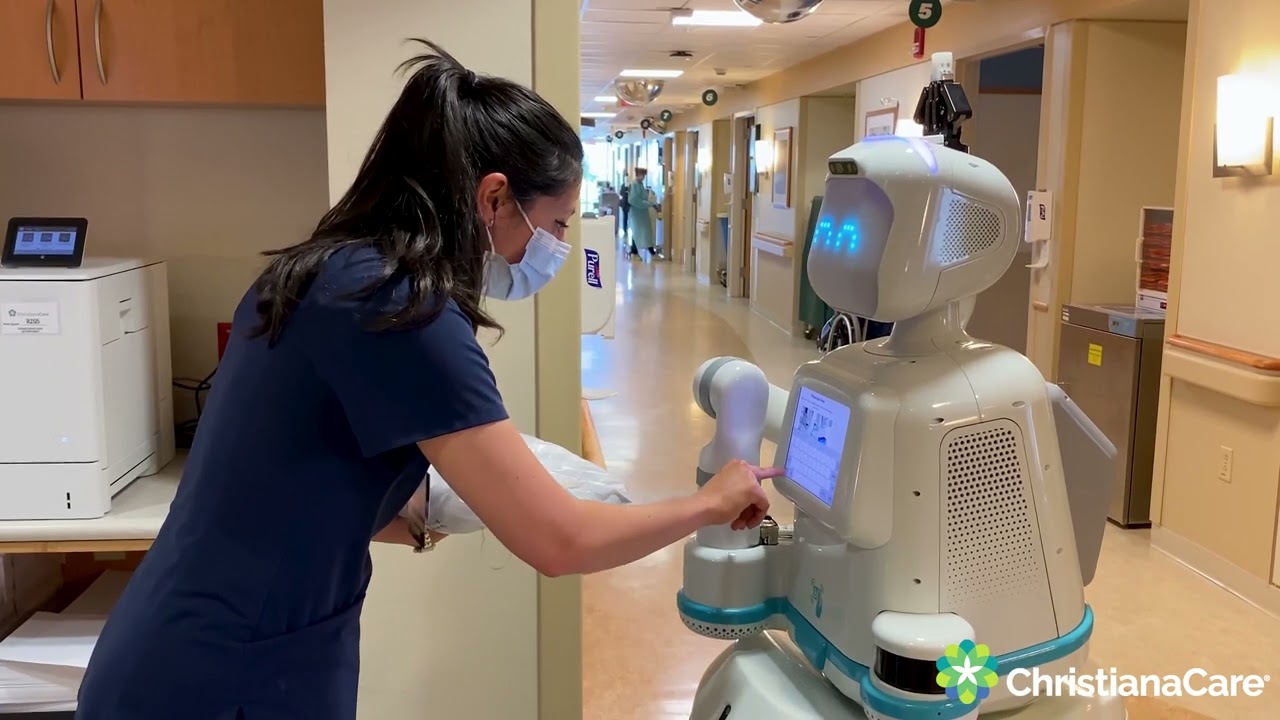
ChristianaCare is the first health system in the Philadelphia region piloting an innovative tool called Moxi, a collaborative robot — or “cobot”— that can assist in the hospital by making deliveries and performing other non-clinical tasks so that nurses and other clinical staff can spend more time focused on what they do best—caring for patients. With a landmark $1.5 million grant from the American Nurses Foundation, ChristianaCare will deploy a total of five Moxi cobots at Christiana Hospital. It is the largest single grant in the history of Nursing at ChristianaCare. Research published in the Journal of Nursing Management shows that nurses spend a significant amount of time — up to 33% of their shifts — on time-consuming but simple tasks such as dropping off lab specimens, collecting supplies or picking up medications from the pharmacy. By taking over these time-consuming but simple tasks, Moxi enables nurses to focus on patient care, where their skills are most needed. “Nurses need the time and space to deliver care and patient education at the top of their license,” said Ric Cuming, Ed.D., MSN, RN, NEA-BC, FAAN, chief nurse executive and president, ChristianaCare HomeHealth. “Moxi will be doing those hunting and gathering tasks such as getting equipment and supplies, which nurses are doing today but don’t need to be doing.” Cobots are designed to share workspace and interact directly with people. In ChristianaCare’s initiative, the Moxi cobots will be integrated with the Cerner Corporation electronic health record (EHR) platform and use artificial intelligence to proactively identify when nurses will need equipment, supplies, medications and lab tests. The Moxi cobots will be deployed to 11 inpatient units, partnering with more than 400 nurses. The American Nurses Foundation grant will enable ChristianaCare to evaluate the impact of cobots on nursing practice with the goal of scaling the technology if successful. “Moxi is not a replacement for a nurse or nursing position — or any position,” Cuming said. “It is an additional resource for nurses and their teams. “With robotic technology, we are using resources wisely and effectively, creating more efficient workflows, reducing repetitive tasks and freeing up nurses’ time for the complex clinical work that they excel at doing.” Reimagining Nursing ChristianaCare is one of 10 grant recipients from the American Nurses Foundation Reimagining Nursing (RN) Initiative. “We are proud that the American Nurses Foundation has the confidence in bold nurse-led ideas that will lead to large-scale, replicable change,” said Katherine Collard, MS, RN-BC, chief nursing informatics officer at ChristianaCare. “This grant will support nurses at ChristianaCare and our nursing colleagues across the nation in realizing their full potential, giving them the tools, resources and power to improve health care now and in the future.” With the American Nurses Foundation grant, ChristianaCare will conduct research on driving nursing outcomes through robotics. “We have a transformative opportunity to generate new knowledge and to move the science forward around robotics in nursing and in health care,” said Susan Birkhoff, Ph.D., RN, nurse scientist at ChristianaCare. “Through research, we will study Moxi’s impact to nursing caregivers that will have broad implications for nursing practice, workforce and education,” she said. ChristianaCare began exploring the potential of robotics to support Nursing with two Moxi cobots acquired in February, funded through the generosity of donors including Good Samaritan, Inc. and E.J. “Woody” Rice. With the grant, said Birkhoff, ChristianaCare will take Moxi to the next “bold frontier,” adding three more cobots with the goal of automating and optimizing nurses’ workflow without interrupting care. With five total cobots, ChristianaCare will be home to the largest number of Moxi robots in health care. The Little Bot That Can Before Moxi can become fully part of the care team, it must learn to navigate the hospital and respond to the nurses’ needs. Using artificial intelligence, Moxi is mapping out Christiana Hospital through sensors and other machine-learning technology so that the cobots can ultimately navigate and work autonomously. “When the Moxi cobots are fully integrated, we anticipate that they will complete up to 200 delivery tasks a day,” Collard said. “By making point-to-point deliveries, Moxi can save nurses hours of time and thousands of steps.” Designed to be compatible with the busy environments of hospitals, Moxi’s features include: Social intelligence: Moxi won’t bump into people or objects in hallways, waves when it sees someone new and happily poses for selfies. Mobile manipulation: Moxi can learn to use its robotic arm to operate existing automatic doors and elevator panels. Human-guided learning: The more Moxi is used, the more Moxi learns and adapts to the environment and specific ways of doing things. Friendly and safe design: With heart-shaped eyes and a friendly appearance, Moxi is designed to navigate safely and get the job done so nurses can focus on patient care. “What Moxi is doing in health systems like ChristianaCare is really transforming the way we think about health care and allowing staff to focus on the people in the hospital as opposed to the tasks,” said Dr. Andrea Thomaz, CEO and co-founder of Diligent Robotics, which created Moxi. “Robots are not something way in the future. Our robots work side-by-side with humans to ease the stress and workload of one of the most demanding jobs in society, nursing. The partnership between Diligent and ChristianaCare shows that the future is now.” Hospital Helper Directly from the Cerner EHR, Moxi will be able to anticipate clinician and patient needs and perform tasks without human involvement. Examples could include: Delivering items to patients based on nurses’ order requests. Making rounds across units to deliver lab samples on collections completed in the electronic health record. Making just-in-time deliveries of pharmaceuticals not stocked on the floor. Prioritizing tasks based on the nursing workload in a unit, so that the busiest nurses will get help first. “Connecting Moxi to the existing technology that clinicians use on a daily basis is key to making it easier to anticipate needs so clinicians can spend more time on patient care,” says Eva Karp, DHA, MBA, RN-BC, senior vice president, chief clinical and patient safety, Cerner. “Moxi could make a real difference in a nurse’s day — alleviating burnout and staffing shortages, which have become especially prevalent since the pandemic.” Incorporating the electronic health record into Moxi is part of the study funded by the American Nurses Foundation. “It’s absolutely in the best interest of our patients that Moxi can work alongside nurses so we can spend more time working directly with our patients to do what we do best,” said Pam Owen, MSN, RN-BC, nurse manager on 7E, one of the pilot units. “And Moxi brings a smile to people’s faces.” Fast Facts About Moxi Works in 22-hour shifts. Needs only two hours of charging time. Weighs about 300 pounds. Can carry a total weight of 70 pounds. Gender-neutral. Pronouns are “it” for a single Moxi cobot and “they” for more than one. Named one of America’s Greatest Disruptors in 2021 by Newsweek and one of the Best Inventions of 2019 by Time Magazine. About ChristianaCare Headquartered in Wilmington, Delaware, ChristianaCare is one of the country’s most dynamic health care organizations, centered on improving health outcomes, making high-quality care more accessible and lowering health care costs. ChristianaCare includes an extensive network of primary care and outpatient services, home health care, urgent care centers, three hospitals (1,299 beds), a freestanding emergency department, a Level I trauma center and a Level III neonatal intensive care unit, a comprehensive stroke center and regional centers of excellence in heart and vascular care, cancer care and women’s health. It also includes the pioneering Gene Editing Institute. ChristianaCare is nationally recognized as a great place to work, rated by Forbes as the 2nd best health system for diversity and inclusion, and the 29th best health system to work for in the United States, and by IDG Computerworld as one of the nation’s Best Places to Work in IT. ChristianaCare is rated by Healthgrades as one of America’s 50 Best Hospitals and continually ranked among the nation’s best by U.S. News & World Report, Newsweek and other national quality ratings. ChristianaCare is a nonprofit teaching health system with more than 260 residents and fellows. With its groundbreaking Center for Virtual Health and a focus on population health and value-based care, ChristianaCare is shaping the future of health care.
