
Experts Matter. Find Yours.
Connect for media, speaking, professional opportunities & more.

D. Tyler McQuade, Ph.D., professor in the Department of Chemical and Life Science Engineering at Virginia Commonwealth University College of Engineering, is principal investigator of a multi-university project seeking to use artificial intelligence to help scientists come up with the perfect molecule for everything from a better shampoo to coatings on advanced microchips. The project is one of the first in the U.S. to be selected for $994,433 in funding as part of a new pilot project of the National Science Foundation (NSF) called the Convergence Accelerator (C-Accel). McQuade and his collaborators will pitch their prototype in March 2020 in a bid for additional funding of up to $5 million over five years. Adam Luxon, a Ph.D. student in the Department of Chemical and Life Science Engineering who has been involved from the beginning, explained it this way: “We want to essentially make the Alexa of chemistry.” Just as Amazon, Google and Netflix use data algorithms to suggest customized predictions, the team plans to build a platform and open knowledge network that can combine and help users make sense of molecular sciences data pulled from a wide range of sources including academia, industry and government. The idea is right in line with the goal of the NSF program: to speed up the transition of convergence research into practice in nationally critical areas such as “Harnessing the Data Revolution.” The team itself reflects expertise across several specialties. Working with McQuade are James K. Ferri, Ph.D., professor in the Department of Chemical and Life Science Engineering; Carol A. Parish, Ph.D., professor of chemistry and the Floyd D. and Elisabeth S. Gottwald Chair in the Department of Chemistry at the University of Richmond; and Adrian E. Roitberg, Ph.D., professor in the Department of Chemistry at University of Florida. Two companies are also involved with the project: Two Six Labs, based in Arlington, Virginia, and Fathom Information Design, based in Boston, Massachusetts. Currently, there is no shared network or central portal where molecular scientists and engineers can harness artificial intelligence and data science tools to build models to support their needs. What’s more, while scientists have been able to depict what elements make up a molecule, how the atoms are arranged in space and what the properties of that molecule are (such as its melting point), there is no standard way to represent — or predict — molecular performance. The team aims to fill these gaps by advancing the concept of a “molecular imprint.” The collaborators will create a new system that represents molecules by combining line-drawing, geometry and quantum chemical calculations into a single, machine-learnable format. They will develop a central platform for collecting data, creating these molecular imprints and developing algorithms for mining the data, and will develop machine learning tools to create performance prediction models. Parish said, “The ability to compute molecular properties using computational techniques, and to dovetail that data with experimental measurements, will generate databases that will produce the most comprehensive results in the molecular sciences. “There are many laboratories around the world working in this space; however, there are few organizational structures available that encourage open sharing of these data for the benefit of the community and the common good. We seek to collaborate with others to provide this structure; an open knowledge network or repository where scientists can deposit their molecular-level experimental and computational data in exchange for user-friendly tools to help manage and query the data.” The initial response to their idea has been strong from potential partners. Ferri and the others have already collected more than a dozen letters from major corporations such as Dow and Merck expressing interest in participating. Also on board are Idaho National Laboratory and Argonne National Laboratory, as well as national chemical engineering and chemistry organizations. McQuade said that chemical engineers in major industries including consumer products and oil and gas producers expend a lot of effort running experiments to determine the molecule they want to use, such as finding the best shampoo additive that doesn’t make babies cry. “The ability to design the properties you want is still more art than science.” The team also plans to develop a toolkit for processing and visualizing the data. Roitberg, whose research focuses include advanced visualization, said this could take the form of a virtual reality realm in which a user could find materials that are soluble in water but not oil, for instance, and then be able to browse for similar materials nearby. “We envision a very interactive platform where the user can explore relations between data and desired material properties,” he said.


Gene therapy and the next frontier of medicine
Genetic testing today is mainstream, marketing to consumers who want to know where in Europe they came from or what types of hereditary diseases they could develop. For around $200 you can trace your family tree to learn your origins or identify genetic abnormalities that could signal disease. James Dahlman, assistant professor in the College of Engineering’s biomedical engineering department, specializes in genetics and believes these genotyping services can be helpful, as long as they are used responsibly. “If you’re going to start making medical predictions, you have to be careful,” said Dahlman. “Most people are not equipped to interpret statistics correctly, which can lead to negative predicting and ethical dilemmas. In a few years, genetic counselors will be in high demand so folks can make better decisions about their health.” Dahlman is fascinated by genetics, citing gene therapy as the most interesting field in the world. And it’s a field that he is revolutionizing through his research. Gene therapy is an experimental technique that uses genes to treat or prevent diseases, including hemophilia, Parkinson’s, cancer and HIV. It can help manage a number of diseases by leveraging genes instead of drugs or surgery. Although gene therapy shows promise, there are still risks involved, including unwanted immune system reactions or the risk of the wrong cells being targeted. That’s where Dahlman’s research comes in. Dahlman’s lab focuses on drug delivery vehicles, which are nanoparticles. The nanoparticle delivers gene therapies to the right place in the body to fight disease. It’s critical that the gene therapies only target the unhealthy cells to avoid damaging healthy ones. Dahlman is laser focused on ensuring the nanoparticles know what paths to take to reach the correct organ to start the healing process. “The issue with genetically-engineered drugs is that they don’t work unless they get to the right cell in the body,” said Dahlman. “You can have the world’s best genetic drug that's going to fix a tumor or eradicate plaque, but it’s not going to be effective unless it travels to the right organ. In my lab, we design different nanoparticles to deliver the genetically-engineered drugs to the correct location.” The field of genetic therapy is fascinating – and if you are a journalist looking to cover this topic or have questions for upcoming stories – let our experts help. James Dahlman is an Assistant Professor in the Georgia Tech BME Department. He is an expert in the area of biomedical engineering and uses molecular biology to rationally design the genetic drugs he delivers. This research is redefining the field of genetic therapy. Dr. Dahlman is available to speak with media – simply click on his icon to arrange an interview.



When people hear the term “assisted living,” they might think “nursing home” or “old folks’ home.” But what people don’t know is that interior designers are working hard to ensure that these facilities provide a sense of comfort and a sense of home to their residents. “Designing for assisted living environments requires careful consideration of the needs of the residents living there. But really, in that way, it is no different from designing for any population,” said Elise King, assistant professor of interior design in Baylor University’s Robbins College of Health and Human Sciences. Baby boomers would rather live at home or in a residential setting, according to SeniorLiving.org. This will require more locations to have independent and assisted living available. With the baby boomer generation transitioning into retirement, many will require additional care but don’t want to be in nursing homes like their parents. “You should always begin by understanding the users of the space and assessing their needs and requirements,” King said. “And what you’ll find is that across the lifespan, while there are different needs which must be met by various functional requirements, our innate desires are not that different.” 1. Bring outdoors inside by incorporating nature into facility design. One way designers enhance facilities is by incorporating nature into their design and bringing the outdoors inside. At Baylor, Debra Harris, Ph.D., associate professor of interior design — who has researched the impact of health care facility design on patients, families and health care workers — teaches a sustainability course that addresses some aspects of nature in design. “We reinforce all aspects of indoor environmental quality through research activities and through the entire design process,” Harris said. “For years, architects have discussed the concept of organic architecture and more recently, the term ‘biophilic design’ has been used,” King said. “And in the past 30 or so years, we’ve seen a growing body of research that supports what we’ve assumed for a long time, essentially that humans desire a connection with nature and that nature can have a positive impact on health and well-being.” She said one way this can be accomplished is by having ample windows, particularly those that look onto greenspaces or treetops. It also is important to consider that some residents will be using walkers, canes or wheelchairs. Window height should be considered so that all residents can benefit. Another way to incorporate nature into the design is by using natural materials when possible or using materials that have textures or patterns reminiscent of nature. Harris agrees that incorporating nature into a facility’s design is important and beneficial to the residents living there. “Direct access to nature, like gardening or nature walks, and indirect access to nature, through a window, provide real tangible benefits,” Harris said. 2. Access to natural light, as well as artificial light that mimics daylight, provides benefits to seniors that are associated with well-being. Harris said having access to natural light provides benefits associated with well-being, such as reinforcing our natural clock, known as circadian rhythms, which helps with the quality of sleep and may contribute to management of chronic conditions. Designing to provide access to nature through gardening and walking also can increase physical activity and social interactions, she said. Artificial lighting is also an important factor in interior design, especially for seniors. Harris said there are lighting systems that can mimic daylight, changing over the course of the day to support our circadian rhythms, which can lead to an elevated sense of well-being. This may contribute to other aspects, such as social interactions, physical activity, and satisfaction, she said. 3. Designing for all five senses is critical for making a facility feel more like home. King said it’s important to design for all the senses, not just the visual aspect of the facility. She said sound, smell and touch are other critical aspects that need to be taken into consideration to make a facility feel more like a home. “Designers have to use research to understand how we can best address the specific needs of a mature population through design,” King said. “By creating environments that value and support these innate needs — self-actualization, esteem, love and belonging, safety needs and physiological needs — we’re reinforcing a sense of place and hopefully, a sense of home.” ABOUT BAYLOR UNIVERSITY Baylor University is a private Christian University and a nationally ranked research institution. It provides a vibrant campus community for more than 17,000 students by blending interdisciplinary research with an international reputation for educational excellence and a faculty commitment to teaching and scholarship. Chartered in 1845 by the Republic of Texas through the efforts of Baptist pioneers, Baylor is the oldest continually operating University in Texas. Located in Waco, Baylor welcomes students from all 50 states and more than 90 countries to study a broad range of degrees among 12 nationally recognized academic divisions. ABOUT ROBBINS COLLEGE OF HEALTH AND HUMAN SCIENCES AT BAYLOR UNIVERSITY The Robbins College of Health and Human Sciences at Baylor University was established in 2014, a result of identified priorities for strengthening the health sciences through Baylor’s strategic vision, Pro Futuris, and the University’s Illuminate strategic plan. The anchor academic units that form Robbins College – Communication Sciences and Disorders; Family and Consumer Sciences; Health, Human Performance and Recreation; Public Health; and Division of Health Professions – share a common purpose: improving health and the quality of life. The College’s curricula promotes a team-based approach to transformational education and research that has established interdisciplinary research collaborations to advance solutions for improving quality of life for individuals, families and communities. For more information, visit www.baylor.edu/chhs.



The World Needs More MBAs! Let an expert from WGU explain how partnerships can make it work.
Recently, much talk has centered on the closing of business school programs, and the extreme debt that many students take on to achieve a business degree. New data from Bloomberg Businessweek reported that nearly half of students polled from 126 universities across the world finance $100,000 or more for their MBAs. “Bloomberg Businessweek surveyed more than 10,000 2018 graduates of MBA programs from 126 schools about the amount of debt they piled on earning their degrees. The survey found that almost half of students at leading business schools around the world borrowed at least $100,000 to finance their MBA. According to the survey, at minimum 40% of MBA graduates from U.S. News & World Report’s top-ranking business programs — those at Duke, Dartmouth, University of Michigan, Cornell and University of Chicago — reported incurring at least $100,000 in debt.” July 09 – CNBC MBAs have been widely accepted by employers, and the return on investment for students has historically been high. Over the years, business programs have adapted to the needs of employers, and the basic design of the MBA, combining a broad scope of valuable business skills, has remained relevant despite massive changes in the business world. But with the rise of tuition costs, rapid changes in technology, and a higher value being placed on specialization, the long-standing value proposition of the MBA is changing. Cost, flexibility of delivery and open-loop, customized micro-learning are more likely to meet the needs of students and employers going forward. At WGU, we live and breathe the mission of supporting student academic success and expanding opportunities with affordable, valuable and relevant degree programs. Collaborations with companies which are equally committed to provide their employees the opportunity to sharpen their skills, advance in their careers, and better their lives, are one step in this evolution of business education. An evolution not in the future, it’s here. Dr. Rashmi Prasad is Dean and Academic Vice President of Western Governors University's College of Business. Dr. Prasad is available to speak with media regarding the need for higher education and how partnerships will bolster MBA programs and help graduates find success after they leave school – simply click on his icon to arrange an interview.

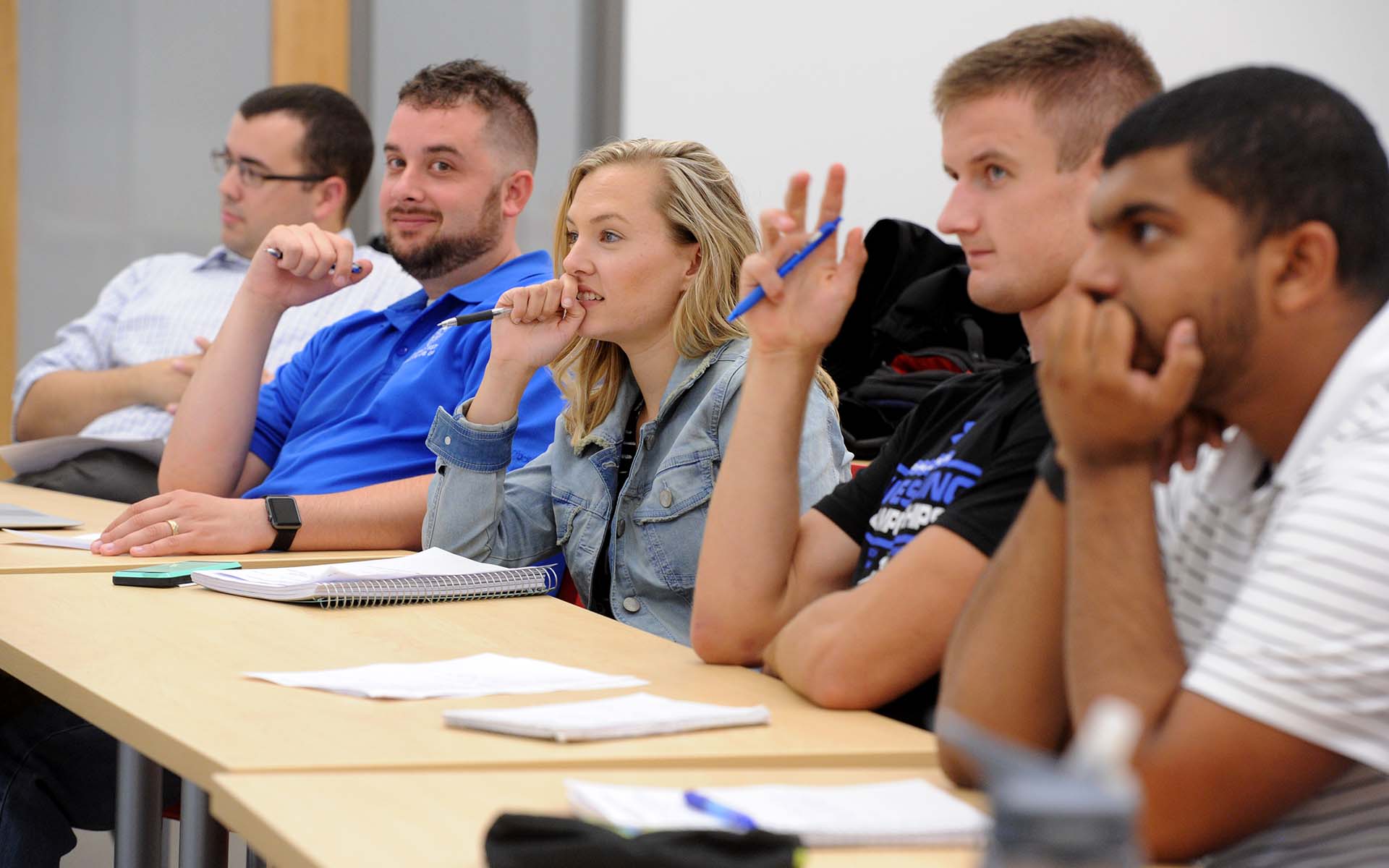
“Design thinking is a human-centered approach to innovation that draws from the designer's toolkit to integrate the needs of people, the possibilities of technology, and the requirements for business success.” - Tim Brown, CEO of IDEO I would add the following to Mr. Brown’s statement. This innovation approach requires more than a designer’s toolkit. It requires multiple departments within an organization to engage in the approach. If I’ve learned one thing in my more than 5 years in higher education it’s that companies continue to push for employees to become better problem solvers, more creative/critical thinkers, and ultimately stronger communicators. Why? Company growth is critical, and the aforementioned skills are how many companies will achieve growth. At Otterbein, we continue to provide education that addresses the development of these skills. We are designing a new focus in the MBA Program; Design Thinking. Otterbein University’s MBA Program is collaborating with the Master of Design (MDes) Program at the Columbus College of Art & Design (CCAD), to integrate a Design Thinking Area of Focus within the MBA program. Design Thinking combines design research, service design, studio & project course for prototyping/impression/artifact work, along with design thinking principles critical in succeeding in business and industry. It is designed for individuals who wish to pursue a career in business design, organizational change, and innovation, among other potential career paths. Are you a reporter covering stories that involve Design Thinking? Are you a student considering pursuing Design Thinking as a postsecondary option? If so, let our experts help with any of your questions. Eric is Director of the MBA Program at Otterbein University and is available to speak to the concepts of Design Thinking. Simply click on his icon to arrange an interview.


Planet Analog featured, on 25 May 2019, Bill Schweber’s article “What to do about analog inaccuracies?”. Three options were presented: calibrate the sensor; use better parts; if possible, self cancellation. Circuit Seed is a new platform utilising the Complementary Current injection Field Effect Transistor (CiFET) for processing analog signals using 100% digital components that can be constructed to build any low power analog device. Circuit Seed designs are aligned with all three options presented in the article. Circuit Seed is completely linear, and insensitive to temperature and process variation without correction circuitry that reduce inaccuracies. The build blocks are better parts with low power consumption and low SNR ratio. The CiFET itself uses self cancellation due to the complementary nature of the circuit improving performance. Finally, the designs are less complex thereby requiring less wafer space, fewer BOM which means less cost. In a recent contribution to Planet Analog, author and engineer Bill Schweber takes a look at the importance of being accurate and even tries to and out just how close is ‘close enough’ when it comes to analog design. For more information, please contact: Lesley Gent Director Client Relations, InventionShare™ lgent@InventionShare.com (613) 225-7236, Ext 131 Or visit our website at www.CircuitSeed.com


New book reveals how to successfully navigate the uncertainties that sink most startups
INDIANAPOLIS – Research shows that the majority of startups fail. Even more never get off the ground. So how do you avoid the pitfalls that come with navigating the uncertainties of a startup? A new book entitled The Titanic Effect: Successfully Navigating the Uncertainties that Sink Most Startups, guides early-stage startups and their supporters through the challenges they will encounter as they begin building their venture. Startups are inherently uncertain. Decisions have to be made with incomplete information. These decisions result in unanticipated consequences –- problems that lurk beneath the surface. The book draws on lessons learned from the Titanic, which sunk in 1912 not only because it hit an iceberg, but because of a number of decisions that interacted to create one of the largest maritime disasters. A series of trade-offs and choices in the design, building and operating of the Titanic magnified the catastrophic consequences. Co-authors M. Kim Saxton, clinical professor of marketing at the IU Kelley School of Business, Todd Saxton, associate professor of entrepreneurship and strategy at the IU Kelley School of Business, along with serial entrepreneur Michael Cloran, who has founded multiple startups, leverage decades of startup experience to reveal the often-overlooked human, marketing and technical “hidden debts” that sink startups, while drawing parallels to little known parts of the original Titanic story. “The idea for this book came from a conversation about ‘technical debt,’ often used in a software development context, in which shortcuts taken early in a startup’s life limit potential later,” said Todd Saxton. “But this challenge isn’t unique to product development; it applies to other domains as well. That led us to broaden the idea to a more holistic one—That we call in our book ‘hidden debt,’ or debts that are beneath the surface but can limit growth or sink even the most promising startup.” “Most books about entrepreneurship and startups are ‘how-to’s,’ detailing all the things you have to do to succeed when creating your own venture. Our book tells you what not to do, and it shows you how to identify the potential issues that could keep you from being successful,” said Michael Cloran. The Titanic Effect explains that taking on these hidden debts is inevitable, but startups must be careful to recognize that debt and take steps to mitigate the risks. “Over our more than 20 years of working with student, alumni and venture community startups—and helping launch and investing in them as well--we have seen the same patterns of mistakes repeated over and over again,” explained Kim Saxton. “We made a list of the most common startup mistakes, and that’s the main focus of this book. Our goal is to bring these so-called ‘icebergs’—or ‘debt-bergs,’ as we call them—out of hiding. Debt is not necessarily bad as long as you recognize, measure and manage it.” “Entrepreneurs make a lot of decisions under uncertainty, and often, they don’t fully understand the consequences of those decisions,” Saxton added. “Each decision has the potential to either enable – or hamper – future potential. At best, the wrong decision could limit how the startup can grow. At worst, it could cause ventures to sink.” The Titanic Effect is available as an e-book and will be available June 2019 in print. For more information, head to the book’s website here.


Baylor Researchers Share Sleep and Memory Recall Tips to Help Tackle College Finals
It’s final exam season for college students across the country. And final exams often come with all-night study sessions and gallons of coffee. But do such things really help? In recent years, Baylor University researchers have identified a few practices that could help students get enough sleep and retain information for their exams. Here are some tips pulled from their research. Say No to All-Nighters Poor sleep during finals is common as students sacrifice bedtime for study time. Students are under more stress, use more caffeine to stay awake and are exposed to more bright light. Fewer than 10 percent of undergraduates maintain the recommended average of 8 hours per night of sleep or even the recommended minimum of 7 hours of sleep per night. Baylor researchers Michael Scullin, Ph.D., assistant professor of psychology and neuroscience in Baylor’s College of Arts & Sciences and director of Baylor’s Sleep Neuroscience and Cognition Laboratory, and Elise King, M.I.D., M.A., assistant professor of interior design in Baylor’s Robbins College of Health and Human Sciences teamed together to find out if more sleep equaled better success. Their December 2018 study found that students who succeeded in averaging eight hours of sleep for five nights during final exams week did better than those who did not. Sleeping for eight hours was associated with a four-point grade boost. “Better sleep helped rather than harmed final exam performance, which is contrary to most college students’ perceptions that they have to sacrifice either studying or sleeping. And you don’t have to be an ‘A’ student or have detailed education on sleep for this to work,” Scullin said. King said students know that sacrificing sleep to complete school work is not a healthy choice, but they assume they don't have a choice, often remarking that there aren't enough hours in the day for coursework, extracurriculars, jobs, etc. “This removes that excuse,” King said. Sleep Consistency is Key In a study of sleep and creativity done in 2017, King and Scullin found that interior design students with highly variable sleep habits — cycling between “all-nighters” and “catch-up” nights — had decreased cognition in attention and creativity, especially with major projects. “Whether or not they ‘pull an all-nighter,’ when students cut their sleep, the effects are obvious,” King said. “They have trouble paying attention during class, and they aren't as productive during studio time.” To be successful at the challenge, students need to manage their time better during the day. Getting more sleep at night then allows them to be more efficient the next day. “By training students in their first year of college, if not earlier, that they can sleep well during finals week without sacrificing performance, we may help to resolve the ‘global sleep epidemic’ that plagues students in America and abroad,” Scullin said. Looking for Better Recall? Tell a Friend What You Learned Students who are given information and tell someone about it immediately recall the details better and longer, according to a 2017 study led by Baylor psychologist Melanie Sekeres, Ph.D., assistant professor of psychology and neuroscience in Baylor’s College of Arts & Sciences. She said this “replaying” method takes a lot of effort but is worth it in the long run. “A week later, the memory was just as good,” Sekeres said. “Telling someone else about what you’ve learned is a really effective way for students to study instead of just re-reading the textbook or class notes.” In the study, students were shown 24-second clips from 40 films over a period of about half an hour. The study focused on their retention of both the general plot of the films as well as such details as sounds, colors, gestures, background details and other peripheral information that allow a person to re-experience an event in rich and vivid detail, said Sekeres. “We tell students to test yourself, force yourself to tell someone about the lecture,” Sekeres said. “Even by writing out some question for yourself about the information, then later answering them yourself, you are more likely to remember the information. Unfortunately, simply re-reading or passively listening to a recording of your lecture in hopes of remembering the information isn’t a great study strategy by comparison.” ABOUT BAYLOR UNIVERSITY Baylor University is a private Christian University and a nationally ranked research institution. The University provides a vibrant campus community for more than 17,000 students by blending interdisciplinary research with an international reputation for educational excellence and a faculty commitment to teaching and scholarship. Chartered in 1845 by the Republic of Texas through the efforts of Baptist pioneers, Baylor is the oldest continually operating University in Texas. Located in Waco, Baylor welcomes students from all 50 states and more than 90 countries to study a broad range of degrees among its 12 nationally recognized academic divisions.


Notre Dame Fire Marks ‘Dark Day,’ But Beauty Will Emerge, Baylor Architectural Historian Says
In the wake of a massive fire that devasted Paris’ iconic Notre Dame Cathedral on Monday and captured eyes and prompted tears across the globe, a Baylor University expert in architectural history said beauty can emerge from the ashes. Elise King, M.I.D., M.A.,, assistant professor of interior design in Baylor’s Robbins College of Health and Human Sciences, is an architectural and design historian. “Something I find comforting is that when you study architecture and design throughout history, there are numerous examples demonstrating that destruction, chaos and loss can beget inspired beauty. No matter the damage, this will not be the end of Notre Dame’s story,” King said. “Architecture isn’t static; it’s designed to adapt and change. The more significant the structure, the more likely its legacy will continue in some built form,” she said. “Whether it’s reconstruction, preservation and restoration, new construction or, more likely, some combination of strategies, Île de la Cité will not be without its cathedral.” French President Emmanuel Macron said Tuesday that he hopes the 850-year-old building could be rebuilt within five years. “We will rebuild the cathedral and make it even more beautiful,” Macron said, according to a story in The Wall Street Journal. King said that the Notre Dame the world has come to know from pictures or personal visits is not the Notre Dame of the 12th Century. “The beloved gargoyles, for example, were added in the 19th century during Viollet-le-Duc's controversial ‘restoration' of the cathedral,” she said. “There is no doubt that today will be remembered as a dark day in Notre Dame’s history. But already there is light, as groups of Parisians came together tonight to sing ‘Ave Maria’ on the sidewalk in front of the smoldering edifice. And if the damage is severe, I hope the destruction will inspire new and innovative design solutions.” ABOUT BAYLOR UNIVERSITY Baylor University is a private Christian University and a nationally ranked research institution. The University provides a vibrant campus community for more than 17,000 students by blending interdisciplinary research with an international reputation for educational excellence and a faculty commitment to teaching and scholarship. Chartered in 1845 by the Republic of Texas through the efforts of Baptist pioneers, Baylor is the oldest continually operating University in Texas. Located in Waco, Baylor welcomes students from all 50 states and more than 90 countries to study a broad range of degrees among its 12 nationally recognized academic divisions.

Better Sleep - Not 'All-Nighters' - Helps Students on Final Exams
Students given extra points if they met “The 8-hour Challenge” — averaging eight hours of sleep for five nights during final exams week — did better than those who snubbed (or flubbed) the incentive, according to Baylor University research. “Better sleep helped rather than harmed final exam performance, which is contrary to most college students’ perceptions that they have to sacrifice either studying or sleeping. And you don’t have to be an ‘A’ student or have detailed education on sleep for this to work,” said Michael Scullin, Ph.D., , director of Baylor’s Sleep Neuroscience and Cognition Laboratory and assistant professor of psychology and neuroscience in Baylor’s College of Arts & Sciences. While students who successfully met the sleep challenge received extra points for the “mini-incentive,” the additional credit was not included in the analysis of how well they performed on the finals, emphasized Elise King, assistant professor of interior design in Baylor’s Robbins College of Health and Human Sciences. “They didn’t just perform well because they received extra points,” she said. “Students know that sacrificing sleep to complete school work is not a healthy choice, but they assume they don't have a choice, often remarking that there aren't enough hours in the day for coursework, extracurriculars, jobs, etc. “This removes that excuse.” Research participants included undergraduate interior design students and students in upper-level psychology and neuroscience classes. While the psychology classes emphasized education about sleep, the interior design students did not receive any formal training in sleep. Those who opted to take the challenge wore wristband sleep-monitoring devices for five days to ensure accurate study results. “The students didn’t need the extra credit to perform better, and they weren’t really better students from the get-go,” Scullin said. “If you statistically correct for whether a student was an A, B, C, or D student before their final exam, sleeping 8 hours was associated with a four-point grade boost — even prior to applying extra credit.” The collaborative interior design study — “The 8-Hour Challenge: Incentivizing Sleep During End-of-Term Assessments” — was published in the Journal of Interior Design. Scullin’s study of psychology students — “The 8-Hour Sleep Challenge During Final Exams Week” — was published in Teaching of Psychology. Poor sleep is common during finals as students cut back on sleep, deal with more stress, use more caffeine and are exposed to more bright light, all of which may disrupt sleep. Fewer than 10 percent of undergraduates maintain the recommended average of 8 hours a night or even the recommended minimum of 7 hours, previous research shows. But with incentives, “we can potentially completely reverse the proportion of students meeting minimum sleep recommendations — 7 hours a night — from fewer than 15 percent up to 90 percent,” Scullin said. “Half of students can even meet optimal sleep recommendations of 8 to 9 hours.” Here are the findings of the two studies: PSYCHOLOGY STUDENTS In the study of psychology students, 34 students in two undergraduate courses could earn extra credit if they averaged 8 hours of sleep during final exams week or at least improved upon their sleep from earlier in the semester. The 24 who opted to take the challenge averaged 8.5 hours of sleep, with 17 meeting the goal. On the final exam, students who slept more than 8 hours nightly performed better than those who opted out or slept less than 7.9 hours. The incentive was 8 points — the equivalent of 1 percent on a student’s overall class grade. “It’s worth noting that one student who had a D-plus grade before the final but slept more than 8 hours a week during finals week, remarked that it was the ‘first time my brain worked while taking an exam,’” Scullin said. INTERIOR DESIGN STUDENTS In the interior design study challenge, students earned credit if they averaged 8 or more hours a night but received no grade change if they averaged 7 to 7.9 hours a night. Of the 27 students enrolled in the program, 22 attempted the challenge. Compared with a group of 22 students who did not try for the extra points, very few (9 percent) averaged 8 hours or even 7 hours (14 percent). The 8‐hour challenge increased the percentage of 8‐ and 7‐hour sleepers to 59 percent and 86 percent respectively. Students who took part in the challenge slept an average of 98 minutes more per night compared to students who were not offered the incentive but were monitored. “Critically, the additional sleep did not come at a cost to project performance,” King said. “Students who showed more consistent sleep performed better than those who had less consistent sleep. And students who achieved the challenge performed as well as or better than those who did not take the challenge." In a study of sleep and creativity done in 2017, King and Scullin found that interior design students with highly variable sleep habits — cycling between “all-nighters” and “catch-up” nights — had decreased cognition in attention and creativity, especially with major projects. Design students customarily complete finals projects rather than final exams. “Whether or not they ‘pull an all-nighter,’ when students cut their sleep, the effects are obvious,” King said. “They have trouble paying attention during class, and they aren't as productive during studio time.” She noted that there is a cultural acceptability — at least in design professions — related to sleep deprivation, in part because of the notion of the "tortured artist" who finds inspiration in the wee hours. “Some fields might find it unprofessional, but for many years, in design, sacrificing sleep was viewed as a rite of passage. That's something we're trying to change,” King said. “Even during stressful deadline weeks, students can maintain healthy sleep habits.” “To be successful at the challenge, students need to manage their time better during the day. Getting more sleep at night then allows them to be more efficient the next day,” Scullin said. “By training students in their first year of college, if not earlier, that they can sleep well during finals week without sacrificing performance, we may help to resolve the ‘global sleep epidemic’ that plagues students in America and abroad.” *Co-researcher on the interior design sleep study was Christine Mobley, Ph.D., lecturer at the University of Kentucky.