Experts Matter. Find Yours.
Connect for media, speaking, professional opportunities & more.

Researcher develops microrobots to battle cancer with unique precision
Magnetic robots that can target cancer cells are nothing new. But the patented microrobots developed by the University of Delaware's Sambeeta Das can be guided with a magnetic field to deliver medication to cells – or to destroy infectious cells, such as cancer – inside the body. To mark the launch of National Inventors Month, Das, assistant professor of mechanical engineering, shared her journey toward invention. Q: Tell us about your patented invention on microrobots for cancer research. What problem were you trying to solve? Das: One of the biggest issues with cancer research is the ability to target cancer cells without harming healthy cells. Cancer cells are sneaky, and they have evolved ways of hiding from the body’s immune cells. A big part of our research focuses on targeting, specifically precision targeting. We want to be able to target a single cell in a mass of cells, whether that is a single cell in a mass of cancer cells or whether it is a single abnormal cell surrounded by healthy cells. To do this, we use magnetic microrobots that can be driven inside the body by magnetic fields to a particular cell location. Magnetic fields are biocompatible, meaning they are not harmful to biological tissues, and our microrobots are very small, around 20 microns, which is about the size of a single bacteria cell. We can load our microrobots with various drugs and modify their surface in such a way that when the robots come in contact with the cells we are targeting, they can kill the target cell or perform some other function. Q: How is this solution unique? Das: Other people have made magnetic microrobots, but our system is unique since it allows us to do automatic targeting with a lot of precision. For example, a person operating our microrobots can just point to a cell and our system will drive the microrobot there. Additionally, the instrument we have made and patented is an all-in-one portable device that can be used anywhere. We don’t need a separate microscope, camera or software, it is all built in and very user friendly. Anyone can use it. This makes it super portable, which means quick solutions for health practitioners. In addition, poor and resource challenged areas can also be accessed with this portable solution. Q: What drives you toward invention? Das: I like to solve problems, and I like seeing something come together from nothing. I am very interested in problems that affect human health and longevity, particularly those that affect the common person. Q: How do you approach solving a problem, and whose support has been critical along the way? Das: One thing I have realized is that it is imperative to ask the right question to solve a problem. You must really get to the core of the issue. The second thing is to always keep the end user in mind. So, it’s kind of a two-pronged approach—looking from both ends of the problem. For support, I would say my team members and my collaborators. Their support has been invaluable in helping me solve the problems that I want to solve. In fact, my graduate students keep a running list of crazy ideas that they have come up with. It helps us look at problems in a unique way and come up with innovative solutions. Q: Not every invention makes it. How do you deal with failure? Das: The way that I start working on a problem is to assume that whatever we do, we are going to fail. I always tell my students that their first couple of experiments or designs will always fail. But failure is essential because it will teach you what not to do. And knowing what not to do is sometimes the critical part of the invention process. The failures inform us about the ways of not doing something which means now there is another way of doing something. Q: What is the best advice you’ve ever received? Das: The best career advice I’ve ever received is that there is always another way. If you run into roadblocks there is always another answer, there is always another opportunity. So we just need to keep going and trying new and crazy ideas. Q: How are inventive minds created – is it innate or can it be developed? How do you encourage innovation among your students? Das: That’s an interesting question and honestly, I am not sure. I do believe in what Edison said, “Genius is 1% inspiration and 99% perspiration.” He is a known inventor, so I would go with his interpretation on this. As for my students, I give them lots of freedom. I think freedom is essential in encouraging innovation. The freedom to come up with crazy ideas without anyone saying that won't work and the freedom to fail—multiple times. Das is available for interviews to talk about her microrobots and other projects at UD. To reach her, visit her profile and click the "contact" button.



What Families Need to Know about How to Safely Store Firearms at Home
Guns have been identified as the leading cause of death for children in the United States, making ongoing discussions about firearm safety especially important. Kerri Raissian, an associate professor of public policy at the University of Connecticut, and Jennifer Necci Dineen, associate director of the ARMS Center for Gun Injury Prevention, recently co-authored an very important piece for The Conversation titled detailing what families need to know about safely storing firearms at home. There were 2,571 children age 1 to 17 who died in shootings in the U.S. in 2021, 68% more than the 1,531 that occurred in 2000. To help reduce the number of firearm-related deaths and injuries among children, Secretary of Education Miguel Cardona in January 2024 called upon school and district administrators to talk with parents and guardians about safe firearm storage practices. As experts on the safe storage of firearms – and as leaders of the University of Connecticut’s ARMS Center for Gun Injury Prevention – we often get questions about the best ways to keep guns out of the hands of children. We offer the following tips: 1: Safely store all of your firearms 2. Don’t assume you can hide your guns 3. Store ammunition separately 4. Learn to talk about firearm safety 5. Know the law 6. Invest in a quality safe and/or locking device The full piece is available here from The Conversation. Kerri Raissian is an associate professor in the School of Public Policy at the University of Connecticut, director of the University of Connecticut's UConn’s Center for Advancing Research, Methods, and Scholarship (ARMS) in Gun Violence Prevention, and co-director of the Institute for Collaboration on Health, Intervention, and Policy (InCHIP) Gun Violence Prevention Research Interest Group. Her research focuses on child and family policy, with an emphasis on understanding how policies affect fertility, family formation, and family violence. She is available to speak to media about this important topic - simply click on her icon now to arrange an interview today.


Municipalities around the world have invested significant resources to develop connected smart cities that use the Internet of Things (IoT) to improve sustainability, safety and efficiency. With this increased demand for IoT experience, the VCU College of Engineering formed the OpenCyberCity testbed in 2022. The 1:12 scale model city provides a realistic, small-scale cityscape where students and researchers can experiment with new and existing smart city technology. Sherif Abdelwahed, Ph.D., electrical and computer engineering professor, is director of OpenCyberCity. He recently answered some questions about new developments within the testbed. The OpenCyberCity is a smart city testbed, but are there any real-life cities that one could call a smart city? Several real-life locales are considered smart cities due to their extensive use of technology and data-driven initiatives to optimize infrastructure and services. Dubai is one of the most notable. They have implemented smart transportation systems, buildings and artificial intelligence to transform the city’s operations and make them more efficient. Other reputable smart cities include Singapore and Seoul, which utilize smart energy management, smart transportation and comprehensive data analytics for improved urban planning and services. Seoul, in particular, has an initiative with smart grids and connected street lights, which VCU Engineering’s own OpenCyberCity test bed is working to implement. How does the OpenCyberCity address privacy? With so much technology related to monitoring, how are individual citizens protected from these technologies? Privacy is a major concern for smart cities and it is one of the main research directions for VCU Engineering’s OpenCyberCity. We are developing several techniques to prevent unwanted surveillance of personal information. Sensitive data is protected by solid protocols and access restrictions that only allow authorized users to view the data. Our aim is to find a reasonable middle ground between technological progress and privacy rights, staying within legal and ethical bounds. Some techniques to address privacy concerns include: Data Anonymization: This makes it difficult to trace back information to individual identities. Within the testbed, we will evaluate how to protect individual privacy while maintaining data utility and assess the impact on data quality. Secure Data Storage and Transmission: Encrypt data to protect it from unauthorized access. In the smart city testbed, these access control mechanisms will be implemented within the testbed’s infrastructure. We will also test different data handling processes and access control models to determine their ability to safeguard sensitive data. Privacy Impact Assessments: Regularly evaluate potential privacy risks of new smart city projects in order to mitigate them and ensure the ethical handling of data by those with access. Policy and Regulation Development: Data and insights generated from OpenCyberCity experiments can inform the development of cybersecurity policies and regulations for smart cities. How is the College of Engineering’s OpenCyberCity test bed different from similar programs at other institutions? While other universities have similar smart-city-style programs, each has their own specialty. The VCU College of Engineering’s OpenCyberCity test bed focuses on real-world contexts, creating a physical space where new technologies, infrastructure, energy-efficient transportation and other smart city services can be tested in a controlled environment. Our lab monitors real-time data and develops smart buildings, smart hospitals and smart manufacturing buildings to enhance the city’s technologies. Recent additions to the OpenCyberCity allow for expanded research opportunities like: Advanced Manufacturing: Students can apply advanced manufacturing techniques in a controlled environment. They can also test new materials, processes and automation technologies to improve efficiency and product quality. Energy Efficiency Testing: Environmental engineers and sustainability experts can evaluate energy consumption patterns within the smart manufacturing unit to implement energy-saving measures and assess their impact on sustainability. Production Optimization: Manufacturers can use real-time data from the smart manufacturing unit to optimize production schedules, minimize downtime and reduce waste. Predictive maintenance algorithms also help prevent equipment breakdowns. Education and Training: Hands-on experience with state-of-the-art manufacturing technologies helps train the workforce of the future. Integration with Smart City Services: Data generated by the manufacturing unit can be integrated with smart city services. For example, production data can inform supply chain management and energy consumption data can contribute to overall city energy efficiency initiatives. How has the OpenCyberCity changed in the last year? Is the main focus still data security? What started with research examining, analyzing and evaluating the security of next-generation (NextG) applications, smart city operations and medical devices has expanded. Data security is now only one aspect of OpenCyberCity. Its scope has grown to encompass more expansive facets of cybersecurity like automation and data analytics in the domain of smart manufacturing systems. The implementation of a smart manufacturing system in 2023 is something students really enjoy. Thanks to the vendor we used, undergraduate students had the option to develop functionality for various features of the manufacturing plant. Graduate students were also able to research communications protocols and cybersecurity within the smart manufacturing system. What does the smart manufacturing system entail and what kind of work is occurring within that system? An automated system is there for students to work with. Robot arms, microcontrollers, conveyor belts, ramps, cameras and blocks to represent cargo form an environment that emulates a real manufacturing setting. We’re currently brainstorming an expansion of the smart manufacturing system in collaboration with the Commonwealth Cyber Initiative (CCI). We plan to set up two building models, one for manufacturing and one for distribution, linked by a sky bridge conveyor system that moves items between the locations. Students work to leverage convolutional neural networks that use images to facilitate machine learning. When paired with the advanced cameras, it forms a computer vision system that can accurately place blocks in a variety of lighting conditions, which can be a challenge for other systems. By having to optimize the communication protocols that command the smart manufacturing system’s robotic arms, students also get a sense for real-world constraints . The Raspberry Pi that functions as the controller for the system is limited in power, so finding efficiencies that also enable stability and precision with the arms is key. Is there an aspect of cybersecurity for these automated systems? Yes. Devices, sensors and communication networks integral to the IoT found in smart manufacturing systems and smart cities generate and share vast amounts of data. This makes them vulnerable to cybersecurity threats. Some of the issues we look to address include: Data Privacy: Smart systems collect and process vast amounts of data, including personal and sensitive information. Protecting this data from unauthorized access and breaches is a top priority. Device Vulnerabilities: Many IoT devices used in smart systems have limited computational resources and may not receive regular security updates, making them vulnerable to exploitation. Interconnectedness: The interconnected nature of smart city components increases the attack surface. A breach in one system can potentially compromise the entire network. Malware and Ransomware: Smart systems are susceptible to malware and ransomware attacks, which can disrupt services and extort organizations for financial gain. Insider Threats: Employees with malicious intent or negligence can pose significant risks to cybersecurity. Potential solutions to these problems include data encryption, frequent software updates, network segmentation with strict access controls, real-time intrusion detection (with automated responses to detected threats), strong user authentication methods, security training for users and the development of well-designed incident response plans.


Tales of Christmas Past: Preserving Your Family History During the Holidays
Baylor’s Institute for Oral History shares seven simple best practices to get the conversation started (Credit: FG Trade Latin/Getty Images Collection E+) During past family Christmas gatherings, many of us remember when older relatives regaled everyone with tales about their fascinating life stories, firsthand experiences as an eyewitness to history or simply sharing how favorite family traditions started. So how do you preserve those precious family memories during the holidays? Baylor University oral historians Stephen Sloan and Adrienne Cain Darough have recorded and preserved the oral history memoirs of thousands of individuals through their work with Baylor’s renowned Institute for Oral History, home of the national Oral History Association. Together, the historians share seven simple best practices to help family members begin oral history conversations that enrich recollections of the past and capture your family memories. “The holiday season brings about the opportunity to spend time with family members, especially those you may not be able to see on a frequent basis,” Cain Darough said. “This presents the perfect opportunity to conduct oral histories to capture the stories and experiences of your family and loved ones, to learn more about them, the history of your family, traditions that have been passed down from generation to generation and more.” Seven best practices for preserving your family’s oral history 1. Ask first! Make sure your family member wants their story to be documented or recorded. That is the first – and most important – question to ask, said Adrienne Cain Darough, M.L.S., assistant director and senior lecturer with the Institute for Oral History. Ask first. “Many oral historians have run into the spot where someone says, ‘Oh, my grandpa would be great for that topic,’ and you get there and it's, ‘Grandpa does not want to talk to you.’ So first, make sure they want their story recorded,” she said. 2. Determine the type of recording equipment you want to use. Decide if you want to record your interview with an audio recorder or use a video recording device. It all depends on your needs and comfort level with the technology. For family members who are unable to travel this holiday season, you can include them by capturing their stories using a remote recording platform like Zoom, which became a vital tool for oral historians when COVID struck in 2020. Helpful resources from Baylor’s Institute for Oral History include: How to choose the right digital recorder Oral History at a Distance webinar on the dynamics of conducting remote oral history interviews Remote Interviewing Resources guide (Oral History Association) 3. Research your family member’s life and their timeline to help you formulate your questions. Recording a family member’s oral history is more than just putting down a recorder in front of them and saying, “Talk.” If you’re recording an oral history over Christmas with a family member, are there specific things that you want to know that are related to the holiday? For example, what was Christmas morning like for them as a child? How did your favorite family traditions start? What is their favorite holiday dish? (Maybe they could even share the recipe. “You can finally learn why Nana’s banana pudding doesn’t even have bananas in it,” Cain Darough said.) “Doing your research to try to form those questions will help you get around the reluctance to talk sometimes,” Cain Darough added. “The favorite thing that I love to hear is, ‘Oh, I don't have much to say,’ or ‘I'm not that important.’ And then you sit down with them, and you listen to their stories, and your mind is just blown by the things that they've seen and experienced.” 4. Start with the basics: “Where are you from?” When Baylor oral historians conduct an interview, they generally begin with some life history of the subject, providing important context for historians. “Ask questions early on that are easy for them to answer: a little bit of the backstory, a little bit of where they're from, where they grew up,” said Stephen Sloan, Ph.D., director of the Institute for Oral History, executive director of Oral History Association and professor of history at Baylor. “I want to understand the lens through which they experienced events, and the only way I can do that is, who was this? What was formative in their life growing up? Who spoke into who they were? What did they learn? Where did they go? What did they do? Those are the sorts of things that I would be exploring early in the interview.” One of the questions Cain Darough enjoys asking is, “What did you want to be when you grew up?” “You want to give them something that's very easy and comfortable to talk about,” Cain Darough said. “What was your favorite subject in school, just to see if that was something that continued on in their life. If there's a certain hobby or something that you know that they're affiliated with, when did you learn about that? Tell me more. What's your interest with this? And then they'll get to talking.” 5. Ask open-ended questions – without making any assumptions. With oral history, it is important that you don’t go into the interview with a specific agenda or try to lead anyone to a certain conclusion. “We can do this very subtly by assuming information, but you can't assume anything about their experience with the topic,’” Sloan said. “If we assume information, it could be very far from how they encountered whatever event that may have been. Allow them to relate the ways in which they lived these experiences.” 6. Listen closely. Listening is an important facet of gathering oral history. But historians say you are not only listening for what they're saying, you're also listening for what they're not saying. “Are there things that are being skipped around?” Cain Darough said. “For example, sometimes when you're talking to veterans about their combat experience, it may be the first time that they're reliving or retelling these stories. They need time, and you just have to be prepared for that.” 7. Be patient. It might take your subject some time to warm up to the conversation. “If you're talking to someone who is 80, 90 or even 100, that's a lot of memories that they have to go through, so patience is important,” Cain Darough said.


Research: Add space salad to the risks astronauts face
University of Delaware researchers grew lettuce under conditions that imitated the weightless environment aboard the International Space Station and found those plants were actually more prone to infections from Salmonella. It’s been more than three years since the National Aeronautics and Space Administration made space-grown lettuce an item on the menu for astronauts aboard the International Space Station. Alongside their space diet staples of flour tortillas and powdered coffee, astronauts can munch on a salad, grown from control chambers aboard the ISS that account for the ideal temperature, amount of water and light that plants need to mature. But as the UD researchers discovered, there is a problem. The International Space Station has a lot of pathogenic bacteria and fungi. Many of these disease-causing microbes at the ISS are very aggressive and can easily colonize the tissue of lettuce and other plants. Once people eat lettuce that’s been overrun by E. coli or Salmonella, they can get sick. With billions of dollars poured into space exploration each year by NASA and private companies like SpaceX, some researchers are concerned that a foodborne illness outbreak aboard the International Space Station could derail a mission. In the new study by UD's team, published in Scientific Reports and in npj Microgravity, researchers grew lettuce in a weightless environment similar to that found at the International Space Station. Plants are masters of sensing gravity, and they use roots to find it. The plants grown at UD were exposed to simulated microgravity by rotation. The researchers found those plants under the manufactured microgravity were actually more prone to infections from Salmonella, a human pathogen. Stomata, the tiny pores in leaves and stems that plants use to breathe, normally close to defend a plant when it senses a stressor, like bacteria, nearby, said Noah Totsline, an alumnus of UD’s Department of Plant and Soil Sciences who finished his graduate program in December. When the researchers added bacteria to lettuce under their microgravity simulation, they found the leafy greens opened their stomata wide instead of closing them. “The fact that they were remaining open when we were presenting them with what would appear to be a stress was really unexpected,” Totsline said. Totsline, the lead author of both papers, worked with plant biology professor Harsh Bais as well as microbial food safety professor Kali Kniel and Chandran Sabanayagam of the Delaware Biotechnology Institute. The research team used a device called a clinostat to rotate plants at the speed of a rotisserie chicken on a spinner. “In effect, the plant would not know which way was up or down,” Totsline said. “We were kind of confusing their response to gravity.” Additionally, Bais and other UD researchers have shown the usage of a helper bacteria called B. subtilis UD1022 in promoting plant growth and fitness against pathogens or other stressors such as drought. They added the UD1022 to the microgravity simulation that on Earth can protect plants against Salmonella, thinking it might help the plants fend off Salmonella in microgravity. Instead, they found the bacterium actually failed to protect plants in space-like conditions, which could stem from the bacteria’s inability to trigger a biochemical response that would force a plant to close its stomata. “The failure of UD1022 to close stomata under simulated microgravity is both surprising and interesting and opens another can of worms,” Bais said. “I suspect the ability of UD1022 to negate the stomata closure under microgravity simulation may overwhelm the plant and make the plant and UD1022 unable to communicate with each other, helping Salmonella invade a plant.” To contact researchers from the team, visit the profiles for Bais or Kniel and click on the contact button.


Cold and winter weather is about to settle in and CAA South Central Ontario (CAA SCO), Toronto Police Service (TPS), Ontario Provincial Police (OPP), and the Ontario Government want to know: are you winter ready? The four organizations have joined forces to help inform Ontarians that now is the time to get your winter tires installed, check your car battery and stock your car with an emergency kit with all the essentials needed for the winter months. “Our weather can be unpredictable, especially in the winter. It’s important to think ahead and prepare before driving conditions become hazardous,” says Nadia Matos, Manager External Communications, CAA SCO. “It all comes down to safety and there’s no time like the present to ensure you and your car are properly equipped.” TPS, OPP and the Ontario Government are also reinforcing the importance of driver behaviour. "The safety of Ontario’s roads is always a top priority, and we are continuing to work closely with our road safety partners to promote safe driving habits this winter season,” says Prabmeet Sarkaria, Minister of Transportation. “Road safety is everyone’s responsibility, so when you’re heading out, always remember to slow down and drive according to weather and road conditions. Together, we can keep Ontario’s roads and highways safe for everyone this winter.” “Winter driving can be stressful. Motorists need to be alert at all times when on the road, even in the most routine circumstances like driving to and from work,” says Police Constable Sean Shapiro, Toronto Police Service. “That includes slowing down and driving according to weather conditions and ensuring you give yourself plenty of time to get to your destination.” This year motorists also need to be aware of new amendments to the Highway Traffic Act. “It is now illegal to pass snowplows working side by side on Ontario highways. Only pass a snowplow if the lane is completely clear of any part of the plow, including its blade,” says Sargeant Kerry Schmidt, Ontario Provincial Police. Offenders may face a fine ranging from $150 to $1,000. This winter, before heading out on the road motorists can download and use the 511 app to check the weather and road conditions before they leave home. The 511 app can be found at 511on.ca or in the app store on your mobile device. Motorists should also refer to some other tips to help make their winter drive a safer one: Keep your gas tank at least half full at all times. Cold weather causes condensation in the system, which can lead to fuel-line freeze-up and can prevent your car from starting. Remove excess snow from your car before driving off. Any snow left on the roof might slide down onto the windshield and obstruct your vision. Keep your wiper fluid full. Keep extra fluid in your trunk. Make sure it’s rated for -40℃. Pack a fully stocked emergency kit. The kit should include a flashlight and extra batteries, warning devices (e.g., flares, reflective vests/strips), a first aid kit, blankets, jumper cables, non-perishable food and water plus a phone charger. Be sure to also keep an ice scraper, small shovel and snow brush handy in your car at all times.



Promoting your expertise just got easier with a host of new platform features. Well the world’s best platform for Expertise Marketing just got even better! We’ve just released the latest release of ExpertFile and it’s huge. Our newly designed, mobile-ready platform provides the most intuitive, collaborative solution for creating, managing, and showcasing your experts and insights. Whether you are managing content directly on your website or promoting it through one of our powerful distribution channels like our expertfile.com search engine used by leading media outlets, you will find a lot of great new features packed into this release. With a host of new and enhanced features, streamlined workflows and more advanced analytics we’ve made showcasing your expertise, capturing valuable inquiries, and tracking your results easier than ever. You will see some exciting improvements that enable you to create highly customizable, searchable directories and media-rich profiles and content features to sharing valuable expert insights with detailed Posts and Q&A. Built for marketing and communications professionals and compatible with your current systems we continue to take the burden out of managing your expert content, and eliminate the need for ongoing, costly or time-consuming IT projects. The following highlights some of the great new features and functionality that can be found across the platform. We hope you take a moment to explore the new ExpertFile. And please let us know what you think! Cheers, Robert ------------ Robert Carter Co-Founder & VP Product | ExpertFile A Quick Tour of What's New with the ExpertFile Platform Home Screen Experience the power of the ExpertFile Platform from the moment you log in. The *NEW* Home Screen is your gateway to a wealth of essential information related to your account, key analytics, recent activities and more. With intuitive menus and a new universal search bar for easy discovery, the Home tab is your jumping off point for effortlessly exploring all your expert content and quickly connecting with valuable inquiries. Our refined layout features clear tab structures, quick action buttons and links making it a breeze to create and manage your experts and their insights, whether creating detailed media-rich profiles, insightful posts, Q&A or other featured content. Plus, gain valuable insights and optimize your expertise marketing strategy with convenient access to resource links and tools to grow your online presence both on your website, through Google or by one of our powerful distribution channels. New Home Screen features include: Quick action buttons to access all frequent activities Universal search capabilities for all your expert content User/license overview Analytics summary Recent content & login activity People Tab Manage your experts and your team through the People tab. Quickly add users and create captivating mobile-ready profiles that showcase their knowledge and thought-provoking content. Effortlessly update experts profiles using our user-friendly inline editor or take advantage of bulk actions to make changes across your entire team. Easily create and assign your experts to categories and tags enhancing discovery and building of custom directories and featured content. Transition profiles seamlessly from drafts to public visibility, or establish private password-protected viewing for exclusive restricted access directories and targeted profile outreach. Build the perfect support network. Manage your experts, their content, and inquiries with ease, while collaborating with diverse teams. With unlimited admins and agent users, we allow for more efficient management and better visibility across your entire roster of experts or within specific groups of experts. Easily add users from a diverse range of departments such as marketing communications, digital, research, analyst relations, and more to help maintain fresh and engaging expert content and ensure you never miss valuable inquiries. Assign agents to make edits or handle inquiries on an expert or multiple experts behalf. Extend your reach with access to leading tools for leveraging your experts, including easy export functionality and variety of integrations options for your website and with external platforms. New People Tab features include: New user setup enhancements Streamlined profile status options Advanced filtering capabilities People specific activity log Post Tab The Post tab is the starting point for sharing your organization’s insights on current news, trending topics and more by creating shareable Posts that connect back to your experts. Interactive and mobile-ready, Posts let you quickly deliver expert, SEO friendly content to your audiences on any device at any time. Quick links allow you to create drafts including using our new AI Brainstorming feature to help generate ideas and initial drafts. For more interaction with your expert Posts streamline content discovery and expand your content distribution capabilities by tagging your Posts. Whether you choose to publish immediately or schedule for future release, you have the flexibility to align your content with breaking news, important announcements, cyclical trends or your marketing calendar. Finally increase the power of Posts by assigning individual experts to each post to better connect your insights to your experts, driving more profiles views and valuable inquiries. New Post Tab features include: Quick create button with AI brainstorming Advanced filtering capabilities Bulk action management options Connected “experts” visibility Enhanced tag management Post specific activity log Q&A Tab The Q&A tab makes leveraging the power of Q&A easy. Deliver insights through expert curated Q&A, either with a single question and answer from an expert or organization, or allow for multiple experts to provide a variety of answers. By connecting your answer to your experts, you’ll drive profile views and capture valuable inquiries. Streamline content discovery and expand your content distribution capabilities by tagging your Q&A. New Q&A Tab features include: Quick create button Advanced filtering capabilities Bulk action management options Connected “experts” visibility Enhanced tag management Q&A specific activity log Analytics Tab Track your performance with the customizable features of the new Analytics Tab. Access current metrics across all important areas from your people to Posts, Q&A and inquiries. Define your view by type and time period. Quickly export your monthly PDF reports or create custom exports to allow for detailed reporting that matches your organization’s reporting cycles. Easily export all your metrics to create additional reports in other systems you currently use. New Analytics Tab features Include Content-type specific reporting Date range filtering Customizable graphing capabilities Enhanced data exports Downloadable monthly reports Bulk actions & Filtering Inquiries Tab The Inquiries tab provides access to all the capabilities you need for viewing, managing and responding to your opportunities. The layout lets you quickly understand the nature of your incoming inquiries whether they’re related to media, speaking, research, customer/business requests and more. Quickly view key details of all incoming inquiries including time-sensitive requests that require immediate follow-up. Activate only the type of inquiries you’re looking to receive through our inquiry type setup. At the same time keep unwanted messages away from your experts with our AI Quarantine function that monitors all your incoming inquiries and proactively blocks messages that can be reviewed later. Ensure total visibility with our mailing list functionality that enables inquiries to be seen by type beyond the specific setup for each expert. New Inquiry Tab features include: Enhanced AI Quarantine protection Organization wide blocking Network level blocking Enhanced inquiry filtering Inquiry specific activity log Settings The new Settings section provides easier more intuitive access to a wide variety of account customizations and system settings to tailor your implementation. This includes access to integration options from Custom API to Embeds and our WordPress plugin. New Settings Section features Include Enhanced brand management capabilities Improved asset uploader Refined layout New “Customer Success” resources


Optical research illuminates a possible future for computing technology
Nathaniel Kinsey, Ph.D., Engineering Foundation Professor in the Department of Electrical and Computer Engineering (ECE), is leading a group to bring new relevance to a decades-old computing concept called a perceptron. Emulating biological neuron functions of the messenger cells within the body’s central nervous system, perceptrons are an algorithmic model for classifying binary input. When combined within a neural network, perceptrons become a powerful component for machine learning. However, instead of using traditional digital processing, Kinsey seeks to create this system using light with funding from the Air Force Office of Scientific Research. This “nonlinear optical perceptron” is an ambitious undertaking that blends advanced optics, machine learning and nanotechnology. “If you put a black sheet outside on a sunny day, it heats up, causing properties such as its refractive index to change,” Kinsey said. “That’s because the object is absorbing various wavelengths of light. Now, if you design a material that is orders of magnitude more complex than a sheet of black plastic, we can use this change in refractive index to modify the reflection or transmission of individual colors – controlling the flow of light with light.” Refractive index is an expression of a material’s ability to bend light. Researchers can harness those refractive qualities to create a switch similar to the binary 1-0 base of digital silicon chip computing. Kinsey and collaborators from the U.S. National Institute of Standards and Technology, including his former VCU Ph.D. student Dhruv Fomra, are currently working to design a new kind of optically sensitive material. Their goal is to engineer and produce a device combining a unique nonlinear material, called epsilon-near-zero, and a nanostructured surface to offer improved control over transmission and reflection of light. Kinsey’s prior research has demonstrated that epsilon-near-zero materials combine unique features that allow their refractive index to be modified quite radically – from 0.3 to 1.3 under optical illumination – which is roughly equivalent to the difference between a reflective metal and transparent water. While an effective binary switch, the large change in index requires a lot of energy (~1 milli-Joules per square centimeter). By combining epsilon-near-zero with a specifically designed nanostructure exhibiting surface lattice resonance, Kinsey hopes to achieve a reduction in the required energy to activate the response. The unique response of a nanostructure exhibiting surface lattice resonance allows light to effectively be bent 90 degrees, arriving perpendicular to the surface while being split into two waves that travel along the surface. When a large area of the nanostructure is illuminated, the waves traveling along the surface mix, where they interfere constructively or destructively with each other. This interference can produce strong modification to reflection and transmission that is very sensitive to the geometry of the nanostructure, the wavelength of the incident light and the refractive index of the surrounding materials. The mixing of optical signals along the surface can also selectively switch regions of the epsilon-near-zero material thereby performing processing operations. A key aspect of Kinsey’s work is to build nonlinear components, like diodes and transistors, that use optical signals instead of electrical ones. Transistors and other traditional electronic components are nonlinear by default because electrical charges strongly interact with each other (for example, two electrons will tend to repel each other). Creating optical nonlinear components is challenging because photons do not strongly interact, they just pass through each other. To correct for this, Kinsey employs materials whose properties change in response to incident light, but the interaction is weak and thus requires large energies to utilize. Kinsey’s device aims to reduce that energy requirement while simultaneously shaping light to perform useful operations through the use of the nanostructured surface and lightwave interference. The United States Department of Defense sees optical computing as the next step in military imaging. Kinsey’s work, while challenging, has potential to yield an enormous payoff. “Let’s say you want to find a tank within an image,” Kinsey said, “Using a camera to capture the scene, translate that image into an electrical signal and run it through a traditional, silicon-circuit-based computer processor takes a lot of processing power. Especially when you try to detect, transfer, and process higher pixel resolutions. With the nonlinear optical perceptron, we’re trying to discover if we can perform the same kinds of operations purely in the optical domain without having to translate anything into electrical signals.” Linear optical systems, like metasurfaces and photonic integrated circuits, can already process information using only a fraction of the power of traditional tools. Building nonlinear optical systems would expand the functionality of these existing linear systems, making them ideal for remote sensing platforms on drones and satellites. Initially, the resolution would not be as sharp as traditional cameras, but optical processing built into the device would translate an image into a notification of tanks, troops on the move, for example. Kinsey suggests optical-computing surveillance would make an ideal early warning system to supplement traditional technology. “Elimination or minimization of electronics has been a kind of engineering holy grail for a number of years,” Kinsey said, “For situations where information naturally exists in the form of light, why not have an optical-in and optical-out system without electronics in the middle?” Linear optical computing uses minimal power, but is not capable of complex image processing. Kinsey’s research seeks to answer if the additional power requirement of nonlinear optical computing is worthwhile given its ability to handle more complex processing tasks. Nonlinear optical computing could be applied to a number of non-military applications. In driverless cars, optical computing could make better light detection and ranging equipment (better known as LIDAR). Dark field microscopy already uses related optical processing techniques for ‘edge detection’ that allows researchers to directly view details without the electronic processing of an image. Telecommunications could also benefit from optical processing, using optical neural networks to read address labels and send data packets without having to do an optical to electrical conversion. The concept of optical computing is not new, but interest (and funding) in theory and development waned in the 1980s and 1990s when silicon chip processing proved to be more cost effective. Recent years have seen many advancements in computing, but the more recent slowdown in scaling of silicon-based technologies have opened the door to new data processing technologies. “Optical computing could be the next big thing in computing technology,” Kinsey said. “But there are plenty of other contenders — such as quantum computing — for the next new presence in the computational ecosystem. Whatever comes up, I think that photonics and optics are going to be more and more prevalent in these new ways of computation, even if it doesn’t look like a processor that does optical computing.” Kinsey and other researchers working in the field are in the early stages of scientific exploration into these optical computing devices. Consumer applications are still decades away, but with silicon-based systems reaching the limit of their potential, the future for this light-based technology is bright.

A recent survey conducted on behalf of CAA Insurance Company has found that a growing number of Ontarians have significant concerns about vehicle theft. The findings indicate that almost half of respondents (47 per cent) are very concerned about auto theft. That number increases to 57 per cent for those living in Toronto and the Greater Toronto Area (GTA). In contrast, those who live in either Northern (14 per cent) or Southwestern Ontario (10 per cent) were less worried about auto theft. "As an organization, we are deeply concerned about the rising trend of auto theft in Ontario and across the country. The survey results highlight the urgency of taking comprehensive action to protect our communities," says Elliott Silverstein, director of government relations CAA Insurance Company. Many Ontarians have a false sense of security. While many of those surveyed are concerned about the increase in vehicle theft, far fewer (30 per cent) are worried that their vehicle is at risk of getting stolen. This discrepancy suggests that many Ontarians may have a false sense of security when trusting that their cars are not at risk of being stolen. In most cases, basic auto theft prevention does not go far enough. According to the Solicitor General of Ontario, a car is stolen every 48 minutes. From 2014 to 2021, there was a 72 per cent increase in auto theft across the province, with a 14 per cent increase in the last year alone. While many people are diligent about locking their doors, basic auto theft prevention does not go far enough. Eighty-two per cent of drivers are ensuring their vehicle is always locked. Seventy-seven per cent of drivers ensure valuables are out of sight. Nearly 50 per cent of drivers park their cars in locked garages. Six per cent of drivers use a steering wheel lock, and only 8 per cent use a Faraday box to block the transmission of RFID signals. "Auto theft can happen to anyone, and drivers need to do more than just lock their doors to make their vehicle difficult to steal. We are urging Ontarians to take additional preventive measures to safeguard their vehicles, making them less appealing targets for thieves," adds Silverstein. Tips that can help deter vehicle theft As car-related thefts in Ontario have risen dramatically. Here are tips that can help deter vehicle theft: Secure your parked vehicle with an anti-theft deterrent such as a steering wheel lock, brake pedal lock or wheel & tire lock device like "The Club" Store your key fob in a Faraday box/pouch to block its signal from being hacked Lock your doors, and if you have a garage, park your vehicle inside If you have multiple vehicles, park the less expensive one closest to the street Install motion sensors on your driveway and a camera to capture any activity Cover the VIN (Vehicle Identification Number) so that it’s not visible on the dashboard Store an Air Tag in your vehicle to track your vehicle should it be stolen Ensure items are out of sight, and do not leave valuables in your vehicle at all Never leave your vehicle running Share any suspicious activity with law enforcement CAA Insurance believes that to combat auto theft properly; it will require collaboration with the government, insurers, vehicle manufacturers, and others, including Canada Border Services Agency. About This Survey The survey conducted for CAA Insurance Company is a representative sample of 2,000 Ontarians balanced and weighted on age, gender, and region. Comparative margin of error = +/-3.1%

#Expert Research: Biodegradable ultrasound implant could improve brain tumour treatments
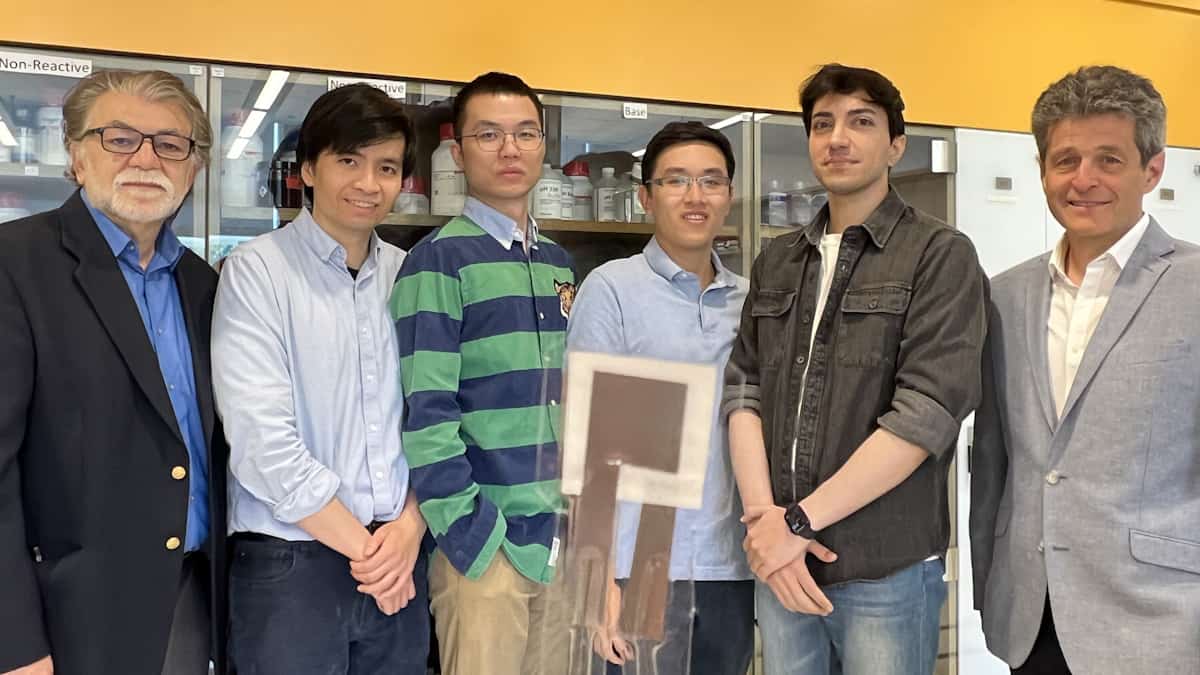
One of the challenges in treating certain types of brain cancer is the way that the blood-brain barrier prevents chemotherapy drugs from reaching the tumors they're meant to target. UConn's Thanh Nguyen, a biomedical and mechanical engineer, is developing new technology that could improve how we are able to treat brain tumors. He recently spoke with Physics World about this groundbreaking research: A new type of biodegradable ultrasound implant based on piezoelectric nanofibres could improve outcomes for patients with brain cancer. Researchers led by Thanh Nguyen from the the University of Connecticut’s department of mechanical engineering fabricated the devices from crystals of glycine, an amino acid found in the human body. Glycine is not only non-toxic and biodegradable, it is also highly piezoelectric, enabling the creation of a powerful ultrasound transducer that could help treat brain tumours. Brain tumours are particularly difficult to treat because the chemotherapy drugs that would be effective in tackling them are blocked from entering the brain by the blood–brain barrier (BBB). This barrier is a very tight junction of cells lining the blood vessel walls that prevents particles and large molecules from making their way through and damaging the brain. However, ultrasound can be safely used to temporarily alter the shape of the barrier cells such that chemotherapy drugs circulating in the bloodstream can pass through to the brain tissues. Currently, to achieve such BBB opening requires the use of multiple ultrasound transducers located outside the body, together with very high intensity ultrasound to enable penetration through the thick human skull bone. “That strong ultrasound can easily damage brain tissues and is not practical for multiple-time applications which are required to repeatedly deliver chemotherapeutics,” Nguyen tells Physics World. By contrast, the team’s new device would be implanted during the tumour removal surgery, and “can generate a powerful acoustic wave deep inside the brain tissues under a small supplied voltage to open the BBB”. The ultrasound would be triggered repeatedly as required to deliver the chemotherapy that kills off the residual cancer cells at tumour sites. After a set period of time following treatment the implant biodegrades, thereby eliminating the need for surgery to remove it. The research, reported in Science Advances, demonstrated that the team’s device used in conjunction with the chemotherapy drug paclitaxel significantly extended the lifetime of mice with glioblastomas (the most aggressive form of brain tumour) compared with mice receiving the drugs but no ultrasound treatment. This is fascinating research and if you are interesting in covering this topic, then let us help. Professor Nguyen focuses on biointegrated materials and devices at nano- and micro-scales for applications in biomedicine, and he's available to speak to media about his research. Simply click on his icon now to arrange an interview today.