
Experts Matter. Find Yours.
Connect for media, speaking, professional opportunities & more.

Expert Q&A: What is Soft Diplomacy and how does it impact classrooms?
"Right now, storytelling is critical. Language learning is highly personal, and it’s the person-to-person relationships that grease the wheels," says Cheryl Ernst, director of the English Language Institute at the University of Delaware. She recently published English Language Programs as Facilitators of Soft Diplomacy in Innovations in Star Scholars Press. Here's how she's discussing this important topic. Q: What is the focus of this research, and why is it important? Ernst: ELI and other English language programs provide the ideal space for communication development, cross cultural appreciation, gaining life skills, and raising awareness about people beyond the media. Post pandemic, we’re hearing across campus how individuals feel less connected, and in English language classrooms, connection is critical. Language is only learned through production and practice since it’s a skill that needs to be honed. In language, there is no such thing as perfect. In our classrooms, English is the common goal, and everyone comes to that space at their own levels and overflowing with imperfection. Our students learn to use their vulnerability as a tool. They learn the value of a growth mindset living in a culture that is different from their own, and with that comes an appreciation for difference, respect for others, trust, human-to-human communication. Q: What inspired this research? Ernst: More than 30 years of observation, conversations, experiences, and personal relationships. There was no term to describe the skills English language programs teach beyond grammar (what’s perceived, anyway). Terms like personal diplomacy, person-to-person diplomacy, civic diplomacy, and the like happens all the time and oversimplifies what we do. In my readings, I started to see overlaps between soft power and diplomacy, which led to the concept of Soft Diplomacy. Then what distinguishes Soft Diplomacy from other more common monikers are the variety of skills that happen organically in our classrooms that we rarely acknowledge and students may not recognize. Q: What are some key findings or developments? Ernst: Institutionally, ELPs can do better highlighting the skills beyond English that we teach organically or deliberately. Q: How could this work potentially impact the field or the wider public? Ernst: Respecting ELPs for the space they provide and the skills they offer. It’s not “just English,” rather is learning to communicate in a common language and with people from around the globe. I’d like people to realize that relationships are foundational, that there are common values across nations and that differences are not bad. What version of English is “correct” British or American dialects (the New York? Wisconsin? Alabama? Iowa?). Q: What are the next steps or upcoming milestones in your research? Ernst: A former student and I have launched a podcast series called Soft Diplomacy in Action that focuses on personal stories from those who work in international education. We’ve interviewed an ELI associate professor from Morocco, the UD coordinator of the Mandela Fellows program, a professor who sees (and lives) the diplomatic value of sports, and a retired English language professional. We’re looking forward to continuing these conversations with individuals from a variety of disciplines that also work in this space but through different lenses. ABOUT CHERYL ERNST Cheryl Ernst is the director of the English Language Institute at the University of Delaware where she and her colleagues and students practice Soft Diplomacy every day. Her professional areas of interest include program administration and international marketing, teacher training and working with international teaching assistants, curriculum design, and advanced level academic English (graduate levels). To speak with Ernst her work and the importance of Soft Diplomacy, reach out to MediaRelations@udel.edu.

Covering the War in Iran? TCU has Experts that Are Getting National Coverage
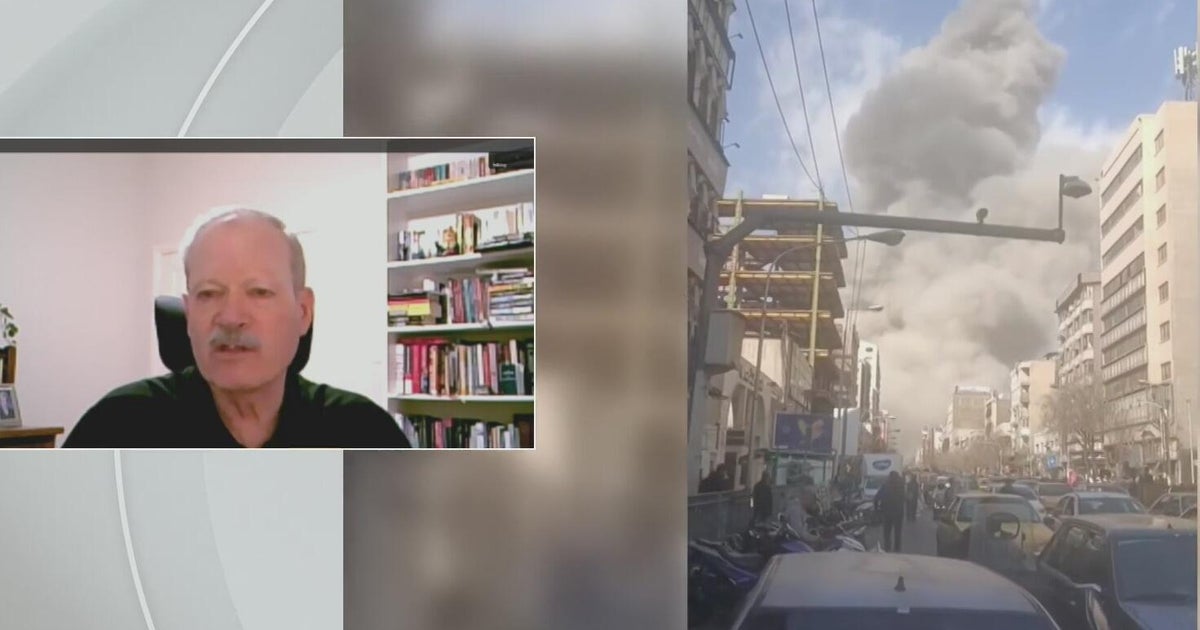
As the war against Iran continues to unfold, global media coverage has intensified, with major news organizations providing near-constant reporting on the conflict and its geopolitical implications. From live battlefield updates to analysis of regional alliances, energy markets, and international diplomacy, the story has become one of the most closely followed developments in international affairs. Networks such as CBS News are dedicating significant airtime to helping audiences understand the rapidly evolving situation and the broader implications for global stability. To provide credible context and insight, these outlets often turn to academic experts who specialize in Middle East politics and international relations. Experts like Ralph Carter from Texas Christian University (TCU) are among those providing research-based analysis that helps explain the historical roots of the conflict, the motivations of the key actors involved, and what developments could come next. Their expertise allows journalists to translate complex geopolitical dynamics into clear, accurate information for audiences trying to make sense of a fast-moving global crisis. Professor Ralph Carter teaches introductory courses in political science and international politics as well as advanced courses in Middle East conflicts, U.S. foreign policy and Russian foreign policy. He is the author or editor of eight books and the author or co-author of over 50 journal articles, book chapters, and other professional publications. His research agenda focuses on the making of U.S. foreign, trade, and defense policy, with a particular emphasis on the roles played by members of Congress. Recently, Professor Carter's expertise was sought out by CBS News in Dallas/Fort Worth as journalists were updating Americans on the current situation in the war in Iran. Ralph Carter is available to speak with the media about the ongoing war in Iran - simply click on his icon now to arrange an interview today.


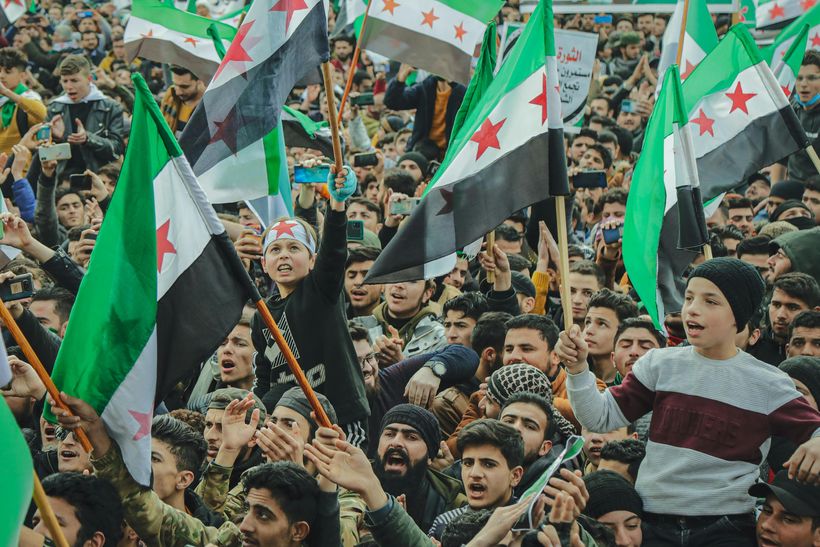
One year ago, after a campaign that toppled Bashar al-Assad's repressive dictatorship, Ahmed al-Sharaa assumed the Syrian presidency. Since then, the former rebel commander has worked to establish his credentials as a statesman, winning the support of regional powers like Türkiye, Saudi Arabia and Qatar—as well as recognition from the White House. Yet al-Sharaa and his transitional government have not been immune from criticism, particularly over their handling of domestic affairs. Samer Abboud, PhD, director of the Center for Arab and Islamic Studies at Villanova University, is an expert on modern Syria and the wider Middle East. A year into al-Sharaa's presidency, he believes the provisional government has made incredible strides in some areas, like international diplomacy, while struggling to find its footing in others. "There's no doubt that Syria's external image is becoming more positive. We see this kind of charm offensive, with President al-Sharaa taking to the world stage," says Dr. Abboud. "Also, most of the regional actors are very fond of al-Sharaa and were very happy for the Assad regime to have fallen. So, there's this external presentation of a transition government that is legitimate and has support, and I think that's largely true. "The problem in Syria right now, of course, is what's happening internally. To begin, across the country, you have completely collapsed infrastructure—limited electricity, restricted access to running water and unreliable internet." Much has been made of economic sanctions' role in contributing to these internal issues, with Western governments having historically limited the amount of aid and investment that could enter Syria. However, while Dr. Abboud sees these measures' elimination as crucial to the nation's progress, he also contends that ending restrictions alone is not enough to ensure the country's long-term stability and prosperity. Of particular concern, according to the professor, is the al-Sharaa administration's persistent claim "that 'free markets' could and would be a cure-all." As he explains, "The problem is that there's literally no evidence to demonstrate that private enterprise is interested in social betterment in reconstruction cases. You can't rebuild a state and a society on the profit logic. When you look at Lebanon, after all the wars Lebanon endured, what did free markets—without a strong public sector—do for that country? Roughly 80 percent of Lebanese people live in poverty." Beyond the troubles surrounding economic growth and infrastructural development, there also exist a series of fractures along ethnic and ideological lines. Wide swaths of Syria are currently controlled by militias with agendas at odds with that of the provisional government, and despite making inroads with one significant bloc of dissent (the Kurdish-led Syrian Democratic Forces), tensions are exceedingly high. Furthermore, a number of groups remain suspicious of the president and his intentions due to his past affiliation with Hayat Tahrir al-Sham, a Sunni Islamist group that traces its roots to al-Qaeda. Navigating this delicate situation with poise and precision is something that al-Sharaa needs to master, contends Dr. Abboud. And, over the course of the past several months, it seems Syria's new leader has started to refine the skill. "To illustrate, last year, at least 25 people were killed in a bombing at the Mar Elias Church in Damascus, and President al-Sharaa did not go to the site. In addressing the incident, he also didn't use the language of martyrdom, which is what you would typically do for any person—Christian or Muslim—who died in this context," says Dr. Abboud. "In June, however, they arrested the culprits, and he went and met the patriarch and went inside the church, and they publicized it. "The first time, he was too worried about these internal influences—of being perceived by his base as having moderated his views. Right now, he very much finds himself caught in a balancing act, working to temper the forces that are compelling him to possibly do something that could worsen an unstable situation. But I do think that the two contrasts [represented in the Mar Elias Church episode] suggest that the president is learning and gradually figuring out how to do politics a bit differently." In this vein, Dr. Abboud feels the next phase in al-Sharaa's evolution should center on reckoning with the history of the country's late civil war and encouraging a dialogue between those who supported the Assad regime and those who sought to overthrow it. In the professor's estimation, this step is essential to achieving a lasting peace in Syria. "Currently, there are some memory projects and knowledge projects that are happening, but those are not led or facilitated by the state. And that's troublesome, given what we've seen in other conflict contexts," he says. "In Lebanon, for instance, the state has amnesia. The civil war is not in the textbooks, officials don't talk about it, and it's not commemorated nationally. But then, in many ways, the narrative of how it happened—who are the victims, who are the perpetrators—can totally shape people's lives." Still, while much economic, social and humanitarian work remains to be done, Syria today finds itself in a position unlike any it's occupied in decades' time: one marked by possibility. "In general, I envision an extended period of grace for the government and an extended period of hope," concludes Dr. Abboud. "Syria did not have a future under the Assad regime. Or it had a future, but one characterized by generations of isolation. Today, people, both inside and outside Syria, have an entirely different outlook."

A Roadmap or a Rift? Examining Trump’s 28-Point Ukraine Peace Proposal
As negotiations around the war in Ukraine continue to dominate global headlines, a newly surfaced 28-point peace proposal associated with former U.S. President Donald Trump has triggered intense debate across NATO capitals, Kyiv, and Moscow. The document — described in reporting by Reuters, Axios, Sky News, Al Jazeera and other outlets — outlines a framework aimed at ending the conflict but includes provisions that many analysts say could significantly reshape Europe’s security landscape. A Plan Built Around Ceasefire, Guarantees, and Reconstruction At its core, the plan calls for a formal ceasefire, a non-aggression pact between Russia, Ukraine, and European states, and a set of “security guarantees” meant to deter future conflict. Reporting indicates that Ukraine would receive assurances that any renewed Russian offensive would trigger a coordinated international response. The plan also proposes the creation of a major reconstruction program — potentially financed in part with frozen Russian assets — to rebuild infrastructure and modernize Ukraine’s economy. The proposal references pathways for deeper Ukrainian integration with Europe, including support for progressing toward EU membership and providing enhanced access to European markets. A large “Ukraine Development Fund” is also mentioned in multiple summaries of the plan. Provisions Driving the Most Global Pushback The most controversial elements relate to Ukraine’s territorial integrity and long-term security posture. Outlets such as Sky News and Al Jazeera report that the draft would recognize Russian control over Crimea and large parts of Donetsk, Luhansk, Zaporizhzhia, and Kherson — areas currently occupied by Russian forces. Ukraine would also be required to formally abandon NATO membership and cap its military at 600,000 personnel. Additional provisions include restrictions on the presence of foreign troops in Ukraine, phased lifting of sanctions on Russia, full amnesty for war-related actions, and the reintegration of Russia into global economic and political structures. These components have drawn sharp responses, particularly from European leaders who argue the plan could reward aggression and undermine international legal norms. Dr. Glen Duerr is a citizen of three countries. He was born in the United Kingdom, moved to Canada as a teenager, and then to the United States to obtain his Ph.D. His teaching and research interests include nationalism and secession, comparative politics, international relations theory, sports and politics, and Christianity and politics. View his profile. What Remains Unclear or Still Under Discussion Reporting from Reuters and AP notes that many sections of the plan remain undefined or are still in flux. The exact mechanism behind the proposed security guarantees is not detailed. Oversight of reconstruction funds, timelines for reintegration of Russia, and the legal handling of frozen assets also require further clarification. Some reporting suggests parts of the plan draw from a prior informal Russian “non-paper,” raising questions about the provenance and intent of specific provisions. Why the Proposal Matters With the war approaching four years of fighting, any formal proposal for ending hostilities carries significant geopolitical weight. Supporters of the plan frame it as a pragmatic attempt to halt loss of life and begin rebuilding. Critics argue it risks legitimizing territorial conquest and weakening the broader post-Cold-War security order. As governments evaluate the implications, journalists covering defense, diplomacy, and international law will find this evolving proposal central to understanding where U.S., European, Russian, and Ukrainian negotiators may — or may not — be willing to go next.


Covering the latest developments in Iran? Our experts are here to help with your coverage.
Iran’s nuclear program remains one of the most closely watched issues in international security, diplomacy, and nonproliferation. Originally launched in the 1950s with Western support, the program has since evolved into a focal point of global concern over nuclear weapons, regional stability, and international trust. As negotiations continue to stall and enrichment capabilities increase, understanding the historical context, scientific progress, and geopolitical consequences of Iran’s nuclear ambitions is critical for public awareness. This topic provides journalists with high-impact angles spanning diplomacy, science, and security. Key story angles include: Origins and Evolution of the Program: Tracing the nuclear program from its U.S.-backed beginnings under the Shah to its secret expansion after the 1979 Islamic Revolution. The JCPOA (Iran Nuclear Deal): Examining the 2015 Joint Comprehensive Plan of Action, its successes, its unraveling after the U.S. withdrawal in 2018, and current attempts to revive it. Scientific Advances and Enrichment Capacity: Analyzing Iran’s current uranium enrichment levels, centrifuge technology, and what experts say about its "breakout time." Regional and Global Security Concerns: Investigating how Iran’s program affects Middle Eastern tensions, Israeli security policy, and broader nuclear proliferation risks. Diplomatic Stalemates and Sanctions: Reviewing the impact of international sanctions, diplomatic efforts by the EU, China, and Russia, and the political dynamics within Iran. The Risk of Escalation or Military Conflict: Exploring scenarios that could lead to open confrontation and what military analysts say about preemptive strikes or deterrence strategies. Iran’s nuclear program is not just a regional issue—it’s a global flashpoint at the intersection of science, diplomacy, and international law. Journalists covering this story have an opportunity to unpack a decades-long narrative with renewed urgency. Connect with our experts about Iran’s Nuclear Program: History, Progress, and Global Risks: Check out our experts here : www.expertfile.com


ExpertSpotlight: The Ottawa Treaty, the Anti-Personnel Mine Ban Convention
The Ottawa Treaty, formally known as the Anti-Personnel Mine Ban Convention, stands as one of the most impactful humanitarian disarmament agreements of the modern era. Signed in 1997 and led by Canada, the treaty prohibits the use, stockpiling, production, and transfer of anti-personnel landmines—deadly remnants of war that continue to kill and maim civilians decades after conflicts end. The treaty’s global significance lies not only in its lifesaving goals but also in how it redefined international diplomacy by empowering civil society and survivors in disarmament efforts. As ongoing conflicts and global security threats evolve, revisiting the treaty’s legacy and future relevance is more important than ever. Journalists may find timely and meaningful angles through: The origins of the Ottawa Treaty and Canada’s leadership in humanitarian disarmament The continuing global impact of landmines and the status of mine clearance efforts Survivor stories and the long-term effects of landmine injuries on communities How the treaty reshaped international diplomacy and civil society’s role in negotiations The intersection of armed conflict, environmental degradation, and unexploded ordnance Countries that have not joined the treaty and the geopolitical implications This treaty is a powerful example of global cooperation aimed at protecting civilians, offering rich opportunities for human-interest stories and international policy analysis. Connect with our experts about the Ottawa Treaty and landmines Check out our other experts here : www.expertfile.com

#ExpertSpotlight: India-Pakistan Conflict: Historical Roots and Ongoing Tensions
The India-Pakistan conflict remains one of the most enduring and complex geopolitical disputes in modern history. Rooted in the partition of British India in 1947, the conflict has evolved over decades to include territorial disputes, religious and cultural divisions, and nuclear rivalry. With both countries possessing significant military power and global influence, tensions between India and Pakistan have far-reaching consequences for regional stability, international diplomacy, and global security. As new developments continue to emerge, understanding the conflict’s origins and timeline is critical for comprehensive reporting. Key story angles include: The Partition of 1947 and Its Aftermath: Examining the division of British India, the creation of Pakistan, and the resulting violence and mass displacement. Kashmir: A Disputed Territory: Analyzing the root of territorial disputes over Kashmir, including the wars of 1947, 1965, and 1999, and ongoing claims from both nations. Nuclear Deterrence and Military Escalation: Exploring the impact of both nations becoming nuclear powers and how this has shaped diplomatic and military strategy. Cross-Border Terrorism and Insurgency: Investigating allegations of state-sponsored terrorism, militant activity, and their role in inflaming tensions. Peace Initiatives and Diplomatic Breakdowns: Highlighting past attempts at peace talks, confidence-building measures, and why many efforts have faltered. Global Implications and International Mediation: Assessing how global powers like the U.S., China, and the U.N. view the conflict and what role they play in de-escalation efforts. As tensions between India and Pakistan continue to affect regional and international relations, revisiting the historical context and current stakes provides crucial insights for journalists covering conflict, diplomacy, and security. Connect with an expert about India and Pakistan: To search our full list of experts visit www.expertfile.com

The History of Conclave and How Do They Pick a New Pope?
The papal conclave—the centuries-old process by which the Roman Catholic Church selects a new pope—is one of the most secretive and spiritually symbolic events in the world. Rooted in rich ritual and guided by strict protocols, the conclave represents a moment of global significance, not only for the 1.3 billion Catholics worldwide but for all who follow the influence of religion on world affairs. This topic matters to the public as it blends ancient tradition with contemporary global leadership questions, shedding light on how faith, power, and governance intersect. The election of a pope impacts international diplomacy, interfaith relations, and moral discourse on modern issues. Key story angles that may interest a broad audience include: Origins of the papal conclave: Tracing its development from medieval times to its formalization by Pope Gregory X in 1274. The voting process: Exploring the steps from the Sistine Chapel seclusion to the smoke signals that announce a new pontiff. The role of the College of Cardinals: Examining who the electors are, how they are chosen, and the geopolitical makeup of the voting body. Influence of modern issues on papal selection: Understanding how social, environmental, and political concerns may shape cardinal deliberations. Global reaction to papal succession: Looking at how nations, religious groups, and the public respond to the announcement of a new pope. Symbolism and tradition: Analyzing the vestments, rituals, and centuries-old customs that surround the conclave and papal inauguration. Connect with an expert about the Papal Conclave: To search our full list of experts visit www.expertfile.com

Myanmar’s earthquake crisis demands international humanitarian intervention - before it’s too late
We are at a crossroads. Will the international community intervene in Myanmar to save lives, or will it once again retreat into silence until it is too late? In the shadow of disaster, silence is complicity. The devastating earthquake that recently struck Myanmar, registering a magnitude of 7.7 and claiming over a thousand lives with the potential for fatalities to rise into the tens of thousands, is far more than a natural calamity - it is a preventable humanitarian catastrophe. The international community must confront a difficult question: How many more lives must be lost before the world steps in? As someone who has studied disaster governance for over two decades, I can say with a heavy heart that what we are witnessing in Myanmar is a textbook case of systemic failure - of national crisis management, of international humanitarian coordination and, most disturbingly, of disaster diplomacy. A Crisis Exacerbated by Inaction The situation on the ground is dire. Entire villages lie in ruins across Shan State and Mandalay. Liquefaction, caused by the shifting of tectonic plates, has turned many areas into unstable wetlands, with water seeping through the ground continuously. With countless bodies left unrecovered and proper sanitation systems overwhelmed, the risk of cholera and other waterborne diseases looms large. In past disasters - be it Haiti in 2010, Nepal in 2015 or the Turkey-Syria earthquake of 2023 - we saw the tragic consequences of slow and politicised humanitarian responses. But Myanmar’s case is uniquely perilous. The country is not only facing a natural disaster but also the aftermath of years of civil conflict, military rule and geopolitical paralysis. The ruling junta’s statements and figures are unreliable at best and disinformation is hampering coordinated international support. When Aid Needs Armour The reality is that humanitarian intervention in Myanmar now requires more than blankets and bottled water - it needs boots on the ground. Given the multiplicity of armed rebel groups and the entrenched conflict dynamics, any aid convoy risks becoming a pawn in a larger power struggle. We need an international peacekeeping force, mandated strictly for humanitarian purposes, to ensure safe and unfettered access to affected populations. This must be a neutral, apolitical force, equipped to operate in a complex, high-risk environment - not to take sides, but to protect lives. Without such security guarantees, humanitarian agencies cannot function, and the crisis will evolve into famine, mass migration, and possibly regional instability across Southeast Asia. A Crisis of Leadership The United Nations, ASEAN, WHO and other key global institutions have yet again fallen short of timely action. The ineffectiveness of their response should prompt a critical reevaluation of their governance structures and crisis leadership models. The deeper issue is not just logistical - it’s moral. In the absence of strong, scientifically-informed and transparent leadership, international aid becomes another layer of dysfunction. We need a new generation of disaster governance professionals - leaders trained not only in logistics and law, but in negotiation, ethics and diplomacy. The Cost of Indifference Myanmar’s crisis will not remain confined within its borders. Already, we are seeing early signs of mass displacement towards India, Thailand and Bangladesh. If left unchecked, these flows will eventually extend to Europe, the UK and beyond, burdening an already overstretched global refugee system. The longer we delay, the greater the consequences - not just for Myanmar, but for the world. A Call for Science, Transparency and Regional Solidarity As academics and practitioners in the field of Disaster Risk Reduction (DRR), we must hold ourselves to the highest standard of integrity. DRR in regions like South and Southeast Asia must be built on inclusive science, open data, regional collaboration and local knowledge. Taiwan and Singapore offer examples of how early warning systems and data transparency can save lives - why aren't we replicating these models more widely? If this disaster teaches us anything, it is that sovereignty cannot be used as a shield for inaction. A disaster of this magnitude transcends politics. It is a test of our global conscience.


ExpertSpotlight: History of Yemen and the Houthi Rebels
The history of Yemen and the rise of the Houthi rebels is essential to understanding one of the world’s most complex humanitarian and geopolitical crises. Once considered a crossroads of ancient trade, Yemen has in recent decades become a focal point of conflict, regional power struggles, and human rights challenges. The conflict involving the Houthi movement has had global ramifications—from maritime security and oil trade routes to civilian displacement and famine. This topic matters to the public because it highlights the intersection of war, diplomacy, and humanitarian need, while prompting critical questions about international responsibility, peace-building, and regional stability. Key story angles that may interest a broad audience include: The roots and rise of the Houthi movement: Tracing the group’s origins, ideology, and evolution into a key political and military force in Yemen. Regional power dynamics: Analyzing the involvement of Saudi Arabia, Iran, and other actors in fueling or resolving the conflict. The humanitarian crisis in Yemen: Investigating the scale of famine, disease outbreaks, displaced populations, and access to aid. The role of the international community: Exploring arms sales, ceasefire negotiations, and accountability in the context of international law. Maritime security and global trade: Understanding how conflict in Yemen affects Red Sea shipping routes and international energy markets. The future of peace and governance: Examining potential pathways to a political resolution and the reconstruction of a stable Yemeni state. Connect with an expert about Yemen and the Houthi rebels: To search our full list of experts visit www.expertfile.com