
Experts Matter. Find Yours.
Connect for media, speaking, professional opportunities & more.

Covering the Economy? FAU has the ideal expert to help with your questions and stories
The economy isn’t just a headline, it’s the story behind nearly every headline. From grocery bills and mortgage rates to job growth, small business confidence, and federal policy decisions, economic forces shape daily life for Americans in ways that are immediate and deeply personal. For journalists, that makes the economy a constant, high-stakes beat. Audiences want clear answers: Why are prices rising? Are we headed for a slowdown? What does the Fed’s next move mean for my community? The challenge is cutting through jargon and partisan spin to deliver insight that’s accurate, grounded, and understandable. That’s where William Luther, Ph.D., stands out. A respected economist and Associate Professor at Florida Atlantic University, Luther brings serious academic credibility, but explains economic trends in plain language that resonates beyond the classroom. His expertise in monetary policy, inflation, unemployment, cryptocurrency, and economic growth makes him a valuable resource for breaking news, enterprise stories, and long-form analysis alike. Whether reporters are covering Florida’s housing market, national interest rate decisions, or the future of digital currency, Luther offers thoughtful, balanced analysis that helps audiences understand not just what’s happening, but why it matters. William Luther, Ph.D., is an expert in monetary economics and macroeconomics. He is an associate professor of economics at Florida Atlantic University, director of the American Institute for Economic Research’s Sound Money Project, and an adjunct scholar with the Cato Institute’s Center for Monetary and Financial Alternatives. The Social Science Research Network currently ranks him in the top five percent of business authors. View his profile Recent media coverage: ABC News Others downplayed the likelihood of a meaningful loss of Fed independence, since news of the DOJ investigation of Powell drew a rare degree of Republican opposition. Powell holds only a single vote on the 12-member board responsible for setting interest rates, they said. “Anytime we’re changing institutions, we should have some concern,” William Luther, a professor of economics at Florida Atlantic University, told ABC News. “At the same time, we should recognize the institutional safeguards we have are pretty strong.” Newsweek William Luther, associate professor of economics at Florida Atlantic University, said that the immediate net financial loss to those in Florida, and all Americans, appears to be "very, very large." Luther added Florida should expect a short-term "sharp contraction" in real estate and tourism, both vital sectors for the state's economy. NPR At the moment, the economy is performing very well. It wasn't performing very well not too long ago, both because of the pandemic, which reduced our ability to produce goods and services quite significantly, and then, as a result of some of the policy responses to that pandemic, we had very high inflation. NBC Will Luther, an economics associate professor at Florida Atlantic University, acknowledged the concerns among students. "Absolutely, there are students very much concerned with whether or not they will be able to get a job when they finish here. The good news is that they will. The bad news is it's a little harder right now than it was, say, two years ago," Luther said. Fox Nation FAU's William Luther joins Fox Nation's Deep Dive, hosted by the Wall Street Journal's Mary Anastasia O'Grady, to discuss the economic impact of cryptocurrencies. Video courtesy of Fox Nation's Deep Dive.



Op-Ed: Crypto innovation needs stability, not shortcuts
After months of bipartisan negotiations, Congress continues to debate crypto market structure legislation, though questions remain whether common sense investor protections will be included in a new federal framework for digital assets. These proposals address fundamental questions aimed at providing needed clarity for digital asset markets, including around agency jurisdiction, and trust and confidence for mainstream adoption of modern markets. At times, the negotiations fractured over stablecoin yields, while provisions addressing decentralized finance and developer liability and the importance of investor safeguards have proven similarly divisive. The GENIUS Act prohibits stablecoin issuers from paying interest, recognizing such payments transform digital tokens into bank deposits requiring regulatory oversight. Platforms opposing restrictions on stablecoin yields prioritize business models generating revenue by offering deposit-like products without deposit-like regulation – an unfair regulatory arbitrage that disadvantages prudentially supervised banks, drains funding from local lending and introduces systemic risk without corresponding accountability. While these complex issues require careful calibration, there is no substitute for keeping investor-first reforms at the center of market structure legislation and prioritizing clear rules and robust investor safeguards that ensure digital assets benefit everyday investors and that America strengthens its economic competitiveness and leads the next era of financial innovation. Such impasses reflect a pattern where narrow interests prevail over broader economic considerations. Platforms opposing restrictions on stablecoin yields prioritize business models generating revenue by offering deposit-like products without deposit-like regulation. Banking institutions recognize that unregulated competition operating under lower-cost structures will drain funding from local lending. Both positions are economically rational for the parties involved. Neither serves the public interest in financial stability. Likewise, opponents argue that regulation stifles innovation, especially in decentralized finance. But this conflates innovation with regulatory arbitrage. Genuine technological progress creates value by improving efficiency or reducing costs. Regulatory arbitrage extracts value by exploiting gaps between economically equivalent activities subject to different rules. The alternative claim – that existing securities laws suffice – ignores that those frameworks were designed for different market structures. Securities laws assume centralized issuers. Commodity regulations assume physical delivery. Digital assets often fit neither category cleanly, creating uncertainty that inhibits legitimate activity while failing to prevent abuse. The choice is not between perfect legislation and the status quo but between establishing clear rules now or waiting for the next crisis. Financial regulation written in crisis tends toward overcorrection that stifles markets for years. Regulation developed deliberately better balances stability with innovation. Both House and Senate committee versions share core elements providing needed clarity on agency jurisdiction, registration requirements and disclosure standards. International considerations reinforce urgency. The European Union's Markets in Crypto-Assets regulation provides comprehensive frameworks for issuers and service providers. Continued U.S. regulatory ambiguity cedes leadership to jurisdictions that may not share American economic interests. More immediately, delay allows risks to accumulate as digital assets become interconnected with traditional finance through retirement plans and institutional portfolios. Recent market failures demonstrate why regulatory clarity and investor safeguards matter. The 2022 collapse of crypto exchange FTX revealed an $8 billion dollar deficit in customer accounts, spreading losses to pension funds and individual retirement accounts. Investigators identified conflicts of interest and leverage that standard regulation would have prevented. When Silicon Valley Bank failed, one major stablecoin had 8% of reserves tied to that institution. The crisis resolved only because uninsured depositors received public support. These episodes reveal a pattern where institutions operating outside prudential supervision accumulate risks requiring public intervention. Markets function best when rules are clear, consistently enforced and apply equally to all participants. This principle applies whether the market involves energy commodities, agricultural credit or digital assets. Louisiana's economy depends on community banks that understand local conditions and maintain lending relationships through economic cycles. When regulatory gaps allow deposit flight to lightly supervised alternatives, these institutions lose capacity to serve small businesses and agricultural operations. Congress has made meaningful progress on consensus-driven legislation. Completing that work would provide clarity allowing legitimate innovation while preventing regulatory arbitrage that creates systemic risk. The alternative is waiting for the next crisis to demonstrate why such frameworks were necessary.



Aston University economists say Prime Minister can reduce UK trade vulnerability with China visit
Greenland episode exposed UK’s lack of effective response to economic coercion from allies Research shows tariff retaliation would have cost the average UK household up to £324 per year Economists say China visit is “portfolio risk management” – diversification reduces vulnerability. The Prime Minister’s visit to China – the first by a British PM since 2018 – is an opportunity to reduce the UK’s vulnerability to economic coercion, according to new research from Aston University. A policy paper from Aston Business School’s Centre for Business Prosperity analyses the January 2026 Greenland tariff episode, when President Trump threatened and then withdrew tariffs on eight European countries. The researchers found that the UK had no good options: retaliation would have made Britain worse off, while absorbing the tariffs left Europe without credible deterrence. Director of the centre for business prosperity, Professor Jun Du, said: “The Greenland episode was a wake-up call. When your principal security ally threatens economic coercion, the old assumptions about who is safe and who is dangerous no longer hold. “The PM’s China visit should be framed as portfolio risk management – building diversified trading relationships that reduce the UK’s exposure to any single partner. Just as investors don’t put all their money in one stock, countries shouldn’t put all their trade into one basket. A UK with multiple strong partnerships is harder to pressure, whether the pressure comes from Washington or Beijing.” The research found that coordinated UK–EU tariff retaliation would have cost British households up to £324 per year – the worst outcome modelled. But the authors argue that Europe has untapped leverage elsewhere: the US runs a €148 billion annual services surplus with the EU, and mutual investment exceeds €5.3 trillion. Associate professor of economics and co-author, Dr Oleksandr Shepotylo, said: “Tariff retaliation fails because it hurts consumers and distorts the economy – the retaliator suffers similarly to the target. But Europe has cards it isn’t playing. Services, investment screening, and regulatory access are pressure points where Europe can respond effectively.” UK exports to China fell by 10.4% in the year to Q2 2025, with goods exports down 23.1% – the sharpest decline among major trading partners. The researchers argue that this closes off the UK’s largest alternative market at precisely the moment US reliability is in question. The paper identifies three priorities for UK policy: Recognise the permanent incentives behind US tariffs. US tariff revenue hit $264 billion in 2025. Trade negotiations alone cannot resolve revenue-driven policy. Build UK–EU coordination on non-tariff instruments. Services, investment, procurement, and regulation offer leverage that tariffs do not. Treat China engagement as portfolio risk management. Concentration in any single market creates vulnerability. Diversification is not about picking sides – it’s about resilience. Professor Du added: “The question for the Prime Minister is whether to use this breathing space to build resilience – or wait for the next Greenland.” To read the policy paper in full, click on this link:


Power, Politics, and Petroleum: The Story of Venezuela
After gaining independence from Spain in the early 19th century under the leadership of Simón Bolívar, the country spent much of the next century marked by political instability and military rule. Everything changed in the early 20th century with the discovery of vast oil reserves, which rapidly transformed Venezuela into one of the world’s leading petroleum exporters and shifted power toward a centralized state funded almost entirely by oil revenue. By the mid-20th century, oil had become both Venezuela’s greatest asset and its greatest vulnerability. Democratic governments that emerged after 1958 used oil income to expand social programs and infrastructure, but also built an economy dangerously dependent on a single commodity. When oil prices fell in the 1980s and 1990s, economic inequality and public frustration surged, creating the conditions that brought Hugo Chávez to power in 1999. Chávez reoriented the political system around a state-controlled oil sector, using petroleum revenues to fund social initiatives while consolidating political authority and weakening independent institutions. Under Chávez and his successor Nicolás Maduro, oil remained the backbone of the state—but declining production, corruption, and mismanagement hollowed out the industry itself. As oil revenues collapsed, so did public services, democratic norms, and economic stability. Venezuela’s history illustrates a central paradox: immense natural wealth paired with fragile governance. Control of oil has repeatedly shaped political power, domestic policy, and Venezuela’s relationship with the world—making energy inseparable from the country’s political story. Journalists covering Venezuela, Latin American politics, energy markets, or resource-driven economies are encouraged to connect with experts who can provide historical context, explain the role of oil in shaping political outcomes, and assess how Venezuela’s past continues to influence its uncertain future. Our experts can help! Connect with more experts here: www.expertfile.com


A Snapshot of the Local Economy: Simon Medcalfe on Growth, Risk, and What Comes Next
At Augusta University’s annual Economic Forecast Breakfast hosted by the James M. Hull College of Business, Simon Medcalfe, PhD, offered a grounded, data-driven look at how the local economy is performing — and what lies ahead. Speaking to business leaders, students and community stakeholders, Medcalfe emphasized the importance of distinguishing real economic growth from inflation-driven gains, noting that while the Augusta region continues to grow, it does so at a measured pace compared to national averages. His presentation framed the local economy as stable and resilient, but not immune to broader forces shaping the U.S. outlook. A key theme of Medcalfe’s remarks was the role of research, innovation and education in sustaining long-term economic health. He pointed to strong gains in research and development across Georgia and highlighted how university-based research directly contributes to regional economic output. According to Medcalfe, investment in knowledge creation remains one of the most reliable drivers of growth, reinforcing the value of higher education institutions as economic anchors. Simon Medcalfe, PhD, is an economist with an emphasis on sports economics, social determinants of health, and the local economy. View his profile At the same time, Medcalfe cautioned against complacency. While regional fundamentals remain solid, he stressed that uncertainty at the national level continues to pose risks. “However, uncertainty abounds in national macroeconomic policy that could negatively impact growth next year,” Medcalfe said, underscoring how unresolved fiscal decisions and policy shifts can ripple down to local economies. Still, his overall outlook balanced realism with optimism. Medcalfe concluded that the Augusta region — and Georgia more broadly — is positioned to weather uncertainty thanks to diversification, investment in early education, and continued research activity. “Overall, Augusta and Georgia are positioned well for economic growth in 2026 with a strong commitment to early childhood education, a diversified labor market and strong research and development,” he said. View the full article 'Annual Economic Forecast Breakfast offers snapshot of the local economy' here: For journalists covering regional economics, workforce development, higher education, or policy-driven growth trends, Simon Medcalfe, PhD, offers clear-eyed analysis rooted in data — and an ability to translate complex economic signals into insight that matters locally. Simon is available to speak with media - simply click on his icon now to arrange an interview today.



AI as IP™: A Framework for Boards, Executives, and Investors
Under current corporate accounting practices, artificial intelligence (AI) companies’ most valuable resources – large language models, training datasets, and algorithms – remain “off the books” or uncapitalized. As the importance of AI continues to grow in the global knowledge-based economy, financial statements are becoming less representative of a company’s true worth, creating a recognition gap. In this article, James E. Malackowski, Eric Carnick, and David Ngo present several conceptual frameworks to bridge this gap. They explain how the triangulation of three valuation approaches can reveal both the tangible investment base and the intangible, strategic upside of AI assets. In turn, these approaches provide board-level visibility into where AI capital resides and how it contributes to enterprise value. James E. Malackowski is the Chief Intellectual Property Officer (CIPO) of J.S. Held and Co-founder of Ocean Tomo, a part of J.S. Held. Mr. Malackowski has served as an expert on over one hundred occasions on intellectual property economics, including valuation, royalty, lost profits, price erosion, licensing terms, venture financing, copyright fair use, and injunction equities. He has substantial experience as a Board Director for leading technology corporations, research organizations, and companies with critical brand management issues. This article is the second installment in our three-part series, Artificial Intelligence as Intellectual Property or “AI as IP™”, which explores how artificial intelligence assets should be treated as a form of intellectual property and enterprise capital. The first article, “A Strategic Framework for the Legal Profession”, explored the legal foundations for recognizing and protecting AI assets. The upcoming third article, “Guide for SMEs to Classify, Protect, and Monetize AI Assets”, will provide practical steps for small and mid-sized enterprises to turn AI into measurable economic value. To explore the topic further, simply connect with James through his icon below.



J.S. Held Releases the Lending Climate in America Survey Results
Global consulting firm J.S. Held reveals the “Lending Climate in America” survey results from Phoenix Management, a part of J.S. Held. The fourth quarter survey results highlight the persisting lender views on policy decisions and their national/global impacts. The “Lending Climate in America” survey is administered quarterly to lenders from various commercial banks, finance companies, and factors across the country. We collect, tabulate, and analyze the results to create a complete evaluation of national attitudes and trends. Phoenix’s Q4 2025 “Lending Climate in America” survey asked lenders which factors could have the strongest potential to impact the economy in the upcoming six months. Forty-six percent of lenders think political uncertainty will have the strongest impact on the economy, while 41% of lenders believe geopolitical risk (war) has the strongest potential to impact the economy. Lenders continue to believe that the possibility of a U.S. recession and upcoming FOMC interest rate decisions will impact the economy. Lenders revealed what actions their customers may take in the next six months. Almost two-thirds of the surveyed lenders believe their customers will raise additional capital, while 30%+ of the surveyed lenders believe their customers will introduce new products and make acquisitions. Forty-three percent of respondents identified the retail trade industry as the most likely to experience volatility in the next six months, followed by the healthcare (social assistance) industry at 38% of respondents. Additionally, Phoenix’s “Lending Climate in America” survey asked lenders if their respective institutions plan to tighten, maintain, or relax their loan structures for various sized loans. For larger loan structures (greater than $25M), the plan to maintain loan structures remained relatively constant from Q3 to Q4, increasing by 9%. As loan sizes decrease, lenders plan to maintain their loan structures. Loans in the range of $15-25M and $5-15M saw very similar structure changes from Q3 to Q4. Loans under $5M had no change in structure. Lender optimism in the U.S. economy decreased for the near term, moving from 2.58 in Q3 2025 to 2.38. In this current quarter, there is heavy expectation of a B level performance (49%), with a majority of the remainder (41%) sitting at a C level. Lender expectations for the U.S. economy’s performance in the longer term also decreased from 2.71 to 2.46. Of the lenders surveyed, 54% believe the U.S. economy will perform at a B level during the next twelve months, virtually no change from the prior quarter. Performance expectations at the D level increased by 5%, matching the increase at a C level. To see the full results of Phoenix’s “Lending Climate in America” Survey, please visit: “Lenders are signaling heightened caution as political uncertainty and geopolitical risks dominate near-term economic concerns,” says Michael Jacoby, Senior Managing Director and Strategic Advisory Practice Lead at J.S. Held. “Confidence in the U.S. economy continues to erode, with short-term grades slipping from a weighted average of 2.58 in Q3 to 2.38 in Q4, and long-term expectations following the same downward trend. While most lenders plan to maintain current loan structures, a notable 21% anticipate tightening terms, even as 77% expect further Fed rate cuts in the coming months. Industry volatility is projected to rise sharply in healthcare, consumer products, and finance, underscoring a challenging environment for borrowers and investors alike.” To learn more about how our experts can add value to your stories in development, simply connect with Michael through his icon below.

Farm but no fowl: How Florida aquaculture is growing the economy
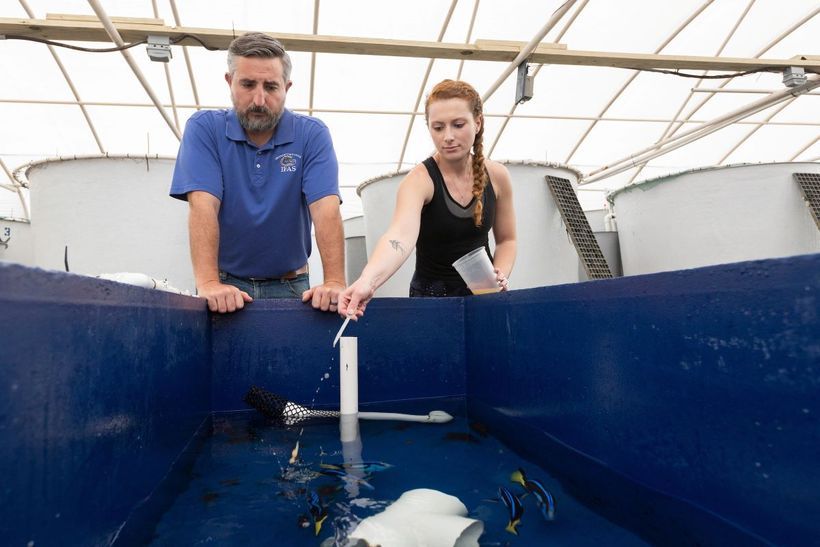
Florida’s thriving aquaculture industry is a vital part of the state’s economy, generating more than $165 million in sales annually and supporting jobs across rural and coastal communities. Recognized as agriculture by the Florida Legislature in 1993, aquaculture contributes to food security, environmental sustainability and economic resilience. “Just like terrestrial, land-based agriculture, aquaculture is the process of growing or raising a product,” said Shirley Baker, UF/IFAS professor of aquaculture and associate director of the School of Forest, Fisheries and Geomatics Sciences. “The people who do the work consider themselves farmers. Their products are simply plants and animals grown or raised underwater.” Overseen by the Florida Department of Agriculture & Consumer Services (FDACS), the industry includes an estimated 1,500 varieties of food fish, bait fish, mollusks, aquatic plants, alligators, turtles, crustaceans, amphibians, caviar and ornamental fish. With proper regulatory support, aquaculture can continue to be a driving force in Florida’s economy and environmental stewardship. The hallmark of Florida aquaculture is ornamental, or tropical fish, the saltwater and freshwater species bred for aquariums. In 2023, the sector generated more than $57 million, making the state the country’s top pet fish producer. In fact, 95% of ornamental fish in the United States come from the Sunshine State. About 90% of Florida’s ornamental fish are freshwater varieties. Farmers primarily raise live-bearing species in sterilized earthen ponds dug into loam or bedrock. They fill ponds with sexually mature fish called broodstock and harvest offspring using baited traps. Most egg-laying fish are grown in commercial hatcheries. Like ornamental fish, the demand for farmed seafood has grown as wild-caught sources are increasingly depleted. Globally, more than 50% of all seafood for human consumption is produced through aquaculture. “Seafood is considered one of the most in-demand sources of lean protein in the world, and it has to come from somewhere,” said Matthew DiMaggio, director of the UF/IFAS Tropical Aquaculture Laboratory in Ruskin. “The ocean can't produce any more than it already has, so aquaculture has to make up the deficit.” In Florida, as the number of fish farms and the scale of their operations have grown, the value of food fish sales has skyrocketed. Between 2018 and 2023, sales rose from $4 million to $26 million, a 550% increase. Some of the most common Florida food fish are tilapia, striped bass, cobia, pompano and red drum. They’re housed in various ways. Operations can include fiberglass ponds, vats and tanks inside greenhouses and recirculating systems occupying entire warehouses. Farmers typically start with fingerlings, or juvenile fish, purchased from reputable suppliers. Aquaculture farmers share their experiences Evans Farm of Pierson, Florida, is among the pioneering food fish farms in the state. Originally cattle farmers, the company expanded to sell tilapia, striped bass and caviar harvested from sturgeon. Fish are kept in filtered, recirculating ponds and long tanks known as raceways. They’re transported live to grocery stores and markets in vans outfitted with tanks and filtration systems. “Our fish are thriving, and they’re healthy. We grow them with great water quality, and we feed them excellent food,” said Jane Davis, who owns the business with her mother and brothers. “Although they’re raised in water, they’re no different than other agriculture crops, whether it's cattle, chickens or anything else.” Mollusks are another significant contributor to Florida aquaculture. While the sector includes oysters and scallops, clams are the dominating commodity; in 2023, they brought in $32 million of the state’s $43 million in mollusk sales. Clam farmers generally obtain grain-sized seed clams from hatcheries. The smallest varieties are initially cared for in nursery systems. Once the shells become large enough, they’re transferred to bags submerged off the coast. Cedar Key resident Heath Davis, no relation to Jane Davis, transitioned from fishing to clam farming in the mid-1990s. He and his father, Mike Davis, own Cedar Key Seafarms, one of the state’s leading wholesale clam distributors. “Before, as fishermen, we would go out and place nets wherever we thought the fish were,” Heath Davis said. “But clamming is like farming. We lease a 2-acre, underwater plot from the state and harvest the product from our designated field.” The Florida Aquaculture Plan In November, the Florida Aquaculture Review Council, the official conduit between FDACS and farmers, published the latest revision of the Florida Aquaculture Plan, a detailed list of research and development priorities. Florida’s climate, infrastructure, streamlined regulations and positive business environment have positioned the state to become the national leader in aquaculture, but innovation is required to remain competitive, according to the document. It’s a message Heath Davis echoed. “Aquaculture farming is such a huge part of Florida’s economy,” he said. “It could hold some of the answers needed to sustain the growing number of people living on this peninsula.”



Australia’s Under-16 Social Media Ban Isn’t a Finish Line - It’s a Reality Check
Australia’s move to restrict social media accounts for kids under 16 has become a global lightning rod - and it’s forcing the right conversation: what do we do when a technology is too powerful for a developing brain? But here’s what I think journalists should focus on next: “A ban is a speed bump, not a seatbelt. It might slow kids down - but it won’t teach them how to drive their attention.” That’s the part that gets lost in the headlines. Because even if you can reduce access, you still have to deal with the why behind the behavior: boredom, social pressure, loneliness, stress, sleep debt. “The headlines make it sound like the problem is solved. But the real question is: what happens in the living room on day three?” Offline.now’s early data shows something important: most people genuinely want to change their screen habits, but many feel overwhelmed and don’t know where to start. That’s why we begin with a quick self-assessment and map people into four Types - Overwhelmed, Ready, Stuck, Unconcerned - so the advice matches the person. “We keep treating social media like a self-control test. It’s not. It’s a confidence problem - people don’t know where to start, so they start with shame.” What I’d tell policymakers considering similar bans 1. Pair friction with skills. “If the only plan is ‘block the app,’ you’re betting against the internet. Workarounds aren’t a bug - they’re the default.” 2. Don’t outsource responsibility entirely to families. “If policy turns parents into full-time bouncers and kids into part-time hackers, we’ve built a system that’s guaranteed to fail.” 3. Ask what gets protected, not just what gets restricted. “The real target isn’t ‘screen time.’ It’s the moments screens replace.” What parents need to know that headlines aren't telling them This is a process, not a switch. The best “first phone / first social” plans are adjustable. Modeling beats monitoring. The rules collapse if adults don’t follow them too. Have a handoff plan. If a child’s mood, sleep, school performance, or withdrawal is deteriorating, it may be bigger than habits. Why this is a late December / January story “The holidays are the perfect storm: more free time, more family friction, more devices, less sleep. January is when the bill comes due.” Journalist angles Bans vs. behavior change: what policy can’t solve The workarounds economy: age gates, bypass culture, privacy tension The four Types: why one-size fits all screen-time advice fails families New Year resets for families: simple, shame-free agreements that stick Available for interviews Eli Singer - CEO of Offline.now; author of Offline.now: A Practical Guide to Healthy Digital Balance. I speak about practical behavior change, non-judgmental family agreements, and confidence-based starting points - and I can direct people to licensed professionals via the Offline.now Directory when needs go beyond coaching.



Have Yourself a Sustainable Christmas: Five Tips for a Greener Holiday
As the holiday season approaches, there are multiple ways that individuals and families can employ mindful practices – both meaningful and eco-friendly – that reduce waste and support local communities. From reusable wrappings to sourcing meals locally and composting the leftovers to smarter Christmas tree choices, Baylor University’s Joshua King, Ph.D., professor of English and director of Environmental Humanities minor, and Gary Cocke, senior director of sustainability, offer five tips for embracing sustainability during the holidays to help us reconnect with simpler, more meaningful traditions. Five Tips to Make Your Holidays Meaningful and Eco-friendly 1. Thoughtful gift giving: Choose long-lasting gifts or experiences that recipients will use and appreciate. "Quality over quantity is always a good rule of thumb," Cocke said. “Giving gifts that are useful and durable is best – and if you think of what the recipient would actually be able to use, it is, by its very nature, a more thoughtful gift.” He also encourages exploring and supporting local businesses and the local economy while shopping for unique presents. King added that crafting a creative letter, poem or handmade gift “take us back to the gratitude that should be at the heart of our celebration.” "Experiences can also be wonderful gifts – they often foster lasting memories and meaningful connections," Cocke added. For those looking to give back, donating to a nonprofit organization that resonates with the recipient’s values is a thoughtful gesture. 2. Eco-friendly gift wrapping options An easy way to reduce holiday waste is with intentional gift wrapping. "Choose recyclable paper wrapping over shiny, plastic-laden alternatives and reuse materials when possible," Cocke said. King added that reusable options like fabric and premade bags can be stylish and sustainable. Do-it-yourself wrapping paper can be a fun family activity. “Grab some plain paper and decorate with stamps and markers,” Cocke said. “Grandparents especially love the personal touch of kid-decorated paper." 3. Eat locally and compost Another way to support local businesses is by “sourcing meals locally and making use of leftovers or composting what can’t be eaten,” King said. The Baylor Community Garden offers compost buckets for families to collect their food waste for composting. 4. Greener Christmas tree choices When it comes to Christmas trees, the debate between real versus artificial trees comes down to longevity and disposal. "Artificial trees can be the more sustainable option if used for at least 10 years," Cocke said. "However, real trees are a good choice if properly composted after use." Cocke highlighted the importance of composting and local options for live tree recycling or mulching: 5. A sustainable future “The holidays invite us to practice gratitude and to celebrate relationships we cherish, often by giving gifts, and at Christmas, Christians express gratitude for the ultimate gift: God’s pledge of love to creation through the incarnation, becoming one with us as a fellow creature,” King said. “What better time for practicing a revolution of gratitude through gift-giving and celebrations that are light on the earth and that respect the many relationships by which we live?” Cocke hopes that Baylor’s strategic initiatives and local partnerships will continue to foster sustainable practices, from increasing access to composting to raising awareness about holiday waste reduction. "A little mindfulness can go a long way toward making the holidays more meaningful and sustainable," he said. Looking to know more or arrange an interview? Simply contact: Shelby Cefaratti-Bertin today.
