
Experts Matter. Find Yours.
Connect for media, speaking, professional opportunities & more.

Up, Down or Steady – What do Interest Rates Really Mean for Our Economy?
The heat was on Federal Reserve Chairman Jerome Powell this week to lower interest rates coming out of the June meetings of the Fed. He was under scrutiny from President Trump and others who share a growing worry that America’s economy could be slowing down and potentially turning toward recession. An option that is neither appetizing for investors, the business community or politicians looking for positive messaging as an election looms in 2020. Powell held the rates steady but there is massive speculation this will be for the last time and that rates will begin to be cut as of the next meeting of the Federal Reserve. There are a lot of questions about interest rates and the economy: How do rates encourage or dissuade investment and business? How much of a rate cut will it take to impact the economy? Do interest rates and the dollar go up and down in tandem? And how independent is the Fed and who influences these decisions? If you are covering, we can help. Jeff Haymond, Ph.D. is Dean, School of Business Administration at Cedarville and is an expert in finance and trade. Bert Wheeler, Ph.D. specializes in macroeconomics, international trade, economic development, and econometrics. Jeff and Bert are both available to speak to media regarding the current trade war with China – simply click on either expert’s icon to arrange an interview.



Why it just makes ‘cents’ to know your financial ABCs early in life – let our expert explain.
Managing money, understanding interest and how to avoid debt – all these elements make up some of the very basics of financial literacy. However, despite a humming economy and record low unemployment, more and more Americans are falling deeper into debt. Just recently, CBS News reported that roughly 4 in 10 Americans can’t cover an unexpected bill of 400 dollars. Something desperately needs to be done about not just how we are handling our money – but when we are taught the how banking, money and personal finances work. It’s a topic of concern and one that is gaining traction. Showbiz moguls Will Smith and Nas invested in a financial literacy app for teens (see attached article). The issue is finally on the radar of leaders in Washington and throughout the country as well, with 19 states now requiring financial education to graduate, according to the Council for Economic Education, up from 13 in 2011. Can these efforts make a real impact and reverse the tide of financial illiteracy? How did America get to this point? Is this about our spending habits and access to credit or a lack of education? And if we don’t correct the curse – what could it mean for our economy? There are a lot of questions and that’s where our experts can help! Professor Jonathan Clarke is an award-winning teacher and researcher in the fields of investment banking, finance and analysis. Clarke created a personal finance course that is offered to all Georgia Tech students that provides the importance of budgeting, basics of credit, as well as more advanced financial topics such as investing and trading. He’s an expert in the field and is available to speak with media about economics and the importance of financial literacy – simply click on his icon to arrange an interview. He has also developed a one-week summer course for high school students – Wall Street on West Peachtree and annually assists the Boy Scouts with obtaining their finance badge.


There’s no question about it – our planet has a problem with plastic. Though simple, cheap, convenient and often necessary, the reality is single use and non-reusable plastics like straws, plastic bags, wrapping and most containers are causing problems. There’s no hiding or ignoring the evidence – plastic is everywhere from landfills, to our rivers and streams and even occupying its own land mass in the ocean. Recently Canada proposed a ban on single use plastics to come in to effect in 2021. The country joined the likes of France, Germany, Italy, the U.K. and the European Union who are all implementing similar policies. The United States, however – has not. Here are some facts from the Center for Biological Diversity. Americans use 100 billion plastic bags a year, which require 12 million barrels of oil to manufacture. The average American family takes home almost 1,500 plastic shopping bags a year. According to Waste Management, only 1 percent of plastic bags are returned for recycling. That means that the average family only recycles 15 bags a year; the rest ends up in landfills as litter. Up to 80 percent of ocean plastic pollution enters the ocean from land. 100,000 marine animals are killed by plastic bags annually. One in three leatherback sea turtles have been found with plastic in their stomachs. Plastic bags are used for an average of 12 minutes. It takes 500 (or more) years for a plastic bag to degrade in a landfill. Unfortunately, the bags don't break down completely but instead photo-degrade, becoming microplastics that absorb toxins and continue to pollute the environment There is no doubt plastic is a serious problem in America – but will the country join in? What will it take from an industry point of view? Will costs outweigh the benefit? Is this a matter of regulation and do Americans have the appetite to make this a political issue? There are a lot of questions and that’s where our experts can help. Dr. Beril Toktay is Professor of Operations Management, Brady Family Chairholder and ADVANCE Professor at Georgia Tech’s Scheller College of Business. She’s the founding Faculty Director of the Ray C. Anderson Center for Sustainable Business. She’s an expert in the areas of sustainable operations and supply chain management, with a special focus on the circular economy. Beril is available to speak about this issue with media – simply click on her icon to arrange an interview.

Belief in the ‘Prosperity Gospel’ Does Not Turn People into Successful Entrepreneurs
But the belief that God financially rewards the faithful can fuel values linked to entrepreneurial thinking, Baylor University study finds Belief in the “Prosperity Gospel” — that God financially blesses faithful followers — does not turn individuals into successful entrepreneurs. But prosperity beliefs can fuel values linked to entrepreneurial thinking, such as power and achievement, according to a Baylor University study. However, researchers found no direct relationship between prosperity beliefs and willingness to take risks, and little connection to recognizing opportunities. Risk-taking and identifying opportunities are typical traits of entrepreneurs, according to the national study. “As revealed in our findings, a belief that God will provide financial benefit to the faithful is not enough to push someone to launch a business,” said lead author Kevin D. Dougherty, Ph.D., associate professor of sociology in Baylor’s College of Arts & Sciences. “The relationship between prosperity beliefs and starting a business is indirect and inconsistent.” The study — Prosperity Beliefs and Value Orientations: Fueling or Suppressing Entrepreneurial Activity” — is published in the Journal for the Scientific Study of Religion. For the study, researchers analyzed data from a nationally representative survey of 1,066 working adults. Their goal was to connect prosperity beliefs, human values, entrepreneurial attitudes and entrepreneurial action. They found that values — both by themselves and in conjunction with religious beliefs — are important predictors of how and whether individuals might launch a business. Participants responded to a three-item scale to measure beliefs that faith and faithful behavior lead to success at work and in business. The items included: “God promises that those who live out their faith will receive financial success;” “Believers who succeed in business are evidence of God’s promised blessing;” and “I believe faithful believers in God receive real financial benefits in this life.” Participants also responded to questions relating to The Theory of Basic Human Values, which recognizes such universal values as openness to change, achievement, security, power and benevolence. In general, “entrepreneurs tend to think differently than non-entrepreneurs, prizing achievement and self-direction while downplaying tradition and conformity,” said co-author Mitchell J. Neubert, Ph.D., professor of management in Baylor’s Hankamer School of Business. Value orientations of self-enhancement and openness to change are associated with recognizing opportunities and taking risks — entrepreneurial behaviors that correlate with creating new businesses. While prosperity beliefs by themselves show little direct impact on entrepreneurship, they do influence the impact of values and attitudes related to creating a business. Prosperity beliefs can strengthen the relationship between self-enhancement values and opportunity recognition, but they seem to reduce the relationship between openness to change and willingness to take risks. Another significant finding pertains to gender. Men and women who accept prosperity beliefs are no different in their willingness to take risks or start businesses, said co-author Jerry Z. Park, Ph.D., associate professor of sociology in Baylor’s College of Arts & Sciences. In general, risk-taking and business startups are more common among men. The study also shows that education and experience are key predictors of entrepreneurship, but those resources may be difficult to acquire for some prosperity believers because of social and economic circumstances. While individuals in that group have hope, it seems contingent on divine action rather than human action, Neubert said. “Can prosperity preachers Joel Osteen and T.D. Jakes save the U.S. economy? Probably not. But nor are they damning it,” Dougherty said. “The type of positive, self-help gospel they preach can enhance specific value orientations that are related to entrepreneurial thinking and entrepreneurial behavior.” *The research was supported by a National Science Foundation grant. ABOUT BAYLOR UNIVERSITY Baylor University is a private Christian University and a nationally ranked research institution. The University provides a vibrant campus community for more than 17,000 students by blending interdisciplinary research with an international reputation for educational excellence and a faculty commitment to teaching and scholarship. Chartered in 1845 by the Republic of Texas through the efforts of Baptist pioneers, Baylor is the oldest continually operating University in Texas. Located in Waco, Baylor welcomes students from all 50 states and more than 90 countries to study a broad range of degrees among its 12 nationally recognized academic divisions. ABOUT THE COLLEGE OF ARTS & SCIENCES AT BAYLOR UNIVERSITY The College of Arts & Sciences is Baylor University’s oldest and largest academic division, consisting of 25 academic departments and seven academic centers and institutes. The more than 5,000 courses taught in the College span topics from art and theatre to religion, philosophy, sociology and the natural sciences. Faculty conduct research around the world, and research on the undergraduate and graduate level is prevalent throughout all disciplines. Visit www.baylor.edu/artsandsciences.





Trump, tariffs and the long game
He said he’d get tough on China and make sure America was getting the better end of any trade deal – and President Trump seems bound and determined, despite the critics and advice from his own cabinet, that massive tariffs and a trade war with China is a good thing for America. Last week Trump more than doubled tariffs on $200 billion in Chinese goods. China reacted with tariffs on American agricultural and other products. The response, Trump is now looking at approximately $300 billion in import levies on more Chinese goods. As far as trade wars go, this one could be epic in its scale and economic proportions. But who will blink first, who will win and ultimately – who is paying the costs and taking on the burden of all the financial collateral damage at the end of the day? Is this a matter of short-term pain for long-term gain for America’s economy? Or is this political posturing that will at the end of the day hurt the country’s bottom line? There are a lot of questions to be asked and that’s where two of the experts from Cedarville can help. Dr. Glen Deurr's research interests include nationalism and secessionism, comparative politics, and international relations theory. Jeff Haymond, Ph.D. is Dean, School of Business Administration at Cedarville ad is an expert in finance and trade. Glen and are both available to speak to media regarding the current trade war with China – simply click on either expert’s icon to arrange an interview.

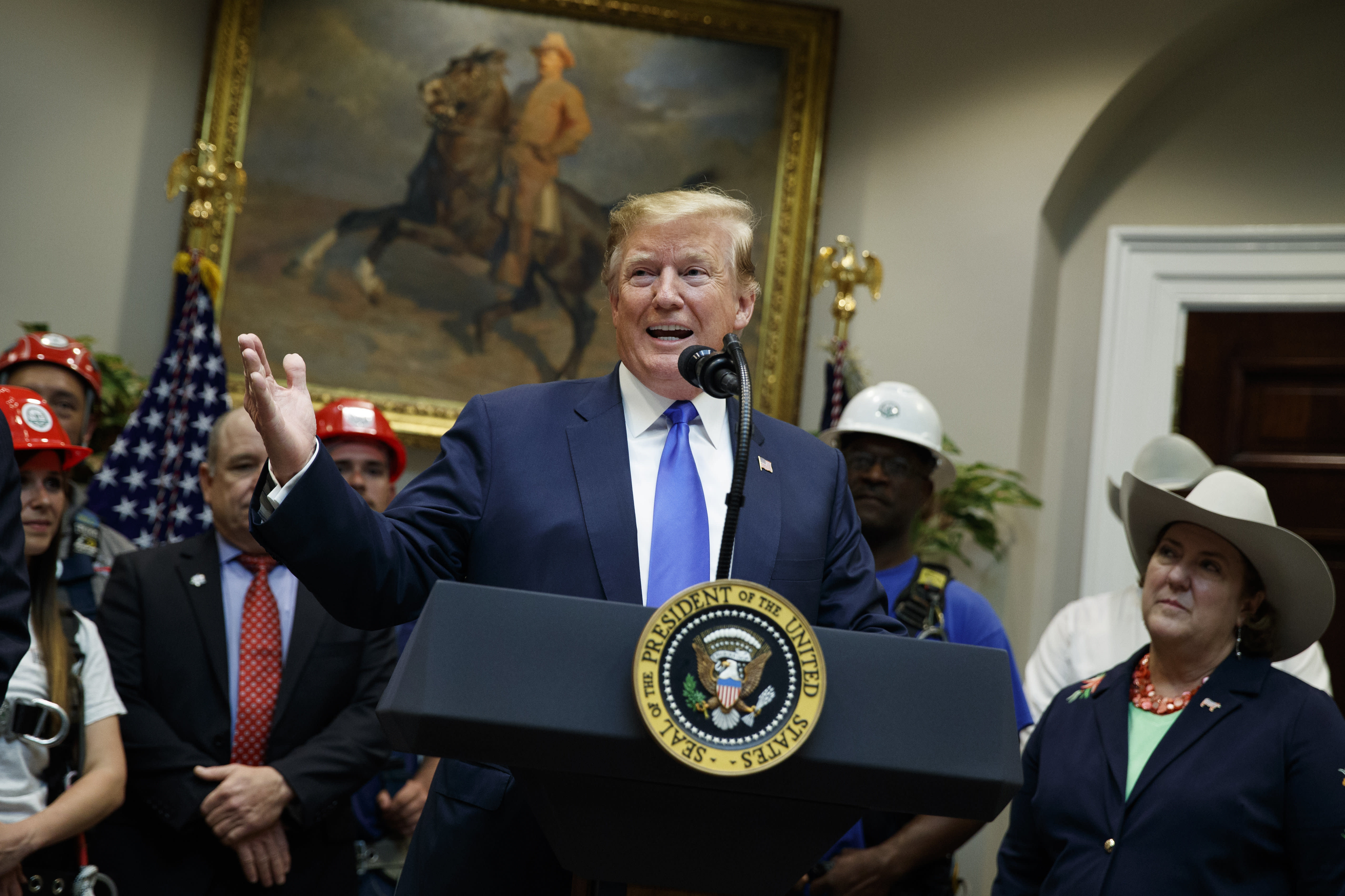
Is Wall Street hedging on a Trump win in 2020? Let our experts tell you why.
“The economy, stupid!” It’s a famous quote that Bill Clinton campaigner James Carville used in 1992. And the Ragin’ Cajun was right – odds are, when it comes to Americans casting a vote in presidential elections – the economy calls the shots on how they vote. And despite the scandals, the Tweets, the gaffes and the indictments – the economy under President Donald Trump is booming. So, while convention and traditional politics would likely write of the presidency of Donald Trump as a one term wonder - an article about a recent report commissioned by Goldman Sachs says Democrats and pundits shouldn’t be so sure to write him off. ‘In a comprehensive report released late Saturday, the investment bank gave its preliminary thoughts on a general election that’s still more than a year away. While Trump re-election is far from assured, Goldman’s economists believe the president is bolstered by “the advantage of first-term incumbency and the relatively strong economic performance,” in what is sure to be a “close call” election.’ - Yahoo! Finance Are you covering the race for 2020? Should Democrats change their focus away from the scandals and the Mueller Report and focus on economics? If not, what are the issues that will sway undecideds next year? And what will a potential run by an Independent candidate mean for the race? There are so many storylines already at play and a long way to go before November 2020 – but the election is already daily news and that’s where our experts can help. Dr. Marc Clauson is a professor of history and law at Cedarville. Marc is an expert in the fields of political and economic philosophy Dr. Clauson is available to speak with media – simply click on his icon to arrange an interview.

Trading rights for favors – Are Brunei’s new anti-LGBT laws all about pleasing Saudi Arabia?
Brunei is now the first country in Southeast Asia to adopt a country-wide sharia penal code – this decision swiftly brought with it concern and condemnation from around leaders around the globe and organizations like Amnesty International. The Sultan of Brunei laid down new and harsh anti-LGBT laws earlier this month that under a new penal code that now includes death by stoning for gay sex and adultery. But why so harsh and why now? Brunei’s economy is faltering, and some are wondering if these moves are simply to curry favor and please countries like Saudi Arabia as it seeks distance from the dependence it has on China and America as trading partners. University of Mary Washington’s Professor of Political Science and International affairs Elizabeth Freund Larus recently weighed in on the situation with media. "Early measures included the 2015 ban on the celebration of Christmas and jail terms for homosexuality. The most recent measures announced Wednesday put some teeth into Brunei’s penal code." April 05 – MEAWW Are you covering this topic? Do you need an expert to help explain the political and economic situation Brunei faces and what these measures may mean in the short and long term for the small country? That’s where our experts can help. Professor Larus teaches political science at the University of Mary Washington and is an #expert on China and the field of Asian studies. She is available to speak to other media pursuing this this subject – simply click on her icon to arrange an interview.


Deal or no deal – is Britain about to go bust with Brexit?
It’s pretty much deal or no deal. After a couple of years on negotiating, glad-handing, spinning and voting – Britain is now looking down the barrel of leaving the European Union with no deal in place. With two years to figure things out, it seems infighting and politics have help Theresa May and Britain in a stagnant stalemate when it comes to agreeing on any sort of term for the U.K. to leave the E.U with some semblance of a trade agreement in place. So, what can we expect in the days before April 12? What’s the hold-up now? Is the economy really in jeopardy and what will that mean globally? And is it a big deal? Is it a matter of renegotiating after the deadline or does Britain risk leaving an enormous amount of trade leverage on the table? There’s so much up in the air right now with Brexit - and that’s where the experts from Cedarville University can help. Dr. Glen Deurr's research interests include nationalism and secessionism, comparative politics, and international relations theory. Glen is available to speak to media regarding the rise of extremism – simply click on his icon to arrange an interview.
Another shutdown? Let our experts explain if there's a reason to worry about the economy
It lasted longer than a month, and for now we’re on a three-week reprieve – but the federal government shutdown that saw Democrats and Republican dueling at a safe 20 paces while 800,000 federal employees were watching unpaid from the sidelines is over. But from the financial side, the big picture for America was hardly touched. Will that still be true this time around? But with the shutdown over and employees back to work, for three weeks while politicians negotiate a final deal – there are still a lot of questions outstanding? What industries are most vulnerable to another government stoppage? Is there anything that can be done politically to stop federal government employees from being used as pawns in future negotiations? Despite the economy carrying on – are investors dissuaded by these shutdowns? David M. Primo is the Ani and Mark Gabrellian Professor and an associate professor of political science and business administration at the University of Rochester. He is the author of three books and is a go-to for media in New York and nationally for his expertise on topics like this. David is available to speak with media regarding the economic effects of the shutdown – simply click on his icon to arrange an interview.



Preaching to choirs, playing it safe and not saying much at the State of the Union
One Tuesday evening – pretty much everything seemed to go to plan. President Trump stuck to script, Republicans stood and clapped on cue, Democrats scoffed and scowled when required and we all listened closely for a total of one hour and twenty minutes – the second longest SOTU ever given. President Trump called for unity, touted the economy, acknowledged the white-wave of females on Congress and how there are now more women employed in America. He played to his base on topics like immigration and abortion and then oddly let everyone know that the only thing holding America back were expensive wars and pointless investigations. He also thanked veterans for defeating the Nazis. Left out was any mention of climate change or Russia. Of course, afterwards the Democrats responded, politicians flocked to reporters and pundits weighed in. President Trump played it safe and kept to the prompter, and according to CBS Evening News an overwhelming 76 percent of Americans liked what they heard. But the day after … there are still a few questions to be asked: Did President Trump deliver the speech e needed to deliver? Outside of the beltway, how was this received by voters? Does this point out a pathway for either Democrats or Republicans for 2020? And by not saying much, did Trump say everything he needed to? If you are covering, let an expert from the University of Mary Washington help. Dr. Stephen Farnsworth is professor of political science and international affairs at the University of Mary Washington. A published author and a media ‘go-to’ on U.S. politics, he is available to speak with media regarding this issue. Simply click on his icon to arrange an interview.
