Experts Matter. Find Yours.
Connect for media, speaking, professional opportunities & more.

The warnings are dire: artificial intelligence is poised to blow through all sectors of the economy, not just manufacturing, destroying jobs and shaking the very foundations of the workforce. Source:


Somewhere in California Mark Zuckerberg is smiling. That’s because earlier this week his company saw a $934 million reduction in its income-tax provision all coming from a new rule affecting the accounting for stock payments to employees. And Facebook isn’t alone. The new rules affect all companies like Microsoft and other corporations that rely on employee stock compensation as incentive. And with this week’s announcement of close to a billion dollars – expect more to get on board. But with accounting rules like this – who wins, who pays and obviously, someone out there must be making up the difference? Is this good for the economy or just another example of how enormous companies are finding ways of paying fewer and fewer taxes? Clever accounting is never simple to explain – that’s where the Kelly School of Business can help. Laureen Maynes is the Executive Associate Dean of Faculty and Research at The Indiana University’s Kelly School of Business. Laureen is an expert in the fields accounting and financial services and is a leading opinion on this topic. She can help explain how companies are reaping hundreds of millions of dollars in benefits and why it is allowed. Simply click on her icon to arrange an interview. Source:


Since Jan. 20, 2017, America has seen a new style of leadership and authority under President Donald Trump. Trade agreements that were already in place are now under renegotiation, and even agreements like the Trans Pacific Partnership that were expected to be scrutinized by Congress have all but been abandoned. On the international stage, even long held reservations and hesitations to comment on sensitive topics like Taiwan and the ‘One China’ policy seem to be off the table when brought up in public conversation. So, what will this mean for the short- and long- term relationships between the world’s two most powerful countries? Can we expect conflict, military posturing, trade wars and currency battles? Or will the two sides have to simply ‘re-learn’ how to negotiate and cooperate in the new Trump era? But a new person in charge isn’t just an American issue. China too may see a change in leadership at its highest levels this fall. That is a factor that has many watching and wondering about that country’s future direction. For America’s economy, and the global economy – there is much at stake and many world leaders are watching. A recent discussion at the Brookings Institution explored the expectations for China’s leadership change and the prospects for U.S.-China relations in the interim. Dr. Dennis Hickey is a global studies expert specializing in Asian politics and American foreign policy at Missouri State University. His extensive experience and perspective have made him one of the leading opinions on this topic. Simply click of Dr. Hickey’s icon to arrange an interview. Source:

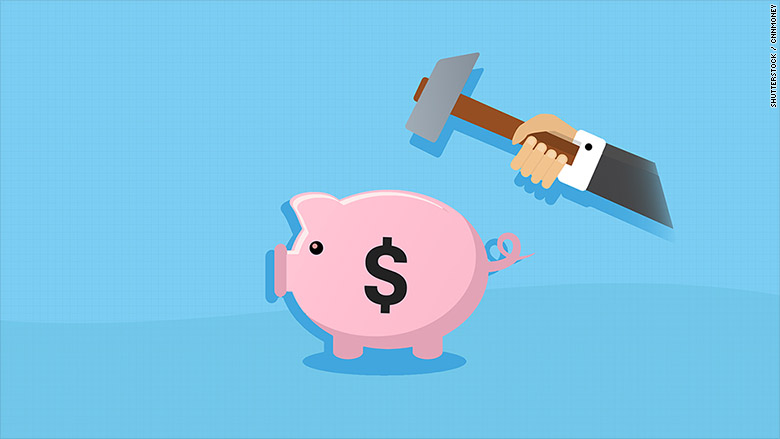
More than half of Americans do not have $500 in savings
Nearly six in 10 Americans do not have enough savings to cover a $500 or $1,000 unplanned expense, according to a new report from Bankrate. Only 41 percent of adults reported having enough in their savings account to cover a surprise bill of this magnitude. A little more than 20 percent said they would put it on a credit card, the report said, while 20 percent would cut their spending and 11 percent would turn to friends and family for financial assistance. So, is there cause to worry? Just how leveraged is the average American and what does this mean when looking at the long-term forecast of the country’s economy? America seems to finally be back from the financial meltdown it faced in 2008. Is the bubble about to burst again? Dr. David Mitchell is a professor of economics and a director of both the Bureau of Economic Research and Center for Economic Education at Missouri State University. He is a respected expert in economic forecasting and is ready to speak to this important topic. Click on his icon to arrange an interview. Source:

Family firms are a strong contributing factor to the Canadian economy
Great comments by Galen Weston on how Family Firms benefit the Canadian economy. With their patience and long-term vision, family firms can make tough strategic decisions that non-family firms cannot, due to management’s short-term focus. Source:


#Rio2106 – A Billion Dollar Party?
Is hosting the Summer Games worth it for an economy in shambles? On Aug. 5, the Olympic Games begin in Rio de Janiero. What should be a point of pride for Brazil has been reduced to a cause for concern and worry for athletes, tourists, and international organizers. Hosting the Olympics is not cheap. It can cost the host country billions of dollars in infrastructure costs. During the bidding process, host cities make bold promises of upgrades to transportation, modernized and safe housing for athletes and new event facilities. Brazil’s economy is currently is a serious recession. Some economists have even said that the economy in this once powerful South American nation has not been in this poor a state since 1901. Professor Tom Smith specializes in cultural economics and the economics of the arts at Emory University’s Goizueta Business School. Professor Smith is available to speak to media about whether or not the economic risk of hosting the Summer Games outweighs the reward. He can also speak to the costs, benefits and long term effects can have on a country. Source:



Humber Experts Available to Provide Insight into Canadian Economic Forecast
Professor Alvina Cassiani is available to provide commentary on the current Canadian economic forecast. Source:


Regulation, Sharing, Innovation
As Airbnb and Uber take America by storm, are cities in the right or wrong to clamp down, regulate and get their cut of the sharing economy? Emory’s Charles S. Goetz of the Goizueta Business School can help explain if government is in the right and how law makers need to adapt to the economic innovation and modern ways of doing business. Source: