
Experts Matter. Find Yours.
Connect for media, speaking, professional opportunities & more.

Amanda Hewes, MS, education program manager at ChristianaCare’s Gene Editing Institute, has been named one of the 2023 Outstanding Delaware Women in STEM by Million Women Mentors, an international movement dedicated to encouraging girls and women to pursue careers in science, technology, engineering and math (STEM). Hewes’ selection spotlights her dedication to engaging young people in the science of gene editing by introducing the Gene Editing Institute’s CRISPR in a BoxTM educational toolkit into classrooms across Delaware and her commitment to bridging disparities in STEM education. “I’m overjoyed to be honored among so many amazing women in this state,” Hewes said. “It’s humbling to be considered and to stand alongside them. All of these women foster and lead dynamic communities of young women that inspire me every day. I hope that I can do the same by making young women in this state feel empowered through the work that I do.” Hewes joined ChristianaCare’s Gene Editing Institute in 2017 with a focus on expanding its CRISPR gene editing system in a cell-free environment. She was first author in a publication in Nature that established the highly innovative “gene editing on a chip” protocol that allowed CRISPR to edit DNA outside of the cell for the first time. This methodology enables researchers to take fragments of DNA extracted from human cells, place them in a test tube and precisely engineer multiple changes to the genetic code. This gene editing system eventually led to the creation of the CRISPR in a Box™ toolkit. This innovative educational resource provides a way for students to learn about this exciting frontier of science through a hands-on exercise in which they use CRISPR gene editing to disrupt a synthetic gene within a plasmid. The simplicity of this experiment allowed for the reaction to be developed into a remarkable teaching tool that can be brought into most school laboratories containing basic laboratory equipment. Once CRISPR in a Box™ was developed, Hewes recognized the potential it could have for high school and college students. She took on a new role as education program manager and expanded the Gene Editing 360™ platform, which is the Gene Editing Institute’s suite of educational tools for engaging students and the public. “Amanda has set us on a tremendous path toward providing more educational opportunities for Delaware students,” said Eric Kmiec, Ph.D., director of ChristianaCare’s Gene Editing Institute. “She’s inspired young women in multiple states and has created so much of this program with her own ingenuity and passion.” Hewes was honored alongside 10 other women by Gov. John Carney, Lt. Gov. Bethany Hall-Long and others at the Delaware State House with the signing of a proclamation to declare March 24, 2023, as “Delaware Women and Girls in STEM Day.”


Aston Medical School given full approval by the General Medical Council
Aston Medical School has been given full approval by the General Medical Council (GMC), meaning they can award degrees to graduating students for the first time this year. The Medical School at Aston University completed the GMC’s rigorous quality assurance process, which began in 2016. The decision, ratified by the GMC’s Council, means Aston Medical School can be added to the list of UK bodies able to award a primary medical qualification. The approval means that from this summer, medical graduates from Aston University will be added to the medical register and will be able to join the UK’s healthcare workforce as doctors. Aston Medical School welcomed its first students in 2018 and will be graduating its first cohort of students at its graduation ceremonies taking place in July 2023. The school was built on the ethos of educating medical professionals of the future, those who come from a wide cross section of society, and in particular those from disadvantaged communities where they have traditionally faced more barriers to accessing and completing medical education. Professor Helen Cameron, Dean of Medical Education at Aston Medical School, said: "This is a really exciting moment for Aston Medical School, and we are delighted for our students, especially our pioneer cohort who will graduate in July with an Aston University medical degree and contribute to the UK's healthcare workforce. Our focus on providing excellent education and support to a diverse range of students, including those from disadvantaged communities, has been at the heart of our mission since the school's inception. “We are proud that through commitment, team-work, and partnership with our students, we have met the GMC's rigorous quality assurance standards and we look forward to continuing to educate the healthcare leaders of the future.” Professor Aleks Subic, Vice-Chancellor and Chief Executive of Aston University, said: "Receiving full approval from the General Medical Council is a significant milestone for Aston Medical School and Aston University in general, and a testament to the hard work and dedication of our faculty, staff and students. “This achievement enables us to continue our mission of developing the next generation of medical professionals, with a particular focus on promoting diversity and inclusion in healthcare education and improving healthcare in the community. “We are proud to be adding new exceptional talent to the UK’s healthcare workforce and look forward to the contributions our graduates will make to the field." Professor Colin Melville, the GMC’s Medical Director and Director of Education and Standards, said: “The GMC maintains high standards and has a very rigorous process before a new medical school can award primary medical qualifications to its students. Aston University has worked hard, over a number of years, to meet our quality assurance standards. I’m delighted that, thanks to that hard work, they now have GMC approval to award medical degrees.” The GMC oversees both undergraduate and postgraduate medical education and training in the UK. Any institution looking to establish a new medical school or training programme must demonstrate it meets the GMC’s standards by being subject to an extensive period of quality assurance.


Aston University celebrates becoming a University of Sanctuary with official event
Aston University officially celebrated becoming a University of Sanctuary with an event held on 16 May for all those who contributed to achieving this status. The University was awarded University of Sanctuary status in December 2022, joining a network of higher education institutions across the UK working to develop support for those displaced by humanitarian crises. The celebration was hosted by Aston University Vice-Chancellor and Chief Executive, Professor Aleks Subic. Guests included Councillor John Cotton, Birmingham City Council Cabinet member for Social Justice, Community Safety and Equalities, who made a special award presentation. The event programme also included a performance by poet Loraine Masiya Mponela, who herself was an asylum seeker and conversations with recipients of Ernest Edward Scholarships, a sanctuary scholarship scheme for students who have sought refuge in the UK. The scheme was set up by Aston University in 2022 due to a generous donation by prominent businessperson Matthew Crummack. Universities of Sanctuary is an initiative to recognise and celebrate the good practice of institutions welcoming people seeking sanctuary through facilitated access to higher education, supporting local refugee communities and taking an active role in learning about the issues and obstacles faced by this group in pursuing university-level education. Professor Aleks Subic, Vice-Chancellor and Chief Executive of Aston University, said: “I am delighted to have had this opportunity to host a celebration event to thank everyone who has helped us achieve the University of Sanctuary status. “Aston University is committed to supporting people seeking sanctuary through its efforts to deepen our understanding of the issues surrounding asylum seekers and refugees, providing a welcoming environment for sanctuary students, and working with individuals and communities beyond the campus to promote the values and principles of sanctuary. “Being a University of Sanctuary is key to our Civic Agreement: our commitment to make Birmingham a better place for everyone who lives, works, and studies here. Birmingham." Councillor John Cotton, Birmingham City Council Cabinet member for Social Justice, Community Safety and Equalities, said: “Birmingham is proud to be a City of Sanctuary, with its long history of offering refuge to those fleeing war, persecution and tyranny around the globe. In these troubled times, standing up for the principles of sanctuary and refuge is more important than ever. “I’m delighted that Aston University has joined the family of Universities of Sanctuary and is one of the many important institutions in our city that actively extends the hand of friendship to those seeking refuge and the chance to rebuild their lives here in Birmingham.”

Aston University predicted as one of the UK’s leading centres for lab-made meat
• Aston University named as one of the UK’s leaders in the potential future of food • Highlighted for research, teaching, public outreach, industry links and location • Process uses cells taken from animals via biopsy, so doesn’t involve slaughter. Aston University has been named as one of the UK’s leading lights in what is predicted to be the future of food - lab-made meat. The University is one of 17 higher education institutions that are expected to play a major role in the development of cultivated meat. Cultivated or lab-grown meat is made from cells taken from animals via biopsy. The cells are used to create meat which doesn’t involve the slaughter of animals. The process promises fewer greenhouse gases and a decrease in land required for its production compared to traditional livestock. The list of universities has been compiled by Cellular Agriculture UK, a non-profit organisation which promotes the UK’s so-called ‘cell-ag’ sector. Aston University is one of five institutions they chose to highlight in their report Mapping the potential for UK universities to become research and teaching hubs for cellular agriculture. Aston University is described in the report as having potential to be an anchor institution for cellular agriculture, and was highlighted for its research and teaching, public outreach work, links with emerging industry and its central location. Dr Eirini Theodosiou, senior lecturer in the School of lnfrastructure and Sustainable Engineering, focuses on ways to produce enough cell mass to create the meat. She said: “This is still a relatively new food technology. Unlike many others we work on biomaterials for microcarriers/scaffolds for cultivated meat, which puts us in a very strong position, in the UK at least.” Meanwhile Dr Jason Thomas’ work explores the psychology behind supporting people to accept lab-made food. Although many people are willing to try it, there are still many who are reluctant to do so. A recent study of the US and UK found that 35% of meat eaters and 55% of vegetarians claimed they were too disgusted by the idea of cultured meat to even try it. A key goal of his research is how to support people to not just try it but to integrate it into their diet. Dr Thomas said: “We are interested in finding out what factors can influence consumer purchase of and consumption of lab-made meat.” “The engineering/psychology link is one of our USPs and is something Aston University can capitalise on; learning what the consumer wants from cultivated meat, and what would encourage them to consume it, using psychological science, and then incorporating this directly into the production process via engineering. “It is a relatively new food technology, and much work still needs to be done to make it affordable, acceptable and on a massive scale, but it could easily end up being one of the most transformative new foods of the 21st century.”

Allen Friedland, M.D., MACP, FAAP, has been recognized with the Dema C. Daley Founders Award for his national impact as an educator, innovator and leader in internal medicine. Given by the Alliance for Academic Internal Medicine, the award honors internal medicine doctors who have greatly influenced undergraduate and graduate medical education and the development of training programs in internal medicine. Watch the video of Friedland’s acceptance speech here. “Dr. Friedland has been a tireless advocate and innovator for internal medicine, medicine-pediatrics, and residency education over two decades,” said Vinay Maheshwari, M.D., MHCDS, Hugh R. Sharp Jr., Chair of Medicine and physician executive of the Medical Group at ChristianaCare. “He is a mentor to countless physicians across the country and beloved by those who have had the privilege of working alongside him. What is most evident about Dr. Friedland is how much he cares about those he has taught locally and nationally – all of them will forever be a part of his family. This award is a testament to a lifetime career dedicated to graduate medical education.” Friedland is ChristianaCare’s section chief of Medicine-Pediatrics (Med-Peds) and has served as the director of ChristianaCare’s combined Internal Medicine-Pediatrics residency program for 25 years. He also teaches medical students at ChristianaCare, which is a branch campus of Sidney Kimmel Medical College at Thomas Jefferson University and Philadelphia College of Osteopathic Medicine. His accomplishments include: Spearheading the development of what is now known as ChristianaCare’s Center for Special Health Care Needs, dedicated to providing primary care and specialty care for adults ages 18 and older with complex medical and social conditions that originated in childhood. Creating the elective Leadership Excellence Education for Residents/Fellows (LEED-R), which partners emerging resident leaders with ChristianaCare senior leaders for mentorship, real-world experience in applying leadership education and the ability to share those learnings with other residents. Known affectionately by his colleagues as “Mr. Med-Peds,” Friedland has held leadership positions with all of the major national med-peds organizations. He co-founded the Med-Peds Academic Channel and received the Leadership Award from the Medicine-Pediatrics Program Directors Association. He recently launched a professional association named the Association of Med-Peds Physicians. Kimberly Bates, M.D., FACP, FAAP, director of the Internal Medicine Residency Program at Dignity Health – St. Rose Dominican, nominated Dr. Friedland for the award. Bates is a ChristianaCare Med-Peds alumna (Class of 2003). “Dr. Friedland is an exceptional human being and a natural leader and mentor who leaves a powerful imprint on every person he meets, whether they are students, residents, physician colleagues or patients,” Bates said. “He has dedicated his career to medical education, and he takes an innovative and problem-solving approach to all that he does.”


Gene Editing Institute Opens a Unique Learning Lab for High School and College Students
Free program uses CRISPR in a Box™ toolkit to teach the power of gene editing To inspire the next generation of students to pursue careers in STEM (science, technology, engineering and math) and learn about the power of genomic science, ChristianaCare’s Gene Editing Institute has launched a new Learning Lab on its premises that offers educational programming about revolutionary CRISPR gene editing technology. Located next to the Gene Editing Institute’s lab on the University of Delaware’s STAR Campus, the Learning Lab is a physical space that provides an immersive field trip experience for upper-level high school students and college undergraduates who may not have access at their schools to a laboratory to conduct gene editing experiments. There is no cost for schools to use the lab or for the materials to conduct the experiment. The Gene Editing Institute wants to ensure that all schools have equal opportunity to participate in educational programming at the lab. Students using the lab can perform a gene editing experiment in a single day using the Gene Editing Institute’s innovative CRISPR in a Box™ educational toolkit. All materials in the kit are safe, synthetic materials, and allow students to perform CRISPR gene editing with non-infectious E. coli bacteria. They will be able to see an appearance change indicating gene editing has occurred at the end of their experiment. “Students around the country, no matter where they go to school, have the potential to be scientists, researchers and laboratory technicians,” said Eric Kmiec, Ph.D., executive director and chief scientific officer of ChristianaCare’s Gene Editing Institute. “Our hope is that by creating access and space for students to explore, we can inspire the next generation of students to pursue STEM careers. The Learning Lab allows us to help cultivate the next generation of genetic scientists and strengthen Delaware and our region as a leader in biotechnology.” Education Program Manager Amanda Hewes, MS, developed the Learning Lab after noticing a problem that was undercutting the opportunities of teachers to bring gene editing experiments into the classroom — a lack of space and equipment. Amanda Hewes, education program coordinator, assists students from Wilmington Charter School with their samples of DNA during a Learning Lab experiment. “We don’t want anything to hinder the way students learn about CRISPR gene editing,” Hewes said. “If a student feels like there are too many steps, or a teacher doesn’t have an essential piece of equipment, then we’ve lost an opportunity to bring the next generation of scientists into the lab. We’re striving to break down as many barriers as possible for students.” Learning real-world applications of gene editing The Learning Lab also allows students to speak directly with experts in the field about careers in biotechnology and gene editing as they learn the difference between such things as phenotypic and genotypic readouts in their gene editing experiments. This gives students the chance to ask about the real-world application of genome experiments in a research lab. It also lets them think about their place in a lab setting. “I’ve never been in an actual lab setting before,” said Shiloh Lee, a junior at the Charter School of Wilmington, at a recent class. “I think it is very, very cool to be able to experience it.” “I’ve learned a lot of new skills with the micropipetting,” said Pauline Zhuang, a senior at The Charter School of Wilmington. “We don’t have the same resources at our school. The CRISPR in a Box is such a great resource. My classmates and I have been able to experience, firsthand, what it is like to actually do gene editing.” Through the program, the Gene Editing Institute hopes to educate 1,000 students by spring 2024. Currently, the lab is on track to engage more than 200 students by the end of the spring 2023 semester. CRISPR stands for Clustered Regularly Interspaced Short Palindromic Repeats, which are the hallmark of a bacterial defense system that forms the basis for CRISPR-Cas 9 genome editing technology. The CRISPR technology enables researchers to modify genes in living cells and organisms and may make it possible to correct mutations at precise locations in the human genome in order to treat genetic causes of disease. For more information about the Learning Lab and the educational program, email geneeditinginstitute@christianacare.org.


• Professor Stephen Garrett to discuss why the UK needs to up its game in maths education • He has a particular interest in the development of mathematical and computational solutions to real-world problems • Lecture will take place on Thursday 27 April at Aston University. The latest inaugural lecture at Aston University is to explore why the UK’s low level of mathematical skills don’t add up to a positive digital future. Professor Stephen Garrett will discuss why school-level mathematics is so important in many areas of life and will discuss how the UK needs to up its game in maths education at all ages for the modern digital world. Currently just half of all 16–19-year-olds study maths. Earlier this year the Prime Minister proposed that all students in England will study some form of maths to 18 to ensure that they leave school better equipped for the jobs of the future. Professor Garrett joined Aston University in spring 2022 as Pro-Vice-Chancellor and Executive Dean of the College of Engineering and Physical Sciences. Stephen said: “I’m concerned that too many people are being held back by poor maths – not just at work but in their personal lives too. “Improving maths skills at any age can bring confidence, open up more career options and benefit the local and national economy.” The professor’s research interests are at the boundary of applied mathematics with other disciplines and he has a particular interest in the development of mathematical and computational solutions to real-world problems. He is primarily known as a fluid dynamicist. As an academic leader, Stephen is particularly keen to develop synergies between teaching and research activities and believes the two should always be closely intertwined within the HE sector. His talk, My career in five equations, and the importance of mathematics education in the digital age will also explore the importance of some key areas of school mathematics in his research career. He will start with traditional classroom maths topics such as Pythagoras and trigonometry, through familiar sounding concepts and will link them to a model for fluid flows relevant to the aerospace sector. The free event will take place on the University campus at Conference Aston, on Thursday 27 April from 6 pm to 8 pm and will be followed by a drinks reception. To sign up for a place visit https://www.eventbrite.co.uk/e/an-inaugural-lecture-by-professor-aniko-ekart-tickets-516518760517 There are more details about mathematics courses at Aston University at https://www.aston.ac.uk/courses/mathematics

Aston University and asbestos consultancy to use AI to improve social housing maintenance
• Aston University and Thames Laboratories enter 30-month Knowledge Transfer Partnership • Will use machine-learning and AI to create a maintenance prioritisation system • Collaboration will reduce costs, emissions, enhance productivity and improve residents' satisfaction. Aston University is teaming up with asbestos consultancy, Thames Laboratories (TL) to improve efficiency of social housing repairs. There are over 1,600 registered social housing providers in England, managing in excess of 4.4 million homes. Each of these properties requires statutory inspections to check gas, asbestos and water hygiene, in addition to general upkeep. However, there is not currently a scheduling system available that offers integration between key maintenance and safety contractors, resulting in additional site visits and increased travel costs and re-work. Aston University computer scientists will use machine-learning and AI to create a maintenance prioritisation system that will centralise job requests and automatically allocate them to the relevant contractors. The collaboration is through a Knowledge Transfer Partnership (KTP) - a collaboration between a business, an academic partner and a highly-qualified researcher, known as a KTP associate. This partnership builds on the outcomes of TL’s first collaboration with Aston University, by expanding the system developed for the company’s in-house use - which directs its field staff to jobs. The project team will improve the system developed during the current KTP to enable it to interact with client and contractor systems, by combining an input data processing unit, enhanced optimisation algorithms, customer enhancements and third-party add-ons into a single dynamic system. The Aston University team will be led by Aniko Ekart, professor of artificial intelligence. She said: “It is a privilege to be involved in the creation of this system, which will select the best contractor for each job based on their skill set, availability and location and be reactive to changing priorities of jobs." TL, based in Fenstanton, just outside Cambridge, provides asbestos consultancy, project management and training to businesses, local authorities, social housing and education facilities, using a fleet of mobile engineers across the UK. John Richards, managing director at Thames Laboratories, said: “This partnership will allow us to adopt the latest research and expertise from a world-leading academic institute to develop an original solution to improving the efficiency of social housing repairs, maintenance and improvements to better meet the needs of social housing residents.” Professor Ekart will be joined by Dr Alina Patelli as academic supervisor. Dr Patelli brings experience of software development in the commercial sector as well as expertise in applying optimisation techniques with focus on urban systems. She said: “This is a great opportunity to enhance state-of-the-art optimisation and machine learning in order to fit the needs of the commercial sector and deliver meaningful impact to Thames Laboratories.”
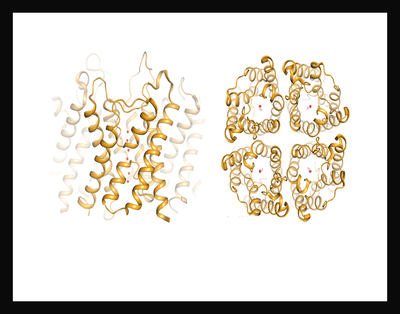
• Leading scientist wins €2.2 million ERC Advanced Grant • The five-year project will explore early dementia interventions through understanding how an aquaporin water channel regulates glymphatic clearance • ERC Advanced Grant funding is amongst the most prestigious and competitive of the EU funding schemes. A world leading scientist in the College of Health and Life Sciences at Aston University has been awarded a €2.2 million ERC Advanced Grant to understand how the movement of a protein known as aquaporin-4 in the brain can help slow cognitive decline. The FORTIFY project, which will run for five years, is led by Professor Roslyn Bill in the School of Biosciences. She will apply her discovery of the movement of aquaporin-4 to understand how the cleaning mechanism in the brain works during sleep. The research will focus on how aquaporin-4 controls the glymphatic system, which is the mechanism that allows us to clear waste products from our brains while we sleep. Her hypothesis is that the movement of aquaporin-4 in the brain changes the effectiveness of this cleansing mechanism - which lessens as people age. A greater understanding of this process could lead to an early intervention treatment that could slow the onset of dementia, such as Alzheimer’s and Parkinson’s Diseases. ERC Advanced Grant funding is amongst the most prestigious and competitive of the EU funding schemes, providing researchers with the opportunity to pursue ambitious, curiosity-driven projects that could lead to major scientific breakthroughs. Professor Bill said: “Every three seconds someone in the world develops dementia and there is no cure. I want to stop that from happening. By understanding the molecular mechanisms of brain waste clearance, we have an opportunity to develop medicines that can slow the onset of dementia, very much in the same way that statins are prescribed to control heart disease”. Roslyn Bill discovered that the water channel protein aquaporin-4 increases the permeability of brain cells to water after a brain or spinal cord injury. Around 60 million people a year suffer such injuries following falls or accidents. For example, after a skiing accident in the French Alps in 2013, Michael Schumacher suffered a severe head injury. He was placed in a medically induced coma and underwent several surgeries to treat his injuries. Until now doctors have only been able to manage the symptoms of brain injury (swelling on the brain) through interventions that may require surgery. Professor Bill and her team are due to start clinical trials in summer 2023, to test a method to stop the swelling from happening in its tracks, building on her discoveries. Roslyn’s new ERC-funded project, FORTIFY, will focus on how aquaporin-4 controls fluid flow in the healthy, uninjured brain. In this round of Advanced Grants, the European Research Council (ERC) is awarding €544 million to 218 outstanding research leaders across Europe, as part of the Horizon Europe programme. The grants will support cutting edge research in a wide range of fields, from medicine and physics to social sciences and humanities. The grant is awarded to established, leading researchers with a proven track-record of significant research achievements over the past decade. The funding will enable the researchers to explore their most innovative and ambitious ideas. Mariya Gabriel, European Commissioner for Innovation, Research, Culture, Education and Youth, said: “ERC grants are a top recognition and a significant commitment from our best researchers. The €544 million funding puts our 218 research leaders, together with their teams of postdoctoral fellows, PhD students and research staff, in pole position to push back the boundaries of our knowledge, break new ground and build foundations for future growth and prosperity in Europe” Maria Leptin, ERC President, added: "These new ERC Advanced Grantees are a testament to the outstanding quality of research carried out across Europe. I am especially pleased to see such a high number of female researchers in this competition and that they are increasingly successful in securing funding. “We look forward to seeing the results of the new projects in the years to come, with many likely to lead to breakthroughs and new advances.”


ChristianaCare Named one of Mogul’s Top 100 Companies with Inclusive Benefits
Recognition affirms ChristianaCare’s deep commitment to inclusion and diversity ChristianaCare has been recognized as one of the Top 100 Companies with Inclusive Benefits by Mogul, a diversity recruitment platform that partners with the world’s fastest-growing companies to attract and advance top diverse talent. ChristianaCare was recognized for both its “diverse hiring practices” and “progressive workplace resources.” “At ChristianaCare, we embrace diversity and show respect to everyone, and we reinforce these behaviors through purposeful actions that enable all our caregivers to serve our neighbors with love and excellence,” said Neil Jasani, M.D., MBA, FACEP, chief people officer at ChristianaCare. “By offering a wide array of inclusive benefits, we more fully support our caregivers in their commitment to being exceptional today and even better tomorrow.” The honor by Mogul is the latest recognition for ChristianaCare’s commitment to inclusion and diversity. ChristianaCare, Delaware’s largest private employer, has committed to being an anti-racism organization and works to ensure that this commitment is reflected through the organization’s policies, programs and practices. (Read more about ChristianaCare’s anti-racism commitment here.) ChristianaCare President and CEO Janice E. Nevin, M.D., MPH, has signed the CEO Action for Diversity & Inclusion Pledge. This pledge outlines a specific set of actions the signatory CEOs will take to cultivate a trusting environment where all ideas are welcomed and employees are empowered to have discussions about diversity and inclusion. More than 3,100 of ChristianaCare’s caregivers also have signed the pledge. ChristianaCare’s inclusion and diversity efforts feature 11 employee resource groups, which connect caregivers who have a common identity or bond with one another. Formed by employees across all demographics – including disability, race, military status, national origin and gender identity – these voluntary, grassroots groups work to improve inclusion and diversity at ChristianaCare. More than 1,350 caregivers participate. ChristianaCare has developed LeadershipDNA, a leadership development program that is specifically targeted to underrepresented caregivers early in their careers. ChristianaCare’s deep commitment to inclusion and diversity also includes: Providing $500,000 in scholarships to 10 high school students in Delaware who plan to pursue degrees in health care. Supporting Project Search, which is a nationally recognized program dedicated to providing education and training to young adults with intellectual and developmental disabilities. Participation in Project Hope, a partnership with external agencies that provides support to individuals who were involved with the criminal justice system. This program creates pathways to meaningful and sustainable employment within ChristianaCare. Participation in Project Veteran through career fairs that target veterans. Elimination of bias in hiring through biannual education for all hiring managers, along with leader demographic scorecards to support building a diverse workforce. Parental leave of 12 weeks for the bonding, care and wellbeing of a newborn, adopted children or foster care children. This policy applies to both birthing and non-birthing caregivers. Behavioral health services for employees that include access to professionals who specialize in mental health care and substance use disorder. A work life employee assistance program that provides free and confidential resources designed specifically for caregivers and their families. Coverage in employee health plans for gender affirmation surgery, which consists of medical and surgical treatments that change primary sex characteristics for individuals diagnosed with gender dysphoria. Autism spectrum disorders benefits – such as diagnostic assessment and treatment – to the children of caregivers who are under 21 years of age. “Our commitment to inclusion and diversity touches all areas of our organization – including our benefits packages,” said Natalie Torres, director of Inclusion & Diversity at ChristianaCare. “We know that when we offer an inclusive benefits package that anticipates the needs of our caregivers, they can better support their families and provide better care to our community.”