
Experts Matter. Find Yours.
Connect for media, speaking, professional opportunities & more.

• Professor Stephen Garrett to discuss why the UK needs to up its game in maths education • He has a particular interest in the development of mathematical and computational solutions to real-world problems • Lecture will take place on Thursday 27 April at Aston University. The latest inaugural lecture at Aston University is to explore why the UK’s low level of mathematical skills don’t add up to a positive digital future. Professor Stephen Garrett will discuss why school-level mathematics is so important in many areas of life and will discuss how the UK needs to up its game in maths education at all ages for the modern digital world. Currently just half of all 16–19-year-olds study maths. Earlier this year the Prime Minister proposed that all students in England will study some form of maths to 18 to ensure that they leave school better equipped for the jobs of the future. Professor Garrett joined Aston University in spring 2022 as Pro-Vice-Chancellor and Executive Dean of the College of Engineering and Physical Sciences. Stephen said: “I’m concerned that too many people are being held back by poor maths – not just at work but in their personal lives too. “Improving maths skills at any age can bring confidence, open up more career options and benefit the local and national economy.” The professor’s research interests are at the boundary of applied mathematics with other disciplines and he has a particular interest in the development of mathematical and computational solutions to real-world problems. He is primarily known as a fluid dynamicist. As an academic leader, Stephen is particularly keen to develop synergies between teaching and research activities and believes the two should always be closely intertwined within the HE sector. His talk, My career in five equations, and the importance of mathematics education in the digital age will also explore the importance of some key areas of school mathematics in his research career. He will start with traditional classroom maths topics such as Pythagoras and trigonometry, through familiar sounding concepts and will link them to a model for fluid flows relevant to the aerospace sector. The free event will take place on the University campus at Conference Aston, on Thursday 27 April from 6 pm to 8 pm and will be followed by a drinks reception. To sign up for a place visit https://www.eventbrite.co.uk/e/an-inaugural-lecture-by-professor-aniko-ekart-tickets-516518760517 There are more details about mathematics courses at Aston University at https://www.aston.ac.uk/courses/mathematics


Aston University and asbestos consultancy to use AI to improve social housing maintenance
• Aston University and Thames Laboratories enter 30-month Knowledge Transfer Partnership • Will use machine-learning and AI to create a maintenance prioritisation system • Collaboration will reduce costs, emissions, enhance productivity and improve residents' satisfaction. Aston University is teaming up with asbestos consultancy, Thames Laboratories (TL) to improve efficiency of social housing repairs. There are over 1,600 registered social housing providers in England, managing in excess of 4.4 million homes. Each of these properties requires statutory inspections to check gas, asbestos and water hygiene, in addition to general upkeep. However, there is not currently a scheduling system available that offers integration between key maintenance and safety contractors, resulting in additional site visits and increased travel costs and re-work. Aston University computer scientists will use machine-learning and AI to create a maintenance prioritisation system that will centralise job requests and automatically allocate them to the relevant contractors. The collaboration is through a Knowledge Transfer Partnership (KTP) - a collaboration between a business, an academic partner and a highly-qualified researcher, known as a KTP associate. This partnership builds on the outcomes of TL’s first collaboration with Aston University, by expanding the system developed for the company’s in-house use - which directs its field staff to jobs. The project team will improve the system developed during the current KTP to enable it to interact with client and contractor systems, by combining an input data processing unit, enhanced optimisation algorithms, customer enhancements and third-party add-ons into a single dynamic system. The Aston University team will be led by Aniko Ekart, professor of artificial intelligence. She said: “It is a privilege to be involved in the creation of this system, which will select the best contractor for each job based on their skill set, availability and location and be reactive to changing priorities of jobs." TL, based in Fenstanton, just outside Cambridge, provides asbestos consultancy, project management and training to businesses, local authorities, social housing and education facilities, using a fleet of mobile engineers across the UK. John Richards, managing director at Thames Laboratories, said: “This partnership will allow us to adopt the latest research and expertise from a world-leading academic institute to develop an original solution to improving the efficiency of social housing repairs, maintenance and improvements to better meet the needs of social housing residents.” Professor Ekart will be joined by Dr Alina Patelli as academic supervisor. Dr Patelli brings experience of software development in the commercial sector as well as expertise in applying optimisation techniques with focus on urban systems. She said: “This is a great opportunity to enhance state-of-the-art optimisation and machine learning in order to fit the needs of the commercial sector and deliver meaningful impact to Thames Laboratories.”

• Leading scientist wins €2.2 million ERC Advanced Grant • The five-year project will explore early dementia interventions through understanding how an aquaporin water channel regulates glymphatic clearance • ERC Advanced Grant funding is amongst the most prestigious and competitive of the EU funding schemes. A world leading scientist in the College of Health and Life Sciences at Aston University has been awarded a €2.2 million ERC Advanced Grant to understand how the movement of a protein known as aquaporin-4 in the brain can help slow cognitive decline. The FORTIFY project, which will run for five years, is led by Professor Roslyn Bill in the School of Biosciences. She will apply her discovery of the movement of aquaporin-4 to understand how the cleaning mechanism in the brain works during sleep. The research will focus on how aquaporin-4 controls the glymphatic system, which is the mechanism that allows us to clear waste products from our brains while we sleep. Her hypothesis is that the movement of aquaporin-4 in the brain changes the effectiveness of this cleansing mechanism - which lessens as people age. A greater understanding of this process could lead to an early intervention treatment that could slow the onset of dementia, such as Alzheimer’s and Parkinson’s Diseases. ERC Advanced Grant funding is amongst the most prestigious and competitive of the EU funding schemes, providing researchers with the opportunity to pursue ambitious, curiosity-driven projects that could lead to major scientific breakthroughs. Professor Bill said: “Every three seconds someone in the world develops dementia and there is no cure. I want to stop that from happening. By understanding the molecular mechanisms of brain waste clearance, we have an opportunity to develop medicines that can slow the onset of dementia, very much in the same way that statins are prescribed to control heart disease”. Roslyn Bill discovered that the water channel protein aquaporin-4 increases the permeability of brain cells to water after a brain or spinal cord injury. Around 60 million people a year suffer such injuries following falls or accidents. For example, after a skiing accident in the French Alps in 2013, Michael Schumacher suffered a severe head injury. He was placed in a medically induced coma and underwent several surgeries to treat his injuries. Until now doctors have only been able to manage the symptoms of brain injury (swelling on the brain) through interventions that may require surgery. Professor Bill and her team are due to start clinical trials in summer 2023, to test a method to stop the swelling from happening in its tracks, building on her discoveries. Roslyn’s new ERC-funded project, FORTIFY, will focus on how aquaporin-4 controls fluid flow in the healthy, uninjured brain. In this round of Advanced Grants, the European Research Council (ERC) is awarding €544 million to 218 outstanding research leaders across Europe, as part of the Horizon Europe programme. The grants will support cutting edge research in a wide range of fields, from medicine and physics to social sciences and humanities. The grant is awarded to established, leading researchers with a proven track-record of significant research achievements over the past decade. The funding will enable the researchers to explore their most innovative and ambitious ideas. Mariya Gabriel, European Commissioner for Innovation, Research, Culture, Education and Youth, said: “ERC grants are a top recognition and a significant commitment from our best researchers. The €544 million funding puts our 218 research leaders, together with their teams of postdoctoral fellows, PhD students and research staff, in pole position to push back the boundaries of our knowledge, break new ground and build foundations for future growth and prosperity in Europe” Maria Leptin, ERC President, added: "These new ERC Advanced Grantees are a testament to the outstanding quality of research carried out across Europe. I am especially pleased to see such a high number of female researchers in this competition and that they are increasingly successful in securing funding. “We look forward to seeing the results of the new projects in the years to come, with many likely to lead to breakthroughs and new advances.”


ChristianaCare Named one of Mogul’s Top 100 Companies with Inclusive Benefits
Recognition affirms ChristianaCare’s deep commitment to inclusion and diversity ChristianaCare has been recognized as one of the Top 100 Companies with Inclusive Benefits by Mogul, a diversity recruitment platform that partners with the world’s fastest-growing companies to attract and advance top diverse talent. ChristianaCare was recognized for both its “diverse hiring practices” and “progressive workplace resources.” “At ChristianaCare, we embrace diversity and show respect to everyone, and we reinforce these behaviors through purposeful actions that enable all our caregivers to serve our neighbors with love and excellence,” said Neil Jasani, M.D., MBA, FACEP, chief people officer at ChristianaCare. “By offering a wide array of inclusive benefits, we more fully support our caregivers in their commitment to being exceptional today and even better tomorrow.” The honor by Mogul is the latest recognition for ChristianaCare’s commitment to inclusion and diversity. ChristianaCare, Delaware’s largest private employer, has committed to being an anti-racism organization and works to ensure that this commitment is reflected through the organization’s policies, programs and practices. (Read more about ChristianaCare’s anti-racism commitment here.) ChristianaCare President and CEO Janice E. Nevin, M.D., MPH, has signed the CEO Action for Diversity & Inclusion Pledge. This pledge outlines a specific set of actions the signatory CEOs will take to cultivate a trusting environment where all ideas are welcomed and employees are empowered to have discussions about diversity and inclusion. More than 3,100 of ChristianaCare’s caregivers also have signed the pledge. ChristianaCare’s inclusion and diversity efforts feature 11 employee resource groups, which connect caregivers who have a common identity or bond with one another. Formed by employees across all demographics – including disability, race, military status, national origin and gender identity – these voluntary, grassroots groups work to improve inclusion and diversity at ChristianaCare. More than 1,350 caregivers participate. ChristianaCare has developed LeadershipDNA, a leadership development program that is specifically targeted to underrepresented caregivers early in their careers. ChristianaCare’s deep commitment to inclusion and diversity also includes: Providing $500,000 in scholarships to 10 high school students in Delaware who plan to pursue degrees in health care. Supporting Project Search, which is a nationally recognized program dedicated to providing education and training to young adults with intellectual and developmental disabilities. Participation in Project Hope, a partnership with external agencies that provides support to individuals who were involved with the criminal justice system. This program creates pathways to meaningful and sustainable employment within ChristianaCare. Participation in Project Veteran through career fairs that target veterans. Elimination of bias in hiring through biannual education for all hiring managers, along with leader demographic scorecards to support building a diverse workforce. Parental leave of 12 weeks for the bonding, care and wellbeing of a newborn, adopted children or foster care children. This policy applies to both birthing and non-birthing caregivers. Behavioral health services for employees that include access to professionals who specialize in mental health care and substance use disorder. A work life employee assistance program that provides free and confidential resources designed specifically for caregivers and their families. Coverage in employee health plans for gender affirmation surgery, which consists of medical and surgical treatments that change primary sex characteristics for individuals diagnosed with gender dysphoria. Autism spectrum disorders benefits – such as diagnostic assessment and treatment – to the children of caregivers who are under 21 years of age. “Our commitment to inclusion and diversity touches all areas of our organization – including our benefits packages,” said Natalie Torres, director of Inclusion & Diversity at ChristianaCare. “We know that when we offer an inclusive benefits package that anticipates the needs of our caregivers, they can better support their families and provide better care to our community.”


Cyber threats have become one of the leading issues for corporations, governments, and public institutions across America. With ransomware attacks, hackers, and other nefarious threats, the issue is becoming a daily occurrence and leading news story. Rensselaer Polytechnic Institute’s James Hendler, director of the Future of Computing Institute, Tetherless World Professor of Computer, Web, and Cognitive Sciences, and director of the RPI-IBM Artificial Intelligence Research Collaboration, weighs in on what we should all know about cybersecurity. Overview Think about cybersecurity the way you think about home security – the more valuables you have, the more security you need. A normal user needs the equivalent of a lock on the door, which most of our computers provide out of the box. However, a user with a fair amount of personal information, who keeps financial records or runs a small business, probably wants a firewall or other additional protection. We used to tell people to protect their computers with firewalls, malware detectors, and the like, but now it is much more important to protect your web access, be wary of external sites, and keep your passwords secure and not easily guessed. Use of a password manager program can be really helpful for people who use a lot of different accounts. Threats The biggest threat facing individuals is identity theft caused by someone getting into an account that you don’t control. Most malware or password stealing comes via a phishing attack (a fake email that convinces you to click a bad link), so if you see an offer that looks too good to be true, don’t believe it. Never give out a password or personal information without confirming that it is legitimate. We also recommend not using major accounts (like Google, Facebook, etc.) to log in to new apps where you aren’t completely sure of the reliability – you’re safer if you use a separate password. It’s also worth noting that these kinds of attacks are now happening on cell phones – if you get a text saying your Amazon, Netflix, or other services have been shut off, be very careful. These companies almost never send out such messages, and if they do, they come via email, not text. For businesses, ransomware is becoming an increasing challenge. Frequent backups and dual authentication are absolute musts for small businesses. Large businesses, and especially those with cyber-physical connections such as a manufacturing device, must have someone on the team who understands internet technology. Outside audits done annually, at least, are also highly recommended. The biggest danger in cybersecurity is that people, especially in businesses, think that the software industry will fix things and that they don’t have to worry. That’s like expecting auto manufacturers to stop car theft, or the government to prevent all crime – these organizations certainly need to help, but they cannot be perfect. So while there definitely needs to be a role for manufacturers and government, people need to understand that the threats are now coming from social interactions such as phishing, or serious criminal enterprises such as ransomware attackers, and not just maladjusted teenagers. They must be ready to pay for some security if they have things on their network that need protection. The Cloud Cloud-based services are a major boon to cybersecurity for individuals and small businesses if, and only if, people protect their access. If a breach is reported to you by a company, don’t ignore it, change your password, and, whenever possible, use dual authentication. The cloud companies can afford to spend more on security than you can and thus your information stored in these services tends to be quite secure. However, people need to be careful in using the cloud. Just as you may trust a bank with your money, you want to be sure not to be robbed on your way there. Future Computing Systems and Cybersecurity New technologies, such as artificial intelligence (AI), are arising all the time in today’s fast-moving cyber world. As these technologies arise, they can create new opportunities for cybersecurity, but can also create new challenges. Cybercrime will never disappear, and each new capability comes with a price. Increased education and awareness of emerging computing technologies (blockchain, quantum, etc.) are important not just for the expert, but also for the general public. It is important to stay informed and pay attention to what is being reported. Just as buying a new appliance can be a great advantage at home (I love my new air-fryer), you also have to be sure to be using it appropriately (used wrong, it can cause fires). Looking to learn more or connect with an expert for your questions and coverage? James Hendler is the director of the Rensselaer Future of Computing Institute, Tetherless World Professor of Computer, Web, and Cognitive Sciences, and director of the RPI-IBM Artificial Intelligence Research Collaboration. Hendler has authored over 400 books, technical papers, and articles in the areas of Semantic Web, artificial intelligence, cybersecurity, and high-performance processing. Hendler is available to speak with media - simply click on his icon now to arrange an interview today.



Infant seating devices may reduce language exposure
When a parent needs to cook dinner or take a shower, often they will place their baby in a bouncy seat, swing, exersaucer, or similar seating device intended to protect the baby and grant a degree of independence to both the parent and infant. For many parents, these devices represent a helpful extra set of hands; for babies, the freedom to safely explore their immediate surroundings. As useful as these devices are to both parents and infants, they may present trade-offs regarding their effect on infants’ exposure to adult language, which is critical for language development. That’s according to a new study by researchers at the Stress and Early Adversity Lab at Vanderbilt Peabody College of education and human development. Within infants’ natural environments and daily routines, the study explored interactions between their exposure to adult language and their placement in seating devices, which support posture and promote the infant’s ability to play with objects or observe their surroundings without direct support from a caregiver. The researchers found that infants were exposed to fewer words when spending time in seating devices compared to when spending time in other placements. They also found that infants who spent the most time in seating devices heard nearly 40 percent fewer daily words compared to infants who spent the least amount of time in seating devices. Infants with more, compared to less, seating device use also had less consistent exposure to adult language throughout the day. Sixty mothers and their 4- to 6-month-old infants participated in this study. For three days, a Language Environment Analysis audio recording device (i.e. “talk pedometer”) captured language exposure. The mothers inserted the audio recorder into the pocket of a vest their babies wore. Automated software estimated from the recordings the total number of adult words spoken to or near the infant over the course of a day. To record real-time behaviors of infant placement, the mothers responded to 12 brief surveys per day about their infant’s current location and use of seating devices. Caregiver reports of their child’s placement in seating devices accounted for 10 percent of an infant’s daily exposure to adult words, which the researchers say is a striking finding due to the complex nature of language exposure and how many other factors may influence children’s exposure to speech (e.g. caregiver’s talkativeness, presence of other siblings). Kathryn Humphreys, assistant professor of psychology and human development and expert in infant and early childhood mental health, is the senior author of the study. She notes that infant seating devices can provide a convenient way to keep infants safely contained while caregivers attend to other tasks. However, given the potential for frequent and prolonged use of these devices, she says that parents may want to be intentional about interactive opportunities while the infant explores their surroundings as well as consider wearing or otherwise carrying their infant on their body as much as possible to create more opportunities for engagement through speech. “While we need more research to be certain that seating devices reduce the richness of infants’ language environments, these findings are influencing my own decisions about intentional placement with my 6-month-old." - Kathryn Humphreys Kathryn Humphreys She suggests that safe and convenient places are a boon for both infants and their caregivers, but that there is a risk for reduced levels of interactions when infants are stationary and not moving to where their caregivers are active.


Public lecture: how can we have a good future with artificial intelligence?
Public lecture: how can we have a good future with artificial intelligence?AI expert and educator Professor Anikó Ekárt to discuss one of today’s most provocative topics Lecture will take place on 28 February at Aston University Talk to explore artificial intelligence’s capabilities, benefits and pitfalls. The potential impact of artificial intelligence (AI) on our daily lives will be explored in a public lecture at Aston University. The University is inviting the public onto its campus on Tuesday 28 February to hear Professor Anikó Ekárt discuss one of today’s most provocative topics. Research into AI began in the1950s and since then it has played an increasing role in daily lives, such as chatbots and digital assistants. As an AI researcher and educator, Professor Ekárt will take a pragmatic view of the technology, arguing that society will benefit from it – but only if it is used responsibly. She said: “Digital assistants based on speech recognition are now broadly accepted and successfully embedded in many business services. “However, the most recent release of a chatbot with amazing writing capabilities has divided the world; some are relieved that their job may now become substantially easier, but others have questioned the impact of this on education. “In the lecture, I’ll suggest three key directions; responsible use of AI, exploring many AI techniques rather than focusing on just one, and educating the public about AI’s capabilities, benefits and pitfalls.” She will illustrate the success and further potential of less well-known AI techniques, such as evolutionary computation, genetic programming and symbolic regression, based on her 25 years of research. Anikó who is a professor of artificial intelligence, joined Aston University in 2006 as a lecturer. She leads the artificial intelligence research theme within the School of Informatics and Digital Engineering. Her research interests are centred around AI methods and their application, focusing on evolutionary algorithms and genetic programming. She has successfully contributed to applications of AI techniques to health, engineering, transport, and art. In 2022 she was the winner of the Evo* Award for Outstanding Contribution to Evolutionary Computation in Europe. The free event will be taking place on 28 February from 6 pm to 8 pm and will be followed by a drinks reception. To sign up for a place visit https://www.eventbrite.co.uk/e/an-inaugural-lecture-by-professor-aniko-ekart-tickets-516518760517
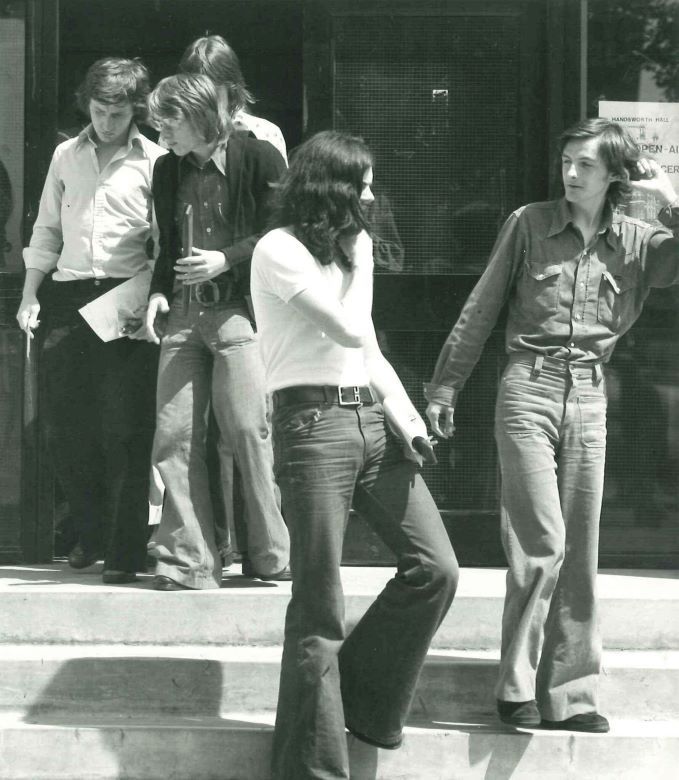
Aston University gears up to celebrate 50 years of transport education
Aston University calls for former transport students to get in touch 2023 marks half a century of transport studies at the University First transport course ran in 1973. Aston University is asking former students to get in contact to help celebrate 50 years of transport education. This year marks half a century of transport studies at Aston University, dating back to 1973 when the subject first appeared as part of a combined honours degree course, with the first transport graduates completing in 1976. In 1982-3 the course became a degree in its own right and 40 years later is still teaching the transport professionals of the future. Aston University is currently the only UK institution to offer a dedicated transport management degree, BSc Transport Management, and a BSc Transport Planning degree apprenticeship. During the past five decades the course has produced graduates equipped with the skills, knowledge and experience needed across the transport sector. Dr Lucy Rackliff, programme director and head of the department of Engineering Systems & Supply Chain Management, said: “Generations of our students have contributed no end to the UK’s skills in this sector. From rail and road, consultancy and government, there are few areas in the transport sphere that have not been improved by our graduates. “If you studied transport at Aston University, we would love to hear from you with any stories and memories from your student days. And of course, we would love to hear about where your transport career has taken you.” Aston University started life in 1875, and in 1895 become the Birmingham Municipal Technical School, teaching chemistry, physics, metallurgy and electrical engineering. In 1966 it received its royal charter to become a university. If you would like to share where your transport career has taken you please get in touch via LinkedIn https://www.linkedin.com/groups/13582956/ or contact the University’s alumni team at alumni@aston.ac.uk

Goizueta Faculty Member Uncovers Impact of Remote Learning on Educational Inequality
In 2020, the world went into lockdown. Learning in school became learning from the couch. Rather than listening to teachers in-person behind a desk, high school students had to find a computer to stream their lectures and lessons. What happens to educational inequality in a digital-first, remote-learning environment? Whereas students are traditionally bound by their brick-and-mortar schools and the limitations of funding in those areas, what happens when the walls are removed and students have access to the teachers, knowledge, and peers from other areas? Ruomeng Cui and co-researchers, Zhanzhi Zheng from University of North Carolina at Chapel Hill and Shenyang Jiang from Tongji University, decided to find out. In their 2022 paper, currently under review, Cui and her colleagues looked at the performance of high school students in developing and developed regions of China. We thought that remote learning might reduce the inequality gap in education because when students are learning off-line, they’re restricted by their local resources. “It’s quite obvious that developing regions don’t have good resources, experienced teachers, or competitive peers—they often have inferior educational resources in comparison to developed regions,” explains Cui, associate professor of information systems and operations management. “We thought the accessibility of remote learning could help reduce this knowledge gap and help students in developing regions improve their learning outcomes.” Analyzing Education in Developed and Developing Areas The idea for the paper, “Remote Learning and Educational Inequality,” published earlier this year, stemmed from another of Cui’s papers, which looked at the academic productivity of women as a result of the COVID-19 lockdowns. “We wanted to study whether the switch to remote learning impacts educational inequality. Does it make it better or worse?” says Cui. “We are the first ones to offer empirical evidence on such a granular level about a large-scale data set.” The group analyzed the Chinese college entrance exam from 2018 through 2020, which students take during the last few weeks of high school; the test score is a requirement for undergraduate admission in China. It’s common for high schools to announce the number of students who scored 600 or higher (out of 750 total points). Using 1,458 high school exam results from 20 provinces, the group found that in 2020, when remote learning became the norm, “the number of students scoring above 600 points in developing regions increased by 22.22 percent,” in comparison to developed regions. Remote learning significantly improved learning outcomes of students in developing regions. We should think about encouraging the adoption of remote learning in education However, Cui and her co-researchers wanted to go a step further. Because the entrance exams are summaries of student data, they surveyed 1,198 students to drill down and ensure that these results came from remote learning rather than other factors. Respondents were asked to rate aspects of their remote-learning experience, such as access to digital devices, their proficiency in using software, how reliable their internet was, how they interacted with peers and teachers, and their access to online educational resources. The researchers found that students in developing regions were able to better connect with peers and teachers, and the students believed that “their learning efficiency was greater” because of the remote learning. Education inequality is not only a problem in China. It’s everywhere. It’s across the world. Having access to better educational resources online can be applied anywhere. However, the one caveat to their findings: Remote learning is beneficial, but students need devices and the infrastructure to support online learning, which is often lacking in developing regions or underserved areas. “We need to support, build, and develop the digital technology capability that enables the effectiveness of remote learning,” says Cui. Are you a reporter looking to know more about the impact COVID had on education and how inequality plays a role in how we educate students during a pandemic? Then let us help with your coverage and questions. Ruomeng Cui is an Associate Professor of Information Systems & Operations Management at Emory University's Goizueta School of Business. Ruomeng is available to speak with media regarding this topic - simply click on her icon now to arrange an interview today.


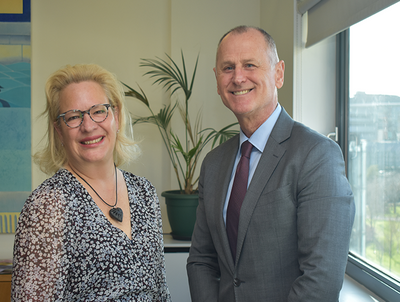
Aston University welcomes Mexican Ambassador to campus during Global Trade Conference
Her Excellency Josefa González-Blanco, Mexican Ambassador to the UK visits West Midlands for the Global Trade Conference The ambassador met with representatives of British industry including University Vice-Chancellor Professor Aleks Subic Josefa González-Blanco was appointed as Mexico's representative in London in 2021. Mexican Ambassador to the UK, Her Excellency Josefa González Blanco Ortiz Mena, has visited Aston University during a high-profile visit to the city to attend the Global Trade Conference and meet with representatives of British industry. The Global Trade Conference (15 February) is an annual event hosted by the Greater Birmingham Chambers of Commerce which offers businesses the opportunity to build relationships and grow their network. During her visit to campus, she met with Vice-Chancellor Professor Aleks Subic, executive director of business engagement Mark Smith, and Lloyd Broad, head of international affairs at Birmingham City Council. Ambassador González Blanco said: “I was thrilled to visit Aston University and to meet the Vice-Chancellor and Chief Executive, Professor Aleks Subic. “We had a chance to review our academic links towards intensifying the research collaboration already in place between Aston Business School, Tecnológico de Monterrey, Conacyt México and Instituto Nacional de Astrofísica.” Professor Aleks Subic said: “It was a pleasure to welcome Her Excellency Josefa González Blanco Ortiz Mena to Aston University. “We are immensely proud of our international collaborations, and meetings such as this one, are crucial in deepening our understanding of areas of common interest and priorities as we work together to advance global partnerships and trade. “I look forward to working further with relevant higher education institutions and industries in Mexico and around the world in line with our 2030 strategy focused on creating a globally relevant university that can make substantial contributions to innovation and trade at international level.”