
Experts Matter. Find Yours.
Connect for media, speaking, professional opportunities & more.

Georgia Southern recognized as top 100 degree producer for diverse students
Georgia Southern University has ranked in the top providers nationally for degrees conferred to diverse students among higher education institutions. For several years, Diverse Issues In Higher Education has produced the Top 100 Degree Producers rankings of the institutions that confer the most degrees to diverse students. The data was reported at the end of 2022 for the previous year of 2020-2021. Georgia Southern ranked highly in the following categories: #2 for international (temporary resident) students receiving doctoral degrees in public health #3 for African American and total minority students receiving doctoral degrees in public health #5 for African American students receiving bachelor’s degrees in the physical sciences #6 for African American students receiving bachelor’s degrees in communications disorder sciences #6 for African American students receiving bachelor’s degrees in parks and recreation “We are proud to be ranked in the top 20 in a variety of disciplines and categories,” said Dominique A. Quarles, Ph.D., associate vice president for inclusive excellence and chief diversity officer. "Along with our designations as a First-gen Forward Institution and Military Friendly School, this highlights the University’s success in providing education to students in our diverse state and region, and it reaffirms the importance of inclusion as a value at Georgia Southern.” The number of combined bachelor’s, master’s and doctoral degrees awarded increased by over 55,000 degrees from 2019-2021 to 2021-2022 for diverse students nationwide. Underrepresented students of color received 35% of the combined degrees. The data comes from the Integrated Postsecondary Education Data system survey known as IPEDS, which are collected by the U.S. Department of Education. Georgia Southern detailed diversity rankings: Rank Category Degree Level Discipline #2 Temporary Resident Doctorate Public Health #3 African American Doctorate Public Health #3 Total Minority Doctorate Public Health #5 African American Bachelor’s Physical Sciences #6 African American Bachelor’s Communication Disorders Sciences #6 African American Bachelor’s Parks, Recreation, Leisure #8 African American Bachelor’s Engineering #9 African American Bachelor’s Marketing #10 African American Bachelor’s Rehabilitation and Therapeutic Sciences #13 African American Bachelor’s Finance #13 African American Master’s Parks, Recreation, Leisure #14 African American Bachelor’s Family And Consumer Sciences #14 Two or More Races Bachelor’s Communication Disorders #15 African American Bachelor’s Education #19 African American Bachelor’s All Disciplines Combined View the Top 100 Diverse Report Here For more information about the Top 100 Diverse Report or to speak with Dominique A. Quarles — simply reach out to Georgia Southern Director of Communications Jennifer Wise at jwise@georgiasouthern.edu to arrange an interview today.


Craig M. Harvey, Ph.D., has been selected to serve as the new dean of the Allen E. Paulson College of Engineering and Computing beginning July 1. “I am excited to welcome Dean Craig Harvey to Georgia Southern University as the next generation of leadership for the College of Engineering and Computing,” said Carl L. Reiber, Ph.D., provost and vice president for academic affairs. “Dean Harvey brings with him an understanding of what a vibrant and growing research university will need to move to the next level as our region expands in its engineering and computing needs.” Harvey comes to Georgia Southern University from Louisiana State University, where he serves as the associate dean for academic affairs of the College of Engineering, professor of Industrial Engineering and is the holder of the Donald W. Clayton University Professorship. He brings to Georgia Southern a wealth of knowledge in leadership, student growth and expansion and advanced engineering studies. “It will be a great honor to serve as the next dean of the Allen E. Paulson College of Engineering and Computing, a college that prepares graduates in engineering, construction and computing to be ready to take on the challenges facing Georgia and the country in the 21st century,” Harvey said. “I look forward to working with faculty, staff, students, alumni and industry to position the college to meet the future demands in both education and research in the state where my engineering career began.” His research interests include human computer interaction, usability engineering, human collaboration within complex environments, human factors engineering and safety engineering. Harvey worked full time as a maintenance engineer and captain at Grand Forks Air Base in North Dakota and served in the United States Air Force Reserves while earning a Ph.D. in industrial engineering from Purdue University. He holds a bachelor's in industrial engineering from Georgia Institute of Technology and a master's in industrial engineering degree from Purdue University in West Lafayette, Indiana. For more information — simply reach out to Georgia Southern Director of Communications Jennifer Wise at jwise@georgiasouthern.edu to arrange an interview today.

Episode 14| CorpusCast with Dr Robbie Love
CorpusCast is the podcast about corpus linguistics and what it can do for society. Join Dr Robbie Love as he speaks with top researchers in the field to find out more about how corpus linguistics – the study of linguistic patterns in large samples of language – is applied to a diverse range of areas including health, social justice and education. On this episode of CorpusCast, Robbie chats to Professor Bas Aarts. Bas is director of the Survey of English Usage, an internationally recognised and highly regarded centre of excellence for research in the area of English Language and Linguistics. Dr Robbie Love ? https://bit.ly/3Zcgo36 Professor Bas Aarts ? https://bit.ly/3YfFxsv Aston Centre for Applied Linguistics ? https://bit.ly/3QKHcSF School of Social Sciences and Humanities ? https://bit.ly/3JCRAd1 Find out more about courses related to this show ? https://bit.ly/3pR705k #TeamAston #CorpusCast #linguistics



Aston University to celebrate 100 years of pharmacy education and research
Aston Pharmacy School to celebrate 100 year anniversary during 2023 The history of teaching pharmacy at Aston University dates back to the 1890s In 2016 the Pharmacy School was awarded a Regius Professorship by HM Queen Elizabeth II. Aston University is gearing up to celebrate 100 years of pharmacy education and research this year. In 1923 the Birmingham Municipal Technical School started to offer full time pharmacy courses to applicants from the general public. The roots of pharmacy education at Aston University date back to the 1890s and more significantly to 1919 when it first started teaching the subject as part of the Chemistry department at the Birmingham Municipal Technical School - as part of a funded package of training and education for returning servicemen after the First World War. In 1923 the pharmacy training provision expanded, taking on six specialist pharmacy staff within the pharmacy section of the Department of Chemistry. That year the Technical School began to offer full time pharmacy courses open to applications from the general public. In 1926 Harry Berry was appointed as head of a separate Department of Pharmacy - following an inspection by the University of London and a positive report. This distinct identity was further cemented a year later in 1927, when Neville Chamberlain, who was the then Minister for Health, opened the new teaching facilities in the School of Pharmacy in the Birmingham Central Technical College. Since then, the University has graduated thousands of pharmacy students with more than 2700 graduates in the last 20 years. Aston University’s Pharmacy School is now recognised as one of the outstanding pharmacy schools in the UK and has been at the forefront of scientific advances over the last 100 years. Its researchers developed the $2 billion blockbuster drug Temozolomide, the leading treatment for brain tumours and it created the UK's first Masters programme for hospital pharmacists. In 2016, Aston Pharmacy School was awarded a Regius Professorship by HM Queen Elizabeth II to mark her 90th birthday. It was the first time a pharmacy school had been given the award, a rare and prestigious honour bestowed by the Sovereign to recognise exceptionally high-quality research. The first holder of the title of Regius Professor of Pharmacy at Aston University was Keith Wilson, a pharmacy academic who helped to shape current and future pharmacy education both within the UK and internationally. Dr Joe Bush, head of Aston Pharmacy School, at Aston University said: "100 years of pharmacy education is a major milestone. We are immensely proud of all our achievements, from producing exceptional graduates who make a significant contribution to the professional workforce in a variety of near-patient settings, to our research discoveries and developments which have positively impacted patient healthcare and the high quality of this research having been recognised via the award of the first ever Regius Chair for Pharmacy. “It is an honour to be a part of Aston Pharmacy School, whose humble beginnings have grown to produce world class research and exceptional graduates. I look forward to celebrating with the rest of the school over the course of the year.” Celebrations of the centenary anniversary will include a celebratory lunch for staff, former staff, students and alumni to recognise the significant contributions that the school has made in research discoveries and teaching. The school will host an exhibition about the last 100 years of pharmacy at Aston University, with a range of historical artefacts on display in the entrance to the University’s main building and there will be a social media campaign to highlight key facts about the last 100 years of pharmacy at Aston University. Did you study pharmacy at Aston University? We would love to hear from you with any stories, memories from your student days. And we would love to hear about where your pharmacy career has taken you. Please get in touch with our alumni team here.

Georgia Southern University’s Staff Council Professional Development Committee, in coordination with the Office of Military and Veteran Services, will offer Green Zone Training to faculty and staff on the Statesboro and the Armstrong campuses in February. “This training will highlight our military-connected student population, military culture and experiences, and help participants recognize obstacles these students face in higher education,” said Georgia Southern Director of Military and Veteran Services George Fredrick, Ed.D. “In addition to the Georgia Southern Military Resource Center, Green Zone Training will assist in identifying other campus resources that are available for students, staff and faculty.” Georgia Southern currently has more than 3,500 military-affiliated students across its three campuses in Statesboro, Savannah and Hinesville. Jodi Middleton Kennedy, director of the Office of Leadership and Community Engagement, benefitted from last year’s session. “Green Zone Training is an amazing opportunity for staff to learn not only how we can support military-connected students, but also some of the unique obstacles they face as students navigating their educational journeys,” she stated. “It is clear that George Fredrick and his team in Military and Veteran Services are passionate about their roles, and it was amazing to be able to connect with a panel of students and hear about their personal experiences as Georgia Southern students.” University Academic Success Coach Lydia Hinkle also thought it was advantageous to participate in Green Zone Training for multiple reasons. “It is important to be aware of the different types of students we serve and what their needs are so that we can better assist them as staff members,” said Hinkle. “As staff members, we should want to do these kinds of training opportunities so that we can support these students as best as we can. Not only does it increase your value as an employee to be able to understand your students better, but it increases our appeal as a university if we, as a whole, are known to be extremely knowledgeable and supportive of this student population. “I did learn a lot about what our students from this population need and would like to see happen, and brought some information back to my department on how we can better assist these students.” During the Green Zone Training in Savannah, recipients of three Military Spouse Scholarships totaling $10,000 will also be recognized. Green Zone Training will take place on the Statesboro Campus on Thursday, Feb. 2, in the Williams Center and on the Armstrong Campus in Savannah on Feb. 9 in the Ogeechee Theatre. Both events take place from 9:30 to 11:00 a.m. For more information about Green Zone Training or to arrange an interview with Georgia Southern's Director of Military and Veteran Services George Fredrick - simply reach out to Georgia Southern Director of Communications Jennifer Wise at jwise@georgiasouthern.edu to arrange an interview today.

Cancer Program Earns Reaccreditation From the Commission on Cancer
Report cited zero deficiencies and highlights leadership, innovative programs and strong research program The Commission on Cancer, a quality program of the American College of Surgeons, has granted three-year reaccreditation to the cancer program at ChristianaCare’s Helen F. Graham Cancer Center & Research Institute, one of the original National Cancer Institute Community Cancer Centers Program sites in the U.S. ChristianaCare has received accreditation since 1951. To earn accreditation, a cancer program must meet 34 quality care standards, be evaluated every three years through a survey process and maintain levels of excellence in the delivery of comprehensive patient-centered care. The Commission cited zero deficiencies during its site visit and in its final report. “Earning this prestigious accreditation with no deficiencies cited is a testament to the unparalleled expertise and quality of care our entire team at the Graham Cancer Center provides to our patients and community across the continuum of cancer care,” said Nicholas Petrelli, M.D., Bank of America Endowed Medical Director of the Helen F. Graham Cancer Center & Research Institute. “Patients in the communities we are privileged to serve can be assured of groundbreaking cancer treatments, innovative technology, state-of-the-art research, prevention, education and the most caring, dedicated team anywhere.” “Innovative programs that address community need” The Graham Cancer Center was recognized in the reaccreditation report for taking a multidisciplinary approach to treating cancer as a complex group of diseases that requires consultation among surgeons, medical and radiation oncologists, diagnostic radiologists, pathologists and other cancer specialists. This multidisciplinary partnership results in exceptional patient care. In its performance report, the Commission on Cancer praised the Graham Cancer Center’s leadership that has built a “culture of continual process improvement across all areas from prevention, screening, treatment and support for the patient.” It highlighted “innovative programs that address community need,” such as its on-site primary care practice and its Oncology Express Unit, which offers urgent care for patients with advanced disease. The report also stated that the “research trial offerings are a strong point.” Clinical trials test new drugs and combinations of treatments, as well as new techniques using surgery, radiation therapy, gene therapy, immunotherapy and biologics. ChristianaCare is among the national leaders in cancer clinical trials; patient enrollment rates into clinical trials at the Graham Cancer Center are at 29% which is seven times the national average. A national standard for accreditation The Commission on Cancer accreditation program provides the framework for the Graham Cancer Center to improve its quality of patient care through various cancer-related programs that focus on the full spectrum of cancer care including prevention, early diagnosis, cancer staging, optimal treatment, rehabilitation, life-long follow-up for recurrent disease and end-of-life care. When patients receive care at a Commission on Cancer-accredited facility, they also have access to information on clinical trials and new treatments, genetic counseling and patient-centered services including psycho-social support, a patient navigation process and a survivorship care plan that documents the care each patient receives and seeks to improve cancer survivors’ quality of life. Like all Commission on Cancer-accredited facilities, the Graham Cancer Center maintains a cancer registry and contributes data to the National Cancer Database, a joint program of the Commission on Cancer and American Cancer Society. This nationwide oncology outcomes database is the largest clinical disease registry in the world. Data on all types of cancer is tracked and analyzed through the database and used to explore trends in cancer care. Cancer centers, in turn, have access to information derived from this type of data analysis, which is used to create national, regional and state benchmark reports. These reports help facilities with their quality improvement efforts. Established in 1922 by the American College of Surgeons, the Commission on Cancer is a consortium of professional organizations dedicated to improving patient outcomes and quality of life for patients with cancer through standard-setting, prevention, research, education and the monitoring of comprehensive, quality care. There are currently more than 1,500 Commission on Cancer-accredited programs in the U.S. and Puerto Rico that diagnose and treat more than 70% of all patients newly diagnosed with cancer.



A.I. and Higher Education: The Rise of ChatGPT
ChatGPT. Maybe you’ve heard of it. Colleges and universities certainly have. It’s the chatbot that uses artificial intelligence (A.I.) technology to generate sentences based only on a brief prompt, writing anything from college-level papers to fanfiction. And as one might expect, the popular chatbot is taking the academic world by storm, raising questions about trust, academic integrity and even the future of college admissions. We turned to Seth Matthew Fishman, PhD, Assistant Dean of Curriculum and Assessment and associate teaching professor in the Department of Education and Counseling at Villanova University, to get his thoughts. Q: What makes ChatGPT different and why is it causing such a stir? Dr. Fishman: The use of chatbots is not a new debate in higher education. But ChatGPT and other similar free software certainly add a complex layer that we are only just now starting to have conversations about. There will be an ongoing debate about trust—Who wrote the material we are reading? To what extent if any, will it impact faculty members? There are also A.I. digital images, graphics, and design—To what extent do these programs impact our creative arts and design programs? I think these fields will mostly embrace A.I., though I can see issues of copyright infringement and artist control/attribution. Q: How are other chatbots being used in academic settings? DF: A.I. use already impacts higher education. If you ask any faculty member teaching a foreign language that requires a translation, they will have tales of work submitted by students who use online translation software. But benefits do exist for students and faculty regardless—we’re able to interact a bit more with others, reducing some language barriers. I expect we will see hundreds of articles about ChatGPT’s impact on education; there are likely several dissertations underway, and I expect to see ChatGPT and similar software cited in papers and likely even in authorship groups. Q: What will the impact of ChatGPT be on the college application and admissions process? DF: I think we’ll see conversations from college admissions professionals on the impact of ChatGPT on higher education admissions. For example, key components of college applications such as essays and writing samples may be impacted. And ChatGPT may also be used to write some rather good letters of recommendation. Q: What does the future hold? Will ChatGPT and similar A.I. programs maintain popularity? DF: I’m curious if A.I. will be used to generate employment cover letters. Additionally, many corporations already use A.I. to sift through candidate applications to narrow down their applicant pools. It may continue to transcend academia. I also expect to hear more from our philosophy and ethics experts to help us better understand the societal and educational implications of using A.I. in these ways. And these kinds of conversations will be had with our students to engage them as partners in the learning experience. We will probably generate new ideas and different perspectives from doing just that.


Aston University appoints new pro-vice-chancellor and executive dean of business and social sciences
Professor Zoe Radnor has been appointed as Pro-Vice-Chancellor and Executive Dean of the College of Business and Social Sciences She has had a successful career in higher education for over 25 years Professor Radnor will be joining Aston University in Spring 2023. Aston University has appointed Professor Zoe Radnor as the new Pro-Vice-Chancellor and Executive Dean of the College of Business and Social Sciences. Professor Radnor will succeed Professor George Feiger, who will be standing down after 10 years of leadership of Aston Business School and the College of Business and Social Sciences. With a successful career in higher education spanning over 25 years, Professor Radnor will be joining Aston University from The University of Law (ULaw), where she is currently Provost and Deputy Vice-Chancellor, specifically focused on leading the diversification of the academic portfolio, including building an academic model for the provision of high quality, innovative teaching and thought leadership. In addition, she is leading the TEF submission at the institution Prior to her executive role at ULaw, she was Vice-President for Strategy and Planning; Equality, Diversity and Inclusion and Professor of Service Operations Management at City, University of London, leading the development of the University EDI strategy. In this role she also led the creation of the new enabling Civic Strategy and established the new institution-wide Change Support Unit. Before City, Professor Radnor was the founding Dean of the School of Business at the University of Leicester, and prior to that, as Associate Dean Teaching and Learning, she led the development of new curriculum offerings for the Loughborough University campus in London. Professor Zoe Radnor is a Fellow of the Academy of Social Sciences (FAcSS) and the British Academy of Management (FBAM). She is also a member of the Athena Swan Governance Committee for Advance HE. Her main research interests are in performance, process improvement and service value within public sector organisations. She has led research projects for a number of Government and healthcare organisations, evaluating the use of ‘lean’ and associated techniques and continues to maintain a strong ongoing research profile. Professor Aleks Subic, Vice-Chancellor and Chief Executive of Aston University, said: “I am looking forward to welcoming Professor Radnor to the Executive Team at what is a hugely exciting period of development for the University and to working with her as we shape our Aston University 2030 Strategy. Zoe brings significant leadership experience to the team and ambition in line with our bold vision. “I would also like to take this opportunity to acknowledge the significant contribution made by Professor George Feiger during his leadership of Aston Business School and the College of Business and Social Sciences over the last 10 years.” Professor Radnor said: “I am delighted to be joining such a prestigious and forward-thinking University and College. “The reputations of the College of Business and Social Sciences and of Aston University generally and the strategic vision of the new Vice-Chancellor and University leadership are what attracted me to this exciting role. I can’t wait to get started working with so many talented and innovative new colleagues.” Professor Radnor will be taking up her post in Spring 2023.
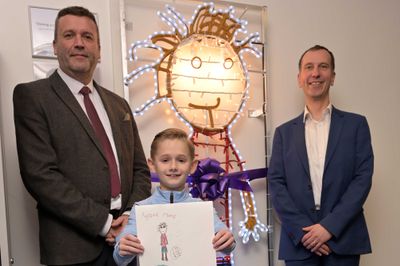
‘Shining a light on Colour Blindness’ competition winner unveils light sculpture at Aston University Winner 10-year-old Leo Evans helped unveil the feature of footballer Tyrone Mings The competition helped highlight the challenges of colour blindness - particularly in sport. A light sculpture named after the Aston Villa footballer Tyrone Mings has been unveiled at Aston University as part of a campaign to help raise awareness of colour blindness. In the UK there are approximately 3 million colour blind people (about 4.5% of the entire population), most of whom are male. Worldwide, there are estimated to be about 300 million people with colour blindness. The competition, ‘Shining a Light on Colour Blindness’, was launched by non-profit organisation Colour Blind Awareness and supported by various football club charities - including the Aston Villa Foundation. Young supporters were asked to take part by drawing a colourful picture of their favourite footballer. The winning entry was then made into a light feature. The winning artwork, which came from the Aston Villa Foundation, was transformed into a light feature and was selected to go on display inside the Aston University Vision Sciences building in the paediatrics bay, as part of the ongoing partnership between the Aston Villa Foundation and Aston University. Colour Blind Awareness is a non-profit organisation designed to highlight the relevance and impact of colour vision deficiency amongst those that live with it - including the challenges in sport. The organisation is part of an EU-funded project, Tackling Colour Blindness in Sport. Competition winner, 10-year-old Leo Evans from Erdington, helped unveil the light sculpture alongside Professor Anthony Hilton, pro-vice-chancellor & executive dean of the College of Health and Life Sciences. Professor Hilton said: “We are delighted for Leo, his winning drawing of Tyrone Mings looks fantastic as a light sculpture and we are proud to host it in our Vision Sciences building for our students, staff and visitors to enjoy, whilst raising awareness about colour blindness.” Commenting on his winning drawing, Leo said: “I am very proud that my picture won the competition and that Tyrone Mings liked it. I now better understand what being colour blind means and I hope my picture has helped someone else.” Cheryl Evans, Leo's Mum, said: “I couldn't be prouder of Leo and the fact that his drawing is of his favourite player Tyrone Mings makes it even more special. This competition has meant that as a family we have had many conversations about colour blindness and it has educated us all more on this topic. Well done Leo!” Kathryn Albany-Ward, CEO at Colour Blind Awareness CIC, said: “Aston Villa Foundation’s entry from Leo charmed the judges and who were delighted to award it first prize. We’re very grateful to Aston University for hosting the light feature and can’t wait to see it displayed. We hope its location in the Vision Sciences Department will help raise more awareness of a condition which affects 8% of boys and 0.5% of girls worldwide, impacting on their education and ability to perform to their best in sport if left unsupported.” Leo was met and congratulated by the head of the Aston Villa Foundation, Guy Rippon, and foundation manager, Ross Alexander. Ross said: “The Aston Villa Foundation would like to say a big congratulations to Leo for his amazing achievement! This is a really proud moment for Leo and we are thrilled that he was inspired by his favourite Aston Villa player. “It has also been a pleasure to have supported Colour Blind Awareness, who have done some great work in highlighting such an important and relevant topic during our coaching team’s workforce development. The support has culminated in a competition that was won by Leo, a participant in one of our Football in the Community holiday sessions. “The stunning light feature of Tyrone Mings will now be housed at Aston University for all to see and we are grateful for the University’s ongoing support with the Club.”


Combating Hate Speech in 2023 (and Beyond)
The arrival of a new year often initiates a reflection on the previous one. And according to Billie Murray, PhD, associate professor in the Department of Communication, reflecting on America’s past begins with acknowledging the country’s history of and ever-growing propensity towards hate speech. As defined by Dr. Murray in her book Combating Hate: A Framework for Direct Action, hate speech “defames, denigrates, dehumanizes and/or inspires violence against particular groups of people on the basis of their religion, ethnicity, nationality, race, gender or other identity category.” Hateful rhetoric is not restricted to the fringes of society as it once might have been. It is emerging within schools, localities and central government. Yet, as Dr. Murray points out, America’s enmeshment is not fated. Dr. Murray’s commitment to fieldwork has taken her throughout the country to protests at hate group rallies in Stone Mountain and Newnan, Georgia, Columbia, South Carolina, and Washington, D.C. At these rallies, and through the lens of a researcher, scholar and activist, Dr. Murray sought to identify oppositional tactics used by counter-protestors that succeeded in diminishing the presence and the effects of hate speech. As a result of her observations, Dr. Murray devised the Counterspeech System, a strategy based on the idea that more speech (not avoidance) is the best way to counter hate speech. And there are two successful ways of doing just that: Confrontational Tactics focus on combating hate through direct action. For example, ‘Angel Action’ is a term used for a confrontational tactic employed at funerals in which activists dress in white angel costumes, rising seven feet tall with ten-foot wing spans, to form a shield with their bodies while creating a barrier between mourners and hate groups. For non-funeral occasions, counteractive celebratory events such as public dance parties, pride celebrations and noise brigades (the drowning out of hate speech with things like kazoos or brass bands) aim to quell hate with love. Persuasive-Dialogic Tactics focus on both public and interpersonal discussions. For example, persuadable members of the general public may receive the message that hate is a problem (through media campaigns and education) and thus come to the conclusion that action must be taken to combat it. Additionally, an interpersonal dialogue with individual members of a hate group in which messaging about compassion, human dignity and mutual respect is initiated can lead to self-reflection and the use of resources such as de-radicalization support groups (like Life After Hate). It is important to acknowledge that although successful, Counterspeech System tactics do not prevent hate groups from organizing or disseminating information. More speech serves to combat existing hateful rhetoric. “Our country needs a shift in how it understands free speech and the role of police protection of hate groups, especially if we are going to continue to win this fight,” says Dr. Murray. It will take federal action coupled with a coalition of those engaging in oppositional tactics to bring about lasting change. However, despite the challenges, Dr. Murray affirms that combating hate speech is worth the fight.
