
Experts Matter. Find Yours.
Connect for media, speaking, professional opportunities & more.

Cyber attacks and ransomware are incidents that are happening more and more often. They are threatening America’s energy supply, food chain and critical infrastructure. Recently, two Georgia hospitals were victims of a recent attack. Media from across the country asked experts like Frank Katz, director of Georgia Southern University's Center for Applied Cyber Education, who is vulnerable and why. Katz, who directs the Center for Applied Cyber Education at Georgia Southern University’s Armstrong Campus in Savannah, said hospitals can be targets for extortion as well as sources of personal identifying information that can aid in further fraud. “They are more likely to pay than another type of business because it’s a life and death situation,” Katz told WSAV-TV. “It really has become a situation of money, pure and simple. These are thieves that know they can extort the money and often get it.” June 21 – Associated Press Frank Katz, director of the Center for Applied Cyber Education at Georgia Southern University, says hospitals are often easy targets. Having so many employees, he says user IDs and passwords can be easy to figure out. Plus, they’re dealing with emergency medical care. “They are more likely to pay than another type of business because it’s a life and death situation,” Katz said. June 21 – NBC News If you are a reporter looking to cover this subject and speak with Frank Katz, Georgia Southern’s Director of the Center for Applied Cyber Education – then let our experts help. Frank Katz, director of the Center for Applied Cyber Education is available, simply click on his icon or reach out to Georgia Southern Director of Communications Jennifer Wise at jwise@georgiasouthern.edu and she’ll assist with connecting you for an interview today.


Aston University – inspiring more women into engineering careers
• Aston University is celebrating International Women in Engineering Day • College of Engineering and Physical Sciences photography campaign of females as #EngineeringHeroes • Campaign aims to encourage girls into engineering careers A team of female engineering heroes from Aston University’s College of Engineering and Physical Sciences has banded together to encourage girls into STEM careers. As part of International Women in Engineering Day (INWED), the world’s largest initiative to celebrate the achievements of women in engineering, Aston University’s very own team of engineers have shown themselves to be the very best STEM superheroes. Aston University Mechanical Engineering Student and STEM Ambassador Olamide Olabode Dressed in capes and taking selfies for the event on Wednesday 23 June, female ambassadors from the College, in collaboration with the Greater Birmingham and Solihull Institute of Technology, have also put together video content to show off their engineering skills and become ‘heroes’ for girls wanting to do the same. Also launching on the day will be a competition for participating schools linked to Aston University. Girls are being challenged to come up with their own superhero gadget / gizmo idea. Professor Sarah Hainsworth OBE FREng, Pro-Vice Chancellor and Executive Dean of the College of Engineering and Physical Sciences at Aston University, said they were proud to be a part of INWED2021. “It is so important to us to encourage more girls into STEM subjects. Our hope is that through our teaching, and our partnership with the Greater Birmingham and Solihull Institute of Technology with its focus on technical skills for advanced manufacturing and giving students a clear route to technical employment, many will follow in the footsteps of our incredible team and be the STEM leaders of the future. “At Aston University, we work on sustainability for the environment, bioengineering, robotics, machine learning, sensors, communications, artificial intelligence, technologies for future vehicles and the issues that shape our future. On International Women in Engineering Day (INWED 2021), our College of Engineering and Physical Sciences celebrates the amazing contribution of our women colleagues who represent the cutting edge of engineering who are making vital contributions to our health and wellbeing, our society and our planet,” she added. Katy Lewis, marketing manager, said schools invited to take part were from the Aspire to Aston progressive programme, which works with 10 schools in and around Birmingham from areas of high deprivation. “At each of these schools there are up to 40 pupils per year group who have the academic ability to aim for university but lack the knowledge and confidence to do so and are selected for the programme. Our aim is to raise aspirations and normalise the idea of going into higher education, which is why us doing challenges like this one is so vitally important, so we can’t wait to help find the STEM female stars of the future,” she said. Currently the College of Engineering and Physical Sciences has 25% female academic staff (the UK STEM staff benchmark being 17 – 19%). The amount of female students studying the engineering subjects at Aston University has also grown over the past five years from 22% - 27%, above the UK STEM benchmark of 17% – 19%. To find out more about engineering at Aston University, visit ww.aston.ac.uk/eps For more details about the Greater Birmingham and Solihull Institute of Technology, visit this link: http://gbsiot.ac.uk/


Emily Baum: Chilling academic exchanges between China and the U.S. Emily Baum is an associate professor of modern Chinese history and director of the Long U.S.-China Institute, which aims to bridge the gaps between academia, journalism and the public sector. Baum says the pandemic will likely affect study abroad for years to come, in both directions, with negative impacts on both sides. There was already a significant disparity with roughly 370,000 Chinese students studying in the U.S. and only 11,000 Americans studying in China annually. “A drop in Chinese enrollments will have major consequences for the future of higher education in the U.S., where many schools rely on the full tuition paid by international students to stay afloat,” Baum says. But equally worrisome: “The educational decoupling that had already begun before COVID-19 — and will be greatly exacerbated by it — means that there will be far fewer opportunities for each country’s students to gain firsthand knowledge of, and mutual understanding about, the other.” Reach Baum at: emily.baum@uci.edu Wang Feng: China has passed its peak Wang Feng is a professor of sociology and an adjunct professor at Fudan University in Shanghai, China. He is an expert on global social and demographic changes and social inequality. He has served on expert panels for the United Nations and the World Economic Forum, as well as he served as a senior fellow and director at the Brookings Institution Brookings-Tsinghua Center for Public Policy. Wang sees the ascendance of China in the last 40 years as the result of a unique confluence of circumstances: a dynamic leader in Deng Xiaoping, plus a significant rural population that moved to cities and provided a huge labor force. In the last 20 years, China has produced 600 billionaires — and gaping wealth disparities. “When China was poor, people thought it would be poor forever. Now that China is rich, people think it will be rich forever. But China has passed its peak,” he says. “The headwinds of an aging population, the legacy of the one-child policy, and tremendous social inequality will present enormous internal challenges in the years ahead.” Reach Wang at fwang@uci.edu. Jeffrey Wasserstrom: China’s box office changes Hollywood portrayals Jeffrey Wasserstrom is a Chancellor’s professor of history. A specialist in modern Chinese history, he has testified before a Congressional-Executive commission on China, conducted a State Department briefing on contemporary Chinese politics, and worked with the Hong Kong International Literary Festival. His articles have been published by TIME, The Nation, Wall Street Journal, Financial Times, The New York Times and others. Wasserstrom notes that Hollywood films and TV often negatively present whichever East Asian country is most feared at the time. However, the power of China’s box office is changing that. “Due to concern with the massive market for movies in the People’s Republic of China, you do not often see negative portrayals of that country on American screens,” says Wasserstrom. “A telling example of our living in a new era is that when filmmakers were setting out to make a new version of ‘Red Dawn,’ a film that originally portrayed a Russian invasion of the U.S., the plan was to have Chinese soldiers serve as the enemies. Concern about PRC box office receipts led to a change in nationality — the enemies became North Korean soldiers.” Reach Wasserstrom at: jwassers@uci.edu. Yong Chen: Chinese food in the U.S. and China Yong Chen is the author of several books including "Chop Suey, USA: The Story of Chinese Food in America" (Columbia University Press, 2014). He also co-curated “‘Have You Eaten Yet?’: The Chinese Restaurant in America” in Atwater Kent Museum, Philadelphia (2006), and the Museum of Chinese in the Americas, New York City (2004–05). He is professor of history. He points out that the COVID-19 pandemic hastened changes to culinary habits that were already underway in China, including less consumption of wild animals, greater demand for fast food, and a shift away from communal or “family style” meals. Meanwhile, in the U.S., Chinese restaurants have been hit hard by anti-Asian sentiments, while also showing signs of resilience thanks to the popularity of Chinese takeout. “If the seriously strained relationship between China and the US continues to deteriorate, it is possible that more people in America will lose their appetite for Chinese food, to say the least,” Chen says. Reach Chen at: y3chen@uci.edu.


A new model of health care is coming to Wilmington’s Riverside neighborhood and the Kingswood Community Center. ChristianaCare Virtual Health is now available at The Coker Family Resource Center, inside Kingswood Community Center. It offers convenient, personalized, always-accessible care that makes it easier for people to connect with the care they need and stay well. “This is an entirely new model of health care powered by data and technology to make it easier for people to access care when they need it, and one that fosters strong relationships between patients and their care team,” said Janice E. Nevin, M.D., MPH, president and CEO of ChristianaCare. “In our commitment to make a positive impact on health for everyone in the communities we serve, we’re excited to bring this leading-edge model of care to our neighbors at Riverside. We’re grateful for the partnership of The WRK Group and Kingswood Community Center in this collaborative effort that will support the health and wellbeing of the people in this community.” At The Coker Family Resource Center, patients can connect to ChristianaCare Virtual Health for a virtual appointment with a primary care provider or a member of their care team and also receive access to medical services such as vaccines, blood pressure checks and in-person exams. But care doesn’t have to happen at Kingswood Community Center. Patients can have a virtual visit with their care team anytime and from anywhere they have access to the internet with a smartphone, tablet or laptop with a camera. “Throughout the pandemic, many people have learned the convenience of having a video visit with their doctor instead of coming in for an in-person appointment. At ChristianaCare, we’ve actually been developing this kind of care since the launch of our Virtual Primary Care practice for ChristianaCare caregivers in 2018, in addition to our CareVio data-powered care management platform,” said Sharon Anderson, RN, MS, FACHE, chief virtual health officer at ChristianaCare. “What we’re able to provide today is not just video visits, but an entirely new kind of care that’s always on—it enables patients to interact with their care team when they need support through video visits, secure text messages and other ways that provide care in ways that fit into each person’s lifestyle.” Sharon Anderson, RN, MS, FACHE, chief virtual health officer at ChristianaCare In addition to the on-site medical services provided at the Kingswood location, patients can also receive in-person help with the technology so that they can become comfortable with this new model of care, and ask questions or get help when they need it. Kingswood Community Center, a member of The WRK Group (The Warehouse, REACH Riverside, and Kingswood Community Center), has been a pillar of the Riverside community for 75 years and is located at 2300 Bowers St, Wilmington, DE 19802. In-person appointments are available every Tuesday and Thursday from 12:30 – 2:30 (times may vary). Information and appointments are available by calling 302-428-2400. Establishing easily accessible health care within the Riverside neighborhood marks a long-time goal of The WRK Group. “We are incredibly thankful for this partnership with ChristianaCare Virtual Health as they become the first primary care service provider that exists within Riverside,” said Logan S. Herring, Sr., CEO of The WRK Group. “ChristianaCare has created a nimble solution for our neighbors that includes valuable in-person services and care as well as virtual appointments. Creating this physical and virtual space is an achievement for our community and one in a series of initiatives The WRK Group plans to bring to the local area.” The WRK’s Group managing partner, REACH Riverside, is currently overseeing a $250M holistic revitalization project which includes building a new and improved community center, developing a mixed income housing community, and investing in physical capital to create a thriving and vibrant neighborhood. Introducing the Coker Family Resource Center The Coker Family Resource Center is a new addition to the Kingswood Community Center, made possible by the generous donation of the Coker family, a pillar in the Riverside and Wilmington community. From matriarch and civil rights leader Beatrice “Bebe” Coker and her activism efforts to daughters Dr. Joan Coker, Laurie Coker Reid, and Julie Coker's collective philanthropic and community work, the Coker family embodies the values of Kingswood Community Center and The WRK Group’s collective mission to empower the community to reach its full potential. “Thank you to the entire Coker family, who have dedicated themselves to bettering our community for decades, as well as for providing the needed funding to create the physical space that ChristianaCare Virtual Health inhabits,” Herring continued. “The Coker family has once again demonstrated the value of believing and investing in their community. As we look to the future and continue to dream big about the new Kingswood Community Center, I am excited by the prospect of what this space will evolve into and what additional services we can offer our community.” For more information about ChristianaCare Virtual Care at Kingswood Community Center, click here. About ChristianaCare Headquartered in Wilmington, Delaware, ChristianaCare is one of the country’s most dynamic health care organizations, centered on improving health outcomes, making high-quality care more accessible and lowering health care costs. ChristianaCare includes an extensive network of primary care and outpatient services, home health care, urgent care centers, three hospitals (1,299 beds), a freestanding emergency department, a Level I trauma center and a Level III neonatal intensive care unit, a comprehensive stroke center and regional centers of excellence in heart and vascular care, cancer care and women’s health. It also includes the pioneering Gene Editing Institute. ChristianaCare is nationally recognized as a great place to work, rated by Forbes as the 5th best health system to work for in the United States and by IDG Computerworld as one of the nation’s Best Places to Work in IT. ChristianaCare is rated by HealthGrades as one of America’s 50 Best Hospitals and continually ranked among the nation’s best by U.S. News & World Report, Newsweek and other national quality ratings. ChristianaCare is a nonprofit teaching health system with more than 260 residents and fellows. With its groundbreaking Center for Virtual Health and a focus on population health and value-based care, ChristianaCare is shaping the future of health care. About The WRK Group The WRK Group, which is comprised of three organizations and over 130 employees, shares a collective mission to empower the community to reach its full potential by eliminating the barriers of structural racism and revolutionizing teen engagement. REACH Riverside, overseeing a $250M holistic revitalization, also serves as the managing partner for Kingswood Community Center, a pillar of the Northeast Wilmington neighborhood for 75 years, and The Warehouse, an educational and recreational oasis for teens. The Warehouse: Developed "For Teens, By Teens" - Innovative, one-stop center serving ages 13 to 19 Teen-driven programming focused on recreation, education, arts, career, and health Collaborating with over 140 youth-serving organizations Three goals: safety, educational support, and workforce readiness REACH Riverside: Developed "With the Community, For the Community" Member of the national Purpose Built Communities Redevelopment: Up to 600 units of high quality, mixed-income housing Education: cradle-to-college and career readiness pipeline Community Health: health, wellness, safety services, and programming Kingswood Community Center Empowering the Community of Riverside and Northeast Wilmington since 1946 Early Learning Academy: high quality, evidence-based programming (ages one through five) School-age services (ages six through twelve): before, after-school, and summer programming Jimmy Jenkins Senior Center: activities to remain healthy and self-sufficient Kingswood Academy: alternative school, located at The Warehouse (seventh through twelfth grade) Preparing for the development of a new, state-of-the-art facility that will replace and enhance the current community center ####


New York and Tokyo: Global Cities as Essential Hubs for Our Collective Future
Throughout, cities have faced repeated pronouncements of their demise. Yet, as centers of soft power, cities adapt, persevere, and ultimately, reinvent themselves to thrive. Photo: Orbon Alija / Getty Images On August 24, 2020, in the dog days of the New York summer and at the peak of the COVID-19 pandemic, comedian Jerry Seinfeld wrote an op-ed for The New York Times titled "So You Think New York Is 'Dead' (It's not.)" The king is dead, long live the king! "Real, live, inspiring human energy exists when we coagulate together in crazy places like New York City," wrote Seinfeld. Cities change, "They mutate. They re-form. Because greatness is rare. And the true greatness that is New York City is beyond rare." In fact, megacities around the world have been experiencing similar trends related not just to the novel coronavirus--climate change, natural disasters, population shifts, and transformations in business, infrastructure, and transportation will all shape the contours of the 21st century. New York City's own history--when and why it has been pronounced "dead" during the last century--is instructive in and of itself. Other megacities of consequence should take note and take heart, especially Tokyo, which will be under the microscope in a new way as it prepares to host the Olympic Games in today's unprecedented environment. History repeats itself In the tensions of living in the present time, it's easy to forget New York City's long history of disaster, recovery, growth, and innovation--the 1918-19 influenza epidemic, the seasonal threat of polio, the scourge of HIV-AIDS, and the current pandemic, all define the city's history. In October 1975, New York City, America's largest and wealthiest city, narrowly averted bankruptcy. Refused rescue by the federal government and President Gerald Ford, the city was saved only through the beneficence of the city's own Teacher's Retirement System pension fund, which made up a $150 million shortfall. The next day, the Daily News headline shouted "Ford to City: Drop Dead." We survived, and we thrived! Then there was 9/11, 20 years ago this September, when the U.S. rallied around the city. New Yorkers cheered as heavy equipment driven from across America arrived to help clear the devastation, and were joined by the entire nation in mourning those who were lost. Along came the 2008 financial crisis, sounding another death knell for New York. Today, we know from past history that what has closed will reopen, or be reborn in a different form. And we'll be here to celebrate. Global cities generate soft power Like Tokyo, London, or Paris, New York is a global center for arts and culture, a place where diverse creative arts flourish and inspire people in close proximity, where there is always space for tradition and innovation, and a place, too, for those who come for entertainment. But whether in Japan, Europe, or America, whether in the arts, innovation, or civil society, the soft power of a global city is so much more than the sum of its parts. It is a treasure trove of history, a platform for the future, a home for diversity, and an incubator for social change. What is soft power and why do we need it? The term "soft power" was crafted by Harvard political scientist Joseph Nye in the 1980s, and is now widely used in a foreign policy context. As a 2004 Foreign Affairs review of Nye's book, Soft Power; The Means to Success in World Politics noted: "Nye argues that successful states need both hard and soft power--the ability to coerce others as well as the ability to shape their long-term attitudes and preferences... But overall, Nye's message is that U.S. security hinges as much on winning hearts and minds as it does on winning wars." Almost two decades later, soft power--the cultural, intellectual, and social bonds that bring diverse countries and societies together for mutual understanding--has become a critical component of American foreign policy. This is especially important for the U.S.-Japan alliance, as most recently evidenced by Hideki Matsuyama's thrilling Masters Tournament win and President Biden hosting Prime Minister Yoshihide Suga as the first head of state to visit the White House during his tenure. As I've written before, based on my experience from the State Department, "innovative and entrepreneurial partnerships based on shared objectives--economic growth, stability, and more--will be the engine for increased security and prosperity." In other words, the future of diplomacy will not only be national, but subnational, where megacities like Tokyo and New York will shape their own destinies based on the partnerships that their leaders--political, business, and civil--can forge together in the best interests of their constituents. Japan Society and New York As the President and CEO of Japan Society, my work is to take the Society's mission into its second century, to be the deep connection, or kizuna, that brings the United States and Japan together through its peoples, cultures, businesses, and societies. From our New York headquarters, which opened to the public 50 years ago, we are looking toward the next half century knowing that we will be defined not so much by our now-landmarked building but by our digital and ideational impact. Our future can only be enhanced by continuing to exchange with our friends in Tokyo and beyond. Long before soft power was defined, in the radical days of 1960s New York, Japan Society supported international exchange in the arts between Japan and the U.S. through fellowships and grants to Japanese artists and students, among them Yayoi Kusama, Yutaka Matsuzawa (Radicalism in the Wilderness: Japanese Artists in the Global 1960s), Shiko Munakata (Improvisation in Wood: Kawamata x Munakata, fall/winter 2021), and many others who made history in the arts in both the U.S. and Japan. Now, performing arts commissions and gallery exhibitions at Japan Society build on and evolve U.S.-Japan cultural exchange even as Japanese traditional and contemporary artists have been mainstreamed into New York's major cultural institutions. Our work continues--in arts and culture, education, business, and civil society. Even as the COVID pandemic recedes through continued social distancing practices and increasing vaccinations, the changes it has wrought on the ways we work and communicate are here to stay. Remote work, flexible schedules, and collaboration and connectivity across time zones all predate the pandemic but were scaled up at a rate that was previously unimaginable. While physical borders closed to travelers, virtual ones opened --and technology has allowed us to engage and convene with those near and far like never before. We at Japan Society are committed to finding new connections and building new bridges outside of New York City, starting with Tokyo and then the rest of the world. Our 37 other Japan-America sister societies across the United States have much to offer even as New York remains an essential global stage and financial platform. Partnerships will ultimately define the future of which global hubs thrive and where populations gravitate post-COVID. As we continue our mission for the future of the world, and for the U.S.-Japan alliance, I'm incredibly optimistic for Japan Society and for New York City's long-term evolution. This article was originally published in the Tokyo Metropolitan Government.


Local neighborhood conditions are important for children’s brain development
Growing up in a disadvantaged neighborhood is related to children’s brain structure and neurocognitive performance, according to a study published May 3, 2021 in the journal JAMA Pediatrics. It is associated with the brain’s cortical structure and volume as well as how children pay attention, their executive function, reading, flexible thinking, and other tasks that support learning. These differences could potentially contribute to other inequities during adolescence as well as later in life for these children, though there is no evidence that such neighborhood-related differences are fixed or immutable. Children’s brains exhibit plasticity, meaning that they can change and grow in response to learning and experience. The study’s findings shine a spotlight on the larger population trend and do not serve as a predictor of any individual child’s outcome. “This points to the importance of investing in policies and programs that help improve local neighborhoods and to support and empower communities to promote children’s neurodevelopment and long-term health and well-being,” said Daniel A. Hackman, assistant professor at the USC Suzanne Dworak-Peck School of Social Work and lead author of the study. Researchers from the USC Suzanne Dworak-Peck School of Social Work and the Keck School of Medicine of USC used data from the Adolescent Brain and Cognitive Development (ABCD) Study, collected from October 2016 – 2018. The ABCD Study is the largest long-term study of brain development and child health ever conducted in the United States. “Disadvantaged neighborhoods may lack quality health services, access to nutritional foods, and well-maintained parks and rec facilities,” said Megan Herting, assistant professor in the department of preventive medicine at the Keck School of Medicine at USC and senior author of the study. “They may also expose residents to more pollutants or social stressors.” In addition to Hackman and Herting, study authors include Dora Cserbik, Jiu-Chiuan Chen, and Rob McConnell of the department of preventive medicine at Keck School of Medicine; Bita Minaravesh of the USC Dornsife Spatial Sciences Institute; and Kiros Berhane of the Department of Biostatistics at Columbia University Mailman School of Public Health. Neighborhood disadvantage and the brain The study participants were 8,598 nine- to eleven-year-old children in 21 sites from the ABCD Study, and includes youth from diverse backgrounds, family income levels and neighborhood environments. Using this ABCD data, the multidisciplinary team of researchers tested whether neighborhood disadvantage is associated with neurocognition and brain structure through the National Institute of Health Toolbox Cognition Battery and magnetic resonance imaging (MRI) scans. Neurocognition refers to specific cognitive functions related to particular neural systems, such as executive function, memory, problem-solving and perception. Executive function is the set of cognitive functions that allows people to select behaviors, make efforts to regulate or control their behavior or thinking in given situations, and to focus on goals despite distractions. Brain structure refers to global and regional measures of the brain’s cortex and subcortex, such as volume and surface area. The researchers found that neighborhood disadvantage was associated with worse neurocognitive performance on nearly all tasks and smaller cortical surface area, as well as cortical volumes and subcortical volumes, across the whole brain. The associations remain after adjusting for family socioeconomic status and largely remain after adjusting for perceptions of neighborhood safety. “Our findings aren't specific to the child's home life, as we accounted for socioeconomic factors at each child's home,” Herting said. “But the research suggests neighborhoods may have different levels of social and educational resources and opportunities that can impact a child's neurodevelopment.” Disadvantaged neighborhoods are those in which people generally have lower levels of income, employment and education. Growing up in these conditions can be stressful for children and adults. However, comparing disadvantaged neighborhoods across the country is challenging to social work researchers, who understand that when looking at national samples they may pick up regional differences for which they must account. Neighborhood similarities and differences The impressive scope and scale of the ABCD study made it possible for these researchers to delve into rich local data that enabled them to understand the similarities and differences of disadvantaged neighborhoods within the context of their cities. Hackman, whose research interests include understanding neighborhoods and the context that children and adolescents grow up in, wanted to be able to look at the research question from both the national perspective as well as the local perspective. “This is the first large, national study of neurodevelopment to determine that the role of neighborhood disadvantage is similar across all regions of the country, and we found that what mattered most were the local differences in neighborhood disadvantage within each city, rather than how cities differ from each other overall” Hackman said. “This highlights the broad relevance of neighborhood disadvantage, and the importance of unique local conditions. His interest was even more piqued when he saw a clear narrative emerge from the data. “The consistency of the data was so compelling,” Hackman said. Though disadvantaged neighborhoods may vary from city to city, the researchers found the associations were largely consistent across 21 metropolitan areas within the U.S. For policymakers, a takeaway is that neighborhoods were related to these important aspects of child development everywhere, and that though each city is different, the unique local conditions are important to address. In addition, the global relationship between neighborhood and overall brain structure and neurocognitive performance suggest that intervention approaches may be most successful if they are comprehensive and focused on improving children’s contexts, rather than narrowly targeted to the development of particular cognitive skills. “This research is important as it not only highlights that neighborhoods matter, but it also suggests that promoting neighborhood equity based on the unique local conditions within cities could be important for the short and longer-term health and overall development of children and adolescents,” Hackman said. According to the study, although the magnitudes of association between disadvantaged neighborhoods and neurocognition and brain structure are statistically small, they are potentially meaningful. One reason is because even small effects may have large consequences as they accumulate over time at a population level. Another reason is because these are comparable to, but smaller, than effect sizes for family socioeconomic status in these models. “There is also considerable evidence of resilience,” Hackman noted, as the authors caution that these associations are not predictive at the individual level. In particular, many youth from disadvantaged neighborhoods outperform their peers from more affluent neighborhoods, and also have larger cortical surface area and subcortical volume as well. In other words, living in a disadvantaged neighborhood is not deterministic and does not automatically predict any pattern of neurocognition and brain structure for any individual. Instead, the association uncovered by these researchers points to more reasons why improvements to neighborhoods can bring positive change. “Future research is needed to determine if our findings are, in fact, attributable to differences in community-based resources or differences in quality of schooling,” Herting said. “However, our findings do add to a growing literature suggesting the importance of neighborhoods and how they may contribute to place-based disparities in health and well-being in America.”


Social Work is Advancing Addiction Science Research
Tens of thousands of Americans die from drug use and addiction every year, with overdoses killing over 63,000 people in America in 2016, according to the National Institute on Drug Abuse. Add in deaths linked to alcohol overuse and tobacco, and the number climbs above half a million Americans. The collective work of several researchers at the USC Suzanne Dworak-Peck School of Social Work, in collaboration with other USC faculty and outside organizations, is advancing knowledge of substance use disorders. Social work has become a hub where researchers and practitioners drive understanding and improve treatment for this disease that impacts millions of families each year. “Either as a cause or consequence, addiction relates to every problem we deal with in social work,” said John Clapp, professor and associate dean for research and faculty development at the USC Suzanne Dworak-Peck School of Social Work. Addiction’s complexity The social work field is uniquely poised to help effect change because of its holistic approach to individual well-being and the public good. According to Clapp, substance use disorder problems are inherently ecological, impacting and being impacted by individuals, families, peers, neighborhoods, communities and public policy in complex and dynamic ways. Untangling those causes and effects and interdependencies is one part of the solution. The other part is understanding that simple solutions may stay out of reach. “We will not find a one-size-fits-all answer,” said Clapp. Looking at addiction as a genetic, psychological or sociological issue only shows one piece of the overall cause. A comprehensive approach is essential, he said, especially when statistics from the National Institute on Alcohol Abuse and Alcoholism (NIAAA) show alcohol use disorders alone as the third leading cause of preventable death in the world. A hub for addiction science The need for a transdisciplinary response to this worldwide crisis was behind the 2018 creation of the USC Institute on Addiction Science (IAS), a joint venture between social work and the Keck School of Medicine of USC, with membership from 10 different schools, colleges and hospitals. Its vision is to strengthen the discipline of addiction science and improve the lives of those touched by the disease. Clapp is co-director of the institute and one of its founding architects. IAS is quickly becoming the foremost place for a broad effort focused on addiction that brings together researchers from the fields of public health, social work, law, public policy, mathematicians, computer engineers and others in recognition of the promise of new approaches to longstanding problems. The USC Suzanne Dworak-Peck School of Social Work has eight faculty making substantial contributions to the prevention of addiction-related disorders as members of the IAS: Professor Avalardo Valdez, associate professors Julie Cederbaum and Alice Cepeda, and assistant professors Jordan Davis, Shannon Dunn, Jungeun Olivia Lee, Danielle Madden, and Hans Oh. “Social work brings one of the broadest perspectives on the underpinnings and solutions to the addiction crisis,” said Adam Leventhal, director of IAS and professor of preventive medicine and psychology at Keck. “By approaching addiction as a health condition and a social justice issue, social work brings to the table the opportunity for high-impact, multi-modal intervention and social policy approaches, which are needed to address the addiction epidemic.” A holistic approach Social work faculty are raising the bar in addiction science research, developing new and novel approaches to improving outcomes for those affected by addiction. In a study recently published in Addiction, a multidisciplinary team lead by Davis and Clapp found gender differences in the risk factors for relapse following treatment for opioid use disorder. The study was the first in this field to use machine learning techniques to process large data sets and identify risk factors for relapse, said Davis, who also serves as associate director of the USC Center for Artificial Intelligence in Society (CAIS). The findings may result in more personalized treatment for opioid use disorder with lasting results. This dovetails with additional research Davis is conducting with computer science engineers at CAIS to collect and input neighborhood and census data into their models in an effort to better understand how these macro variables affect relapse. “We are finding that data points such as crime statistics, population density and concentrated poverty tend to be some of the most important predictors of relapse, over and above individual-level predictors such as impulsivity, motivation or gender,” Davis said. These findings echo Clapp’s description of addiction as ecological and point to the need for holistic solutions. “These machine learning techniques are helping us gain an apparent picture of what the most important factors are surrounding someone’s recovery,” Davis said. “Environment matters greatly.” Davis is also collaborating closely with Eric Pedersen, associate professor at Keck School of Medicine at USC, on several research efforts examining substance use among veterans. Most recently, they have assembled a survey group of approximately 1,200 veterans whom they survey quarterly about their well-being. A recently conducted survey of the group found that veterans with PTSD prior to the COVID-19 pandemic were now managing their symptoms with more frequent alcohol and cannabis use. Another joint research endeavor between the two is examining the use of mindfulness smart phone apps to help reduce substance use in Operation Enduring Freedom/Operation Iraqi Freedom veterans with PTSD and alcohol use disorder. Where well-being and inequalities intersect Jungeun Olivia Lee also seeks to decode the network of relationships between socioeconomic status, adverse childhood experiences and drug use. Her experience as a social work practitioner working directly with clients drives her motivation to demonstrate to policymakers what she sees as a linkage between unemployment, economic stress and substance use disorders. She is lead author on a paper published in Nicotine & Tobacco Research that found unemployment may advance nicotine addiction among young adults, rather than the idea that nicotine addiction may lead to unemployment. Lee’s research interests lie at the intersection of substance use and co-occurring mental health, social inequalities (such as poverty and low socioeconomic status), and adverse childhood experiences. She is interested in combining these three areas of inquiry to explore their influence on addictive behavior that can persist over generations of at-risk families, such as adolescent mothers and their children. Her memories of working directly with clients struggling with the impact of addiction remain clear in her mind. When Lee hears policymakers and others suggest that individual willpower will solve substance use disorder problems, she has a straightforward response: “People are not born with addiction.” In her view, many factors contribute to the triggered distress, including socioeconomic status and adverse childhood experiences. Lee is exploring an idea with other IAS researchers to investigate the relationship between financial strain and employment uncertainty and addiction. “Individual circumstances, such as losing a job, certainly influence substance use, but policy-level decisions, such as the generosity of unemployment insurance, can mitigate the impact,” she said. Transdisciplinary collaboration with social scientists, psychologists and medical researchers at IAS and across the USC campus enriches and amplifies her work. “We are breaking down discipline-specific silos and bringing new and valuable perspectives to this work,” she said. “The synergy is both useful and inspiring.” Looking ahead Researchers also hope to spark interest in the field among the next generation. A new minor for undergraduate students in addiction science was introduced at USC in Fall 2020. The minor is an interdisciplinary collaboration of the Keck School of Medicine, the USC Suzanne Dworak-Peck School of Social Work, the USC School of Pharmacy and the USC Dornsife College of Letters, Arts, and Sciences. It is designed to provide students with a transdisciplinary approach to understanding and treatment of the broad spectrum of addiction-related problems. The goal of addiction science research and education is to improve the long-term effect of addiction treatment and save lives. As society’s understanding of the cause of addiction grows, researchers like those in the school of social work and the IAS strive to bridge the gap between science, practice and policy to positively impact outcomes for those affected by addiction.
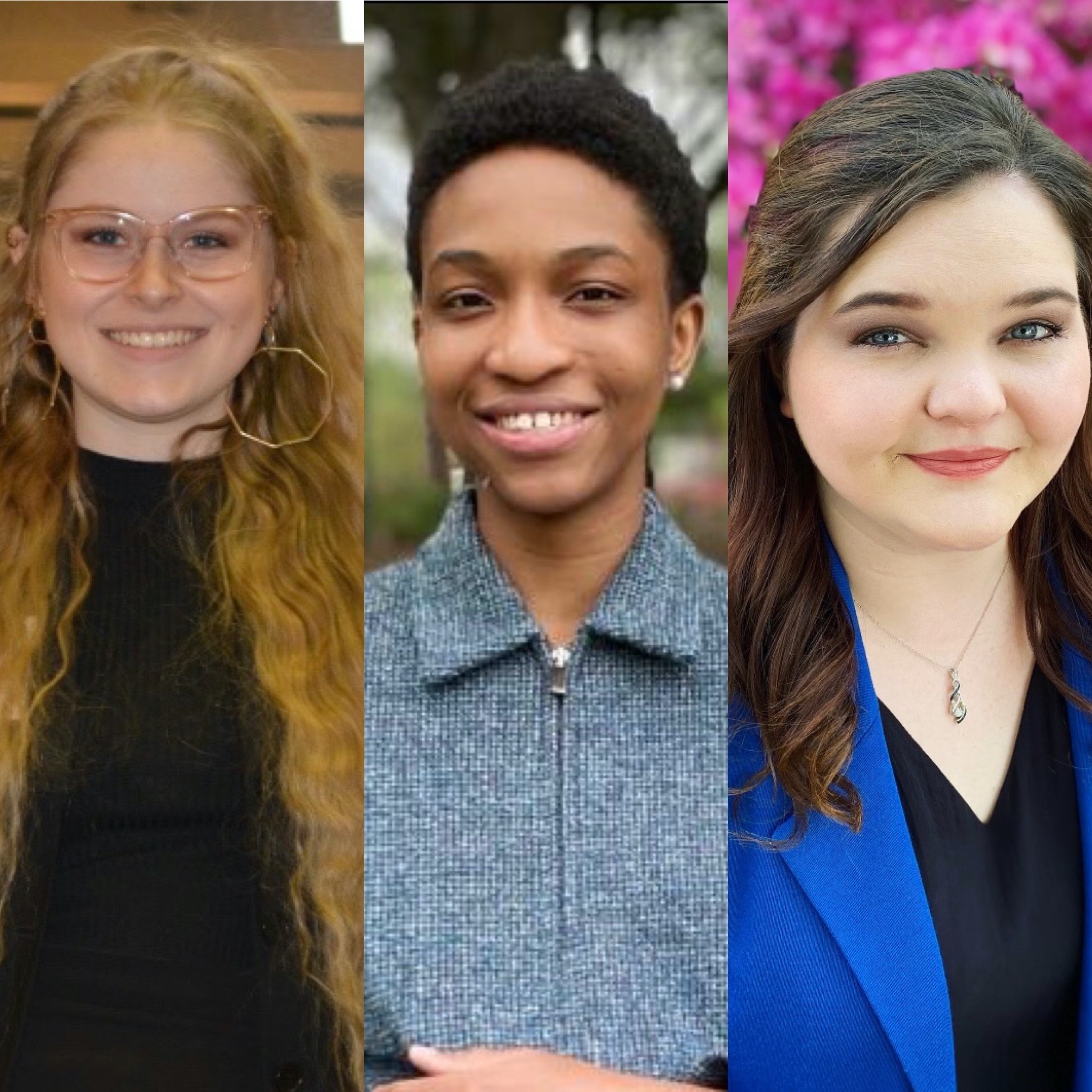
Ambitious student research collaborations with faculty members often lead to much more than good grades. The mentorships encourage professional growth, confidence and creativity, even in the midst of a pandemic. Georgia Southern University’s Spring 2021 Honors Research Symposium, which is being held virtually April 26 through April 30, will showcase faculty-student partnerships through a broad range of scholarly and creative research projects produced by more than 100 honors students across multiple disciplines on the Statesboro and Armstrong campuses. A few of the presenters include: Chelsea Riley, a triple major in international studies, political science and Spanish, worked with political science and international studies professor Srobana Bhattacharya, Ph.D., on her thesis, “The Culture Gap: The Role of Culture in Successful Refugee Settlement.” History and English major Jacey Thomas, mentored by associate professor of history Alan Downs, Ph.D., will present, “Irish Rock Music amid a Time of Troubles: Thin Lizzy and U2 as a Bridge During a Time of Division.” Biology major Susan Ihejirika’s presentation, “A Forward Genetic Screen to Identify Human Genes of Interest and Their Roles in Ovarian Cancer,” was guided by biology assistant professor Dongyu Jia, Ph.D. The Honors College, as the university-wide center for excellence in undergraduate education, plays a crucial role with undergraduate research at Georgia Southern. Since the beginning of the College, students have been required to complete honors theses or capstone projects. The faculty-mentored projects have spanned traditional research models, applied research and creative activities in all academic colleges and majors. “Through faculty-mentored research and scholarly activities, honors students create new knowledge and the Honors Research Symposium is the venue where we share it with the broader scholarly community,” said Honors College Dean Steven Engel, Ph.D. “ I am proud of the fact that they have been able to complete these projects despite the challenges of the past year.” Presentations will be posted on YouTube and the comments section will be open for audience engagement with presenters. If you're a journalist looking to learn more about this year’s Honors Research Symposium — simply reach out to Georgia Southern Director of Communications Jennifer Wise at jwise@georgiasouthern.edu.

MEDIA RELEASE: CAA supports provincial efforts to move Ontarians more safely
CAA South Central Ontario supports today’s provincial announcement of the Moving Ontarians More Safely & Towing and Storage Safety and Enforcement Act, 2021. The proposed legislation is an important step toward addressing the needs and challenges experienced by both motorists and the towing industry. “CAA is pleased that provincial legislation to govern the towing industry looks to address the most pressing issues related to safety and consumer confidence,” says Teresa Di Felice, AVP government and community relations, CAA SCO. “Provincial oversight should provide consistent levels of training for operators, create standards for this important service on Ontario roads and establish tough penalties for those who do not follow the rules.” One element highlighted in today’s announcement is the introduction of a tow truck licensing system. “CAA’s research on this demonstrates that motorists expect their tow operators to be provincially licensed and qualified to perform towing services safely,” adds Di Felice. The tougher enforcement measures for stunt driving are also welcome. Since the COVID-19 lockdown measures first began in March 2020, police have seen a significant surge in speeding and street racing—both of which can have serious consequences. “The dangerous driving behaviours that we have seen over the past year highlights the need for increased measures, education and enforcement. The proposed changes will help to continue making Ontario’s streets some of the safest in North America,” adds Di Felice. A study commission by CAA SCO in March highlighted that 74 per cent of drivers agree that stricter penalties and increased fines would discourage drivers from performing stunts or driving aggressively. CAA believes that safer streets for all Ontarians are possible. This new proposed legislation will not only bring clarity for consumers when requesting towing services, the tougher penalties for stunt driving will help to curb the impulse to speed or drive dangerously. The study was conducted between March 15th to 22nd, 2021, among a sample of 1,504 Ontario driver’s license (G, G2 or G1) holders, have access to a vehicle and are part of the Asking Canadians’ research panel. The study was conducted through online surveys. A probabilistic sample of a similar size would have a margin of error of plus or minus 3%, 19 times out of 20.



Toolkit is easily incorporated into any laboratory science course Wilmington, Del., April 1, 2021 – St. Georges Technical High School in southern New Castle County, Delaware is the first high school in the United States to use ChristianaCare Gene Editing Institute’s innovative CRISPR in a Box Educational Toolkit™ in a science class. CRISPR in a Box brings to life the much-heralded CRISPR gene editing technology – the “genetic scissors” that allow scientists to edit DNA. The toolkit is designed for educational sessions in secondary and post-secondary schools and is suitable for remote learning. “Gene editing is the future of medicine,” said Eric Kmiec, Ph.D., director of ChristianaCare’s Gene Editing Institute. “Our partnership with the Delaware Department of Education will help cultivate the next generation of genetic scientists and enhance Delaware’s position as a leader in the biosciences.” “We are thrilled that students at St. Georges Technical High School will be the first In the United States to experience a live demonstration of CRISPR gene editing using our Innovative CRISPR in a Box educational toolkit,” said Siobhan Hawthorne, Education and Community Outreach leader at ChristianaCare’s Gene Editing Institute. “This toolkit will provide STEM students with a visual understanding of how the exciting CRISPR technology can unlock medical treatments to improve lives.” Delaware Secretary of Education Susan Bunting praised her department's partnership with ChristianaCare's Gene Editing Institute to develop the “Seeds of STEM” course that teaches high school students about gene editing. “Gene editing approaches diseases in new ways and will have significant impact in the health care and agriscience fields,” Bunting said. “This is a great example of an industry and education partnership investing in youth by providing hands-on knowledge and skills around emerging technology.” “We are so fortunate that ChristianaCare’s Gene Editing Institute reached out to our program to plan a high school ‘first’ opportunity with this new CRISPR experiment,” said Danya Espadas, one of the St. Georges biotech teachers. “Giving students the chance to use a cutting-edge, 21st century tool for medicine in their own high school lab – to have that technology at their fingertips – transcends what they see in a textbook or a video. By being able to do it themselves, it makes it real for them.” Espada said the experiment focuses on editing a gene of a non-infectious E.coli bacteria to become resistant to an antibiotic, thereby allowing researchers to create a new class of antibiotics that cannot be overcome by bacteria that are gene resistant. “We’re talking about eventually saving lives, here,” she said. “What can be more important than that?” The tools in CRISPR in a Box have been designed based on the pioneering discoveries of the Gene Editing Institute that are currently being used to explore next-generation medical therapies and diagnostics for diseases, including lung cancer and sickle-cell anemia. Component items in the toolkit include the CRISPR/Cas complex, a target DNA molecule, a mammalian cell free extract and a synthetic DNA molecule. All materials in the kit are safe, synthetic materials. There are no live cultures or viruses involved. The kit is meant to provide a hands-on demonstration of CRISPR’s capabilities, and not allow for manipulations of living organisms. “The kit is easy and fun to use,” said Kristen Pisarcik, research assistant at the Gene Editing Institute who has taught students at Delaware Technical Community College which first used the toolkit. “In a short period of time students will reliably and successfully complete the laboratory activity and be able to see the results of gene editing,” she said. Since the foundations of the kit touch upon key themes in biology, it can be readily incorporated into practically any science or biology course with a laboratory component, “One of the beauties of CRISPR in a Box is that there is no need to purchase specialized equipment. If a teaching lab can support bacterial cultivation, it can perform the in vitro gene editing lab activity,” Pisarcik said. CRISPR in a Box is the evolution of a partnership between the Gene Editing Institute, Delaware Technical Community College and Rockland Immunochemicals that began in 2017 with a National Science Foundation grant to develop the first-ever gene editing curriculum for community college students. Video and photo collection of first class in U.S. to use CRISPR in a Box™ educational gene editing toolkit. About ChristianaCare’s Gene Editing Institute The Gene Editing Institute, a worldwide leader in CRISPR gene editing technology and the only institute of its kind based within a community health care system, takes a patient-first approach in all its research to improve the lives of people with life-threatening disease. Since 2015, researchers at the Gene Editing Institute have been involved in several ground-breaking firsts in the field, including the development of the first CRISPR gene editing tool to allow DNA repairs outside the human cell which will rapidly speed therapies to patients and a unique version of CRISPR called EXACT that reduces the number of off-target edits to other areas of the genome, which is vital for further research and patient applications. Its researchers are currently developing a patient trial for lung cancer using CRISPR and employing the technology to combat the COVID-19 pandemic. About the biotech program St. Georges Technical High School The Biotech career program of study at St. Georges Technical High School is the first such program offered in a Delaware high school. With two teachers and approximately 100 students in grades 10-12, the program presents advanced content in biology and chemistry with opportunities for students to learn basic laboratory techniques and procedures and to maintain and operate common instruments and equipment used in a biotechnology laboratory. St. Georges is a comprehensive career and technical high school with 1,100 students who study in one of 16 different career pathways.
