
Experts Matter. Find Yours.
Connect for media, speaking, professional opportunities & more.

Managers should consider ethics and performance when rewarding employees, Baylor professor says Do you consider yourself more ethical than your coworker? Caution! Your feelings of ethical superiority can cause a chain reaction that is detrimental to you, your coworker and your organization, according to Baylor University management research. A new study published in the Journal of Business Ethics suggests that your feelings of ethical superiority can lead you to have negative emotions toward a “less ethical” coworker. Those negative emotions can be amplified if you also believe you do not perform as well as that coworker. And, furthermore, those negative emotions can lead to your mistreatment and/or ostracism (social exclusion) of that less ethical, higher-performing coworker. “One way to think of this is that it is – and should be – concerning to us to believe that we are more ethical than our coworkers, especially if we do not perform as well as they do,” said lead author Matthew Quade, Ph.D., assistant professor of management in Baylor University’s Hankamer School of Business and an expert on workplace ethics and ostracism. The research, Quade said, can help managers create better atmospheres and improve the bottom line. “The managerial implication is that we need to create environments where ethics and performance are both rewarded,” he said. A total of 741 people, among them 310 employees (“focal employees”) and an equal number of their coworkers (“comparison coworkers”), were surveyed for the study. Focal employees compared themselves with their coworkers based on two areas: perceived ethics and performance. Then they rated their levels of negative emotions (i.e., feelings of contempt, tension or disgust) toward those same comparison coworkers. Results show that employees who believe they are more ethical than similar coworkers (i.e., those that hold similar positions, have similar education background and similar tenure in the organization) feel negative emotions (i.e., contempt, disgust, stress, repulsion) when thinking about those coworkers. These negative emotions about the coworker are amplified when the employees also believe they do not perform as well as those same coworkers. In turn, the comparison coworkers rated how often they experienced social undermining (i.e., insults, spreading of rumors, belittling of ideas) and ostracism (i.e., ignored, avoided, shut out of conversations) from the focal employee. Results also show that the negative emotions that the “more ethical, lower performing” employees experience may result in them behaving in unethical ways directed at their coworkers. Specifically, they become more likely to socially undermine and ostracize those “less ethical, higher performing” coworkers. All the study’s results exist regardless of gender and any positive emotion the employees may experience as a result of believing they are more ethical. Ultimately, such workplace scenarios pose a conundrum for managers, Quade said. On one hand, there is the ethical worker who doesn’t perform as well. On the other hand, there’s the less ethical worker who hits all the goals. Who gets rewarded? “If high performance is the result of questionable or unethical behavior, that combination should not be celebrated,” the researchers wrote. “Instead, organizations should be cautious when rewarding and promoting performance within organizations, ensuring that they also consider the way the job is done from an ethical standpoint.” The ideal situation, the study reveals, is when high ethics and high performance are the norm – and employees are rewarded. “Enhancing the ethical behavior of all employees should be an emphasis to attempt to remove some of the disparity that tends to exist between employees when it comes to their moral behavior at work,” the researchers wrote. ABOUT THE STUDY “’If Only My Coworker Was More Ethical’: When Ethical and Performance Comparisons Lead to Negative Emotions, Social Undermining, and Ostracism,” published in the Journal of Business Ethics, is authored by Matthew Quade, Ph.D., assistant professor of management, Hankamer School of Business, Baylor University; Rebecca Greenbaum, Ph.D., associate professor of management, Spears School of Business, Oklahoma State University; and Mary Mawritz, Ph.D., associate professor of management, LeBow College of Business, Drexel University. ABOUT BAYLOR UNIVERSITY Baylor University is a private Christian University and a nationally ranked research institution. The University provides a vibrant campus community for more than 17,000 students by blending interdisciplinary research with an international reputation for educational excellence and a faculty commitment to teaching and scholarship. Chartered in 1845 by the Republic of Texas through the efforts of Baptist pioneers, Baylor is the oldest continually operating University in Texas. Located in Waco, Baylor welcomes students from all 50 states and more than 80 countries to study a broad range of degrees among its 12 nationally recognized academic divisions. ABOUT HANKAMER SCHOOL OF BUSINESS Baylor University’s Hankamer School of Business provides a rigorous academic experience, consisting of classroom and hands-on learning, guided by Christian commitment and a global perspective. Recognized nationally for several programs, including Entrepreneurship and Accounting, the school offers 24 undergraduate and 13 graduate areas of study. Visit www.baylor.edu/businessand follow on Twitter at twitter.com/Baylor_Business.



Baylor research reveals effects of time, age, education and income on birth mothers’ satisfaction following ‘life-altering’ decision research findings from Baylor University’s Diana R. Garland School of Social Work could change the adoption landscape for birth mothers struggling with the life-altering decision to place their children. There is consensus among adoption researchers that for many birth mothers the experience of placing their children for adoption brings feelings of grief, loss, shame, guilt, remorse and isolation. Any level of satisfaction (or lack thereof) in such a decision varies. But how is that level of satisfaction – that feeling that the right decision was made – affected by time? “Little is known about the interaction of these two variables,” said Elissa Madden, Ph.D., associate professor of social work at Baylor and lead author of the study, "The Relationship Between Time and Birth Mother Satisfaction with Relinquishment." Much of Madden’s research focuses on the birth mother experience in the adoption process – an area, she said, has historically been underrepresented. “This article seeks to address a clear void in the literature,” she said, “and we hope it has some implications for future practices and adoption policies.” The research, published in the journal Families in Society, centers on data from an online survey of 223 birth mothers who had relinquished an infant for adoption during the last 25 years. This time period was selected because it reflects an increased acceptance and emphasis on open adoption arrangements between birth and adoptive parents, according to the study. Of those surveyed, nearly seven out of 10 reported periodic contact with the adopted child; most parents (94 percent) reported only a single child relinquished; a majority (56 percent) parented other children after the relinquishment; and on a scale of 1 to 5, participants reported a mean satisfaction with relinquishment score of 3.11. Among the study’s findings: 1. Satisfaction is not static. While many birth mothers reported satisfaction with their decision, the findings show that the more time that has passed since the birth mothers placed their child, the less overall satisfaction some birth mothers felt. Some prior research suggests birth mothers’ grief and adjustment attenuates with the passage of time. However, the researchers note “the findings of this analysis highlight the importance of not confusing birth mother’s satisfaction with her decision and the feelings of loss that she may feel about the placement.” A birth mother may feel she made the right decision regarding placement and yet still experience ongoing feelings of loss and grief even years later, Madden said. 2. Age had an inverse relationship with satisfaction. “As with time since the relinquishment, age of the respondents predicted an incremental decrease in satisfaction for every year they have aged,” researchers wrote. “It may be that the distance afforded by time, along with the internal resources and perspective that often comes with age, may have provided an opportunity for birth mothers to look back and reflect on what could have been.” 3. Higher education and higher income led to decreased satisfaction. “It is possible that birth mothers who have achieved educational and/or financial success may now feel dissatisfaction with their decision to place their child as they now believe, in retrospect, that they would have been able to acquire sufficient resources necessary to successfully parent their child,” researchers wrote. Additionally, the researchers noted that some birth mothers may feel that educational and financial success may have been achieved “at the expense of their opportunity to parent their child.” 4. Birth mothers who have current contact with their child were more likely to express satisfaction with their decision. “Prior research suggests that for some birth mothers, having contact with the child helps reduce feelings of anxiety about the child’s life and well-being, worries they may be having about the child feeling abandoned, and/or guilt about their decision,” the researchers wrote. 5. Birth mothers who work full-time were more likely to express increased satisfaction. “While the rationale for this finding is not immediately clear,” the researchers wrote, “it is possible that birth mothers who are employed full-time have achieved personal fulfillment or otherwise found success through their employment. It is also possible that for some birth mothers, there is recognition that they have less time or perhaps fewer resources for parenting and thus are more satisfied with their decision to place their child.” What are the implications of this research? Madden said there are long-term consequences for all members of the adoption triad – birth mothers, those seeking to adopt, and adoptees. She said, specifically, that adoption professionals need to be well-versed in the positive and negative repercussions for birth mothers. “Adoption professionals must be especially attuned to the needs and concerns of expectant mothers who seek their counsel, as many lack a full understanding of their options,” Madden said, reflecting on her earlier research. Madden and her fellow researchers believe this study and others like it could lead to changes in the adoption process. They suggest: Annual “grief and loss” training for adoption professionals State and federal policies ensuring birth mothers have access to ongoing post-relinquishment support services Free grief support groups for all birth mothers Adoption of national standards to ensure that expectant mothers and prospective adoptive parents receive standardized information detailing the benefits of ongoing post-adoption contact Stipends for expectant mothers to hire independent legal counsel to represent the mothers at the relinquishment and during sensitive discussion regarding post-adoption contact ABOUT THE STUDY "The Relationship Between Time and Birth Mother Satisfaction with Relinquishment" is published in the journal Families in Society. Authors are Elissa Madden, Ph.D., associate professor, Diana R. Garland School of Social Work, Baylor University; Scott Ryan, Ph.D., professor and dean, School of Social Work, University of Texas at Arlington; Donna M. Aguiniga, Ph.D., associate professor, School of Social Work, University of Alaska – Anchorage; Michael Killian, Ph.D., assistant professor, School of Social Work, University of Texas at Arlington; and Brenda Romanchik, L.C.S.W., independent practitioner. ABOUT BAYLOR UNIVERSITY Baylor University is a private Christian University and a nationally ranked research institution. The University provides a vibrant campus community for more than 17,000 students by blending interdisciplinary research with an international reputation for educational excellence and a faculty commitment to teaching and scholarship. Chartered in 1845 by the Republic of Texas through the efforts of Baptist pioneers, Baylor is the oldest continually operating University in Texas. Located in Waco, Baylor welcomes students from all 50 states and more than 80 countries to study a broad range of degrees among its 12 nationally recognized academic divisions. ABOUT DIANA R. GARLAND SCHOOL OF SOCIAL WORK Baylor University’s Diana R. Garland School of Social Work is home to one of the leading graduate social work programs in the nation with a research agenda focused on the integration of faith and practice. Upholding its mission of preparing social workers in a Christian context for worldwide service and leadership, the School offers a baccalaureate degree (B.S.W.), a Master of Social Work (M.S.W.) degree and three joint-degree options, M.S.W./M.B.A., M.S.W./M.Div. and M.S.W./M.T.S., through a partnership with Baylor’s Hankamer School of Business and George W. Truett Theological Seminary, and a Ph.D. program. Visit www.baylor.edu/social_work to learn more.
Baylor Researchers Awarded Grant to Develop Diabetes Mobile Health App for Use in India
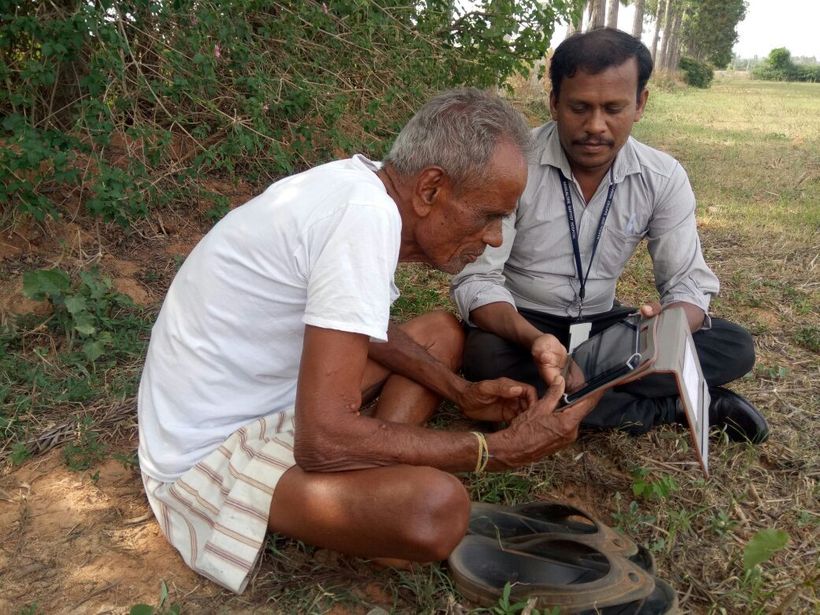
An interdisciplinary team of Baylor University researchers – from nursing and business information systems to art and video game design – and physicians from Bangalore Baptist Hospital in Bengaluru, India, were awarded a 21st Century Knowledge Initiative Grant from the U.S. India Education Foundation (USIEF) to develop a diabetes mobile health app to boost awareness and educate those in India who are most at risk for diabetes. The team is led by Shelby Garner, Ph.D., R.N., assistant professor in Baylor’s Louise Herrington School of Nursing, who has worked in India over the past six years to develop technological health resources. She cited statistics from the World Health Organization that show life expectancy in India is among the lowest in the South East Asian Region and is largely attributed to growing rates of non-communicable diseases, such as diabetes. Contextualized health education is one key to help raise awareness in the country, she said. “There is a need for culturally appropriate health education materials in India,” Garner said. “Our early research showed that technology, such as smartphones and internet accessibility, are widely available in India among health providers, but most technological educational resources were developed in the West and do not effectively translate to the Indian context.” Physicians from Bangalore Baptist Hospital will provide cultural context and help identify important medical content to be included in the app. “Our diabetes app will feature an interactive 3D animated video with gaming features to help educate patients at risk for diabetes,” Garner said. “Answers to questions addressed in the app include: What is diabetes? What happens if I have diabetes? How do I prevent and treat diabetes? What do I do now?” The app also serves as a data collection tool to help researchers determine if the video is improving participants’ knowledge on diabetes. Community health workers employed by Bangalore Baptist Hospital will use the app as they visit with people in rural villages and urban slums during door-to-door health education visits, Garner said. The research team will compare the app’s effectiveness with standard health educational resources previously used. Garner said the USIEF grant was awarded, in large part, due to the success of an earlier project that led to the development of a hypertension app. “Earlier this year, we tested the hypertension app among 346 people in one of the largest slums in Bengaluru, India, and in several rural villages surrounding Bengaluru,” she said. “The app was significantly effective in improving knowledge among participants. We used these results to justify the need to design more resources and applied for funding from the U.S. India Education Foundation.” From previous experience developing and employing the hypertension app, Garner said she knew this new project would require input from a variety of perspectives. “I’ve realized some of the ‘big picture’ challenges in health education, and it will take a team of experts to make this happen,” she said. Team members are: • Shelby Garner, Ph.D., R.N., assistant professor in Baylor’s Louise Herrington School of Nursing • Dr. Carol Elizabeth George, community health physician, Bangalore Baptist Hospital • Dr. Gift Norman, community health physician, Bangalore Baptist Hospital • Dr. Kingsly Victor, internal medicine physician, Bangalore Baptist Hospital • Hope Koch, Ph.D., associate professor of business information systems, Baylor’s Hankamer School of Business • Phil Young, Ph.D., assistant clinical professor of business information systems, Baylor’s Hankamer School of Business • Julia Hitchcock, M.F.A., associate professor of art, Baylor’s College of Arts & Sciences • Matthew Fendt, Ph.D., lecturer in computer science, Baylor’s School of Engineering and Computer Science The grant also will fund exchange teams of researchers and faculty from India to come to the U.S. and for Baylor team members to go to India to collaborate on the research for the next two years. The first team from India is due in late October. “We are really excited about the work we will do together with our Indian partners over the next two years,” Garner said. ABOUT BAYLOR UNIVERSITY Baylor University is a private Christian University and a nationally ranked research institution. The University provides a vibrant campus community for more than 17,000 students by blending interdisciplinary research with an international reputation for educational excellence and a faculty commitment to teaching and scholarship. Chartered in 1845 by the Republic of Texas through the efforts of Baptist pioneers, Baylor is the oldest continually operating University in Texas. Located in Waco, Baylor welcomes students from all 50 states and more than 80 countries to study a broad range of degrees among its 12 nationally recognized academic divisions. ABOUT LOUISE HERRINGTON SCHOOL OF NURSING The Baylor University Louise Herrington School of Nursing (LHSON) located in Dallas was established in 1909 as a diploma program within Baylor Hospital in Dallas, which is now Baylor University Medical Center, and in 1950 became one of the six degree-granting schools of Baylor University. The first Baccalaureate degrees were granted in 1950 establishing the school among the earliest baccalaureate nursing programs in the United States. In 1999, the School was renamed the Baylor University Louise Herrington School of Nursing after Louise Herrington Ornelas, a 1992 Baylor Alumna Honoris Causa, who made an endowment gift to the school. Accredited by the Commission on Collegiate Nursing, LHSON offers Bachelor of Science in Nursing (B.S.N.) degrees through a traditional program and FastBacc (one-year accelerated program). LHSON also offers an online Master of Science in Nursing (M.S.N.) Leadership and Innovation program, as well as Doctor of Nursing Practice (D.N.P.) programs to include Family Nurse Practitioner (F.N.P.), Nurse-Midwife (C.N.M.) and Neonatal Nurse Practitioner (N.N.P.). LHSON was featured in U.S. News & World Reportfor the 2018Best Graduate Schools ranking the D.N.P.program in the top 50 U.S.nursing schools at No. 46. The Baylor M.S.N.program is ranked at No. 56and the Nurse Midwifery Program ranked No. 10. Baylor’s M.S.N. in Nursing Leadership andInnovation Online Program ranked No. 39 in the 2018U.S. News Best Online Graduate Programs. For more information, www.baylor.edu/nursing.

Can Hollywood help lift the stigma on mental health?
When A Star is Born was released to theatres – it had high expectations. It was a hit at international film festivals and Oscar buzz was already starting. Loaded with stars from stage, screen, and the music industry, it was guaranteed to bring in the audiences and pack theatres. While critics are raving about the performances, the message the film is bringing is also resonating with audiences as well. The story deals with characters attempting to overcome addictions as well as suicide. It’s a film that has people talking about serious issues. But is it Hollywood’s job to educate people about issues such as mental health? With the lines between education and entertainment blurring – is this a platform that could serve the wrong purposes? And with all things celebrity, is there a risk to glorifying acts of suicide or addiction? There are a lot of questions and that’s where the experts from CARF International can help. Michael Johnson is Managing Director of Behavioral Health at CARF and is an expert in mental health and substance use disorder. Mike is available to speak with media regarding this topic – simply click on his icon to arrange an interview.


Cedar Crest named Top College by U.S. News & World Report
For the eighth year in a row, Cedar Crest College has been named among the top colleges in the nation by U.S. News and World Report’s Best College Rankings, 2019. Among colleges in the northern region, Cedar Crest is ranked the sixth Best Regional College, the third Best Value School and the second Best College for Veterans. The college has been named a Top Regional College and Best Value College every year since 2012, and was named a Best College for Veterans in 2015, 2016 and 2018. “At Cedar Crest College, we are dedicated to preparing our students for a lifetime of continued success,” said Cedar Crest President Elizabeth Meade. “The fact that we consistently rank among the best colleges in the nation shows that we are committed to providing the very best education to our students.” In addition to the U.S. News & World Report ranking, Cedar Crest was also recognized for its student engagement by the Wall Street Journal this year, and was named a “Best College for Your Money” by MONEY Magazine.


On World Food Day, Cedar Crest College works to combat food insecurity among students
World Food Day -- an annual event established by the United Nations in 1945 -- will be celebrated on October 16, 2018. Cedar Crest College will join the celebration by continuing to work diligently to eliminate food insecurity among its students. The college's Closing the Gap Committee is holding a Fall Food Drive through October 22 to help stock the campus Resource Pantry. The pantry is open to all students – traditional undergrads, adult learners and graduate students. It offers non-perishable food items, toiletries and frozen meals.The pantry operates solely on donations and gifts. “It is harder to concentrate on your academic work when you are hungry,” said Mary Alice Ozechoski, Vice President of Student Affairs & Traditional Enrollment. “We believe that students who are food insecure need assistance so they can focus on what matters: completing their education.” Cedar Crest College was one of dozens of schools to participate in a recent survey conducted by Temple University and the Wisconsin HOPE Lab assessing the basic needs of university students across the nation. The study determined that 36 percent of students on U.S. College campuses suffer from food insecurity. You can read the full report here. Mary Alice Ozechoski is available to speak with media regarding this issue. Simply click on her icon to arrange an interview.

In Georgia governor's race, women could cast deciding vote
With the 2018 midterm elections looming less than a month away, Georgia gubernatorial candidates Stacey Abrams and Brian Kemp are neck-and-neck according to the latest Atlanta Journal Constitution/Channel 2 poll. In an election year with record voter registration numbers in the Peach State—and amid allegations of voter suppression—women voters could cast the deciding vote. But for which side? To find the answer, says Dr. Mary-Kate Lizotte, associate professor of political science at Augusta University, look to the issues. “Women, in particular Republican and Independent women, differ from men of the same party on the issues of government spending on childcare, public schools, welfare, social security, and aiding the homeless,” Lizotte said. “Women typically favor increased spending on the issues.” Examining data from 1994 to 2008, Lizotte, an expert on gender differences relating to public opinion, found that women are also more liberal than men of the same party on the issues of gay rights, government-guaranteed standard of living, and on the provision of more government services. “For races where these issues have become salient, it might be the case that women would be more likely to be motivated to turn out to vote and to vote for candidates that have liberal positions on these issues,” she said. That could be excellent news for the Abrams campaign, which has emphasized public education funding. “Women in Georgia who believe in increasing public education funding should be more likely to vote for Abrams,” Lizotte said. “This may also be the case for several House races where the issue of tax reform and tax cuts has become salient.” The confirmation of Justice Brett Kavanaugh to the Supreme Court earlier this month could also sway election results, albeit in less clearly defined ways. Lizotte said the confirmation could either motivate conservative women voters to turn out or, alternatively, dissuade Republican women with Pro-Choice leanings from voting entirely. The expectation is a little more cut-and-dry for liberal women voters. “The Kavanaugh confirmation is just one more reason to expect an increase in voter turnout among liberal women,” she said. “The Women's March in 2017 and 2018 along with the increase in female interest in running for office all indicate that the Trump election and presidency had already galvanized liberal women voters.” Finally, Lizotte said, although white women are divided politically—with college-educated white women swaying Left and those without a college degree favoring the Right—there was no such division among African American women voters. “And as we've seen, African American women turnout at high rates and can influence elections like the Alabama Senate race,” she said. Dr. Lizotte is available to discuss: "Gender gaps" on various issues leading up to the 2018 midterm elections The role of women voters in State and National elections The perception of voters, in terms of public opinion, toward candidates in Georgia's gubernatorial election.


With the legalization of cannabis less than two weeks away, CAA South Central Ontario (CAA SCO) is releasing new research showing that 1.9 million Ontario motorists have driven under the influence of cannabis, and over 735,000 have done so in the last three months. The statistically representative study, commissioned by CAA and conducted by Ipsos in July 2018, surveyed 1000 Ontarians over the age of 19 who own, lease or drive a vehicle and have a valid driver’s license. One of the big issues uncovered is the prevalence of ‘poly-users’, people who consume cannabis and alcohol or other mixed substances during the same time period. CAA’s research shows that 205,800 Ontario drivers admit to drinking alcohol and using cannabis before getting behind the wheel in the last 3 months. Those who have driven a car under the influence of cannabis and alcohol, tended to do so in social settings such as gatherings with family and friends and at bars/clubs/pubs. “Road safety needs to be prioritized as a leading issue as cannabis becomes legal in the coming weeks, but it’s clear that the focus can’t solely be on cannabis-impaired driving,” said Elliott Silverstein, manager, government relations, CAA SCO. “We need to take an integrated view of the dangerous behaviours that impact road safety in Ontario and focus public education and enforcement efforts accordingly.” Source:



Cloudhopper - What is it and should we worry?
Earlier this week, the Department of Homeland Security issued a warning that a Beijing based group of hackers -dubbed ‘cloudhopper’ was mounting a potential cyber-attack on American based institutions. The Chinese government has denied these claims vigorously and stated that China does not support hacking. So, what is cloudhopper? What businesses and institutions are most vulnerable? And does America need to increase its focus on cyber-security and digital threats? There are a lot of questions – and only a few leading experts who can help explain the situation. That’s where Cedarville can help. Dr. Seth Hamman is an assistant professor of computer science at Cedarville. Seth is an expert in cybersecurity education. Dr. Hamman is available to speak with media – simply click on his icon to arrange an interview.


Cities value cybersecurity but budget prevents investment
Although city governments increasingly rely on software programs to provide services such as 911 calls, service delivery and online bill payment, they may not have the proper cybersecurity policies in place to protect their systems, according to a recent nationwide survey of cities by Augusta University researchers. “We’re concerned first with the human factor of all issues,” said Dr. William Hatcher, director of Augusta University’s Master of Public Administration program and one of the survey’s authors. “Having trained employees is necessary to stop attacks or even make sure organizations are not tricked through phishing type schemes.” Almost 30 percent of surveyed cities have no formal cybersecurity policy, which would include rules on password creation, guidelines for employee training on computer security and procedures for reviewing the list of employees with access to sensitive systems, according to the survey. Of the cities that have a formal policy, the survey found that: - 17 percent don’t require in-depth background checks when employees are granted access to sensitive systems. - 18 percent don’t teach employees to recognize breaches. - 37 percent don’t provide ongoing training to employees on new computer security procedures. - 47 percent don’t review the list of employees who have security access on a regular basis. - 54 percent don’t work with an outside auditor to review their policies on an annual basis. The survey looked into cities nationwide with more than 10,000 people and received responses from 193 local governments. Based on the results of the survey, Hatcher says most cities understand the importance of cybersecurity but are not investing in vulnerable areas due to financial constraints. “Providing effective cybersecurity protection is expensive, and many municipalities have financial issues paying for the service,” Hatcher said. Hatcher ‘s research focuses on the connection between public administration and the development of local communities. Through his research, he tries to understand why public administration scholars and practitioners often have different views about the efficacy of certain administrative practices. His research has appeared in journals such as American Journal of Public Health, Journal of Public Affairs Education, Public Administration Quarterly and The Review of Regional Studies. Contact us to schedule an interview with Dr. Hatcher or learn more about his expertise. Source:
