
Experts Matter. Find Yours.
Connect for media, speaking, professional opportunities & more.
Has the SuperBowl Priced Itself out of Fans?
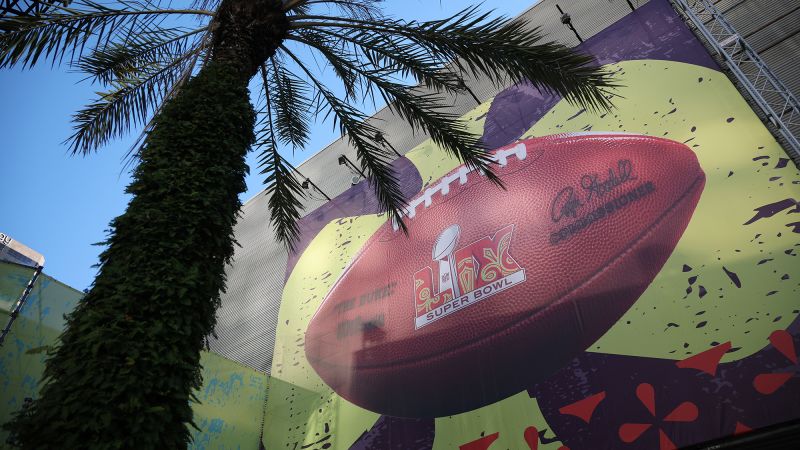
It's arguably one of the 'must-see' sporting events in the world. But this year fans seem to be a little reluctant to spend those hard earned dollars to watch the Kansas City Chiefs attempt a three-peat and a chance at history. It's a topic that's getting a lot of coverage leading up to the big game this Sunday. The Kansas City Chiefs might make history this weekend, but ticket prices aren’t reflecting that. The cheapest ticket for Super Bowl LIX in New Orleans has fallen below $4,000 on the secondary market, according to reseller TickPick, marking a 30% decline over the past week — and more than 50% cheaper compared to last year’s record-breaking Super Bowl. The Chiefs, who face the Philadelphia Eagles on Sunday, are hoping to be the first team to win three successive Super Bowl rings. Despite that historic feat on the line, fans apparently aren’t excited to splash out big bucks. There are a few potential reasons related to this year’s host city — and perhaps a slight dose of Chiefs fatigue. Last year’s matchup between the Chiefs and San Francisco 49ers was the most expensive Super Bowl on record, partly because it took place in the party mecca of Las Vegas for the first time. However, New Orleans “doesn’t have the same appeal” as Las Vegas, TickPick CEO Brett Goldberg said. New Orleans’ larger seating capacity is pushing prices lower as well, Goldberg said. The Caesars Superdome holds about 74,000 seats, whereas the Allegiant Stadium in Las Vegas holds around 65,000 seats. The host city is also still reeling from a terrorist attack last month when a man drove a pickup truck into a crowd and opened fire, killing 14 people and injuring at least 35. Then there’s the matchup itself. Football fans are bored by a third straight Chiefs Super Bowl bid, resulting in TickPick “seeing less interest from fans looking to attend,” Goldberg told CNN. “Had the Detroit Lions, Washington Commanders or Buffalo Bills made it this far, it’d be a much different story as it relates to current prices.” February 03 - CNN It's an interesting topic and there are questions to be asked Does ticket demand and attendance really matter to the NFL and its sponsors? Why is viewership more important than attendance and ticket prices for the Super Bowl? Location, location, location. It’s always the same issue but what’s different this year? The NFL is big business and if you're a journalist covering the Super Bowl this Sunday - then let us help with your stories. Kirk Wakefield, Ph.D., is The Edwin W. Streetman Professor of Retail Marketing at Baylor University, where he is the Executive Director of the Curb Center for Sales Strategy in Sports and Entertainment (S3E) program in the Hankamer School of Business. Kirk is available to speak with media - simply click on his icon ow to arrange an interview today.


Halloween, one of the most celebrated holidays worldwide, has a rich history rooted in ancient traditions, evolving through centuries of cultural exchange and adaptation. This topic is of public interest not only because of its widespread celebration but also due to its fascinating mix of religious, cultural, and folk origins that shape how Halloween is experienced today. From ancient Celtic rituals to modern festivities, exploring Halloween's origins offers insights into the lasting impact of folklore and tradition in society. Key story angles that may interest a broad audience include: The ancient Celtic festival of Samhain: Delving into the pagan roots of Halloween and its transformation over time. Halloween and religious traditions: Exploring the holiday's connection to Christian observances like All Saints’ Day and its integration with local customs. The commercialization of Halloween: Analyzing the economic impact of Halloween on the retail and entertainment industries, from costumes to candy. Halloween symbols and superstitions: Investigating the origins of classic symbols like pumpkins, ghosts, and witches, and their meanings in different cultures. Modern-day Halloween traditions: Highlighting how different countries celebrate Halloween uniquely, reflecting local customs and beliefs. The psychology of fear and fantasy: Examining why people are drawn to the spooky, the macabre, and the thrill of Halloween. Connect with an expert about the origins of Halloween : To search our full list of experts visit www.expertfile.com


It's October ... and that means one thing in America: Major League Baseball playoffs are set to begin. It means wall to wall broadcasts of games, massive advertising buys and gate receipts that means a serious stream of revenue for all of the teams, players and owners who made it through a long season and survived to be one of the dozen teams left to play for the Commissioner's Trophy. It's going to be a wild few weeks for baseball fans and the reporters covering the games. And if you're a journalist looking to know how important the marketing and business sides are to the the playoffs - then let us help with your stories. Kirk Wakefield, Ph.D., is The Edwin W. Streetman Professor of Retail Marketing at Baylor University, where he is the Executive Director of the Curb Center for Sales Strategy in Sports and Entertainment (S3E) program in the Hankamer School of Business. Kirk is available to speak with media - simply click on his icon ow to arrange an interview today.

#ExpertSpotlight: The Origin of Friday the 13th
Friday the 13th is a day shrouded in superstition and mystery, deeply rooted in historical and cultural significance. Often viewed as a day of bad luck, its origins stem from a combination of religious, historical, and folkloric traditions that date back centuries. The fear surrounding the number 13, known as triskaidekaphobia, along with the historically ominous associations with Fridays, have contributed to the day’s infamous reputation. As society continues to explore the psychological effects of superstition, Friday the 13th remains a fascinating topic for public discussion and cultural reflection. Key story angles of interest include: The historical and religious roots of the superstition surrounding Friday the 13th The psychological impact of superstition and its role in modern society The influence of Friday the 13th in popular culture, including movies, books, and folklore Triskaidekaphobia: why the number 13 is feared in many cultures How different cultures interpret and respond to Friday the 13th The commercialization of Friday the 13th in horror films and entertainment Connect with an expert about the Origin of Friday the 13th: To search our full list of experts visit www.expertfile.com Photo Credit: Library of Congress Blogs

ExpertSpotlight: The History of American Football
American football holds a special place in the cultural fabric of the United States, evolving into one of the most popular and celebrated sports in the country. Its history, marked by innovation, athleticism, and deep-rooted rivalries, reflects broader societal changes such as commercialization, media influence, and evolving notions of teamwork and competition. As one of the most-watched sports globally, its impact on American culture, from college football Saturdays to Super Bowl Sundays, goes beyond the field. This story matters because it highlights the connection between sports, community identity, and the evolution of American pastimes. Key story angles of interest include: The origins and early development of American football The impact of college football rivalries on American sports culture The rise of the NFL and its influence on modern sports entertainment The role of football in fostering a sense of community and national identity The effects of media and technology on the commercialization of football Health concerns and how they’ve shaped the future of the sport, particularly in relation to player safety and concussions Connect with an expert about the The History of American Football: To search our full list of experts visit www.expertfile.com

NarrA.I.tive empowers storytellers by merging AI and traditional artistic crafts
Irvine, Calif., Aug. 26, 2024 — Beall Applied Innovation at the University of California, Irvine has announced the launch of NarrA.I.tive, a groundbreaking initiative that blends the university’s academic strengths with the global entertainment industry and the innovative spirit of Orange County to harness artificial intelligence as a force for good across creative industries. “As AI’s influence expands, the opportunity and responsibility to steer it in positive directions is crucial,” said Errol Arkilic, UC Irvine’s chief innovation officer. “Through NarrA.I.tive, we redirect doom-and-gloom scripts to scripts of inspiration, education and enthusiastic support for creators as artificial intelligence increasingly influences the industry.” NarrA.I.tive’s action plan includes establishing UC Irvine and Orange County as global leaders in reshaping the artistic and technological ecosystem surrounding storytelling, attracting partners and collaborators to support the state-of-the-art initiative, creating revenue-generating content and tools, unifying academic excellence with emerging content production methods, and developing a structure for efficient project execution and student involvement. Supporting NarrA.I.tive’s impact, Beall Applied Innovation has established a strategic collaboration with Apples and Oranges Arts, an Orange County-based nonprofit entertainment and education studio co-founded by UC Irvine alumnus Tim Kashani ’86, MBA ’88, and his wife, actress Pamela Winslow Kashani. Started in 2008, Apples and Oranges Arts empowers storytellers to become creative entrepreneurs by combining educational platforms, technological integration, and a thriving community of new and existing voices. “Through NarrA.I.tive, we blend the magic of storytelling with the power of technologies such as artificial intelligence and extended reality, creating narratives that touch hearts and minds in ways previously unimaginable,” Tim Kashani said. “This collaboration marks a new era of creativity and technology alignment that requires ethical stewardship placing the human front and center.” In July, Apples and Oranges Arts and Beall Applied Innovation finalized plans for the NarrA.I.tive Story Studio, to be located at the Cove@UCI in the campus’s Research Park. Apples and Oranges Arts will lead the studio’s charge through training in new technologies that drive the entertainment industry’s future and through collaboration with UC Irvine schools, involving students and faculty in tool development and content production. “We invite storytellers, technologists, philanthropists, investors and the global community to join us in reshaping the future of storytelling,” said Stuart Mathews, director of industry alliances at Beall Applied Innovation. “Together, we will explore the expanding possibilities that AI and technology bring to the narrative arts, redefining how stories inspire, entertain and elevate the human experience.” About the University of California, Irvine: Founded in 1965, UC Irvine is a member of the prestigious Association of American Universities and is ranked among the nation’s top 10 public universities by U.S. News & World Report. The campus has produced five Nobel laureates and is known for its academic achievement, premier research, innovation and anteater mascot. Led by Chancellor Howard Gillman, UC Irvine has more than 36,000 students and offers 224 degree programs. It’s located in one of the world’s safest and most economically vibrant communities and is Orange County’s second-largest employer, contributing $7 billion annually to the local economy and $8 billion statewide. For more on UC Irvine, visit www.uci.edu. Media access: Radio programs/stations may, for a fee, use an on-campus studio with a Comrex IP audio codec to interview UC Irvine faculty and experts, subject to availability and university approval. For more UC Irvine news, visit news.uci.edu. Additional resources for journalists may be found at https://news.uci.edu/media-resources.


Election 2024: Providing insight during a pivotal campaign season
Voter behavior and emotion, civil discourse, the spread of misinformation, the role of gender and race in politics and conspiracy theories are among the many topics University of Delaware experts can comment on during this final stretch of the 2024 campaign. David Redlawsk Professor of Political Science and International Relations Expertise: Political psychologist who studies voter behavior and emotion, focuses on how voters process political information to make their decisions. He has written several books on politics, worked behind the scenes on campaigns and ran for local office. Dannagal Young Professor of Communication Director of the Center for Political Communication Expertise: The spread of misinformation in politics and the intersection of entertainment and information, with an emphasis on political satire, political media effects, public opinion and the psychology of political humor. Kassra Oskooii Professor of Political Science and International Relations Expertise: Focuses on the interplay between the contextual and psychological determinants of political opinions and behaviors of high and low status group members. Erin Cassese Professor of Political Science and International Relations Expertise: Explores the behavior of women as voters and candidates for political office, and studies political psychology, gender stereotypes, public opinion, elections and the intersection of religion and politics. Yasser Payne Professor of Sociology and Africana Studies Expertise: Research program also focuses on Black racial identity; street identity; economic and educational opportunity or the impact of structural violence. Tim Shaffer SNF Ithaca Director Stavros Niarchos Foundation (SNF) Chair of Civil Discourse Expertise: Civil discourse in politics; can talk about partisanship, polarization and their impact on media outlets. advancement of democratic practices by focusing on the role of civic professionals in institutional settings. Alice Ba Professor and acting chair, Political Science and International Relations. Expertise: Her work on the international relations of East and Southeast Asia examines the structures, processes, and systemic effects of regionalism and cooperative regime building, as well as relations between smaller and major powers. Joanne Miller Professor of American Politics, Research Methods and Political Psychology Expertise: Studies political psychology, with an emphasis on political propaganda, misinformation and conspiracy theories. Muqtedar Khan Professor of Comparative Politics, International Relations and Political Theory Expertise: Issues surrounding U.S. foreign policy in the Muslim World as well as national security and counter-terrorism. To speak with any of these experts, simply visit their profle and click on the "contact" button, which will send a message directly to them (while also copying UD's media relations team).


Can the Olympics Help Americans Forget Politics (at Least for 16 Days)?
Americans are divided on a multitude of different issues, but could the Olympic Games unite the country – at least for the duration of an Olympiad? A Baylor University sports marketing and branding expert says yes, the Olympics can help bring people together even when it’s hard for them to agree about anything else. In his latest Forbes Sports Money column, Baylor University sports marketing and branding expert Kirk Wakefield, Ph.D., executive director of the Curb Center for Sales Strategy in Sports and Entertainment (S3E) program at Baylor’s Hankamer School of Business, analyzed a July 8 national population poll that asked Americans questions about politics but also included the Steen Happiness Index (SHI). The 20-item happiness index provides a series of statements for participants to read and choose the one from each group that describes their state at that moment. Happiness items focus on three types of happy lives: the pleasant life (experiencing and savoring pleasures), the engaged life (losing the self in engaging activities) and the meaningful life (participating in meaningful activities). Are people happier when watching the Olympics? “Happy people follow the Olympics and people who follow the Olympics are happy people,” Wakefield wrote. The higher people scored on the happiness index, the more likely they are to: Watch at least some of the Olympics (49.75%) Root for the U.S. to win (31.8%) Follow the results of the Olympics (28.1%) Read stories about athletes in the Olympics (19.6%) Will talk with others about the Olympics events (18.7%) “Controlling for age, gender, income, education, race and marital status, Americans who follow the Olympics in one, two, or three of these ways are somewhat more happy people (+4% on the SHI). But those who follow the Olympics in four or all five of these ways are significantly happier people (+10% on the SHI),” Wakefield wrote. Who is happiest when the Olympics are on? The happiest? Those would be the Americans who love to talk about the Olympics with others while also cheering for U.S. athletes to win. In fact, they are about 14% happier than those who don’t follow the Olympics, according to the SHI. “Perhaps best of all, people of all political leaning and presidential preferences are equally likely to follow the Olympics. No matter the party, people can party together in unity following the Olympics,” Wakefield wrote. “Maybe we can’t forget politics. But we can give it a break to watch the Olympics.” ABOUT KIRK WAKEFIELD, PH.D. Kirk Wakefield, Ph.D., is The Edwin W. Streetman Professor of Retail Marketing at Baylor University, where he is the Executive Director of the Curb Center for Sales Strategy in Sports and Entertainment (S3E) program in the Hankamer School of Business. The author of Team Sports Marketing and founder of Wakefield Research Partners, Wakefield has conducted fan research on partnerships, pricing, promotions, sportscape, service, and anything else that explains why fans do what they do in nearly every venue in sports, including the NBA, NFL, MLB, MLS, NHL and NASCAR. His scholarly works appear in a breadth of journals: Journal of Marketing, Journal of Consumer Research, Journal of the Academy of Marketing Science, Journal of Service Research, Journal of Retailing, Journal of Advertising, Journal of Advertising Research and Journal of Sport Management, among others. Wakefield is a regular contributor to Sports Money on Forbes.com. ABOUT THE CURB CENTER FOR SALES STRATEGY IN SPORTS AND ENTERTAINMENT (S3E) The Center for Sales Strategy in Sports and Entertainment (S3E) at Baylor University is the only program in the U.S. focused on generating revenue for sports. S3E graduates have career opportunities in sales, digital marketing or business analytics for major league teams, university athletics, corporations and agencies. Baylor is the only university combining learning with practice in partnership with the Athletics Department to prepare graduates for careers in the business of sports. The S3E program is unique in vision, values, mission and culture to transform the business of sports and entertainment. Consistent with the Christian mission and purpose of Baylor University, we prepare passionate servant leaders to positively influence lives in places people go to play or watch others play.

Goizueta Professors on Olympic Fandom, Viewership, Economics of the Games
As we countdown to the July 26 opening of the Olympic Games in Paris, we have two Goizueta Business School experts who can discuss the Olympics, including fandom, viewership, and the economics of the Paris Games. Professor Mike Lewis studies fandom and has spent many years tracking how sports can stay relevant and lucrative across generations. “While the Olympics is presented as a pure sports competition, it’s actually a unique sports entertainment event that leverages underpaid athletes and national identities to create one of the foremost sports-based advertising platforms.” His research on this year’s Olympics finds: Viewership skews to an older audience - with Baby Boomers showing the biggest fandom. The Games have an ongoing challenge to attract a younger audience. The Olympic broadcast will have to work hard to gain the attention of Gen Z and Millennials. Olympic fans are pretty even between genders, which is very different from typical sports fans that are more than 50% male. Check out his latest research: And his latest podcast on the Games: Professor Tom Smith studies the economics of sports. He can discuss: The economic impact of the Games for Paris during what is usually a high tourist season. The economics of decisions by city leaders to repurpose current facilities, landscape and architecture for the Paris games. What other cities can learn from the Paris games. Both Tom and Mike are available to speak with media about the upcoming Olympic Games - simply click on either expert's icon now to arrange an interview today.




It Has to Matter Who Wins: Futurecasting the MLB All-Star Game
Globe Life Field in Arlington, home of the 2023 World Series champion Texas Rangers, will play host to the 94th edition of the Major League Baseball All-Star Game on July 16, marking the second time in franchise history the Rangers will host the Midsummer Classic. MLB’s All-Star game – which matches up the best players from the American League and National League as selected by fans, managers and players – is considered one of best all-star contests among professional sports, said Kirk Wakefield, Ph.D., executive director of the Curb Center for Sales Strategy in Sports and Entertainment (S3E) program at Baylor University’s Hankamer School of Business. However, the game faces continued headwinds, Wakefield said, ranging from lagging viewership to fan voting to a game that is more an exhibition than a meaningful game. Wakefield Weighs In: Five Thoughts on MLB's All-Star Game Is the MLB All-Star game the best All-Star contest of all major leagues? Wakefield: Yes, it’s the only one where players seem to try their best. The NBA and NFL – who have practically given up – have declining viewership since 2011. Unfortunately, MLB All-Star game is on the same downhill skid. (According to Statista, viewership has declined from 22 million in 1993 to seven million in 2023.) The reason why is it doesn’t really matter who wins. If the players don’t care who wins, neither will fans. Further, fans aren’t particularly a fan of only one league so that it really matters if one league has bragging rights. That was less the case years ago before interleague play. How could viewership improve in any of the All-Star games? Wakefield: It has to matter who wins. MLB tried this with home field advantage for the World Series. They gave that up. The current approach in baseball is truly an exhibition because every player gets to play, so it’s like three players at every position playing three innings. That’s not how a manager would play it if trying to win. And it’s not like it used to be when the starters (who were more likely to be the best at their positions) played longer. One suggestion I’ve heard is to make the payoff big enough for the winners so that the players gave it their best. Get a sponsor to put up the money so the winners each make seven figures and could be the players and managers will play more like a team trying to win. Does Monday’s prelude, the hugely popular Homerun Derby, enhance Tuesday’s game? Wakefield: The Homerun Derby is popular because fans do follow individual players. It matters more who wins. That said, the HR derby’s viewership has still lagged. Bottom line: Fans are loyal to teams more than to leagues or individual players. Fan voting… Need we say more? Wakefield: Major market teams with huge fan bases will dominate, but what about the Kansas City Royals, who at one point in the season were on pace for the biggest year-over-year improvement in wins and losses? Given the way fan voting has become essentially a promotion game to get more fans to vote more often, it’s hardly representative of anything other than largest markets with the best promoters. The good news is that the MLB All-Star game will be quite the occasion in Arlington, Texas, with a bevy of game-related activities and events July 13-16. Wakefield: Arlington is an optimal location central to the U.S. with plenty of space to blow out the occasion. It’s like the Texas State Fair came to baseball, where all the rides and attractions are baseball-happy. ABOUT KIRK WAKEFIELD, PH.D. Kirk Wakefield, Ph.D., is The Edwin W. Streetman Professor of Retail Marketing at Baylor University, where he is the Executive Director of the Curb Center for Sales Strategy in Sports and Entertainment (S3E) program in the Hankamer School of Business at Baylor University. The author of Team Sports Marketing and founder of Wakefield Research Partners, Wakefield has conducted fan research on partnerships, pricing, promotions, sportscape, service, and anything else that explains why fans do what they do in nearly every venue in sports, including the NBA, NFL, MLB, MLS, NHL and NASCAR. His scholarly works appear in a breadth of journals: Journal of Marketing, Journal of Consumer Research, Journal of the Academy of Marketing Science, Journal of Service Research, Journal of Retailing, Journal of Advertising, Journal of Advertising Research and Journal of Sport Management, among others. Wakefield is a regular contributor to Sports Money on Forbes.com. ABOUT THE CURB CENTER FOR SALES STRATEGY IN SPORTS AND ENTERTAINMENT (S3E) The Center for Sales Strategy in Sports and Entertainment (S3E) at Baylor University is the only program in the U.S. focused on generating revenue for sports. S3E graduates have career opportunities in sales, digital marketing or business analytics for major league teams, university athletics, corporations and agencies. Baylor is the only university combining learning with practice in partnership with the Athletics Department to prepare graduates for careers in the business of sports. The S3E program is unique in vision, values, mission and culture to transform the business of sports and entertainment. Consistent with the Christian mission and purpose of Baylor University, we prepare passionate servant leaders to positively influence lives in places people go to play or watch others play.