
Experts Matter. Find Yours.
Connect for media, speaking, professional opportunities & more.
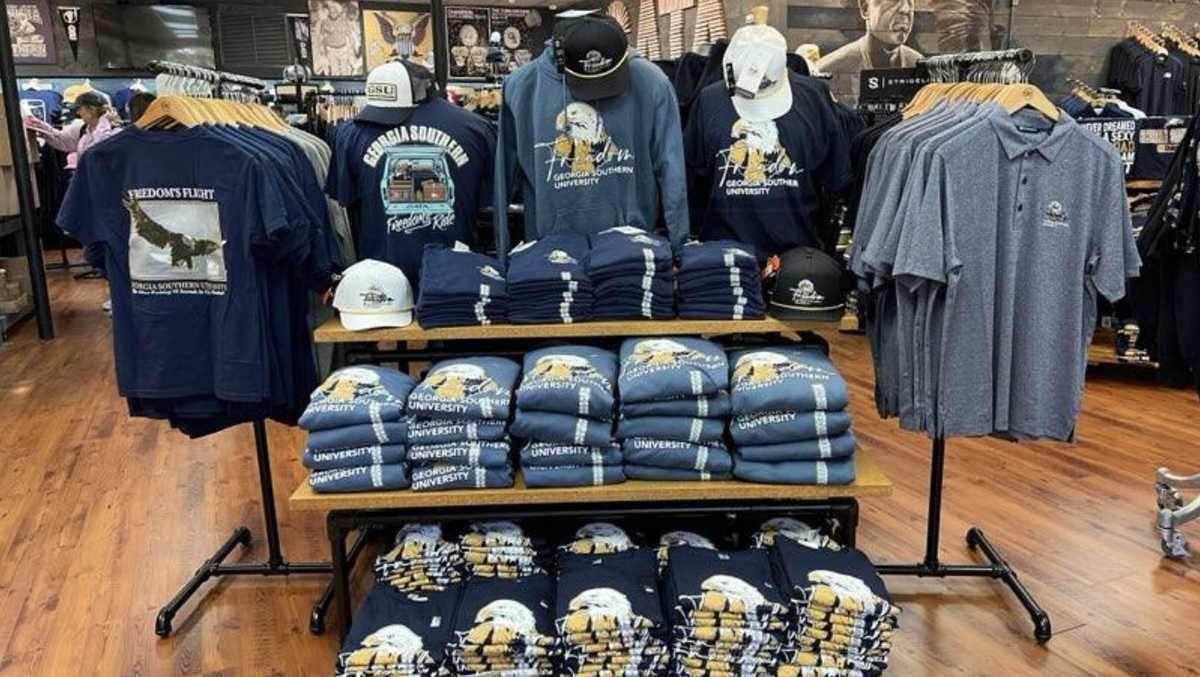
It's been called the most exciting 30 seconds in college football - and recently Freedom, Georgia Southern University’s live bald eagle mascot that flies before each home game was flying high with some serious media attention on TV, radio and print. Unable to survive on his own because of an injury to his beak as a newborn, Freedom came to Georgia Southern in 2004 and now lives at the University’s Center for Wildlife Education in Statesboro alongside other eagles, raptors, reptiles and waterfowl. He will celebrate his 20th birthday this December. The school recently launched a new line of merchandise - and the news soon went viral putting Freedom and his handler, Wildlife Center Executive Director Steve Hein in the spotlight. The coverage was tremendous and if you're looking to know more about Freedom - let us help. Simply click on Wildlife Center Executive Director Steve Hein's icon now or Contact Georgia Southern's Director of Communications Jennifer Wise at jwise@georgiasouthern.edu to arrange an interview today.


Podcast: Research into household chores reveals fascinating home truths
The notion of ‘women’s work’ still deeply embedded in today’s society Men’s choice of housework centred around machinery and perceived physical strength Some household tasks have ‘shifted’ over the years A fascinating study by an academic at Aston University has revealed that women still do certain traditional tasks within the home. The research by Dr Emily Christopher, a lecturer in sociology and policy, found that ‘woman-type’ tasks often involve multi-tasking while men’s roles often include solo duties such as mowing the lawn. Dr Christopher, whose research focuses on the reproduction of gender inequalities in paid and unpaid work, spoke about her study in the latest episode of the 'Society matters' podcast series, presented by journalist Steve Dyson. The episode is sub-titled 'Did you iron my shirt? Why household work, and who does it, matters'. Dr Christopher explained that men are doing much more household work than they did 50 years ago, and that there was “general agreement” among the couples she interviewed that household work should be shared. The lecturer, who invited couples to assign ‘task cards’ during interviews in their homes, said past research found that women still perform the ‘lion’s share’ of household work. This, she said, followed on from the “age old idea” of women being more caring and nurturing which was “deeply embedded in the way society thinks”. While some tasks were still more likely to be done by women, some had shifted over time. Tasks still “overwhelmingly gendered” today include women remembering birthdays, organising presents, and remembering whether a child needs PE kit or money for a cake sale, all the cognitive labour of household management. She said: “The problem is it’s invisible, so it isn’t recognised as work.” Dr Christopher said that men tend to do the ironing if they find it “enjoyable”, often while listening to football or music, or if they have “particular standards”, such as creases in their sleeves. However, some women choose ironing as a “form of protest”, doing their own and their children’s clothes but refusing to iron men’s shirts. Dr Christopher pointed out that some other tasks traditionally seen as women’s, which had ‘shifted’, included cooking. She said: “Men are more likely to do this now, arguably this might be because they are less likely to be seen as less masculine for doing so, this helped by the rise of celebrity chefs like Gordon Ramsay, Rick Stein and Jamie Oliver.” Her research also revealed that men are more likely to wash up and stack the dishwasher but, like ironing, men doing these tasks was often driven by standards such as liking them stacked a particular way. They are also more likely to hoover than to clean, which fell mostly to women, with Dr Christopher suggesting: “I wonder whether sometimes this is something to do with the fact that hoovering involves technology and machinery, so it conceptualises more as a masculine form of housework.” Similarly, Dr Christopher said men are more likely to do outside jobs such as DIY, washing the car and mowing the lawn, with the emphasis again on physical strength. Significantly, tasks which men are more likely to be responsible for, such as DIY, are less likely to “interfere” with paid work, whereas those done by women often involve a reduction in their hours with “very wide implications” such as a gender pay gap, restrictions in career progression, and restricted access to pensions in later life. As a result, she said the state needs to do more, particularly around parental leave and the lack of affordable childcare provision. Dr Christopher said: “If you take maternity leave, it’s 12 months maximum in comparison to one or two weeks’ paternity leave, so straight away we are sending a message about who’s the natural carer. Parental leave needs to change to challenge this reinforcing of gender roles.” She added that childcare provision needs to be seen as integral to the way society and the economy works, so needs funding. Increasingly, Dr Christopher said couples are relying on their parents for help with childcare, and “interestingly, it tends to be the grandmothers who take on this work”. Individuals wanting to put a monetary value on household work can complete the Office for National Statistics’ domestic labour calculator, although she said it was a crude measure and only gives a rough idea. “Using this measure, my household work, on top of a full-time job at Aston University, is worth £18,000 a year,” she said. Listen to all episodes of the 'Society matters' podcast


How Colorism Impacts Professional Achievement
Melissa J. Williams is associate professor of organization and management at Emory University’s Goizueta Business School. She investigates what happens when social identities collide with workplace hierarchies, and the consequences of putting people in positions of power and leadership. Here she looks at something less documented: the extent to which our appearance is stereotypically Black or white. And what that means for our prospects. Rosa Parks made history on December 1, 1955, when she refused to relinquish her bus seat to a white passenger. Her simple gesture of defiance ignited a city-wide bus boycott in Montgomery, Alabama, and has gone down in the annals as a pivotal moment for the social justice movement in the United States. However, Parks was not the only African American to make a stand against racial segregation. Nor was she the first. In March of the same year in the same city, 15-year-old Claudette Colvin also refused to give up her seat to a white woman on a Montgomery bus. So why isn’t she a household name? In part, Colvin’s age was a factor. The National Association for the Advancement of Colored People and other Black civil rights groups got behind Parks, reasoning that an older woman would be better equipped to withstand the controversy. But as Colvin herself stated, there were other factors at play. There was something about Parks’ appearance that gave her more leverage, reasons Colvin explained in Philip Hoose’s award-winning book on the civil rights movement. She had the “right hair and the right look.” Not only that, but her appearance “was the kind that people associate with the middle class. She fit that profile.” Success isn’t black or white. It’s shades of…white. Colorism has long been documented in the U.S. and elsewhere. Discrimination against human beings on the basis of their facial features, hair, and skin color transcends race—it is prevalent even within groups that share the same ethnic identity, where lighter skin tones are perceived to be more valuable than dark. Research over the years has shed light on the nefarious effects of colorism or shadeism in terms of equity and access to opportunity. But a new landmark study by Associate Professor of Organization & Management Melissa Williams, and Goizueta colleagues, PhD student Tosen Nwadei and Roberto C. Goizueta Chair of Organization & Management Anand Swaminathan, looks at just how Black or white someone appears—and how this shapes the way others see their potential; as well as the kinds of professional outcomes they can expect. What Williams and her co-authors, who also include James B. Wade from George Washington University and C. Keith Harrison and Scott Bukstein of University of Central Florida, find in their studies, is that Black professionals are less likely to be promoted to leadership roles. What’s more, for Black professionals whose physical appearance is more Black-stereotypical, their chances drop from 12 percent to a mere seven percent. For white professionals, on the other hand, having a more white-stereotypical appearance is an advantage for leadership – looking more stereotypical as a white person increased their chances of holding a leadership role from 32 percent to 43 percent. Williams and colleagues ran both an archival study and a lab experiment with volunteers to discover the extent to which degrees of ethnicity in appearance influence perceptions of a person’s potential for leadership and actually predict their likelihood of success in an industry. While the science unequivocally shows that white people enjoy advantages over Black people in opportunity and outcome across the board, Williams et al. were also interested in exploring what she calls the “continuum of race:” the more nuanced racial characteristics and differences that shape how the world sees us. There’s an assumption that everyone within the same ethnic group—Black or white—will experience the same degree of bias and prejudice, or acceptance and success. And we wanted to push back on that idea to really explore how degrees of whiteness or Blackness play out in people’s minds and shape how they read you physically. -Associate Professor of Organization & Management Melissa Williams Previous research shows the link between persisting in STEM-based majors in college and how much students are perceived to look “like their race,” she says. Those who are perceived to look less typically Black tend to make more friends outside their ethnic group—a boundary-crossing behavior that can help drive careers. To test these ideas, Williams and co-authors ran two studies. First, they accessed publicly available data including photographs, professional background, and positions from one large industry within the U.S.: American college football. College football is really rich in data. You can access job titles, photos, leadership, and non-leadership roles; and you can separate individuals out into head coaches and position coaches who have overseeing roles but who are not leaders per se. Separately, Williams et al. recruited a group of volunteers to look at the images of the football coaches: a mix of Black and white head and position coaches. These volunteers were asked to rate how typical they perceived each individual’s appearance to be of European or white Americans, or of Black Americans, ascribing each person a score out of five based on features such as their skin color, hair, eyes, nose, cheeks, and lips. These scores were then regressed—or cross-referenced—with the position held by the individuals in the photos to determine the relationship between their racial stereotypicality and their leadership role. Crunching the numbers, Williams found a direct correlation between the degree of perceived whiteness or Blackness of the coaches and how likely they actually were to be successful leaders. “We do find a kind of consensus in people’s view of what it means to be Black or white straight off,” says Williams. “So we do all seem to agree on the physical attributes of race. But it gets really interesting when you regress the scores that these photos get and compare them with the actual jobs these guys hold.” What we see is that, controlling for their age, attractiveness, and professional experience, the white guys who look less stereotypically white are 32 percent likely to occupy leadership roles. This rises to 43 percent with the men who look more like a stereotypical white guy. For Black professionals, the inverse is true, she notes. The more typically Black an individual looks, the less probability there is that he occupies a leadership job. Specifically, that figure drops from 12 to seven percent. So benchmark leadership probability is not only already lower for Black individuals, but drops even further when people are deemed to look “more typically Black,” says Williams. A follow-up experiment invited volunteer football fans to compare how they saw the potential future success of two same-race college football players—one more stereotypical in appearance than the other. The results confirm what Williams et al. suspect: 70 percent of the time, participants chose the more-typical white individual over the less-typical white individual as having greater leadership potential. In other words, the more white a white person looks, the more they are seen as leadership material. These findings should translate into an imperative, says Williams; and that is to think more broadly about race and how it impacts life outcomes. Because race is not a uniform experience, she says. “Organizations might want to look beyond just ticking the box when it comes to diversity and inclusion, and give deeper thought to who they want to recruit, support and push forward in representation. For white people, paying attention to whiteness—the types of white people who enjoy advantages in leadership—can be useful in reframing certain questions. A good place to start might be for leaders to ask: do I want to support people who look like me? Because the face you choose can ultimately help disrupt, or reinforce, the stereotype.” Interested in learning more or connecting with Melissa J. Williams, associate professor of organization and management at Emory University’s Goizueta Business School? She's available to speak about this subject - Simply click on her icon now to arrange an interview today.


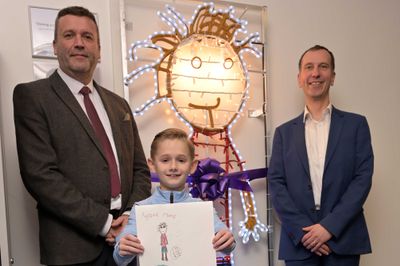
‘Shining a light on Colour Blindness’ competition winner unveils light sculpture at Aston University Winner 10-year-old Leo Evans helped unveil the feature of footballer Tyrone Mings The competition helped highlight the challenges of colour blindness - particularly in sport. A light sculpture named after the Aston Villa footballer Tyrone Mings has been unveiled at Aston University as part of a campaign to help raise awareness of colour blindness. In the UK there are approximately 3 million colour blind people (about 4.5% of the entire population), most of whom are male. Worldwide, there are estimated to be about 300 million people with colour blindness. The competition, ‘Shining a Light on Colour Blindness’, was launched by non-profit organisation Colour Blind Awareness and supported by various football club charities - including the Aston Villa Foundation. Young supporters were asked to take part by drawing a colourful picture of their favourite footballer. The winning entry was then made into a light feature. The winning artwork, which came from the Aston Villa Foundation, was transformed into a light feature and was selected to go on display inside the Aston University Vision Sciences building in the paediatrics bay, as part of the ongoing partnership between the Aston Villa Foundation and Aston University. Colour Blind Awareness is a non-profit organisation designed to highlight the relevance and impact of colour vision deficiency amongst those that live with it - including the challenges in sport. The organisation is part of an EU-funded project, Tackling Colour Blindness in Sport. Competition winner, 10-year-old Leo Evans from Erdington, helped unveil the light sculpture alongside Professor Anthony Hilton, pro-vice-chancellor & executive dean of the College of Health and Life Sciences. Professor Hilton said: “We are delighted for Leo, his winning drawing of Tyrone Mings looks fantastic as a light sculpture and we are proud to host it in our Vision Sciences building for our students, staff and visitors to enjoy, whilst raising awareness about colour blindness.” Commenting on his winning drawing, Leo said: “I am very proud that my picture won the competition and that Tyrone Mings liked it. I now better understand what being colour blind means and I hope my picture has helped someone else.” Cheryl Evans, Leo's Mum, said: “I couldn't be prouder of Leo and the fact that his drawing is of his favourite player Tyrone Mings makes it even more special. This competition has meant that as a family we have had many conversations about colour blindness and it has educated us all more on this topic. Well done Leo!” Kathryn Albany-Ward, CEO at Colour Blind Awareness CIC, said: “Aston Villa Foundation’s entry from Leo charmed the judges and who were delighted to award it first prize. We’re very grateful to Aston University for hosting the light feature and can’t wait to see it displayed. We hope its location in the Vision Sciences Department will help raise more awareness of a condition which affects 8% of boys and 0.5% of girls worldwide, impacting on their education and ability to perform to their best in sport if left unsupported.” Leo was met and congratulated by the head of the Aston Villa Foundation, Guy Rippon, and foundation manager, Ross Alexander. Ross said: “The Aston Villa Foundation would like to say a big congratulations to Leo for his amazing achievement! This is a really proud moment for Leo and we are thrilled that he was inspired by his favourite Aston Villa player. “It has also been a pleasure to have supported Colour Blind Awareness, who have done some great work in highlighting such an important and relevant topic during our coaching team’s workforce development. The support has culminated in a competition that was won by Leo, a participant in one of our Football in the Community holiday sessions. “The stunning light feature of Tyrone Mings will now be housed at Aston University for all to see and we are grateful for the University’s ongoing support with the Club.”


Battleground Georgia: All eyes on the Peach State with midterms in sight
The US midterm elections are quickly approaching, and with key Senate seats and the governor's mansion up for grabs in Georgia, the Peach State will be low hanging fruit for anyone looking to see where the balance of power rests in the country. With reporters across America covering the latest developments, we asked Augusta University's Mary-Kate Lizotte to answer a few questions that are top of mind for reporters and political junkies alike. The strength of endorsements? Q: What kind of an impact could Mike Pence backing Gov. Brian Kemp have going forward? It could have an influence on the willingness of Republicans who are not former President Trump supporters to contribute to the Kemp campaign and be sure to show up to vote for Kemp. But, it will likely not have much of an influence. Research does not find a huge, lasting impact of endorsements. Ultimately, Trump supporters are unlikely to stay home and not vote for Kemp given that they likely are very against Stacey Abrams becoming governor. For Abrams supporters, she has already begun to use Indiana as a comparison with Georgia to say that Indiana under Pence was more moderate, including Medicaid expansion in comparison with Georgia under Kemp. I doubt this will influence Republican voters who like Pence to vote for Abrams, but it could influence some Independents/moderates to vote for Abrams. It is important to note, however, that most Independents/moderates tend to consistently vote for one party's candidates and thus may not be influenced by this either. A fractured right? Q: Could Pence's support also divide the Republican party somewhat after former President Trump backed David Perdue? Yes, but will likely not have a substantial impact on the election. It is unlikely that Trump supporters and/or Perdue voters will stay home on election day. They will likely vote for Kemp as their most preferred candidate who is running. Goal line stand? Q: Herschel Walker won the Republican primary by a large margin. How does he stack up against Sen. Raphael Warnock in the general election? Polling is currently showing a close race within the margin of error. Warnock has not been running against Walker up until now because Walker had not won the primary, but Walker and conservative groups have been able to run against Warnock because there was no reason to believe that he would not win his primary. In terms of experience, Warnock is the incumbent and thus has more experience. Walker is a complicated and controversial public figure but also is loved among University of Georgia football fans. Warnock has focused on putting out positive campaign advertisements up to this point. But, since there are already attack ads against Warnock, the Warnock campaign or groups supporting the Warnock campaign need to begin airing attack ads against Walker to improve the Warnock standing in the polls. The research indicates that it is best to go negative once you have been attacked. Follow the money? Q: Are we likely to see a record amount of cash flow for candidates in Georgia over the next several months knowing it will be a key swing state? Definitely. People from out of state who will be watching these elections closely will likely contribute. We saw that when Abrams and Kemp ran against one another in 2018 and in the special election that elected Warnock in 2020. If you are a journalist covering this topic, then let our experts help. Dr. Mary-Kate Lizotte is an expert in political and voter behavior. She is available to talk about the upcoming midterm and gubernatorial elections in Georgia. Click on her name to schedule an interview.


Aston Institute of Health and Neurodevelopment officially launches new £2.8m MRI scanner
A new £2.8 million MRI scanner has been unveiled at Aston University. The showcase took place in Aston Institute of Health and Neurodevelopment on Monday 25 April. The event was attended by Aston University Interim Vice-Chancellor Saskia Loer Hansen and other members of the University executive team, together with academic researchers in the University’s College of Health and Life Sciences. After an official ribbon-cutting ceremony hosted by the Institute co-directors Professor Jackie Blissett and Professor Gavin Woodhall, guests were invited to take a tour of the new MRI scanner facilities where imaging researchers were on hand to showcase and discuss their research for which the new MRI scanner is a vital facility. Interim Vice-Chancellor Saskia Loer Hansen said: “I am delighted that Aston Institute of Health and Neurodevelopment is home to this state-of-the-art facility. Having a new MRI scanner on our campus will not only enable our scientists to undertake their neuroimaging research, but will also benefit so many patients in the region who urgently need this facility as part of their medical treatment. “Our new MRI scanner further highlights the world-class research that our scientists are undertaking at Aston University.” The new Siemens MAGNETOM Prisma 3T MRI scanner was installed over a period of four months starting in November 2021, including the work undertaken to remove the old machine from the building. The scanner has been made ‘child friendly’ with suitable images and the room which hosts the scanner has a wall mural of cherry blossom trees. The new MRI scanner will enhance the world-class neuroimaging research facilities within the Institute of Health and Neurodevelopment and support the development of the next generation of researchers. Professor Jackie Blissett, co-director of Aston Institute of Health and Neurodevelopment, said: “The new MRI scanner will enhance the world-class neuroimaging research facilities within the Institute of Health and Neurodevelopment. It will allow us to answer the questions that matter to children and young people, their families and the services that support them.” Aston University researchers use advanced neuroimaging techniques to examine brain health in children with neurological diseases and developmental disorders and are developing a research programme focused on children and young people to deliver a new understanding of development, disorder and disease and the interventions that will make a difference. The new scanner will also enable the Institute to provide the most recent innovations in MRI for patients visiting through the clinical service Aston University Imaging. Patients visiting for MRI scans come through private referrals, as well as from local institutions such as the Birmingham Royal Ballet and Aston Villa Football Club.


An Opening Day Predicament—Will Baseball Fans Side with Billionaire Owners or Millionaire Players?
A percolating labor showdown between well-heeled Major League Baseball team owners and well-paid baseball players threatens spring training and Opening Day. For the time being, it is an amicable negotiation to carve a new Collective Bargaining Agreement in time for the 2022 season, but it could turn sour, as these things tend to do. As usual, the fans are in that empty, helpless space between billionaire owners and millionaire players. “There’s still a little bit of time here before panic and pressure set in,” said Mike Lewis, Goizueta professor of marketing and a national expert on fandom who also serves as the faculty director of the Emory Marketing Analytics Center (EmoryMAC). “If we get to Opening Day and there is no baseball that is going to be a major shock to the system, and it is going to have major ramifications.” Lewis explains, “Fandom is built by the epic moment, the walk-off home run and the spectacular catch, but fandom is also hurt by the epic failure, such as canceling Opening Day. You might not see it in the data for this season, but it is going to be a hit on the fans’ long-term appreciation for their team.” So, whose side should fandom be on? The billionaire owners or the many millionaire players? The Baseball Collective Bargaining Agreement, Explained Lewis spells out the current baseball dilemma. Players want to reduce the time they have to wait to enter full free agency, which is currently six seasons. The players also want teams to be able to spend at least $245 million a season, per team, on salaries before MLB hits the clubs with a luxury tax, which is a way to keep rich teams from buying all the talent. The luxury tax ceiling is currently $210 million. Players are not happy with the luxury tax because it resembles a “soft” salary cap, or a limit on their pay. “A lot of what the players are looking for is the freedom for the owners to spend,” Lewis says. “And more freedom for the owners to spend is going to make the competitive balance issues in Major League Baseball worse.” Do the fans really want that the players to win this labor fight? Major League Baseball instituted a luxury tax system in 2002 with a new Collective Bargaining Agreement that charged a fee to teams whose payrolls passed a certain threshold. It was done to keep clubs like the Yankees, Red Sox, Dodgers, and Cubs with their massive local television revenues from stockpiling all the stars, Lewis explains. He goes on to say that the luxury tax penalty has slowly lost its effectiveness because revenues have grown in MLB. The rich teams shrug at the tax and the results have been awful for competitive balance in the game. Fans of less wealthy teams despair in this state of oligopoly in baseball. There have been as many 100-loss teams in the past three full seasons (2018, 2019, 2021) as there were from 2007-2017 combined (11). Good players flee the less wealthy teams, losses pile up, and fans are put off. If we move back to the wild west with the market it is going to be harder to keep the franchise superstar in town. “We know what the system’s going to look like with a more open market. It’s going to look like the New York Yankees dominating, as they did in the late 90s and early 2000s. It’s going to look like Alabama in college football.” If the players have their way in this latest bargaining, they will be “stuck” for just three or four years with the team that drafts them, not six, before they hit free agency. Morgan Ward, Goizueta assistant professor of marketing with a research focus on consumer behavior, said the labor tussle between wealthy owners and wealthy players is a “rich people problem” that threatens the “folklore” of the game. “I think it could have a really alienating effect overall on the general public just because it changes the focus of the game, it takes something very communal and familial and makes it very transactional,” Ward says. “It can be very distancing for the fans and, if anything, illustrates the schism between the fans and these players. These are not your friends or neighbors. They are in a very different place in life.” So, Will Fans Side with the Owners? It’s more complicated than that. “The fans have an emotional attachment with the players and no real emotional attachment with the owners,” Ward says. What the Major League Baseball Players Association, or the union, better not count on, Ward notes, is the fandom rallying to the players just because we have seen a national shift toward worker’s rights that arrived with the COVID-19 pandemic. One of those shifts was college athletes, at last, being able to make money off their name, image, and likeness. Labor has been humanized on a certain level, but even though the baseball players are “labor” and in a “union,” Ward says there is no comparison between the fight for college athletes against the majordomo NCAA, the governing body of college athletics, and baseball players against baseball owners. “The public is sympathetic with people in low-wage, high-service industries that finally have the ability to negotiate,” Ward says. “But it’s hard for me to see the same victimization of baseball players that happened with college athletes.” The last time there was a prolonged labor dispute between the owners and players, which was in 1994, it was disastrous for baseball. The players went on strike in August that season, which canceled the World Series. Average attendance per game that season was a then-record of 31,256. It took 10 years for baseball to average more than 30,000 fans to a game because fans became disgusted with the owners and players. “How much should we expect fans to endure this time?” Lewis asks. “They just came off Covid when there were restrictions on attendance and a shortened season,” Lewis said. “This stuff adds up. The fan is going to say, ‘Why am I loyal to these guys?’” If you're a reporter looking to know more - then let us help. Professor Mike Lewis is an Associate Professor of Marketing at Emory University’s Goizueta Business School and is an expert in sports analytics and marketing. Morgan Ward is an Assistant Professor of Marketing at Emory University’s Goizueta Business School and is an expert in consumer behavior. Both experts are available to speak with media - simply click on an icon to arrange a discussion today.


New £2.8m MRI scanner delivered to Aston University
A landmark moment in the improvement to facilities at Aston Institute of Health and Neurodevelopment (IHN) has been reached with the arrival of its new £2.8m MRI scanner on site. A landmark moment in the improvement to facilities at Aston Institute of Health and Neurodevelopment (IHN) has been reached with the arrival of its new £2.8m MRI scanner on site. The new Siemens MAGNETOM Prisma 3T MRI scanner will enhance the world-class neuroimaging research facilities within the Institute. The old machine has already been removed from the building and internal spaces are currently being refurbished before the new scanner is lifted into the building. Researchers in the Institute use advanced neuroimaging techniques to discover biomarkers of brain health in children with neurological disease. By detecting those biomarkers, they are able to determine those who are at risk of longer term poor cognitive, behavioural and health outcomes with the goal/vision of providing early support to those children who need it most. The new scanner will also enable the Institute to provide the most recent innovations in MRI for patients visiting through the clinical service, Aston University Imaging. Patients visiting for MRI scans come through private referrals, as well as from local institutions such as the Birmingham Royal Ballet and Aston Villa football club. Professor Jackie Blissett, co-director of Aston Institute of Health and Neurodevelopment, said: “The arrival of our new MRI scanner is tremendously exciting. This state-of-the-art equipment is core to our child-focused research programme that delivers a new understanding of development and disease and the interventions that will make a difference.” Aston University Students' Union President, Balraj Purewal added: "It is great that we have a new state-of-the-art MRI scanner being installed on our campus. It will not only help our researchers in their work, but will also be of benefit to patients in the community, including young people, supporting both their diagnosis and treatment." For more information about the Aston Institute of Health and Neurodevelopment, please visit our website.

Ask an Expert - Are American Fan-Based Businesses at Risk for Decreased Revenue?
Modern fandom, according to Mike Lewis, is about having a passion for something—a sports team, entertainer, politician, fashion brand, a university—something. Lewis, professor of marketing and faculty director, Emory Marketing and Analytics Center (EmoryMAC) and host of the podcast, Fanalytics, considers fandom important because what people are fans of defines a modern culture. We can laugh at the sports fan with the painted face and the open shirt and the spikes on the sleeves, but the reality is, the traits that drive that level of enthusiasm and commitment are the traits that change the world outside of the arena. Mike Lewis, professor of marketing and director of EmoryMAC To better understand modern fandom and its effect on culture, Lewis, along with Yanwen Wang, Associate Professor of Marketing and Behavioral Science, and Canada Research Chair in Marketing Analytics, University of British Columbia, created EmoryMAC’s “Fandom Analytics Initiative.” The Fandom Analytics Initiative’s first report, Next Generation Fandom Survey, Generation Z: The Lost Generation of Male Sports Fans, published in September 2021, examines the results of a national survey the initiative commissioned. Nearly 1,400 people across four demographic groups—Generation Z, Millennials, Generation X and Baby Boomers—participated in the survey. Is Gen Z the Lost Generation of Male Sports Fans? The results reveal a somewhat troubling trend: Generation Z males (those born between 1990 and 2010) “seem to be increasingly indifferent and negative to traditional sports,” Lewis and Wang write in their report. “Generation Z’s relative lack of passion for sports and other categories is troubling for fandom-based businesses and a curiosity for those interested in the state of American society.” While only 23 percent of Generation Z defined themselves as “avid sports fans,” 42 percent of Millennials did, along with 33 percent of Gen Xers and 31 percent of Baby Boomers. Perhaps even more revealing is the percentage of respondents who considered themselves “anti-sports fans”—a startling 27 percent of Generation Z tagged themselves as “anti-sports” compared to 7 percent of Millennials, 5 percent of Gen X, and 6 percent of Baby Boomers. “That was unexpected,” says Lewis, who thought Generation Z would line up similar to Millennials, given that both groups are digital natives. “I’m still more and more surprised at how different Generation Z is than Millennials and, frankly, everyone else.” When Lewis and Wang took a look at the differences between male and female Generation Zers, things got even more interesting. In traditional sports categories (football, basketball, hockey, baseball, soccer), more Generation Z females defined themselves as “avid sports fans” than did their male counterparts. When it came to football, 20 percent of both Generation Z males and females described themselves as avid fans (the lowest percentage of all the demographic groups). But in every other traditional sport, Generation Z “avid sports fan” females outnumbered males by a discernable margin. Only when it came to eSports did Generation Z males outnumber Generation Z females. “I think there’s a very deep issue going on,” says Lewis. “Something fundamental has shifted.” The survey included questions about fandom-related psychological traits, specifically, community belonging and self-identity. On both, Generation Z males scored lower than Millennials. “The findings related to sports are particularly germane from a cultural perspective,” states the report. “Part of the lack of Generation Z fandom is due to younger individuals having less intense feelings of group belonging in general.” Beyond the Playing Field, How Does Loyalty Shine? While the report doesn’t take a deep dive into the psychology behind Generation Z’s fandom differences, it does note that Generation Z came of age during a time of “ubiquitous social media, dramatic demographic changes, and a hyper-partisan political environment,” they write. “These dramatic changes may fundamentally alter how members of Generation Z engage with cultural industries.” Overall, Millennials were shown to have the “highest preference across all sports,” according to the report. Millennials are not only willing to watch games, but they also enthusiastically wear team gear. Baby Boomers are up for watching games but are less interested in following teams on social media. As it turns out, note the authors, Generation Z isn’t totally disconnected. Across the entertainment categories, Generation Z is similar to other generations. “Sports fandom is the outlier,” they state. In addition to sports, Lewis and Wang looked at six other fandom segments: new and now celebrities, social justice culture, athletic excellence, old school personalities, brand fanatics, and Trump Fans. Lewis points to the fact that whatever one thinks of Donald Trump, he does generate fandom. “That passion for whatever it is—sports, politics, movies, music—that’s really what drives the world,” says Lewis. Because of its importance, fandom is, notes the study, “increasingly actively managed,” whether to garner viewers, money, or votes. Recent trends such as streaming across devices, the ubiquity of social media, an increase in demographic diversity (not to mention a once-in-a-lifetime pandemic), have affected mainstream sports and entertainment. As a result, Lewis believes it’s important to study how fans are changing across generations. Leagues, teams, networks, studios, celebrities, and others need to understand why there is less engagement to formulate strategies for acquiring the next generation of fans. Authors Mike Lewis and Yanwen Wang As sports leagues and teams see more growth opportunities with women and increasingly diverse fan bases, Lewis wonders if some sports teams may alienate their current fan bases by marketing to non-traditional groups. “If you’re a league or a team, you’ve got a real dilemma at this point,” he explains. “If the NFL wants positive press, it has to market to the non-traditional fan segments. If they do that, are the traditional fan segments going to be less interested? Perhaps.” EmoryMAC’s research on fandom in the modern age is ongoing. A study into how eSports’ fandom differs from traditional sports fandom is also in process—as is research on how younger demographic groups see colleges and universities as institutions worthy of fandom. EmoryMAC will continue to make data and insights available on its fandom analytics website. “Looking at the fandom and passion of young groups now will tell you a lot about what the world will look like in 20 years,” says Lewis. I suspect that the era of sports being a mass marketing product and also a cultural unifier is probably going to end. Mike Lewis While that strikes Lewis as sad, he and EmoryMAC are merely following the data. “It may be the reality of where this is going,” he adds. If you're a reporter looking to know more - then let us help. Professor Michael Lewis is an Associate Professor of Marketing at Emory University’s Goizueta Business School. In addition to exploring trends in the overall marketing landscape, Lewis is an expert in sports analytics and marketing. He is available for interview - simply click on his icon to arrange a discussion today.

New £2.8 million MRI scanner installed at Aston Institute of Health and Neurodevelopment
Installation of a new £2.8 million MRI scanner is due to start at Aston University in the Institute of Health and Neurodevelopment (IHN) to replace the existing ageing unit in the Day Hospital on campus. The state-of-the-art facility will be installed over a period of four months, including work being undertaken to remove the old machine from the building. This will involve several complex crane lifts outside the Day Hospital to remove the existing scanner. The internal spaces will then be refurbished before the new scanner is lifted into the building in February 2022. The new Siemens MAGNETOM Prisma 3T MRI scanner will enhance the world-class neuroimaging research facilities within the Institute. Currently Aston University researchers use advanced neuroimaging techniques to discover biomarkers of brain health in children with neurological disease. By detecting those biomarkers, researchers are able to determine those who are at risk of longer term poor cognitive, behavioural and health outcomes with the goal/vision of providing early support to those children who need it most. The new scanner will also enable the Institute to provide the most recent innovations in MRI for patients visiting through the clinical service: Aston University Imaging. Patients visiting for MRI scans come through private referrals, as well as from local institutions such as the Birmingham Royal Ballet and Aston Villa football club. Professor Jackie Blissett, co-director, Aston Institute of Health and Neurodevelopment (IHN), said: “The installation of our new MRI scanner is tremendously exciting. This state-of-the-art equipment is core to our child-focused research programme that delivers a new understanding of development and disease and the interventions that will make a difference.”