
Experts Matter. Find Yours.
Connect for media, speaking, professional opportunities & more.
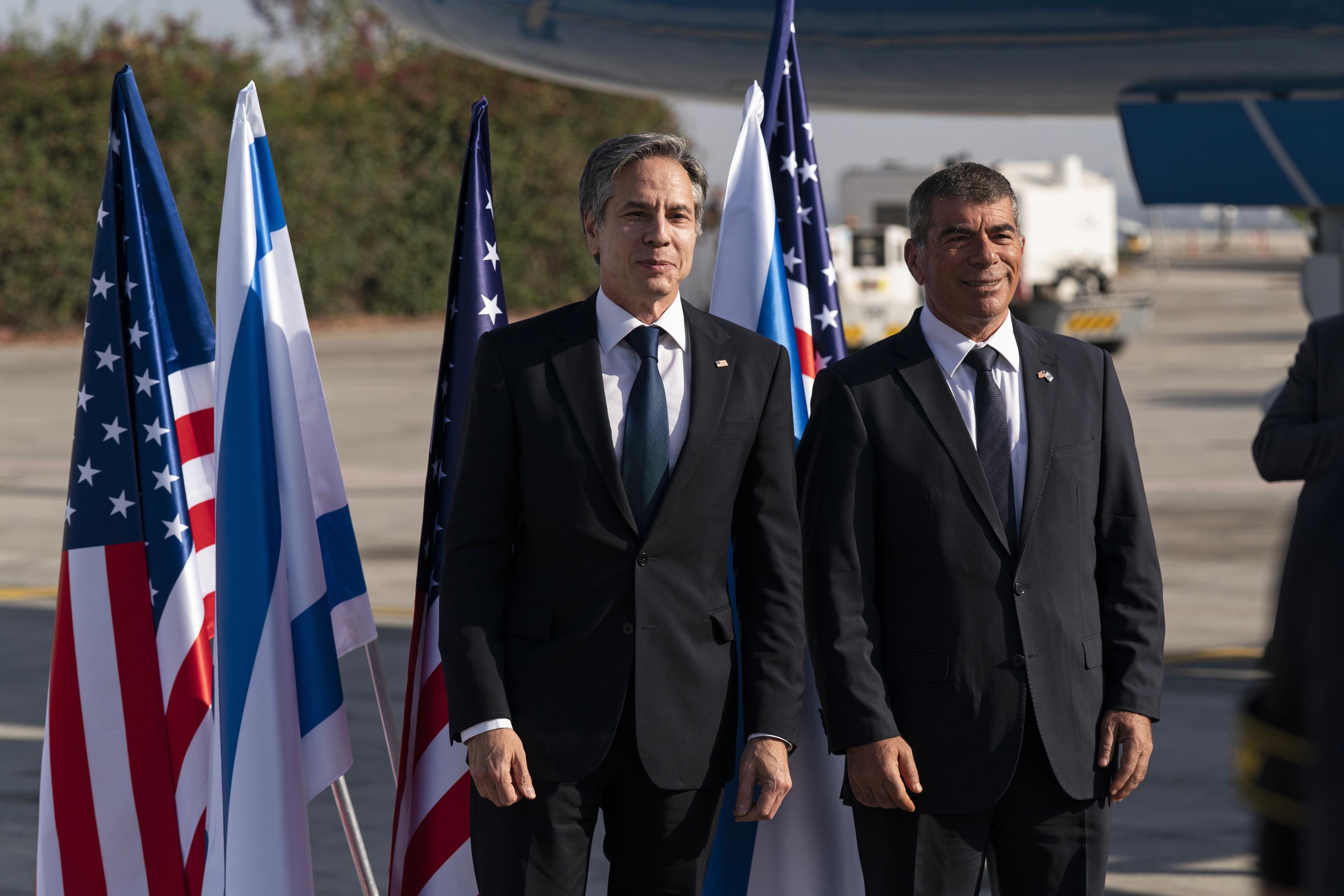
As the eleven-day war between Palestine and Israel sits on a razor-thin ceasefire, it is hoped that American intervention and influence can deliver support, aid and even a lasting truce between two warring factions. For diplomats, it will be like walking a tight rope in an effort to calm both the Israelis and Palestinians while also ensuring Hamas remains on the sidelines. U.S. Secretary of State Antony Blinken is in the region now, leading the cause. The truce that came into effect Friday has so far held, but it did not address any of the underlying issues in the Israeli-Palestinian conflict, something Blinken acknowledged after meeting with Israeli Prime Minister Benjamin Netanyahu. “We know that to prevent a return to violence, we have to use the space created to address a larger set of underlying issues and challenges. And that begins with tackling the grave humanitarian situation in Gaza and starting to rebuild,” he said. “The United States will work to rally international support around that effort while also making our own significant contributions.” He added that the U.S. would work with its partners “to ensure that Hamas does not benefit from the reconstruction assistance.” Blinken will not be meeting with Hamas, which does not recognize Israel’s right to exist and which Israel and the U.S. consider a terrorist organization. May 25 - Associated Press This will be a long and delicate process and there are a lot of questions to consider: Is it possible to negotiate in Gaza and not include Hamas? With Palestinian President Mahmoud Abbas and Israeli Prime Minister Benjamin Netanyahu both facing a political ousting - can a solution even be found? And what are the issues and is there any negotiating the long-sought after two-state solution? If you’re a journalist looking to cover the ongoing tensions between Israel and Palestine – then let us help with your stories and questions. Professor Ralph Carter is an expert in the areas of international politics, U.S. foreign policy, and Mideast conflicts. Dr. Carter is available to speak with media regarding the ongoing developments between Israel and Palestine – simply click on his icon now to arrange an interview today.



New York and Tokyo: Global Cities as Essential Hubs for Our Collective Future
Throughout, cities have faced repeated pronouncements of their demise. Yet, as centers of soft power, cities adapt, persevere, and ultimately, reinvent themselves to thrive. Photo: Orbon Alija / Getty Images On August 24, 2020, in the dog days of the New York summer and at the peak of the COVID-19 pandemic, comedian Jerry Seinfeld wrote an op-ed for The New York Times titled "So You Think New York Is 'Dead' (It's not.)" The king is dead, long live the king! "Real, live, inspiring human energy exists when we coagulate together in crazy places like New York City," wrote Seinfeld. Cities change, "They mutate. They re-form. Because greatness is rare. And the true greatness that is New York City is beyond rare." In fact, megacities around the world have been experiencing similar trends related not just to the novel coronavirus--climate change, natural disasters, population shifts, and transformations in business, infrastructure, and transportation will all shape the contours of the 21st century. New York City's own history--when and why it has been pronounced "dead" during the last century--is instructive in and of itself. Other megacities of consequence should take note and take heart, especially Tokyo, which will be under the microscope in a new way as it prepares to host the Olympic Games in today's unprecedented environment. History repeats itself In the tensions of living in the present time, it's easy to forget New York City's long history of disaster, recovery, growth, and innovation--the 1918-19 influenza epidemic, the seasonal threat of polio, the scourge of HIV-AIDS, and the current pandemic, all define the city's history. In October 1975, New York City, America's largest and wealthiest city, narrowly averted bankruptcy. Refused rescue by the federal government and President Gerald Ford, the city was saved only through the beneficence of the city's own Teacher's Retirement System pension fund, which made up a $150 million shortfall. The next day, the Daily News headline shouted "Ford to City: Drop Dead." We survived, and we thrived! Then there was 9/11, 20 years ago this September, when the U.S. rallied around the city. New Yorkers cheered as heavy equipment driven from across America arrived to help clear the devastation, and were joined by the entire nation in mourning those who were lost. Along came the 2008 financial crisis, sounding another death knell for New York. Today, we know from past history that what has closed will reopen, or be reborn in a different form. And we'll be here to celebrate. Global cities generate soft power Like Tokyo, London, or Paris, New York is a global center for arts and culture, a place where diverse creative arts flourish and inspire people in close proximity, where there is always space for tradition and innovation, and a place, too, for those who come for entertainment. But whether in Japan, Europe, or America, whether in the arts, innovation, or civil society, the soft power of a global city is so much more than the sum of its parts. It is a treasure trove of history, a platform for the future, a home for diversity, and an incubator for social change. What is soft power and why do we need it? The term "soft power" was crafted by Harvard political scientist Joseph Nye in the 1980s, and is now widely used in a foreign policy context. As a 2004 Foreign Affairs review of Nye's book, Soft Power; The Means to Success in World Politics noted: "Nye argues that successful states need both hard and soft power--the ability to coerce others as well as the ability to shape their long-term attitudes and preferences... But overall, Nye's message is that U.S. security hinges as much on winning hearts and minds as it does on winning wars." Almost two decades later, soft power--the cultural, intellectual, and social bonds that bring diverse countries and societies together for mutual understanding--has become a critical component of American foreign policy. This is especially important for the U.S.-Japan alliance, as most recently evidenced by Hideki Matsuyama's thrilling Masters Tournament win and President Biden hosting Prime Minister Yoshihide Suga as the first head of state to visit the White House during his tenure. As I've written before, based on my experience from the State Department, "innovative and entrepreneurial partnerships based on shared objectives--economic growth, stability, and more--will be the engine for increased security and prosperity." In other words, the future of diplomacy will not only be national, but subnational, where megacities like Tokyo and New York will shape their own destinies based on the partnerships that their leaders--political, business, and civil--can forge together in the best interests of their constituents. Japan Society and New York As the President and CEO of Japan Society, my work is to take the Society's mission into its second century, to be the deep connection, or kizuna, that brings the United States and Japan together through its peoples, cultures, businesses, and societies. From our New York headquarters, which opened to the public 50 years ago, we are looking toward the next half century knowing that we will be defined not so much by our now-landmarked building but by our digital and ideational impact. Our future can only be enhanced by continuing to exchange with our friends in Tokyo and beyond. Long before soft power was defined, in the radical days of 1960s New York, Japan Society supported international exchange in the arts between Japan and the U.S. through fellowships and grants to Japanese artists and students, among them Yayoi Kusama, Yutaka Matsuzawa (Radicalism in the Wilderness: Japanese Artists in the Global 1960s), Shiko Munakata (Improvisation in Wood: Kawamata x Munakata, fall/winter 2021), and many others who made history in the arts in both the U.S. and Japan. Now, performing arts commissions and gallery exhibitions at Japan Society build on and evolve U.S.-Japan cultural exchange even as Japanese traditional and contemporary artists have been mainstreamed into New York's major cultural institutions. Our work continues--in arts and culture, education, business, and civil society. Even as the COVID pandemic recedes through continued social distancing practices and increasing vaccinations, the changes it has wrought on the ways we work and communicate are here to stay. Remote work, flexible schedules, and collaboration and connectivity across time zones all predate the pandemic but were scaled up at a rate that was previously unimaginable. While physical borders closed to travelers, virtual ones opened --and technology has allowed us to engage and convene with those near and far like never before. We at Japan Society are committed to finding new connections and building new bridges outside of New York City, starting with Tokyo and then the rest of the world. Our 37 other Japan-America sister societies across the United States have much to offer even as New York remains an essential global stage and financial platform. Partnerships will ultimately define the future of which global hubs thrive and where populations gravitate post-COVID. As we continue our mission for the future of the world, and for the U.S.-Japan alliance, I'm incredibly optimistic for Japan Society and for New York City's long-term evolution. This article was originally published in the Tokyo Metropolitan Government.


Bridge-Building as a Career Path
Yusuhara Wooden Bridge Museum / Kengo Kuma & Associates. © Takumi Ota For my entire life I’ve imagined myself as a bridge between the U.S. and Japan. I grew up in Japan from ages one to eighteen — my parents are Southern Baptist missionaries who have lived in our heartland now for over 40 years. As an American growing up in Hokkaido, I often found myself in the position of explaining to Japanese why Americans do certain things and act certain ways, and then trying to tell Americans why Japanese or people outside of the U.S. saw the country in a particular way. This dialogue became an extension of who I am. Of course, like many children growing up, I wanted to be like my dad, who is a gifted pastor and long-term missionary. But, along the way, I realized that the role of a missionary is actually very much like that of being an ambassador or bridge-builder who represents their country, alliances, and traditions. As reinforced recently by Prime Minister Suga’s visit to the White House, the first of any international visitor for the Biden administration, the alliance with Japan is our single most strategic international relationship. Walter Russel Meade laid this out eloquently in the Wall Street Journal, “For the foreseeable future, the U.S.-Japan alliance is likely to remain the cornerstone of American foreign policy. Building the social and cultural ties that can support that relationship is an urgent task for both countries.” In my lifetime, and perhaps never before, has there been a moment like the present where the U.S. and Japan are mutually reliant to such a degree. Therefore, my personal commitment to being a bridge-builder, and our mission at Japan Society, have never been more critical. Finding my path After college I went to Turkey as a Fulbright Scholar, where I worked with the State Department through the Ambassador’s Office and the Embassy, enriching my understanding of foreign diplomacy. As I explored my interests in other parts of the world, I didn’t intend to pursue a career in U.S.-Japan relations. However, all that changed on March 11, 2011, when the Great East Japan Earthquake, tsunami, and nuclear disaster devastated the Tohoku region of northeastern Japan. At that moment, I felt a deep personal mission to help bring people from around the world together and realized that I was uniquely situated to build bridges with Japan. I had the opportunity to serve three different times in the State Department along with the Defense Department and on various Commerce Department advisory boards as I completed my academic degrees culminating with a PhD from Princeton. My time in academia and government service taught me the important skill of storytelling. When I left the State Department, I joined the strategic communications company APCO Worldwide, where I helped establish their Japan office and became immersed in Japanese public relations. Next, I had the privilege of running the USA Pavilion at the World Expo in Kazakhstan in 2017, telling America’s story from the ground up. That led me to Eurasia Group, the foremost geopolitical risk consultancy group, where I led the largest geopolitical risk summit in Japan, the GZero Summit, taking my academic, government, and public relations experience and putting it into a practical context. Embracing my ikigai Today I’m the President and CEO of Japan Society, working to take the Society’s mission into its second century, to be the deep connection, or kizuna, that brings the United States and Japan together through its peoples, culture, businesses, and societies. One of the greatest things that I see these days is concepts from Japan that have been adapted into the English lexicon — like ikigai, the idea of life’s purpose, which has become a catchphrase in our pandemic world’s search for meaning. Ikigai resonates deeply with me, because it is about finding your reason for being, your passion and calling. For me, this means being dedicated to promoting global understanding and helping make the world a better place. I don’t think I would have told you two years ago that I would be the President and CEO of Japan Society. It is an opportunity that caught me by surprise in some ways. But in other ways, now that I am here, it feels like the most natural job I’ve ever done, and I cannot think of a better place I would rather be or a better way to live out my ikigai. At Japan Society’s founding luncheon on May 19, 1907, the guest of honor, General Baron Kuroki “wished the new organization a long and successful health.” As The New York Times reported, “The object of the new organization will be the promotion of friendly relations between the United States and Japan.” Now in its second century, our work of bridge-building continues today. Joshua Walker (@drjwalk) is president and CEO of Japan Society. Follow @japansociety. The views expressed in this article are the writer’s own.
Are America and Japan forming a strong western front when it comes to China?
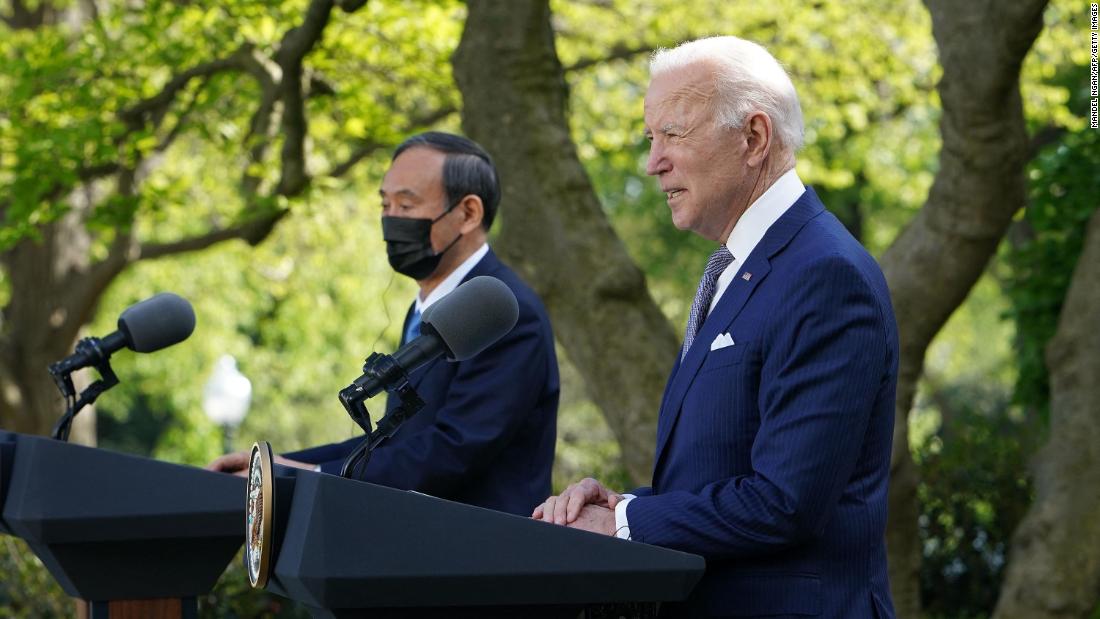
Friday saw President Joe Biden host a foreign leader for the first time since being elected, with Japan’s Prime Minister Yoshihide Suga coming to the White House to discuss Asian policies, primarily, concerns about China. Biden and Suga said they both aimed to tighten the relationship between the two countries during the daylong visit, and China was one of the biggest focuses of the day's meetings. "We committed to working together to take on the challenges from China and on issues like the East China Sea, the South China Sea, as well as North Korea, to ensure the future of a free and open Indo-Pacific," Biden said during remarks in the Rose Garden of the White House on Friday. Suga said he and Biden had "serious talks on China's influence over the peace and prosperity of the Indo-Pacific, and the world at large." "We agreed to oppose any attempts to change the status quo by force or coercion in the East and South China Seas and intimidation of others in the region," Suga said. "At the same time, we agreed on the necessity for each of us to engage in frank dialogue with China, and in so doing, to pursue stability of international relations, while upholding universal values." China sent 25 warplanes into Taiwan's air defense identification zone on Monday, which was the largest breach of that space since the island began regularly reporting such activity in September, Taiwan's Defense Ministry said. The fact that Suga was the first foreign leader to pay a visit to the White House showed the importance of the relationship between the two countries in promoting democracy in the region, Biden said earlier in the day. April 16 – CNN As China continues to flex its military and economic muscle in the region, the world is watching, and every move may have a global impact. If you are a journalist covering Asia and the political issues that are brewing in the region, then let us help with your coverage. Dr. Elizabeth Larus is an expert in the politics of China. She is available to speak to media, simply click on her icon to arrange an interview today.



Spring 2021 begins a season of resiliency. After a long and particularly snowy winter in New York, I look forward to welcoming my favorite cherry blossoms. It’s been a year now since the COVID shutdowns took hold and the pandemic pause has required enormous energy from all of us at Japan Society, from remote work with constant online meetings, to safeguarding our 50-year-old building, to pivoting to online programming and finding new ways to bring in revenue. It’s not really been a “pause” in the traditional sense, it’s been a race for organizational transformation, adaptation to new ways of communicating with our colleagues and our members, and now — a reopening! This spring, we are delighted to celebrate our reopening with When Practice Becomes Form: Carpentry Tools from Japan, a special exhibition that explores the extraordinary, centuries-long tradition of Japanese architecture and woodworking artistry, and features a range of hand tools and models that reflect techniques used for hundreds of years to build and restore Japan’s wooden architectural masterpieces — temples, shrines, and bridges. Philosophy of Japanese woodworking The philosophy that undergirds Japanese woodworking is deeply engrained in Japan Society’s own history. As master woodworker George Nakashima wrote in his book, The Soul of a Tree, “We can walk in step with a tree to release the joy in her grains, to join with her to realize her potentials, to enhance the environments of man.” Fifty years ago, Junzo Yoshimura, the architect of Japan Society’s now-landmarked building, asked that Japanese hinoki cedar be used for the coffered ceilings in the Society’s lobby and selected with his own hands stones to be shipped from Japan for the foyer garden. He also specified furniture to be crafted by Nakashima in his New Hope, Pennsylvania workshop, furniture that has stood the test of time and is still in use today. Precision is a hallmark of the Japanese experience. One of the many ways to view this is through the concept of kodawari — a unique Japanese notion that is difficult to translate — referring to the uncompromising, relentless devotion to one’s art, pursuit, profession, or activity. In a world turned upside down by a pandemic, there has never been a more welcome time to explore this relentless pursuit of precision and quality in one’s work at all levels of kodawari — in the form of Japanese woodworking. Tools of leadership, alliance & innovation The resilient spirit of Japanese craftsmanship resonates, especially in these unusual times. The presence of tools in our galleries and an exploration of their longstanding heritage for a broad audience highlights the persistent strength of U.S.-Japan relations and human ingenuity. As a leader, I take my own inspiration from Nakashima, using the strength of the oak tree in the West and flexibility of bamboo in the East to bring out the strength, resiliency, and innovation of the U.S.-Japan alliance through my own set of tools. These are the tools of leadership, which require the knowledge and precision of a master carpenter, building for the present while planning for the future. As Nakashima writes, “Each cut requires judgments and decisions on what the log should become.” In kigumi — traditional Japanese wooden joinery — each part plays a crucial role since the joints are fitted together without any nails or fasteners. To have structural integrity, the work — whether furniture or architecture — needs to be weight bearing, and with its direct connections, the whole will ultimately be stronger than its separate elements. In an ongoing cycle of repair and renewal, old joints are replaced by new ones, allowing traditional Japanese buildings to stand for hundreds of years. I find a parallel in the U.S.-Japan alliance, where our direct connection is the strength of our relationship — a collective strength where each nation can accomplish more together. Fifty years ago, as Japan Society’s new building was preparing to open to the public, Deputy Executive Director Daniel J. Meloy wrote to George Nakashima: “Your first shipment to us arrived safely today with all pieces in good shape. We have unwrapped them, dusted them, carried them to their respective rooms, and we love them.” This spring, I invite you to visit When Practice Becomes Form, and help us celebrate our reopening. Let’s work together, using the tools of tradition and innovation, to build the next 50 years of our alliance. Given the challenges the world has faced this past year, the U.S.-Japan alliance has never been more necessary — as acknowledged by the fact that the first world leader to visit President Biden’s White House will be Japanese Prime Minister Yoshihide Suga. The personification of the importance of this relationship through this visit, along with the elevation of the “Quad” meeting between the leaders of Australia, India, Japan, and the United States, indicates a new emphasis in American foreign policy. In addition to the geopolitical challenges confronting our nations, Americans have been struggling domestically with the rise in anti-Asian hate crimes and harassment — a powerful reminder of critical battles still to be fought at home. The Japanese American experience, including forced relocation to internment camps during World War II and the 1980s discrimination triggered by economic tensions with Japan, are only two examples of the long history of anti-Asian racism we continue to confront as a country and community. Now, more than ever, we must bring our collective strength to bear to fight hate and bigotry — and build a stronger and more resilient society. Joshua Walker (@drjwalk) is president and CEO of Japan Society. Follow @japansociety. The views expressed in this article are the writer’s own.
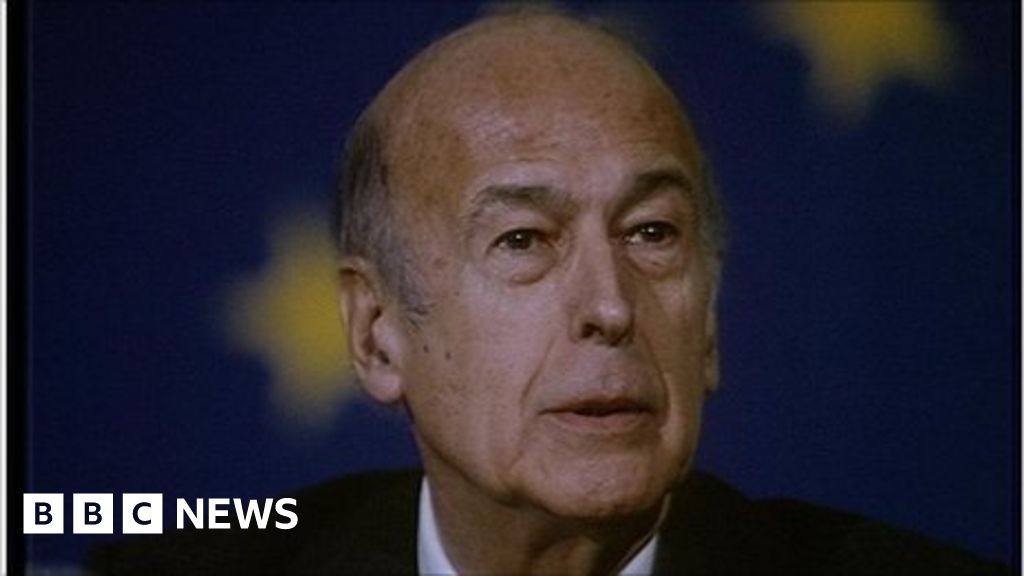
Dr David Lees from the School of Modern Languages and Cultures at the University of Warwick said: “France has lost a fascinating political leader. “Valery Giscard d’Estaing, who has died aged 94, was a modernising if controversial President of the Fifth French Republic between 1974 and 1981. “Giscard was the first non- Gaullist president of the Republic and signalled an end to the continuity following de Gaulle’s presidency. Giscard was an ardent Europhile and one of the architects of the European Constitution that was rejected by the French in 2005. In the course of his presidency, Giscard was responsible for pushing through the reduction in the age of voting to 18, the Veil reforms which legalised abortion and major changes to cultural policy. Giscard was very active in foreign policy, becoming embroiled in a scandal over diamonds gifted to him by the dictator Jean-Bedel Bokassa of the Central African Republic. “The legacy of Giscard remains one of modernity mixed with controversy. Having recently been accused of sexual misconduct, Giscard continued this trend until his death in hospital in Tours in this most exceptional of years.”


U.S.-Iran Crisis: Outlook and Implications
Executive Summary: The immediate crisis following the death of Iranian general Qassem Soleimani in a U.S. airstrike and Iran’s retaliatory missile strikes against two U.S. airbases appears to have settled down. However, the conditions for a future flare-up remain in place because the underlying conditions have not changed. Going forward, each side is likely to double down on its stated strategic objective, with Iran pushing for an end to U.S. presence in the region and the U.S. pushing for an end to the Iranian nuclear program. Further, the norms that had previously prevented an open exchange of fire between the two sides have been eroded. Why It Matters: The events of January 3rd and 8th represent the first time since the skirmishes of the “Tanker Wars” of 1987-88 that the military forces of the United States and Iran have directly and openly exchanged fire with each other. For the last three decades, the contest between the two states has been a shadow war of proxy conflicts, plausible deniability, and non-military measures. The American decision to strike Soleimani and the Iranian decision to fire missiles in response removed many of the guardrails that have set limits on previous escalations of tensions. The Iranian decision to renounce cooperation with the 2015 nuclear agreement places back into contention an issue that had previously brought the U.S. and Israel to the point of war with Iran in 2012-13. Business Impact: Markets have been largely taking a wait-and-see approach in order to determine the form of Iranian response to Soleimani’s death, and they responded with relief when President Trump signaled that the U.S. would not retaliate. To an extent, uncertainty in the Middle East had already been priced into the markets due to tensions in the second half of 2019. A significant or prolonged conflict would have an obvious negative impact on energy markets and regional economies. In addition, American and Western companies operating internationally or their employees could suffer collateral damage from any future Iranian proxy attacks against visible symbols of U.S. presence overseas. Looking Forward: In the immediate term, the resolution of the crisis represented one of the best possible outcomes: Iran has publicly signaled that the missile launches conducted on January 8th constituted the extent of their military retaliation to Soleimani’s death and President Trump’s White House address acknowledged Iran’s desire to de-escalate and spoke of finding mutually beneficial outcomes with no further mention of military action. Going forward, both Iran and the United States are likely to double down on their desired strategic outcomes. Iran will seek to use all of the levers of its influence to drive the United States from the region, beginning with Iraq but also including indirect pressure on the Gulf states that host U.S. forces. Offensive cyber operations and deniable proxy attacks against civilian infrastructure in the Gulf could be part of that campaign, returning to tactics observed in the past. For its part, the United States will continue its maximum pressure campaign over the Iranian nuclear program, with President Trump promising additional economic sanctions even as he stepped back from military action. Therefore, although both sides appear to be committed to non-military means, the points of tension that caused the most recent crisis are all still present and have arguably increased based on Iran’s increased non-compliance with JCPOA. It remains to be seen whether coming close to the brink of open conflict will have changed the risk tolerance of either side or whether the first acknowledged exchange of fires between the U.S. and Iran for 32 years will usher in a new period of low-level conflict. The View from Tehran: Iran has played Soleimani’s death for maximum strategic benefit. The messaging of the past 96 hours was aimed at various audiences within the country, the region, and around the world. Having been caught on the backfoot by the U.S.’s strike on Soleimani, the Supreme Leader allowed the IRGC to retaliate against U.S. forces in Iraq in a calibrated manner, likely calculating that a strike with limited casualties would satisfy demands for vengeance while not prompting a response. Khamenei’s Decision: Ayatollah Khamenei is an inherently conservative figure and one who is above all else motivated by the priority of regime survival. Given their long-standing personal relationship, there is ample reason to believe that his displays of emotion of Soleimani’s death, including weeping over his coffin during the funeral on January 6th, were genuine and heart-felt. However, his expressed desire for revenge has been tempered by the overarching imperative to avoid a conflict that would have threatened the regime’s hold on power, either from within or without. Rally Around the Flag: Within Iran, the regime is seeking to use Soleimani’s death and their subsequent retaliation to build national unity following a period of significant domestic unrest. This has been emphasized by the extended period of mourning for Soleimani, days-long funeral spectacle, and the invocation of religious and cultural symbols associated with Shi’a martyrs. The death of Soleimani comes on the heels of a series of mass protests in Iran that originally began on November 15th in response to proposed increase in the price of gas, but which have since expanded to a wider challenge to the regime. Media reporting from late December suggested as many as 1,500 Iranian civilians have been killed as part of a regime crackdown on the protests, which have been characterized as the most serious challenge to the regime since the Green Movement of 2009. JCPOA as a Wedge Between U.S. and Europe: Iran announced on January 5th that it would cease compliance with the remaining provisions of the 2015 Joint Comprehensive Plan of Action but would be willing to return to compliance if sanctions are removed. The nuance in Iran’s position highlights the fact that it is continuing to attempt to use the nuclear issue to drive a wedge between European signatories to the agreement and the United States, which unilaterally walked away from the treaty in May 2018. Regime Dynamics: Soleimani was a high-profile figure within Iran, but his outsized influence on Iranian foreign policy also created friction with other stakeholders in the regime, including leaders of the conventional military forces, the ministry of foreign affairs, and the intelligence services. He was one of few genuinely strategic thinkers in the Iranian national security apparatus and the one with the most extensive and deepest connections within the Arab-speaking world. His replacement as commander of the Quds Force is his long-time deputy who will be familiar with the day-to-day operations of the IRGC’s external operations arm but will not have the stature or the network of Soleimani. As a result, other stakeholders may jockey to move into the vacuum created by his death. The View from Washington: The present challenge for the U.S. is how to maintain both a deterrent posture and establishing the means to avoid further escalation. The policy on Iraq going forward will have to balance President Trump’s desire to disengage from the conflict while not creating the appearance of having been pushed out by Iran. Escalate to Deter: President Trump’s decision to kill Soleimani reflected an “escalate to deter” strategy, using a sudden and unexpected escalation of force during a crisis in order to reestablish deterrence after previous provocations in 2019 had gone largely unanswered. However, deterrence is only as good as the last demonstration of a willingness to respond. The decision to not respond to Iran’s retaliatory missile strikes reflected a pragmatic decision to de-escalate. National Security Decision-Making: Nearly three years into his presidency, Donald Trump feels increasingly confident making national security decisions based on his own instincts. The original coterie of experienced national security establishment members such as Jim Mattis and H.R. McMaster who had populated the Situation Room during the early days of the administration have largely resigned or been fired and replaced with individuals of lower profile and/or proven loyalty. Although the mechanisms of the formal interagency process continue to function, President Trump increasingly makes decisions based on a network of informal advisors and media sources. Domestic U.S. Considerations: The decision to launch the strike on Soleimani came during a period of high political tension in Washington, as it had been expected this month that the U.S. Senate would begin a trial in response to articles of impeachment passed by the House of Representatives in December. The Soleimani strike is being taken up by both Trump’s supporters and opponents as evidence of either his credentials as a decisive commander-in-chief or his unsuitability for office, depending on their perspective. Congress has proposed votes to limit President Trump’s independent authority to initiate hostilities with Iran, but this is unlikely to gain traction in the Senate. Separately, the first voting in the Democratic primary is less than one month away, and a sudden shift in focus to national security issues could have results that are difficult to predict, either boosting those with national security credentials (such as former vice president Joe Biden and military veteran Pete Buttigieg), or rallying support among primary voters for anti-war (such as Bernie Sanders). Third-Party Perspectives and Responses: Iraq: The strike at Baghdad International Airport that killed Soleimani also killed the deputy commander of Iraq’s Popular Mobilization Front, a coalition of militias that forms a part of Iraq’s official security apparatus. Iraq’s new Prime Minister Adel Abdul Mahdi has condemned the attack as a “massive breach of sovereignty” and an “aggression on Iraq”. Iraq’s parliament passed a draft law on January 5th calling for the removal of all foreign troops from Iraqi soil, but the law was non-binding and the session had been boycotted by most of the Sunni and Kurdish members of the legislature. Iranian presence has also been the recent target of Iraqi ire, such as in November when a crowd of Iraqis burned down the Iranian consulate in the Shi’a holy city of Najaf, and the Iraqi government will likely try to play both sides against each other to maximize its leverage for military and financial support. Withdrawal from Iraq would mean that the remaining American forces in Syria could no longer be supplied or supported through the western desert of Iraq and would therefore also have to be withdrawn. Iran will likely seek to use all its considerable levers of influence in Iraq to convince the government to see through the expulsion of American forces. The United States leaving Iraq and Syria due to Soleimani’s death would be a fitting legacy from the Iranian perspective and a perverse one from the American perspective given that Soleimani was responsible for the deaths of hundreds of American servicemembers in Iraq (and thousands of Iraqi civilians) through his support for Shi’a militias in the mid-to-late 2000s. Europe: Statements from European capitals emphasized the need for restraint and de-escalation. French President Macron is likely to view this event as further justification for his proposals that the EU develop a defense and security apparatus independent of NATO in order to avoid being entangled by potentially reckless American actions. Iran will likely continue to use this event as an opportunity to drive a wedge between the U.S. and Europe on the nuclear program and other issues, and their chosen retaliation was likely calibrated at least in part to allow them to continue positioning themselves as a responsible actor. For his part, Trump is urging the European signatories to join him in walking away from the JCPOA in order to increase Iran’s international isolation. United Kingdom: The British government has tried to tread a fine line in its responses to the strike, with Prime Minister Johnson calling for de-escalation while also stating that he “will not lament” the fact that Soleimani is dead. The U.K. is likely trying to balance its desire to remain aligned with France and Germany in trying to keep the JCPOA together with its traditional close alliance with the United States and Johnson’s personal relationship with President Trump. Russia: Unsurprisingly, Russian President Vladimir Putin condemned the American strike, which removed a valuable interlocutor for Russian forces in Syria. Russian troops and Iranian-backed militias in Syria had periodically found themselves with diverging interests in their campaign to support the Assad regime, and Soleimani performed a critical function in directing the activities of those militias to ensure that both Russia and Iran achieved their strategic objectives in Syria. A potential American withdrawal from Iraq and Syria would advance Russia’s interest in establishing itself as the indispensable foreign power in resolving the crisis in Syria and within the region more broadly. China: In line with their long-standing principle of non-intervention and their own interest, China condemned the strike, but the response was muted overall. Chinese interests are primarily economic and tied to ensuring a steady supply of petroleum. One of China’s newest and most capable naval destroyers recently participated in trilateral naval exercises with Iran and Russia in the Gulf of Oman. Although such exercises primarily serve a strategic messaging and diplomatic function, they do signal an emerging alignment of interests between the three states that would be significant for the response to any future crises.



Unprecedented levels of partisanship vitriol threatens the health of democracy in U.S., globally
Voter-based political parties have played an integral role in American politics since their formation in the 1790s, yet it is difficult to remember any other time in history — other than perhaps the 1850s — when the level of divisiveness was this high and the polarity this profound between Republicans and Democrats. To add more fuel to the fire, the anti-democratic actions against the rule of law by President Donald Trump have become a primary threat to democracy in the U.S., said David Lynch, Ph.D., a professor of History and Social Sciences and Political Science program coordinator at Saint Mary’s University of Minnesota. The same action are also threatening how the government works and delegitimizing and undermining institutions that make and enforce laws,Lynch added. Those institutions include formal ones such as Congress and the political parties themselves, as well as less formal entities, such as the traditional news media. “You have to have free, fair, open media in order to have a democracy. If you do not have a free press, you do not have a democracy,” Dr. Lynch said. “And similarly, you need to have the rule of law where laws are carried out not for political ends, but based on the laws.” The recent impeachment proceedings were an attempt to curtail these actions, but the partisan response to the Senate’s impeachment trial allowed the violation of democratic norms to be rewarded, said Dr. Lynch. Furthermore, politicians who react strongly to anti-democratic actions threaten to further delegitimize the government, such as Trump’s refusal to shake the hand of House Speaker Nancy Pelosi, a Democrat, at his most recent State of the Union address and her subsequent action of tearing up his speech. “That helps both sides reinforce their own position that the other side is less legitimate and that we shouldn't cooperate with somebody like that,” Dr. Lynch said. Dr. Lynch pointed to how the indices that measure the health of democracy both in the U.S. and abroad have all gone down since Trump won the 2016 election. In addition, the most recent Economist Intelligence Unit’s Democracy Index reflected the worst registered global democracy score since its inception in 2006. In that report, the U.S. received a score of “flawed democracy.” Traditionally, the U.S. democratic system has been able to regulate such extreme partisanship before election day by not nominating candidates that violate democratic norms or are far from the ideological center. On election day, overly partisan candidates are vulnerable in swing districts and swing states. That ability for the public to express its collective voice, though, has eroded over the years as the number of swing districts has dwindled. "When people view through a partisan lens, it changes the incentives that elected officials have because they may be rewarded for partisan but anti-democratic actions,” Dr. Lynch said. “It also changes how average people view this whole debate.” To demonstrate the current political scene in the U.S., Dr. Lynch alluded to a 2017 study conducted by a group of political scientists at Yale University in which experimental surveys were sent to Venezuelans to see to what degree they would be willing to accept a less democratic candidate if he or she was a member of the political party they affiliated themselves with. The answer was quite a large degree. “The big message here is you can't necessarily rely on the public just to vote out an anti-democratic candidate because they might get a partisan advantage from that anti-democrat,” Dr. Lynch said. Are you a journalist covering this topic and interested in an interview? That’s where we can help. David Lynch, Ph.D., professor of History and Social Sciences and Political Science program coordinator, has taught political science at Saint Mary’s University of Minnesota since 1996. Dr. Lynch has also written over a dozen chapters on international relations, international political economy, and American foreign policy, including the chapter on trade in the United Nations Association of the USA’s “A Global Agenda” from 1996 to 2005. Dr. Lynch is an expert in political science, political economies, and international relations. He is available to speak with the media. To arrange an interview with him, simply click on his photo below to access his contact information.


The election is on. In fact, it’s as if the campaign of the 2016 election has never come to a finish. U.S. President Donald Trump’s strategy of constant rallies, speeches and campaign stops has essentially meant the Republican incumbent has been on the stump for the better part of almost five years now. On the other side, at one time last year, there were more than two dozen contenders vying for the right to represent the Democrats. That field has been whittled down to about half of that, and it is expected to continue shrinking now that primaries are in play and the financial costs of keeping up will become a reality. So, if there were to be an actual starting point for the November election – this week could be it. On Monday, the Iowa Caucus kicks off what could be months of rigorous and aggressive campaigning for Democrats. The winner Monday will have a huge boost, but after that it’ll be all eyes on New Hampshire, Nevada, South Carolina and then Super Tuesday. Also, this week, the President will deliver the State of the Union. The timing of this speech could be the change of channel the President needs as the clouds of impeachment linger. As well, the speech and the huge audience it gathers could set the tone of what's to come on the campaign trail. For political junkies and journalists – it is going to be a busy nine months. And if you are a reporter covering the primaries, politics and the presidential election – then let our experts help. The team from FAU can help with a variety of topics that will inevitably be part of or influence the policies and platforms of each party and candidate. Kevin Wagner's research and teaching interests include presidential and judicial politics, political behavior and legislative behavior. He is also a research fellow of the FAU Business and Economics Polling Initiative (BEPI). Robert Rabil is an expert in political Islam, terrorism, U.S. foreign policy, and U.S.-Arab relations. Kelly Shannon specializes in the history of U.S. foreign relations, with particular attention to the Middle East and the 20th century. Colin Polsky is trained as a geographer, specializing in the human dimensions of global environmental change. He also oversees FAU's quarterly environmental poll. All of these experts from Florida Atlantic University are available to help with any of your questions or coverage – simply click on an expert’s icon to arrange an interview today.


The killing of Iranian military leader Maj. Gen. Qassim Suleimani by an American ordered drone strike has put the world is on edge. As leaders call for calm, hundreds of thousands are protesting across the Middle East and war seems almost inevitable. As news broke of the attack late last week, media were scrambling to find experts to lend their perspective, opinions and expertise about what’s next. That’s where the University of Connecticut’s Director of Middle East Studies Jeremy Pressman was able to help. Pressman said it’s “too early to say” what kind of repercussions the killing of Iranian Maj. Gen. Qassim Suleimani will have in Iran, Iraq or in other countries like Saudi Arabia or Lebanon, in part because it’s not known yet how much planning went into the decision. “The Trump administration is an administration that, on foreign policy, has not demonstrated that it usually plans much in advance,” he said. “You want to have thought what ways Iran could respond, and how you are going to defend yourselves in those situations and respond to those situations.” January 03 – Middletown Press If you are a reporter covering this ongoing and progressing situation – the let our experts help with any of your questions or stories moving forward. Jeremy Pressman (MIT, PhD) studies international relations, the Arab-Israeli conflict, Middle East politics, and U.S. foreign policy. He is the Director of Middle East Studies at the University of Connecticut and is available to speak with media, simply click on his icon to arrange an interview today.

