
Experts Matter. Find Yours.
Connect for media, speaking, professional opportunities & more.

Baby, It's Cold Outside… And That's No Joke for Seniors
How cold is it? • It's so cold I saw a dog stuck to a fire hydrant. • It's so cold my words froze mid-air and my neighbour had to thaw them out to hear what I said. • It's so cold, I just saw a politician with his hands in his own pockets. Okay, I'm joking—but just a bit. Because while I enjoy a good cold-weather quip, hypothermia isn't funny. Currently, this severe Arctic blast is gripping Canada and large parts of the United States, dropping temperatures 20–40°F (11–22°C) below seasonal norms across a 2,000-mile stretch of North America. Nearly 80 million people are under winter storm warnings. Power outages are anticipated. Roads could be impassable. Travel is about as appealing as a root canal in a snowstorm. For many seniors on both sides of the border, this isn't just an inconvenience—it's a real safety risk. The Cold, Hard Stats (Brace Yourself) Looking at the research I couldn't believe what I found: Older adults are more than 5x as likely to die from hypothermia as younger adults (Kosatsky et al., 2015). In the U.S., approximately half of all hypothermia deaths are people over 65 according to data from the CDC. In Canada, adults over 75 are more than 5 times more likely to die from hypothermia than younger adults—and 87% of those deaths happen right in their own homes. (StatsCan Health Infobase ) Read that again. Slowly. Not on frozen lakes. Not stranded on highways. Instead, in familiar living rooms. Sitting on well-worn couches. Beneath afghans crocheted by someone who loved them. Why Your Body Becomes a Cold -Weather Traitor Our bodies change as we age, and not in the fun "I've earned every wrinkle" way. The insulating fat layer under the skin thins. Circulation slows. Metabolism drops like your interest in small talk. Certain medications—prescription and over-the-counter cold remedies—can interfere with temperature regulation and awareness. Your body's thermostat? It's on the fritz. Here's the math: Hypothermia doesn't require a blizzard. It can begin indoors when temperatures fall below 65°F / 18°C. And here's the truly dangerous part: hypothermia affects the brain first. Judgment declines before shivering becomes severe. You don't realize you're in trouble. You just feel "a bit chilly" while your core temperature quietly drops. Stop Acting Your Age! (But Also... Dress as if you know your age) I'm all for embracing life at every stage—hiking to Everest Base Camp at 60-something, teaching Zumba, and that MBA thing at 70, refusing to "act your age." But embracing life in this weather requires wisdom, not bravado. Cold weather brings real risks: • Slips and falls on icy surfaces (and no, we don't bounce like we used to) • Increased risk of heart attack and stroke because cold thickens the blood • Respiratory infections that linger far too long • Frostbite on fingers and toes • Hypothermia that clouds thinking before any alarms sound. The Indoor Survival Guide—Keep Up (Yes, You Can Get Hypothermia at Home) Set the thermostat to at least 68–70°F (20–21°C). This is not a time to be a miser. Heating bills can be expensive, but hospital stays are even more costly. And they don't even give you warm blankets anymore. Layer like a pro. This is not the time for fashion minimalism. Think: • Long underwear or thermal leggings • Pyjamas under clothes • Stockings or tights under pants • Two pairs of socks • Warm boots with good tread (essential for any outdoor ventures) • Shirts layered under sweaters When it's this cold, if you still own leg warmers—congratulations. Wear them. The warmth is worth the call from the '80s asking for them back. Hats indoors are permitted. This isn't a fashion show; it's survival style. You lose a lot of body heat through your head. Emulate your inner Elmer Fudd if you need to. Carbon monoxide alarms are essential & in many areas legally required. When temperatures drop, people get creative—and desperate. Space heaters, fireplaces, generators, kerosene heaters, or (please, dear God, don't) using gas ovens for heat. That last one is about as safe as texting while skydiving. And here's an important PSA: Starting January 1, 2026, Ontario's updated fire code mandates a functioning carbon monoxide alarm on every level of homes that have fuel-burning appliances. Remember to test alarms when you change your clocks for daylight saving time—it's easy to do, and not easy to forget. Block drafts like you're defending a castle. Roll towels under doors, seal windows, close unused rooms, open curtains during sunny days, and close them tightly at night. Check your medications. Ask your pharmacist or doctor if any prescriptions or over-the-counter remedies influence temperature regulation or alertness. Knowledge is power—and warmth. Check Food & Other Supplies. If venturing out feels risky, order groceries for delivery. Services like Voilà by Sobeys, Instacart, PC Express, and many local grocers deliver directly to your door. This isn't laziness—it's smart risk management. Most delivery services are free or inexpensive, especially when compared to the alternative: icy sidewalks, falls, broken hips, or getting stranded in extreme cold while wearing inadequate footwear because "it's just a quick trip." Clear Your Snow. Snow and ice hinder movement. Limited movement results in isolation. Isolation worsens depression and cognitive decline. Clear snow isn't just about safety—it's about dignity. Pro Tip: Protect Your Pipes (and Your Wallet). Winter power outages can mean burst pipes and serious water damage. If you expect a prolonged outage: • Know where your main water shut-off is • Turn it off • Open faucets to drain the lines It feels extreme—until it doesn't. Until you're standing in three inches of water at 2 a.m., wearing your emergency leg warmers. Know or Live Near an Older Adult? Here's Your Cold Weather Action Plan Don't ask if they need help—just do it. Clear the porch. Shovel a path. Salt the steps. Think of it as the winter cousin of snow angels: shovel angels. Be one! When people Are Shut In—Go check in with them. For those stuck indoors, reach out by video, not just text or voice. Seeing someone tells you far more than hearing "I'm fine." Use FaceTime, Zoom, WhatsApp, or Google Meet. Do this with older people you know. Because pride prevents people from asking for help. Shame prevents people from being honest—about empty fridges, sleeping in mittens, or wearing coats to bed. Look for these signs: • Confusion or slurred speech • Shivering—or lack of it (paradoxically dangerous) • Pale or bluish skin • Slow movements or lack of coordination • Extreme fatigue Know When to Call for Help If something feels off, err on the side of safety. In Canada: • Telehealth Ontario: 1-866-797-0000 • Quebec: 811 • Other provinces: Know your local health line If you notice any signs of distress—confusion, chest pain, shortness of breath, severe cold exposure—or if you're unsure, call 911. Cold-related emergencies escalate rapidly. The Culture Shift We Need—Right Now Cold snaps reveal faults in our systems and communities. This is the time to foster a check-in culture: a call, a knock, a cleared walkway, groceries dropped at the door. Preparation matters. Connection matters more. Winter is temporary. The habits we build to take care of one another are not. Be cool—and stay warm out there, friends. Sue Don’t Retire… Rewire! What are your best winter safety tips? Share them—because staying warm is better when we do it together. Want more of this? Subscribe for weekly doses of retirement reality—no golf-cart clichés, no sunset stock photos, just straight talk about staying Hip, Fit & Financially Free.


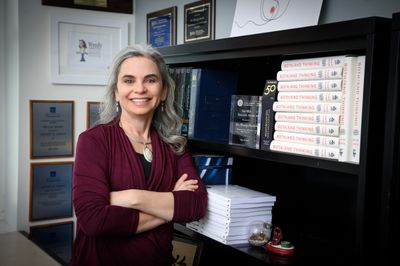
How corporate competition can spur collaborative solutions to the world's problems
Why can’t large competitive companies come together to work on or solve environmental challenges, AI regulation, polarization or other huge problems the world is facing? They can, says the University of Delaware’s Wendy Smith. While it's difficult, the key is to have these companies collaborate under the guise of competition. Smith, a professor of management and an expert on these types of paradoxes, co-authored a recent three-year study of one of the most profound collaborations. Her team looked at the unlikely alliance of 13 competitive oil and gas companies that eventually formed Canada’s Oil Sands Innovation Alliance (COSIA), which works with experts worldwide to find innovative solutions for environmental and technical challenges in the region. Smith and her co-authors found that those companies were willing to collaborate, but only when collaboration was cast in the language, practices and goals of competition. Given the scope of our global problems, companies must continually work together to offer solutions. Creating that collaboration becomes critical, Smith said. This research offers important insight about how these collaborations are possible. Among the study's key findings: Competition can drive cooperation — if leaders harness it. It would make sense to assume that competition undermines collaboration. But the study finds that those who championed alliances used competitive dynamics to strengthen cooperation among rival firms. Rather than suppressing rivalry, leaders leveraged competition as a mechanism to enable joint action toward shared environmental goals. This reframes how organizations can manage tensions between competition and cooperation in partnerships. For example, COSIA leaders created competition between partners to see who would contribute the most valuable environmental innovations. Partners could only gain as much benefit from other company’s innovations commensurate with what they shared. A “Paradox Mindset” is key to complex collaborative success. The research identifies the importance of what the authors call a paradox mindset, which sees competition and cooperation not as opposites to be balanced but as interrelated forces that can be used in tandem. Leaders in the study who adopted this mindset were more thoughtful and creative about how to engage both competitive and collaborative practices in the same alliance. Traditional balance isn’t the goal — process over stability. Instead of pursuing a simplistic “balance” between competing and cooperating, the study shows that effective alliances evolve through process, where competition remains visible and even useful throughout the lifecycle of the alliance. To connect with Smith directly and arrange an interview, visit her profile and click on the "contact" button. Interested journalists can also send an email to MediaRelations@udel.edu.



As interest in cryptocurrencies move from the fringes to mainstream conversation and public policy debate, Derek Mohr, clinical associate professor of finance at the Simon Business School at the University of Rochester, offers a clear-eyed voice on the subject. Mohr specializes in financial innovation and digital assets, and he’s been in demand with reporters looking to understand the economics behind everything from “Bitcoin-powered” home heaters to gas stations offering discounts for crypto purchases. His message? Not everything that markets itself as a breakthrough actually adds up. For instance, some companies have pitched devices that promise to heat a home using excess energy generated from bitcoin mining. Mohr recently told CNBC the idea might sound clever, but that its practicality collapses under basic financial and engineering realities. “The bitcoin heat devices I have seen appear to be simple space heaters that use your own electricity to heat the room . . . which is not an efficient way to heat a house,” Mohr said. “Yes, bitcoin mining generates a lot of heat, but the only way to get that to your house is to use your own electricity.” Bitcoin mining, he explained, has become so specialized that home computers have virtually zero chance of earning a mining reward. Industrial mining farms operate on custom-built chips far more powerful than any consumer device. In other words, consumers who think they’re heating their homes and earning crypto are, in reality, just paying for electricity and getting no real mining benefit. A pragmatic voice in a volatile space Mohr’s research and commentary help explain not just what is happening in the crypto world, but why it matters for consumers, businesses, and regulators. Whether evaluating the economics of mining or the viability of crypto payments, he brings a steady, analytical perspective to a domain dominated by hype and fast-moving news cycles. For journalists covering cryptocurrency, fintech, and the future of financial transactions, Mohr is available for interviews on digital payments, bitcoin mining economics, crypto regulation, and emerging trends in financial technologies. Top contact him, reach out to University of Rochester media relations liaison David Andreatta at david.andreatta@rochester.edu.


LSU Expert Available: Lowest Gas Prices in Years
Greg Upton, an LSU expert in energy economics, is available for media interviews on why gas prices have fallen to their lowest levels in years.



Ready or not, winter weather has decided to make an early cameo! So, the question is: are you actually ready for winter driving? CAA South Central Ontario (CAA SCO), Ministry of Transportation of Ontario (MTO), Ontario Provincial Police (OPP), and Toronto Police Service (TPS) have joined forces to encourage Ontario drivers to get ready now for the cold and snowy weather, before the next unexpected snow event hits. “Now is the ideal time for motorists to install winter tires, check their car battery, and ensure they have an emergency car kit packed,” says Nadia Matos, manager of external communications, CAA SCO. “These simple steps can help motorists confidently navigate winter roads. Ontario weather can be unpredictable, and snowstorms can hit without much notice, so it’s always best to ensure your vehicle is prepared beforehand.” Besides vehicle preparedness, driver behaviour is just as critical in ensuring safe driving operations in winter weather. “Road safety is everyone’s responsibility,” says Sergeant Murray Campbell of the Toronto Police Service. “As daylight hours shorten and visibility decreases, we encourage all road users to stay alert, watch out for one another, adjust their driving to match weather conditions, keep their vehicle lights on, and plan ahead to accommodate longer travel times.” This year, the organizations are focused on protecting motorists who may be caught in unexpected winter weather. “We always encourage motorists to drive according to the road and weather conditions,” says Sergeant Kerry Schmidt of the Ontario Provincial Police. “Drivers should also slow down and move over when approaching stopped emergency vehicles and tow trucks with their emergency lights flashing while they are assisting vehicles and motorists in need of help. It is also unsafe and illegal to try to pass a full echelon of snowplows that are clearing all lanes of a highway during winter events.” Before heading out on the road this winter, MTO encourages motorists to download and use the 511 app to check the weather and road conditions before they leave home. The 511 app can be found at 511on.ca or in the app store on their mobile devices. For a safer trip this winter, motorists can also follow these additional safety tips: • Install winter tires for better traction. On cold and snowy roads, winter tires can help reduce your braking distance by up to 25 per cent. Members can call CAA before Dec. 20 to have our mobile tire service change them at home for a fee. • Test your car battery. If necessary, replace it before it fails. CAA SCO will test Members’ batteries free of cost during a service call. • Pack a fully stocked emergency car kit. The kit should include a flashlight, extra batteries, warning devices (e.g., flares, reflective vests/strips), a first aid kit, blankets, jumper cables, non-perishable food and water, and a phone charger. Be sure to always keep an ice scraper, small shovel, and snow brush handy in your car. • Service your vehicle. Have your brakes checked, oil changed, and top up your windshield washer fluid and any other fluids that are getting low. • Always keep your gas tank at least half full. Cold weather causes condensation in the system, which can lead to a fuel line freeze-up and prevent the car from starting. • Check your lighting system. Ensuring you have full lighting is very important in the winter months. Check your headlights and signal lights to ensure they work correctly.



As sustainability moves from niche topic to boardroom central, companies face an increasingly complex global environment of regulatory divergence, disclosure demands and reputational risk. A recent article by J.S. Held's John Peiserich examines how multinational firms can respond effectively to the “crosscurrents” of ESG compliance, litigation exposure and evolving definitions of corporate responsibility. John Peiserich specializes in environmental risk and compliance. With over 30 years of experience, John provides consulting and expert services for heavy industry and law firms throughout the country with a focus on Oil & Gas, Energy, and Public Utilities, including serving as an expert witness in arbitration proceedings and in state and federal courts. View his profile here Key Insights: Sustainability now touches every major business function — environmental, social, and governance — and must be embedded in strategy rather than treated as an add-on. Regulatory landscapes are diverging: while the U.S. federal approach remains fragmented, individual states like California are moving ahead with mandatory climate and emissions-related corporate disclosures. In contrast, the European Union’s Green Deal and related frameworks promote a more unified regulatory model, creating operational tension for multinational corporations. Litigation and disclosure risk are increasing, with “greenwashing” (overstating sustainability achievements) and “greenhushing” (avoiding or under-reporting ESG performance) emerging as major board-level concerns. Effective risk management now requires scalable data systems, transparent communication, strong governance, and agility to adapt across multiple regulatory regimes. Why this matters: The widening divide between jurisdictions — and intensifying scrutiny of corporate sustainability claims — means ESG compliance can no longer be treated as a checkbox exercise. Organizations that fail to anticipate regulatory expectations or align ESG strategy with business goals risk legal exposure, reputational harm, and missed opportunities for value creation. Strategic Insights for Corporate Leadership on Sustainability Boards and executives must adjust their mindset, seeing sustainability not as a burden but as a catalyst for growth and differentiation. Proactive investment in research, development, and stakeholder engagement will help organizations seize new opportunities and maintain credibility in a fast-changing world. Documentation and transparency are vital defenses against legal challenges, while ongoing monitoring of policy and market trends ensures adaptability. Ultimately, the most successful companies will treat sustainability as an essential tenet of strategy—aligning profit, purpose, and governance to secure their position in the global marketplace. Navigating the crosscurrents of sustainability requires courage, judgment, and a commitment to continuous learning. By embracing these principles, corporations can build a future that is not only profitable but also just, resilient, and worthy of the trust placed in them by shareholders and society alike. Looking to know more or connect with John Peiserich about this important topic? Simply click on his icon now to arrange an interview today.



Aston University’s approach to a global challenge Across industries, companies face mounting pressure to cut carbon, improve resource efficiency, and contribute to the UN Sustainable Development Goals (SDGs). Yet many firms still struggle to move from vision statements to measurable action. At Aston Business School, Dr Breno Nunes, reader in sustainable operations management, is developing practical frameworks that help organisations embed sustainability at their core. His concept of 'sustainability fitness' captures how firms can build the capabilities they need to adapt, compete, and thrive in the transition to a net zero economy. “Many organisations want to be sustainable but struggle to operationalise what that means. My work is about bridging that gap — helping businesses translate strategies into practice.” — Dr Breno Nunes The sustainability fitness concept involves both meeting human needs and respecting environmental limits. While it can also be applied at the societal and individual level, Dr Nunes focuses on organisations, where capability building delivers the fastest, measurable change. Corporate sustainability fitness examines how a firm is able to survive and meet its own needs, while aligning itself to wider essential needs of society and operating within limits imposed by its surrounding natural environment. From research to real-world action Dr Nunes’ research examines how organisations design, implement, and monitor sustainability strategies across operations, supply chains, facilities, and product development. He is the main author of the book Sustainable Operations Management: Key practices and cases, which applies the issues of sustainability to all strategic decisions of operations. His work is already making a tangible difference, including international partnerships in Brazil, Canada, and the US, bringing cross-cultural insights into organisational transformation, as well as for various companies and organisations. In an Innovate UK Knowledge Transfer Partnership (KTP) with automotive supplier Metal Assemblies, Dr Nunes and Professor Alexeis Garcia Perez, professor of digital business and society at Aston University, are working to calculate and report the carbon cost of metal components used in car production, tackling one of the industry’s biggest sustainability challenges. The digitalisation of processes will allow Metal Assemblies to meet customers' requirements and position itself as a trusted and transparent supplier of low-carbon components. In another KTP with Brockhouse Group, a forging manufacturer in the West Midlands, Dr Nunes worked with Aston colleague Dr Muhammad Imran, reader in mechanical, biomedical and design engineering. Together they developed a sustainable manufacturing strategy centred on carbon reduction and process improvement. The work involved the development of an energy dashboard, allowing analysis of data on gas and electricity consumption. The project also included analysis of alternatives for energy recovery systems, and development of routines and procedures to improve the manufacturing process. As a result, Brockhouse group is more competitive to supply in non-captive markets. Dr Nunes has also been involved with a collaboration with Birmingham Botanical Gardens to integrate sustainability into policy and practice, expanding the use of business sustainability theories to nonprofit sectors. Sustainability can be embedded across different areas of organisations while seeking financial stability. As an environmental education charity, it is important to for Birmingham Botanical Gardens to 'practise what it preaches'. It was recently awarded almost £20m from various grants (including Heritage Lottery) in a capital project, thanks to having sustainability at the core of renovation plans. These projects highlight Aston University’s role in bridging academia, industry, and policy — ensuring research findings reach the boardroom as well as the factory floor. Key insights from the research Dr Nunes’ studies highlight several critical factors for turning sustainability from intention into measurable results: • Organisational capabilities are central to embedding sustainability. These include empowering sustainability “champions” (institutional entrepreneurs), supportive structures, superior technologies, and the ability to learn and balance economic, environmental, and social performance. • The tensions in implementing sustainability vary not just by function (supply chains, governance, innovation) but also by an organisation’s maturity level. • Start with the low-hanging fruit: tools like self-assessments, capability diagnostics, and learning games allow firms to act at lower cost before committing to full environmental impact assessments or formal reporting. • Collaboration between academia, industry, and policymakers accelerates real-world impact. Why this matters The stakes are high. Businesses worldwide are expected to reduce carbon emissions, demonstrate social responsibility, and remain competitive in a rapidly changing global economy. Aston University’s research shows that strengthening sustainability capabilities not only improves environmental outcomes but also boosts resilience and cost savings. In pilot projects, teams working with Dr Nunes have achieved up to 30% reductions in both cost and carbon emissions — proof that sustainability can drive operational performance as well as compliance. Looking ahead: expanding the Sustainable Growth Hub The next phase of Dr Nunes’ work centres on Aston’s Sustainable Growth Hub, which is being developed as a reference point for SMEs seeking sustainability solutions. In 2025, the Hub will: • Launch its first industry club cohort and expand its team. • Roll out new self-assessment tools to size sustainability needs and decarbonisation goals. • Introduce new learning formats and follow-up courses to Aston’s Green Advantage programme, alongside sessions to play a new corporate sustainability game. • Host events to bring together businesses, policymakers, and the wider sustainability management community. • Attract new research grants and publish results to share knowledge across both academic and practitioner circles. These initiatives aim to equip organisations not only to meet today’s challenges, but to anticipate tomorrow’s. Get involved Follow Dr Nunes via his profile below, and soon through the Sustainability Fitness website. Businesses can also attend Aston Business School events to explore workshops, tools, and courses first-hand. About Dr Breno Nunes Dr Breno Nunes is reader in sustainable operations management at Aston Business School and president of the International Association for Management of Technology (IAMOT). He serves as associate editor of the IEEE Engineering Management Review and has published widely on sustainability strategy execution and innovation. Aston University’s work in sustainable operations — shaped by researchers like Dr Nunes — is helping organisations worldwide move from ambition to action, building the 'sustainability fitness' needed for a net zero future.


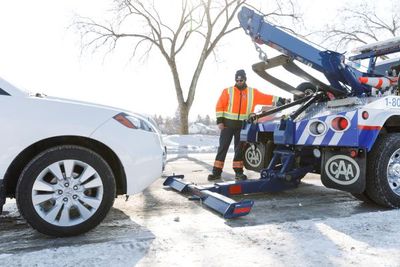
Colder weather will soon to be sweeping across Manitoba, and CAA Manitoba (CAA MB) is reminding drivers to prepare now for the fast-approaching winter season. “Now is the time for motorists to get their winter tires on, check the health of their car battery, and make sure they have an emergency car kit in their vehicle,” says Nadia Matos, manager, external communications for CAA Manitoba. “We want to ensure Manitobans are as ready as possible to drive safely this Winter.” Manitoba is known for cold and snow in the winter months, as well as poor driving conditions. Planning ahead will help make your next winter drive as stress-free as possible. “There’s no better time than now to ensure you and your loved ones are ready to drive safely this Winter,” adds Matos. CAA Manitoba has a list of winter readiness tips to help Manitobans prepare for winter driving. Test your car battery. If necessary, replace it before it fails. Even a fully charged battery can lose up to 30 per cent of its charge in temperatures below zero. CAA Manitoba will test Members’ batteries free of cost during a service call. Make sure you ask for a battery health check when you next perform maintenance on your car. For a listing of CAA's Approved Auto Repair Services (AARS), please visit Approved Auto Repair Service - CAA Manitoba. Install winter tires for better traction. On cold and snowy roads, winter tires can help reduce your braking distance by up to 25 per cent. Members can call CAA before Dec. 12 to have our mobile tire service change them at home for a fee. Ensure you have an emergency car kit. Your kit should include water, non-perishable food, jumper cables, blankets, a flashlight, batteries, waterproof matches, candles, and cat litter to help create traction under your tires. You should also add extra mitts, hats, socks, and footwear to your emergency kit. Have your brakes checked. If you’ve noticed any change in the feel of your brakes, or if they’re squealing or grinding, it may be time to have them serviced. With black ice and unpredictable weather, having good brakes can mean the difference between stopping and sliding. Check your block heater. When you park, is your outdoor plug drawing power? Is your extension cord working with no missing prongs or exposed wires? Check your lighting system. Ensure all your interior and exterior lights are functioning properly. Also, check that your headlights are aimed correctly for safe driving. Top up your fluids. Keep extra fluid in your trunk. Make sure it’s rated for -40ºC. Don’t let your gas drop below half full. Inspect your wiper blades. If you notice streaking on the windshield, check the condition of your blades for fraying or cracking. Remove worn wiper blades and replace them with new ones. Ensure you have the appropriate winter tools. Keep an ice scraper, a small shovel and a snow brush handy in your car at all times. While it’s important to make sure your vehicle is ready to go, it’s also essential for drivers and passengers to be prepared in case of an emergency or if you are stranded. Some additional ways to be prepared include: Keep a cell phone battery bank and a charging cable connected to your vehicle. Download and register for the CAA app and keep your CAA membership card in your wallet or vehicle, so you always know how to contact CAA Manitoba if you are stranded. Check Manitoba 511.ca for road conditions and closures if you head into a rural area. Always tell your loved ones where you plan to go and what your route is before leaving for a longer trip. For more information about driving safely in winter conditions, please visit our winter driving page at caamanitoba.com.

A global team of researchers using the new X-ray Imaging and Spectroscopy Mission (XRISM) telescope, launched in fall 2023, discovered something unexpected while observing a well-studied neutron star system called GX13+1. Instead of simply capturing a clearer view of its usual, predictable activity, their February 2024 observation revealed a surprisingly slow cosmic wind, the cause of which could offer new insights into the fundamental physics of how matter accumulates, or “accretes,” in certain types of binary systems. The study was one of the first from XRISM looking at wind from an X-ray binary system, and its results were published in Nature—the world's leading multidisciplinary science journal—in September 2025. Spectral analysis indicated GX13+1 was at that very moment undergoing a luminous super-Eddington phase, meaning the neutron star was shining so brightly that the radiation pressure from its surface overcame gravity, leading to a powerful ejection of any infalling material (hence the slow cosmic wind). Further comparison to previous data implied that such phases may be part of a cycle, and could “change the way we think about the behavior of these systems,” according to Joey Neilsen, PhD, associate professor of Physics at Villanova University. Dr. Neilsen played a prominent role as a co-investigator and one of the corresponding authors of the project, along with colleagues at the University of Durham (United Kingdom), Osaka University (Japan), and the University of Teacher Education Fukuoka (Japan). Overall, the collaboration featured researchers from dozens of institutions across the world. GX13+1 is a binary system consisting of a neutron star orbiting a K5 III companion star—a cooler giant star nearing the end of its life. Neutron stars are small, incredibly dense cores of supergiant stars that have undergone supernovae explosions. They are so dense, Dr. Neilsen says, that one teaspoon of its material would weigh about the same as Mount Everest. Because of this, they yield an incredibly strong gravitational field. When these highly compact neutron stars orbit companion stars, they can pull in, or accrete, material from that companion. That inflowing material forms a visible rotating disk of gas and dust called an accretion disk, which is extremely hot and shines brightly in X-rays. It’s so bright that sometimes it can actually drive matter away from the neutron star. “Imagine putting a giant lightbulb in a lake,” Dr. Neilsen said. “If it’s bright enough, it will start to boil that lake and then you would get steam, which flows away like a wind. It’s the same concept; the light can heat up and exert pressure on the accretion disk, launching a wind.” The original purpose of the study was to use XRISM to observe an accretion disk wind, with GX13+1 targeted specifically because its disk is persistently bright, it reliably produces winds, and it has been well studied using Chandra— NASA’s flagship X-ray observatory—and other telescopes for comparison. XRISM can measure the X-ray energies from these systems a factor of 10 more precisely than Chandra, allowing researchers to both demonstrate the capabilities of the new instrument and study the motion of outflowing gas around the neutron star. This can provide new insights into accretion processes. “It's like comparing a blurry image to a much sharper one,” Dr. Neilsen said. “The atomic physics hasn't changed, but you can see it much more clearly.” The researchers uncovered an exciting surprise when the higher-resolution spectrum showed much deeper absorption lines than expected. They determined that the wind was nearly opaque to X-rays and slow at “only” 1.4 million miles per hour—surprisingly leisurely for such a bright source. Based on the data, the team was able to infer that GX13+1 must have been even brighter than usual and undergoing a super-Eddington phase. So much material was ejected that it made GX13+1 appear fainter to the instrument. “There's a theoretical maximum luminosity that you can get out of an accreting object, called the Eddington limit. At that point, the radiation pressure from the light of the infalling gas is so large that it can actually hold the matter away,” Dr. Neilsen said, equating it to standing at the bottom of a waterfall and shining light so brightly that the waterfall stops. “What we saw was that GX13+1 had to have been near, or maybe even above, the Eddington limit.” The team compared their XRISM data from this super-Eddington phase to a set of previous observations without the resolution to measure the absorption lines directly. They found several older observations with faint, unusually shaped X-ray spectra similar to the one seen by XRISM. “XRISM explained these periods with funny-shaped spectra as not just anomalies, but the result of this phenomenally strong accretion disk wind in all its glory,” Dr. Neilsen said. “If we hadn’t caught this exact period with XRISM, we would never have understood those earlier data.” The connection suggests that this system spends roughly 10 percent of its time in a super-Eddington phase, which means super-Eddington accretion may be more common than previously understood—perhaps even following cycles—in neutron star or black hole binary systems. “Temporary super-Eddington phases might actually be a thing that accreting systems do, not just something unique to this system,” Dr. Neilsen said. “And if neutron stars and black holes are doing it, what about supermassive black holes? Perhaps this could pave the way for a deeper understanding of all these systems.”



Simulations of Exoplanet Formation May Help Inform Search for Extraterrestrial Life
Florida Tech astrophysicist Howard Chen is offering new insights to help aid NASA’s search for life beyond Earth. His latest theoretical work investigates the TRAPPIST-1 planetary system, one of the most widely studied exoplanetary systems in the galaxy. It has captured scientists’ attention for its potential to host water, and thus possibly life, on its planets. Now, he’s offering an explanation for why telescopes have yet to find definitive signs of either. The paper “Born Dry or Born Wet? A Palette of Water Growth Histories in TRAPPIST-1 Analogs and Compact Planetary Systems” was authored by Chen, an assistant professor of space sciences, and researchers from NASA, Johns Hopkins University and Harvard University, was published in The Astrophysical Journal Letters in September. It explores the likelihood that TRAPPIST-1’s three innermost exoplanets contained no water when they formed, despite existing in a zone where water is viable. TRAPPIST-1 is a red dwarf star located about 40 light-years away from us. (One light year is about 6 trillion miles.) It is thought to be about 7.6 billion years old, or 3 billion years older than our Sun. Astronomers are captivated by the TRAPPIST-1 system because its seven known planets are rocky and Earth-like. They also fall within the star’s habitable zone: the distance range from a star at which temperatures are not too hot or cold to support liquid water. Researchers are searching for any evidence of water on these planets, but have yet to detect anything. Some think a lack of gas in the atmosphere is disrupting the light needed to pick up detailed visuals. Others predict water could have escaped the planets’ atmospheres throughout their evolution. Chen and his team, however, decided to research a different theory: that there was no water to begin with because there was no gas to contain it. He would test it not from an observational perspective, but with mathematical modeling of the planets’ initial formation. “You have astronomers who are using telescopes to see what’s out there. I come from a different perspective,” Chen said. “I’m both trying to explain what we’re seeing while trying to make predictions about what we can’t.” The researchers created models that examined the composition and growth of these planets starting when they were as small as one kilometer wide. They simulated how material aggregated during collisions with other celestial objects until they reached their final planetary formations. There are several key factors in collision events that heavily influence a planet’s final composition. Chen’s models incorporated impact delivery, which is the transfer of materials like water and gases during a celestial collision; impact erosion, which refers to the removal of materials in a planet’s atmosphere due to impact; and mantle-atmosphere exchange, which is the transfer of water and gases between a planet’s atmosphere and mantle to maintain its conditions. The team ran hundreds of collision simulations, which returned thousands of different possibilities for how TRAPPIST-1’s planets might have formed. They varied several components, such as the amount of water available to the system, the profile of the initial planet formation environment, the planets’ density profiles and the initial system conditions. For the inner worlds, specifically the first three planets, most of the simulations came back dry. “Whatever we did, we couldn’t get much water in these inner planets,” Chen said. He believes that the main reason the planets couldn’t acquire water is due to the nature of the collision events. Compact planet collisions are higher velocity, so they are more aggressive and energetic, Chen said. This means that instead of acquiring material for a gaseous atmosphere, planets’ atmospheres were completely cleared out by the power of the collisions. With no gas in the atmosphere to contain water, it’s possible that any previously existing water escaped back into space during these collision events. Understanding a planet’s earliest characteristics, its water, air and carbon content, builds the foundation for how they evolve. That way, when researchers identify a planet that seems viable for life at the surface level, they can use Chen’s model to simulate what these distant worlds might be like on the inside, on the surface and in the air. Combining the theoretical context of a planet’s formation with the state in which it was discovered can help researchers – and NASA – make informed, efficient decisions on which planets are worth investigating and when it’s time to move on to the next. If you're interested in connecting with Howard Chen about the search for life beyond Earth, let us help. Contact Adam Lowenstein, Assistant Vice President for External Affairs at Florida Institute of Technology, at adam@fit.edu to arrange an interview today.
