
Experts Matter. Find Yours.
Connect for media, speaking, professional opportunities & more.

Remembering the Tiananmen Square Crackdown in 1989
The anniversary of the Tiananmen Square crackdown on June 4, 1989, marks one of the most pivotal and censored events in modern Chinese history. What began as a peaceful student-led demonstration demanding political reform, freedom of expression, and anti-corruption measures, ended in a violent military response that shocked the world. The Chinese government's suppression of the protests, including the deaths and detentions of countless civilians, continues to shape how the nation is viewed both internally and globally. As public remembrance is restricted in China, the event remains a powerful lens through which to examine human rights, authoritarian governance, and the limits of collective memory. Key story angles include: What Led to the Protests: Exploring the economic and political climate of late-1980s China, the influence of global democratic movements, and the demands of the student protestors. The Crackdown and Casualties: Reconstructing the timeline of events, the military response, estimated death tolls, and the international reactions in real-time. Global Response and Diplomatic Fallout: Analyzing how countries responded with sanctions, condemnation, or silence—and how the crackdown affected China’s foreign relations. Censorship and Erasure in China Today: Investigating how the Chinese Communist Party has erased public memory of the event through internet censorship, media control, and surveillance. Legacy for Chinese Civil Society: Looking at how the crackdown shaped political activism, dissent, and civil rights movements in China and among the Chinese diaspora. Symbolism and Cultural Memory: Examining how iconic images, like the “Tank Man,” became global symbols of resistance, and how artists, scholars, and activists continue to commemorate the event. As China rises on the world stage, the legacy of Tiananmen Square remains a crucial marker of its internal contradictions and its contested role in global discussions on freedom, history, and accountability. Connect with our experts about Tiananmen Square and its enduring global impact: Check out our experts here : www.expertfile.com


Covering the latest developments in Iran? Our experts are here to help with your coverage.
Iran’s nuclear program remains one of the most closely watched issues in international security, diplomacy, and nonproliferation. Originally launched in the 1950s with Western support, the program has since evolved into a focal point of global concern over nuclear weapons, regional stability, and international trust. As negotiations continue to stall and enrichment capabilities increase, understanding the historical context, scientific progress, and geopolitical consequences of Iran’s nuclear ambitions is critical for public awareness. This topic provides journalists with high-impact angles spanning diplomacy, science, and security. Key story angles include: Origins and Evolution of the Program: Tracing the nuclear program from its U.S.-backed beginnings under the Shah to its secret expansion after the 1979 Islamic Revolution. The JCPOA (Iran Nuclear Deal): Examining the 2015 Joint Comprehensive Plan of Action, its successes, its unraveling after the U.S. withdrawal in 2018, and current attempts to revive it. Scientific Advances and Enrichment Capacity: Analyzing Iran’s current uranium enrichment levels, centrifuge technology, and what experts say about its "breakout time." Regional and Global Security Concerns: Investigating how Iran’s program affects Middle Eastern tensions, Israeli security policy, and broader nuclear proliferation risks. Diplomatic Stalemates and Sanctions: Reviewing the impact of international sanctions, diplomatic efforts by the EU, China, and Russia, and the political dynamics within Iran. The Risk of Escalation or Military Conflict: Exploring scenarios that could lead to open confrontation and what military analysts say about preemptive strikes or deterrence strategies. Iran’s nuclear program is not just a regional issue—it’s a global flashpoint at the intersection of science, diplomacy, and international law. Journalists covering this story have an opportunity to unpack a decades-long narrative with renewed urgency. Connect with our experts about Iran’s Nuclear Program: History, Progress, and Global Risks: Check out our experts here : www.expertfile.com

ExpertSpotlight: American Steel Tariffs – A Brief History
The history of steel trade and tariffs in the United States is deeply intertwined with the nation’s industrial rise, global economic strategy, and political maneuvering. From the late 19th century through the 21st, steel has symbolized both national strength and international tension. Trade protections—such as tariffs—have been used to shield American steel producers from foreign competition, often sparking international disputes and shaping the direction of U.S. economic policy. This topic matters to the public because it affects manufacturing jobs, infrastructure costs, international relations, and the price of goods in everyday life. Understanding steel tariffs offers a lens into larger debates about globalization, economic nationalism, and trade fairness. Key story angles that may interest a broad audience include: The origins of U.S. steel tariffs: Tracing the first protective tariffs in the late 1800s and their role in America’s industrial expansion. The role of steel in national security and economic independence: Investigating why steel has been labeled a “strategic industry” across administrations. Tariff flashpoints: Highlighting major tariff battles—such as the 2002 and 2018 steel tariffs—and their economic and diplomatic consequences. Impact on American manufacturing and jobs: Examining whether tariffs have protected or hindered employment in steel-producing regions. Global trade tensions: Exploring how tariffs have affected relationships with allies such as Canada, the EU, and China. Future of steel trade policy: Discussing evolving views on protectionism, globalization, and climate-linked trade strategies. Connect with our experts about the history of tariffs and steel in America: Check out our experts here : www.expertfile.com

Expert Perspective: The Hidden Costs of Cultural Appropriation
In our interconnected world, cultural borrowing is everywhere. But why do some instances earn applause while others provoke outrage? This question is becoming increasingly crucial for business leaders who must carefully navigate cultural boundaries. Take the backlash the Kardashian-Jenner family faced for adopting styles from minority cultures or the controversy over non-Indigenous designers using Native American patterns in fashion. These examples highlight the issue of cultural appropriation, where borrowing elements from another culture without genuine understanding or respect can lead to accusations of exploitation. Abraham Oshotse, an assistant professor of organization and management at Goizueta Business School, along with Assistant Professor of Sociology and Anthropology at Hebrew University Yael Berda and Associate Professor of Organizational Behavior at the Stanford Graduate School of Business Amir Goldberg, explores this in their research on “cultural tariffing.” They shed light on why high-status individuals, such as celebrities or industry leaders, often come under fire when crossing cultural boundaries. The Concept of Cultural Tariffing Oshotse and coauthors define cultural tariffing as “the act of imposing a social cost on cultural boundary crossing. It is levied on high-status actors crossing into low-status culture, in order to mitigate the reproduction of the status inequality.” This notion suggests that the acceptance or rejection of cultural boundary-crossing is influenced by the perceived costs and benefits. Cultural appropriation involves taking elements from a culture that one does not belong to, without permission or authority. For example, when Elvis Presley brought African-American music into the mainstream, it was initially seen as elevating the genre. However, in today’s context, such acts might be criticized as appropriation rather than celebration. This research seeks to analyze people’s modern reactions to different examples of cultural boundary-crossing and which conditions induce cultural tariffing. The Hypotheses The researchers make four hypotheses about participants’ reactions to cultural appropriation: People will disapprove of cultural borrowing if there’s a clear power imbalance, with the borrowing group having more status or privilege than the group they are borrowing from. Cultural borrowing is more likely to be criticized if the person doing it has a higher socioeconomic status within their social group. Cultural borrowing is more likely to be criticized if the person doing it has only a shallow connection to the culture they’re borrowing from. Cultural borrowing is more likely to be criticized if the person doing it benefits more from it than the people from the culture they are borrowing from. Put to the Test Oshotse et al exposed respondents to four scenarios per hypothesis (16 total) with a permissible and a transgressive condition. In the permissible condition, subjects exhibit lower status or socioeconomic standing or a stronger connection to the target culture. Subjects in the transgressive condition exhibit a higher status or socioeconomic standing and less of an authentic connection to the target culture. Insights from the Study Oshotse’s study offers four key insights: Status Matters: Cultural boundary-crossing is more likely to generate disapproval if there’s a clear status difference favoring the adopter. Superficial Connections: The less authentic the adopter’s connection to the target culture, the more likely they are to face backlash. Socioeconomic Influence: Higher socioeconomic status within the adopter’s social group increases the likelihood of disapproval. Value Extraction: The more value the adopter gains relative to the culture they’re borrowing from, the higher the disapproval. These insights are crucial for leaders who want to navigate cultural boundaries successfully, ensuring their actions are seen as respectful and inclusive rather than exploitative. Real-World Implications for Business Leaders Why does this matter for business leaders? Understanding cultural tariffing is crucial when expanding into new markets, launching multicultural campaigns, or even managing diverse teams. The research suggests that crossing cultural boundaries without deep understanding or respect can backfire. That’s especially true when the adopter holds a higher socioeconomic status. Consider the example of a luxury brand adopting traditional African patterns without engaging with the communities behind them. In this case, it risks being seen as exploitative rather than innovative. The consequences aren’t just reputational; they can also impact the brand’s bottom line. This research isn’t just about isolated incidents; it mirrors sweeping societal shifts. Over the past 50 years, Western views have evolved to embrace ethnic diversity and multicultural exchange. But with this newfound appreciation comes a fresh set of challenges. Today’s leaders must navigate cultural interactions with greater care, fully aware of the historical and social contexts that shape perceptions of appropriation. In today’s global and interconnected business landscape, mastering the subtleties of cultural appropriation and tariffing is crucial. Leaders who tread thoughtfully can boost their reputation and success, while those who falter may face serious backlash. By understanding the hidden costs of crossing cultural boundaries, business leaders can cultivate authentic exchanges and steer clear of the pitfalls of appropriation. Abraham Oshotse is an assistant professor of organization & management. He is available speak to media regarding this important topic - simply click on his icon now to arrange an interview today.



Researchers to explore how AI can help urban mobility planners They are to investigate AI-driven policy tools’ potential to create greener cities Project to benefit from expertise of five European universities. A European group of researchers led by Aston University is taking the first steps to explore how AI can help urban mobility planners. As city populations grow causing strain on resources, the experts are to investigate AI-driven policy tools’ potential to create greener cities. The team have received £10,000 in funding from the British Academy which they hope will set them on the road to further research. Taking part in the project will be experts from University College London, Ruralis University in Norway, the University of Turin, Italy and Lisbon University Institute, Portugal. Dr Dalila Ribaudo from the Centre for Business Prosperity at Aston Business School and Dr Alina Patelli from the Aston Centre for Artificial Intelligence Research and Application will co-lead a UK-EU consortium consolidation project. The interdisciplinary project will benefit from expertise in applied business and specialist insight into global economics, policymaking and urban transport planning. Dr Patelli said “Policymakers and society could all benefit from our research into innovative ways of managing the strain on urban infrastructures and resources. "The AI-powered policy tools we are developing are meant to support decision managers at all levels of urban governance with reducing emissions, optimising transportation as well as predicting and preventing environmental hazards. Such changes would improve the quality of life for the millions of people living in towns and cities across the UK, Europe and, in the long term, the entire world.” Following the successful bid for the British Academy pump priming grant the team will apply for Horizon Europe funding to continue developing impactful AI-driven policy tools for greener cities.


UD researchers launch open-source tool to boost global food security and water sustainability
Efficient water usage in agriculture is crucial for sustaining a growing human population. A better understanding of the systems that support agriculture, farmers and farmlands allows for food production to become more efficient and prosperous. That's what makes the Monthly Irrigated and Rainfed Cropped Areas Open Source (MIRCA-OS) dataset so important. MIRCA-OS offers high-resolution data on 23 crop classes — including maize, rice and wheat — and helps researchers, students and farmers examine irrigation, rainfall and croplands and how they interact with global water systems. Co-authored by Endalkachew (Endi) Kebede, a doctoral student in University of Delaware’s Department of Geography and Spatial Sciences, a recent paper focused on MIRCA-OS was published in Nature Scientific Data. Kyle Davis, assistant professor in the Department of Geography and Spatial Sciences and the Department of Plant and Soil Sciences, served as a co-author on the paper and coordinated the study. “We first developed a comprehensive data library of crop-specific irrigated and rainfed harvested areas for all countries,” Kebede said. “This involved two years of gathering data from a wide range of international, national and regional sources. Through this process, we produced a tabulated crop calendar, annual harvested area grids and monthly harvested area grids for all irrigated and rainfed crops.” “The amount of effort that Endi put in to gather, process and harmonize all of this data is truly incredible,” Davis said. “His effort is a very important contribution to the scientific and development communities.” Doctoral student Endalkachew Kebede (left) and Assistant Professor Kyle Davis. (Photo credit: University of Delaware) Cropland accounts for 13% of Earth's total habitable land, and the preservation of cropland is important in feeding the growing global population. “Crop production has been a widespread human activity for a few thousand years, and it has a huge role in global food security,” Kebede said. “But it also has unintended impacts on the environment, such as overutilization of water resources, pollution through rivers or the effects on soil and the environment.” MIRCA-OS can play a crucial role in helping to better understand croplands and agriculture, allowing the global population to be successfully fed while minimizing the agricultural effects on the environment. In addition to the data included on cropland and water resources, MIRCA-OS allows researchers to view social aspects like poverty and unemployment through an agricultural lens, creating a better understanding of the interconnectivity of agriculture and social issues. MIRCA-OS is an updated version of the earlier MIRCA2000 dataset. Kebede said the MIRCA2000 was released nearly two decades ago, so renewing the data gives users more accurate and timely information. Both datasets specialized in examining irrigation and rainfall, but the MIRCA-OS added two new complexities to their data. First, MIRCA-OS is open source, meaning it is publicly available for anyone to use, download, or modify. Kebede said the added accessibility allows the technology to contribute to anyone's work, whether it be a student, a researcher or a farmer. “Anybody can use, update it, or upscale it to the special skill they’re interested in,” Kebede said. “Some might use it for research, some might use it to create policies and some might use it to practice agriculture.” To arrange an interview with Davis, visit his profile and click on the contact button.


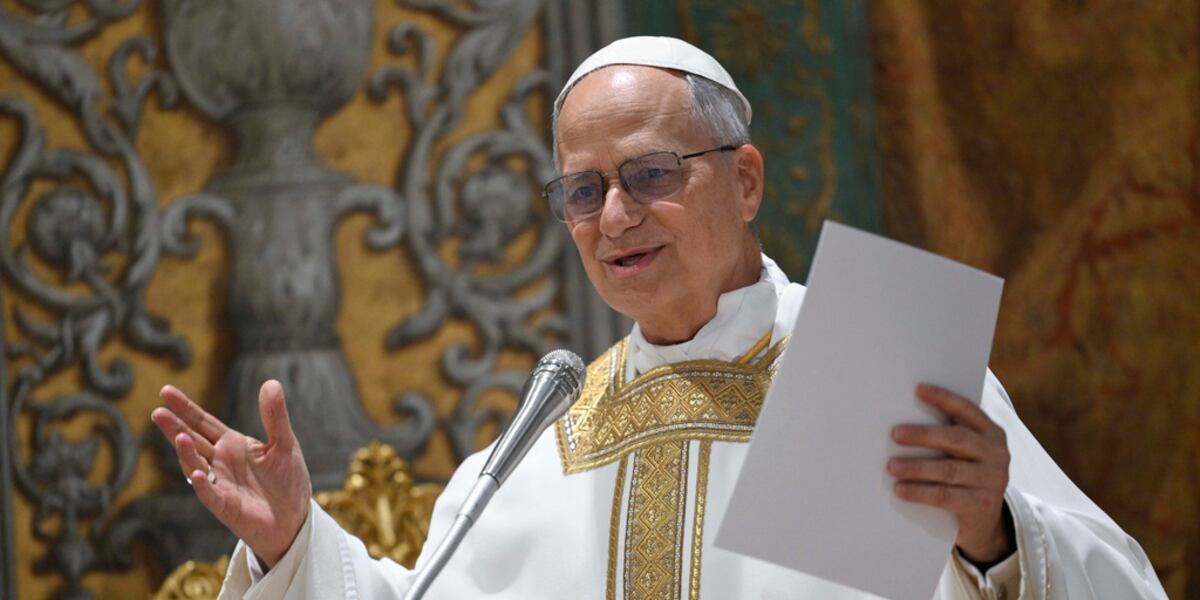
Expert Q& A: ‘The Pope is also a monarch’
Kathleen Comerford, Ph.D., professor of history at Georgia Southern University, specializes in Catholic history in the 16th and 17th centuries. She is also an associate editor for the Journal of Jesuit Studies, which focuses on the work of the Society of Jesus (Jesuits), a religious order within the Catholic Church. Pope Francis was the church’s first Jesuit pope. With the global significance and rarity of the conclave, Comerford answered frequently asked questions about how the conclave works, how the conclave process has evolved over time, and what the passing of a pope means for the Catholic Church and the world. Question: What does the passing of a pope mean for the world? Comerford: Multiple things! First of all, there are 1.4 billion Catholics in the world scattered in many different countries. The pope is a unifying figure for all of the Catholics. He represents something immediate in the sense that he’s the head of the church and is a recognizable figure. The pope is also a monarch. I was just talking with my classes about this. He is the head of the government of the Vatican City State, which is the smallest independent state in the world. It has a very long history itself. Pretty much everybody who lives in Vatican City works for the Vatican. The pope is one of the few elected monarchs in history. He is responsible for financial and political decisions, and he has ambassadors around the world as a result of his role in global policy. Question: How is a new pope selected? Comerford: The College of Cardinals will meet for an election called a conclave, and they actually stay in a dormitory-like place in Vatican City for it. They are sequestered from the public, and they take some time to meet, pray and vote. The cardinals aren’t supposed to be sitting around talking about who would be a really good pope, but we don’t know whether they do because they’re sequestered and nobody is supposed to talk about it. They will likely take a vote on the first day, but that’s not required. Every subsequent day, they can take a maximum of four votes; two in the morning and two in the afternoon until a candidate gets a two-thirds majority. Question: What does the voting look like? Comerford: There are ballots, and the cardinals write their preferred candidate on the ballot, and then they put their vote in a chalice. To count the votes, there’s a group of three people who are in charge of counting and then announcing the results to the fellow cardinals. There are 252 cardinals, but only 135 of them are eligible to vote because anyone over the age of 80 is ineligible. The procedure where only cardinals can elect the pope dates from 1059. The secret ballot and the two-thirds majority requirement is from 1621. The sequestration for the process dates from 1271 because they argued about who the new pope would be for two years and nine months; a total of 33 months. And so, they decided that the only way to make sure that this didn’t happen again would be to create this scenario with the cardinals locked in a room with a key. Question: When one of the candidates receives a two-thirds majority and becomes the next pope, how will it be announced? Comerford: Well, this is kind of fun, because they have four votes every day until one of the candidates receives a two-thirds majority. After they take the votes, the papers used to vote are burned. How the news is shared to the crowds outside is based on the color of smoke. If the smoke is black, that means no one received the majority and there’s no new pope yet. If there’s white smoke, it means there’s a new pope. This practice really only dates to the early 19th century. At first, it was just if there was smoke, there was no pope; if there was no smoke, then there was a pope. In 1914, they changed this aspect of the election so that black smoke means “no pope” and white smoke means “new pope.” Question: It’s expected that the next pope will be one of the cardinals in the room when they vote, yes? Comerford: Yes, but it doesn’t have to be. There have been a lot of popes, but in the last 200-300 years, there hasn’t been somebody who wasn’t in the conclave that was elected. Theoretically, they could nominate somebody who’s not a cardinal and the whole room could say, “yes, that’s the person we want as pope.” However, they don’t vote by acclamation anymore. They stopped doing that in the 19th century. Question: Pope Francis appointed 108 of the cardinals, so that’s a total of 80% of those eligible to vote for the next pope. How likely is it that we see a pope similar to the late Francis, considering he provided the electorate for his successor? Comerford: First of all, he deliberately went out and created cardinals in places where there had never been cardinals before. And he didn’t do that by saying, “I’m going to find somebody who’s like-minded to me.” He just said, “There are a lot of Catholics in Myanmar and they’ve never had a cardinal. So I’m going to make sure that there’s a cardinal now.” Most of these new cardinals are in places like Rwanda, Cape Verde, Tonga, Myanmar, Mongolia and so on. So these are non-European cardinals. Now, less than 40% of the voting cardinals are European. So to speculate on how similar they are to Francis, you have to break down what Francis was. There has been his entire pontificate about how he’s the first American pope, but his parents were born in Italy. He didn’t grow up speaking Italian, but it was a dialect of Italian as well as Spanish, because he grew up in Argentina. He was the most European you can get and still be an American. Another part of the question is, will the new pope be somebody who is of a similar mind to Francis in terms of his governance, which was very devolved. He introduced this idea of “synodality,” which is about fairly consistent communication with groups of people. Pope Francis was not particularly monarchical or hierarchical. There is also the aspect of his thinking that leans more to the left than the right on a number of social issues like immigration, women’s rights, the rights of minorities and immigration. He opened a lot of conversations, which the very right leaning portions of the church have been very uncomfortable with. If you're interested in learning more about this topic and want to book time to talk or interview with Kathleen Comerford then let us help - simply contact Georgia Southern's Director of Communications Jennifer Wise at jwise@georgiasouthern.edu to arrange an interview today.


ExpertSpotlight: The Ottawa Treaty, the Anti-Personnel Mine Ban Convention
The Ottawa Treaty, formally known as the Anti-Personnel Mine Ban Convention, stands as one of the most impactful humanitarian disarmament agreements of the modern era. Signed in 1997 and led by Canada, the treaty prohibits the use, stockpiling, production, and transfer of anti-personnel landmines—deadly remnants of war that continue to kill and maim civilians decades after conflicts end. The treaty’s global significance lies not only in its lifesaving goals but also in how it redefined international diplomacy by empowering civil society and survivors in disarmament efforts. As ongoing conflicts and global security threats evolve, revisiting the treaty’s legacy and future relevance is more important than ever. Journalists may find timely and meaningful angles through: The origins of the Ottawa Treaty and Canada’s leadership in humanitarian disarmament The continuing global impact of landmines and the status of mine clearance efforts Survivor stories and the long-term effects of landmine injuries on communities How the treaty reshaped international diplomacy and civil society’s role in negotiations The intersection of armed conflict, environmental degradation, and unexploded ordnance Countries that have not joined the treaty and the geopolitical implications This treaty is a powerful example of global cooperation aimed at protecting civilians, offering rich opportunities for human-interest stories and international policy analysis. Connect with our experts about the Ottawa Treaty and landmines Check out our other experts here : www.expertfile.com

Historical Significance of the Papal Name
In the wake of the historic election of Pope Leo XIV, the first American to ascend to the papacy, scholars and observers alike are reflecting on the global, historical and theological implications of his early statements and symbolic choices. His decision to take the name Leo – a name not used for over a century – immediately evokes comparisons to both Leo XIII and Leo I (Leo the Great), popes known for their firm leadership and dynamic engagement with the world. Baylor University’s Elisabeth Rain Kincaid, J.D., Ph.D., director of the Institute for Faith and Learning and an expert on early modern theology and Catholic Social Thought, said choosing the name Leo is significant, especially in today’s world. Through his choice of name, rhetorical style and theological references, the new pope is signaling a clear vision for a Church that is simultaneously grounded in tradition and open to global dialogue, Kincaid said. Kincaid is currently at work on a monograph – “Business Ethics for a Flourishing Life: Catholic Social Thought in the Modern Workplace” – in which she argues for the continued importance of Leo XIII’s thought for modern life. If you're covering the news about Pope Leo XIV and are looking to know why Cardinal Robert Prevost chose that name - we can help. Elisabeth Rain Kincaid is an author, speaker, teacher, and theologian. She has published broadly in peer-reviewed journals and popular publications. She is a frequent speaker at conferences, churches, and professional events on topics including business ethics, virtue and character, Christian engagement with law and politics, and work and vocation. She is currently the Director for the Institute for Faith and Learning at Baylor University. In her teaching, she draws upon her years of experience as a white-collar criminal defense attorney and a private equity professional, along with her ministry experience. Elisabeth is available to speak with media about this topic - simply contact Shelby Cefaratti-Bertin, M.A., Assistant Director of Media and Public Relations at Baylor University, Shelby_Cefaratti@baylor.edu or 254-327-8012 to arrange an interview today.


Name: Adrian Peter Title: Associate professor of mathematics and systems engineering and electrical engineering and computer science (joint appointment); director, Center for Advanced Data Analytics and Systems (CADAS) Department/College: Department of Mathematics and Systems Engineering and Department of Electrical Engineering and Computer Science/College of Engineering and Science Current research funding: $2.19 million General research focus: Our Multi-domain, Multi-sensor, Cyber-physical Tactical Exploitation (M2CTE) project addresses a critical need for a robust analytic processing framework capable of supporting autonomous sensing and analytics on the edge – where devices and sensors collect data – with the ability to reach back to the cloud for more improvement. Adrian Peter's research interests are in applying advanced analytics (e.g. machine learning, statistical modeling, optimization and visualization) to solve large-scale computing problems across a variety of domain areas (signal processing, geospatial, environmental, sensor fusion and enterprise intelligence). Q: What has you excited about your current research? We have built our entire infrastructure with the immensely talented graduate and undergraduate students at Florida Tech. Their tireless efforts have led to us delivering practical and operational real-world, machine-learning solutions that make us among the global leaders in machine learning at the edge. Q: Why is it important to conduct research? The objective of all research is to advance the frontiers of knowledge in a specific discipline. In my research, we are continually pushing state-of-the-art distributed sensing and edge analytics. Our results have helped transition conceptual ideas and customer requirements into operational solutions that improve situational awareness at tactical edge. Adrian Peter is available to speak with media. Contact Adam Lowenstein, Director of Media Communications at Florida Institute of Technology, at adam@fit.edu to arrange an interview today.
