
Experts Matter. Find Yours.
Connect for media, speaking, professional opportunities & more.

Assigned a Piece for May Day? Our Experts are Here to Help with Your Questions and Coverage
May Day, celebrated on May 1st each year, holds significance as a global day of action for anti-capitalist, anarchist, and other left-wing activists. Originating from the historic struggles of the labor movement, May Day symbolizes solidarity, workers' rights, and social justice. Understanding the importance of this event requires recognizing its relevance to contemporary societal issues and its potential to spark discussions on a wide range of topics that resonate with the public. Key sub-topics that may interest journalists and the public include: Labor Rights and Worker Advocacy: Exploring the current state of labor rights worldwide, including issues such as fair wages, workplace safety, and the challenges faced by marginalized workers. Social Justice Movements: Examining the role of May Day in amplifying the voices of social justice movements advocating for equality, diversity, and inclusion across various sectors of society. Economic Inequality: Analyzing the growing disparities in wealth and income distribution globally and how May Day serves as a platform to address systemic economic injustices. Political Activism and Protest Culture: Investigating the tradition of political activism and protest culture associated with May Day, including its historical roots and contemporary expressions. Global Solidarity: Highlighting instances of international solidarity and collaboration among activists, unions, and grassroots organizations during May Day events worldwide. The Future of Work: Discussing the evolving nature of work in the digital age, automation's impact on employment, and the need for policies to ensure a just transition for workers. May Day serves as a powerful reminder of the ongoing struggles for social and economic justice, offering journalists and the public an opportunity to engage with pressing issues, amplify marginalized voices, and envision a more equitable future. Connect with an Expert about May Day: Steven E. Harris Associate Professor · University of Mary Washington Dr Elisabeth Schimpfössl Senior Lecturer · Aston University Edward Lopez Professor · Western Carolina University David Smilde Charles A. and Leo M. Favrot Professor of Human Relations and and Senior Associate Fellow at CIPR · Tulane University To search our full list of experts visit www.expertfile.com Photo Credit: Sinitta Leunen

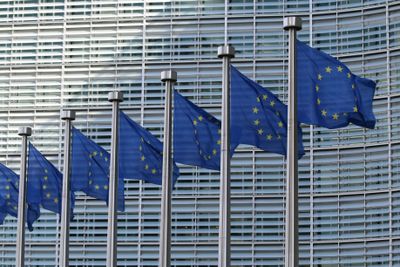
Two decades ago, the European Union welcomed ten new member states, including Cyprus, Czech Republic, Estonia, Hungary, Latvia, Lithuania, Malta, Poland, Slovakia, and Slovenia. This historic expansion not only reshaped the geopolitical landscape of Europe but also holds significance for global politics, economics, and cultural integration. Understanding this event's importance requires recognizing its impact on various fronts, from fostering regional stability to influencing trade dynamics and promoting cross-cultural exchange. Key sub-topics that may interest journalists and the public include: European Integration and Unity: Exploring how the expansion has contributed to the European Union's efforts towards unity, cooperation, and peace among member states. Economic Implications: Analyzing the economic effects of the expansion on both existing and new member states, including trade patterns, investment flows, and disparities in development. Political Dynamics: Investigating the political changes within the European Union, such as shifts in power dynamics, decision-making processes, and the challenges of governance in a larger union. Cultural Exchange and Identity: Examining the cultural exchange and diversity resulting from the inclusion of new member states, and how it has enriched the European cultural tapestry. Challenges and Achievements: Assessing the successes and ongoing challenges faced by the European Union post-expansion, including issues related to migration, integration, and institutional reforms. Future Prospects: Speculating on the future of the European Union, considering factors like potential further expansions, the rise of Euroscepticism, and the Union's role in global affairs. The 20th Anniversary of the Expansion of the European Union marks a significant milestone in the continent's history, offering journalists and the public alike a chance to reflect on the achievements, challenges, and the future trajectory of European integration. Connect with an Expert about the EU: Carolyn Dudek Professor of Political Science · Hofstra University Dr Martin Brenncke Lecturer in Law · Aston University David R. Dorondo Professor · Western Carolina University To search our full list of experts visit www.expertfile.com Photo Credit: Guillaume Périgois

Success Is Sweet: Ferrero's Crown Jewel, Nutella, Turns 60
Six decades ago, on April 20, 1964, the first jar of Nutella left Gruppo Ferrero's factory in the Italian town of Alba. In its gooey wake, the chocolate-hazelnut treat would spread across continental Europe, and then the world, like a healthy schmear on toast. Today, Nutella is the crown jewel of Ferrero's confectionary empire, propping up a business that generates roughly 17 billion euros in revenue each year. Annually, a whopping 365,000-plus tons of the stuff are sold across 160 countries, and nearly one quarter of all hazelnuts harvested are devoted to its production. Luca Cottini, PhD, is an associate professor of Italian in Villanova University's College of Liberal Arts and Sciences and an expert on modern Italian culture, history and society. He also is the author of a book on Michele Ferrero, the mastermind behind Nutella and its meteoric rise: Il fabbricante di cioccolato. To mark the iconic Italian brand's 60th anniversary, Dr. Cottini shared some thoughts on its Willy Wonka-like creator, early (accidental) origins and recipe for international success. Here's a taste: Q: According to Business Insider, a jar of Nutella is sold every 2.5 seconds—just about the time it takes to finish this sentence. How did we get so "nuts" for Nutella, anyway? Dr. Cottini: Well, much of the success of Nutella relates to its novelty, to the idea of spreadable chocolate. At one point, to think that spreading chocolate would be popular was as crazy as to predict that spreadable coffee would be a hit. The idea developed because, in the mid-to-late 1940s, Michele Ferrero's father Pietro was to combine the scarcity of cocoa in his area with hazelnuts, which was the ingredient most available in Alba. It seemed like condemnation that they should have only hazelnuts. Well, he combined them with cocoa to produce this mix—it's called "gianduja" in Italian—and he sold it. But when the Ferreros sold it in southern Italy, they had a problem: The chocolate was melting with the summer heat; and a lot of the workers in Naples, to not waste it, started to spread it on slices of bread. And it's interesting. The Ferreros have a completely non-moralistic approach to failure. You sell chocolate; it melts. This is somewhat embarrassing. But their approach was instead to see this situation as the beginning of a new idea, of a new concept. Q: Is Nutella's story unique in this respect? DC: Several Italian innovators have similar stories to the Ferreros', especially during the 1930s. [Salvatore] Ferragamo, for instance, developed the wedge shoe because there was a shortage of steel, with an embargo imposed on Italy. So, he used Sardinian cork as a replacement, and that generated the wedge shoe. [Guccio] Gucci, during a leather shortage, started using hemp and decorating the hemp with a double "G," and that became the trademark of the company. [Alfonso] Bialetti, who produced the modern coffeepot, used the only metal that was allowed during Fascism, which was aluminum, since the Partito Nazionale Fascista would not import iron or prime metals. But Bialetti took this poor, hybrid ore and made it something that could become valuable. And so, he invented the moka coffeepot in 1933, which is one of the symbols of Italian design. That’s one of the keys of the Italian model of entrepreneurship: producing objects that are not just trendy for one season, but eventually become evergreen or classic. Q: What inspired the name "Nutella?" DC: It was the product of 18 years of research. For all intents and purposes, "Nutella" first came out in 1946. It was called "SuperCrema" and, before that, "Cremalba." But in 1962, there was a law in Italy that prevented companies in the food industry from using prefixes like "super" or "extra." So, that led Ferrero—by then, under the leadership of Michele Ferrero—to figure out a new alternative to SuperCrema. At the same time, the company was expanding into Germany and France, and they needed a brand name that could be pronounced easily. So, Ferrero joined the "ella" sound from mozzarella, stella, caramella—Italian words that people could recognize—with the word "nut," like the English "nut," which gave their product an international feel. It's really a "glocal" [global and local] name. It was conceived as a very rooted enterprise with a global horizon. Q: In 1964, were Ferrero's global ambitions practical? DC: It was honestly a bit of a gamble. In 1957, the European Economic Community was established, which is the beginning of the European Union. And that same year, Michele Ferrero organized in Rome the first conference of his company, which was by then somewhat national, to plan exportation in Europe. In the Italy of the 1950s and 1960s, this was very pioneering. Michele Ferrero was actually one of the first businesspeople to export products to Germany in the 1950s, at a time when there was a lot of resentment against Italians because of everything that happened during the Second World War. So, he entered this incredibly difficult market, and still today, Ferrero and Nutella are strong. Q: What do you think accounts for Nutella's continued popularity, 60 years after its introduction? DC: Michele Ferrero thought of his products as speaking products. It's something very common to the automobile industry in Italy. This is characteristic of Ferrari and Lamborghini; they produce cars that are appealing not just because they're "super cars," but because they say something. Nutella is a food that says something. When someone puts it on the table, it compels people to jump in and share their own stories—of trying it with a friend, of having it on a hike or of taking part in "Nutella Day." Today, if you're in the market for a chocolate-hazelnut spread, you might find products that are even better than Nutella. Actually, surely better. But they will never replicate the appeal and the grasp that Nutella has. Because Nutella has that aura of storytelling and mythmaking other products simply don't have.


Climate change research trailblazer elected to prestigious list of AAAS Fellows
University of Delaware professor Rodrigo Vargas has been elected as a fellow of the American Association for the Advancement of Science (AAAS) — one of the largest scientific societies in the world and publisher of the Science family of journals. The new class of AAAS Fellows includes 502 scientists, engineers and innovators across 24 disciplines, who are being honored for their scientifically and socially distinguished achievements. Vargas, professor of ecosystem ecology and environmental change in UD’s College of Agriculture and Natural Resources, is recognized "for distinguished contributions to carbon dynamics across the terrestrial-aquatic interface, development of environmental networks, novel data analysis tools and his leadership in creating a more diverse scientific workforce." Deborah Allen, who retired from UD in 2019 as a professor of biological sciences, was also names as a fellow. She was cited “for transformational contributions to STEM education nationally and internationally, particularly for developments in problem-based learning and faculty development.” Vargas is an ecosystem ecologist who studies how nature-based solutions can help address global environmental change in both terrestrial and coastal ecosystems, Vargas uses a variety of research methods, including data mining, machine learning, remote sensing, measurements of greenhouse gas fluxes and modeling techniques for forecasting applications.


New book explores minority languages in the digital age
Heritage Languages in the Digital Age. The Case of Autochthonous Minority Languages in Western Europe offers invaluable insights for educators, activists, policymakers and researchers The book describes the challenges faced by minority languages in today's interconnected world and asks whether digital communication could potentially reverse the decline of smaller and lesser used languages A researcher from Aston University has co-edited a book that explores the intricate relationship between technology, language policy and cultural identity, presenting case studies of digital communication in smaller languages such as Breton, Gaelic, Faroese, Frisian, Lombard, Low German, and Welsh. Heritage Languages in the Digital Age asks whether digital communication can help to prevent language loss of smaller languages and offers invaluable insights for educators, activists, policymakers and researchers navigating the challenges faced by minority languages in today's interconnected world. Edited by Gertrud Reershemius, a professor of linguistics and language contact at Aston University, and Birte Arendt from Greifswald University in Germany, the book's central focus is on minority languages which are facing a declining number of speakers and a loss of communicative domains in an increasingly globalising world. As these languages contend with the dominance of majority languages, stakeholders such as teachers, language activists, planners and researchers are re-evaluating traditional media strategies, language policies and teaching methodologies to counteract language shift trends. The book also discusses how online communities influence language usage and cultural exchanges for minority speakers and advocates for adaptive language policies and innovative teaching methods to support minority languages and bilingualism while fostering linguistic pride and identity. Professor Gertrud Reershemius said: “The languages examined in this book are still spoken by a considerable number of speakers and enjoy varying forms of institutional, legal, financial and ideological support. “While the overall numbers of speakers may be declining, their significance in identity construction and cultural commodification processes is undeniably growing. “As the global discourse on language diversity and cultural preservation gains momentum, this book serves as a comprehensive resource for understanding and addressing the multifaceted challenges and opportunities facing minority language communities.” You can purchase a copy of Heritage Languages in the Digital Age here.


Dr Raghunath Anant Mashelkar delivered the 2024 Aston University Annual Distinguished Lecture He has been president of the Indian National Science Academy and director general of the Indian Council of Scientific and Industrial Research and has received multiple honours and awards He was also presented with an honorary professorship in recognition of his outstanding contribution to academia and beyond. Dr Raghunath Anant Mashelkar delivered Aston University’s 2024 Annual Distinguished Lecture to more than 70 invited guests on 22 April. One of the world’s renowned figures in polymer science, research leadership and intellectual property rights, Dr Mashelkar, a chemical engineer, is a global leader and inspiration in his native India and the wider international research community. In recognition of his outstanding contribution to the research community, Dr Mashelkar was bestowed with an honorary professorship at the end of the lecture by Professor Aleks Subic, Vice-Chancellor and Chief Executive of Aston University. The title of Dr Mashelkar’s lecture was ‘Trapeze Artistry in Biomimetic Smart Gels’. ‘Smart gels’, made from synthetic polymers (types of plastics), can be developed with specific functional properties, such as reacting to changes in temperature and pH. Whilst Director at India’s National Chemical Laboratories, Dr Mashelkar led work which discovered smart gels which can mimic biological functions (biomimetic), including being self-healing, self-organising, and acting as enzymes in chemical and biological processes. Their properties can be reversibly switched on or off, or they can change volume or shape, through the use of pH or temperature, the ‘trapeze artistry’ of the title, giving them many uses. This included temperature-responsive comfortable insoles for diabetic feet, drilling fluids which can quickly, but reversibly, plug an oil well, and medical devices for the digestive system, which resist the acidic environment of the stomach to deliver drugs, but dissolve harmlessly in the alkaline environment when they leave the stomach. One of the defining factors of Dr Mashelkar’s work has been serendipity. He told the story of a smart gel that dried to become a completely different shape when dried in his laboratory’s old oven rather than the new oven. One of his research team discovered this was due to the presence of copper ions from corrosion in the oven, which changed the way the molecules arranged themselves and led to a whole new area of research on polymer self-assembly. As he said: “Eyes do not see what the mind does not know. Look at the 'failed' experiment very carefully, maybe the next big breakthrough is waiting there!” Dr Mashelkar also spoke on his life story, from a young boy in India, attending the local municipal school, to addressing thousands of the world’s best minds at places like the World Economic Forum and the World Bank. His great passion now is ‘Gandhian Engineering’ based on the principle of more performance, from fewer resources, for more people. He created the Anjani Mashelkar Award, named after his mother, for the best low-cost, high-technology innovations. Winners have included an Internet of Things-based maternal healthcare system for rural areas and a smartphone app to assess lung health. Dr Mashelkar is proud of his work on Gandhian Engineering. Speaking after the lecture he said: “Rising inequalities create social disharmony. Now, you can’t make the inequalities vanish because you can’t make poor people rich overnight. What is needed is access. Can we give access equality, despite the income inequality? And that’s the principle of Gandhian Engineering. In my lecture I showed a photograph of a poor lady in a hut with a mobile, and a rich lady from a city who also had a mobile. This is equal access. It was not possible previously when mobiles were so expensive. In India now we have good public infrastructure. Data is now Rs 4 per GB and wireless is free. Once you start giving access, there is a parity.” Professor Subic said: “It was a privilege and a pleasure to welcome such a celebrated scientist as Dr Mashelkar to give the Aston University Annual Distinguished Lecture this year. Once again, we have brought a renowned international leader to engage with our community and present some of the most exciting research going on in our world today, while also inspiring the next generation of researchers and international citizens. I am deeply honoured that Dr Mashelkar has accepted an honorary professorship from Aston University in recognition of his international standing and significant contributions to scientific research and innovation.” The distinguished lecture series was established by Professor Subic in 2023. It brings influential speakers to the University to address major scientific breakthroughs, as well as social, cultural and policy issues. The first distinguished lecture was given by Nobel Laureate Peter Agre in 2023. Speaking after the lecture, Dr Mashelkar said: “I am absolutely honoured to get this honorary professorship from Aston University. Aston University is excelling in a number of areas. In terms of its future, I consider that to be very bright for the simple reason that the University’s dynamic Vice-Chancellor is making big changes with speed and skill, with expansion, inclusion and excellence. To be honoured with an honorary professorship is one of the greatest satisfactions and fulfilments of my life.” The lecture was followed by a drinks reception to allow guests to meet Dr Mashelkar and further discuss his work. A video recording of the 2024 Annual Distinguished Lecture will be made available on the University website at a later date.

Aston Business School postgraduate team reaches final of global business simulation competition
Hein, Hussein and Shristi The Universities Business Challenge Global Masters is a team-based business simulation event where participants act as a board of directors The competition offers postgraduate students the opportunity to develop the skills needed for the working world The Grand Final will take place in Southampton on Friday 26 April 2024. A team of postgraduate students from Aston Business School has secured a spot in the Grand Final of the Universities Business Challenge (UBC) Global Masters competition. The competition is a team-based business simulation that provides participants with the opportunity to act as a board of directors who have taken responsibility for improving the performance of a company. Team 'GJ1' from Aston Business School, comprising Hussein Mohammedali Rangoonwala (MSc International Business), Hein Htut Tin (MSc Investment Analysis) and Shristi Shrestha (MSc Investment Analysis), with the guidance of their staff mentor Adriana Braje demonstrated exceptional performance throughout the competition's qualifying rounds. The competition offers postgraduate students a unique opportunity to develop the skills that they will need when moving into the working world and consists of 80 teams, drawn from a wide range of UK and Irish universities. Adriana Braje, a teaching fellow in marketing at Aston Business School, said: “I'm feeling really proud as a mentor seeing my students reach the final of the UBC competition. “Their dedication and teamwork have been outstanding, and I'm excited to see them shine even brighter in the final round.” Professor Zoe Radnor, Pro Vice-Chancellor and Executive Dean for the College of Business and Social Sciences at Aston University, said: “I am pleased to see our students excel on a global platform like the UBC Global Masters competition. “This accomplishment reinforces our position as a leader in business education and highlights the calibre of talent nurtured at Aston Business School, which is commitment to academic excellence and competitive spirit. “It reflects our commitment in our Aston 2030 strategy to ensuring our students are ready for work and life. “I wish the team all the best of luck for the final.” The Grand Final will take place in Southampton on Friday 26 April 2024.

Aston University MBA programmes excel in global Eduniversal Rankings
The Aston Online MBA has been placed 1st in the UK and 24th in the world in the Part-Time MBA rankings The full-time MBA was ranked 4th in the UK and top 20 position in Europe The Eduniversal rankings provide a comprehensive evaluation of Masters and MBA programmes across the globe. Aston University has seen success in the latest Eduniversal rankings, with two MBA programmes securing positions in the global or European top 25. The Aston Online MBA has been placed 1st in the UK and 24th in the world in the Part-Time MBA rankings. The full-time MBA was ranked 4th in the UK and secured a top 20 position (19th) in Europe. It is the latest global accolade for Aston Business School, which is part of an elite group of global business schools that hold the gold standard of ‘triple-crown’ accreditation from AACSB, AMBA and EQUIS, having risen to 66th in the world in the 2024 QS World Subject rankings for business and management studies. Additionally, the MSc Entrepreneurship & International Business has climbed to 25th in the world and 2nd in the UK, while the MSc in Supply Chain Management has risen to 37th worldwide and 2nd in the UK. The Eduniversal rankings provide a comprehensive evaluation of the top 5,820 Masters and MBA programmes, spanning 56 fields of study and covering 153 countries/regions across nine geographic zones, offering a comprehensive view of excellence in higher education globally. Annually, over 20,000 postgraduate programmes from around the globe undergo evaluation. The rigorous assessment process involves collaboration with representatives from leading academic institutions worldwide, alongside 5,000 international recruiters and 100,000 current or recent graduates from these programmes. Professor Aleks Subic, Vice-Chancellor and Chief Executive of Aston University, said: “These latest rankings underscore Aston University’s ongoing commitment to excellence and are a testament to the dedication and hard work of our outstanding staff, students and stakeholders. “It is just the latest in a series of external accolades recognising our success, following the recent announcement of our success in the 2024 QS World Rankings by Subject, which placed business and management studies in the top 8 in the UK and 66th in the world. “These achievements show our Aston 2030 Strategy in action and our dedication to providing an outstanding education for our students at world-leading standard.” Professor Zoe Radnor, Pro Vice-Chancellor and Executive Dean for the College of Business and Social Sciences at Aston University, said: “I am delighted to see the Aston Online MBA and full-time MBA recognised in these latest rankings. “We take pride in our programmes, which are consistently recognised by the world's most prominent rankings as being at the forefront of business education and accredited by AMBA. “We have a strong track record of MBA employability with our graduates going on to excel across the business sectors in companies across the world, and these rankings recognise the hard work of everyone at the University to make that happen.”

Healthy Environment, Healthy People: The Intersection Between Climate and Health
How is climate change influencing our health? Why does climate change have a greater impact on vulnerable populations and low-income people? How does the U.S. health care system affect the climate? How can health care systems improve their impact on the climate and the environment? ChristianaCare’s inaugural Climate and Health Conference addressed these topics and raised possible solutions at the John H. Ammon Medical Education Center on the Newark, Delaware, campus on April 12. At the conference, the common denominator was this: An unhealthy environment can lead to illnesses and deaths from air pollution, high heat, contaminated water and extreme weather events. Health systems, government entities, community organizations and individuals all have a role to play in decreasing these effects. “Climate, the environment and health care systems are intertwined,” said Greg O’Neill, MSN, APRN, AGCNS-BC. “We need to pay close attention to this relationship so we can improve health for everyone.” O’Neill is director of Patient & Family Health Education and co-chair of the Environmental Sustainability Caregiver Committee at ChristianaCare. Climate change and intensifying health conditions Negative health effects are so closely tied to the environments where people live, work and play that The Lancet called climate change “the greatest global health threat facing the world in the 21st century [and] the greatest opportunity to redefine the social and environmental determinants of health.” At the conference, speakers addressed specific areas of concern. Asthma. Air pollutants, while largely invisible, are associated with asthma. What’s more, people who live in urban areas with little green space are more likely to have uncontrolled asthma, said speaker Robert Ries, M.D., an emergency medicine resident at ChristianaCare. And there’s the rub, he said: When people with asthma spend time in green spaces, it may improve their health. “In Canada,” he said, “some doctors prescribe nature – two hours a week for better overall health outcomes. Could we do that here?” Heat-related illness. Temperatures worldwide have been rising, increasing the likelihood of heat-related health incidents. Heat waves may be harmful to children and older adults, particularly those who don’t have access to air conditioning, swimming pools or transportation to the beach, said speaker Alan Greenglass, M.D., a retired primary care physician. Children visit the emergency room 20% more frequently during heat waves. Weather-related illness. Climate change is causing more floods, which may result in respiratory problems due to mold growth; and droughts, which may threaten water safety and contribute to global food insecurity, said speaker Anat Feingold, M.D., MPH, an infectious disease specialist at Cooper Health. Stress and anxiety. Climate change can affect mental health, even leading to “solastalgia,” which is distress about environmental change and its effect on one’s home, said speaker Zachary Radcliff, Ph.D., an adolescent psychologist at Nemours. He encouraged clinicians in the audience to keep this mental health concern in mind when seeing patients as it may become more prevalent. Cardiovascular disease risk. Frequent consumption of red meat increases the risk of cardiovascular disease, the top cause of death in the U.S. It’s also unhealthy for the environment, said speaker Shirley Kalwaney, M.D., an internal medicine specialist at Inova. Livestock uses 80% of available farmland to produce only 17% of calories consumed, creating a high level of greenhouse gas emissions. By comparison, plant-based whole foods decrease the risk of cardiovascular disease and diabetes. They use only 16% of available farmland, producing 82% of calories consumed. This makes reducing red meat in our diets one of the most powerful ways to lower the impact on our environment. Health equity and the environment People in low-income communities are more likely to live in urban areas that experience the greatest impacts of climate change, including exposure to air pollutants and little access to green space, said speaker Abby Nerlinger, M.D., a pediatrician for Nemours. A Harvard study in 2020 demonstrated that air pollution was linked with higher death rates from COVID-19 — likely one of the many reasons the pandemic has disproportionally harmed Black and Latino communities. Similarly, access to safe, affordable housing is essential to a healthy environment, said Sarah Stowens, Ed.D., manager of State Policy and Advocacy for ChristianaCare, who advocated for legislation including the Climate Solutions Act, another bill that increased oversight regarding testing and reporting of lead poisoning and a policy to reduce waste from topical medications. Opportunities for change in health care Reduce emissions from pharmaceuticals and chemicals. These emissions are responsible for 18% of a health system’s greenhouse gas emissions. One way to reduce this number is for clinicians to prescribe a dry-powder inhaler (DPI) instead of a metered-dose inhaler (MDI) when applicable and safe for the patient and to give patients any inhalers that were used in the hospital at discharge if they are going home on the same prescription. Hospitals have opportunities to reduce greenhouse gases while caring for patients, said Deanna Benner, MSN, APRN, WHNP, women’s health nurse practitioner and co-chair of ChristianaCare’s Environmental Sustainability Caregiver Committee. The health care sector is responsible for 8.5% of U.S. greenhouse gas emissions, the highest per person in the world. U.S. greenhouse gas emissions account for 27% of the global health care footprint. One way to significantly reduce the carbon footprint is to use fewer anesthetic gases associated with greater greenhouse gas emissions, Benner said. Limit single-use medical devices. Did you know that one surgical procedure may produce more waste than a family of four produces in a week? Elizabeth Cerceo, M.D., director of climate health at Cooper Health, posed this question during her talk. Sterilizing and reusing medical devices, instead of using single-use medical devices, she said, may meaningfully reduce hospital waste. ChristianaCare’s commitment to healthy environments and healthy people As one of the nation’s leading health systems, ChristianaCare is taking a bold, comprehensive approach to environmental stewardship. ChristianaCare reduced its carbon footprint by 37% in 2023 by purchasing emission-free electricity. ChristianaCare joined the White House Climate Pledge to use 100% renewable energy by 2025, reduce greenhouse gas emissions by 50% by 2030 and achieve zero net emissions by 2050. ChristianaCare has created an Environmental, Social and Governance structure to help advance a five-year strategic plan that delivers health equity and environmental stewardship. Nearly 150 staff members have become Eco-Champions, an opportunity to be environmental change-leaders in the workplace. In 2023, ChristianaCare’s successful environmental stewardship included: Reducing our carbon footprint by 37% by purchasing emission-free electricity. Recycling 96,663 pounds of paper, which preserved 11,485 trees. Reducing air pollution by releasing an estimated 33,000 fewer pounds of nitrogen oxides and sulfur oxides through the use of a cogeneration energy plant on the Newark campus. Donating 34,095 pounds of unused food to the Sunday Breakfast Mission in Wilmington, Delaware. Donating 1,575 pounds of unused medical equipment to Project C.U.R.E., ChristianaCare’s Virtual Education and Simulation Training Center and Delaware Technical Community College. “In quality improvement, they say you improve the things that you measure,” O’Neill said in expressing goals for continued success. In looking ahead, said Benner, “I really hope that this conference is the catalyst for positive change with more people understanding how climate is connected to health, so that we can protect health from environmental harms and promote a healthy environment for all people to thrive.”



How misinformation spreads online and shapes behavior
With the Internet as a font of information, particularly during a major crisis or conflict, a simple Google search can produce a stream of conjecture, conspiracy and alternative facts. Then there’s the firehose of “news” flooding social media feeds. By headlines alone, it’s near impossible to separate wheat from chaff. Coupled with that user frustration is a vulnerability to bad actors who push agendas under the guise of news. Indeed, on its worst days, the internet is a disinformation machine. Understanding that dynamic and its impact on our moods and behavior is NJIT’s Julie Ancis, a behavioral psychologist who’s a pioneer in the field of cyberpsychology. Her research examines how disinformation spreads and shapes how we act online and in person. As she explains on her blog for Psychology Today: “The speed and flow of information online has enabled information to be transferred on a mass global scale, galvanizing social movements such as the Arab Spring, Occupy Wall Street and #MeToo. In short, the ways in which we consume information and communicate with others both locally and globally have fundamentally changed.” To interview Ancis, click on the button below.

