
Experts Matter. Find Yours.
Connect for media, speaking, professional opportunities & more.

Artificial intelligence has been hogging headlines around the world in recent months. In late March 2023, an unprecedented coalition of tech CEOs signed an open letter calling for a moratorium on AI training. The race to empower powerful artificial minds should be paused, argued signatories (including Elon Musk) to give humanity time to review and reassess the potential risks of developing “human-competitive intelligence”–intelligence that “no one–not even their creators–can understand, predict, or reliably control.” Concerns about the unchecked rise of AI are not new, and global media is increasingly sounding the alarm, citing concerns that range from invasion of privacy to an existential threat to human existence. Weighing in on this with compelling new evidence around the “unintended consequences” of AI is research by Goizueta’s Ramnath Chellappa and Information Systems PhD candidate, Jonathan Gomez Martinez. Uncovering the Threat Their paper, Content Moderation and AI: Impact on Minority Communities, takes a hard look at how the use of AI in social media could disadvantage LGBTQ+ users. And what they find is worrying. Chellappa, who is Goizueta Foundation Term Professor of Information Systems & Operations Management, explains that he and Gomez Martinez homed in on Twitter to explore how unchecked artificial language moderation might (mistakenly) censor the use of “otherwise toxic” language by failing to understand the context or nuanced use of the LGBTQ+ lexicon. Examples of this include “reclaimed language”—verbiage that would be a slur in other contexts—but is reclaimed and prosocial if used by the originally targeted community. Their paper, Content Moderation and AI: Impact on Minority Communities, takes a hard look at how the use of AI in social media could disadvantage LGBTQ+ users. And what they find is worrying. Chellappa, who is Goizueta Foundation Term Professor of Information Systems & Operations Management, explains that he and Gomez Martinez homed in on Twitter to explore how unchecked artificial language moderation might (mistakenly) censor the use of “otherwise toxic” language by failing to understand the context or nuanced use of the LGBTQ+ lexicon. Examples of this include “reclaimed language”—verbiage that would be a slur in other contexts—but is reclaimed and prosocial if used by the originally targeted community. “This is a community that has ‘reclaimed’ certain words and expressions that might be considered offensive in other contexts. Terms like ‘queer’ are used within the community both in jest and as a marker of identity and belonging. But if used by those outside the community, this kind of language could be deemed inflammatory or offensive.” Gomez Martinez adds: “We wanted to measure the extent to which AI’s lack of a nuanced understanding of what is ‘acceptable’ affects minority users’ online interactions. As humans, we understand that marginalized communities have long used ‘reclaimed words’ both in jest and as a kind of rallying cry. Our intuition was that the machine simply wouldn’t understand this without context—context that is more immediately apparent to people.” Determining the Impact of AI-Based Moderation To test this, he and Chellappa looked at data from social media behemoth, Twitter. During the pandemic in 2020, the platform made a significant shift to AI-based content moderation to accommodate stay-at-home measures. Data from Twitter’s proprietary Academic Research API afforded Gomez Martinez and Chellappa access to a complete listing of historical tweets and replies before, during and after this period. Together they analyzed a total of 3.8 million interactions (1.8 million tweets and 2.0 million replies) from a panel of 2,751 users, of which 1,224 self-identified as LGBTQ+ in their Twitter bios. Their study ran over four months, from January to May 2020, before, during and after the switch to machine-based moderation. Using the same tools that Twitter moderators deploy to moderate interactions, Gomez Martinez and Chellappa were able to measure any increase or decrease in pro-social, in-group teasing and toxic language among LGBTQ+ users: terms such as “bitch” or “queer,” which research shows to be a form of ritualized insults—dubbed “reading” by the community—which can appear inappropriate or incoherent to outsiders, says Chellappa. “Analyzing the language, we find a notable reduction in the use of terms that could be considered toxic. When the AI moderation is in effect, you see these users’ language become more vanilla,” he adds. Quantifiably so, in fact. Chellappa and Martinez find a 27 percent reduction in the use of reclaimed language among LGBTQ+ users. And while that doesn’t sound like much, it’s significant for the community, says Gomez Martinez. Using in-language and reading each other is one way for this marginalized group to create a sense of community and social status. Not just that, we know from research that LGBTQ+ people use slurs and insults as a way of preparing themselves emotionally and psychologically for hostile interaction with heterosexual individuals. This kind of teasing and playing helps build resilience, so any reduction in it is significant.” Jonathan Gomez Martinez Good Intentions May Breed Unexpected Consequences So what does this mean for social media, for the LGBTQ+ community or any marginalized group for that matter, that might be prone to automated censorship? And how does any of this play out in the context of broader concerns around AI? For Chellappa and Gomez Martinez, there is a major hazard in granting technology any degree of control over how human beings interact. And it’s rooted in the mismatch between good intentions and unexpected consequences. Their paper, one of the first to dig into the impact of AI on actual business and society, lays bare some of the real-world impact AI has already had on marginalized people. While this study looks at the LGBTQ+ community, it could equally apply to any group that is prone to bias or exclusion—racial minorities or any other underrepresented demographic. “Wherever you have user-generated content, you are likely to find communities with their own, unique way of interacting. We looked at LGBTQ+ Twitter users, but you could also look at the African American community, for instance.” Ramnath K. Chellapa At a time when social media platforms have become almost newslike in their influence, this is a concern. On the one hand, censoring certain demographics might earn Twitter et al an unwanted reputation for being anti-LGBTQ+ or racist, he adds. But there are even bigger stakes here than bad publicity. “Twitter has long aspired to be a kind of global town square,” says Gomez Martinez. “But you end up pretty far from that scenario if only some voices are truly heard, or if you start reinforcing biases because you are using a time-saving technology that is not equipped yet to understand the complexity and nuance of human interaction.” AI isn’t there yet, say Chellappa and Gomez Martinez. And they caution against using AI indiscriminately to expedite or streamline processes that impact human communication and interchange. If we don’t keep track of it, their research shows that AI has the potential to start dictating and moving people into normative behavior—effectively homogenizing us. And that’s a problem. Looking to know more? Ramnath Chellappa is available to speak with media. Simply click on his icon now to arrange an interview today.



Five Tips to Choose Sustainable Fashion
Getty Images Fast Fashion is the most popular trend in retail fashion today. Fast Fashion isn’t a specific style but rather clothing produced quickly and cheaply to respond instantly to consumer demand. Low prices and popular online retailers allow people to purchase clothing more often but at a devastating cost to the environment. According to EarthDay.org, the fashion industry is one of the largest global polluters, creating 4% of all greenhouse gas emissions, 40 million tons of landfill waste and 35% of microplastics in the ocean. According to fashion expert Jay Yoo, Ph.D., associate professor of apparel merchandising in the Robbins College of Health and Human Sciences at Baylor University, consumers are learning more about the environmental impacts of fashion and searching for better options. Fashion expert Jay Yoo, Ph.D., associate professor of apparel merchandising in the Robbins College of Health and Human Sciences at Baylor University Fashion expert Jay Yoo, Ph.D. Yoo’s research shows that purchasing apparel products that help reduce negative impacts on the environment has emerged as a lifestyle. “Fashion-conscious consumers are ready and willing to forgo fast fashion for more sustainable options produced in an ecologically and socially responsible way,” said Yoo. Yoo recommends five ways you can use your purchasing power to support sustainable fashion. Choose natural fibers - organic cotton, linen or hemp. Avoid clothing that requires dry cleaning. Donate to and shop at resale stores. Purchase from retailers that are committed to sustainability. Encourage your friends to join you in supporting sustainable fashion. Although fashion is often understood to center on apparel choices, fashion impacts nearly every aspect of human lives, Yoo said, including health, social responsibility and environmental issues involving consumptive behaviors. His additional research interests include appearance-related behaviors and their implications for individual and social well-being from consumer perspectives, from body-tanning behaviors, body image and quality of life among cancer patients, retail therapy and mental health, and irrational shopping and extreme body modification.


Predicting the post-pandemic desires for the Latin music industry
Coachella, identified as a mega-festival universe, decided on a diverse 2023 roster with artists like Becky G, Kali Uchis, and Rosalía. Bad Bunny, last year’s most-streamed global artist, made history as the festival’s first Spanish-language headliner. It also marked the first year since Coachella’s founding in 1999 that none of the headliners were white. José Valentino Ruiz-Resto, an assistant professor in the School of Music at the University of Florida, co-authored a paper for the Journal of Arts Entrepreneurship Education, which focused on how the music industry would evolutionarily change after the pandemic and ultimately predicted the 2023 Coachella trend. “The rise of Latin artists/headliners at festivals like Coachella is really a reflection of what has been happening in the music industry for the past two decades,” said José Valentino Ruiz-Resto who is also the program coordinator of Music Business & Entrepreneurship at UF. Ruiz-Resto’s research showed that the post-Covid era music industry would encourage more people to stay home and listen to music digitally, but the traditional Latin music experience is an outlier to this. The world-renowned multi-instrumentalist explains, "In order for concerts and festivals to maintain success, they needed to branch out to other markets to bring in those people who were still very much passionate about experiencing music in a live context.” Although this shift was initiated by the pandemic, it has been patiently anticipated by Ruiz-Resto for over 23 years, starting with the founding of the Latin Grammys in 2000. “Because the amount of production within the Latin recording academy is almost equivocal to that of all of the other genres in the American market combined. Latin music is the No. 1 meta genre in the music industry in terms of sales and fan support,” Ruiz-Resto, now a four-time Latin Grammy Award winner, said. Ruiz-Resto's data predicted the need for a stronger focus on the Latin music enthusiasts who still actively go to concerts like Coachella, “In order for Coachella to ultimately succeed in the post-Covid era and attract people, they needed to bring in artists like Bad Bunny.” This historic Coachella moment followed an announcement from the Recording Industry Association of America, stating that Latin music revenues in the United States were at an all-time high, exceeding over $1 billion in 2022. All of this was no surprise to Ruiz-Resto, who observes, researches and directly participates in the Latin music industry. “Now bigger shows are catching up to what has been the largest-selling music market for years. It’s a testament to how positively Latin American cultures are inspiring listeners across the U.S.” By Halle Burton


ChristianaCare ranked as 81st best hospital in the United States and the only health system in Delaware to make the list For the fifth consecutive year, ChristianaCare has earned a spot in Newsweek’s exclusive list of the World’s Best Hospitals – United States, recognized for consistently being at the forefront in care, research and innovation. “Receiving this honor year after year is a testament to the work ChristianaCare caregivers do each day to create health together so that every person can flourish,” said ChristianaCare President & CEO Janice E. Nevin, M.D., MPH. “At its core our mission is a simple, yet profound, one. We take care of people. And I am so proud of everyone in this organization for what five-straight years of being called one of the World’s Best Hospitals says about the exceptional quality of the care we provide.” Headquartered in Wilmington, Del., ChristianaCare ranked 81st in the United States in the annual list that ranks 2,300 hospitals in 28 countries. “ChristianaCare has gained a global reputation thanks to our unwavering focus to provide expert, high-quality care,” said Kert Anzilotti, M.D., MBA, chief medical officer at ChristianaCare. “This award belongs to all our caregivers, who continuously seek new knowledge, are true to their word and are committed to delivering exceptional care to every patient we serve.” Compiled by Newsweek and the global data firm Statista, the lists are based on the following data sources: Recommendations from tens of thousands of doctors, health care professionals and managers across the world. The survey asked participants to recommend hospitals in their own country as well as in other countries. The survey did not permit recommendations of the health professional’s own hospital. Patient surveys originating from publicly available data that included areas such as their general satisfaction with the hospital and their satisfaction with their medical care. Hospital quality metrics such as data on the quality of care for specific treatments, data on hygiene measures and patient safety, and data on clinician-patient ratios. The Patient Reported Outcome Measures (PROM) surveys, which are standardized, validated questionnaires completed by patients to measure their well-being and quality of life. The recognition by Newsweek echoes other quality recognitions that ChristianaCare has received during the past 12 months: For the third consecutive year, Healthgrades named ChristianaCare one of America’s 50 Best Hospitals for 2023. Healthgrades also ranked ChristianaCare as one of America’s 50 Best Hospitals for five service lines: cardiac care, coronary intervention, joint replacement, spine surgery and gastrointestinal surgery. For the seventh consecutive year, the College of Healthcare Information Management Executives named ChristianaCare a Most Wired Health Care Technology Leader. U.S. News & World Report rated ChristianaCare as the No. 42 hospital in the nation for obstetrics and gynecology and a High Performing Hospital for Maternity. U.S. News & World Report also rated ChristianaCare as high-performing in orthopedics. For the second consecutive year, Forbes ranked ChristianaCare as one of the Best Employers for Diversity and Inclusion in the United States. The Human Rights Campaign Foundation gave ChristianaCare’s Christiana Hospital and Wilmington Hospital the top score in the Human Rights Campaign Foundation’s most recent Healthcare Equality Index.


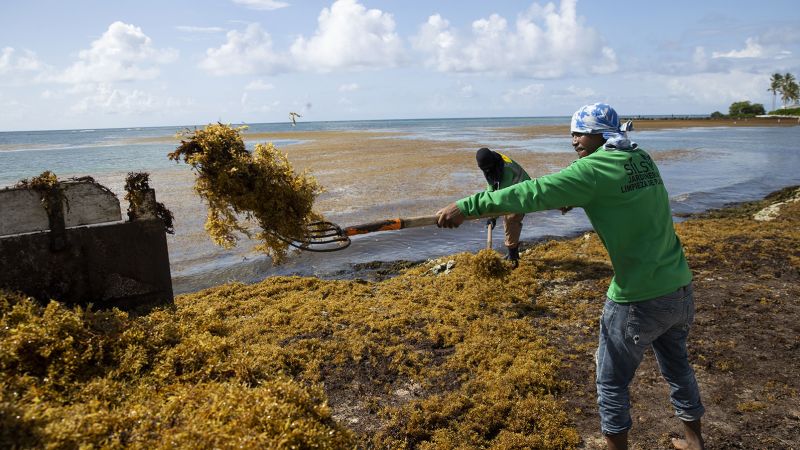
Solving sargassum: Florida Tech researchers exploring ways to make seaweed useful
Sargassum, a type of large brown seaweed, has been in the news lately, with a massive blob that’s visible from space and threatening ocean life. University research funded by the U.S. Environmental Protection Agency could address the issue, while also helping solve another problem in our water. Toufiq Reza, an assistant professor of chemical engineering in the Department of Biomedical and Chemical Engineering and Sciences, along with research students Cadianne Chambers, Swarna Saha, Savannah Grimes and Josh Calhoun, were part of the research paper, “Physical and morphological alteration of Sargassum‐derived ultraporous superactivated hydrochar with remarkable cationic dye adsorption.” The paper was published in the May edition of Springer Nature’s Biomass Conversion and Biorefinery journal. The paper is part of a three-year, nearly $400,000 EPA grant to examine different uses of sargassum. It explains that the team can produce biochar from sargassum that can filter water. Though the team has tested model dye in this paper, they plan to extend their research for other applications including harmful algal bloom remediation and nutrient recovery in the future. While sargassum has been around for centuries (Christopher Columbus is credited with the first written account after he encountered it in 1492), and you’ve probably seen bits of brownish seaweed on the beach – it sometimes smells like rotten eggs – the quantities in the ocean and washing up on shores are a more recent phenomenon. There are multiple reasons behind the increased amount of sargassum, including global warming that intensifies sargassum production and nutrient runoff making its way to ocean water and overfertilizing the seaweed growth. More sargassum is expected to show up on Florida shores in the future, inspiring the team to explore more positive uses of the abundant seaweed. “In the next couple of years, we’ll be seeing much more sargassum coming into our way. It’s not a common practice to utilize sargassum,” Reza said. “We go to a beach and then we see a little bit of sargassum just dried out. That doesn’t bother us that much, but when it started to come as a foot-tall sargassum wave, that’s where it gets more alarming.” Sargassum in the lab is labor intensive. Because it contains salt from the ocean, it is washed with tap water first, then put in a freezer for preservation. Next, it goes through hydrothermal carbonization, a thermochemical process that uses heat and pressure to convert biomass and organic waste (such as the sargassum being used) into solid hydrochar. Lastly, the solid char goes through pyrolysis, where it is heated in a high-temperature, oxygen-free chamber into a biochar that is used to filter water. For Swarna Saha, a first-year doctoral student, her goal as a researcher is to identify an environmental problem and come up with a sustainable solution. Having grown up in Bangladesh around textile factories that generate dyes that pollute the surface water, she was inspired to work on solutions that improved water quality with biochar. “I came in the project when we were experimenting on dye adsorption and saw how a tiny amount of biochar changes the color of the water,” she said. “For me, seeing the results made me the happiest. When we saw that our biochar is effective, that is the biggest achievement for me. That made me happy.” Cadianne Chambers, a second-year doctoral researcher, was motivated by her home country of Jamaica and its massive issues with sargassum. Chambers has heard accounts of fishermen unable to go out to sea because of the sargassum buildup. A popular destination for summer vacation, Jamaica is facing serious environmental and economic problems with waves of sargassum. “A team in Jamaica saw that article and they reached out to us, and they’re trying to cultivate sargassum. They want us to teach them how to make export-quality hydrochar and biochar, which could help solve their environmental problem and generate revenues,” Chambers said. “So, everything is just connecting nicely and I’m hoping to continue our collaboration with them. If it’s something that I can go home and put my PhD research to work and help the community, that would be really satisfying.” Looking to know more about sargassum and the ground-breaking research taking place at Florida Tech? Then let us help with your coverage and questions. Toufiq Reza is an assistant professor in the biomedical and chemical engineering and sciences department at Florida Tech. He's available to speak with media about this topic - simply click on his icon now to arrange an interview today.


Georgia Southern professor earns Fulbright US Scholar Award for 2023-2024
A noted Georgia Southern University public health professor has earned a Fulbright U.S. Scholar Program award in All Disciplines to Latvia for the 2023-2024 academic year from the U.S. Department of State and the Fulbright Foreign Scholarship Board. Yelena N. Tarasenko, DrPH, is a professor in the Department of Biostatistics, Epidemiology and Environmental Health Sciences at Georgia Southern’s Jiann-Ping Hsu College of Public Health. Her Fulbright project is titled “Strengthening research and teaching capacity in cancer prevention globally.” She will collaborate with personnel and students at the Faculty of Medicine and Institute of Clinical and Preventive Medicine at the University of Latvia, as well as colleagues at the International Agency for Research on Cancer to help improve cancer care coordination and screening in Latvia and 14 European countries participating in the “Towards gastric cancer screening implementation in the European Union” project. Given Tarasenko’s expertise in legal and cancer epidemiology, she will engage in (i) implementation research focused on cancer screening and patient navigation, and (ii) teaching activities focused on fostering research productivity (e.g., guest lecturing, curriculum development, advising, and mentoring). Tarasenko is among more than 800 U.S. citizens who will teach or conduct research abroad for the 2023-2024 academic year through the Fulbright U.S. Scholar Program. Fulbright scholars engage in cutting-edge research and expand their professional networks, often continuing research collaborations started abroad and laying the groundwork for forging future partnerships between institutions. Upon returning to their home countries, institutions, labs and classrooms, they share their stories and often become active supporters of international exchange, inviting foreign scholars to campus and encouraging colleagues and students to go abroad. As Fulbright Scholar alumni, their careers are enriched by joining a network of thousands of esteemed scholars, many of whom are leaders in their fields. Notable Fulbright alumni include 62 Nobel Prize laureates, 89 Pulitzer Prize recipients, 78 MacArthur Fellows and 41 who have served as a head of state or government. Since 1946, the Fulbright Program has provided more than 400,000 participants from over 160 countries – chosen for their academic merit and leadership potential – with the opportunity to exchange ideas and contribute to finding solutions to challenges facing our communities and our world. “This is a wonderful validation of Dr. Tarasenko’s scholarship and expertise, and another example of Georgia’s Southern’s expanding reputation for public-impact research,” said Carl Reiber, Ph.D., Georgia Southern University provost and vice president for academic affairs. “Fulbright scholars are among the world’s most talented academicians, and we congratulate Dr. Tarasenko for this achievement.” More than 800 U.S. scholars — faculty members, artists, and professionals from all backgrounds — teach or conduct research overseas through the Fulbright U.S. Scholar Program annually. In addition, over 2,000 U.S. students, artists, and early career professionals from all backgrounds in more than 100 different fields of study receive Fulbright U.S. Student Program awards annually to study, teach English, and conduct research overseas. “I’m excited to help expand our expertise on global health and develop a relationship with the only classical university in Latvia,” Tarasenko said. “This proposed project meets the university’s strategic pillars, as its leadership looks for ways to create and encourages opportunities for the exchange of teaching, research, scholarship, and professional development. It also meets the Jiann-Ping Hsu College of Public Health’s values and goals in terms of thinking globally and acting locally.” The Fulbright Program is the U.S. government’s flagship international educational exchange program and is supported by the people of the United States and partner countries around the world. The Fulbright Program is funded through an annual appropriation made by the U.S. Congress to the U.S. Department of State’s Bureau of Educational and Cultural Affairs. Participating governments and host institutions, corporations, and foundations around the world also provide direct and indirect support to the Program. In the United States, the Institute of International Education supports the implementation of the Fulbright U.S. Student and Scholar Programs on behalf of the U.S. Department of State, including conducting an annual competition for the scholarships. For more information about the Fulbright Program, visit https://fulbrightprogram.org. To connect with Yelena N. Tarasenko — simply reach out to Georgia Southern's Director of Communications Jennifer Wise at jwise@georgiasouthern.edu to arrange an interview today.


Researchers seek to apply nanoparticle drug delivery to coral wound healing
Coral reefs are the foundation of many aquatic ecosystems and are among the ocean’s most vulnerable inhabitants. While natural processes, like animal predation and storms, frequently damage coral, man-made causes, like ship collisions and global warming, destabilize these environments beyond their ability to recover. Researchers like Nastassja Lewinski, Ph.D., associate professor of chemical and life science engineering, are working to understand how corals heal in order to aid the restoration of these fragile ecosystems. They also seek partnerships with stakeholders that can support coral preservation by applying this research to industry practices and providing funding for continued research. “Coral ecosystems are vital to human life,” Lewinski said, “When there’s a high-intensity storm, reefs can absorb the impact and reduce the damage we see on land. They’re also important to the aquatic food web and serve as the foundation to many foods we eat.” Discovering the limits of coral healing is part of Lewinski’s work. Ideal water temperature for coral is 25 degrees Celsius, so research is conducted at the ideal temperature and elevated temperatures of 28 to 31 degrees Celsius, the projected water temperatures influenced by global warming. Successive imaging of wound closure in these conditions builds an understanding of the rate of closure during healing. “We’re looking to understand the mechanics of healing,” Lewinski said, “Some of what we’ve found suggests a process similar to human healing. We want to understand the actors in this process at a cellular level and what their role is in repairing tissue.” These observations inform the mathematical, cell-based wound healing model developed by Lewinski’s collaborators, Angela Reynolds, Ph.D. and Rebecca Segal, Ph.D., both professors in the Department of Mathematics and Applied Mathematics in VCU’s College of Humanities and Sciences. Similar to humans, corals have been documented as following the same four stages of the healing process. These stages include: 1) coagulation to close the site of injury, 2) infiltration with immune cells to ward off infection, 3) cell migration and proliferation and 4) scar remodeling. “With our observations and a mathematical model, the next step is to collect data on the cellular dynamics of the healing process,” Lewinski said, “We want to observe what kinds of cells enter the wound area and what functions they perform during healing.” Fluorescent tagging is used to mark specific cells so they may be observed entering the wound area when healing occurs. Because corals are naturally fluorescent, the selection of the fluorescent tags must take this into account. Phagocytic properties allow immune cells to engulf and absorb bacteria and other small cells, in this case the fluorescent particles being used to tag immune cells. Nutritional variables are also being considered within the experiment. Corals derive energy from consuming small organisms and their symbiotic relationship with algae colonies. Modifying nutritional balance in the lab emulates the coral’s participation in the food web, where accessibility to vital nutrients could impact healing. Developing a nanoparticle drug-delivery system designed to deliver molecules to speed wound healing is the culmination of this research. Lewinski hypothesizes the delivery system would promote an energy-burning state within the corals that could result in increased healing. This is among a few examples of harnessing nanotechnology for safeguarding coral reefs, which are discussed in a recently published comment in Nature Nanotechnology. “The research we’re doing on wound healing in corals is the start of something bigger,” Lewinski said. “Our goal is to create a center dedicated to engineering new technologies for corals. We want to find partners who can translate our research findings to practice, helping preserve coral reefs and the vital resources they provide.” Through this consortium, newly-developed science can be disseminated more effectively within each partner’s respective industry. The result: a renewed commitment to aquatic sustainability and the protection of vital coral ecosystems.



It has been a tense and stressful couple of weeks in Washington as the negotiations about raising America's debt went from the usual political arm-wrestling to facing the reality that the United States may actually default on its debt. The very concept left reporters and experts scrambling to explain what this could mean for the country's economy, civil service and global financial reputation. And when answers, explanations and expert perspective was needed, Georgia Southern University's Michael Toma, Ph.D., was sought out to talk about the effect of a looming U.S. debt default. Georgia Public Broadcasting spoke to Toma, who explained the situation and the impact of not reaching a deal could have locally and on a broader spectrum. If you're a reporter looking to know more about important topics like this - then let us help. Michael Toma, Ph.D., researches regional economics and public choice at Georgia Southern. He's available to speak with reporters simply click on his icon now to arrange an interview today.


King Charles and the Power of Pomp
With the approach of the first coronation of a British monarch in 70 years, the world is watching, dissecting, and analyzing every element involved in the Coronation of King Charles III and his wife, Camilla, the Queen Consort. Cameras, photographers and journalists from across the globe are working overtime on this historic event, as are observers and scholars, including UConn anthropologist Dimitris Xygalatas, who penned a piece for the BBC where he explains the power behind the pomp and ceremony around the crowing of Britain's new king: On 6 May, 2023, one of the most spectacular rituals in the world will take place: the Coronation of King Charles III and his wife, Camilla, the Queen Consort. Shrouded in spectacle and adorned with priceless regalia, the ceremony will be officiated by the Archbishop of Canterbury at Westminster Abbey and attended by a host of foreign royals and heads of state. The whole event will be broadcast around the world, with hundreds of millions of people expected to tune in. Once crowned, the royal couple will return to Buckingham Palace in the Gold State Coach, a carriage so loaded with gold that it needs eight horses to pull it. They will be escorted by thousands of troops from all branches of the armed forces, making up the largest military display in three generations. The festivities will last all weekend – and a long weekend at that, as Monday has been proclaimed a public holiday nationwide. Events include colourful parades, public concerts, spectacular light shows, and thousands of street parties across the UK and the Commonwealth. The scale of this undertaking might seem exuberant. After all, King Charles may have dominion over all swans, dolphins, whales and sturgeons in the UK's waters but he will wield little political power beyond a largely ceremonial role. What is more, a coronation is not even necessary to become king. In fact, Edward VIII reigned as sovereign without ever being crowned. As heir apparent, King Charles III's accession to the throne occurred automatically the moment Queen Elizabeth II died, on 8 September 2022. ... The effects of ceremonial opulence may extend well beyond the Kings’ subjects. To the world at large, they act as status symbols – what anthropologists call “credibility-enhancing displays”. Our minds intuitively link effort with value. A ceremony that requires such enormous cost and effort to organise provides tangible evidence of the importance of the institution it celebrates and people’s commitment to that institution. At a time of political instability, with an increase in Russian aggression, the UK emerging from Brexit and a global pandemic, the British state could use some of that social glue. And above all, so could the royal family. The last few years have been rough on the royals, to say the least. Prince Andrew lost his military titles and royal patronages as he faced allegations of sexual assault that he has consistently denied. Internationally, as the world grapples with the legacy of colonialism, more and more countries seem inclined to cut their ties to the Crown. All the while, Prince Harry and his wife Meghan, the Duchess of Sussex, have had a very public exit from the centre of royal life and their media presence has been rubbing salt to these wounds. In light of these developments, the Coronation may play a crucial role in the Royal Family’s struggle to stay relevant. Indeed, as public support for the monarchy has been steadily declining, two recent grand ceremonies, the Queen’s Platinum Jubilee and funeral, have been accompanied by boosts to British attitudes towards the institution. King Charles III's Coronation will be one of the most grandiose royal celebrations of this century. It remains to be seen whether it can help convince his subjects that he still has a role to play in British society. Dimitris Xygalatas is an associate professor of anthropology and psychological sciences, and head of UConn's Experimental Anthropology Lab, which develops interdisciplinary methods and technologies for studying behavior in real-life settings. He is available to speak with media, answering all your questions about coronations and their rituals and purpose. Click on his icon to arrange an interview today.


Aston University establishes new independent investment company
Aston University is part of a group of eight universities which has established a new investment company Midlands Mindforge will accelerate the commercialisation of university research It aims to raise up to £250 million from investors. Aston University is one of eight research intensive universities in the Midlands to establish a new investment company to accelerate the commercialisation of university spinouts and early-stage IP rich businesses in the region. Midlands Mindforge Limited has been co-founded by Aston University, University of Birmingham, Cranfield University, Keele University, University of Leicester, Loughborough University, University of Nottingham and University of Warwick, collectively Midlands Innovation. This ambitious, patent capital investment company plans to raise up to £250 million from strategic corporate partners, institutional investors and qualifying individuals. It aims to transform ground-breaking science and technology into successful businesses with real-world impact. Midlands Mindforge will help to address the significant funding deficit for early-stage technology businesses in the region. Through the combination of additional capital and company-building skills, Midlands Mindforge will lay the foundations of a more vibrant ecosystem for emerging science-backed companies in areas such as Clean Technology, AI and Computational Science, Life Sciences and Health Tech. Professor Aleks Subic, Vice-Chancellor of Aston University, said: "Aston University has a strong track record in bringing together industry and academia to solve real world problems and drive innovation through applied and translational research. Â Investment raised through Midlands Mindforge will enable a step change that will ensure we get the very best outcomes for our research. "The impact of increased investment in research translation will be felt widely, with Midlands Mindforge supporting the growth of high value added businesses and jobs in the region and creating the right conditions to build future global companies. This is a hugely exciting time for Aston University and the wider Midlands Innovation group of universities, and I look forward to seeing the benefits that this strategic development will bring." Collectively, the eight founding universities have the most postgraduate students, the highest levels of annual income, more research disclosures and patents generated per unit of research spend in the last three years, in comparison to any other UK university grouping. Minister of State for Science, Research & Innovation George Freeman MP said: "Commercialising UK science & technology for global industrial adoption has never been more urgent for both the UK economy and the global resource challenges facing us. The Midlands Innovation universities are driving a new era of innovation from robotics and advanced manufacturing to life science and autonomous vehicles and much more. "As we in Government increase UK public R&D to a record £20 billion a year, the key is private finance backing spinouts and scale-ups. The Midlands is rapidly becoming a world class UK cluster of excellence and Midlands Mindforge will play a key role in bringing global investors to help back world class companies." Chairman of the Midlands Engine Partnership, Sir John Peace, said: "The Midlands has always been associated with exceptional invention and creativity, but has long experienced significant underinvestment and consequently productivity levels have lagged behind the rest of the UK. "This bold and ambitious initiative led by the Midlands Innovation universities has the potential to help close the investment gap, supporting our region to reach its true potential for sustainable economic growth. Midlands Mindforge will help to further fast-track commercialisation of research ideas, creating a more resilient economy and playing an important role in levelling up the Midlands." Andy Street, Mayor of the West Midlands, said: "A key part of my mayoral mission is to drive our regional recovery forward and help generate the high-quality jobs of the future in order to improve quality of life for local people. This exciting new investment vehicle will very much support that mission planting the seeds for long-term sustainable economic growth here in the West Midlands. "Many brilliant ideas and top businesses have spun out from Midlands universities and this new venture will help us to advance that agenda and retain more of our innovative success stories within our region. "Together we can better nurture the enterprising talent on our doorstep and this new endeavour creates a wonderful opportunity to do just that." For more information about Midlands Mindforge visit www.midlandsmindforge.com
