
Experts Matter. Find Yours.
Connect for media, speaking, professional opportunities & more.

Understanding economic development and its environmental impact
While fears about the environmental impact of economic development remains under discussion, the number of proenvironmental international non-governmental organizations (INGOs) continues to grow. But little is known about their influence on countries to create more eco-friendly industrial processes and technologies. In new research from Wesley Longhofer, assistant professor of organization & management, and coauthor Andrew Jorgenson (Boston College), the pair determined which nations they believed were “more embedded in the proenvironmental world society,” determining the level of influence of INGOs, as well as global treaties and professionals, on the countries they studied. The data took into account GDP per capita to find the effect of economic development on carbon emissions. The research examined whether countries that were more likely to feel this global pressure to “enact pro-environmental policies or invest in cleaner technologies” subsequently experienced a drop in rates of carbon emissions. Longhofer and Jorgenson created a measure to analyze the effects of development over time on carbon emissions in 79 countries, using data from 1970 to 2009. They found that “nations that are the most embedded in the environmental world society experienced a moderate decrease” in the impact of economic development on carbon emissions. Essentially, larger and more developed nations were more likely to feel the influence of proenvironmental INGOs than less developed countries, ultimately showing a small drop in carbon emissions. Source:


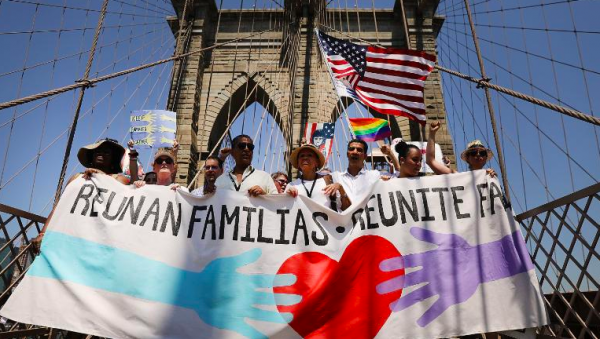
6 Facts We Learned Working with Migrants and Refugees Around the World - Facts 3 and 4 Working with migrants and refugees is our business at Catholic Relief Services. CRS was founded in 1943 to assist refugees during World War II. Seventy-five years later, we are still coming to the aid of people escaping conflict, violence and natural disasters. While CRS doesn’t resettle refugees in the United States (these programs are run by the Catholic Church’s Migration and Refugee Service and Catholic Charities), our rich history has taught us valuable lessons on how to best help families fleeing crisis. 3. Support the Family. The family unit provides the primary support for children during the traumatic refugee experience -- whether it is witnessing violence or crossing a desert on foot. CRS focuses on keeping families together. This means housing a family together and using any services provided – from trauma counseling to income generation – to boost family cohesion. Shannon Senefeld is a global development expert at CRS. She has published and presented extensively on international children’s issues and the importance of strengthened family care for children’s development. See her contact information at the bottom. 4. Kids Need School and Play. CRS is dedicated to keeping up children’s education, to provide stability and normality and give them hope for the future so they can be productive citizens wherever they end up. Kids need to be kids, too. Whether they are in a camp or any sort of migrant or refugee holding center they need a space to play. Caroline Brennan is the Emergency Communications Director for Catholic Relief Services. In her role, she travels to and/or works in areas facing natural or man-made emergencies. See her contact information at the bottom. The experts at Catholic Relief Services are available to help with any media coverage or insight that is required regarding this ongoing news story and issue that is continuing in America. Simply click on any of their icons to arrange a time for an interview. Source:

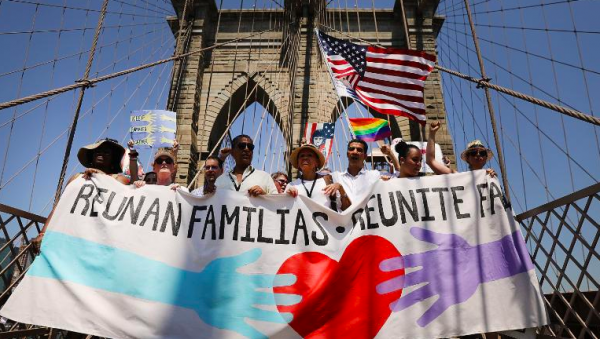
6 Facts We Learned Working with Migrants and Refugees Around the World: Facts 1 and 2 Working with migrants and refugees is our business at Catholic Relief Services. CRS was founded in 1943 to assist refugees during World War II. Seventy-five years later, we are still coming to the aid of people escaping conflict, violence and natural disasters. While CRS doesn’t resettle refugees in the United States (these programs are run by the Catholic Church’s Migration and Refugee Service and Catholic Charities), our rich history has taught us valuable lessons on how to best help families fleeing crisis. 1. People Do Not Want to Leave Their Homes. An astonishing 1 in 110 people have been forced to flee their home (UNHCR). They only do that when they feel they have no other choice. Most people the world over give the same reason for starting their perilous journey across borders -- violence. That’s true for millions fleeing conflict in South Sudan and for tens of thousands fleeing gang violence in Central America. Most often, people flee to other parts within their country first. Only when they see no other option do people leave their country. Rick Jones is the agency's Youth and Migration Advisor in Latin America and the Caribbean. He also specializes in issues affecting Central American migration, including gang violence, poverty, and internal displacement. See his contact information at the bottom. 2. Don’t Separate Families. Based on extensive experience with refugees and migrants, CRS agrees with the criticism of the former U.S. policy of separating children from their parents. Decades of research shows that this is so traumatic for children it can lead to long-term psychological, and even physical damage. Shannon Senefeld is a global development expert at CRS. She has published and presented extensively on international children’s issues and the importance of strengthened family care for children’s development. See her contact information at the bottom. The experts at Catholic Relief Services are available to help with any media coverage or insight that is required regarding this ongoing news story and issue that is continuing in America. Simply click on any of their icons to arrange a time for an interview. Source:
Biodiversity on the brink? Is there any stopping the damage to the Pervuian Amazon?
There’s nothing new or breaking about the importance of the Amazon rain forest. For decades, politicians, celebrities and most recently – even the Pope called on the world to act against the deforestation and further protection of the region. The impacts of this devastation are being felt around the world. The massive forests absorb greenhouse gases, and as deforestation occurs at a staggering rate – so too does the increase in climate change and global warming. But agriculture, mining and development seem to be ignorant to those requests and consequences. While a lot of attention naturally goes to Brazil, Peru’s is in just as much trouble. According to the United Nations, the country is one of 17 "megadiverse" countries on the planet containing 70 percent of the world's biodiversity. There’s still a l lot to know about the affects of deforestation and how losing over a million hectares of rain forest has taken a toll on fish, the ecosystem and the vast flora and fauna that remain undiscovered. That’s where our experts can help. Anthony Mazeroll, PhD, Professor of Biology at Soka University of America, is also Executive Director and Board Chair for the Amazon Research Center for Ornamental Fishes, which is devoted to sustainable breeding and conservation of the rainforest ecology. Dr. Mazeroll is available to speak with media regarding this and many other issues affecting the Amazon - simply click on Anthony’s icon to arrange an interview. Source:



Controversy surrounding the VIX benchmark — this expert saw it coming
There are a lot of eyes on the VIX benchmark these days as regulators explore potential flaws in the Cboe Global Markets product. Focus is on the monthly process through which the price of VIX futures contracts is calculated. According to a recent article on Bloomberg, “That monthly auction has been the focus of intense scrutiny this year, spurred by wild price swings and a 2017 research paper alleging the process is rigged. The stakes are big. Billions of dollars of derivatives contracts and exchange-traded products are tied to the index.” But should this be a surprise to anyone? As the article points out, a Texas McCombs professor has been looking into the VIP benchmark for some time now: “John Griffin, the University of Texas professor whose 2017 paper written with a grad student caught traders’ attention, believes someone is artificially suppressing the price of S&P 500 contracts, then profiting when the VIX settlement price comes in much higher. A more than $200 million distortion in the market was seen during the April 18 auction, he argues. ‘Since the public release and publication of our academic paper last year, the settlement deviations have substantially increased,’ he wrote in this week’s column. [Griffin is a regular columnist for Bloomberg.] ‘We are concerned that market participants may be reading our paper as a how-to-manipulate manual.’” This is a complex issue with literally billions of dollars at stake. And if you need to know more, that’s where our experts can help. Griffin is an educator and researcher in the structured finance field with respect to mortgage-backed securities and collateralized debt obligations. His expertise also includes international finance, institutional investment, and forensic finance, and his recent research focuses on understanding the role that conflicts of interest and misreporting by credit rating agencies and investment banks played in the financial crisis.Griffin is available to speak with media. Simply click on his icon to arrange an interview today. Source:


The Struggle for DREAMers in Utah - Explore DACA
On Tuesday, April 24, 2018, a third federal judge ruled against the Trump administration’s push to end Deferred Action for Childhood Arrivals (DACA). U.S. District Judge John Bates called the administration’s attempts to end DACA “arbitrary,” “virtually unexplained,” and “unlawful.” He put a hold on the decision, allowing the Department of Homeland Security 90 days to give better reasoning to cancel the program or it would be fully reinstated. Dr. Stephen Allen, associate provost of International Affairs at Southern Utah University and expert on American immigration policy, sees the struggle for “DREAMers” in Utah and across the nation. “In March, the Supreme Court refused to hear a challenge to DACA,” said Dr. Allen. “That decision, along with the April 24 federal court ruling, has taken pressure off of Congress to act on the issue. The result is a great deal of uncertainty for DREAMers, families, and employers.” Originally enacted by President Obama, DACA is an immigration policy that shields undocumented immigrants that were brought to the United States as children. The youth apply to obtain a renewable two-year deferred action from deportation and to be eligible for a work permit. DACA has helped hundreds of thousands obtain driver’s licenses, social security numbers and attend school. Steps to eliminate DACA were initiated by the Trump administration in late 2017, but previous federal rulings have stalled the efforts. “Rescinding DACA would have a tremendous impact on Utah,” said Dr. Allen. “The program has allowed nearly 10,000 young people in Utah to come forward and pass background checks and live legally in the United States. There is strong evidence that the majority of these young people are productive citizens who are gainfully employed and/or enrolled in school. According to the non-profit and non-partisan organization Interfaith Worker Justice (IWJ), ending DACA would cost Utah alone nearly $476.5 million in annual GDP losses.” Dr. Allen believes that in general, Utahan’s have a strong commitment to keeping families together. “The United States is the only country most DREAMers have known. Deporting nearly 700,000 individuals would result in separation from families and losing the ability to legally work in the United States.” Dr. Allen specializes in international enrollment and admissions, developing global partnerships, and international education. He is familiar with the media and available for an interview. Source:


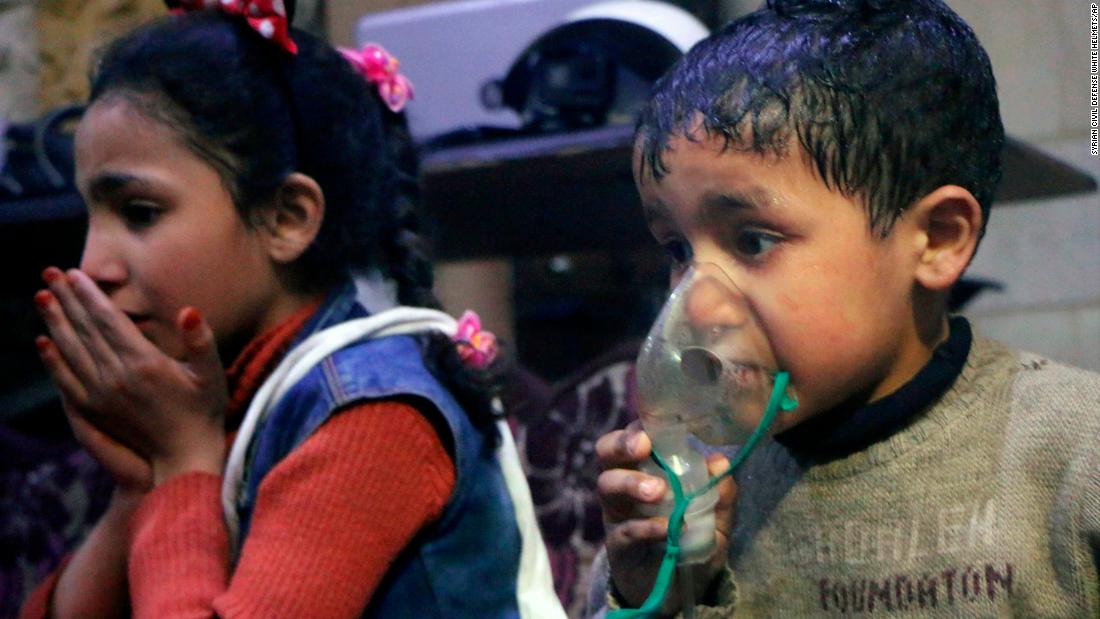
How serious is the sabre-rattling over Syria?
Last Saturday, though not ‘officially confirmed,’ a poisonous gas attack happened in the besieged Syrian town of Douma. The World Health Organization has confirmed that 500 people showed symptoms of being exposed to "toxic chemicals". This act of aggression supposedly by the Assad government has opened a Pandora’s Box. President Donald Trump is threatening missile strikes. Russian officials are threatening retaliation for any American aggression. Many world leaders are on edge and watching closely – Syria has become a powder keg and what happens next could have global implications. What are President Trump’s options? What could happen if the Russians counter? Is there a diplomatic option? There is an enormous amount at stake and a lot of scenarios to consider. That’s where experts from Missouri State University can help. Dr. David Romano, political science professor at Missouri State University, researches Middle Eastern politics and government. He's an expert in theories of peace and conflict, and foreign policy. He's available to speak about the escalating tensions, potential outcomes and consequences regarding any action in Syria. Click on his icon to arrange an interview. Source:


Need to understand trade wars and tariffs? Goizueta's Jeff Rosensweig can explain. "These foreign nations that we're going to put these import taxes on, these tariffs, are not stupid," he tells NPR. "They're going to retaliate against our exports, and they're going to hit us where it hurts, which is often our farm exports." Source:


Gender Gap Grows Wider Globally
The World Economic Forum (WEF) began calculating the global gender gap in 2006. Yesterday, it released the results of the 2017 Global Gender Gap Report and the news is bad – for the first time in more than a decade, the gender gap is widening. This year's report revealed that the divide between men and women stood at 32 percent, up from 31.7 percent last year. The Global Gender Gap Index ranks 144 countries and compares them across four ‘pillars’: economic participation and opportunity, education, political empowerment, and health and survival. The best scores overall belonged to three Scandinavian countries. Iceland had the smallest gender gap at 22 percent. How about the United States? While the U.S. has improved its overall gender gap, this year's report showed it moved down the rankings to 49th place. The score was 0.72 or a gender gap of 28 percent. The pillar featuring economic participation, which includes salaries, workforce participation and leadership, has one of the fastest-growing gaps. Globally, women are earning less than men. The WEF believes the economic gender gap will now not be closed for 217 years. When considering a woman's income as a percent of a man’s, the U.S. came in at 13th place, where a woman can expect to make on average only 64.8 percent of that of what a male earns. Why is this the case even though more women than men are graduating from universities? Can this worrying trend be changed? What steps must be taken to make the playing field equal for all in America? Dr. Shannon Wooden, gender studies expert and professor of English at Missouri State University, can provide insight on this topic. She can address the gender pay gap and why companies need more female representation in senior and board levels. Contact her for an interview. Source:
Another Big Short or Better Off? 10 Years Later – Is there Another Financial Crisis Looming?
It was 10 years ago Wednesday that the world changed for just about everyone. It was on that afternoon when BNP Paribas announced it was ceasing activity in three hedge funds that specialized in U.S. mortgage debt. BNP Paribas was the first major bank to acknowledge the risk of exposure to the sub-prime mortgage market, and many look back at those days as the start of the worst financial crisis in American history since the stock market crashed in 1929. For a decade, America has been in a state of recovery. It took trillions of dollars in stimulus and bail outs. The real estate market almost collapsed on itself and millions were left unemployed. Some are still incapable of finding work and income that matched what they made back then. On the outside, America seems to be in complete recovery. Housing prices have bounced back, the DOW is soaring and unemployment rests at just 5.1 percent. However, some are skeptical. Americans are borrowing again at record rates. Credit is once again being offered abundantly and as people spend again – risk is climbing. Add in China’s shaky economy and there’s also talk of a double-bubble bursting. Understanding finance and economics is no easy task. It takes global understanding, a keen eye on micro and macroeconomics and sometimes a crystal ball. But on Wednesday, many people will remember exactly what they were doing when America’s economy tanked. So where are we now? Have we learned our lesson or are we doomed to repeat ourselves? Have the reforms on Wall Street worked or can the actions of a few big banks still derail one of the strongest financial engines in the world? None of these are easy questions to answer or explain. But experts from Missouri State University can help. Dr. David Mitchell is a Professor of Economics and Director of the Bureau of Economic Research at Missouri State. He is also an expert at economic forecasting and understanding market trends and direction. Dr. Mitchell can speak to the anniversary of the financial crisis and what may lie ahead for America’s economy. Click on his icon to arrange an interview. Source: