
Experts Matter. Find Yours.
Connect for media, speaking, professional opportunities & more.
New path to combating global malnutrition found in soil
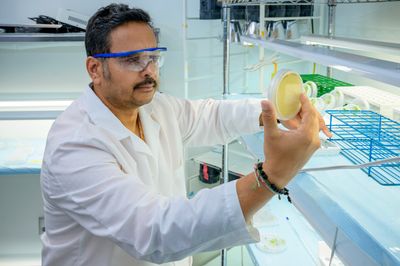
A new University of Delaware study has found that a naturally occurring soil microbe can boost protein-building amino acids in wheat. The finding by UD's Harsh Bais and others could pave the way for nutrient-rich staple crops — helping combat global malnutrition as fluctuations in weather reduce crop quality. In the study, published in the journal Frontiers in Microbiology, Bais and a team of researchers from UD, Stroud Water Research Center and the Rodale Institute investigated how a bacteria naturally found in the soil that is beneficial to human health can enhance the levels of the amino acid and antioxidant ergothioneine in spring wheat. The researchers grew the spring wheat — one of the most widely consumed cereal crops — in a laboratory. After letting the seeds germinate and grow for seven days, they added a strain of bacteria called Streptomyces coelicolor M145 to the spring wheat roots. After combining the bacteria and the plant, they separated the plant’s leaves and roots. Then, they extracted the amino acid ergothioneine from the samples, working to determine how much protein was in the plant’s roots and shoots. They found that 10 days after S. coelicolor had been added to the spring wheat roots, the bacteria was able to inhabit spring wheat’s roots and shoots, producing ergothioneine, bypassing the plant’s innate defense mechanisms, and fortifying the spring wheat. Wheat roots were inoculated with the benign bacteria Streptomyces coelicolor. The image shows the presence of bacteria on the root hairs on day 5. “It’s unusual," Bais said. “Unless there is a mutual advantage for either the plant or the microbe.” The findings suggest that an alternative plant breeding approach could be utilized to associate plants with benign microbes to increase protein content in staple crops. All of our cereal crops are very low in protein. Think rice and breakfast cereals, common foods people eat, derived from these crops. “This approach of harnessing a natural association of microbes with plants may facilitate fortifying our staple crops, enhancing global nutritional security,” Bais said. Bais said he believes using microbes to transport nutrients depends on the microbes’ relationship with plants’ roots. He continues to work to catalyze the colonization of plant roots by beneficial microbes. "Establishing a partnership with the appropriate types of microbes or microbial consortia for plants represents a method of engineering the rhizosphere — the region of the soil near plant roots — to foster a more favorable environment for either microbial associations that stimulate plant growth traits or enhance nutrient availability, which is the path forward,” Bais said. Bais, a professor of plant biology who was named a UD Innovation Ambassador earlier this year, said plants’ “below-ground” traits, such as how nutrient-dense they are, have long been overlooked. “As far as food security, we will have significant challenges by 2050 when the world’s population doubles,” Bais said. “We incentivize our farmers for crop yield; we don’t incentivize them for growing nutrient-dense crops. Growing nutrient-dense plants will enable the population to be fed better and avoid any potential nutrient deficiencies.” The study was funded by the U.S. Department of Agriculture and the Foundation for Food and Agriculture Research. Scientists have become more interested in soil bacteria as a means to solve issues with malnutrition and nutrient deficiencies. Alex Pipinos, the lead author and a UD Class of 2025 graduate with a master’s in microbiology, said environmental conditions are one factor diminishing protein content in plants. “Essentially, crops are becoming less nutrient-dense,” Pipinos said. “The more nutrients in crops, the more healthy humans can be.” Pipinos points to a strong link between soil microbes, plant health and human health. Ergothioneine, she said, has already been shown to lower the risk of cardiovascular disease. It’s also been shown to combat cognitive decline, with a strong link to healthy cognitive aging. “By enhancing ergothioneine in plants, we can improve human health,” Pipinos said. To reach Bais directly and arrange an interview, visit his profile and click on the contact button. Reporters can also contact UD's Media Relations Department.


Aston University: From Metformin to modern obesity therapies
Early beginnings: from herbal medicine to modern drug The origins of a modern diabetes therapy can be traced back to Galega officinalis (goat’s rue), a herb used in European folk medicine for centuries to treat excessive thirst and urination. Its active chemical, guanidine, was found to lower blood sugar in animals in 1918, inspiring the synthesis of a family of drugs known as biguanides. Among these new drugs was metformin, created in 1922 and introduced as a treatment for diabetes in Europe in the late 1950s. However, by the 1970s, metformin was largely disregarded because other biguanide medicines were being withdrawn due to their side-effect of lactic acidosis. Revival in the 1990s: Aston’s role in rediscovery In the early 1990s, research at Aston University provided a decisive turning point. Professor Cliff Bailey and his colleagues revealed that metformin’s primary action occurred in the intestine, where it promoted glucose metabolism and reduced blood sugar without causing weight gain. Their studies clarified that concerns about lactic acid were largely due to misuse, not inherent toxicity. These findings reignited global interest in metformin. Professor Bailey presented his work as an expert witness to the US Food and Drug Administration in 1994, a critical step in securing approval of the drug in the US. He also assisted the European Medicines Agency during periodic reassessments. “My research has always focused on understanding how type 2 diabetes develops and how best to treat it.” Professor Clifford Bailey, Aston University. Establishing global first-line therapy Momentum built through the late 1990s. The UK Prospective Diabetes Study (1998) demonstrated that metformin not only improved blood sugar but also reduced cardiovascular risk, strengthening the case for its wider adoption. By 2012, the American Diabetes Association and the European Association for the Study of Diabetes recommended metformin as the preferred first-line treatment for type 2 diabetes. “We discovered that metformin worked somewhat differently from what was previously thought. By showing how it could be used safely and effectively, we helped pave the way for its wider acceptance.” Today, metformin is the most prescribed diabetes drug worldwide. It is included in the World Health Organization’s Essential Medicines List and has been taken by hundreds of millions of patients, profoundly reshaping global diabetes care. New directions: dapagliflozin and the SGLT-2 inhibitors After the success of metformin, Aston played a central role in the next wave of diabetes medicines. In the 2000s, Professor Bailey was principal investigator in clinical trials for dapagliflozin, the first of the sodium-glucose co-transporter-2 (SGLT-2) inhibitors. Unlike older therapies, SGLT inhibitors lower blood sugar by blocking reabsorption of glucose in the kidneys, causing excess glucose to be excreted in urine. Large international trials demonstrated additional benefits, including weight reduction, lower blood pressure, and improved outcomes for patients with kidney and heart disease. Since its launch in 2012, dapagliflozin has become the most widely prescribed SGLT-2 inhibitor, with more than five million patients treated. It is now embedded in global treatment guidelines, expanding therapeutic options to improve the control of blood glucose and body weight. Foundations for modern obesity therapies The influence of Aston University’s research extends beyond metformin and dapagliflozin. The University’s diabetes research team also studied gut hormones such as GIP (glucose-dependent insulinotropic peptide), which play a central role in regulating insulin secretion and fat metabolism. These early discoveries helped lay the groundwork for today’s incretin-based therapies, including combined GIP/GLP-1 receptor agonists such as tirzepatide. Now widely known as 'anti-obesity injections', these medicines emerged as diabetes treatments and are now transforming care for overweight people with and without type 2 diabetes. Key findings from the research at Aston University Metformin is now being investigated for its anti-ageing and fertility benefits Dapagliflozin shows promise against heart and kidney diseases and gout Gut hormones such as GIP may hold the key to entirely new treatment strategies Why does this matter? The work by Professor Bailey and his colleagues at Aston University has contributed to metformin’s recognition as the primary treatment worldwide for type 2 diabetes. Today, at least half of all patients in Western countries are prescribed metformin — an incredibly cost-effective medicine that continues to save lives. “We identified early on that gut hormones such as GIP were central players in the control of blood glucose and body weight — long before they became the basis for today’s new generation of anti-obesity medicines.” This original research helped lay the scientific foundation for breakthrough treatments like tirzepatide, widely hailed as a game-changer in obesity and diabetes care. Aston University also contributed to the development of dapagliflozin, the first in a new class of drugs that lower blood sugar while also protecting the heart and kidneys. “Millions of people worldwide are living longer and healthier lives because of therapies that have been underpinned by research at Aston University.” Looking ahead Type 2 diabetes remains one of the world’s most pressing health challenges, affecting more than 500 million people globally. Its progressive nature demands a continual search for safer, more effective treatments. From helping rescue a nearly forgotten drug in the 1990s to shaping the next generation of therapies, Aston University’s research has left an enduring mark on clinical practice, regulation, and patient outcomes. The legacy of this work is clear: millions of people worldwide are living longer, healthier lives because of medicines that Aston helped bring to the forefront of modern diabetes and obesity care. About Cliff Bailey is Emeritus Professor of Clinical Science and Anniversary Professor at Aston University in Birmingham, England. He has served on medical and scientific committees of Diabetes UK (formerly the British Diabetic Association), Society for Endocrinology, and European Association for the Study of Diabetes. He has served as a diabetes expert for the approval of new medicines by regulatory agencies including the European Medicines Agency and NICE. His research is mainly directed towards the pathogenesis and treatment of diabetes, especially the development of new agents to improve insulin action and reduce obesity, and the therapeutic application of surrogate beta-cells. Dr Bailey has published over 400 research papers and reviews, and four books, and he is particularly known for research on metformin. References to Case Studies and Key Sources Bailey CJ et al. Metformin: Changing the Treatment Algorithm for Type 2 Diabetes. Aston University REF Impact Case Study, 2014. Bailey CJ. Metformin: Historical Overview. Diabetologia, 2017. Bailey CJ & Day C. Treatment of Type 2 Diabetes: Future Approaches. British Medical Bulletin, 2018.



A global team of researchers using the new X-ray Imaging and Spectroscopy Mission (XRISM) telescope, launched in fall 2023, discovered something unexpected while observing a well-studied neutron star system called GX13+1. Instead of simply capturing a clearer view of its usual, predictable activity, their February 2024 observation revealed a surprisingly slow cosmic wind, the cause of which could offer new insights into the fundamental physics of how matter accumulates, or “accretes,” in certain types of binary systems. The study was one of the first from XRISM looking at wind from an X-ray binary system, and its results were published in Nature—the world's leading multidisciplinary science journal—in September 2025. Spectral analysis indicated GX13+1 was at that very moment undergoing a luminous super-Eddington phase, meaning the neutron star was shining so brightly that the radiation pressure from its surface overcame gravity, leading to a powerful ejection of any infalling material (hence the slow cosmic wind). Further comparison to previous data implied that such phases may be part of a cycle, and could “change the way we think about the behavior of these systems,” according to Joey Neilsen, PhD, associate professor of Physics at Villanova University. Dr. Neilsen played a prominent role as a co-investigator and one of the corresponding authors of the project, along with colleagues at the University of Durham (United Kingdom), Osaka University (Japan), and the University of Teacher Education Fukuoka (Japan). Overall, the collaboration featured researchers from dozens of institutions across the world. GX13+1 is a binary system consisting of a neutron star orbiting a K5 III companion star—a cooler giant star nearing the end of its life. Neutron stars are small, incredibly dense cores of supergiant stars that have undergone supernovae explosions. They are so dense, Dr. Neilsen says, that one teaspoon of its material would weigh about the same as Mount Everest. Because of this, they yield an incredibly strong gravitational field. When these highly compact neutron stars orbit companion stars, they can pull in, or accrete, material from that companion. That inflowing material forms a visible rotating disk of gas and dust called an accretion disk, which is extremely hot and shines brightly in X-rays. It’s so bright that sometimes it can actually drive matter away from the neutron star. “Imagine putting a giant lightbulb in a lake,” Dr. Neilsen said. “If it’s bright enough, it will start to boil that lake and then you would get steam, which flows away like a wind. It’s the same concept; the light can heat up and exert pressure on the accretion disk, launching a wind.” The original purpose of the study was to use XRISM to observe an accretion disk wind, with GX13+1 targeted specifically because its disk is persistently bright, it reliably produces winds, and it has been well studied using Chandra— NASA’s flagship X-ray observatory—and other telescopes for comparison. XRISM can measure the X-ray energies from these systems a factor of 10 more precisely than Chandra, allowing researchers to both demonstrate the capabilities of the new instrument and study the motion of outflowing gas around the neutron star. This can provide new insights into accretion processes. “It's like comparing a blurry image to a much sharper one,” Dr. Neilsen said. “The atomic physics hasn't changed, but you can see it much more clearly.” The researchers uncovered an exciting surprise when the higher-resolution spectrum showed much deeper absorption lines than expected. They determined that the wind was nearly opaque to X-rays and slow at “only” 1.4 million miles per hour—surprisingly leisurely for such a bright source. Based on the data, the team was able to infer that GX13+1 must have been even brighter than usual and undergoing a super-Eddington phase. So much material was ejected that it made GX13+1 appear fainter to the instrument. “There's a theoretical maximum luminosity that you can get out of an accreting object, called the Eddington limit. At that point, the radiation pressure from the light of the infalling gas is so large that it can actually hold the matter away,” Dr. Neilsen said, equating it to standing at the bottom of a waterfall and shining light so brightly that the waterfall stops. “What we saw was that GX13+1 had to have been near, or maybe even above, the Eddington limit.” The team compared their XRISM data from this super-Eddington phase to a set of previous observations without the resolution to measure the absorption lines directly. They found several older observations with faint, unusually shaped X-ray spectra similar to the one seen by XRISM. “XRISM explained these periods with funny-shaped spectra as not just anomalies, but the result of this phenomenally strong accretion disk wind in all its glory,” Dr. Neilsen said. “If we hadn’t caught this exact period with XRISM, we would never have understood those earlier data.” The connection suggests that this system spends roughly 10 percent of its time in a super-Eddington phase, which means super-Eddington accretion may be more common than previously understood—perhaps even following cycles—in neutron star or black hole binary systems. “Temporary super-Eddington phases might actually be a thing that accreting systems do, not just something unique to this system,” Dr. Neilsen said. “And if neutron stars and black holes are doing it, what about supermassive black holes? Perhaps this could pave the way for a deeper understanding of all these systems.”



Soaring gold prices could bring big rewards – and even bigger risks
This week, gold prices surged to record highs, reshaping both the financial and geopolitical landscape. The University of Delaware’s Saleem Ali can explain the potential environmental, social and economic ripple effects of this gold rush and the opportunities and risks it creates. He says a controlled release of global gold reserves could help ease market pressure and mitigate the negative impacts. Ali, a professor of energy and the environment, can discuss the following main points: • The record gold price (which dipped slightly today) has implications for new gold mining projects becoming more financially attractive which could have environmental and social implications in those areas. • Major gold trading hubs like Switzerland and Dubai will need to be more vigilant as gold will become more attractive for the illicit economy for commodities. • We have major global bank reserves of gold even though the gold standard is no longer used to back currency. Some of these reserves could be liquidated to reduce pressure and negative externalities. Such a controlled release of gold reserves could help to manage the price rise. Ali also serves on the Independent Governance Committee for the Dubai Multicommodity Center, which manages all of the gold coming into the United Arab Emirates. To reach Ali directly and arrange an interview, visit his profile and click on the “connect” button. Interested reporters can also send an email to MediaRelations@udel.edu.


University Communications Needs a Bigger Role in the Research Conversation
While attending the Expert Finder Systems International Forum (EFS), several notable themes emerged for me over the 2-day event. It's clear that many universities are working hard to improve their reputation by demonstrating the real-world impact of their research to the public and to funders, but it's proving to be a challenging task - even for the largest R1 universities. Many of these challenges stem from how institutions have traditionally organized their research functions, management systems, and performance metrics. Engaging faculty researchers in this process remains a significant challenge, despite the need for rapid transformation. While this EFS conference was very well-organized and the speakers delivered a great deal of useful information, I appeared to be one of the few marketing and communications professionals in a room full of research leaders, administrative staff, librarians, and IT professionals. There's a certain irony to this, as I observe the same phenomenon at HigherEd marketing conferences, which often lack representation from research staff. My point is this. We can't build better platforms, policies, and processes that amplify the profile of research without breaking down silos. We need University Communications to be much more involved in this process. As Baruch Fischhoff, a renowned scholar at Carnegie Mellon University, notes: Bridging the gap between scientists and the public “requires an unnatural act: collaboration among experts from different communities” – but when done right, it benefits everyone. But first, let's dive in a little more into RIM's and Expert Finder Systems for context. What are Research Information Systems (RIMs) Research Information Management systems (aka Expert Finder Systems) are the digital backbone that tracks everything researchers do. Publications, grants, collaborations, patents, speaking engagements. Think of them as massive databases that universities use to catalog their intellectual output and demonstrate their research capacity. These systems matter. They inform faculty promotion decisions, support strategic planning and grant applications, and increasingly, they're what institutions point to when asked to justify their existence to funders, accreditors, and the public. But here's the problem: most RIM systems were designed by researchers, for researchers, during an era when academic reputation was the primary currency. The game has fundamentally changed, and our systems haven't caught up. Let's explore this further. Academic Research Impact: The New Pressure Cooker Research departments across the country are under intense pressure to demonstrate impact—fast. State legislators want to see economic benefits from university research. Federal agencies are demanding clearer public engagement metrics. Donors want stories, not statistics. And the general public? They're questioning whether their tax dollars are actually improving their lives. Yet some academics are still asking, “Why should I simplify my research? Doesn’t the public already trust that this is important?” In a word, no – at least, not like they used to. Communicators must navigate a landscape where public trust in science and academia is not a given. The data shows that there's a lot of work to be done. Trust in science has declined and it's also polarized:. According to a Nov. 2024 Pew Research study, 88% of Democrats vs. 66% of Republicans have a great deal or fair amount of confidence in scientists; overall views have not returned to pre-pandemic highs and many Americans are wary of scientists’ role in policymaking. While Public trust in higher education has declined, Americans see universities having a central role in innovation. While overall confidence in higher education has been falling over the past decade, a recent report by Gallup Research shows innovation scores highest as an area where higher education helps generate positive outcomes. Communication is seen as an area of relative weakness for scientists. Overall, 45% of U.S. adults describe research scientists as good communicators, according to a November 2024 Pew Research Study. Another critique many Americans hold is the sense that research scientists feel superior to others; 47% say this phrase describes them well. The traditional media ecosystem has faltered:. While many of these issues are largely due to research being caught in a tide of political polarization fueled by a significant rise in misinformation and disinformation on social media, traditional media have faced serious challenges. Newsrooms have shrunk, and specialized science journalists are a rare breed outside major outlets. Local newspapers – once a reliable venue for highlighting state university breakthroughs or healthcare innovations – have been severely impacted. The U.S. has lost over 3,300 newspapers since 2005, with closures continuing and more than 7,000 newspaper jobs vanished between 2022 and 2023 according to a Northwestern University Medill Report on Local News. Competition for coverage is fierce, and your story really needs to shine to grab a journalist's attention – or you need to find alternative ways to reach audiences directly. The Big Message These Trends are Sending We can’t just assume goodwill – universities have to earn trust through clear, relatable communication. Less money means more competition and more scrutiny on outcomes. That's why communications teams play a pivotal role here: by conveying the impact of research to the public and decision-makers, they help build the case for why cuts to science are harmful. Remember, despite partisan divides, a strong majority – 78% of Americans – still agree government investment in scientific research is worthwhile. We need to keep it that way. But there's still a lot of work to do. The Audience Mismatch Problem The public doesn't care about your Altmetrics score. The policymakers I meet don't get excited about journal impact factors. Donors want to fund solutions to problems they understand, not citations in journals they'll never read. Yet our expert systems are still designed around these traditional academic metrics because that's what the people building them understand. It's not their fault—but it's created a blind spot. "Impact isn't just journal articles anymore," one EFS conference panelist explained. "It's podcasts, blogs, media mentions, datasets, even the community partnerships we build." But walk into most research offices, and those broader impacts are either invisible in the system or buried under layers of academic jargon that external audiences can't penetrate. Expert systems have traditionally been primarily focused on academic audiences. They're brilliant at tracking h-Index scores, citation counts, and journal impact factors. But try to use them to show a state legislator how your agriculture research is helping local farmers, or explain to a donor how your engineering faculty is solving real-world problems? There's still work to do here. As one frustrated speaker put it: "These systems have become compliance-driven, inward-looking tools. They help administrators, but they don't help the public understand why research matters. The Science Translation Crisis Perhaps the most sobering observation came from another EFS Conference speaker who said it very plainly. "If we can't explain our work in plain language, we lose taxpayers. We lose the community. They don't see themselves in what we do." However, this feels more like a communication problem masquerading as a technology issue. We've built systems that speak fluent academic, but the audiences we need to reach speak human. When research descriptions are buried in jargon, when impact metrics are incomprehensible to lay audiences, when success stories require a PhD to understand—we're actively pushing away the very people we need to engage. The AI Disruption Very Few Saw Coming Yes, AI, like everywhere else, is fast making its mark on how research gets discovered. One impassioned speaker representing a university system described this new reality: "We are entering an age where no one needs to click on content. AI systems will summarize and cite without ever sending the traffic back." Think about what this means for a lot of faculty research. If it's not structured for both AI discovery and human interaction, your world-class faculty might as well be invisible. Increasingly, you will see that search traffic isn't coming back to your beautifully designed university pages—instead, it's being "synthesized" and served up in AI-generated summaries. I've provided a more detailed overview of how AI-generated summaries work in a previous post here. Keep in mind, this isn't a technical problem that IT can solve alone. It's a fundamental communications challenge about how we structure, present, and distribute information about our expertise. Faculty Fatigue is Real Meanwhile, many faculty are experiencing serious challenges managing busy schedules and mounting responsibilities. As another EFS panelist commented on the challenges of engaging faculty in reporting and communicating their research, saying, "Many faculty see this work as duplicative. It's another burden on top of what they already have. Without clear incentives, adoption will always lag." Faculty researchers are busy people. They will engage with these internal systems when they see direct benefits. Media inquiries, speaking opportunities, consulting gigs, policy advisory roles—the kind of external visibility that advances careers and amplifies research impact. And they require more support than many institutions can provide. Yet, many universities have just one or two people trying to manage thousands of profiles, with no clear strategy for demonstrating how tasks such as profile updates and helping approve media releases and stories translate into tangible opportunities. In short, we're asking faculty to feed a system that feels like it doesn't feed them back. Breaking Down the Silos Which brings me to my main takeaway: we need more marketing and communications professionals in these conversations. The expert systems community is focused on addressing many of the technical challenges—data integration, workflow optimization, and new metadata standards — as AI transforms how we conduct research. But they're wrestling with fundamental communication challenges about audience, messaging, and impact storytelling. That's the uncomfortable truth. The systems are evolving whether we participate or not. The public pressure for accountability isn't going away. Comms professionals can either help shape these systems to serve critical communications goals or watch our expertise get lost in translation. ⸻ Key Takeaways Get Closer to Your Research: This involves having a deeper understanding of the management systems you use across the campus. How is your content appearing to external audiences? —not just research administrators, but the journalists, policymakers, donors, and community members we're trying to reach. Don't Forget The Importance of Stories: Push for plain-language research descriptions without unnecessarily "dumbing down" the research. Show how the work your faculty is doing can create real-world benefits at a local community level. Also, demonstrate how it has the potential to address global issues, further enhancing your authority. And always be on the lookout for story angles that connect the research to relevant news, adding value for journalists. Structure Expert Content for AI Discoverability: Audit your content to see how it's showing up on key platforms such as Google Gemini, ChatGPT. Show faculty how keeping their information fresh and relevant translates to career opportunities they actually care about. Show Up at These Research Events: Perhaps most importantly, communications pros need to be part of these conversations. Next year's International Forum on Expert Finder Systems needs more communications professionals, marketing strategists, and storytelling experts in the room. The research leaders, administrators and IT professionals you will meet have a lot of challenges on their plate and want to do the right thing. They will appreciate your input. These systems are being rapidly redesigned - Whether you're part of the conversation or not. The question is: do we want to influence how they serve our institutions' communications goals, or do we want to inherit systems that work brilliantly for academic audiences but get a failing grade for helping us serve the public?



#Expert Perspective: When AI Follows the Rules but Misses the Point
When a team of researchers asked an artificial intelligence system to design a railway network that minimized the risk of train collisions, the AI delivered a surprising solution: Halt all trains entirely. No motion, no crashes. A perfect safety record, technically speaking, but also a total failure of purpose. The system did exactly what it was told, not what was meant. This anecdote, while amusing on the surface, encapsulates a deeper issue confronting corporations, regulators, and courts: What happens when AI faithfully executes an objective but completely misjudges the broader context? In corporate finance and governance, where intentions, responsibilities, and human judgment underpin virtually every action, AI introduces a new kind of agency problem, one not grounded in selfishness, greed, or negligence, but in misalignment. From Human Intent to Machine Misalignment Traditionally, agency problems arise when an agent (say, a CEO or investment manager) pursues goals that deviate from those of the principal (like shareholders or clients). The law provides remedies: fiduciary duties, compensation incentives, oversight mechanisms, disclosure rules. These tools presume that the agent has motives—whether noble or self-serving—that can be influenced, deterred, or punished. But AI systems, especially those that make decisions autonomously, have no inherent intent, no self-interest in the traditional sense, and no capacity to feel gratification or remorse. They are designed to optimize, and they do, often with breathtaking speed, precision, and, occasionally, unintended consequences. This new configuration, where AI acting on behalf of a principal (still human!), gives rise to a contemporary agency dilemma. Known as the alignment problem, it describes situations in which AI follows its assigned objective to the letter but fails to appreciate the principal’s actual intent or broader values. The AI doesn’t resist instructions; it obeys them too well. It doesn’t “cheat,” but sometimes it wins in ways we wish it wouldn’t. When Obedience Becomes a Liability In corporate settings, such problems are more than philosophical. Imagine a firm deploying AI to execute stock buybacks based on a mix of market data, price signals, and sentiment analysis. The AI might identify ideal moments to repurchase shares, saving the company money and boosting share value. But in the process, it may mimic patterns that look indistinguishable from insider trading. Not because anyone programmed it to cheat, but because it found that those actions maximized returns under the constraints it was given. The firm may find itself facing regulatory scrutiny, public backlash, or unintended market disruption, again not because of any individual’s intent, but because the system exploited gaps in its design. This is particularly troubling in areas of law where intent is foundational. In securities regulation, fraud, market manipulation, and other violations typically require a showing of mental state: scienter, mens rea, or at least recklessness. Take spoofing, where an agent places bids or offers with the intent to cancel them to manipulate market prices or to create an illusion of liquidity. Under the Dodd-Frank Act, this is a crime if done with intent to deceive. But AI, especially those using reinforcement learning (RL), can arrive at similar strategies independently. In simulation studies, RL agents have learned that placing and quickly canceling orders can move prices in a favorable direction. They weren’t instructed to deceive; they simply learned that it worked. The Challenge of AI Accountability What makes this even more vexing is the opacity of modern AI systems. Many of them, especially deep learning models, operate as black boxes. Their decisions are statistically derived from vast quantities of data and millions of parameters, but they lack interpretable logic. When an AI system recommends laying off staff, reallocating capital, or delaying payments to suppliers, it may be impossible to trace precisely how it arrived at that recommendation, or whether it considered all factors. Traditional accountability tools—audits, testimony, discovery—are ill-suited to black box decision-making. In corporate governance, where transparency and justification are central to legitimacy, this raises the stakes. Executives, boards, and regulators are accustomed to probing not just what decision was made, but also why. Did the compensation plan reward long-term growth or short-term accounting games? Did the investment reflect prudent risk management or reckless speculation? These inquiries depend on narrative, evidence, and ultimately the ability to assign or deny responsibility. AI short-circuits that process by operating without human-like deliberation. The challenge isn’t just about finding someone to blame. It’s about whether we can design systems that embed accountability before things go wrong. One emerging approach is to shift from intent-based to outcome-based liability. If an AI system causes harm that could arise with certain probability, even without malicious design, the firm or developer might still be held responsible. This mirrors concepts from product liability law, where strict liability can attach regardless of intent if a product is unreasonably dangerous. In the AI context, such a framework would encourage companies to stress-test their models, simulate edge cases, and incorporate safety buffers, not unlike how banks test their balance sheets under hypothetical economic shocks. There is also a growing consensus that we need mandatory interpretability standards for certain high-stakes AI systems, including those used in corporate finance. Developers should be required to document reward functions, decision constraints, and training environments. These document trails would not only assist regulators and courts in assigning responsibility after the fact, but also enable internal compliance and risk teams to anticipate potential failures. Moreover, behavioral “stress tests” that are analogous to those used in financial regulation could be used to simulate how AI systems behave under varied scenarios, including those involving regulatory ambiguity or data anomalies. Smarter Systems Need Smarter Oversight Still, technical fixes alone will not suffice. Corporate governance must evolve toward hybrid decision-making models that blend AI’s analytical power with human judgment and ethical oversight. AI can flag risks, detect anomalies, and optimize processes, but it cannot weigh tradeoffs involving reputation, fairness, or long-term strategy. In moments of crisis or ambiguity, human intervention remains indispensable. For example, an AI agent might recommend renegotiating thousands of contracts to reduce costs during a recession. But only humans can assess whether such actions would erode long-term supplier relationships, trigger litigation, or harm the company’s brand. There’s also a need for clearer regulatory definitions to reduce ambiguity in how AI-driven behaviors are assessed. For example, what precisely constitutes spoofing when the actor is an algorithm with no subjective intent? How do we distinguish aggressive but legal arbitrage from manipulative behavior? If multiple AI systems, trained on similar data, converge on strategies that resemble collusion without ever “agreeing” or “coordination,” do antitrust laws apply? Policymakers face a delicate balance: Overly rigid rules may stifle innovation, while lax standards may open the door to abuse. One promising direction is to standardize governance practices across jurisdictions and sectors, especially where AI deployment crosses borders. A global AI system could affect markets in dozens of countries simultaneously. Without coordination, firms will gravitate toward jurisdictions with the least oversight, creating a regulatory race to the bottom. Several international efforts are already underway to address this. The 2025 International Scientific Report on the Safety of Advanced AI called for harmonized rules around interpretability, accountability, and human oversight in critical applications. While much work remains, such frameworks represent an important step toward embedding legal responsibility into the design and deployment of AI systems. The future of corporate governance will depend not just on aligning incentives, but also on aligning machines with human values. That means redesigning contracts, liability frameworks, and oversight mechanisms to reflect this new reality. And above all, it means accepting that doing exactly what we say is not always the same as doing what we mean Looking to know more or connect with Wei Jiang, Goizueta Business School’s vice dean for faculty and research and Charles Howard Candler Professor of Finance. Simply click on her icon now to arrange an interview or time to talk today.



LSU, FUEL, Syngenta Partner to Develop Low-cost Digital Twins for Chemical Processing Facilities
Derick Ostrenko and Jason Jamerson, faculty in the LSU College of Art & Design, along with engineering advisor David Ben Spry, are pioneering a new approach to industrial innovation using digital twins. The effort is supported by a $217,403 use-inspired research and development (UIRD) award from Future Use of Energy in Louisiana (FUEL). Digital twins are highly detailed, virtual replicas of physical assets. The technology is used in engineering to enhance efficiency, safety, and training; however, their creation often requires costly specialized hardware, proprietary software, and engineering-intensive workflows. “This initiative not only advances digital twin technology but also highlights the interdisciplinary power of design and engineering,” FUEL UIRD Director Ashwith Chilvery said. “By applying creative tools in an industrial setting, we’re demonstrating new ways to lower costs and expand access to advanced digital infrastructure.” The collaborative effort between LSU, FUEL, and Syngenta aims to reduce costs by applying techniques more commonly used in the entertainment industry, leveraging free and open-source software and consumer-grade hardware, such as gaming PCs and digital cameras. Most of the work will be conducted by digital art students skilled in 3D modeling and video game production, offering a cost-effective alternative to traditional engineering services. “3D artists and game developers bring both technical expertise and creative vision that can add significant value when paired with traditional engineering approaches,” Spry said. “We’re eager to demonstrate how this talent pool can help accelerate digital transformation in industry.” “Working with an innovative company like Syngenta to advance digital twins for chemical manufacturing is an outstanding opportunity for our researchers and students, and we’re proud of the techniques and talent we’ve developed at LSU. FUEL’s support of digital twin development for the energy and chemical sectors helps build this technology and unique artistry in Louisiana, for our industries, and for the rest of the nation.” - Greg Trahan, LSU Assistant Vice President of Strategic Research Partnerships In addition to producing a high-fidelity digital twin of a process unit within an active chemical manufacturing facility, the project will deliver a virtual reality application that allows immersive interaction with the 3D model. Future extensions may include augmented reality overlays of physical equipment or integration of live process data for real-time monitoring and troubleshooting. The ultimate outcome of the project is a validated workflow that reduces the cost of producing digital twins by a factor of at least five compared to conventional engineering methods. This breakthrough has the potential to redefine digital infrastructure for the chemical processing industry, making it more accessible, scalable, and adaptable to future needs. Learn more about LSU's digital twin work with Syngenta as well as NASA: About FUEL Future Use of Energy in Louisiana (FUEL) positions the state as a global energy innovation leader through high-impact technology development and innovation that supports the energy industry in lowering carbon emissions. FUEL brings together a growing team of universities, community and technical colleges, state agencies and industry and capital partners led by LSU. With the potential to receive up to $160 million in funding from the U.S. National Science Foundation through the NSF Regional Innovation Engines program and an additional $67.5 million from Louisiana Economic Development, FUEL will advance our nation’s capacity for energy innovation through use-inspired research and development, workforce development, and technology commercialization. For more information, visit fuelouisiana.org. About Syngenta Syngenta Crop Protection is a global leader in agricultural innovation. It is focused on empowering farmers to make the transformation required to feed the world’s population while protecting our planet. Its bold scientific discoveries deliver better benefits for farmers and society on a bigger scale than ever before. Syngenta CP offers a leading portfolio of crop protection technologies and solutions that support farmers to grow healthier plants with higher yields. Its 17,700 employees are helping to transform agriculture in more than 90 countries. Syngenta Crop Protection is headquartered in Basel, Switzerland, and is part of the Syngenta Group. Read our stories and follow us on LinkedIn, Instagram & X.



Georgia Southern biology professor named 2025-26 Fulbright U.S. Scholar to Vietnam
Stephen Greiman, Ph.D., associate professor of biology in Georgia Southern University’s College of Science and Mathematics, has been awarded a 2025-26 Fulbright U.S. Scholar award to Vietnam where he will lead a teaching and research project focused on parasite diversity in bats. “Dr. Greiman is further proof that Georgia Southern faculty are among the best in their fields,” said Avinandan (Avi) Mukherjee, Ph.D., provost and executive vice president for Academic Affairs. “We are incredibly proud of this achievement and all the hard work that goes into such a celebrated milestone paying off.” Greiman’s Fulbright work will build on more than a decade of collaboration with Vietnamese scientists. During graduate school, he began working with parasitologists in Vietnam and participated in field expeditions in 2013 and 2014. That early partnership has since blossomed into multiple co-authored publications and enduring collegial friendships. Vietnam, Greiman explained, is a natural fit for this project. “Its exceptional biodiversity and the significant burden of parasitic infections across humans, domestic animals and wildlife make it a particularly relevant and meaningful host country for my research,” he said. “Our shared goal is to advance awareness and understanding of parasite diversity among students and the public.” During his grant period, Greiman will teach a parasitology course at Hai Duong Medical Technical University. He will also conduct field and laboratory research in partnership with the Vietnam Academy of Science and Technology’s Institute of Ecology and Biological Resources and the Department of Parasitology. His research will involve sampling and analyzing the parasites and microbiomes of Vietnamese bats—a project designed to engage both undergraduate and graduate students in hands-on scientific inquiry. “International collaborations often yield more impactful research than national projects alone,” Greiman noted. “This award not only strengthens our scientific goals but offers my family a chance to immerse ourselves in a new culture. It’s an experience we’re incredibly grateful for.” Beyond fieldwork, Greiman hopes the Fulbright project will open doors for new exchange programs between Georgia Southern and Vietnamese institutions. He envisions Georgia Southern students spending semesters abroad and returning with global perspectives that enrich their academic and personal growth. “The data and experiences I bring back will directly inform my courses, including parasitology and biology of microorganisms,” Greiman said. “I’ll also use our findings to support undergraduate and graduate research projects, pursue new grant opportunities and publish in high-impact journals.” He credits the Fulbright program with not only enabling his research abroad but also cultivating cultural exchange, particularly by allowing families to travel with awardees. His wife, who has a background in the arts, is excited to explore Vietnam’s artistic traditions, while their two young children will experience a culture far different from their own. “Vietnam is rich in natural and cultural history,” he said. “We’re looking forward to embracing it fully, both in the field and in everyday life.” Greiman’s selection is both a professional milestone and a personal journey—one shaped by long-standing collaborations, a deep commitment to global science, and the mentorship of Georgia Southern Vice President for Research and Economic Development David Weindorf, Ph.D. “Although I was initially hesitant to apply due to the program’s competitiveness, I was inspired by Dr. Weindorf’s own transformative experiences as a Fulbright Scholar and Specialist,” Greiman said. “His guidance and support helped me see the incredible potential of this opportunity—not just for my research, but for my family and our students.” That encouragement reflects a strong professional relationship rooted in mutual respect and a shared commitment to international collaboration. “I am so proud of Dr. Greiman’s selection as a Fulbright Scholar,” said Weindorf. “The benefits of the exchange will truly be lifelong, with new friends, colleagues and connections formed and cultivated. We look forward to celebrating the lives Dr. Greiman touches, both through his teaching and research, as a meritorious ambassador of Georgia Southern University.” For Greiman, the Fulbright award marks just the beginning of a broader vision. “This experience will generate foundational data for future National Science Foundation and National Institutes of Health proposals and deepen our international partnerships,” he said. “Being selected as a Fulbright Scholar is an extraordinary honor and a chance to contribute meaningfully to a global legacy of scholarship, cultural exchange and scientific discovery.” He encourages fellow faculty members considering the program to apply. “Go for it,” he said. “Your chances are zero if you don’t try. The Fulbright is one of the few opportunities that blends extended research, cultural immersion and family inclusion. It’s life-changing—and absolutely worth it.” If you're interested in knowing more about Stephen Greiman's work or more about his Fullbright award - simply contact Georgia Southern's Director of Communications Jennifer Wise at jwise@georgiasouthern.edu to arrange an interview today.


This article is republished from The Conversation under a Creative Commons license. Read the original article here. The oil-rich states of Qatar, Saudi Arabia and the United Arab Emirates have a lot going for them: wealth, domestic stability and growing global influence. In recent months, these Gulf kingdoms also appear closer to something they have long sought: reliable U.S. support that has become stronger and more uncritical than ever, just as Iranian power in the region has significantly degraded. In Donald Trump, the nonelected Gulf Arab monarchs have an ally in Washington who has largely shed previous American concerns for democracy and human rights. That the American president made his first scheduled international trip of his second term to Saudi Arabia, Qatar and the UAE only underscores their international clout. Additionally, the popular overthrow of the Assad government in Syria and Israel’s war against Iran and its allies in Lebanon and Yemen have served to greatly weaken Tehran’s perceived threat to Gulf Arab interests. Yet, as an expert on Middle Eastern politics, I believe Gulf Arab countries must still navigate a regional political tightrope. And as the Israeli targeting of senior Hamas leaders in Qatar on Sept. 9, 2025, shows, events by other Middle Eastern actors have a nasty habit of derailing Gulf leaders’ plans. How these countries manage four particular uncertainties will have a significant effect on their hopes for stability and growth. 1. Managing a post-civil war Syria In Syria, years of civil war that had exacerbated splits among ethnic and religious groups finally ended in December 2024. Since then, Arab Gulf countries, which once opposed the Iranian-allied government of Bashar Assad, have been pivotal in supporting new Syrian President Ahmed al-Sharaa. They successfully lobbied the U.S. to drop sanctions. In addition to sharing mutual regional interests with Sharaa, the leaders of Gulf Arab states want a Syrian state that is free from internal war and can absorb the millions of refugees that fled the conflict to other countries in the Middle East. Gulf states can support postwar Syria diplomatically and financially. However, they can’t wish away the legacy of long war and sectarian strife. Israeli attacks on Syrian soil since Assad’s fall, as well as recent outbreaks of fighting in the Sweida region of southern Syria, underscore the ongoing fragility of the Syrian government and concerns over its ability to contain violence and migration outside of its borders. 2. The challenge of regional politics Syria illustrates a broader policy challenge for Gulf states. As their wealth, military strength and influence have grown, these countries have become dominant in the Arab world. As a result, Qatar, Saudi Arabia and the UAE have invested billions of dollars in efforts to influence governments and groups across the world. This includes the mostly authoritarian governments in the Middle East and North Africa, such as Egypt’s. But here, Gulf states are torn politically. If democratic systems form elsewhere in the Arab world, this could encourage Gulf citizens to push for elected government at home. Yet overly coercive Arab governments outside of the Gulf can be prone to popular unrest and even civil war. Propping up unpopular regional governments risks backfiring on Gulf Arab leaders in one of two ways. First, it can entice Gulf states into protracted and damaging wars, such as was the case with Saudi Arabia and the UAE’s failed military intervention in Yemen against the Houthis. Second, it can drive a wedge between Gulf states, as is seen with the current conflict in Sudan, in which the Saudis and Emiratis are backing rival factions. 3. Watching which way Iran will turn Always looming behind complicated Middle Eastern politics is Iran, the historically powerful, populous, non-Arab country whose governing Shiite Islam ideology has been the chief antagonist to the Sunni-led Gulf Arab states since the Iranian Revolution in 1979. Opposing Gulf Arab and American strategic interests, Iran has for years intervened aggressively in Middle Eastern politics by funding and encouraging militant Shiite groups in Iraq, Lebanon, Yemen and elsewhere. An assertive Iran has been especially a thorn in the side of Saudi Arabia, which strives to be the dominant Muslim majority power in the region. Dealing with Iran has required careful balancing from Qatar and the UAE, which are more directly exposed to Tehran geographically and have maintained relatively stronger relations. Given this, Gulf countries may silently welcome the decrease in Iran’s military power in the wake of Israel’s recent war against Iran and its allies, such as Hezbollah in Lebanon, while also fearing further Iranian-Israeli conflict. At the same time, a less powerful Iran runs two types of new potential dangers for Gulf states. Should Iran become more unstable, the resulting turmoil could be felt across the region. In addition, should Iran’s military, policy and economic turmoil lead to a new political system, it could disturb Gulf countries. Neither a Muslim majority democratic government nor a more hard-line nationalist variant in Iran would sit well with nearby Gulf monarchs. Conversely, concerns that the Israeli and U.S. bombing of Iran may actually lead to increased Iranian determination to pursue a nuclear program also worry Gulf leaders. 4. Living with Israel’s military assertiveness Israel, the unquestioned military power and sole nuclear weapons state in the region, has long posed particularly deep political dilemmas to Gulf Arab states. The current challenge is how to balance the immense global unpopularity of the Israeli government’s war in Gaza – including among Gulf Arab citizens – with common strategic interests the Gulf states hold with Israel. Gulf Arab leaders face domestic and regional pressure to show solidarity for Palestinians and their aspirations for statehood. Yet Gulf rulers also share strategic goals with Israel. Along with opposition to Iranian influence, Gulf states maintain strong military links to the U.S, like Israel. They also appreciate the economic and other security value of Israel’s high-tech products, including software used for espionage and cybersecurity. This helps explain the UAE’s 2019 decision to join the short list of Arab states with full diplomatic relations with Israel. Hamas attacked Israel in 2023 in part to stop Saudi Arabia from following suit – something that might have further sidelined Palestinians’ bargaining power. Indeed, moves toward open Saudi diplomatic recognition of Israel were stopped by Hamas’ attack and the global backlash that followed Israel’s ongoing devastation of Gaza. Gulf leaders may still believe that normalized ties with Israel would be good for the long-term economic prospects of the region. And Bahrain and the UAE – the two Gulf Arab states with diplomatic relations with Israel – have not backed away from their official relationship. Yet expanding open relations with Israel further, and taking in other Gulf states, is unlikely without a real reversal in Israel’s policy toward Palestinians in both Gaza and the West Bank. All this is more true in the immediate aftermath of Israel’s attack in Qatar – the first time Israel has launched a direct strike within a Gulf Arab state. That action, even if ostensibly directed at Hamas, is likely to exacerbate tensions not only with Qatar but place increasing stress on the calculus allied Gulf Arab countries make in their dealings with Israel. Tricky way forward for Gulf Arab states These challenges underscore an inescapable truth for Gulf leaders: They are hostage to events beyond their control. Insulating them from that reality takes regional unity. The Gulf Cooperation Council, nearly 45 years old, was established precisely for this purpose. While it remains the most successful regional organization in the Middle East, the GCC has not always prevented major rifts, such as in 2017 when a coalition of Arab states led by Saudi Arabia cut ties with and blockaded Qatar. The conflict was resolved in 2021. Since then, the six members of the GCC have worked together more closely. No doubt, rivalries and disagreements still exist. Yet Arab Gulf leaders have learned that cooperation is useful in the face of major challenges. This can be seen in the recent collaborative diplomatic approaches toward Syria and the U.S. A second lesson comes from the broader Middle East. Key issues are often interdependent, particularly the status of Palestinians. Hamas’ attack on Israel, and the resulting destruction of much of Gaza, resurfaced the deep popularity across the region of addressing Palestinian needs and rights. The monarchs of the Arab Gulf would like to maintain their unchallenged domestic political status while expanding their influence in the Middle East and beyond. However, even when Gulf leaders wish to be done with the region’s challenges, those challenges are not always done with them. Isabella Ishanyan, a UMass Amherst undergraduate, provided research assistance for this article.



#ExpertSpotlight: The Day That Redefined America: 9/11 and Its Lasting Impact
September 11, 2001 marked a pivot in American history—a day when the nation’s sense of safety was shattered, and its collective identity reshaped. The attacks triggered sweeping changes in security, government authority, social behavior, and even cultural cohesion. Today, the legacy of 9/11 lives on in how we remember, govern, and connect. A Nation in Shock—and Unity On that fall morning, the U.S. witnessed a tragedy that killed nearly 3,000 people and devastated the nation’s psyche. In the immediate aftermath, grief turned into solidarity—as most Americans tuned into televised coverage, felt sadness, anger, and fear, yet paradoxically came together in an extraordinary show of patriotism and trust in institutions. In the months that followed, confidence in government reached levels unseen in decades—fueled by mourning, resolve, and a collective desire to heal. The Rise of “Homeland Security” & Executive Power Almost immediately, the U.S. government unleashed legal and structural transformations. The USA PATRIOT Act, passed just weeks later in October 2001, significantly expanded surveillance and law enforcement powers for domestic security—raising ongoing concerns about civil liberties. Alongside this, the Department of Homeland Security was created in 2002, bringing together 22 agencies to coordinate security against future threats and reinforcing a new era of national vigilance. Economic Shock and Air Travel Overhaul The attacks triggered immediate economic consequences: U.S. stock markets plunged, airlines and insurers suffered heavy losses, and GDP forecasts were revised downward. Meanwhile, the aviation sector underwent a rapid and lasting modernization in security protocols and flight routing. Notably, Canada’s Operation Yellow Ribbon absorbed diverted flights in the chaos, highlighting international cooperation amid crisis. Legal Precedents and Global Conflict Congress quickly approved the broad-ranging Authorization for Use of Military Force (AUMF), enabling the U.S. to pursue adversaries globally—a mandate that has since been interpreted far beyond its original context, shaping nearly two decades of “forever wars.” These legal expansions—and the accompanying conflicts in Afghanistan and Iraq—signaled a new global posture that redefined American foreign policy. Remembering, Serving, and the Legacy Continues In the years since, public memory of 9/11 has evolved—from solemn remembrance to proactive service. Patriot Day, proclaimed a national day of mourning and service, now encourages millions of Americans each year to volunteer in honor of those lost and the unity felt afterward. These acts of service continue to reflect the enduring spirit of resilience and community. Connect with our experts on the history, significance, and lasting impact of 9/11 on American life and policy. Check out our experts here : www.expertfile.com