
Experts Matter. Find Yours.
Connect for media, speaking, professional opportunities & more.

Aston University establishes new independent investment company
Aston University is part of a group of eight universities which has established a new investment company Midlands Mindforge will accelerate the commercialisation of university research It aims to raise up to £250 million from investors. Aston University is one of eight research intensive universities in the Midlands to establish a new investment company to accelerate the commercialisation of university spinouts and early-stage IP rich businesses in the region. Midlands Mindforge Limited has been co-founded by Aston University, University of Birmingham, Cranfield University, Keele University, University of Leicester, Loughborough University, University of Nottingham and University of Warwick, collectively Midlands Innovation. This ambitious, patent capital investment company plans to raise up to £250 million from strategic corporate partners, institutional investors and qualifying individuals. It aims to transform ground-breaking science and technology into successful businesses with real-world impact. Midlands Mindforge will help to address the significant funding deficit for early-stage technology businesses in the region. Through the combination of additional capital and company-building skills, Midlands Mindforge will lay the foundations of a more vibrant ecosystem for emerging science-backed companies in areas such as Clean Technology, AI and Computational Science, Life Sciences and Health Tech. Professor Aleks Subic, Vice-Chancellor of Aston University, said: "Aston University has a strong track record in bringing together industry and academia to solve real world problems and drive innovation through applied and translational research. Â Investment raised through Midlands Mindforge will enable a step change that will ensure we get the very best outcomes for our research. "The impact of increased investment in research translation will be felt widely, with Midlands Mindforge supporting the growth of high value added businesses and jobs in the region and creating the right conditions to build future global companies. This is a hugely exciting time for Aston University and the wider Midlands Innovation group of universities, and I look forward to seeing the benefits that this strategic development will bring." Collectively, the eight founding universities have the most postgraduate students, the highest levels of annual income, more research disclosures and patents generated per unit of research spend in the last three years, in comparison to any other UK university grouping. Minister of State for Science, Research & Innovation George Freeman MP said: "Commercialising UK science & technology for global industrial adoption has never been more urgent for both the UK economy and the global resource challenges facing us. The Midlands Innovation universities are driving a new era of innovation from robotics and advanced manufacturing to life science and autonomous vehicles and much more. "As we in Government increase UK public R&D to a record £20 billion a year, the key is private finance backing spinouts and scale-ups. The Midlands is rapidly becoming a world class UK cluster of excellence and Midlands Mindforge will play a key role in bringing global investors to help back world class companies." Chairman of the Midlands Engine Partnership, Sir John Peace, said: "The Midlands has always been associated with exceptional invention and creativity, but has long experienced significant underinvestment and consequently productivity levels have lagged behind the rest of the UK. "This bold and ambitious initiative led by the Midlands Innovation universities has the potential to help close the investment gap, supporting our region to reach its true potential for sustainable economic growth. Midlands Mindforge will help to further fast-track commercialisation of research ideas, creating a more resilient economy and playing an important role in levelling up the Midlands." Andy Street, Mayor of the West Midlands, said: "A key part of my mayoral mission is to drive our regional recovery forward and help generate the high-quality jobs of the future in order to improve quality of life for local people. This exciting new investment vehicle will very much support that mission planting the seeds for long-term sustainable economic growth here in the West Midlands. "Many brilliant ideas and top businesses have spun out from Midlands universities and this new venture will help us to advance that agenda and retain more of our innovative success stories within our region. "Together we can better nurture the enterprising talent on our doorstep and this new endeavour creates a wonderful opportunity to do just that." For more information about Midlands Mindforge visit www.midlandsmindforge.com


• Leading scientist wins €2.2 million ERC Advanced Grant • The five-year project will explore early dementia interventions through understanding how an aquaporin water channel regulates glymphatic clearance • ERC Advanced Grant funding is amongst the most prestigious and competitive of the EU funding schemes. A world leading scientist in the College of Health and Life Sciences at Aston University has been awarded a €2.2 million ERC Advanced Grant to understand how the movement of a protein known as aquaporin-4 in the brain can help slow cognitive decline. The FORTIFY project, which will run for five years, is led by Professor Roslyn Bill in the School of Biosciences. She will apply her discovery of the movement of aquaporin-4 to understand how the cleaning mechanism in the brain works during sleep. The research will focus on how aquaporin-4 controls the glymphatic system, which is the mechanism that allows us to clear waste products from our brains while we sleep. Her hypothesis is that the movement of aquaporin-4 in the brain changes the effectiveness of this cleansing mechanism - which lessens as people age. A greater understanding of this process could lead to an early intervention treatment that could slow the onset of dementia, such as Alzheimer’s and Parkinson’s Diseases. ERC Advanced Grant funding is amongst the most prestigious and competitive of the EU funding schemes, providing researchers with the opportunity to pursue ambitious, curiosity-driven projects that could lead to major scientific breakthroughs. Professor Bill said: “Every three seconds someone in the world develops dementia and there is no cure. I want to stop that from happening. By understanding the molecular mechanisms of brain waste clearance, we have an opportunity to develop medicines that can slow the onset of dementia, very much in the same way that statins are prescribed to control heart disease”. Roslyn Bill discovered that the water channel protein aquaporin-4 increases the permeability of brain cells to water after a brain or spinal cord injury. Around 60 million people a year suffer such injuries following falls or accidents. For example, after a skiing accident in the French Alps in 2013, Michael Schumacher suffered a severe head injury. He was placed in a medically induced coma and underwent several surgeries to treat his injuries. Until now doctors have only been able to manage the symptoms of brain injury (swelling on the brain) through interventions that may require surgery. Professor Bill and her team are due to start clinical trials in summer 2023, to test a method to stop the swelling from happening in its tracks, building on her discoveries. Roslyn’s new ERC-funded project, FORTIFY, will focus on how aquaporin-4 controls fluid flow in the healthy, uninjured brain. In this round of Advanced Grants, the European Research Council (ERC) is awarding €544 million to 218 outstanding research leaders across Europe, as part of the Horizon Europe programme. The grants will support cutting edge research in a wide range of fields, from medicine and physics to social sciences and humanities. The grant is awarded to established, leading researchers with a proven track-record of significant research achievements over the past decade. The funding will enable the researchers to explore their most innovative and ambitious ideas. Mariya Gabriel, European Commissioner for Innovation, Research, Culture, Education and Youth, said: “ERC grants are a top recognition and a significant commitment from our best researchers. The €544 million funding puts our 218 research leaders, together with their teams of postdoctoral fellows, PhD students and research staff, in pole position to push back the boundaries of our knowledge, break new ground and build foundations for future growth and prosperity in Europe” Maria Leptin, ERC President, added: "These new ERC Advanced Grantees are a testament to the outstanding quality of research carried out across Europe. I am especially pleased to see such a high number of female researchers in this competition and that they are increasingly successful in securing funding. “We look forward to seeing the results of the new projects in the years to come, with many likely to lead to breakthroughs and new advances.”


ChristianaCare Will Open Neighborhood Hospital at Its West Grove Campus
Plans for emergency and inpatient care follow extensive planning and community listening sessions ChristianaCare today provided new details about its plans to restore needed health care services to the southern Chester County, Pennsylvania, community at its West Grove campus, formerly Jennersville Hospital. ChristianaCare will open a neighborhood hospital that includes 10 emergency department beds and 10 inpatient beds. The neighborhood hospital will offer emergency care and behavioral health emergency care and provide diagnostic capabilities including ultrasound, computed tomography (CT), X-ray and laboratory services. The emergency department will treat common emergency care needs such as falls, injuries, heart attacks and strokes. Additionally, the hospital will benefit from access to ChristianaCare’s large network of specialists and support services — such as neurology and cardiology — through virtual consults. “We are excited to share our plans to restore important local health care resources to the southern Chester County community,” said Janice Nevin, M.D., MPH, ChristianaCare president and CEO. “We are committed to our neighbors in southern Chester County for the long-term, serving them as expert, caring partners in their health.” ChristianaCare’s plans for a neighborhood hospital meet the Pennsylvania Department of Health’s requirements for a micro-hospital, which must have a minimum of 10 inpatient beds and 10 emergency department treatment rooms and offer imaging services on-site. “After listening to the needs of the community and an extensive review of historical and projected demographic data, we believe this neighborhood hospital model will provide the right mix of health care services for the West Grove campus in a way that is sustainable and meets the community’s most immediate needs today,” said Heather Farley, M.D., chief wellness officer for ChristianaCare and the clinical leader for the West Grove planning. “It also sets us up to grow in meeting more of the community’s needs in the future.” ChristianaCare anticipates an opening date in late 2024, although the date is subject to change due to the significant work that will be required to renovate the facility to bring it up to current standards, including the build-out of an entirely new information technology infrastructure. Last year, ChristianaCare received funding from Chester County and the Commonwealth of Pennsylvania totaling $5 million to assist in facility upgrades. ChristianaCare already serves residents of southern Chester County. Since 2020, ChristianaCare has provided primary care in three practices that are located in Jennersville, West Grove and Kennett Square. The West Grove practice has recently brought on additional providers and will soon begin offering virtual visits with ChristianaCare specialists. Combined, these three practices are now the “medical home” for 22,000 residents in these communities. ChristianaCare finalized the purchase of its West Grove campus from Tower Health in June 2022. The hospital has been closed since Dec. 31, 2021.


ChristianaCare Named one of Mogul’s Top 100 Companies with Inclusive Benefits
Recognition affirms ChristianaCare’s deep commitment to inclusion and diversity ChristianaCare has been recognized as one of the Top 100 Companies with Inclusive Benefits by Mogul, a diversity recruitment platform that partners with the world’s fastest-growing companies to attract and advance top diverse talent. ChristianaCare was recognized for both its “diverse hiring practices” and “progressive workplace resources.” “At ChristianaCare, we embrace diversity and show respect to everyone, and we reinforce these behaviors through purposeful actions that enable all our caregivers to serve our neighbors with love and excellence,” said Neil Jasani, M.D., MBA, FACEP, chief people officer at ChristianaCare. “By offering a wide array of inclusive benefits, we more fully support our caregivers in their commitment to being exceptional today and even better tomorrow.” The honor by Mogul is the latest recognition for ChristianaCare’s commitment to inclusion and diversity. ChristianaCare, Delaware’s largest private employer, has committed to being an anti-racism organization and works to ensure that this commitment is reflected through the organization’s policies, programs and practices. (Read more about ChristianaCare’s anti-racism commitment here.) ChristianaCare President and CEO Janice E. Nevin, M.D., MPH, has signed the CEO Action for Diversity & Inclusion Pledge. This pledge outlines a specific set of actions the signatory CEOs will take to cultivate a trusting environment where all ideas are welcomed and employees are empowered to have discussions about diversity and inclusion. More than 3,100 of ChristianaCare’s caregivers also have signed the pledge. ChristianaCare’s inclusion and diversity efforts feature 11 employee resource groups, which connect caregivers who have a common identity or bond with one another. Formed by employees across all demographics – including disability, race, military status, national origin and gender identity – these voluntary, grassroots groups work to improve inclusion and diversity at ChristianaCare. More than 1,350 caregivers participate. ChristianaCare has developed LeadershipDNA, a leadership development program that is specifically targeted to underrepresented caregivers early in their careers. ChristianaCare’s deep commitment to inclusion and diversity also includes: Providing $500,000 in scholarships to 10 high school students in Delaware who plan to pursue degrees in health care. Supporting Project Search, which is a nationally recognized program dedicated to providing education and training to young adults with intellectual and developmental disabilities. Participation in Project Hope, a partnership with external agencies that provides support to individuals who were involved with the criminal justice system. This program creates pathways to meaningful and sustainable employment within ChristianaCare. Participation in Project Veteran through career fairs that target veterans. Elimination of bias in hiring through biannual education for all hiring managers, along with leader demographic scorecards to support building a diverse workforce. Parental leave of 12 weeks for the bonding, care and wellbeing of a newborn, adopted children or foster care children. This policy applies to both birthing and non-birthing caregivers. Behavioral health services for employees that include access to professionals who specialize in mental health care and substance use disorder. A work life employee assistance program that provides free and confidential resources designed specifically for caregivers and their families. Coverage in employee health plans for gender affirmation surgery, which consists of medical and surgical treatments that change primary sex characteristics for individuals diagnosed with gender dysphoria. Autism spectrum disorders benefits – such as diagnostic assessment and treatment – to the children of caregivers who are under 21 years of age. “Our commitment to inclusion and diversity touches all areas of our organization – including our benefits packages,” said Natalie Torres, director of Inclusion & Diversity at ChristianaCare. “We know that when we offer an inclusive benefits package that anticipates the needs of our caregivers, they can better support their families and provide better care to our community.”
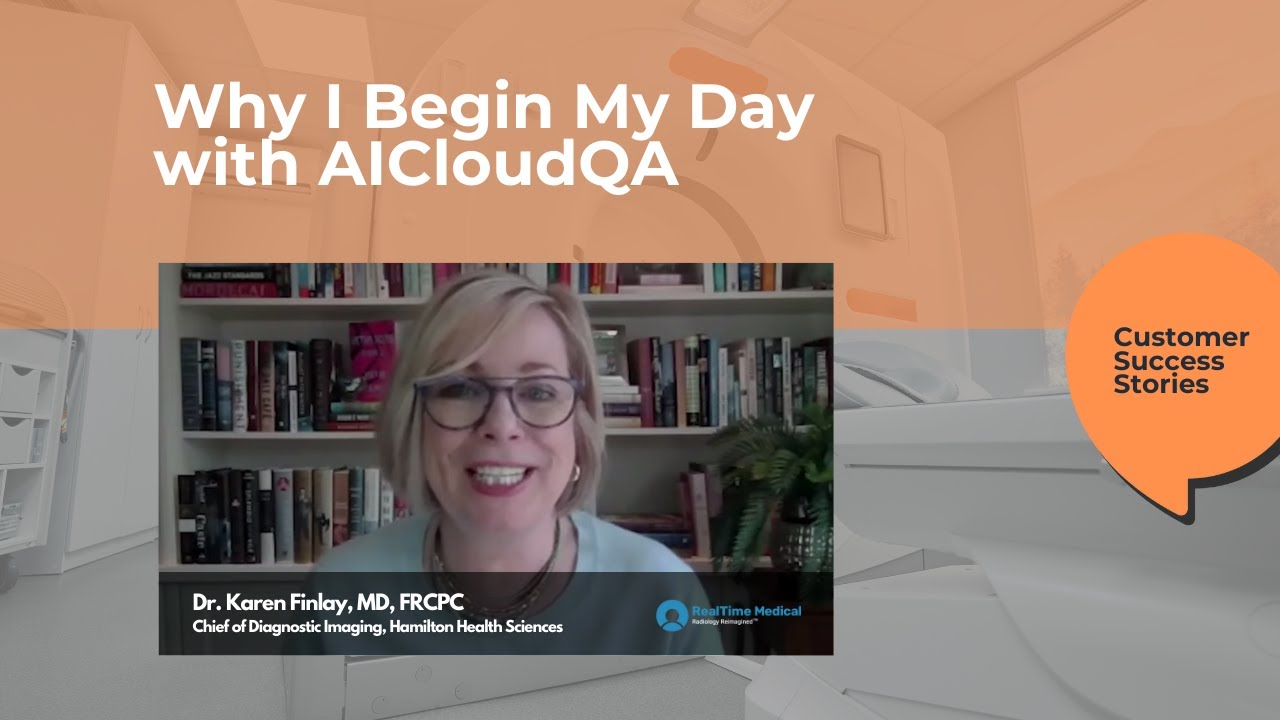
Why I Begin My Day with AICloudQA?
What benefits would make you want to start every day with a certain piece of software? Learn what makes Dr. Karen Finlay and the team at Hamilton Health Sciences and Hamilton St. Joseph’s want to start their day with AICloudQA and how it contributes to the working environment for radiologists. Learn more here: https://realtimemedical.com/software-solutions/ #radiology #teleradiology #diagnosticimaging


Professor James Wolffsohn and Dr Sònia Travé Huarte in collaboration with NuVision won the Medilink Business Award 2023 for a Partnership between Academia and Business The optometry researchers were recognised with an award for their partnership with a company that develops treatments for ocular diseases The collaboration has directly benefitted patients and enhanced global research knowledge. Researchers in the School of Optometry and Vision Sciences at Aston University have been recognised with an award for their partnership work with NuVision, a company that develops treatments for ocular diseases Professor James Wolffsohn and Dr Sònia Travé Huarte recieved the Medilink Business Award 2023 for a Partnership between Academia and Business at a prestigious ceremony held on 16 March in the Great Hall at the University of Birmingham. Professor Wolffsohn, who is also the head of the School of Optometry at Aston University, said: “We are delighted to have won this Medilink award in partnership with NuVision. This collaboration has directly benefitted our patients with this common chronic, debilitating disease, has enhanced global research knowledge in dry eye management and enhanced the local economy. The team at NuVision are exceptional and it is a pleasure to continue to innovate with them.” NuVision has an expert team of scientific, clinical and industry professionals dedicated to building innovative ocular biotherapies. It was founded in 2015 based on 15 years of translational research at the University of Nottingham. The company develops ocular biotherapies through research and innovation. The Medilink Midlands Business Awards 2023 are sponsored by the University of Birmingham and the Precision Health Technologies Accelerator Ltd. The awards event saw 13 life science companies based in the East and West Midlands receive awards from Start-Up to Outstanding Achievement. A further six companies received Highly Commended certificates. For more information about the School of Optometry and the Vision Sciences Research Group please visit our website.


Expert Q&A: The Summer of Sargassum?
A 5,000-mile-wide mass of sargassum seaweed is drifting toward Florida's beaches. It could arrive, with its brown, slick leaves and rotten eggs smell, around July as the state's Atlantic beaches are filled with locals and tourists. Florida Tech oceanographer Kevin Johnson offered his insights into this looming arrival. Is it dangerous? Will it spoil the beaches? Here are his answers to some key questions. QUESTION: Is this situation really a big deal? Kevin Johnson: I wouldn’t say it is being overhyped, but it is yet to be determined whether this year will have greater amounts of sargassum in the Atlantic offshore, (visible by satellite) or coming ashore and covering the beaches, a connected but separate phenomenon requiring the cooperation of onshore winds. 2018 was a record-setting year, and this year could exceed what was seen in both locations in 2018. If the winds contribute strongly to sargassum coming ashore, it could make it smelly and hard to find an area of clean sand to set up on the beaches. QUESTION: Is there a health risk if we head to a beach where sargassum is present? Kevin Johnson: Sargassum doesn’t produce aerosolized organic toxins, but as it rots on the beach, it will smell and give off hydrogen sulfide gas, or H2S. That's the stuff that smells like rotten eggs. When concentrated in enclosed areas, this gas is toxic and can be harmful. However, in the open air, diluted on an exposed beach, it is more of a smelly nuisance than a genuine health hazard for most people. But there could be a minor irritation, like itching, after coming into contact with sargassum. There are symbiotic species living in and amongst this seaweed when it is healthy and floating at sea. (These intricate relationships are part of what makes sargassum ecologically significant as a food source, nursery and habitat for many populations.) One of the symbionts is a tiny branching colonial hydroid, related to corals. it grows on sargassum fronds. Hydroid colonies have a sting like corals and jellyfish, but it is generally not severe. Some people may experience itching around their feet or ankles (or any body part that contacts the sargassum hydroids) if they brush up against sargassum in waves or swash, or step on freshly deposited sargassum on the sand. Many people will not be bothered or only mildly troubled by this, but some people may be more sensitive to the hydroids. QUESTION: I was planning to visit the beach. Should I reconsider now? Kevin Johnson: If the winds collude with the large bloom already underway to deliver huge mats to the beach, it could be hard for beachgoers to find a place to sit on the sand, and the smells could make the beach untenable. I emphasize “could” with the hydrogen sulfide smell because it depends on how the sargassum is deposited and how wet it is as it breaks down. In some cases, beached Sargassum can be very dry and in such cases it may not smell too bad. People who are more sensitive to the hydrogen sulfide or to the hydroids on the fresh sargassum may find the experience even more unpleasant. Westerly winds would be helpful from the perspective of keeping sargassum away from beaches, but unfortunately easterlies are pretty common this time of year. If you're a reporter looking to know more about this topic, let us help with your coverage. Dr. Johnson can be available for phone, Zoom or, depending on scheduling, in-person interviews.


Infant seating devices may reduce language exposure
When a parent needs to cook dinner or take a shower, often they will place their baby in a bouncy seat, swing, exersaucer, or similar seating device intended to protect the baby and grant a degree of independence to both the parent and infant. For many parents, these devices represent a helpful extra set of hands; for babies, the freedom to safely explore their immediate surroundings. As useful as these devices are to both parents and infants, they may present trade-offs regarding their effect on infants’ exposure to adult language, which is critical for language development. That’s according to a new study by researchers at the Stress and Early Adversity Lab at Vanderbilt Peabody College of education and human development. Within infants’ natural environments and daily routines, the study explored interactions between their exposure to adult language and their placement in seating devices, which support posture and promote the infant’s ability to play with objects or observe their surroundings without direct support from a caregiver. The researchers found that infants were exposed to fewer words when spending time in seating devices compared to when spending time in other placements. They also found that infants who spent the most time in seating devices heard nearly 40 percent fewer daily words compared to infants who spent the least amount of time in seating devices. Infants with more, compared to less, seating device use also had less consistent exposure to adult language throughout the day. Sixty mothers and their 4- to 6-month-old infants participated in this study. For three days, a Language Environment Analysis audio recording device (i.e. “talk pedometer”) captured language exposure. The mothers inserted the audio recorder into the pocket of a vest their babies wore. Automated software estimated from the recordings the total number of adult words spoken to or near the infant over the course of a day. To record real-time behaviors of infant placement, the mothers responded to 12 brief surveys per day about their infant’s current location and use of seating devices. Caregiver reports of their child’s placement in seating devices accounted for 10 percent of an infant’s daily exposure to adult words, which the researchers say is a striking finding due to the complex nature of language exposure and how many other factors may influence children’s exposure to speech (e.g. caregiver’s talkativeness, presence of other siblings). Kathryn Humphreys, assistant professor of psychology and human development and expert in infant and early childhood mental health, is the senior author of the study. She notes that infant seating devices can provide a convenient way to keep infants safely contained while caregivers attend to other tasks. However, given the potential for frequent and prolonged use of these devices, she says that parents may want to be intentional about interactive opportunities while the infant explores their surroundings as well as consider wearing or otherwise carrying their infant on their body as much as possible to create more opportunities for engagement through speech. “While we need more research to be certain that seating devices reduce the richness of infants’ language environments, these findings are influencing my own decisions about intentional placement with my 6-month-old." - Kathryn Humphreys Kathryn Humphreys She suggests that safe and convenient places are a boon for both infants and their caregivers, but that there is a risk for reduced levels of interactions when infants are stationary and not moving to where their caregivers are active.



UCI expert: federal standards of chemicals in country's waterways
The Biden Administration announced today that they are prepared to finally set federal standards on the amount of PFAS chemicals in the country’s waterways. This is long overdue oversight into regulating chemicals, specifically perfluoroalkyl and polyfluoroalkyl substances, which when exposed to can cause debilitating, deadly diseases, and conditions such as cancer, liver damage, fertility and thyroid problems, asthma and more. For an expert source on this breaking news, Scott Bartell, MS, PhD, UC Irvine professor of environmental and occupational health, is available for interviews. For the past 25 years, Bartell has dedicated his research to quantifying human exposures and health effects caused by environmental contaminants such as PFAS – specifically the presence and epidemiology of PFAS in U.S. water sources. He is also the lead researcher on a study surveying Orange County, Calif. residents to find a link between PFAS and adverse health effects. To reach Prof. Bartell, reach out to Brianna Aldrich at brianna.aldrich@uci.edu or 760-809-5193.


Innovative virtual practice offers continuous, coordinated and connected care ChristianaCare has launched Virtual Primary Care, a new health solution that offers the benefits of a long-term relationship with your primary care team, with the convenience of virtual care that can be accessed at home, at work or on the go, using a smartphone, tablet or other digital device. The practice is an offering of ChristianaCare’s Center for Virtual Health. “Virtual primary care in most markets does not establish an ongoing relationship between the patient and the provider — it’s on-demand care with the next available provider,” said Sarah Schenck, M.D., medical director of Virtualist Medicine at ChristianaCare. “ChristianaCare Virtual Primary Care is different. We offer a personalized approach in which patients have the attention of their care team who are all focused on their specific needs and health goals. Each care team knows their patients and is actively working to help them reach their personal health goals. And when patients need specialized care or services, our providers have access to ChristianaCare’s network and the ability to refer to the trusted services and specialists a patient might need outside of primary care.” The practice is accessible to residents of Delaware, Pennsylvania, Maryland and New Jersey, New York and Florida and available by monthly, quarterly or yearly subscription. Plans are available for people ages 5 and older and start as low as $35 per month. The subscription provides full access to virtual primary care services — with no additional fees or copays — including same-day appointments, extended hours on nights and weekends, secure text-messaging and the convenience of always-on care. Services that are not a part of primary care, such as emergency room visits, lab tests, diagnostic imaging and specialist referrals, are not included in the subscription and would be subject to the patient’s existing health insurance coverage. “At ChristianaCare we are reimagining health care by making it radically convenient and accessible, and by creating a unique and personal experience,” said Sharon Anderson, MS, RN, FACHE, ChristianaCare’s chief virtual health officer and president of ChristianaCare’s Center for Virtual Health. “The Virtual Primary Care practice goes beyond simply offering video visits to patients. We’ve transformed care so it no longer revolves around waiting for an appointment — it’s immediate, coordinated, continuous. Patients can now access virtual primary care 24/7 as well as a host of other health services — all through their computer, tablet or smartphone.” When individuals sign up, they’ll choose their care team of experts including a primary care provider, nurse and a patient digital ambassador (PDA). The patient digital ambassador serves as a personal health guide to assist individuals with registration and technology set-up for their virtual visits. As a care team member, the PDA is available as a personal health guide, while the primary care provider supports patients with their clinical care needs. Once enrolled, individuals will receive a welcome kit tailored to their needs with tools to assist in their care, such as monitoring blood pressure, weight and temperature. Benefits of ChristianaCare Virtual Primary Care: Schedule a virtual checkup, communicate using video, send photos through secure text messaging and discuss health concerns and treatment options. Schedule same-day appointments and enjoy extended hours on weekends. Get quick referrals to specialists. Create a personalized Working on Wellness Plan (also known as WOW plan) to help achieve healthy goals around stress management, exercise, nutrition, sleep and more. For more information, visit the ChristianaCare Center for Virtual Health or call 302-428-2400.