
Experts Matter. Find Yours.
Connect for media, speaking, professional opportunities & more.
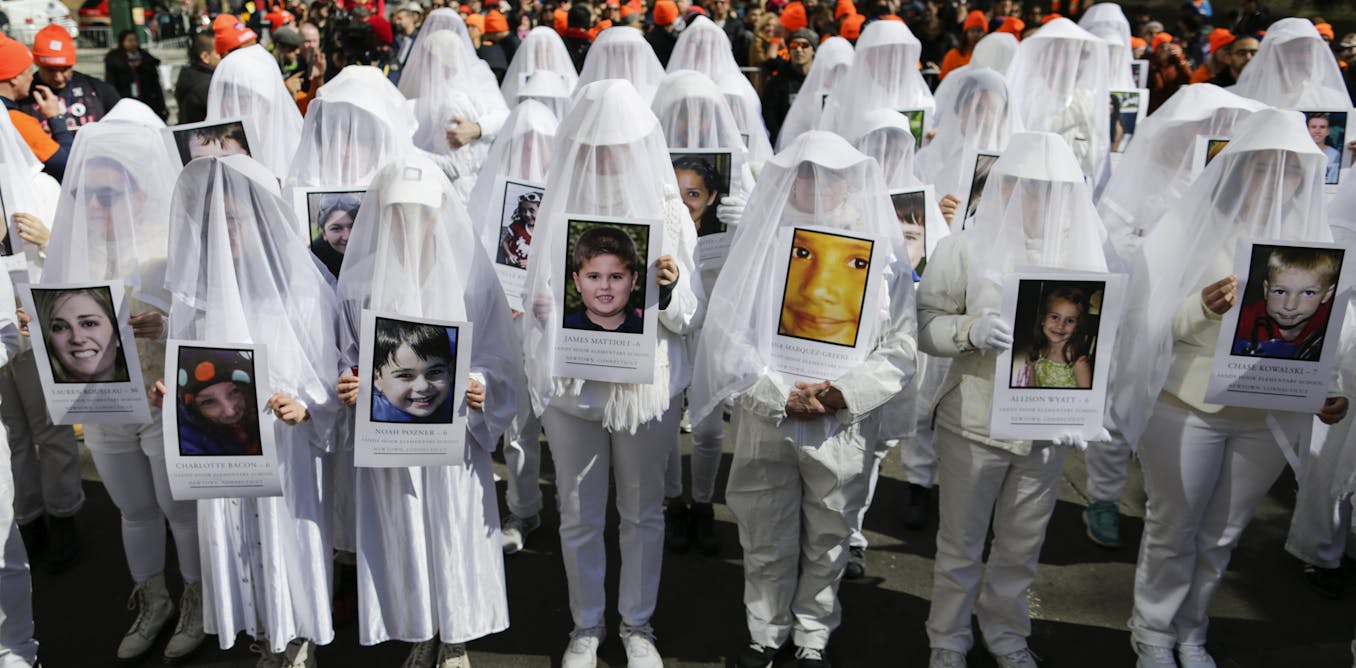
UConn Expert, 10 Years after Sandy Hook, on the Lies that 'Plague the U.S.'
UConn professor and journalist Amanda J. Crawford considers the misinformation that spread like wildfire after tragic school shooting at Sandy Hook Elementary School to be "the first major conspiracy theory of the modern social media age." Ten years after 26 young students and school staff were killed in the massacre, the impact of that day in 2012 continues to reverberate in America today. On this solemn anniversary, Crawford writes about the aftermath of Sandy Hook misinformation in a new essay for The Conversation: Conspiracy theories are powerful forces in the U.S. They have damaged public health amid a global pandemic, shaken faith in the democratic process and helped spark a violent assault on the U.S. Capitol in January 2021. These conspiracy theories are part of a dangerous misinformation crisis that has been building for years in the U.S. While American politics has long had a paranoid streak, and belief in conspiracy theories is nothing new, outlandish conspiracy theories born on social media now regularly achieve mainstream acceptance and are echoed by people in power. Recently, one of the most popular American conspiracy theorists faced consequences in court for his part in spreading viral lies. Right-wing radio host Alex Jones and his company, Infowars, were ordered by juries in Connecticut and Texas to pay nearly $1.5 billion in damages to relatives of victims killed in a mass shooting at Sandy Hook Elementary School a decade ago. Jones had falsely claimed that the shooting was a hoax. As a journalism professor at the University of Connecticut, I have studied the misinformation that surrounded the mass shooting in Newtown, Connecticut, on Dec. 14, 2012 – including Jones’ role in spreading it to his audience of millions. I consider it the first major conspiracy theory of the modern social media age, and I believe we can trace our current predicament to the tragedy’s aftermath. Ten years ago, the Sandy Hook shooting demonstrated how fringe ideas could quickly become mainstream on social media and win support from various establishment figures – even when the conspiracy theory targeted grieving families of young students and school staff killed during the massacre. Those who claimed the tragedy was a hoax showed up in Newtown and harassed people connected to the shooting. This provided an early example of how misinformation spread on social media could cause real-world harm. Amanda J. Crawford is a veteran political reporter, literary journalist, and expert in journalism ethics, misinformation, conspiracy theories, and the First Amendment. Click on her icon now to arrange an interview with her today.


Students studying medicine, pharmacy, nursing, optometry and audiology to benefit from the investment in a new simulation facility over the next three years The Office for Students has granted Aston University £4.8 million to develop future healthcare professionals The investment in digital clinical equipment and health simulation facility will better prepare students for the future of work. Students in the College of Health and Life Sciences at Aston University are to benefit from a major £4.8 million investment in new facilities funded by the Office for Students to further expand and develop the University’s suite of state-of-the-art healthcare simulation and laboratory facilities. Students studying medicine, pharmacy, nursing, optometry and audiology will benefit from capital funding to support new equipment and facilities over the next three years. This latest funding follows on from an initial £1.5 million investment into healthcare simulation facilities on the University campus which were officially opened in December 2022 by Paulette Hamilton MP. The funds will be used to create and equip a simulated hospital ward facility and a simulated patient home environment for healthcare students. Nursing Studies is now recruiting for its first intake of students in September 2023. Pharmacy students will also gain a new wet lab and asepsis suite. The optometry simulation suite, unique in Europe, will be further enhanced with augmented reality simulation, allowing students to learn and refine their skills in a realistic instrument environment, with simulated patients with a wide range of eye conditions. Investment in other additional optometry equipment, including an additional optomap retinal screening device, will also allow the eye clinic to triage patients for the eye hospital, reducing patient waiting times, particularly in assessing conditions such as macular degeneration. Aston Medical School will be equipped with the creation of an immersive room and an anatomy and physiology teaching facility. Professor Liz Moores, Deputy Dean of the College of Health and Life Sciences, said: “The College of Health and Life Sciences is thrilled with this investment. The enhanced facilities will help to support many of our healthcare students, including those now applying for our new nursing degree. It will also support us with the introduction of the new pharmacy and optometry education standards, providing a step change in our ability to simulate a wide range of clinical scenarios.” Professor Aleks Subic, Vice-Chancellor at Aston University, said: “This strategic investment will ensure that our students are learning in the very best facilities with access to state-of-the-art digital technologies. The new facilities will enable us to prepare students fully for future careers that are strategically important to the healthcare sector and society. This is about bringing Industry 4.0 to healthcare.” Professor James Wolffsohn, Head of the School of Optometry and Audiology at Aston University, said: “With the huge hospital waiting lists, particularly post-COVID, with those in ophthalmology being the highest, it is essential that primary care can take more of the patient load to allow hospitals to focus on surgery and complex cases. This investment will allow us to better train our optometry and audiology students to be able to triage patients and to manage more conditions within community practice.” Jiteen Ahmed, Head of Technical Services in the College of Health and Life Sciences at Aston University, said: “It is fantastic to see such a large investment in our facilities to support many of our healthcare programmes. Technical staff at Aston University will be playing a key role in the design of the facilities, ensuring that we provide the most up to date and innovative technologies to meet the needs of the programmes. “I am very excited to see the involvement of technical staff as they will play a significant role in ensuring our students meet key learning outcomes in our facilities at the University.” For more information about studying in the College of Health and Life Sciences please visit our website.


ExpertFile-powered “Our Experts” site makes health experts findable and accessible to media at a click of a button ChristianaCare and its collaborative partner ExpertFile have been recognized with a 2022 Silver Quill Award from the International Association of Business Communicators (IABC) for its "Our Experts" media database. Designed to easily and quickly connect journalists to subject-matter experts, this online resource has been recognized with the top prize – an “Award of Excellence” in the Communications Management, Media Relations category. The IABC Silver Quill Awards showcase business communication excellence and are acknowledged as among the most prestigious awards programs in the communications industry. “I’m proud to accept the Silver Quill Award on behalf of our organization and our incredible Communications team, including our ExpertFile partners,” said Shane Hoffman, communications director at ChristianaCare. “The ‘Our Experts’ platform has given us next-level ways to engage our experts and share our knowledge as a trusted source of health care information. It has also helped us re-imagine the traditional online news room experience and turn it into a truly new and innovative way to serve the needs of both journalists and our community.” IABC’s Silver Quill awards honor the dedication, innovation and passion of communicators on a global scale. Each entry is scored independently by evaluators who judge the award submission on factors that include: stakeholder analysis, strategic and tactical planning, quality of execution and measurable results. Since launching in March 2021, the "Our Experts" media database has received more than 20,000 online visits and has resulted in more than 200 news stories. “We are honored to earn this Silver Quill Award with our client, ChristianaCare,” said Peter Evans, CEO of ExpertFile. “Despite the pressures of the pandemic, their team collaborated closely with us to create a world-class program that continues to help a variety of audiences discover and connect every day with credible medical experts and groundbreaking research.” Powered by the ExpertFile software platform, the ChristianaCare “Our Experts” site provides a digital media toolkit with advanced search/digital content features to help journalists discover experts and access resources that make it easier for them to complete stories and meet their deadlines. Awarding top honors “with distinction,” the IABC judging panel provided a number of detailed comments on the “ChristianaCare Experts Program”: “Very well-done website. Nice content that is well organized and searchable. From planning and implementation to measurement afterward the program shows great work.” “Great work in the time of COVID. Your knowledge of journalists and their challenges. during COVID was spot-on.” “I liked the media advisories. Having been on both sides of the reporter/media relations thing, I like clear and simple. You achieved this!” “If I were a reporter, the advisory would be invaluable when I needed an expert.” “Very specific and focused on business-results. Great work here.” “Very comprehensive! You thought of everything without getting bogged down in unnecessary details.” Nearly 100 ChristianaCare experts are featured in the database today, and that number continues to grow. “As communicators in health care, it has always been important for us to provide timely, accurate, easy-to-understand information to the communities we serve so that people can make informed decisions about their health,” said Karen Browne, vice president of marketing and communications at ChristianaCare. “The COVID-19 pandemic added an entirely new level of urgency to our role as communicators, and it made it even more important for us to build strong relationships with our partners in the news media so that they can deliver compelling, actionable health information to the community—from experts they can trust.” The pandemic also highlighted the need to do more with less. ChristianaCare’s innovation was driven out of a desire to improve the reach, impact and efficiency of its media relations efforts—amid rapidly increasing demand—without the need to add additional resources. “With our partners at ExpertFile, we leveraged ExpertFile’s outstanding technology platform to create a database of our experts that helps reporters and news producers find the sources they need quickly, and it enables our team to nimbly manage their requests and facilitate interviews in a way that makes the absolute best use of our resources,” Hoffman said. “The ExpertFile team worked as our strategic thought partners throughout this process, and they’ve really embraced our desire for innovation that drives results. They’ve helped us to work smarter and do more without adding a lot of additional resources. Together, we’ve built a system and process that is helping us to communicate in new and better ways—and we’re just getting started.” About ChristianaCare Headquartered in Wilmington, Delaware, ChristianaCare is one of the country’s most dynamic health care organizations, centered on improving health outcomes, making high-quality care more accessible and lowering health care costs. ChristianaCare includes an extensive network of primary care and outpatient services, home health care, urgent care centers, three hospitals (1,299 beds), a freestanding emergency department, a Level I trauma center and a Level III neonatal intensive care unit, a comprehensive stroke center and regional centers of excellence in heart and vascular care, cancer care and women’s health. It also includes the pioneering Gene Editing Institute. ChristianaCare is nationally recognized as a great place to work, rated by Forbes as the 2nd best health system for diversity and inclusion, and the 29th best health system to work for in the United States, and by IDG Computerworld as one of the nation’s Best Places to Work in IT. ChristianaCare is rated by Healthgrades as one of America’s 50 Best Hospitals and continually ranked among the nation’s best by U.S. News & World Report, Newsweek and other national quality ratings. ChristianaCare is a nonprofit teaching health system with more than 260 residents and fellows. With its groundbreaking Center for Virtual Health and a focus on population health and value-based care, ChristianaCare is shaping the future of health care.


ChristianaCare Rated a High Performing Hospital for Maternity by U.S. News & World Report
ChristianaCare is the only health system in Delaware to earn the High Performing designation from U.S. News ChristianaCare has earned the highest award for maternity care that a hospital can achieve from U.S. News & World Report in its 2022-23 ratings for Best Hospitals for Maternity Care. Rated as a High Performing Hospital, ChristianaCare was the only health system in Delaware to earn this esteemed honor. Christiana Hospital at ChristianaCare’s Newark Campus is the only high-risk delivering hospital in the First State offering Level III neonatal intensive care. More than 6,100 babies are born at Christiana Hospital each year. The U.S. News Best Hospitals for Maternity Care methodology is based entirely on objective measures of quality, such as C-section rates in lower-risk pregnancies, newborn complication rates, exclusive breast milk feeding rates, early elective delivery rates and vaginal birth after cesarean (VBAC) rates, among other measures. “When we announced plans seven years ago to build the ChristianaCare Center for Women’s & Children’s Health, we affirmed our commitment to provide superior-quality care for women and infants in our region,” said Matthew Hoffman, M.D., MPH, FACOG, Marie E. Pinizzotto, M.D., Endowed Chair of Obstetrics and Gynecology at ChristianaCare. “This prestigious recognition is an affirmation that patients who choose to give birth at ChristianaCare will have access to the very best services and expertise to ensure a safe delivery and a healthy baby.” Just two years ago ChristianaCare opened the Center for Women’s & Children’s Health, an eight-story, approximately 400,000-square-foot tower at Christiana Hospital. The center uses the most up-to-date, evidence-based models of care, with improved integration of services and the space to offer innovative patient-centered care for mothers, babies and families. One of the most significant features of the new center is a state-of-the-art neonatal intensive care unit (NICU), featuring private rooms with sleep-in space for families. Christiana Hospital is one of the only hospitals in the United States to provide “couplet care” in the NICU, keeping the mother and baby together even if they both require medical care. This is based on a European model demonstrating that moms are more likely to breastfeed in this environment, which is particularly important in the early development of children. “We best achieve optimal health and flourish when we are able to begin our lives as healthy newborns,” said David Paul, M.D., chair of ChristianaCare’s Department of Pediatrics. “Building this transformative women’s and children’s hospital was a way to invest in the future of our community’s children. In addition to our outstanding caregivers and the care we provide within the walls of the hospital, this facility is a monumental step forward in enabling us to care for moms and babies, and we are delighted that U.S. News has recognized what a special place it is.” Other innovative features at the center include: Expanded labor and delivery suites. Private rooms for mothers and families after delivery. A spacious, multi-level Ronald McDonald Family Room to support families with infants who are in intensive care. Expanded OB/GYN emergency services area and new labor lounge. Separate admitting and discharge areas for the convenience of our patients. A tranquil family rooftop garden that provides spaces for play and relaxation. Vibrant sibling play spaces with interactive displays and artwork, and open community spaces for health education and programs. U.S. News’ annual evaluation is designed to assist expectant parents and their doctors in making informed decisions about where to receive maternity care. U.S. News evaluated nearly 650 hospitals that provide high-quality labor and delivery services for uncomplicated pregnancies for its 2022-2023 Best Hospitals for Maternity Care. Fewer than half of all hospitals that offer maternity care and participated in the survey received a High Performing designation. “When expectant parents are considering their options for welcoming a baby to the world, the Best Hospitals for Maternity Care are designed to help them identify hospitals that excel in delivering babies for uncomplicated pregnancies,” said Ben Harder, chief of health analysis and managing editor at U.S. News & World Report. “A hospital that has earned a High Performing designation may be a good option for parents, in consultation with their medical provider, to consider.” Excellence in Maternity Care Built on Experience and Research ChristianaCare’s Center for Women’s & Children’s Health includes Delaware’s most experienced maternity team, and it is also a significant research institution. Since opening, the Center for Women’s & Children’s Health participated in a significant study that found that treating mild chronic hypertension with medications is beneficial and safe for mother and baby. Published in The New England Journal of Medicine, the world’s foremost medical journal, the study has the potential to change the standard of care for some pregnant women, as it represented the first time that comprehensive, evidence-based data showed the benefits of treating mild forms of chronic hypertension during pregnancy. “Our commitment to research is a path to better caring for our community,” said Dr. Hoffman, a co-author in the study. About ChristianaCare Headquartered in Wilmington, Delaware, ChristianaCare is one of the country’s most dynamic health care organizations, centered on improving health outcomes, making high-quality care more accessible and lowering health care costs. ChristianaCare includes an extensive network of primary care and outpatient services, home health care, urgent care centers, three hospitals (1,299 beds), a freestanding emergency department, a Level I trauma center and a Level III neonatal intensive care unit, a comprehensive stroke center and regional centers of excellence in heart and vascular care, cancer care and women’s health. It also includes the pioneering Gene Editing Institute. ChristianaCare is nationally recognized as a great place to work, rated by Forbes as the 2nd best health system for diversity and inclusion, and the 29th best health system to work for in the United States, and by IDG Computerworld as one of the nation’s Best Places to Work in IT. ChristianaCare is rated by Healthgrades as one of America’s 50 Best Hospitals and continually ranked among the nation’s best by U.S. News & World Report, Newsweek and other national quality ratings. ChristianaCare is a nonprofit teaching health system with more than 260 residents and fellows. With its groundbreaking Center for Virtual Health and a focus on population health and value-based care, ChristianaCare is shaping the future of health care.

ChristianaCare Names Its Breast Center: The Tatiana Copeland Breast Center
ChristianaCare has named its Breast Center The Tatiana Copeland Breast Center at the Helen F. Graham Cancer Center & Research Institute in recognition of Gerret and Tatiana Copeland’s generous financial support. The Copelands, local philanthropists and business entrepreneurs, provided a $1.2 million gift to the Graham Cancer Center in 2019 for breast cancer prevention and research for underrepresented women. Tatiana Copeland previously provided $800,000 to fund the purchase of two 3D mammography units. As a result of their philanthropic leadership, the Graham Cancer Center was one of the first facilities in the nation to offer 3D mammography. “ChristianaCare is deeply grateful to the Copelands for their generous support of the Helen F. Graham Cancer Center & Research Institute,” said Janice Nevin, M.D., MPH, ChristianaCare president and CEO. “They have made a tremendous difference in the lives of so many women in and around Delaware. We are deeply honored to name the Breast Center after Tatiana.” In a private event celebrating the naming, Dr. Nevin read a personal letter from President Joe Biden and First Lady Jill Biden that was sent to Tatiana about her support of the Breast Center. “Tatiana is a woman with extraordinary vision and a compassionate heart,” wrote President Biden. “As a breast cancer survivor, she has taken her pain and turned it into purpose, ensuring that all those who come in for testing at the Breast Center will receive extraordinary care. She has put lifesaving and life-altering care within the reach of those who need it most. And through it all, she has pushed for progress, fought for patients and kept hope alive.” “The Copelands share our commitment to providing our patients with the very best breast care, diagnosis and treatment,” said Nicholas J. Petrelli, M.D., Bank of America endowed medical director of the Helen F. Graham Cancer Center & Research Institute. “Their generous gifts have enabled women from Delaware and surrounding communities to receive expert, compassionate care right here at the Breast Center without ever having to leave the state. The Copelands have a way of discovering a need and then making the impossible possible.” “As longtime Graham Cancer Center supporters and as a breast cancer survivor myself who received wonderful treatment here, we are confident our investment in the Breast Center will continue to enable women to receive the same care that I did,” Tatiana Copeland said. “The atmosphere of the Breast Center is very comforting — like a nurturing hospital,” she said. “Everybody is very caring and attentive. Dr. Petrelli has created a team effort that is truly admirable. We hope our support inspires others to join us in the fight against cancer.” At The Tatiana Copeland Breast Center, patients are supported by an exceptional care team that includes radiologists, surgeons, radiation oncologists, genetic counselors and support staff. On-site capabilities include: 3D mammography. Digital mammography. Dedicated breast MRI. Breast ultrasound. Minimally invasive breast biopsies. Financial resources. Delaware’s first Center for Breast Reconstruction. According to the Delaware Division of Public Health, breast cancer is the most common cancer diagnosed among women in Delaware and the second leading cause of cancer death among women in the state after lung cancer. The Graham Cancer Center conducts community outreach to educate women about the importance of breast cancer detection and early prevention, including specially designed programs for underrepresented communities, including Black, Latinx and Asian women. “The Copelands’ ongoing generosity and support have helped us elevate the level of care at the Breast Center,” said Dia Williams, vice president of Philanthropy at ChristianaCare. “This gift will have an impact for generations to come.” To learn more about ChristianaCare’s philanthropy opportunities, visit https://christianacare.org/donors.


Aston University partners with paediatric pharmaceutical company to facilitate student research
• Aston University MSc Pharmaceutical Sciences, Drug Delivery and MPharm students work with industry professionals on research projects • Proveca pharmaceutical specialises in the development and licensing of medicines for children • Students will attend workshops led by Proveca and receive coaching on their research proposals. Aston University has partnered with pharmaceutical company Proveca to help support and facilitate final research projects being undertaken by its MSc Pharmaceutical Sciences, Drug Delivery and MPharm students. The partnership between the College of Health and Life Sciences at Aston University and Proveca began with a contract research project during which Professor Afzal Mohammed worked with Proveca to explore the development of drug formulation. Proveca is a pharmaceutical company specialising in the development and licensing of medicines for children. The company has now come on board to support and supervise at least five final year research projects and will help steer the students in the next steps in their lab research. The company will also support a wider number of students by running workshops, educating them on the current challenges of drug formulation development and providing coaching on how to write a research proposal. Professor Afzal Mohammed, associate head of pharmacy at Aston University, said: “This is a fantastic opportunity to enhance the student experience and build on our excellent industry focused teaching and research”. The projects are due to start in January 2023 and Proveca has agreed to sponsor the final project prize open to all of our MSc Pharmaceutical Sciences, Drug Delivery and final year MPharm students. Dr Simon Bryson, CEO and founder of Proveca Ltd, said: “We are delighted to be building on our relationship with Aston University, having collaborated over several years on a range of successful projects including PhD sponsorship and supervision, visiting lecturing and MPharm research awards. “The partnership brings together the academic excellence of Aston University with the paediatric pharmaceutical expertise of Proveca which will ultimately drive innovation in paediatric medicines to improve child health.” For more information about the School of Pharmacy at Aston University please visit our website.


Deprivation in childhood linked to impulsive behaviour in adulthood – research
Researchers found a link between childhood deprivation, impulsive behaviour and addictions later in life Behaviours include overeating, taking drugs, smoking cigarettes and gambling A second study found adults living in deprived areas displayed similar impulsive traits Children who have experienced deprivation are more likely to make more impulsive choices than those who don’t and can lead to addictions in later life - research has shown. ‘Trait impulsivity’, the preference for immediate gratification, has been linked to spending more on food, especially unhealthy, highly calorific food. Studies have shown that children who experience poverty and food insecurity tend to have a higher body-mass index as adults than those who do not. Researchers from the School of Psychology at Aston University found a link between deprivation in childhood and impulsive behaviour – leading to addictions later in life. The findings, which are a culmination of six years of research, also found a further link between impulsivity, obesity and the cost of living crisis. Professor Richard Tunney, head of the School of Psychology at Aston University, published a study in Scientific Reports earlier this year where he showed that children who experience deprivation make more impulsive choices than children who don’t. The research team studied 146 children, with an average age of eight, living in some of the most deprived areas of England and compared them with children living in some of the most affluent neighbourhoods. Children were given a choice between taking home a small amount of money (for example, £1) or getting £10 a week, or even more a year later. How long a person is willing to wait for the larger amount of money can be used to calculate a ‘discount rate’ that shows how much the waiting time reduces the value of the money. An impulsive person might prefer £1 now because the value of £10 in six months is ‘discounted’ to less than £1 right now. This means that, for them, the £10, is discounted by £9 over the six-month wait. A less impulsive person might be willing to wait six months for £10, but not wait for a whole year for £15. This means that, for them, the value of the £15 is discounted by £5 over the additional six-month wait. This discount rate is a measure of how impulsive someone is. Commenting on the findings, Professor Tunney said: “The results showed that children living in the most deprived areas had significantly higher discount rates than children living in the least deprived areas, regardless of age or intelligence, indicating that deprivation was the causal factor in the children’s choice. “This preference for immediate outcomes is a stable personality trait that remains constant throughout a person’s life.” However, in the research team’s most recent study published by the Royal Society, they investigated impulsivity in over 1,000 older adults aged between 50 and 90. The study found that older adults living in the most deprived areas showed the same preference for smaller-sooner financial outcomes as the children in the first study. It also found that a person’s job predicted the choices they made. Adults working in technical or routine occupations, such as mechanics or cleaners, chose to receive smaller amounts of money than wait for larger amounts compared with people in professional occupations, such as engineers or scientists. Professor Tunney added: “These findings are concerning because impulsivity doesn’t just predict obesity. These findings tell us a lot about why people living in poorer areas tend to be unhealthier than people living in wealthy areas. “People who experience deprivation as children are more likely to choose to do things that, although they might be pleasurable in the short term, are unhealthy in the long run. This includes overeating, taking drugs, smoking cigarettes and gambling. “We know too, that impulsivity can help to explain why some people go on to become addicts, while other people can avoid some of the more harmful effects of drugs and alcohol. “Deprivation is one of many factors that can lead to impulsive behaviour throughout a person’s lifetime. Genetics also plays a role in impulsivity. Policymakers can’t do anything about a person’s genes but they can influence the nation’s long-term mental and physical health by minimising child poverty. Failing to do so will have long-term implications for the children living through today’s cost of living crisis.” For more information about the School of Psychology at Aston University, please visit our website.


#Expert Research: New National Science Foundation and NASA-Funded Research Investigates Martian Soil
Studies have shown crops can grow in simulated Martian regolith. But that faux material, which is similar to soil, lacks the toxic perchlorates that makes plant growth in real Red Planet regolith virtually impossible. New research involving Florida Tech is examining how to make the soil on Mars useful for farming. Andrew Palmer, co-investigator and ocean engineering and marine sciences associate professor, along with Anca Delgado, principal investigator and faculty member at Arizona State University’s Biodesign Swette Center for Environmental Biotechnology, and researchers from the University of Arizona and Arizona State University, are participating in the study, “EFRI ELiS: Bioweathering Dynamics and Ecophysiology of Microbially Catalyzed Soil Genesis of Martian Regolith.” This National Science Foundation and NASA-funded project will use microorganisms from bacteria to remove perchlorates from Martian soil simulants and produce soil organic matter containing organic carbon and inorganic nutrients. Martian regolith contains high concentrations of toxic perchlorate salts that will impede plant cultivation in soil, jeopardizing food security and potentially causing health problems for humans, including cancer. Researchers will look at different bacterial populations and how well they are able to process and break down the perchlorates, as well as what kind of materials they produce when they do. They’ll also look at different temperatures and moisture conditions, as well as in the presence or absence of oxygen. Students in the Palmer Lab will receive the simulants after this process, try to replicate it, and then test how well the perchlorate-free regolith is able to grow plants. A challenge the researchers face is how they remove the toxic salts, as well as if they can remove all of them. Palmer cautioned that the possibility that removing the perchlorates does not necessarily mean the regolith is ready for farming. “You can’t make the cure worse than the disease, so we have to be ending up with regolith on the other side that’s better than when we started,” Palmer said. “We can’t trade perchlorates for some other toxic accumulating compound. Just because we’re removing the perchlorates doesn’t necessarily mean that we’re going to make the regolith better for plants. We might just make it not toxic anymore. How much does it improve is really what we’re trying to figure out.” Even without perchlorates, there are significant challenges to growing crops in Martian soil. While researchers have grown plants in simulated regolith, the regolith is not good for plant growth, as in addition to a lot of salts, it has a high pH and is very fine, which means it can ‘cement’ when wet, suffocating plant roots. Being able to grow in the soil instead of using hydroponics could also provide a more efficient, cost-effective solution. “There is always the option of hydroponic growth of food crops, but with a significant distance to Mars and the lack of readily available water, we need a different kind of plan,” said ASU’s Delgado. “If there is a possibility to grow plants directly in the soil, there are benefits in terms of water utilization and resources to get supplies to Mars.” Some of the microbial solutions the team is proposing could also help with studies of soils on Earth. “The best soils for agriculture on earth, they were taken up decades ago, and so now we’re trying to farm on new land that’s not really meant for agriculture, if you think about it,” Palmer said. “So, as we think about ways to convert it into better soil, I think this research helps teach us how to do that, but it also inspires.” The research will also allow Florida Tech students to get hands-on space agriculture experience. “We’re going to be training the grad students and the undergraduates who are going to be the researchers who take on those new challenges, so I think one of our most important products are going to be the students we train,” Palmer said. “We’ll deliver Mars soil, but we also deliver, I think, a future group of researchers.” If you're a reporter looking to know more about this topic - then let us help with your coverage. Dr. Andrew Palmer is an associate professor of biological sciences at Florida Tech and a go-to expert in the field of Martian farming. Andrew is available to speak with media regarding this and related topics. Simply click on his icon now to arrange an interview today.



The COVID-19 pandemic took a toll on America's children -- parents lost jobs, kids weren't able to go to school, and they were told it was dangerous to see their friends. From a child's point of view, they seemed to have a lot, if not nearly everything, taken away, and many are still struggling today. Recently, NPR took a deeper look at the challenges kids are facing and found one creative solution that's helping elementary school children to change negative thinking patterns, better understand others' motivations, and face fears that may fuel unhealthy avoidance behaviors. UConn expert Sandra Chafouleas, a professor and school psychologist, is a co-creator of the new program -- called Feel Your Best Self -- which uses puppets to help children develop their social-emotional skills and well-being. During the pandemic, Wicks sent emails to researchers at the University of Connecticut's Neag School of Education, fishing for collaborators. She'd been wanting to put more of their work online. Her pitch: You want to help kids right now, and we have puppets. One of those emails went to Sandy Chafouleas, a UConn professor and trained school psychologist. Chafouleas was worried about all that extra stress on kids returning from the pandemic and that schools wouldn't be able to help them. "Teachers were stressed. Systems were stressed. Nobody had time to do professional learning to do something complex. That's just ridiculous to think that they could've," Chafouleas says. Denoya, the first-grade teacher at Natchaug Elementary, has seen it firsthand: Kids returned from the pandemic with missing or rusty social and emotional skills. They had trouble sharing, learning how to take turns and dealing with disappointment. "There's just things that they missed out on with not having that socialization, and so we need to find a place to teach it at school too," Denoya says. Anticipating this need, Chafouleas and Wicks cooked up Feel Your Best Self. The idea was, these scripted puppet videos would be easy — and free — for schools to use, even if they don't have a trained mental health specialist on-hand. Which many don't. Or they have one, spread across hundreds and hundreds of kids. That includes Natchaug, where Principal Eben Jones has been unable to fill a vacant school psychologist position for the past two years. Jones says that hasn't stopped him and his staff from prioritizing this kind of emotional and social skill-building. "It is embedded daily," Jones says. "Every teacher has time in the morning to have a morning meeting. And in that morning meeting they build community, share a morning message, you know, play a team-building game and make sure kids are connected to each other." This school year, Denoya and her students are doing one FYBS lesson each week. The FYBS program has exploded over the past year, thanks in part to a flood of grant funding. What began last year at Natchaug with a small team performing virtually – and live, not recorded – in one classroom at a time, became a Herculean effort to script, cast and shoot not one but 12 unique videos, with multiple puppets and performers, that teachers and caregivers can access anytime online, at no cost – in both English and Spanish. "Emily and I often feel like we're hanging on to the end of the caboose right now. This has scaled in ways that are unimaginable," says Chafouleas. Sandra Chafouleas is a UConn Board of Trustees Distinguished Professor of Educational Psychology and an expert on social-emotional well-being. She's available to speak with the media today -- just click her icon to arrange an interview.


Preterm Birth and Lifelong Health
November is Prematurity Awareness Month—a month that places a spotlight on the current state of maternal and infant health in the United States and globally. According to the nonprofit March of Dimes, one in 10 babies is born preterm each year in the U.S. But what does that mean, and why do we need to consider gestation period post-birth? We sat down with Michelle Kelly, PhD, CRNP, CNE, FAANP, associate professor of nursing at Villanova University's M. Louise Fitzpatrick College of Nursing, to discuss and explain the importance of preterm education for lifelong health. Q: To begin, what qualifies as preterm birth? Dr. Kelly: A full-term pregnancy lasts 40 weeks. Infants born before the completion of 37 weeks of gestation are preterm. And there are levels of prematurity: Extremely preterm: Infants born before the completion of 25 weeks of gestation. Very preterm: Infants born before the completion of 32 weeks of gestation. Moderately preterm: Infants born between 32-34 weeks of gestation. Late preterm: Infants born between 34-36 weeks of gestation. Q: Why do health practitioners need to be aware of gestation history? DK: Understanding the potential long-term physical and mental health implications is essential to mitigating the risks. Clinicians cannot change the reality that someone was born early. However, clinicians can utilize that information in treatment decisions. Instituting treatment or therapies early can help minimize the expression of that risk and improve future health. Q: What are the health risks for children born prematurely? DK: The earlier an infant is born, the greater the risk to their overall health and development. And while it is much better to be born at 35 weeks instead of 25 weeks, it does not mean that those born closer to term escape all risks. During infancy and childhood, a preterm birth can cause difficulty with breathing, feeding, gaining weight appropriately and achieving important developmental milestones. Research suggests that children and adolescents born at any level of prematurity are at risk for challenges in school, conditions that require physical or behavioral therapy as well as conditions typically associated with immature body systems, such as respiratory issues like asthma. Additionally, long-term follow-up studies indicate that risk continues into adolescence and adulthood. Q: What are some long-term issues that stem from being born preterm? DK: Adolescents and adults born preterm continue to be at risk for reduced lung function, wheezing and asthma. Research findings suggest that there are also cardiovascular risks, particularly an increased incidence of hypertension (high blood pressure). Additionally, an increased incidence of mental health conditions, specifically anxiety and depression, are associated with preterm birth. All these increased risks are modifiable with early recognition and treatment. Q: What recent research has been conducted and what strides have been made to improve the lives of those born preterm? Is the prognosis for those born preterm positive? DK: Today's NICU environment is vastly different from the NICU of the past. Premature babies born in the last 20 years have survival rates that exceed 95 percent for all but the earliest of gestational ages. Increased attention to developmentally supportive care, breastfeeding, kangaroo care and the recognized importance of family presence in the NICU is now the standard of care. Research and advocacy aimed at supporting families touched by prematurity and raising awareness of healthcare providers and K-12 educators are gaining international attention. While being born preterm presents lifelong risks, identifying and communicating one's status with health practitioners early and often allows for effective treatment and positive outcomes.

