
Experts Matter. Find Yours.
Connect for media, speaking, professional opportunities & more.

Experts in the media – Augusta’s Dr. Jose Vazquez is becoming the go-to expert for the coronavirus
It’s the news story that has health officials concerned and reporters scrambling – on almost every continent on the planet. The coronavirus, originating from China has gone global with new cases popping up in 17 countries to date. And as media are trying their best to explain the situation and accurately report just what the coronavirus is, how it is spread along with the symptoms and precautions and preventative measures – they’re relying on experts to ensure their stories are accurate. That’s where Augusta is helping. Dr. Jose Vazquez is an expert in the realm of infectious diseases. He studies and treats infectious diseases, including antibiotic-resistant superbugs and fungal infections. He has been a reliable source for local, statewide and national media regarding the coronavirus outbreak. Dr. Vasquez is available to speak with media regarding this topic – simply click on his icon to arrange an interview.


Containing the coronavirus – Can it be done?
As of January 21, America had its first confirmed case of coronavirus. The virus that presents with flu like symptoms and is slowly making its way around Asia has finally found a host on American soil. The news of this has health officials scurrying and the world on edge with concerns of another SARS-like epidemic on the way. "As it stands, nearly 440 cases of the new coronavirus have been reported in China, Thailand, Japan, South Korea, Taiwan and the United States, with the overwhelming majority in China. All cases reported internationally were exported from Wuhan. Nine deaths have been reported in Wuhan. What should I know about the cornonavirus case in the U.S.? The first case of coronavirus reported in the U.S. is in a patient in his 30s from Washington state, the CDC said Tuesday. Laboratory testing at the CDC in Atlanta confirmed the patient was infected with it. He's currently hospitalized, in good condition, health officials in Washington said. Although the patient had traveled to Wuhan, he said did not visit the market at the center of the outbreak." January 21 - ABC News As this story develops, there remains a lot of questions to be asked getting the right information and facts will be essential given this is a matter of public health and concern. How is the virus transmitted? Can we expect more cases to appear on U.S. soil? Is there a vaccine and are there any preventable actions people can take? And, can health authorities stop the spread of Coronavirus before it becomes an epidemic? If you are a journalist covering this topic – that’s where our experts can help. Dr. Jose Vazquez is an expert in the realm of infectious diseases. He studies and treats infectious diseases, including antibiotic-resistant superbugs and fungal infections. A leader in his field and a go-to expert for media regarding this topic, Dr. Vasquez is available to speak with media regarding Immunization Awareness Month. Click on his icon to arrange an interview.

By early afternoon Friday, the Centers for Disease Control and Prevention had confirmed a second case of the new coronavirus on American soil. With cases now being detected in Europe and across Asia, the world is watching and worrying about the potential spread of this dangerous virus. There are 63 cases being monitored in the U.S. that stretch across 22 states, including the first patient in Washington state and the new case in Illinois, said Dr. Nancy Messonnier, director of the National Center for Immunization and Respiratory Diseases. Officials said the new patient, a woman in her 60s, is doing well and is in stable condition. She remains isolated in a hospital as a precaution, U.S. health officials said on a conference call with reporters. The Illinois patient traveled to China in late December and began experiencing symptoms when she returned to the U.S. last week, officials said. She did not have symptoms while flying, they said. “She was not symptomatic when flying. And based on what we know now about this virus, our concern for transmission before symptoms develop is low, so that is reassuring,” Dr. Allison Arwady, Chicago’s public health commissioner, said on the call. January 24 – CNBC As this story progresses – there are a lot of questions journalists are asking. How is this virus spread? How worried do Americans need to be about the coronavirus? Are there warning signs or methods to prevent the spread? And how far away are we from a vaccination? If you are a journalist covering this developing issue – let our experts help. Dr. Jian Zhang has worked with the Chinese Centers for Disease Control and Prevention, and the World Health Organization prior to moving to the United States. He obtained a Doctorate in Public Health from the Arnold School of Public Health, University of South Carolina before he joined the faculty of Jiann-Ping Hsu College of Public Health at Georgia Southern University. He is available to speak with journalists regarding the coronavirus and its origins and its potential to spread across America – simply click on his icon to arrange an interview.


Georgia Southern associate dean named to National Advisory Mental Health Council
Joseph Telfair, DrPH, associate dean of public health practice and research in Georgia Southern University’s Jiann-Ping Hsu College of Public Health, has been appointed to the National Mental Health Advisory Committee (NAMHC). The NAMHC advises U.S. Department of Health and Human Services Secretary Alex Azar and the directors of the National Institutes of Health and the National Institute of Mental Health on all policies and activities relating to the conduct and support of mental health research, research training and other programs of the institutes. “I am greatly honored to have been given this opportunity to serve our profession and represent our college and University on this important national advisory committee,” said Telfair. “The prospect to contribute to decisions over the next several years that will make a difference for multidisciplinary researchers is very much appreciated.” Telfair’s advisory role will pertain to public health research and practice, community-based research, and issues of health inequities and translational research — all areas in which his national and global expertise has been recognized. His appointment runs through September 2023. Mental health is one of the leading issues impacting families, workplaces and almost all aspects of society and American life. If you are a journalist looking to learn more about mental health and the research taking place across the country – then let Georgia Southern University help. Joseph Telfair, associate dean of public health practice and research in Georgia Southern University’s Jiann-Ping Hsu College of Public Health, is available to speak with media regarding this important topic – simply click on his icon to arrange an interview.
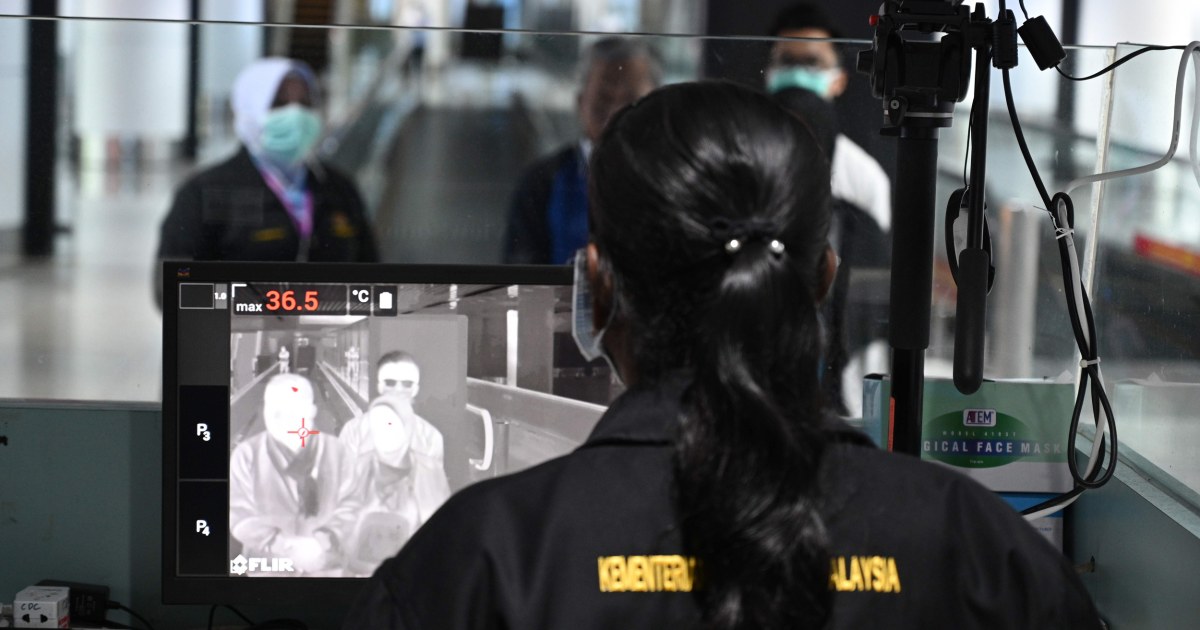
Coronavirus Confirmed – Let our experts help with your questions and coverage of this emerging story
It’s here – and Washington State gets the unfortunate honor of being the location of the first confirmed case of Coronavirus on American soil. “The patient in Washington state, a resident of Snohomish County, is a male in his 30s. The CDC said the man arrived in the U.S. around Jan. 15 after visiting Wuhan. He had not, however, visited the seafood market where this virus is said to have originated.” What is a coronavirus? Coronaviruses are a group of viruses that can cause a range of symptoms including a runny nose, cough, sore throat and fever. Some are mild, while others are more likely to lead to pneumonia. They're usually spread through direct contact with an infected person. The coronavirus gets its name from the crown-like spikes on its surface, according to the Centers for Disease Control and Prevention. (Corona is Latin for crown.) Including the newly identified form of the virus, there are a total of seven coronaviruses that can infect humans, the CDC says." January 21 – NBC News But how safe are Americans – and a lot of concerns to be addressed How is the virus transmitted? Are there simple and easy ways to diagnose simples? What preventable practices can be put in place? Are there vaccines or how long will it take to develop and distribute a vaccination program? And is America better equipped to handle this since the SARS epidemic? There are a lot of questions – and that’s where our experts can help. Dr. Sweeney is the Founding Dean of the School of Pharmacy at Cedarville University. He is an expert in health and wellness and advanced medical equipment. Dr. Sweeney is available to speak to media regarding this topic – simply click on his icon to arrange an interview.


Coronavirus expert available for interviews
Ralph Baric is the William R. Kenan Jr. Distinguished Professor in the Department of Epidemiology at UNC-Chapel Hill. His research specializes in coronaviruses and emerging infections. He is available to speak with reporters about the latest outbreak news. If you’d like to speak with Baric, call 919-445-8555 or email mediarelations@unc.edu. Baric serves as professor in both the Gillings School of Global Public Health and the UNC-Chapel Hill School of Medicine’s Department of Microbiology and Immunology. His substantial research focuses on advancing knowledge about — and vaccines for — coronaviruses and emerging infections like Zika virus, spanning the spectrum from discovery to translation.

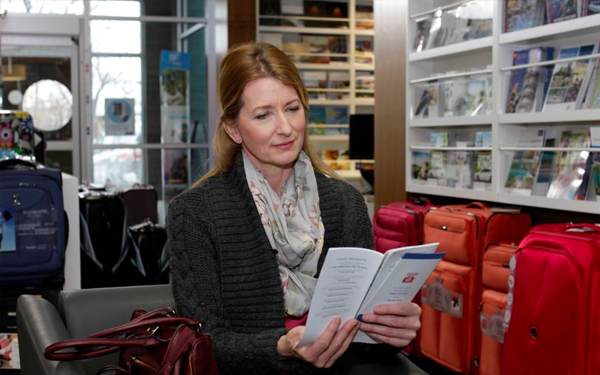
MEDIA RELEASE: Changes to Out-of-Country Medical Coverage Now in Effect
CAA South Central Ontario (CAA SCO) is reminding travellers that changes to out-of-country medical coverage in Ontario are now in effect, prompting the need to review travel insurance coverage. “We are working to educate travellers to make sure they know what they are buying. We are an organization founded to help keep our members safe, and coverage while travelling abroad is a big part of that,” said Elliott Silverstein, director, government relations, CAA Insurance. “Travel insurance protects from unexpected and costly emergencies and it’s important to evaluate available coverage, based on personal needs, to determine how to best safeguard you and your family. This is even more important now that there is no coverage through OHIP.” Some of the key things to consider when it comes to buying travel insurance are how many trips you are taking a year; if you want comprehensive coverage or medical-only insurance; and whether or not the insurance provider offers additional assistance such as interpreters, hospital recommendations and other coordination services. Additional tips to consider when buying travel insurance Ask questions. Speak to a knowledgeable travel insurance advisor that understands your needs. Be honest. It is important that you answer any questionnaire accurately to disclose any pre-existing conditions, and ensure you have the proper coverage suited specifically for you, so you can travel with peace of mind. Build travel insurance into your travel plans. Purchasing travel insurance must be done in your home province. As you begin to consider your next destination, add travel insurance to your “to do” list. Don’t base your decision on price alone. Look at what coverage is most appropriate for your circumstances and consider all different types of plans and levels of protection. Questions to ask: What are the eligibility and exclusions? What is the pre-existing and stability clause? What are the benefit limits? How many days am I covered? Is there a deductible? Do they offer upfront payment if a claim occurs? It’s important to remember that the intent of travel medical insurance is to treat emergency conditions, and return you to your home province for ongoing treatment once your medical condition is stabilized. Emergency travel medical insurance may require completion of a medical health questionnaire depending on age. Medical questionnaires determine premium, NOT coverage. Always answer questions related to your health accurately If you aren’t sure how to answer, ask your physician to help you. For more information resources on travel insurance and what you need to know before you travel, go to: https://www.caasco.com/insurance/resource-centre/travel.



Is there a link between economic stress and opioid abuse? Let our experts help if you are covering
Recent media coverage is pulling back the curtain to reveal another angle on opioid abuse. The facts are startling, and it seems there is a direct relation between those facing economic stress and hardship and abusing opioids. “In 2015, Jennifer Silva, a professor of sociology and anthropology at Bucknell University, began interviewing people in the coal region of northeastern Pennsylvania. She was working on a project, which would become the book We’re Still Here, about how poor and working-class Americans were affected by the collapse of the coal industry—the major job provider in the region. She was curious how the regional decline might have shaped her subjects’ politics. But she quickly noticed a startling trend alongside the growing unemployment: Her subjects and their families were struggling with opioid abuse. At community meetings, doctors and coroners would debate solutions to the problem. Should they be arresting people? Should they be creating support groups? She describes one desperate parent who asked whether Donald Trump’s proposed border wall would keep black tar heroin from getting to Pennsylvania. Silva’s interviewees might have been representative of an awful connection between job loss and opioid abuse, a connection that continues to be bolstered by research. A study published on Monday in the journal JAMA found that counties with automotive assembly plants that closed had, five years after the closure, 85 percent higher rates of opioid-overdose mortality, relative to counties where automotive assembly plants remained open.” January 02 – The Atlantic The opioid epidemic has seen approximately 700,000 Americans dies since 1999. And there are many people who have become victims – rich and poor. However, this recent finding may show a link that public health officials, law makers and addiction experts can further focus on, especially in areas of America facing current or impending economic strife. There are a still lot of questions and that’s where we can help. Dr. Marc Sweeney is the Founding Dean of the School of Pharmacy at Cedarville University and is an expert in the fields of drug abuse, prescription drug abuse and Opioid addiction. Marc is available to speak with media regarding this growing issue. Simply click on his icon to arrange an interview.

There’s no Tour de France for women; it’s time to address the inequity in professional cycling
Since the Passing of Title IX, there have been many improvements in accessibility for girls and women in sports. This trend has not been as strong for some sports, like competitive cycling. “We know that when we look at numbers for licensed riders in the U.S., 15% are women, and that means 85% of competitive cyclists are men,” said Erin Ayala, Ph.D. “Because races are generally run by private organizations, they don’t fall under the Title IX umbrella. It looks very different. They can say that because only 15% of women are in the field, they think they don’t need to add more races so women can participate. This then creates concerns regarding skill development and safety while racing.” As a cyclist who races nationally, Dr. Ayala can attest that women cyclists are treated very differently than men. “I did a large national investigation on the experiences to find out what the factors are that affect participation for women in competitive cycling. A lot of women spoke of importance of creating an encouraging and supportive atmosphere. They'd say, 'If I have people on sidelines cheering me on, that means the world to me.' “Another piece was that race promoters and directors sometimes combine women with master’s men, 50-60-year-old men, to help with field sizes, but that can create a toxic environment because women are racing with older men who may not want them to be there. Women are also paired with younger junior cyclists, which can feel condescending and patronizing because it results in shorter or easier races. “In a lot of races women race shorter distances or durations than the men, which can feel insulting. There’s no Tour de France for Women. It’s a tough atmosphere. Then there are the podium girls, women in high heels and makeup whose job it is to stand next to the male racers to give them their prizes and a kiss on the cheek. The underlying assumption is those women are there to accessorize the male racers. It speaks to the gender dynamics in those sports. “Things that decrease participation are unsupportive environments where women feel they do not belong, inequitable fields, and unequal prize pools; sometimes men are paid more money to win the same race as women. We have good hard data to talk about it. We need to do better, and one of biggest themes that came out of it was ‘Build it and we will come. Invest in us, and we will start to show up more often.’ We are hoping to create some change in communities and nationally to make more room for women in a sport that does not have many women. Are you a journalist covering this topic and looking to book an interview? That’s where we can help. Dr. Erin Ayala is a licensed psychologist and core faculty member in the counseling psychology doctoral program at Saint Mary’s University of Minnesota. She is also an expert in the areas of women’s health and sports psychology. To book an interview with Dr. Ayala – simply click on her icon to arrange a time. Read more on Dr. Ayala's research: https://doi.org/10.18666/JOREL-2020-V12-I1-9912.


Ask our experts - Self-care a necessity for graduate students; what are programs doing to help?
Life doesn’t stop when you’re in a doctoral program. Erin Ayala, Ph.D., has done extensive research into self-care, stress, and quality of life of students, particularly those in human service doctoral programs (like medical students and those in nurse anesthesiology, psychology, and counseling). She knows the recipe for stress and burnout: • These stressful programs tend to attract high achievers. It’s already in their nature to balance several commitments and responsibilities. • These programs and professions have a high level of responsibility. • Students in these programs are frequently at an age where they are also going through significant developmental milestones (marriage, children, purchasing homes). “When you bring all of that together, it can be really difficult to prioritize time for self-care,” she said. “Prevention and health promotion are really important, and it’s not just about mental health. It’s not just about being reactive and addressing distress or burnout when it hits. The question is what can we do on the front end to help prevent negative consequences down the road.” What is self-care? Often, Dr. Ayala said, media romanticizes and glamorizes self-care with advertisements for fizzy bath bombs and manicures. “What we have found is that it is completely personalized,” Dr. Ayala said. “For women, social support is really important. Ultimately, there needs to be time to disconnect, whether it’s doing nothing, or just taking a break from your dissertation. You’ve got to give yourself permission to do that. “Nutrition, exercise, hydration, spiritual life, different people have a different recipe for what their self-care looks like. It ebbs and flows just like any exercise or meditation or spiritual practice. Some weeks we’re doing great and other times we’re not, and that’s part of the process.” Dr. Ayala’s most recent research involves analyzing qualitative data, coming from over 200 students throughout the U.S. in clinical counseling and school psychology, all high achievers in the middle of doctoral programs. She’s investigating what faculty are doing to model or not model the importance of physical and psychological wellness. “Students might know that self-care is important, but it can be hard to act on it if they're in an environment that doesn’t support it,” she said. “The biggest supportive theme that came up was faculty simply encouraging them to do it, asking their students, ‘What did you do this weekend for self-care?’ They take the time to check in with their students and give them permission to take time for themselves. That takes zero effort.” “What can we do to make sure faculty are also able to model self-care for their students? The behaviors students are picking up now pave the foundation for the rest of their career. If faculty are working themselves to the bone, it sets an expectation for their students that they are supposed to do the same. If faculty model self-care and talk about its importance, students may be more likely to do it themselves.” Dr. Ayala said when her team asked students what programs can do to support self-care, answers ranged from formal programming and talking about it in the classroom, to referrals for therapists, discounts for gym memberships, or places to meditate on campus — ways to make self-care easier to access. When students are asked what the biggest barrier to self-care is, the answer wasn’t surprising. The majority of students responded that time was an issue. “That’s a tough one because there’s only so much programs can do to minimize the amount of work required,” Dr. Ayala said. “Students have to balance all these professional responsibilities and don’t know what to give up.” Are you looking to know more about self-care and other similar topics when it comes to high education? Or, are you a journalist covering this topic and looking to book an interview? That’s where we can help. Dr. Erin Ayala is a licensed psychologist and core faculty member in the counseling psychology doctoral program at Saint Mary’s University of Minnesota. To book an interview with Dr. Ayala – simply click on her icon to arrange a time.