
Experts Matter. Find Yours.
Connect for media, speaking, professional opportunities & more.

FAST nanotechnology unveiled at Rome Global Congress by AU scientist
Stephen Hsu, PhD, a professor at the Dental College of Georgia at Augusta University, unveiled his groundbreaking nanotechnology, known as FAST, during a keynote address at the 8th World Congress on Infectious Diseases in Rome, Italy. FAST, or Facilitated Self-Assembling Technology, offers a revolutionary way to convert compounds that are difficult to dissolve in water into stable nanoparticles. This innovation could transform drug development, viral infection prevention, hospital hygiene and more. “FAST takes a completely different approach from traditional nanotechnology,” Hsu explained. “Unlike methods that rely on polymers, metals, surfactants, fat-based carriers or complex engineering processes, FAST allows compounds to self-assemble into nanoparticles with minimal effort. This makes drugs that were once nearly impossible to formulate in water stable, effective and practical for medical and consumer use.” At the heart of this innovation is EC16, or EGCG-palmitate, a lipid-soluble compound derived from green tea. Known for its antioxidant, anticancer, anti-inflammatory and antimicrobial properties, green tea has long been studied but is challenging to use in clinical settings due to stability issues. FAST overcomes these limitations, transforming EC16 and other hydrophobic compounds into water-friendly nanoparticles. “You can’t even tell the particles are there,” said Hsu. “They look just like water. I made several different formulations in one afternoon in my lab. It’s that fast and simple.” A natural solution to global challenges Hsu’s work is the culmination of decades of research and a deeply personal journey. He credits green tea with helping him survive illness during his youth in a labor camp in China. Now, he’s turning its natural properties into cutting-edge therapies with the hope of helping more people. “I’ve been drinking green tea my entire life,” Hsu said. “Now, we’re turning its benefits into medical-grade treatments.” Supported by over $600,000 in NIH grants, Hsu’s team is developing applications like alcohol-free disinfectants and nasal sprays to prevent respiratory virus infections. One promising product is an EC16-based disinfectant that is natural, non-toxic and highly effective against tough pathogens, like norovirus and C. difficile, a bacterium that can cause severe diarrhea. “That’s a big deal for schools, hospitals and places like cruise ships, where these infections spread easily,” he said. Tackling long COVID and beyond Among FAST’s most promising applications is a nasal spray developed to prevent or treat long COVID and other respiratory illnesses. The spray, currently undergoing preclinical testing, targets viral entry points in the nasal mucosa, where infections often begin. “Our goal is to help immunocompromised patients and those with lingering symptoms like brain fog and loss of smell,” Hsu said. “We’ve already seen strong in vitro results against human coronavirus and norovirus.” In addition to nasal and topical treatments, Hsu’s team has developed oral formulations of EC16 that remain stable through the stomach’s acidic environment, critical for treating gastrointestinal viruses and potentially inflammatory bowel diseases like Crohn’s. “We found that even without direct contact with the virus, the EC16 nanoparticles taken by mouth can reduce infection,” Hsu explained. “That’s a major step forward in treatment of digestive tract viral infections.” A platform for the future of medicine FAST isn’t limited to green tea compounds. Hsu’s method can transform a wide range of hydrophobic compounds like cannabidiol, ivermectin, quercetin, procyanidin and retinoic acid, as well as hundreds of existing drugs, into nanoparticle suspensions that are stable and water-friendly. This has huge implications,” said Hsu. “Up to 90% of new drug candidates have poor water solubility and low bioavailability, which limits their effectiveness. With FAST, we can change that.” His lab is already exploring applications in Alzheimer’s research, cancer therapy, oral health and even anti-biofilm coatings to prevent hospital infections. These products, along with the nasal spray, are expected to hit the market this fall. Hsu is currently finalizing publications and preparing patent filings to protect and expand the reach of FAST. While optimistic, he remains cautious. “The results so far are phenomenal. FAST could be a new chapter in how we fight disease and deliver medicine,” Hsu said. Looking to know more about FAST nanotechnology and the research happening at Augusta University? To connect with Dr. Stephen Hsu - simply contact AU's External Communications Team mediarelations@augusta.edu to arrange an interview today.

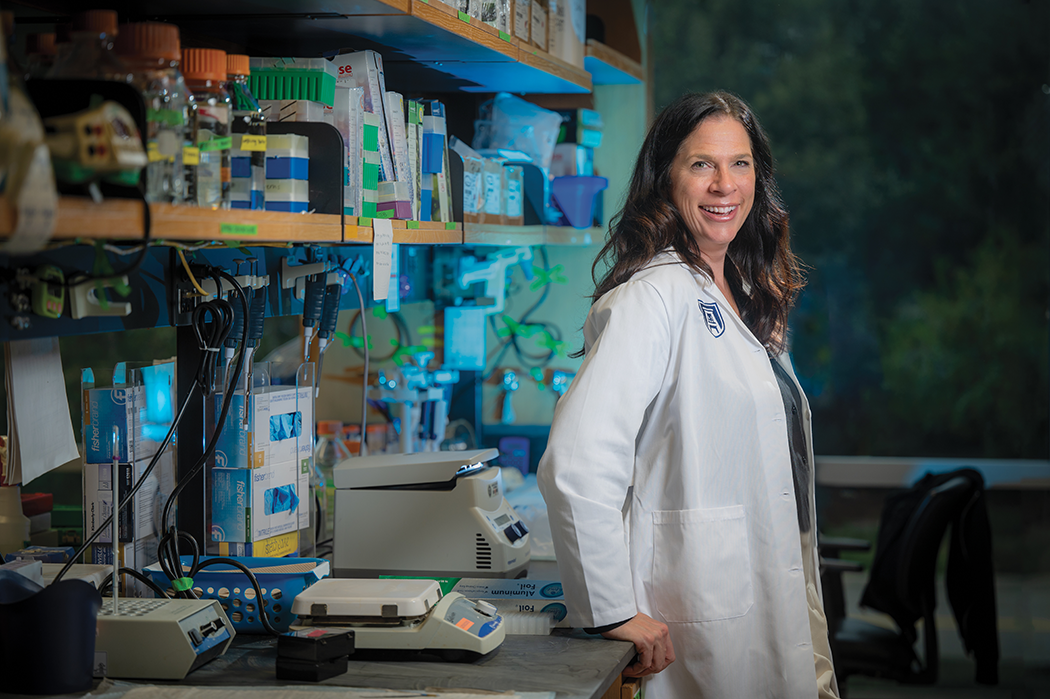
Augusta University named NIH Specialized Center of Research Excellence on Sex Differences
Jennifer C. Sullivan, PhD, dean of The Graduate School at Augusta University, has dedicated her research to better understand why blood pressure increases in hypertension and raising awareness to the dangers of not paying attention to heart health, particularly among women. Throughout her career, Sullivan has been continuously funded by the National Institutes of Health (NIH) and the American Heart Association since becoming a tenure-track faculty member in 2008, and now she has a chance to take her research further after securing a five-year, $7.5 million grant to have Augusta University designated as a Specialized Center of Research Excellence on Sex Differences (SCORE) by the NIH’s Office of Research on Women’s Health. It’s a distinction that places AU among 10 other leaders in research for the field, including Brigham and Women’s Hospital, Cedars-Sinai Medical Center, Emory University, Johns Hopkins University, Massachusetts General Hospital and Harvard Medical School, the Mayo Clinic, the Medical University of South Carolina, the University of Colorado and Yale University. The University of California, Los Angeles has two SCORE programs. “I’m so proud and excited for this opportunity because this has been what I have focused my research program on for my entire career, and to be able to advance it with a program like this, where we can actually build a unique program focused on an area that can make a difference, is just so much fun,” Sullivan said. “Just the fact that Augusta will be included on this list, attached to an organization of the caliber of NIH, will provide opportunities that we’ve never had before, especially for our students and younger researchers.” Sullivan’s SCORE project, “Improving awareness of women with hypertension: ROAR (Rural, Obese, At Risk),” focuses primarily on the fact that, while young women are considered “protected” from hypertension and the associated cardiovascular risk relative to age-matched men, the elimination of hypertension is projected to have a larger impact on cardiovascular disease (CVD) mortality in women. “The group of people with the highest risk of death from hypertension is in the rural South of the U.S., specifically Black women are particularly vulnerable to developing hypertension and CVD,” Sullivan said. According to Sullivan’s research and information available from the American Heart Association (AHA), approximately 19 million deaths were attributed to CVD globally in 2020, an increase of about 20% from 2010. Both Sullivan and the AHA state that cardiovascular disease remains the leading cause of death for both men and women in the United States, and that hypertension is a major modifiable risk factor for CVD. Sullivan said, “It has been suggested that eliminating hypertension would reduce CVD mortality by over 30% in men and 38% in women, but a critical barrier to limiting premature death from CVD is lack of awareness surrounding the risks of CVD. Our overall goal in this new funded project is to transform academic and community understanding of sex as a biological variable in the consideration of hypertension.” The three research projects include Sullivan’s lead project on high fat diets, a project on systemic lupus erythematosus (SLE) disproportionately affects young women led by Erin Taylor, PhD, at the University of Mississippi Medical Center, and another project looking at the role of inflammation and how immune cells are activated in SLE led by Michael Ryan, PhD, at the University of South Carlina’s School of Medicine. But there is more to SCORE than just conducting research. Each SCORE team is also responsible for a career enhancement core and a leadership administrative core. “What really sets these grants apart are the emphasis on the career enhancement and leadership administrative cores. The Career Enhancement Core is designed to be a bit open ended for each SCORE, but in talking to the NIH, what they were most excited about in our project is the community outreach piece we designed. “Our grant includes people across the entire campus, including Augusta University’s Medical College of Georgia, the College of Allied Health Sciences, the College of Education and Human Development and multiple campus partners including some of our sororities on campus and the Center for Writing Excellence,” Sullivan said. “More specifically, the COEHD is able to extend our outreach efforts to our local schools to begin educating children on the importance of screening, and our sororities are obviously connected with other chapters across the southeast which helps us spread our message, as well.” Sullivan notes that, through this portion of the project alone, there will be numerous opportunities to include students from Augusta University’s CAHS, College of Nursing, Department of Kinesiology, the Biomedical Sciences PhD program and the proposed School of Public Health. Marlo Vernon, PhD, associate professor at MCG and researcher for the Georgia Cancer Center, and Amanda Behr, chair of the Medical Illustration Program in CAHS, are also involved in various stages of the project. “The other thing the Career Enhancement Core will do is provide pilot grants to three research projects each year for early-stage investigators. We’ll also be able to fund sabbaticals for graduate students or postdocs to go someplace else and learn cutting edge techniques from other experts, so there is a lot built in that will help us support up-and-coming researchers,” Sullivan said. “We’re now part of this consortium, and they have a once-a-year, in-person meeting at the NIH offices, so we’ll go to that for the first time this year, and what’s neat about it is they’re really promoting young investigators. Each grant can bring up to eight people, the our hope is that we will have the investigators funded by the pilot projects attend next year, giving those folks the opportunity to present and talk to program officers with the NIH and develop a pipeline of investigators committed to studying women’s health and sex as a biological variable.” Sullivan is also looking to designate some of her summer graduate and undergraduate research positions to the project beginning next summer. “The Graduate School already has a summer program to support undergraduates that we will be able to piggyback off of. We have set aside five slots in that program for this that will go to students studying the sex as a biological variable, and the applications for that program, STAR, is already open,” Sullivan said. “We’re also planning a symposium in collaboration with the Physiology Department in April 2024. This is an annual event sponsored by the department, and this year they selected sex differences as the topic, so we are hoping to help increase exposure and attendance.” Looking to know more about the amazing research happening at Augusta? To connect with Jennifer Sullivan, simply click on her icon ow to arrange an interview today.


How ChristianaCare Built a Blueprint for Better Caregiver Health and Lower Costs
By Donna Antenucci, MHA, BSN, RN, and Emily Sahm, EA We know rising health care costs can feel overwhelming for both employers and employees. As Delaware’s largest private employer — with nearly 23,000 employees, spouses and dependents enrolled in our self-funded health plan — ChristianaCare faces these challenges every day. That’s why we’re committed to finding smart, innovative solutions that improve employee health while keeping costs in check. We don’t stop there — ChristianaCare partners with businesses that have an interest in providing high-quality health care for their employees while keeping costs manageable. Prioritizing preventive care The key to a healthier, more resilient workforce is tackling health issues early in order to prevent the need for costly emergency or “rescue” care. By prioritizing prevention and early intervention, we’ve made progress in improving employee health while controlling costs. In 2023, inpatient facility costs for our employees — which include hospital admissions for surgeries, medical treatments and other care requiring overnight stays — dropped by 9%. Wellness incentives and chronic disease management that shifted care to more cost-effective outpatient settings are driving these results. One of ChristianaCare’s differentiators is CareVio®, our care coordination and chronic disease management platform. CareVio provides personalized support to help employees and their families manage conditions and stay on track with preventive care. CareVio’s diabetes program, for example, has delivered remarkable results. Nearly all participants improved their blood sugar levels in 2023, with average A1c reductions of 1.7 points. Enhancing primary care and wellness programs We’ve also focused on encouraging primary care visits through collaboration between our Population Health and Total Rewards teams. Together, we designed a voluntary wellness incentive program that rewards employees and their families for healthy choices, including support for tobacco-cessation programs to help employees quit smoking and lead healthier lives. In 2023, we expanded our wellness incentive program to include primary care visits for employees and their spouses. Over the next eighteen months, primary care utilization increased over 10%, rising from 66% to 77% as of January 2025. Employees who stay connected to primary care catch health problems early and build stronger relationships with their doctors. We’ve launched programs targeting specific health needs. Our breast cancer screening initiative, focused on women ages 52 to 74, increased participation rates from 63% to 72% in 2023, exceeding our target. Additionally, the CareVio metabolic health program is helping a growing number of participants manage complex conditions with tailored support. Flexibility is essential. That’s why we created the Center for Virtual Health, which provides virtual-first primary care to more than 1,200 employees. This program makes high-quality, preventive care more accessible. Employees can fit care into their schedules while maintaining consistent support for their health. We encourage employees to stay up to date on immunizations by offering frequent vaccination events and tying participation to eligibility for the Caregiver Rewards Program payout. By making it easy and rewarding to stay protected, we’re fostering a safer, healthier workplace for everyone. Collaborative networks and cost management In January 2023, we announced the ChristianaCare Clinical Alliance, a new clinically integrated network in partnership with Highmark. Implemented in our employee health plan in July 2024, the network connects ChristianaCare-employed and community clinicians to provide evidence-based, coordinated care. Focused on improving wellness and managing chronic conditions, the Clinical Alliance is helping caregivers and their families stay healthier while reducing costly emergency visits and hospital stays. Employees who choose Clinical Alliance providers also enjoy lower deductibles for their care. Through all these initiatives, we are making a meaningful difference for our caregivers and our costs. In 2023, thanks to our focus on prevention and smarter care delivery, we kept our overall health care cost growth below the national average. Healthier employees lead to lower expenses and a more engaged, productive workforce. By showing that we value employee health, we’re creating a stronger, more resilient workplace. To learn how ChristianaCare can help you provide better care and control costs for your workforce, contact Donna Antenucci at donna.antenucci@christianacare.org. Donna Antenucci is vice president of population health operations for ChristianaCare. Emily Sahm is vice president of Total Rewards for ChristianaCare.



ChristianaCare has once again been recognized by the American Association of Critical-Care Nurses (AACN) for its exceptional complex care. The AACN has awarded the Beacon Award for Excellence to three intensive care units at Christiana Hospital in Newark, Delaware: the Medical Intensive Care Unit (MICU), the Surgical Critical Care Complex (SCCC), and the Transitional Surgical Unit (TSU) Beacon Awards honor critical-care nursing units that demonstrate exceptional patient care, improved patient health outcomes, a supportive work environment and opportunities for collaboration. The Beacon Award is widely considered to be the most prestigious award in critical-care nursing. “The Beacon Award shines a light on individual nursing units for their commitment to providing critically ill patients with exceptional care and evidence-based practices,” said Danielle Weber, DNP, MSM, RN-BC, NEA-BC, chief nurse executive at ChristianaCare. “These awards reflect nursing excellence and commitment to exceptional health outcomes, an outstanding work environment and superior patient experience.” AACN President Jennifer Adamski, DNP, APRN, ACNP-BC, CCRN, FCCM, applauds the commitment of the caregivers at ChristianaCare for working together to meet and exceed the high standards set forth by the Beacon Award for Excellence. These dedicated healthcare professionals join other members of our exceptional community of nurses, who set the standard for optimal patient care. “The Beacon Award for Excellence recognizes caregivers in outstanding units whose consistent and systematic approach to evidence-based care optimizes patient outcomes. Units that receive this national recognition serve as role models to others on their journey to excellent patient and family care,” Adamski said. Consecutive successes Each of these units has received multiple Beacon Awards. • The MICU has been continuously recognized as a Beacon unit since 2009. It is the sixth time that the MICU—Delaware’s first Beacon Award-winning unit—has received the national award, with four silver and two gold recognitions. The unit holds the most Beacon Awards in Delaware. • The SCCC received a silver-level award for the fourth time. • The TSU received a gold-level award for the first time, after receiving two silver-level awards. “For us to be designated for such a consecutive amount of time is a testament to the ongoing, intensive work that we do and the focus on excellence that we have,” said Carol Ritter, MSN, RN, CCRN, CNML, nurse manager for the MICU. “It’s an affirmation of the care that the nurses provide and the excellence that they bring every day, using advanced protocols and the latest technology and research.” Beacon-designated units are renowned for their healthy work environments and high morale, which results in strong relationships among the nurses and outstanding patient care. “Our nurses are committed to providing exceptional care and patient outcomes,” said Amanda Latina, MSN, MBA, RN, TCRN, nurse manager of the TSU and SCCC. “They embody what it means to be a critical-care nurse.” Of the seven Beacon Award-winning patient care units currently in Delaware, all are at Christiana Hospital in Newark. These include the Neuro Critical Care Unit (silver), the Cardiovascular Stepdown Unit 4E (silver), the Cardiovascular Critical Care Complex (three-time gold winner), the Transitional Medical Unit and the 3C Intermediate Medical Unit (both silver).


ChristianaCare Charts New Course With Nurse Robotics Research Fellowship
ChristianaCare, the first hospital system in the region to deploy collaborative robots, has once again broken new ground, this time with a nationally unique initiative that puts bedside nurses at the helm of robotics research and innovation. At a graduation ceremony April 30, ChristianaCare celebrated the first four clinical nurses completing the Nursing Research Fellowship in Robotics and Innovation — the first program of its kind in the nation. The fellowship was part of a larger three-year, $1.5 million grant from the American Nurses Foundation’s Reimagining Nursing Initiative. The grant supports ChristianaCare’s broader study on how collaborative robots impact nursing practice. Over eight months, nurses from different units and specialties participated in immersive research training and lectures designed to expand their knowledge, curiosity and professional growth. Their work culminated in national conference presentations and preparations for journal submissions. The inaugural Nursing Research Fellows in Robotics and Innovation are: Briana Abernathy, BSN, RN, CEN – case management, Christiana Hospital emergency department Elizabeth Mitchell, BSN, RN-BC – Christiana Hospital surgical stepdown unit Hannah Rackie, BSN, RN, C-EFM – Union Hospital maternity unit Morgan Tallo, BSN, RN, CCRN – Christiana Hospital cardiovascular critical care unit A ‘real seat at the table’ “When you create programs that empower nurses to lead, innovate and tackle meaningful challenges, you see real impact — not just in new skills and knowledge, but in job satisfaction, well-being and retention,” said Susan Smith Birkhoff, Ph.D., RN, program director of Technology Research & Education at ChristianaCare. “This fellowship is built on the belief that when nurses are given the space to learn and lead, they bring fresh ideas and collaborative solutions back to their clinical practice areas.” Created and led by Smith Birkhoff, the fellowship is a standout in the U.S. health care landscape: It gives bedside nurses the chance to step away from their daily routines and gain advanced research experience, an opportunity rarely available at the clinical level. While the fellowship directly trained four nurses, its reach extended well beyond thazt. Fellows shared what they were learning along the way, sparking wider interest in research across the health system. The research program was highlighted as a new knowledge and innovation exemplar in the latest evaluation by the American Nurses Credentialing Center, which in March awarded ChristianaCare its fourth Magnet designation — the gold standard for nursing excellence. Adriane Griffen, DrPH, MPH, MCHES, vice president of programs at the American Nurses Foundation, praised ChristianaCare’s responsiveness in shaping the program around nurses’ needs and building a model for future innovation. “What makes this fellowship stand out is its focus on giving bedside nurses a real seat at the table,” Griffen said. “When nurses are trusted to lead and have the right support, they develop solutions that are practical, sustainable and transformative. This fellowship shows how nurse-led innovation can grow from a local pilot into a model for improving care across the country.” Through the fellowship, nurses gained a deeper understanding of applying research methodology to advance robotics science at the intersection of nursing and hospital operations, which is groundbreaking and novel. “This is such an exciting and important moment for our profession,” said Danielle Weber, DNP, RN, NEA-BC, chief nurse executive at ChristianaCare. “Innovation is about improving care, easing the burdens on our teams and finding smarter ways to meet the complex needs of our patients. Tools like collaborative robots don’t replace the human touch, they help protect and elevate it.” Mitchell said she was initially intimidated when she saw the fellowship application because it had been years since she last engaged in formal research. Learning everything from literature reviews to abstract writing pushed her outside her comfort zone and gave her practical tools to take new ideas forward. The experience inspired her to return to school this fall to pursue a graduate degree. A ‘ripple effect’ “This fellowship reignited my enthusiasm for learning and gave me the skills and confidence to keep growing,” Mitchell said. “It’s been amazing to collaborate with other fellows and mentors, and I’m excited to apply what I’ve learned to improve patient care and strengthen our teams.” In addition to Smith Birkhoff, Kate Shady, Ph.D., RN, OCN, RN IV, served as a mentor to the fellows, bringing expertise from her hematology/oncology background. Kati Patel, MPH, provided key administrative coordination and support throughout the program. ChristianaCare continues its broader research into robotics integration, with findings from the multi-year collaborative robot study expected to be shared later this year. Shady said the fellowship is already influencing ChristianaCare’s nursing culture by expanding interest in research and evidence-based practice well beyond the initial group. The program’s ripple effect is helping build lasting infrastructure for nurse-led innovation across departments. “One of the most rewarding parts of this fellowship has been seeing these nurses step into new confidence and capability,” Shady said. “They began unsure about research, but by the end, they were reading studies, writing abstracts and mentoring peers — laying the groundwork for bigger change in how we advance nursing practice.” Learn more about nursing at ChristianaCare.


Vishesh Agarwal, M.D., Appointed Chief of Addiction Medicine Services
Vishesh Agarwal, M.D., has been appointed chief of Addiction Medicine Services at ChristianaCare. In this role, Agarwal will lead and expand ChristianaCare’s comprehensive addiction treatment services, guiding care for people with substance use disorders across inpatient, outpatient, emergency and consultation settings. He will oversee addiction programs across all campuses, help create consistent care guidelines and support teams of experts working together to provide safe, effective and compassionate care for patients. A key priority for Agarwal will be to explore strategic growth opportunities to broaden ChristianaCare’s reach and strengthen its impact on individuals and families affected by substance use disorders. His leadership will be instrumental in ensuring that ChristianaCare continues to set the standard for innovation and excellence. Agarwal will continue in his role as vice chair of the Department of Psychiatry at ChristianaCare, maintaining his leadership of clinical and operational initiatives in the Behavioral Health Service Line. He will continue to lead efforts to improve provider well-being, develop care pathways and foster clinical growth. He also oversees the Behavioral Health Unit, Emergency Department crisis services and psychiatric consultations for hospitalized patients. Agarwal is board certified in general adult psychiatry, addiction psychiatry and obesity medicine. He has published research on substance use and behavioral addictions in peer-reviewed journals and has presented at national conferences. His 2021 study linking gambling disorder, major depression and suicide risk was published in Addictive Behaviors and gained national attention. Agarwal holds an Executive MBA from Quantic School of Business and Technology and completed an addiction psychiatry fellowship at the Zucker Hillside Hospital. He completed his psychiatry residency and served as administrative chief resident at Einstein Medical Center. He earned his medical degree from Gauhati Medical College. Agarwal teaches and mentors psychiatry residents and medical students as a clinical assistant professor at Sidney Kimmel Medical College at Thomas Jefferson University. He also co-chairs system committees and serves on the board of the Mental Health Association in Delaware. He reports to Mustafa Mufti, M.D., chair of the Department of Psychiatry.


Hiring More Nurses Generates Revenue for Hospitals
Underfunding is driving an acute shortage of trained nurses in hospitals and care facilities in the United States. It is the worst such shortage in more than four decades. One estimate from the American Hospital Association puts the deficit north of one million. Meanwhile, a recent survey by recruitment specialist AMN Healthcare suggests that 900,000 more nurses will drop out of the workforce by 2027. American nurses are quitting in droves, thanks to low pay and burnout as understaffing increases individual workload. This is bad news for patient outcomes. Nurses are estimated to have eight times more routine contact with patients than physicians. They shoulder the bulk of all responsibility in terms of diagnostic data collection, treatment plans, and clinical reporting. As a result, understaffing is linked to a slew of serious problems, among them increased wait times for patients in care, post-operative infections, readmission rates, and patient mortality—all of which are on the rise across the U.S. Tackling this crisis is challenging because of how nursing services are reimbursed. Most hospitals operate a payment system where services are paid for separately. Physician services are billed as separate line items, making them a revenue generator for the hospitals that employ them. But under Medicare, nursing services are charged as part of a fixed room and board fee, meaning that hospitals charge the same fee regardless of how many nurses are employed in the patient’s care. In this model, nurses end up on the other side of hospitals’ balance sheets: a labor expense rather than a source of income. For beleaguered administrators looking to sustain quality of care while minimizing costs (and maximizing profits), hiring and retaining nursing staff has arguably become something of a zero-sum game in the U.S. The Hidden Costs of Nurse Understaffing But might the balance sheet in fact be skewed in some way? Could there be potential financial losses attached to nurse understaffing that administrators should factor into their hiring and remuneration decisions? Research by Goizueta Professors Diwas KC and Donald Lee, as well as recent Goizueta PhD graduates Hao Ding 24PhD (Auburn University) and Sokol Tushe 23PhD (Muma College of Business), would suggest there are. Their new peer-reviewed publication* finds that increasing a single nurse’s workload by just one patient creates a 17% service slowdown for all other patients under that nurse’s care. Looking at the data another way, having one additional nurse on duty during the busiest shift (typically between 7am and 7pm) speeds up emergency department work and frees up capacity to treat more patients such that hospitals could be looking at a major increase in revenue. The researchers calculate that this productivity gain could equate to a net increase of $470,000 per 10,000 patient visits—and savings to the tune of $160,000 in lost earnings for the same number of patients as wait times are reduced. “A lot of the debate around nursing in the U.S. has focused on the loss of quality in care, which is hugely important,” says Diwas KC. But looking at the crisis through a productivity lens means we’re also able to understand the very real economic value that nurses bring too: the revenue increases that come with capacity gains. Diwas KC, Goizueta Foundation Term Professor of Information Systems & Operations Management “Our findings challenge the predominant thinking around nursing as a cost,” adds Lee. “What we see is that investing in nursing staff more than pays for itself in downstream financial benefits for hospitals. It is effectively a win-win-win for patients, nurses, and healthcare providers.” Nurse Load: the Biggest Impact on Productivity To get to these findings, the researchers analyzed a high-resolution dataset on patient flow through a large U.S. teaching hospital. They looked at the real-time workloads of physicians and nurses working in the emergency department between April 2018 and March 2019, factoring in variables such as patient demographics and severity of complaint or illness. Tracking patients from admission to triage and on to treatment, the researchers were able to tease out the impact that the number of nurses and physicians on duty had on patient throughput. Using a novel machine learning technique developed at Goizueta by Lee, they were able to identify the effect of increasing or reducing the workforce. The contrast between physicians and nursing staff is stark, says Tushe. “When you have fewer nurses on duty, capacity and patient throughput drops by an order of magnitude—far, far more than when reducing the number of doctors. Our results show that for every additional patient the nurse is responsible for, service speed falls by 17%. That compares to just 1.4% if you add one patient to the workload of an attending physician. In other words, nurses’ impact on productivity in the emergency department is more than eight times greater.” Boosting Revenue Through Reduced Wait Times Adding an additional nurse to the workforce, on the other hand, increases capacity appreciably. And as more patients are treated faster, hospitals can expect a concomitant uptick in revenue, says KC. “It’s well documented that cutting down wait time equates to more patients treated and more income. Previous research shows that reducing service time by 15 minutes per 30,000 patient visits translates to $1.4 million in extra revenue for a hospital.” In our study, we calculate that staffing one additional nurse in the 7am to 7pm emergency department shift reduces wait time by 23 minutes, so hospitals could be looking at an increase of $2.33 million per year. Diwas KC This far eclipses the costs associated with hiring one additional nurse, says Lee. “According to 2022 U.S. Bureau of Labor Statistics, the average nursing salary in the U.S. is $83,000. Fringe benefits account for an additional 50% of the base salary. The total cost of adding one nurse during the 7am to 7pm shift is $310,000 (for 2.5 full-time employees). When you do the math, it is clear. The net hospital gain is $2 million for the hospital in our study. Or $470,000 per 10,000 patient visits.” Incontrovertible Benefits to Hiring More Nurses These findings should provide compelling food for thought both to healthcare administrators and U.S. policymakers. For too long, the latter have fixated on the upstream costs, without exploring the downstream benefits of nursing services, say the researchers. Their study, the first to quantify the economic value of nurses in the U.S., asks “better questions,” argues Tushe; exploiting newly available data and analytics to reveal incontrovertible financial benefits that attach to hiring—and compensating—more nurses in American hospitals. We know that a lot of nurses are leaving the profession not just because of cuts and burnout, but also because of lower pay. We would say to administrators struggling to hire talented nurses to review current wage offers, because our analysis suggests that the economic surplus from hiring more nurses could be readily applied to retention pay rises also. Sokol Tushe 23PhD, Muma College of Business The Case for Mandated Ratios For state-level decision makers, Lee has additional words of advice. “In 2004, California mandated minimum nurse-to-patient ratios in hospitals. Since then, six more states have added some form of minimum ratio requirement. The evidence is that this has been beneficial to patient outcomes and nurse job satisfaction. Our research now adds an economic dimension to the list of benefits as well. Ipso facto, policymakers ought to consider wider adoption of minimum nurse-to-patient ratios.” However, decision makers go about tackling the shortage of nurses in the U.S., they should go about it fast and soon, says KC. “This is a healthcare crisis that is only set to become more acute in the near future. As our demographics shift and our population starts again out, demand for quality will increase. So too must the supply of care capacity. But what we are seeing is the nursing staffing situation in the U.S. moving in the opposite direction. All of this is manifesting in the emergency department. That’s where wait times are getting longer, mistakes are being made, and overworked nurses are quitting. It is creating a vicious cycle that needs to be broken.” Diwas Diwas KC is a professor of information systems & operations management and Donald Lee is an associate professor of information systems & operations management. Both experts are available to speak about this important topic - simply click on either icon now to arrange an interview today.




ChristianaCare Hospitals Earn Top Patient Safety Rating From Leapfrog Group
ChristianaCare’s Christiana Hospital, Union Hospital and Wilmington Hospital have each received an ‘A’ grade in the Spring 2025 Leapfrog Hospital Safety Grade, a national distinction that recognizes ChristianaCare’s achievements in protecting patients from harm and providing safe health care. “At ChristianaCare, patient safety is our highest priority and an essential part of our mission of service to the community,” said Kert Anzilotti, M.D., MBA, system chief medical officer and president of the Medical Group of ChristianaCare. “We are incredibly proud of this achievement. “This ‘A’ grade is not just a letter; it’s a testament to the hard work and passion of our caregivers, who strive every day to ensure our patients receive the highest quality care and feel safe throughout their journey with us.” The Leapfrog Group assigns an ‘A,’ ‘B,’ ‘C,’ ‘D’ or ‘F’ grade to hospitals across the country based on over 30 performance measures reflecting the prevention of errors, accidents, injuries and infections. This Leapfrog recognition comes on the heels of multiple other recent quality and safety awards that ChristianaCare has received, including: • ChristianaCare was recognized as one of the best hospitals in the nation by Money in its 2025 hospital rankings, making it the only hospital in Delaware to achieve this distinction. • ChristianaCare is ranked by Newsweek among the World’s Best Hospitals and rated by U.S. News & World Report as the No. 1 hospital in Delaware. • ChristianaCare earned the Beacon Award for Excellence from the American Association of Critical-Care Nurses (AACN) for three of its intensive care units: the Medical Intensive Care Unit (MICU), the Surgical Critical Care Complex (SCCC), and the Transitional Surgical Unit (TSU) at Christiana Hospital in Newark, Delaware. • ChristianaCare is the only four-time Magnet-designated health care organization in Delaware, recognized for continued dedication to excellence and innovation, high-quality patient care and experience, nurse engagement and work culture.


Taking ACT-ion for Quality Improvement
“Learning is a journey. It is continuous,” said nurse Hellen Okoth, MSN, CCRN, RN-BC, of the Transitional Surgical Unit. She was one of the learners on that journey through ChristianaCare’s professional development program Achieving Competency Today (ACT). ACT, a 12-week graduate-level program dedicated to health care improvement, will celebrate its 40th session in 2025. Some 1,000 caregivers have graduated from ACT and have tested some 140 innovative project ideas since the program’s launch in 2003. On April 9, three ACT teams presented their quality improvement projects at the John H. Ammon Medical Education Center on ChristianaCare’s Newark campus. Interdisciplinary, experiential learning programs like ACT create a rich and dynamic learning environment,” said Tabassum Salam, M.D., MBA, FACP, chief learning officer for ChristianaCare. “The emphasis on continuous improvement and real-world applications of the educational content sets our ACT graduates up for lifelong learning and repeated application of these new skills.” The ACT course is a collaborative experience that brings together learners from diverse disciplines to tackle real-world health care challenges. Participants learn from health system leaders and gain a broad perspective on health care through coursework. They work in teams to complete problem-solving projects from start to finish using the Plan-Do-Check-Act (PCDA) model of continuous improvement. Facilitators, who are experts in improvement science and team effectiveness, guide the teams through the process, ensuring that each project is meticulously planned and executed. ChristianaCare offers many professional development opportunities. Click here for careers and benefits. “The hands-on projects in ACT enable learners to innovate and test out solutions in settings that directly benefit patients, leading to better outcomes and a higher quality of care,” Salam said. The three most recent teams presented improvement research that has the potential to expand beyond their pilot stage to other areas of the health system. ‘Hush! For the Love of Health’ In “Hush! For the Love of Health,” an interdisciplinary team worked to reduce noise levels on the Cardiovascular Critical Care Unit (CVCCC) at Christiana Hospital. Their goal was to decrease ambient noise levels by 10 decibels during the study period. Intensive care units often experience noise levels that can exceed 80 decibels. A quiet environment is 30 to 40 decibels. Members of the “Hush” project found creative ways to reduce noise on an intensive care unit. Ambient noise refers to all sounds present in the background, which research shows can interfere with communication, concentration and comfort. In a hospital setting, these sounds may include alarms, conversations, announcement and pages and carts moving by. The team looked for opportunities to safely reduce the number of alarms sounding. By collaborating with Philips technology company to lower alarm volumes and eliminate redundant alarms, they reduced the number of alarms sounding from 10,000 to 3,000 daily and successfully decreased noise levels by 13 decibels, exceeding their goal. “It’s good for patients to have a quiet environment and it fights alarm fatigue for caregivers,” said Dylan Norris, a pre-medical student from the University of Delaware and participant in the ACT course. ‘Show Up and Show Out’ Reducing the no-show rate among patients in primary care practices improves health outcomes and conserves resources. In “Show Up and Show Out: Boosting Patient Attendance in Primary Care,” the project team aimed to reduce the incidence of no-show appointments at the Wilmington Adult Medicine (WAM) practice by 10%. The “Show Up and Show Out” project team used personalized communication outreach to patients to encourage keeping their primary care appointments. “Our literature review showed that personal relationships with providers are one thing that can encourage people to attend appointments,” said team member Christi Karawan, MS, BSN, CCRN-CSC. The key to their problem-solving strategy was using a secure messaging platform for automatic appointment reminders specifically for WAM that were personalized with the provider’s name and thanking the patients for letting WAM be a part of their healthcare team. Other steps on the road to success were signage around the practice encouraging patients to update their contact information and calls from office assistants and medical assistants to unconfirmed patients the day prior to their appointments. The team achieved a 9.5% reduction in no-shows, just shy of their goal, over a two-week period. An office assistant who participated in the pilot said, “Outreach has been helpful not only in getting people in but in getting people to reschedule or cancel. We can catch it before it becomes a no-show.” ‘Magnetic Efficiency’ To address delays in patient transport from MRI testing at Newark campus, an ACT team created a new communication workflow to directly connect patient escort dispatch to the MRI charge technician. The ACT team aimed to decrease patient wait times following MRI completion for stretcher transport back to patients rooms by 25% — and “a bold goal,” said one colleague — during the study period. The “Magnetic Efficiency” team identified a new workflow to get patients back to their hospital rooms faster after MRI testing. Using Vocera wearable communications tools, the team created a thread for direct communication between Escort Dispatch caregivers and MRI charge technicians. Also, when an Escort transporter dropped off a patient for an MRI, the transporter asked MRI staff if any patients were ready to go back to their rooms. These changes in communication and empowerment consolidated transports and led to a 17% reduction in wait time during the two-week pilot. “We don’t want people to work harder,” said team member Tim Kane, BSN, RN. “We wanted to avoid preventable delays.” Both teams expressed satisfaction and improved communication with the new process and they expressed interest in continuing the process after the pilot ended. Future forward The ACT course has a rich history, originating from a specific initiative piloted by the Robert Wood Johnson Foundation with ChristianaCare among the early adopters along with Harvard University, the University of Pennsylvania, Johns Hopkins University and Beth Israel Deaconess Medical Center. Through the years, ChristianaCare ACT team members have seen their projects live on both as permanent changes throughout the health system and, more personally, in their professional growth. “I was able to enhance my creativity, organizational and problem-solving skills,” said Starr Lumpkin, a staff assistant who was on the “Hush” team. “This was a pivotal journey for me.” ChristianaCare is growing its program to develop a pipeline for the next generation of health professionals, said Safety and Quality Education Specialist Claire Rudolph, MSM, CPHQ. “We have a varied group of learners and facilitators who are making an impact on health care quality, cost and safety.” Dylan Norris was the first participant from a new partnership with the University of Delaware for pre-med students to get quality improvement experience. “I have learned so much about what goes into a quality improvement project. Buy-in from the stakeholders is key in implementing any new project successfully,” she said. “I have also learned about the importance of the initial research that goes into creating a new project and how much pre-planning goes into it.” Closing the event, Clinical Effectiveness Officer Christian Coletti, M.D., MHCDS, FACEP, FACP, called on the ACT graduates to use their newfound “superpowers” — “vision, seeing the future, catching something before it breaks. “It’s not a glitch in the matrix,” he said. “You are the most important people at the bedside – hearing the alarms going off or the stretchers piling up. Work to identify problems and move toward solutions in your own microenvironments. Pass on your powers with reckless abandon.”


Researchers laying the groundwork to eventually detect cerebral palsy via blood test
At the University of Delaware, molecular biologist Mona Batish in collaboration with Dr. Robert Akins at Nemours Children Hospital, is studying tiny loops in our cells called circular RNAs — once thought to be useless leftovers, but now believed to play an important role in diseases like cancer and cerebral palsy (CP). This is detailed in a new article in the Journal of Biological Chemistry. What are circular RNAs? They’re a special type of RNA that doesn’t make proteins but instead helps control how genes are turned on and off. Because they’re stable and can be found in blood, they may help doctors detect diseases more easily. So what’s the connection to cerebral palsy? CP is the most common physical disability in children, but right now it’s diagnosed only after symptoms appear — there’s no clear-cut test for it. Batish and her team are trying to change that. Working with researchers at Nemours Children’s Health, Batish discovered that in children with CP, a certain circular RNA — circNFIX — is found at much lower levels in muscle cells. This RNA normally helps the body make an important muscle-building protein called MEF2C. When circNFIX is missing or low, MEF2C isn’t made properly, which may lead to the weakened, shorter muscles seen in CP. This is the first time researchers have shown a link between circular RNAs and human muscle development in cerebral palsy. Why does this matter? If scientists can confirm this link, it could lead to: Earlier and more accurate diagnosis of CP using a simple blood test New treatments that help improve muscle development in affected children Batish’s ultimate goal? To create a test that can spot CP at birth — or even before — giving kids a better shot at early treatment and a higher quality of life. To speak to Batish, contact mediarelations@udel.edu.
