
Experts Matter. Find Yours.
Connect for media, speaking, professional opportunities & more.
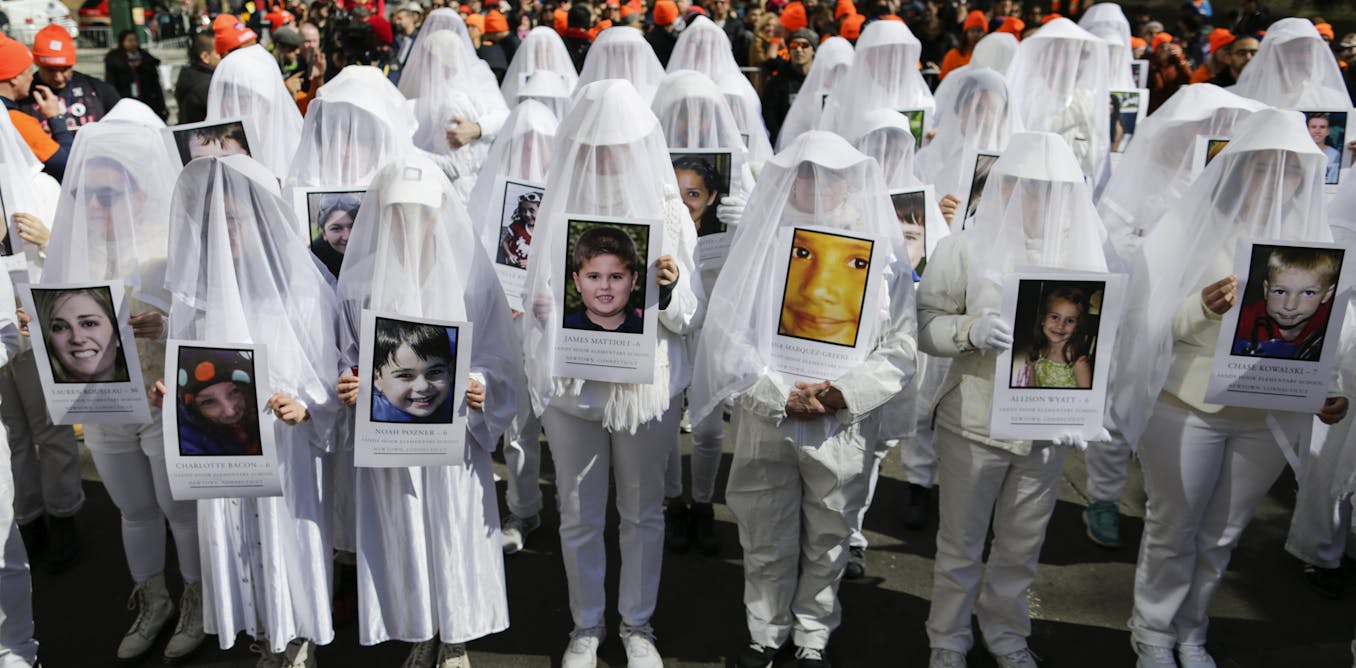
UConn Expert, 10 Years after Sandy Hook, on the Lies that 'Plague the U.S.'
UConn professor and journalist Amanda J. Crawford considers the misinformation that spread like wildfire after tragic school shooting at Sandy Hook Elementary School to be "the first major conspiracy theory of the modern social media age." Ten years after 26 young students and school staff were killed in the massacre, the impact of that day in 2012 continues to reverberate in America today. On this solemn anniversary, Crawford writes about the aftermath of Sandy Hook misinformation in a new essay for The Conversation: Conspiracy theories are powerful forces in the U.S. They have damaged public health amid a global pandemic, shaken faith in the democratic process and helped spark a violent assault on the U.S. Capitol in January 2021. These conspiracy theories are part of a dangerous misinformation crisis that has been building for years in the U.S. While American politics has long had a paranoid streak, and belief in conspiracy theories is nothing new, outlandish conspiracy theories born on social media now regularly achieve mainstream acceptance and are echoed by people in power. Recently, one of the most popular American conspiracy theorists faced consequences in court for his part in spreading viral lies. Right-wing radio host Alex Jones and his company, Infowars, were ordered by juries in Connecticut and Texas to pay nearly $1.5 billion in damages to relatives of victims killed in a mass shooting at Sandy Hook Elementary School a decade ago. Jones had falsely claimed that the shooting was a hoax. As a journalism professor at the University of Connecticut, I have studied the misinformation that surrounded the mass shooting in Newtown, Connecticut, on Dec. 14, 2012 – including Jones’ role in spreading it to his audience of millions. I consider it the first major conspiracy theory of the modern social media age, and I believe we can trace our current predicament to the tragedy’s aftermath. Ten years ago, the Sandy Hook shooting demonstrated how fringe ideas could quickly become mainstream on social media and win support from various establishment figures – even when the conspiracy theory targeted grieving families of young students and school staff killed during the massacre. Those who claimed the tragedy was a hoax showed up in Newtown and harassed people connected to the shooting. This provided an early example of how misinformation spread on social media could cause real-world harm. Amanda J. Crawford is a veteran political reporter, literary journalist, and expert in journalism ethics, misinformation, conspiracy theories, and the First Amendment. Click on her icon now to arrange an interview with her today.


Students studying medicine, pharmacy, nursing, optometry and audiology to benefit from the investment in a new simulation facility over the next three years The Office for Students has granted Aston University £4.8 million to develop future healthcare professionals The investment in digital clinical equipment and health simulation facility will better prepare students for the future of work. Students in the College of Health and Life Sciences at Aston University are to benefit from a major £4.8 million investment in new facilities funded by the Office for Students to further expand and develop the University’s suite of state-of-the-art healthcare simulation and laboratory facilities. Students studying medicine, pharmacy, nursing, optometry and audiology will benefit from capital funding to support new equipment and facilities over the next three years. This latest funding follows on from an initial £1.5 million investment into healthcare simulation facilities on the University campus which were officially opened in December 2022 by Paulette Hamilton MP. The funds will be used to create and equip a simulated hospital ward facility and a simulated patient home environment for healthcare students. Nursing Studies is now recruiting for its first intake of students in September 2023. Pharmacy students will also gain a new wet lab and asepsis suite. The optometry simulation suite, unique in Europe, will be further enhanced with augmented reality simulation, allowing students to learn and refine their skills in a realistic instrument environment, with simulated patients with a wide range of eye conditions. Investment in other additional optometry equipment, including an additional optomap retinal screening device, will also allow the eye clinic to triage patients for the eye hospital, reducing patient waiting times, particularly in assessing conditions such as macular degeneration. Aston Medical School will be equipped with the creation of an immersive room and an anatomy and physiology teaching facility. Professor Liz Moores, Deputy Dean of the College of Health and Life Sciences, said: “The College of Health and Life Sciences is thrilled with this investment. The enhanced facilities will help to support many of our healthcare students, including those now applying for our new nursing degree. It will also support us with the introduction of the new pharmacy and optometry education standards, providing a step change in our ability to simulate a wide range of clinical scenarios.” Professor Aleks Subic, Vice-Chancellor at Aston University, said: “This strategic investment will ensure that our students are learning in the very best facilities with access to state-of-the-art digital technologies. The new facilities will enable us to prepare students fully for future careers that are strategically important to the healthcare sector and society. This is about bringing Industry 4.0 to healthcare.” Professor James Wolffsohn, Head of the School of Optometry and Audiology at Aston University, said: “With the huge hospital waiting lists, particularly post-COVID, with those in ophthalmology being the highest, it is essential that primary care can take more of the patient load to allow hospitals to focus on surgery and complex cases. This investment will allow us to better train our optometry and audiology students to be able to triage patients and to manage more conditions within community practice.” Jiteen Ahmed, Head of Technical Services in the College of Health and Life Sciences at Aston University, said: “It is fantastic to see such a large investment in our facilities to support many of our healthcare programmes. Technical staff at Aston University will be playing a key role in the design of the facilities, ensuring that we provide the most up to date and innovative technologies to meet the needs of the programmes. “I am very excited to see the involvement of technical staff as they will play a significant role in ensuring our students meet key learning outcomes in our facilities at the University.” For more information about studying in the College of Health and Life Sciences please visit our website.


Professor Corinne Spickett will explain how oxygen can cause damage to cells and lead to diseases Her inaugural lecture will take place on Thursday 26 January 2023 at 6.30 pm Members of the public may attend in person or online. A leading biochemist at Aston University is to give an inaugural lecture on the concept of oxidative stress and how failure to control it leads to diseases on Thursday 26 January 2023. During her public lecture, ‘Oxygen: can’t live without it, but stressful to live with it’, Professor Corinne Spickett will explain how oxygen can cause damage to cells, how damaged molecules such as “sticky lipids” can be measured using advanced technology, and what their biological effects are. Corinne moved to Aston University in 2011 from the University of Strathclyde. Her first degree was in biochemistry at Oxford University and she went on to gain a DPhil from Oxford on the application of NMR to study yeast bioenergetics in vivo. After postdoctoral work using NMR to investigate stress responses in plants and glutathione metabolism in pre-eclamptic toxaemia, she became a Glaxo-Jack research lecturer in the Department of Immunology at the University of Strathclyde and subsequently a senior lecturer in the Department of Biosciences. Since then, she has been working on the analysis of phospholipid oxidation by mass spectrometry and the biological effects of oxidized lipids, especially as relating to atherosclerosis and inflammation, and has published extensively in this field. She has also applied her expertise in analysis of phospholipids to lipidomic studies of LDL in chronic kidney disease and the study of changes in yeast membranes in biotechnology applications. More recently, she expanded her research to include analysis of protein oxidation and formation of lipoxidation products during inflammation. She is an internationally recognized researcher in the field of redox biology with extensive involvement in international research. Professor Spickett said: “We tend to take oxygen for granted as something essential for life, but actually it is highly reactive and its role in biochemistry poses a challenge for organisms from yeast to man. “Through a synopsis of my career, I will explain how oxygen can cause damage to cells and, in parallel, I will illustrate how academic research careers are often non-linear and often depend on serendipity.” The lecture will take place at Aston University at 6.00 pm for 6.30 pm on Thursday 26 January 2023. It will be followed by a wine reception from 7.30 pm to 8.00 pm. It is open to the public and free to attend, but places must be booked in advance via Eventbrite.
:quality(70)/d1hfln2sfez66z.cloudfront.net/11-12-2020/t_153988229cf34ae380f9746b321a82db_name_WDW_RESERVATIONS_OPEN_430pm_frame_3082.jpg)
Is the sun set to shine again on a rebounding Florida tourism economy?
It was a tough couple of years for the Florida tourism industry. With flights restricted, travel discouraged and theme parks closed or limiting the number of guests, Florida felt the full economic brunt of the pandemic when the tourists stopped coming. To put it in perspective: In 2020, Walt Disney World took a $7 billion loss. But with COVID all but a memory, the rebound already is in full swing with visitors and their disposable income returning to the Sunshine State. Florida tourism exploded to record numbers as the state has welcomed 104.5 million visitors so far this year, a 15.3 percent increase over the same time period in 2021, according to the offices of Gov. Ron DeSantis and Visit Florida. In the third quarter alone, Florida welcomed 35.1 million tourists – a 6.9 increase from the same period in 2021 and the fifth quarter in a row that saw overall visitation surpassing pre-pandemic levels. About 32.6 million domestic visitors traveled to Florida in the third quarter period of 2022. Islander News - December 2022 But still after such a slowdown, should we be cautious? What can tourism operators, hoteliers and the rest of the hospitality industry expect for 2023? With COVID no longer a deterrent, will a shaky economy be the next shoe to drop? Or, after being stuck at home for so long, will visitors help places such as Disney, Universal and LEGOLAND become recession-proof? These are great questions, and if you are a journalist covering the 2023 tourism season in Florida, let us help. Peter Ricci, Ph.D., is a clinical associate professor and director of the Hospitality and Tourism Management program in Florida Atlantic University’s College of Business. He is a hospitality industry veteran with more than 20 years of managerial experience in segments including food service, lodging, incentive travel and destination marketing. Peter is available to speak with the media about space-travel tourism as well as other topics, including the labor shortage in hospitality and tourism. Simply click on his icon to arrange an interview.



ExpertFile-powered “Our Experts” site makes health experts findable and accessible to media at a click of a button ChristianaCare and its collaborative partner ExpertFile have been recognized with a 2022 Silver Quill Award from the International Association of Business Communicators (IABC) for its "Our Experts" media database. Designed to easily and quickly connect journalists to subject-matter experts, this online resource has been recognized with the top prize – an “Award of Excellence” in the Communications Management, Media Relations category. The IABC Silver Quill Awards showcase business communication excellence and are acknowledged as among the most prestigious awards programs in the communications industry. “I’m proud to accept the Silver Quill Award on behalf of our organization and our incredible Communications team, including our ExpertFile partners,” said Shane Hoffman, communications director at ChristianaCare. “The ‘Our Experts’ platform has given us next-level ways to engage our experts and share our knowledge as a trusted source of health care information. It has also helped us re-imagine the traditional online news room experience and turn it into a truly new and innovative way to serve the needs of both journalists and our community.” IABC’s Silver Quill awards honor the dedication, innovation and passion of communicators on a global scale. Each entry is scored independently by evaluators who judge the award submission on factors that include: stakeholder analysis, strategic and tactical planning, quality of execution and measurable results. Since launching in March 2021, the "Our Experts" media database has received more than 20,000 online visits and has resulted in more than 200 news stories. “We are honored to earn this Silver Quill Award with our client, ChristianaCare,” said Peter Evans, CEO of ExpertFile. “Despite the pressures of the pandemic, their team collaborated closely with us to create a world-class program that continues to help a variety of audiences discover and connect every day with credible medical experts and groundbreaking research.” Powered by the ExpertFile software platform, the ChristianaCare “Our Experts” site provides a digital media toolkit with advanced search/digital content features to help journalists discover experts and access resources that make it easier for them to complete stories and meet their deadlines. Awarding top honors “with distinction,” the IABC judging panel provided a number of detailed comments on the “ChristianaCare Experts Program”: “Very well-done website. Nice content that is well organized and searchable. From planning and implementation to measurement afterward the program shows great work.” “Great work in the time of COVID. Your knowledge of journalists and their challenges. during COVID was spot-on.” “I liked the media advisories. Having been on both sides of the reporter/media relations thing, I like clear and simple. You achieved this!” “If I were a reporter, the advisory would be invaluable when I needed an expert.” “Very specific and focused on business-results. Great work here.” “Very comprehensive! You thought of everything without getting bogged down in unnecessary details.” Nearly 100 ChristianaCare experts are featured in the database today, and that number continues to grow. “As communicators in health care, it has always been important for us to provide timely, accurate, easy-to-understand information to the communities we serve so that people can make informed decisions about their health,” said Karen Browne, vice president of marketing and communications at ChristianaCare. “The COVID-19 pandemic added an entirely new level of urgency to our role as communicators, and it made it even more important for us to build strong relationships with our partners in the news media so that they can deliver compelling, actionable health information to the community—from experts they can trust.” The pandemic also highlighted the need to do more with less. ChristianaCare’s innovation was driven out of a desire to improve the reach, impact and efficiency of its media relations efforts—amid rapidly increasing demand—without the need to add additional resources. “With our partners at ExpertFile, we leveraged ExpertFile’s outstanding technology platform to create a database of our experts that helps reporters and news producers find the sources they need quickly, and it enables our team to nimbly manage their requests and facilitate interviews in a way that makes the absolute best use of our resources,” Hoffman said. “The ExpertFile team worked as our strategic thought partners throughout this process, and they’ve really embraced our desire for innovation that drives results. They’ve helped us to work smarter and do more without adding a lot of additional resources. Together, we’ve built a system and process that is helping us to communicate in new and better ways—and we’re just getting started.” About ChristianaCare Headquartered in Wilmington, Delaware, ChristianaCare is one of the country’s most dynamic health care organizations, centered on improving health outcomes, making high-quality care more accessible and lowering health care costs. ChristianaCare includes an extensive network of primary care and outpatient services, home health care, urgent care centers, three hospitals (1,299 beds), a freestanding emergency department, a Level I trauma center and a Level III neonatal intensive care unit, a comprehensive stroke center and regional centers of excellence in heart and vascular care, cancer care and women’s health. It also includes the pioneering Gene Editing Institute. ChristianaCare is nationally recognized as a great place to work, rated by Forbes as the 2nd best health system for diversity and inclusion, and the 29th best health system to work for in the United States, and by IDG Computerworld as one of the nation’s Best Places to Work in IT. ChristianaCare is rated by Healthgrades as one of America’s 50 Best Hospitals and continually ranked among the nation’s best by U.S. News & World Report, Newsweek and other national quality ratings. ChristianaCare is a nonprofit teaching health system with more than 260 residents and fellows. With its groundbreaking Center for Virtual Health and a focus on population health and value-based care, ChristianaCare is shaping the future of health care.


Brexit changes caused 22.9% slump in UK-EU exports into Q1 2022 - research
Researchers at Aston assessed the impact of the Trade and Cooperation Agreement between the EU and the UK UK exports fell by an average of 22.9% in the first 15 months following the deal Variety of UK products exported to EU down by 42% Research by the Centre for Business Prosperity at Aston University has shown that UK exports to the EU fell by an average of 22.9% in the first 15 months after the introduction of the EU-UK Trade and Cooperation Agreement, highlighting the continuing challenges that UK firms are facing. Building on earlier work funded through Aston University’s Enterprise Research Centre, the researchers found that a negative effect on UK exports persisted and deepened from January 2021-March 2022. According to the research, the UK has also experienced a significant contraction in the variety of goods being exported to the EU, with an estimated loss of 42% of product varieties. The researchers say this, combined with an increased concentration of export values to fewer products, has serious implications for the UK’s future exporting and productivity. The authors are calling for an urgent national debate from politicians about the UK’s post-Brexit trade arrangements. The researchers assessed the impact of the TCA, which allows goods to continue to be bought and sold between the UK and EU without tariffs in the wake of Brexit, by creating an ‘alternative UK economy’ model, based on the case that the UK had remained within the European Union. By comparing the model UK’s exports and imports with actual figures for the UK, they could accurately isolate the impact which the new trade rules were having. “What we are seeing is the effect of Brexit on exports; and that is persisting. It’s not diminishing, and exports have yet to show signs of recovering,” says Professor Jun Du of Aston University. “Until this serious problem with exports is openly acknowledged and discussed, we won’t see any necessary actions being taken.” Unlike exports, an initially significant drop on EU imports to Britain has recovered during the same period, suggesting that UK businesses and consumers have quickly adjusted to new rules. This stands in contrast to the persistent decline in UK exports, which the researchers believe is caused by more fundamental factors. Professor Du said: “It seems that the UK can buy, but it can’t sell – and that’s reinforcing the problem of Brexit. A reduction in import bottlenecks might help exports to rebound, but this recovery is likely to be offset by the rising costs of imports.” Researchers found that as many as 42% of the product varieties previously exported to the EU have disappeared during the 15 months after January 2021. This, they say, is principally caused by a large number of exporters simply ceasing to export to the EU, while the remaining exporters are streamlining their product ranges. Co-author, Dr Oleksandr Shepotylo, says: “The product varieties that have disappeared are mostly those with low export value – we know this because the average export value increased as the number of varieties declined. These products are the ones typically exported by small firms or new exporters, or are exported to new markets. And It’s those smaller businesses that would normally export much more in future, as they grow their volumes and products – so that’s the UK’s future export pipeline being affected, which has bleak implications.” Professor Du says: “The evidence we present here shows the real loss of Brexit, the overall competitiveness of the UK as a global trader. The considerable contraction of the UK trade capacity, combined with an increased concentration of export values to fewer products, signify some serious long-term concerns about the UK’s future exporting and productivity. Debate is essential so that the UK can start to address its current challenges. Of course, no one is suggesting going back into the EU, but there are collaborations, conversations and discussions that must be had. If the UK’s political leaders don’t acknowledge the facts, they are setting the course towards even longer-term problems.”


ChristianaCare Rated a High Performing Hospital for Maternity by U.S. News & World Report
ChristianaCare is the only health system in Delaware to earn the High Performing designation from U.S. News ChristianaCare has earned the highest award for maternity care that a hospital can achieve from U.S. News & World Report in its 2022-23 ratings for Best Hospitals for Maternity Care. Rated as a High Performing Hospital, ChristianaCare was the only health system in Delaware to earn this esteemed honor. Christiana Hospital at ChristianaCare’s Newark Campus is the only high-risk delivering hospital in the First State offering Level III neonatal intensive care. More than 6,100 babies are born at Christiana Hospital each year. The U.S. News Best Hospitals for Maternity Care methodology is based entirely on objective measures of quality, such as C-section rates in lower-risk pregnancies, newborn complication rates, exclusive breast milk feeding rates, early elective delivery rates and vaginal birth after cesarean (VBAC) rates, among other measures. “When we announced plans seven years ago to build the ChristianaCare Center for Women’s & Children’s Health, we affirmed our commitment to provide superior-quality care for women and infants in our region,” said Matthew Hoffman, M.D., MPH, FACOG, Marie E. Pinizzotto, M.D., Endowed Chair of Obstetrics and Gynecology at ChristianaCare. “This prestigious recognition is an affirmation that patients who choose to give birth at ChristianaCare will have access to the very best services and expertise to ensure a safe delivery and a healthy baby.” Just two years ago ChristianaCare opened the Center for Women’s & Children’s Health, an eight-story, approximately 400,000-square-foot tower at Christiana Hospital. The center uses the most up-to-date, evidence-based models of care, with improved integration of services and the space to offer innovative patient-centered care for mothers, babies and families. One of the most significant features of the new center is a state-of-the-art neonatal intensive care unit (NICU), featuring private rooms with sleep-in space for families. Christiana Hospital is one of the only hospitals in the United States to provide “couplet care” in the NICU, keeping the mother and baby together even if they both require medical care. This is based on a European model demonstrating that moms are more likely to breastfeed in this environment, which is particularly important in the early development of children. “We best achieve optimal health and flourish when we are able to begin our lives as healthy newborns,” said David Paul, M.D., chair of ChristianaCare’s Department of Pediatrics. “Building this transformative women’s and children’s hospital was a way to invest in the future of our community’s children. In addition to our outstanding caregivers and the care we provide within the walls of the hospital, this facility is a monumental step forward in enabling us to care for moms and babies, and we are delighted that U.S. News has recognized what a special place it is.” Other innovative features at the center include: Expanded labor and delivery suites. Private rooms for mothers and families after delivery. A spacious, multi-level Ronald McDonald Family Room to support families with infants who are in intensive care. Expanded OB/GYN emergency services area and new labor lounge. Separate admitting and discharge areas for the convenience of our patients. A tranquil family rooftop garden that provides spaces for play and relaxation. Vibrant sibling play spaces with interactive displays and artwork, and open community spaces for health education and programs. U.S. News’ annual evaluation is designed to assist expectant parents and their doctors in making informed decisions about where to receive maternity care. U.S. News evaluated nearly 650 hospitals that provide high-quality labor and delivery services for uncomplicated pregnancies for its 2022-2023 Best Hospitals for Maternity Care. Fewer than half of all hospitals that offer maternity care and participated in the survey received a High Performing designation. “When expectant parents are considering their options for welcoming a baby to the world, the Best Hospitals for Maternity Care are designed to help them identify hospitals that excel in delivering babies for uncomplicated pregnancies,” said Ben Harder, chief of health analysis and managing editor at U.S. News & World Report. “A hospital that has earned a High Performing designation may be a good option for parents, in consultation with their medical provider, to consider.” Excellence in Maternity Care Built on Experience and Research ChristianaCare’s Center for Women’s & Children’s Health includes Delaware’s most experienced maternity team, and it is also a significant research institution. Since opening, the Center for Women’s & Children’s Health participated in a significant study that found that treating mild chronic hypertension with medications is beneficial and safe for mother and baby. Published in The New England Journal of Medicine, the world’s foremost medical journal, the study has the potential to change the standard of care for some pregnant women, as it represented the first time that comprehensive, evidence-based data showed the benefits of treating mild forms of chronic hypertension during pregnancy. “Our commitment to research is a path to better caring for our community,” said Dr. Hoffman, a co-author in the study. About ChristianaCare Headquartered in Wilmington, Delaware, ChristianaCare is one of the country’s most dynamic health care organizations, centered on improving health outcomes, making high-quality care more accessible and lowering health care costs. ChristianaCare includes an extensive network of primary care and outpatient services, home health care, urgent care centers, three hospitals (1,299 beds), a freestanding emergency department, a Level I trauma center and a Level III neonatal intensive care unit, a comprehensive stroke center and regional centers of excellence in heart and vascular care, cancer care and women’s health. It also includes the pioneering Gene Editing Institute. ChristianaCare is nationally recognized as a great place to work, rated by Forbes as the 2nd best health system for diversity and inclusion, and the 29th best health system to work for in the United States, and by IDG Computerworld as one of the nation’s Best Places to Work in IT. ChristianaCare is rated by Healthgrades as one of America’s 50 Best Hospitals and continually ranked among the nation’s best by U.S. News & World Report, Newsweek and other national quality ratings. ChristianaCare is a nonprofit teaching health system with more than 260 residents and fellows. With its groundbreaking Center for Virtual Health and a focus on population health and value-based care, ChristianaCare is shaping the future of health care.

Aston Institute for Forensic Linguistics (AIFL) is part of the project to infer authorship of uncredited documents based on writing style AIFL’s Professor Tim Grant and Dr Krzysztof Kredens are experts in authorship analysis Applications may include identifying counterintelligence risks, combating misinformation online, fighting human trafficking and even deciphering authorship of ancient religious texts. Aston University’s Institute for Forensic Linguistics (AIFL) is part of the AUTHOR research consortium which has won an $11.3 million contract to infer authorship of uncredited documents based on the writing style. The acronym stands for ‘Attribution, and Undermining the Attribution, of Text while providing Human-Oriented Rationales’. Worth $1.3 million, the Aston University part of the project is being led by Professor Tim Grant and Dr Krzysztof Kredens, who both are recognised internationally as experts in authorship analysis and who both engage in forensic linguistic casework as expert witnesses. In addition to their recognised general expertise and experience in this area, Professor Grant has specific expertise in using linguistic analysis to enhance online undercover policing and Dr Kredens has led projects to develop authorship identification techniques involving very large numbers of potential authors. The AUTHOR team is led by Charles River Analytics and is one of six teams of researchers that won The Human Interpretable Attribution of Text Using Underlying Structure (HIATUS) programme sponsored by the Intelligence Advanced Research Projects Activity (IARPA). The programme uses natural language processing techniques and machine learning to create stylistic fingerprints that capture the writing style of specific authors. On the flip side is authorship privacy - mechanisms that can anonymize identities of authors, especially when their lives are in danger. Pitting the attribution and privacy teams against each other will hopefully motivate each, says Dr Terry Patten, principal scientist at Charles River Analytics and principal investigator of the AUTHOR consortium. “One of the big challenges for the programme and for authorship attribution in general is that the document you’re looking at may not be in the same genre or on the same topic as the sample documents you have for a particular author,” Patten says. The same applies to languages: We might have example articles for an author in English but need to match the style even if the document at hand is in French. Authorship privacy too has its challenges: users must obfuscate the style without changing the meaning, which can be difficult to execute.” In the area of authorship attribution, the research and casework experience from Aston University will assist the team in identifying and using a broad spectrum of authorship markers. Authorship attribution research has more typically looked for words and their frequencies as identifying characteristics. However, Professor Grant’s previous work on online undercover policing has shown that higher-level discourse features - how authors structure their interactions - can be important ‘tells’ in authorship analysis. The growth of natural language processing (NLP) and one of its underlying techniques, machine learning, is motivating researchers to harness these new technologies in solving the classic problem of authorship attribution. The challenge, Patten says, is that while machine learning is very effective at authorship attribution, “deep learning systems that use neural networks can’t explain why they arrived at the answers they did.” Evidence in criminal trials can’t afford to hinge on such black-box systems. It’s why the core condition of AUTHOR is that it be “human-interpretable.” Dr Kredens has developed research and insights where explanations can be drawn out of black box authorship attribution systems, so that the findings of such systems can be integrated into linguistic theory as to who we are as linguistic individuals. Initially, the project is expected to focus on feature discovery: beyond words, what features can we discover to increase the accuracy of authorship attribution? The project has a range of promising applications – identifying counterintelligence risks, combating misinformation online, fighting human trafficking, and even figuring out the authorship of ancient religious texts. Professor Grant said: “We were really excited to be part of this project both as an opportunity to develop new findings and techniques in one of our core research areas, and also because it provides further recognition of AIFL’s international reputation in the field. Dr Kredens added: “This is a great opportunity to take our cutting-edge research in this area to a new level”. Professor Simon Green, Pro-Vice-Chancellor for Research, commented: “I am delighted that the international consortium bid involving AIFL has been successful. As one of Aston University’s four research institutes, AIFL is a genuine world-leader in its field, and this award demonstrates its reputation globally. This project is a prime example of our capacities and expertise in the area of technology, and we are proud to be a partner.” Patten is excited about the promise of AUTHOR as it is poised to make fundamental contributions to the field of NLP. “It’s really forcing us to address an issue that’s been central to natural language processing,” Patten says. “In NLP and artificial intelligence in general, we need to find a way to build hybrid systems that can incorporate both deep learning and human-interpretable representations. The field needs to find ways to make neural networks and linguistic representations work together.” “We need to get the best of both worlds,” Patten says. The team includes some of the world’s foremost researchers in authorship analysis, computational linguistics, and machine learning from Illinois Institute of Technology, Aston Institute for Forensic Linguistics, Rensselaer Polytechnic Institute, and Howard Brain Sciences Foundation.

Podcast: UK’s first non-white prime minister is ‘big moment’ – but can Rishi Sunak survive?
Academic focuses on importance of UK having its first prime minister of Indian descent Rishi Sunak’s personal family history could be seen as a testament to the ‘British dream’, as he is also ‘richest man’ ever to sit in the House of Commons But his ability at restoring economic stability and tackling cost-of-living crisis will decide his fate at the polls Having the first non-white leader of the UK is undoubtedly a “big moment” in the history of British politics, according to an academic at Aston University. But, although he may be able to count on the British Asian vote at the next general election, Rishi Sunak faces a major challenge to remain in No 10 due, in part, to the growing number of Conservative MPs intending to stand down. Mr Sunak’s rise to become Britain’s first Asian and first Hindu leader has been discussed by Dr Parveen Akhtar, a senior lecturer and deputy head of politics, history and international relations at Aston University. Dr Akhtar, who has studied across Europe and authored a book on British Muslim politics, was speaking as part of the latest episode in the 'Society matters' podcast series, presented by journalist Steve Dyson. She said Rishi Sunak benefitted from a “privileged upbringing”, but also married into wealth in the form of the daughter of Indian billionaire N R Narayana Murthy, co-founder of information technology company Infosys. With the couple having a combined wealth of £730 million, Parveen said Rishi Sunak can “allegedly lay claim to another title – the richest man to ever sit in the House of Commons”. A “scandal” over his wife’s non-domiciled tax status had even threatened to end Sunak’s career less than a year ago. But she added: “Whatever the mixed feelings are around his personal fortune, this is nevertheless a big moment. Becoming the first non-white leader of the UK is important. It’s important for the country and it’s important for the UK’s ethic minority communities too.” Dr Akhtar, who is currently writing a new book on the politics of Pakistan and Pakistanis abroad, said Rishi Sunak’s paternal grandparents were from Gujranwala, which is in present-day Pakistan. Sunak, himself, was born in Southampton, but his father Yashvir, a family doctor, and mother, Usha, a pharmacist who studied at Aston University, were born and brought up in present-day Kenya and Tanzania respectively.However, they joined an exodus of Asians from East Africa in the second half of the last century, fuelled by Idi Amin’s wholesale expulsion of Asians from Uganda in 1972. Sunak’s “cultural affinity” lies with his Indian roots, Dr Akhtar said, including being a practising Hindu, and he himself had said that ‘British Indian’ is what he ticks on the census. She added: “The Sunaks’ personal family history could be read as a testament to the British dream: the idea that the UK is a land of opportunity where, no matter who you are, if you work hard, you can make it right to the top. The formula for success is simple: head down, hard work perseverance.” While Sunak was privately educated at Winchester, and went on to study at both Oxford University in England and Stanford University in the US, he has spoken about various jobs, including being a waiter in an Indian restaurant. Dr Akhtar said that, in some ways, the Conservative Party has a “lot to be proud of” when it comes to promoting ethnic minority colleagues, as reflected by three key posts in Liz Truss’s short-lived administration, and Suella Braverman as the current Home Secretary. Sunak’s own heritage could prove to be an asset in strengthening ties and negotiating trade deals with other countries, with India’s Prime Minister referring to him as the ‘living bridge’ of UK Indians, and US President Joe Biden describing his success as a ‘ground-breaking milestone’. But can an unelected Sunak win the next election amidst soaring inflation and the cost-of-living crisis? Dr Akhtar replied: “These are challenging times to be at the helm of the ship, a ship which many in his party appear to be jumping off, given the number of Conservative MPs who have announced their intention not to stand at the next general election. “If, in the coming months, people feel further fiscal pain, if there are prolonged strikes by teachers and nurses, firefighters and railway workers, if the NHS is overwhelmed this winter, then no matter how slick Sunak’s PR messaging, he will not be elected come election time.”

ChristianaCare Names Its Breast Center: The Tatiana Copeland Breast Center
ChristianaCare has named its Breast Center The Tatiana Copeland Breast Center at the Helen F. Graham Cancer Center & Research Institute in recognition of Gerret and Tatiana Copeland’s generous financial support. The Copelands, local philanthropists and business entrepreneurs, provided a $1.2 million gift to the Graham Cancer Center in 2019 for breast cancer prevention and research for underrepresented women. Tatiana Copeland previously provided $800,000 to fund the purchase of two 3D mammography units. As a result of their philanthropic leadership, the Graham Cancer Center was one of the first facilities in the nation to offer 3D mammography. “ChristianaCare is deeply grateful to the Copelands for their generous support of the Helen F. Graham Cancer Center & Research Institute,” said Janice Nevin, M.D., MPH, ChristianaCare president and CEO. “They have made a tremendous difference in the lives of so many women in and around Delaware. We are deeply honored to name the Breast Center after Tatiana.” In a private event celebrating the naming, Dr. Nevin read a personal letter from President Joe Biden and First Lady Jill Biden that was sent to Tatiana about her support of the Breast Center. “Tatiana is a woman with extraordinary vision and a compassionate heart,” wrote President Biden. “As a breast cancer survivor, she has taken her pain and turned it into purpose, ensuring that all those who come in for testing at the Breast Center will receive extraordinary care. She has put lifesaving and life-altering care within the reach of those who need it most. And through it all, she has pushed for progress, fought for patients and kept hope alive.” “The Copelands share our commitment to providing our patients with the very best breast care, diagnosis and treatment,” said Nicholas J. Petrelli, M.D., Bank of America endowed medical director of the Helen F. Graham Cancer Center & Research Institute. “Their generous gifts have enabled women from Delaware and surrounding communities to receive expert, compassionate care right here at the Breast Center without ever having to leave the state. The Copelands have a way of discovering a need and then making the impossible possible.” “As longtime Graham Cancer Center supporters and as a breast cancer survivor myself who received wonderful treatment here, we are confident our investment in the Breast Center will continue to enable women to receive the same care that I did,” Tatiana Copeland said. “The atmosphere of the Breast Center is very comforting — like a nurturing hospital,” she said. “Everybody is very caring and attentive. Dr. Petrelli has created a team effort that is truly admirable. We hope our support inspires others to join us in the fight against cancer.” At The Tatiana Copeland Breast Center, patients are supported by an exceptional care team that includes radiologists, surgeons, radiation oncologists, genetic counselors and support staff. On-site capabilities include: 3D mammography. Digital mammography. Dedicated breast MRI. Breast ultrasound. Minimally invasive breast biopsies. Financial resources. Delaware’s first Center for Breast Reconstruction. According to the Delaware Division of Public Health, breast cancer is the most common cancer diagnosed among women in Delaware and the second leading cause of cancer death among women in the state after lung cancer. The Graham Cancer Center conducts community outreach to educate women about the importance of breast cancer detection and early prevention, including specially designed programs for underrepresented communities, including Black, Latinx and Asian women. “The Copelands’ ongoing generosity and support have helped us elevate the level of care at the Breast Center,” said Dia Williams, vice president of Philanthropy at ChristianaCare. “This gift will have an impact for generations to come.” To learn more about ChristianaCare’s philanthropy opportunities, visit https://christianacare.org/donors.
