
Experts Matter. Find Yours.
Connect for media, speaking, professional opportunities & more.

Charities spend big to defend their board’s corporate agendas, new study reveals
Charities with corporate leaders on their boards spend an average of $130,000 a year lobbying on behalf of their connected companies. That’s according to a first-of-its-kind study that shows how companies benefit from their charitable work — and how charities may be all-too-happy to support their powerful board members in return for lucrative connections. The researchers behind the study say the findings could help policymakers and charity stakeholders keep tabs on a previously hidden form of political influence, but that such arrangements are perfectly legal for now. “Charities stand to gain something by behaving in this way. It doesn’t always have to be corporations pushing charities to behave in a way they don’t want to,” said Sehoon Kim, Ph.D., a professor of finance at the University of Florida and senior author of the new study. “It’s a natural quid pro quo arrangement that arises from the incentives corporations and charities have.” The American Medical Association shows one example of these incentives in action. In the 2010s, they actively lobbied against efforts by federal agencies to curb opioid prescriptions. This benefited companies like Purdue Pharma, the maker of OxyContin widely blamed for exacerbating the opioid epidemic in the U.S. It turned out that Richard Sackler, the former president of the company, sat on the board of AMA Foundation, a relationship viewed by many as controversial at the time. But Sackler had arranged for millions in donations to the foundation, and other charities are likely looking to corporate board members to help engineer large donations for their charitable work by connecting charities to other companies and leaders with deep pockets. Lobbying on behalf of their new friends, then, may simply be the most efficient way to ensure those donations keep flowing. Kim collaborated with UF Professor Joel Houston, Ph.D., and Changhyun Ahn, Ph.D., of the Chinese University of Hong Kong to conduct the analysis, which is forthcoming in the journal Management Science. They painstakingly hand collected data covering more than 400 charities and over 1,000 corporations that identified board connections, donations and lobbying activities that fell both within and outside of the charities’ typical political activity. The researchers focused on larger charities that already engage in some lobbying on their own behalf. These lobbying charities are three times larger than smaller nonprofits that never lobby. After a new corporate board member joined, these charities changed their behavior. They were far more likely to lobby outside of their own interests and to even work to support or defeat legislation that affected their new board member’s company, even when that legislation had nothing to do with their charitable mission. It worked out to about a 14% increase in the charity’s lobbying expenditures. “These were the smoking guns that there’s something going on that’s not supposed to be happening,” Kim said. Because lobbying is such an efficient use of resources, and because charities may lend their friendly brand to these lobbying efforts, this help from charities could significantly benefit these connected corporations. “These are previously unrecognized channels at play in terms of corporate political influence that policymakers need to be mindful of when assessing how influential corporations are likely to be,” Kim said.


Sleep Is the First Casualty of Your Screen Habit
Everyone says they want to “sleep better” in the new year. Most start with new pillows, supplements or blackout curtains while the biggest sleep disruptor in the room is still glowing inches from their face. Digital wellness platform Offline.now, founded by author and strategist Eli Singer, has found that we now spend about 10 of our 16 waking hours on screens, roughly 63% of our day. Psychotherapist Harshi Sritharan, MSW, RSW, who specializes in ADHD and modern anxiety, says sleep is often the first system to collapse under that load. Harshi explains that phones and screens emit blue light that hits the retinal ganglion cells in our eyes and tells the brain it’s time to be alert, the opposite of what we need at night: “When we’re leaning towards using our phones right before bed, that blue light hits our system and says, ‘We should be awake.’ It disrupts our circadian rhythm. For people with ADHD or other neurodiversity, whose rhythms are already fragile, adding late-night screen exposure completely throws things off.” She notes that exposure between roughly 11 p.m. and 4 a.m. is particularly damaging for stress and sleep regulation, leaving people “tired all the time throughout the day.” Morning habits can be just as destructive. Sritharan warns that checking your phone first thing essentially programs your brain to chase distraction: “Don’t be on your phone first thing in the morning — it hijacks your attention and your dopamine for the rest of the day. After that kind of stimulation, everything else feels harder and less interesting.” She also calls the snooze button “a pattern that’s making us more tired,” because it fragments REM sleep instead of helping us feel rested. The good news: the data suggests you don’t need a perfect digital detox to see real benefits. A JAMA Network Open study on young adults found that reducing social media use for just one week, not quitting entirely; led to about a 24.8% drop in depression, 16.1% drop in anxiety, and 14.5% improvement in insomnia symptoms. Singer argues that the real barrier isn’t willpower, it’s confidence. Offline.now’s research shows 8 in 10 people want a healthier relationship with tech, but more than half feel too overwhelmed to know where to start. “When people tell us they feel overwhelmed, it’s not laziness. It’s a crisis of confidence,” says Singer. “Lasting change doesn’t require deleting Instagram or TikTok tomorrow. You need to win one personal victory today, and then another tomorrow. That’s how confidence rebuilds.” For journalists covering sleep, mental health, or digital dependency, this story connects the dots between phones, dopamine and insomnia and offers a realistic alternative to the all-or-nothing “digital detox.” Featured Experts Harshi Sritharan, MSW, RSW – Psychotherapist specializing in ADHD, anxiety, insomnia and digital dependency. She explains how blue light, dopamine cycles and “doomscrolling before bed” undermine sleep, especially for neurodivergent clients. Eli Singer – Founder of Offline.now and author of Offline.now: A Practical Guide to Healthy Digital Balance. He speaks to the behavioral data behind digital overwhelm, the confidence gap, and the Offline.now Matrix that turns vague resolutions into actionable micro-steps. Expert interviews can be arranged through the Offline.now media team.




The H³ Plan: How to Retire Without Losing Your Mind & How You Can Support Older Relatives
MEDIA ADVISORY Retirement planning expert Sue Pimento introduces her H³ Plan — a research-backed framework for maintaining mental and emotional health in retirement that goes beyond financial planning. The framework identifies three essential pillars — Hope, Help, and Horizon — that help combat the emotional flatness many retirees experience after leaving structured work. Drawing on neuroscience research and clinical insights, Pimento offers a practical "emotional pension plan" for the growing population of Canadians navigating this life transition. Sue Pimento is available for interviews on retirement wellness, healthy aging, and the psychology of life transitions. Retirement doesn't arrive with a crash. It arrives quietly. One day, you stop setting alarms, stop racing against the clock, stop feeling urgently needed—and no one gives you the mental and emotional playbook for what comes next. There should be a chapter titled: How to Keep Your Brain Engaged, Regulated, and Not Mildly Irritated by Everyone. Instead? 404 page not found. (Translation: the system is actively seeking guidance… and coming up empty.) And if you're nodding along thinking "yes… exactly" — IYKYK. (If You Know, You Know. And if you don't yet, give it time.) Understanding Your Emotional Pension Plan After years of writing, researching, listening, and living through this stage myself, three factors consistently emerge as essential to maintaining mental and emotional health as we age. I call it H³: Hope, Help, and Horizon. Here's why each one matters—and why neglecting any of them leaves you emotionally drained. Think of them as your emotional pension plan — not optional, not fluffy, but essential. 1. Hope: Not Just Wishful Thinking — Agency, Clarified In her reflective New York Times article, "Your Hopes," journalist and believing host Lauren Jackson examines increasing cynicism, waning trust, and—most importantly—what research indicates truly can turn the tide. One line sums up the difference perfectly: Optimism is believing the future will improve. Hope is believing you can make it so. Here's why that matters. Optimism versus Hope (Plain-English Edition) Optimism is passive: "Things will probably work out." Hope is active: "I can influence what happens next." Optimism awaits. Hope takes part. From a psychological perspective, hope is based on: • Agency (I am able to act) • Pathways thinking (I can find a way) Research from the University of Oklahoma's Hope Research Center indicates that hope is one of the strongest predictors of well-being, often surpassing income, education, and even past success. For retirees, this distinction is important because aging narratives often aim to gently remove us from the driver's seat. Hope replies with something more like: Back off, sister. I refuse to buy into outdated stereotypes. I've upgraded to a more modern version of aging—like a new iPod model. (Stereos are out of style. Keep up.) Hope maintains the nervous system in an engaged state rather than resignation. In fact, some see hope as far more nuanced. Frank O’Dea, best known for his personal comeback story — from being homeless to later becoming a very successful coffee entrepreneur as the co-founder of the Second Cup shares his thoughts in his book, “Hope is Not a Strategy.” His personal narrative reinforces a deep belief in hope as a powerful emotional engine, but never as a substitute for action. O’Dea, who later went on to be a co-founder of the Second Cup Coffee Company and is a recipient of the Order of Canada for his philanthropy and humanitarian work, speaks to the human tendency to confuse optimism with preparation — people often wish their way into opportunity, rather than work their way into readiness. I love this line from his book: “Hope is important — it gives us purpose. But without a strategy, it leaves us vulnerable. We win not by wishing, but by working.” — Frank O’Dea 2. Giving Back: Your Brain's Favourite (Unpaid) Job Giving back isn't about virtue. Or virtue signalling on social, for that matter. (It's not a branding exercise. No hashtag required.) It's about nervous system regulation. Over the holidays, I was listening to an interview on CBC Radio and found myself doing that thing where you stop playing Vita Mahjong mid-game because someone said something so logical but also completely fascinating. Gloria Macarenko’s episode with Vancouver-based psychologist and therapist Lawrence Sheppard explored in detail how giving back influences us and what he has personally observed in his practice. The message? Giving back is a key factor for mental health. Certainly, we've all heard the well-known phrase "tis better to give than receive"—or a version of it. But Sheppard wasn't referring to virtue or being kind. He was discussing what truly happens in the brain when we give. Here's the short version: Helping others shifts the brain out of threat mode and into meaning mode. So what's Happening Neurologically? Building on Sheppard's clinical work and broader neuroscience: • Chronic stress forces the nervous system to stay hyper-vigilant. • Rumination shifts inward and intensifies the sense of threat. • Contribution shifts focus outward • Helping activates reward pathways and emotional regulation. Giving back restores balance. • purpose • structure • connection • competence Giving back reminds your brain it's still engaged—just not earning money. (My definition of volunteering. Not Webster's.) And many retirees miss that feeling more than the salary. They also miss the tangibles: vinyl records, 99-cent bread, and the quiet satisfaction of being needed somewhere at 9 a.m. Importantly, giving back—like hope—helps regulate the nervous system by decreasing feelings of isolation and restoring a sense of predictability. Your brain prefers knowing where it belongs. 3. Something to Look Forward To: Anticipation Is Medicine This one is sneaky powerful—and well documented. Having something to anticipate generates excitement. And excitement is not merely a feeling. It's a nervous system event. Here's the connective tissue: All three pillars—hope, giving back, and anticipation—work because they shift the nervous system away from threat and stagnation, and toward engagement, reward, and regulation. The Science (Why Anticipation Works) Research by neuroscientist Wolfram Schultz showed that dopamine spikes most strongly before a reward—not during it. Later studies in affective neuroscience confirmed: • Anticipation boosts motivation and positive emotions. • Future-oriented thinking diminishes depressive rumination. • Predictable positive events enhance mood regulation. In plain English: Your brain lights up when it knows something good is coming. In many instances, anticipation offers more emotional uplift than the event itself. Think: • first date • first kiss • first solo trip • first "I can't believe I'm actually doing this" moment You cannot buy that feeling in a bottle. (Not even the little blue pill will do it.) Why This Matters in Retirement Work used to provide: • deadlines • milestones • future orientation • purpose • feedback • connection • a sense of accomplishment And yes—before anyone writes me a letter—stay-at-home moms, caregivers, and volunteers: that is work. Don't get me started. When structured work concludes, those inputs aren't automatically replaced. Without things to look forward to: • time flattens • mood dulls • life becomes emotionally beige Something—anything—on the calendar restores forward motion. What Giving Back Looks Like in Real Life My friend Janet retired at 63 with a solid financial plan and no emotional plan. Six months in, she was climbing the walls—bored, restless, wondering why she felt so flat when she "should" be enjoying herself. Then she started tutoring at the library (Help), signed up for a pottery course (Horizon), and realized she could actually shape this chapter however she wanted (Hope). Different person. Same retirement account. Completely different nervous system. Big Things Are Overrated Waiting for something big to look forward to is often just perfectionism wearing a sensible cardigan. We tell ourselves the next big milestone will fix everything, when in reality, progress usually happens in a game of inches. Small choices, taken consistently, create big shifts. Direction beats intensity every time. As I wrote in my last blog about my Everest Base Camp and MBA journey: Even Cs get degrees. And I'll add: Consistent B- work wins most races. Small counts: • weekly plans • standing dates • tickets bought months ahead • regular commitments Anticipation is hope with a calendar invite. The H³ Framework for a Happy Retirement (Hope. Help. Horizon.) All three regulate the nervous system and keep us engaged. Hope — I can still shape things Help — I'm useful and connected Horizon — My life has forward motion If life feels flat, add one from each column. That's the prescription. Retirement isn't just about slowing down. It's about re-wiring. In plain English: You are not done yet! Remember, hope keeps you engaged. Giving back keeps you grounded. Looking forward keeps you light. Or, translated: A happy retirement isn't passive. It's practiced. A Note for Those Supporting Older Relatives If you have aging parents, relatives, or friends in your life, be on the lookout for signs of depression, resignation, or apathy. The signs are obvious if you're paying attention: flat affect, repetitive complaints, withdrawal, that vague sense they're just going through the motions, or their smile doesn't reach their eyes. Here's what not to do: point it out directly or suggest they "find a hobby" or "volunteer somewhere." Here's what does work: create Hope and Horizon by scheduling regular outings—lunch, a walk, a movie, anything with a date attached. Sometimes we underestimate how much seniors look forward to our visits and connections. It's better than any tonic or medication to lift spirits, young and old. In this scenario, action speaks louder than words. Talking about depression often brings up shame and further withdrawal. Instead, think of love as a verb, not a noun. You don't need to fix anything. Just show up. Regularly. Predictably. No grand gestures. No reinvention required. Just presence with a pulse - and notifications on mute! Be that person! Don't retire. Re-wire. — Sue Want more of this? Subscribe for weekly doses of retirement reality—no golf-cart clichés, no sunset stock photos, just straight talk about staying Hip, Fit & Financially Free. Subscribe Here



Mental health providers may have trouble detecting bulimia in patients, study finds
When presented with a vignette describing the behaviors and characteristics of a patient with disordered eating, only a quarter of mental health providers who participated in a new study were able to correctly diagnose bulimia nervosa. The findings from researchers at the University of Florida College of Public Health and Health Professions, part of UF Health, appear in the journal Eating Disorders. Two common, yet less-recognized, patient factors may have led to the misdiagnoses, said Dakota Leget, a doctoral student in the college’s Ph.D. program in clinical and health psychology, who conducted the study with her mentor, Rebecca Pearl, Ph.D., an associate professor in the Department of Clinical and Health Psychology. The providers who participated in the study reviewed vignettes about a fictitious patient who was described as either having healthy weight or obesity and who used excessive exercise to compensate for overeating. Many patients with bulimia have average or higher body weight, yet misconceptions persist about the “typical” patient with bulimia, Leget said. “Unfortunately, we have stereotypes that someone with an eating disorder will look ‘very lean’ or ‘sickly,’ but we know that’s not the case for a lot of eating disorders,” she said. The study findings also suggest that providers may not associate excessive exercise with bulimia, despite the fact that it is listed in the Diagnostic and Statistical Manual of Mental Disorders as one of multiple compensatory strategies used by people with bulimia. “I think my biggest takeaway is that excessive exercise may not be on mental health providers’ radar and may be overlooked when patients are presenting for care,” Leget said. For the study, the researchers recruited a nationwide sample of more than 200 mental health providers to read two patient vignettes and then select a diagnosis and recommended number of treatment sessions from a dropdown list of options. The vignettes described fictitious patients who met full diagnostic criteria for their respective disorders, according to the Diagnostic and Statistical Manual of Mental Disorders. Three-quarters of participants correctly diagnosed major depressive disorder in the first patient vignette, which served as a control. Participants were randomly assigned to receive one of two versions of the second vignette. In one version, the patient was described as having a healthy weight; in the second, the patient was described as having obesity. The other patient details were the same for both versions. The patient in the vignette reported she followed a strict diet a few days a week and engaged in a cycle of binge eating accompanied by excessive exercise. The vignette also described the patient’s thoughts and feelings about her appearance and how they affected her activities and relationships. Only 27% of providers correctly diagnosed the patient as having bulimia nervosa, and 38% of providers incorrectly diagnosed the patient with binge eating disorder. Correctly distinguishing between bulimia, binge eating or any other eating disorder is critical, the authors say, not only to ensure patients receive the right treatment, but also to appropriately monitor for other health effects, such as dangerously low sodium levels caused by excessive exercise. “If you are treating the wrong eating disorder, you might not be using the best evidence-based strategy,” Leget said. The findings also point to the need for more continuing education on eating disorders for mental health providers who may not have specialized training, Leget said. “Many people with eating disorders will probably be seen in outpatient settings and they may not be seen by someone with expertise in this area,” Leget said. “Early detection and treatment are crucial. If the community provider is able to detect an eating disorder they can treat that person or guide them to someone with the appropriate expertise so the patient gets the treatment they need sooner rather than later.”


ENLIGHTENing the Holidays: How Meijer Gardens Turned Art and Nature Into a Year-Round Attraction
With the completion of its second season, ENLIGHTEN at Meijer Gardens has moved beyond the idea of a seasonal attraction to become a defining example of how cultural institutions can transform the off-season into a destination experience. The program’s exceptional year-over-year growth, combined with national recognition in only its second year, signals a turning point in how Meijer Gardens engages audiences year-round. At the center of that evolution is Carol Kendra, whose leadership perspective connects ENLIGHTEN’s creative ambition, production scale, and audience growth to a broader strategy of experiential cultural programming. As Chief Operating Officer at Frederik Meijer Gardens & Sculpture Park, Carol Kendra provides strategic oversight for daily operations, guest experience, programming and long-term planning across the organization’s 158-acre campus. It washer leadership and strategic vision helped shape ENLIGHTEN from concept to a growing cultural phenomenon. View her profile Meijer Gardens has long been active outside traditional peak seasons, regularly hosting programs such as Fall at Meijer Gardens, Spring at Meijer Gardens, and its longstanding holiday tradition University of Michigan Health-West: Christmas & Holiday Traditions. These initiatives established a foundation for shoulder-season engagement and demonstrated that audiences were willing to experience the Gardens beyond summer months. ENLIGHTEN marked a deliberate step forward, not simply another seasonal offering, but a fully immersive evening experience that invited visitors to experience Meijer Gardens in a new way during the winter months, using light, sound, and landscape to create a sense of wonder and discovery. The annual event has also garnered attention from media across the country: Taking the Experience to the Next Level What distinguishes ENLIGHTEN is its production and experiential ambition. The program was produced in collaboration with Lightswitch and Upstaging, firms recognized internationally for creating world-class immersive environments and technically sophisticated experiences. Their portfolios include large-scale botanical light installations, major theme park productions, and live and recorded projects for globally recognized, award-winning artists. That expertise elevated ENLIGHTEN into a carefully choreographed, multi-sensory journey that integrates light, sound, landscape, and movement in a way that complements — rather than overwhelms — Meijer Gardens’ art and horticulture. This approach reflects a deliberate investment in experience design, audience flow, and emotional impact. The result is an experience that: Extends engagement well beyond traditional daylight hours Encourages repeat visits across a single season Attracts audiences who may be new to Meijer Gardens ENLIGHTEN reflects how cultural institutions are responding to changing audience expectations. Visitors are increasingly seeking experiences that are immersive, emotionally resonant, and worth traveling for — even during traditionally slower seasons. By building on its history of seasonal programming and elevating it through design, technology, and collaboration, Meijer Gardens demonstrates how institutions can grow without losing authenticity. Expert Insight: As a senior leader involved in shaping Meijer Gardens’ visitor experiences and institutional strategy, Carol Kendra brings expert insight into: How ENLIGHTEN was conceived as both an artistic and operational response to seasonality Why immersive seasonal experiences resonate with broad, multigenerational audiences How art and horticulture can be activated together What measurable growth means for long-term institutional planning and cultural relevance Her perspective helps journalists and industry professionals understand ENLIGHTEN not simply as a holiday event, but as a case study in cultural innovation and audience development.


New research partnership to develop biodegradable gloves from food waste for healthcare sector
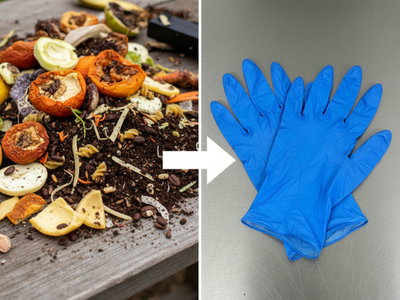
Knowledge Transfer Partnership between Aston University and PFE Medical to develop a biodegradable clinical glove from food waste The gloves will provide a low-cost, convenient and sustainable alternative to the 1.4bn disposable gloves used in the NHS each year The innovation will reduce clinical waste and costs and help the NHS reach its net zero goals. Aston University and Midlands-based company PFE Medical are teaming up to create biodegradable gloves made from food waste for use in the NHS. They will offer a low-cost, convenient alternative to disposable gloves without compromising patient safety. More than 1.4bn disposable gloves are used by the NHS each year. They create large volumes of clinical waste which has both an environmental and economic cost. The Knowledge Transfer Partnership (KTP) project will develop a more sustainable alternative made from polymers derived from food waste such as orange peel, able to degrade naturally. The gloves will initially be for use during low-risk tasks such as ultrasound scans, rather than in more critical situations such as operating theatres. The gloves would be designed to not only reduce clinical waste and costs in the NHS, but also carbon emissions, helping the NHS reach its goal to be the world’s first net-zero health service. With most personal protective equipment (PPE) currently sourced from Chinese manufacturers, the goal is to develop a biodegradable glove that can be manufactured using a UK supply chain. The challenging project draws on Aston University’s expertise in sustainable polymer chemistry, centred at Aston Institute for Membrane Excellence (AIME). Aston University has one of the largest research groups of polymer chemists in the UK. The project will be led at the University by Professor Paul Topham, director of AIME, and Dr James Wilson, AIME associate member. The research team have chosen to focus on polymers from food waste in order to ensure that the final product can be manufactured sustainably. Most polymers are currently made from petroleum. Polymers made from food waste, ranging from fruit waste to corn or dairy products, have the potential for antioxidant and antibacterial properties if designed appropriately. The team will manipulate the polymer molecules so that they include the right monomers (the smaller units which make up the molecules) in the right location to achieve the properties they require. Critical to the success of the project will be PFE Medical’s commercial and clinical experience of taking new innovations into medical use. It will be the third KTP between Aston University and PFE, following on from successful projects to develop an automated endoscope cleaner, now in use across University Hospitals Birmingham NHS Foundation Trust (UHB). Professor Topham said: “At Aston University, we have a long history of working with industry, of translating fundamental research into solutions for real world problems. This project with PFE Medical provides us with that route, to take our science and engineering and make a difference to peoples’ lives. That’s exactly where, as researchers, we want to be.” Rob Hartley, CEO of PFE Medical, said: “Our previous KTP with Aston University was a phenomenal success, thanks to the brilliant team we had on board. I’m just as excited by this project, which is looking to solve an equally long-standing problem. If we can achieve our goal, then the implications are huge, going far beyond the NHS to all the other situations where people are wearing disposable gloves.” KTPs, funded by Innovate UK, are collaborations between a business, a university and a highly qualified research associate. The UK-wide programme helps businesses to improve their competitiveness and productivity through the better use of knowledge, technology and skills. Aston University is a sector-leading KTP provider, ranked first for project quality, and joint first for the volume of active projects. For further details about this KTP, visit the webpage: www.aston.ac.uk/business/collaborate-with-us/knowledge-transfer-partnership/at-work/pfe-medical.


Why homelessness is more than a housing issue for students
More than 4,400 students in Delaware were identified as experiencing homelessness during the 2022–23 school year, a number that continues to rise. Ann M. Aviles, associate professor in the University of Delaware’s College of Education and Human Development, studies education equity, social policy and services for children and families. She is co-author of a new book, "Serving Students Who Are Homeless: A Resource Guide for Schools, Districts, Educational Leaders, and Community Partners", which offers practical guidance for educators navigating the challenges of student homelessness. Nationwide, more than 1.3 million school-aged children experience homelessness annually. While housing instability is often viewed as a social services issue, research shows it has direct and profound consequences for student learning, engagement and well-being. Housing instability affects every aspect of a student’s daily life. Students may be worried about where they will sleep, whether they will have food or how they’ll get home after school. That uncertainty makes it much harder to focus on learning, Aviles said. A key recommendation in Aviles’ new book is stronger collaboration between schools and community organizations. She encourages districts to develop community resource maps that identify local food pantries, shelters, health providers and other support services. She also emphasizes the importance of public understanding of homelessness as a systemic issue shaped by policy, affordability and access to services. To speak with Aviles further, email mediarelations@udel.edu.


The Doomscrolling Couple: Spending Time Together on Different Screens
In 2025, a lot of couples end their day the same way: lying in bed, each silently scrolling through an endless stream of bad news. They’re physically together, but emotionally somewhere else. Licensed Marriage & Family Therapist Gaea Woods sees this pattern constantly in her practice — and says doomscrolling has become a quiet third party in many relationships. “Phones are killing interpersonal relationships — not because tech is evil, but because we use it unconsciously at the moments connection matters most,” she says. “Even something as simple as being on your phone at dinner is a way to express, ‘I’m more interested in my phone than I am in you.’” Instead of talking about their day, fears, or plans, partners lie next to each other consuming the same distressing content, letting shared anxiety take the place of actual conversation. Research on doomscrolling backs up what Woods sees in the therapy room. Studies and reviews have found that compulsively consuming negative news online is linked with higher anxiety, depression, stress, sadness, and feelings of overwhelm, and even existential anxiety and pessimism about life. “Doomscrolling feels like you’re staying informed together,” Woods says, “but what’s really happening is that both nervous systems are getting more activated while neither partner is actually talking about what they’re feeling.” Relationship science adds another important piece: phubbing — phone snubbing during interactions. Multiple studies (including a recent meta-analysis published by Frontiers in Psychology) show that partner phubbing is associated with lower relationship and marital satisfaction, less intimacy and emotional closeness, and more conflict and jealousy. Woods describes what that looks like in real life: “You pick up your phone instead of saying, ‘That hurt my feelings.’ Your partner wonders, ‘Is she okay? Is he mad at me?’ and then they grab their phone too. Suddenly you’re two people on your phones instead of two people connecting.” Her core message for couples and for journalists covering modern relationships is that: scrolling together isn’t the same as being together. When screens become a third party at the table or in bed, intimacy quietly leaves the room. Featured Expert Gaea Woods, MA, LMFT – Licensed Marriage & Family Therapist specializing in digital dependency, intimacy and communication. She speaks to how doomscrolling and phone use act as a “third party” in relationships, why scrolling side-by-side increases emotional loneliness, and the practical phone rules that help couples rebuild genuine connection. Expert interviews can be arranged through the Offline.now media team.
Tracking rain patterns will improve hurricane forecasting, UF researcher finds
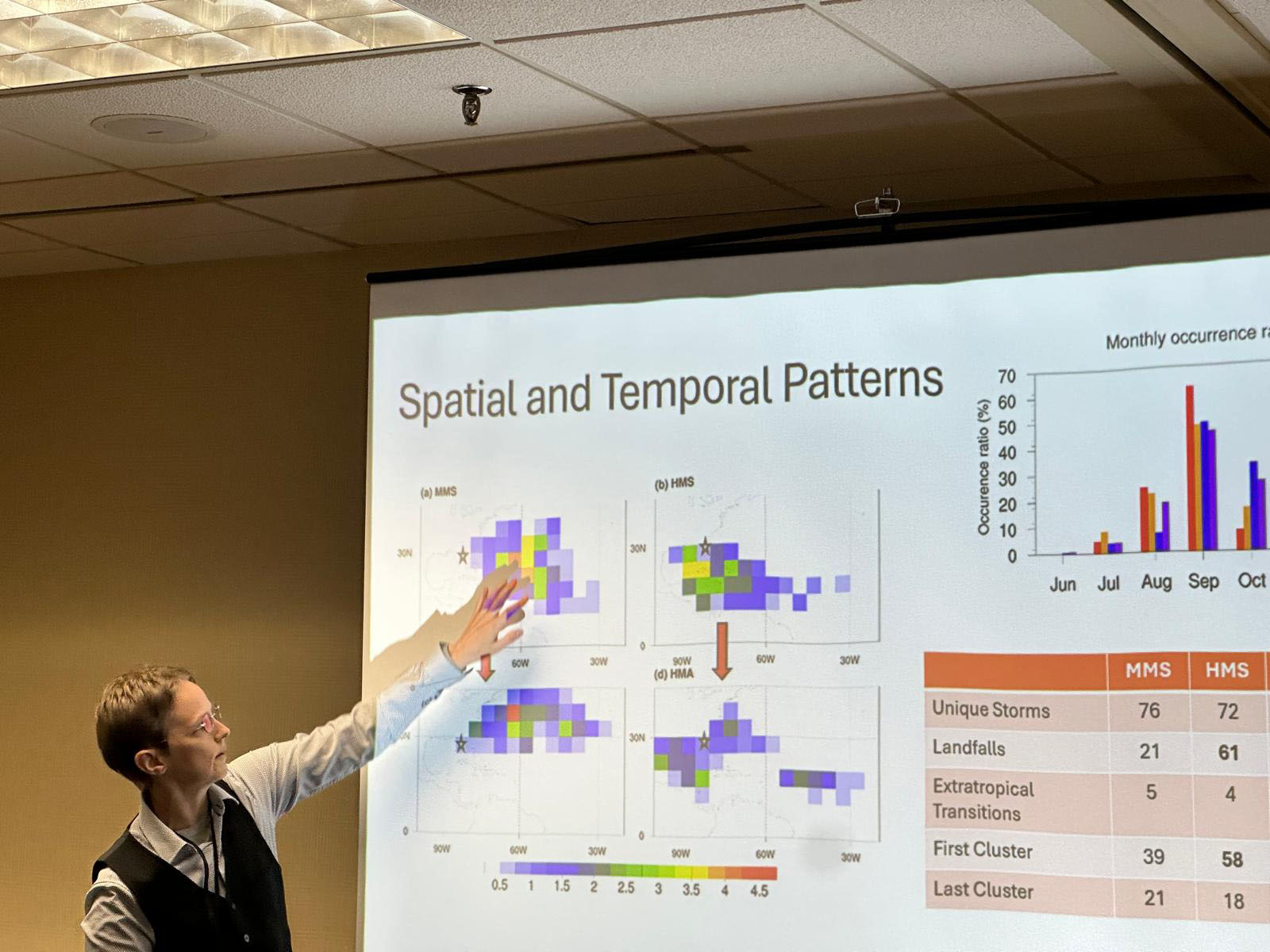
Studying the precipitation patterns in hurricanes may be key to predicting future storm patterns and their potential strength, a University of Florida researcher has found. Supported by a four-year, $212,000 grant from the National Science Foundation, Professor of Geography Corene Matyas, Ph.D. has identified the patterns of rain rates within storms and studied the moisture surrounding these storms. “We are hoping that, if we have a better prediction of moisture availability, that might help us forecast rain events with greater accuracy,” Matyas said. “The more we know about how storms develop, the more we can predict their path and magnitude.” The ideal stage for the perfect storm The potential for devastating high winds, storm surge and flooding poses an annual threat to Florida and its residents. With 1,350 miles of coastline and relatively flat geography that juts out to separate the warm waters of the southeast Atlantic and the Gulf, Florida creates the ideal stage for the perfect storm. Last year broke records with 18 named storms, including 11 hurricanes in the Atlantic basin and three major hurricanes making landfall along Florida’s coast. Early predictions are crucial to hurricane preparedness, allowing for increased response time and resource allocation, and hurricane modeling is essential for understanding these somewhat unpredictable storms. Advances in technology, data collection and the use of artificial intelligence in hurricane modeling have significantly impacted the ability to predict a storm’s path and strength more accurately. Artificial intelligence helps researchers understand hurricanes Matyas has completed two studies on this topic. The first study processed 12,000 images of rain rates from tropical storms and hurricanes in the Atlantic, using a machine learning algorithm called a convolutional autoencoder. Similar in use to image recognition software, the encoder broke the rain rate images down and simplified the patterns. Six main types, or clusters, of rainfall patterns for tropical cyclones were identified. At a presentation of the work to forecasters at the National Weather Service office in Jacksonville, the forecasters confirmed that one of the patterns matches what they typically see when late-season storms make landfall over Florida’s Gulf Coast. The second study used the autoencoder to process 4,600 images that represent the amount of moisture in the atmosphere extending 1,000 kilometers away from each hurricane. “We looked for commonalities in the patterns and found four dominant patterns of moisture that accompany Atlantic basin hurricanes,” Matyas said. “We found the biggest storms with the most moisture make the most landfalls, typically in the Caribbean and even in southern Florida. They also have a large moisture pool, giving them a bigger chance of heavy rainfall.” According to Matyas, three of the moisture patterns found in the second study were strikingly like those found in the earlier study that used fewer observations in a statistical analysis. With this use of AI, researchers can now recognize and understand these moisture patterns better, which can improve predictions about a storm’s intensity, its size and the amount of rainfall that will result from it. Early, accurate storm predictions allow Floridians time to prepare Rapid intensification – when, in a 24-hour period, a storm experiences a sudden drop in pressure and a dramatic increase in wind speed – creates much more of a challenge for forecasters. “We tend to boil down a hurricane to a set of coordinates which track the middle of a storm,” Matyas said. “And the fastest winds do focus there, but the moisture gets pulled from thousands of kilometers away and the system forces the moisture up. That moisture must go somewhere. So, the outer edges of the storm need to be understood more as well.” Matyas hopes these studies will help scientists classify rain patterns more accurately and consistently. Continued funding for research at public universities from federal agencies, such as the National Science Foundation and the National Oceanic and Atmospheric Administration, is essential for helping researchers develop tools to detect and predict severe weather events. Matyas is one of two UF faculty members among 18 national researchers named to the 2025 class of fellows by the American Association of Geographers. Matyas and UF Geography Department Chair Jane Southworth, Ph.D. were honored by the organization for their contributions in biogeography, geospatial analytics, soil science, community geography, climatology and other areas related to geography. “I look forward to this opportunity to contribute to the mission of the AAG in a more formal capacity, continuing to research how weather shapes our spaces and share knowledge of earth systems beyond the classroom and the written word to promote an inclusive society,” Matyas said.


Why Greenland Matters: The History and Strategic Importance of the World’s Largest Island
Often viewed as remote and sparsely populated, Greenland has long played an outsized role in global strategy. Settled by Inuit peoples for thousands of years, Greenland later became part of the Danish realm in the 18th century and today exists as an autonomous territory within the Kingdom of Denmark. Its location—bridging North America and Europe—has consistently drawn the attention of major powers, especially during moments of geopolitical tension. That attention intensified during the Cold War, when Greenland became a critical asset in Arctic defense. The United States established military installations on the island, most notably what is now known as Pituffik Space Base, to support missile warning systems and transatlantic defense. Greenland’s position along the shortest air and missile routes between North America and Russia made it indispensable to early-warning networks—and that strategic logic has not faded with time. Today, Greenland’s importance is growing rather than shrinking. Climate change is reshaping the Arctic, opening new shipping routes and increasing access to natural resources such as rare earth minerals, hydrocarbons, and freshwater reserves locked in ice. These developments have renewed global interest in Greenland from NATO allies and rival powers alike, as control over Arctic infrastructure, data, and mobility becomes central to economic and security planning. At the same time, Greenland’s own political future—balancing autonomy, Indigenous priorities, and external pressure—adds another layer of complexity. Greenland’s story is ultimately one of geography shaping history. What once made the island strategically valuable for defense now places it at the center of debates about climate, security, energy, and sovereignty in the 21st century. As Arctic competition accelerates, Greenland is no longer a peripheral actor—it is a focal point where global interests converge. Journalists covering geopolitics, Arctic security, climate change, Indigenous governance, or global resource competition are encouraged to connect with experts who study Greenland’s past and its evolving strategic role. Expert insight can help explain why this vast island continues to matter—and why it is likely to play an even larger role in the years ahead. Our experts can help! Connect with more experts here: www.expertfile.com
