
Experts Matter. Find Yours.
Connect for media, speaking, professional opportunities & more.

Always On, Never Present: How Work Takes Over Your Life
In many workplaces, being “good at your job” has quietly become synonymous with being constantly reachable. Slack on the laptop, email on the phone, DMs on every platform and a creeping expectation that you’ll answer “just one more thing” at night, on weekends, and even on vacation. Psychotherapist Harshi Sritharan, MSW, RSW and Offline.now founder Eli Singer say this culture is pushing knowledge workers into a state of continuous partial attention: always connected, never fully present. “Most of my high-performing clients don’t have a time-management problem,” says Sritharan. “They have a boundary problem — and their phones are the device enforcing it. Every ping is a tiny dose of dopamine and a tiny spike of stress, and their nervous system never really shuts off.” Research on digital and media multitasking backs up what she sees clinically. Studies have linked frequent task-switching between apps and notifications to: Reduced sustained attention and working memory Slower task performance and more errors Greater mental fatigue and perceived stress Neuroscience and cognition papers also describe how multitasking conditions the brain to seek novelty and micro-rewards, making it harder to tolerate the “boredom” of deep work — exactly the kind of focus most knowledge jobs actually require. Singer argues that the issue isn’t just individual burnout; it’s organizational self-sabotage. Offline.now’s behavioral data show that people now spend about 10 of their 16 waking hours on screens — roughly 63% of the day — and that 8 in 10 want a healthier relationship with tech but feel too overwhelmed to know where to start. “We’ve built workplaces that confuse constant availability with value,” Singer says. “But when you look at the cognitive science, an always-on culture is actually an anti-productivity policy. ‘Do Not Disturb’ isn’t a luxury — it’s the competitive advantage most teams are missing.” The term “continuous partial attention” coined to describe the state of being perpetually attuned to the possibility of new information has been linked in emerging research and commentary to chronic stress, shallow thinking, and emotional exhaustion in modern knowledge work. “The moment you stop treating rest and focus as perks and start treating them as infrastructure, everything changes,” Singer says. “Teams ship better work, people make fewer mistakes, and employees don’t feel like they have to burn their nervous system to keep their job.” For journalists covering work culture, productivity, burnout, or the future of work, this story connects the dots between work apps, multitasking science and mental health and offers a concrete alternative to the “always on” norm. Featured Experts Harshi Sritharan, MSW, RSW – Psychotherapist specializing in ADHD, anxiety, burnout and digital dependency. She helps high-achieving professionals understand how constant notifications, late-night work and screen habits disrupt dopamine, sleep, and emotional regulation — and what sustainable boundaries actually look like. Eli Singer – Founder of Offline.now and author of Offline.now: A Practical Guide to Healthy Digital Balance. He brings proprietary behavioral data on digital overwhelm, the Offline.now Matrix framework, and case examples of organizations reframing “Do Not Disturb” as a strategic asset, not a sign of disengagement. Expert interviews can be arranged through the Offline.now media team.




Sun-Sentinel: What happens when parents go beyond sharenting?
So many parents routinely share photos and news about their kids on social media that the behavior has a name: sharenting. Usually harmless and well-meaning, it can also take a dangerous turn, exposing children to online predators, allowing companies to collect personal information and creating pathways for children to become victimized by identity theft. The risks are most pervasive when parents overshare to profit from their social media accounts. Whenever parents share, they are the gatekeepers, tasked with protecting their children’s information, but they are also the ones unlatching the gates. When parents profit from opening the gates, it is especially challenging to balance protecting their kids’ privacy against sharing their stories. Federal and state laws typically give wide deference to parents to raise their children as they see fit. But the state can and does intervene when parents abuse their children. Those laws protect children in the physical world. However, few laws shield children when parents risk harming them online. Let’s consider this hypothetical situation based on a composite of real-life events. Mia (fictional name) is a 7-year-old girl growing up in Orlando. Her mother is a stay-at-home parent who has a public Instagram account and considers herself an influencer. Many lingerie brands pay Mia’s mom to model their clothing. When a lingerie company from overseas offers Mia’s mom some money to have Mia also pose in their clothing, Mia’s mom says yes. Over the next few weeks, Mia and her mom model the clothing together in pictures and videos, sometimes wearing the outfits while reading together in bed, having pillow fights or being playful around the house — always in clearly intimate but arguably appropriate settings. Mia’s mom’s social media page explodes with new followers, many of whom appear to be grown men. The images on the page receive hundreds of likes and multiple comments. Mia’s mom deletes the most inappropriate comments but leaves others, hoping to increase engagement. As Mia’s mom’s social media following grows, so does the amount of money she earns. Mia tells her teacher about the social media page. Her teacher reaches out to Mia’s parents, to no avail. Mia’s mom keeps sharing. The teacher sees this as a potential form of abuse and neglect and, according to her obligation as a mandatory reporter of abuse, she calls in a report to the state’s central abuse registry. The teacher isn’t trying to get Mia’s mom in criminal trouble, but she thinks the family could use some education surrounding safe social media use and possibly access to financial support if they need this type of online exposure to pay the bills. The intake counselor declines to accept the hotline call. The counselor explains that the posting of pictures is not grounds for an abuse, abandonment or neglect investigation. The parent is sharenting, the counselor says, and that is within a parent’s right. Of course, child sexual abuse material is illegal, but the photos posted by Mia’s mom fall into a gray area — not illegal material, but likely harmful to Mia. Should there be a law to stop this? I believe there should be. Just as our views regarding child abuse have evolved, so must our views on sharenting. Merely 150 years ago, it was legal for parents to beat their children. It wasn’t until 1874, when a little girl named Mary Ellen was beaten severely by her caregiver, that courts began to step in. Drawing from existing laws prohibiting animal cruelty, the Society for the Prevention of Cruelty to Animals argued that Mary Ellen had the right to be free from abuse. At the time, there were laws protecting animals from harm by their caregivers but no laws protecting children from such harm! Back to the present: Mia’s disclosure to her teacher could have changed her life and led to her family getting online safety help, if only the child welfare laws were suitably tailored to protect her in the online world as they attempt to do offline. Child protection laws should be expanded to include harms that can be caused by online sharing. The law can both protect parental autonomy and honor children’s privacy through a comprehensive and multidisciplinary new approach toward protecting children online — one that allows for thoughtful investigation, education, remediation and prosecution of parents who use social media in ways that are significantly harmful to their children. This conduct, which falls beyond sharenting, is ripe for legal interventions that reset the balance between a parent’s right to share and a child’s right to online privacy and safety. Stacey Steinberg grew up in West Palm Beach and now lives in Gainesville, where she is a professor at the University of Florida Levin College of Law; the supervising attorney for the Gator TeamChild Juvenile Law Clinic; the director of the Center on Children and Families; and the author of “Beyond Sharenting,” forthcoming in the Southern California Law Review. This piece was also published in the South Florida Sun-Sentinel.



Listen: Donald Trump Loathes the Courts. He’s Following the Autocrat Playbook to Sideline Them
This article is republished from The Conversation under a Creative Commons license. Read the original article here. In democratic systems, the courts are a vital check on a leader’s power. They have the ability to overturn laws and, in Donald Trump’s case, the executive orders he has relied on to achieve his goals. Since taking office, Trump has targeted the judiciary with a vengeance. He has attacked what he has called “radical left judges” and is accused of ignoring or evading court orders. The Supreme Court has already handed the Trump administration some key wins in his second term. But several cases now before the court will be pivotal in determining how much power Trump is able to accrue – and what he’ll be able to do with it. As Paul Collins, a Supreme Court expert from the University of Massachusetts Amherst, explains in episode 4 of The Making of an Autocrat: It’s all about presidential power. And that’s really significant because it’s going to enable the president to basically inject a level of politics into the federal bureaucracy that we frankly haven’t really seen before in the US. Listen to the interview with Collins at The Making of an Autocrat podcast, available at Spotify, Apple, or wherever you get your podcasts.



Maduro is gone; expert details potential impact on the Caribbean
Globally, the ousting of Nicolás Maduro in Venezuela has been met with a mix of reactions and cautious optimism. The University of Delaware’s Kalim Shah can discuss how regime change will play across the Caribbean and the spillover effect that will ripple throughout the region – and the world – in the years and decades to come. Shah, professor of energy and environmental policy and an expert on the island nations of the Caribbean, says that although public statements have been muted and restrained, there is a shared understanding. “For small island states that have absorbed the effects of Venezuelan collapse for more than two decades, this moment represents the possible end of a long and destabilizing chapter,” Shah said. Caribbean governments are not celebrating regime change, Shah said. Rather, they are responding to the prospect of reduced systemic risk. “A Venezuela that no longer exports large-scale displacement, opaque energy leverage and permissive criminal governance is objectively preferable for the region.” Shah can discuss several aspects of Venezuela’s political history, how the nation has arrived where it is, where it might be headed and the impact this will have on the Caribbean as a whole. Those include: • Venezuela’s political and economic deterioration during the Chávez–Maduro era and how that has translated directly into pressures felt across the Caribbean in the form of migration, fiscal exposure, security risks and regional uncertainty. • How the nation’s institutional collapse coincided with deepening organized crime activity across the Caribbean basin. Data from the United Nations Office on Drugs and Crime consistently places the region within major cocaine trafficking corridors linking South America with North American and European markets. For Caribbean governments, this meant higher interdiction costs, increased exposure to transnational criminal networks and growing pressure on already limited security institutions. • This moment invites a reassessment of China’s expanding footprint in the Caribbean, Shah says. He can discuss the ways in which Beijing has deepened its presence throughout the region. Shah says that as this transition unfolds, five policy developments will determine whether the cautious optimism proves warranted: • The impact on Venezuelan outward migration to the Caribbean. • Whether Caribbean public systems receive durable support rather than short-term humanitarian fixes. • Organized crime and drug trafficking pressures in the Caribbean basin. • External security engagement in the Caribbean. • Whether the region avoids a return to dependency-driven energy and infrastructure politics. “For the Caribbean, hope today is not naïve. It is conditional. The Chávez–Maduro years imposed real costs on the region. Their end creates an opening…but only if policy follows through,” Shah said. To contact Shah directly for interviews, visit his expert page and click on the "contact" button. Interested reporters can also send an email to mediarelations@udel.edu.


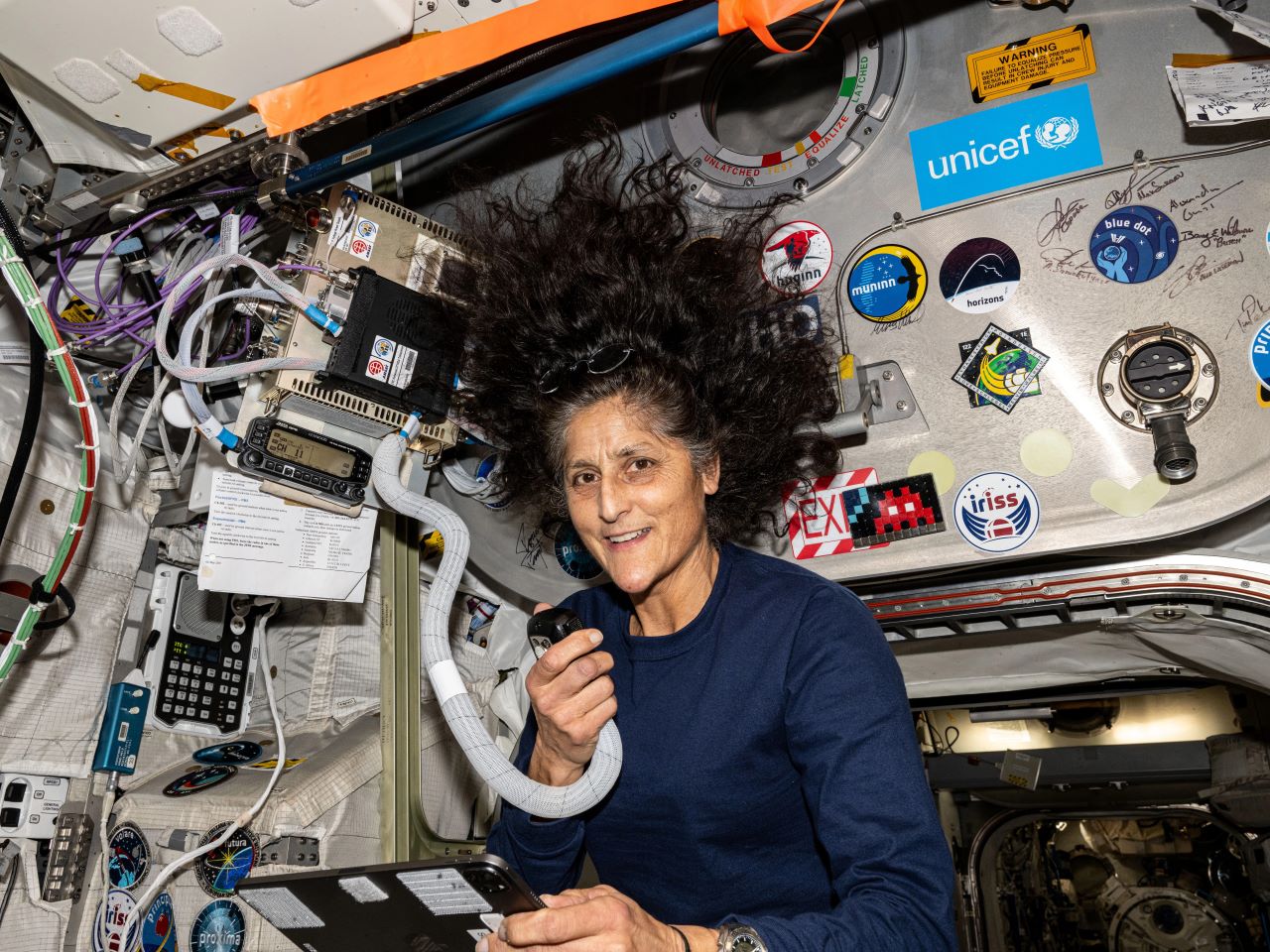
The health challenges astronauts Butch Wilmore and Suni Williams face after 9 months in space
On June 5, 2024, astronauts Butch Wilmore and Suni Williams embarked on a brief mission to the International Space Station. But equipment failures turned what was supposed to be an eight-day trip into a grueling 9 month spaceflight. This week, Wilmore and Williams finally returned to Earth. While their safe return is cause for celebration, the journey doesn’t end when astronauts touch down on Earth. They now face the significant task of recovering from the physical and psychological toll of long-duration spaceflight. As part of the University of Florida’s ongoing research into astronaut health, Rachael Seidler, Ph.D., a leading expert in spaceflight-associated health changes, is studying the long-term effects of space travel on astronauts’ brains and bodies. Seidler’s research focuses on understanding how the central nervous system and brain structure adapt to the challenges of space travel, as well as how these changes affect performance, balance, and mobility once astronauts return to Earth. “While the physical and psychological challenges astronauts face after returning from long-duration space missions are well-documented, the research we do at UF is helping us understand the intricacies of their recovery process,” said Seidler, deputy director of the Astraeus Space Institute at UF. “By following astronauts like Butch and Suni before, during, and after their missions, we can track how the human body responds to the extreme conditions of space.” Behavioral and Brain Changes Post-Flight Seidler’s research tracks astronauts’ physical and neurological recovery by observing them both during their missions and after they return. "One of the most immediate challenges astronauts face when they return to Earth is mobility and balance. These issues often recover more quickly compared to others, but it takes time for astronauts to readjust to gravity,” Seidler said. "The balance, mobility, and walking difficulties astronauts experience during the first weeks back are typically resolved in a short period, but brain function and structure require longer recovery periods." Seidler’s research indicates that astronauts’ brains exhibit compensation when they return to Earth following spaceflight. This compensation occurs through the recruitment of additional neural pathways in order to return to their preflight performance levels. However, the recovery of brain function is a gradual process. "This brain functional compensation is typically no longer observed within one to six months post-flight," Seidler said. However, not all changes are reversible. "Brain structural changes, particularly related to fluid shifts in space, show little to no recovery even after six months to a year," Seidler said. Two significant structural changes include the brain physically sitting higher in the skull and the expansion of the brain’s ventricles — fluid-filled cavities in the brain — which can increase in volume by 25% or more. These changes are thought to result from the fluid shifts caused by microgravity, and they present long-term health considerations for astronauts. Long-Term Health Effects: Understanding the Impact As Wilmore and Williams embark on their recovery journey, the long-term impact of these changes becomes a critical focus for researchers like Seidler. "The long-term health impacts are crucial to understand because they could affect how astronauts recover and perform in their daily lives post-mission," she said. Seidler’s team at UF is conducting a new study in which they are tracking astronauts for up to five years post-flight to better understand these long-term effects. "We’ve had astronauts in space for up to a year, and we know how to manage their physical health during those missions," Seidler said. "But the effects of space on the brain and body extend beyond the mission, and our work helps inform strategies to manage recovery." Collaborating with NASA and Studying Spaceflight-Associated Neuro-Ocular Syndrome Seidler's work is also part of a broader collaboration with NASA and other scientists to assess astronaut long-term health. The project is particularly focused on Spaceflight-Associated Neuro-Ocular Syndrome, which affects up to 70% of astronauts. This condition involves structural changes to the eye and optic nerve, leading to vision problems that may impact astronauts’ function. "Neuropsychological assessments can help to measure astronauts’ brain health, while studies of the ocular system help identify potential vision issues that may arise during and after long-duration space missions," she said. Simulating Space Conditions on Earth In addition to studying astronauts on Earth and in space, Seidler’s team conducts experiments to simulate the effects of spaceflight on human physiology. The UF lab runs experiments in head-down tilt bed rest studies, which keep participants lying down for weeks to months at a time to simulate the lack of gravity. "This type of study helps us understand how fluid shifts in the body during space travel affect mobility, balance, and brain structure," Seidler explained. "In addition, other publications have reported that astronauts describe that vestibular galvanic stimulation feels similar to what they experience when they first arrive in space and when they return to Earth. We have equipment to induce these effects in the lab." Looking Toward the Future As space missions continue to grow longer and more complex, UF’s research is more important than ever. "We’re studying these issues now to ensure that future astronauts are prepared for the physical and cognitive challenges that await them in deep space," Seidler said.

The Annual Reset: Why We Try to Change Every January
Every January, the world collectively decides to become a better version of itself. We swear we’ll exercise more, eat better, save money, quit bad habits, and finally tackle that one thing we’ve been avoiding. And yet—by February—most New Year’s resolutions quietly disappear. This isn’t because people lack willpower. It’s because resolutions often aim too big, too fast, and ignore how change actually works. Resolutions tend to fail when they’re built on motivation alone. Motivation is emotional and short-lived, especially when routines, stress, and real life return. “I’ll go to the gym every day” collapses the first time work runs late or energy dips. Research consistently shows that successful change depends more on systems than goals—small, repeatable behaviors that fit into daily life. People who frame resolutions as habits (“I’ll walk 10 minutes a day”) rather than outcomes (“I’ll lose 30 pounds”) are far more likely to stick with them. Still, there’s a reason resolutions endure. Psychologists call it the “fresh start effect”—the mental boost people feel at symbolic moments like birthdays, Mondays, or a new year. These moments help us psychologically separate our past selves from our future ones, making change feel possible. Even when resolutions fail, the act of reflecting, resetting, and trying again serves a real purpose: it helps people take stock of their lives and imagine improvement. The trick isn’t to stop making resolutions—it’s to make them smarter. Start small. Tie goals to existing routines. Focus on consistency over perfection. And most importantly, allow room for flexibility. Change isn’t linear, and falling off track doesn’t mean failing—it means adjusting. Journalists covering wellness, psychology, productivity, or lifestyle trends: connect with experts who study habit formation, behavior change, and motivation to explain why resolutions fail, what actually works, and how people can turn fresh starts into lasting change. Expert insight can help readers move beyond guilt—and toward progress that sticks. Connect with our experts: www.expertfile.com


Designing Reflection: An Expert’s View Inside Michigan’s Japanese Garden
As public gardens increasingly become spaces for artistic expression, cultural exchange, and mindful reflection, Steven LaWarre, Senior Vice President at Frederik Meijer Gardens & Sculpture Park, recently offered his expert insight to Homes and Gardens Magazine into how world-class garden design can shape human experience, invite contemplation, and connect visitors with nature in deeply meaningful ways. With decades of experience in professional horticulture and garden planning, LaWarre has played a central role in creating and nurturing Meijer Gardens' Richard & Helen DeVos Japanese Garden, guiding its interpretive programming, and curating visitor interaction with seasonal changes and design elements. Steve LaWarre is the Senior Vice President at Frederik Meijer Gardens & Sculpture Park, where his visionary leadership and passion for botanical excellence have been instrumental in shaping the Gardens' stunning landscapes and ensuring operational excellence. He leads efforts to sustain the Gardens' exceptional standards in landscape design, sustainable gardening practices, and the care of diverse plant collections. View his profile here The Richard & Helen DeVos Japanese Garden, an eight-acre landscape inspired by centuries-old Japanese horticultural principle, has rapidly evolved into one of the Midwest’s most beloved cultural destinations. Beyond aesthetic beauty, the garden embodies philosophical traditions that encourage visitors to slow down, observe impermanence, and appreciate harmony between the human spirit and the natural world. As audiences seek spaces that offer quiet reflection, seasonal observation, and cultural resonance, LaWarre’s expertise bridges horticulture, design intention, and visitor experience. Read the Homes and Garden Magazine article 'Beyond Wild Expectations: Michigan’s Very Own Slice of Japan – Where Ancient Garden Design Provides a Deep Connection to Nature' below: Expert Insight Steven LaWarre on the Japanese Garden Experience On Winter’s Quiet Presence “It’s just beautiful covered in snow. You hear the waterfalls differently, you see ice sweep over the pond. Everything feels a bit more muffled in the winter, but it somehow puts you at ease,” LaWarre explains, highlighting how seasonal change reveals structure, silence, and contemplative calm. On Spring’s Renewal “The first flush of leaves on the trees is a joyful sight after winter. The small chartreuse green buds contrast to the dark stems,” LaWarre observes, describing the ephemeral nature of bloom and the reminder of restoration that seasonal transformation offers visitors. On Core Garden Elements “The conifers create a backbone of the garden, recognizable in all four seasons… they have been pruned and shaped over time to really create the caricature of a tree,” LaWarre notes, outlining the horticultural artistry behind traditional practices like niwaki pruning. On Cultural Immersion and Mindful Reflection LaWarre describes the garden’s traditional teahouse experience as more than cultural spectacle: “It’s a way to really quiet the senses and participate in mindful reflection, aided by the serenity of garden views… It’s an opportunity to connect with the people you’re with, but also to connect with yourself.” On Design Intent and Human Experience “It’s taught me to look at things differently. As humans, we can be focused on achieving neat lines and symmetry, but taking a moment to observe your surroundings will reveal this isn’t usually how things are in the natural world,” LaWarre reflects, capturing how garden design can subtly reshape perception. In a cultural moment where audiences increasingly seek restorative outdoor experiences, cultural depth, and mindful engagement with public spaces, LaWarre offers perspective and insight into: How garden design influences perception, supports wellness, and fosters cross-cultural appreciation How public gardens are not solely as spaces of beauty, but also living environments that shape emotional and philosophical engagement with the natural world Steve can bring this perspective for media interviews and speaking engagements.



Online Dating in 2026: Are Apps Bringing Us Closer or Just Keeping Us Swiping?
In 2025, “We met on an app” is the most ordinary love story in the world. Swiping has replaced setups and chance encounters as the primary way couples connect in many countries. But as online dating becomes normal, a new question is emerging: Are app-born relationships actually as happy and secure as we think? Licensed Marriage & Family Therapist Gaea Woods, an expert in the Offline.now digital wellness directory, sees both sides in her practice. “Online dating is just a tool,” she says. “It can absolutely bring people together who would never have met otherwise. But the way we use it — the constant options, the ghosting, the parallel conversations — can quietly undermine trust even after you’ve deleted the app.” Woods says that she hears tension from from clients: “Singles tell me, ‘I hate the apps, but I don’t know another way to meet people.’ Couples tell me, ‘We met on an app, and I’m grateful — but there’s this low-level anxiety: Would you still be with me if you kept swiping?’ The technology amplifies questions that were always there about choice, commitment and comparison.” She emphasizes that how couples talk about their “app origin story” matters more than where they met. Unspoken assumptions — about whether exes stay in your DMs, if profiles stay active “just in case,” or how much flirting online is acceptable — often fuel insecurity more than the apps themselves. “Online dating is here to stay,” Woods says. “The question isn’t ‘Is it bad?’ It’s, ‘How do we use it in a way that supports real intimacy instead of keeping us one foot in and one foot out?’” Featured Expert Gaea Woods, MA, LMFT – Licensed Marriage & Family Therapist specializing in digital dependency, intimacy and communication in modern relationships. She can speak to app fatigue, the “online dating effect,” how apps change expectations around choice and commitment, and the kinds of conversations couples need to have once the swipe turns into something serious. Expert interviews can be arranged through the Offline.now media team.


ExpertSpotlight: Why Hangovers Hurt (and Why Almost Everyone Gets Them Wrong)
The hangover is the ultimate party plot twist: a night of celebration followed by a morning of regret. Headache, nausea, fatigue, brain fog, these aren’t random punishments for having fun. They’re your body’s way of saying it’s been busy processing alcohol, which acts as a diuretic (hello dehydration), irritates the stomach lining, disrupts sleep, and triggers inflammation. Even “just a few drinks” can tip that balance, especially when sleep is short and water is scarce. One of the biggest myths is that hangovers are all about dehydration. Water helps, but it’s only part of the story. Alcohol breaks down into acetaldehyde, a toxic byproduct that contributes to headaches and nausea. It also messes with blood sugar, expands blood vessels, and fragments REM sleep, which is why you can wake up exhausted even after eight hours in bed. Darker drinks often get blamed too; while congeners (chemical byproducts in darker alcohols) can make symptoms worse for some people, quantity and timing usually matter more than color. Then there’s the cure-all folklore: greasy breakfasts, hair of the dog, miracle supplements. Some comfort foods can help stabilize blood sugar, and anti-inflammatory foods may take the edge off, but no remedy truly “cures” a hangover once it’s underway. Time, hydration, light food, and rest remain the most reliable fixes. Prevention, of course, is king: pacing drinks, alternating with water, eating beforehand, and prioritizing sleep do far more than any next-morning hack. Journalists covering health, lifestyle, or New Year’s recovery stories: connect with experts who can explain the real science behind hangovers, what actually works, what’s wishful thinking, and how our bodies respond to alcohol. Whether you’re debunking myths or offering evidence-based tips, expert insight can turn morning-after misery into a smarter story. Find your expert here: www.expertfile.com

A Snapshot of the Local Economy: Simon Medcalfe on Growth, Risk, and What Comes Next
At Augusta University’s annual Economic Forecast Breakfast hosted by the James M. Hull College of Business, Simon Medcalfe, PhD, offered a grounded, data-driven look at how the local economy is performing — and what lies ahead. Speaking to business leaders, students and community stakeholders, Medcalfe emphasized the importance of distinguishing real economic growth from inflation-driven gains, noting that while the Augusta region continues to grow, it does so at a measured pace compared to national averages. His presentation framed the local economy as stable and resilient, but not immune to broader forces shaping the U.S. outlook. A key theme of Medcalfe’s remarks was the role of research, innovation and education in sustaining long-term economic health. He pointed to strong gains in research and development across Georgia and highlighted how university-based research directly contributes to regional economic output. According to Medcalfe, investment in knowledge creation remains one of the most reliable drivers of growth, reinforcing the value of higher education institutions as economic anchors. Simon Medcalfe, PhD, is an economist with an emphasis on sports economics, social determinants of health, and the local economy. View his profile At the same time, Medcalfe cautioned against complacency. While regional fundamentals remain solid, he stressed that uncertainty at the national level continues to pose risks. “However, uncertainty abounds in national macroeconomic policy that could negatively impact growth next year,” Medcalfe said, underscoring how unresolved fiscal decisions and policy shifts can ripple down to local economies. Still, his overall outlook balanced realism with optimism. Medcalfe concluded that the Augusta region — and Georgia more broadly — is positioned to weather uncertainty thanks to diversification, investment in early education, and continued research activity. “Overall, Augusta and Georgia are positioned well for economic growth in 2026 with a strong commitment to early childhood education, a diversified labor market and strong research and development,” he said. View the full article 'Annual Economic Forecast Breakfast offers snapshot of the local economy' here: For journalists covering regional economics, workforce development, higher education, or policy-driven growth trends, Simon Medcalfe, PhD, offers clear-eyed analysis rooted in data — and an ability to translate complex economic signals into insight that matters locally. Simon is available to speak with media - simply click on his icon now to arrange an interview today.

