
Experts Matter. Find Yours.
Connect for media, speaking, professional opportunities & more.

The Struggle for DREAMers in Utah - Explore DACA
On Tuesday, April 24, 2018, a third federal judge ruled against the Trump administration’s push to end Deferred Action for Childhood Arrivals (DACA). U.S. District Judge John Bates called the administration’s attempts to end DACA “arbitrary,” “virtually unexplained,” and “unlawful.” He put a hold on the decision, allowing the Department of Homeland Security 90 days to give better reasoning to cancel the program or it would be fully reinstated. Dr. Stephen Allen, associate provost of International Affairs at Southern Utah University and expert on American immigration policy, sees the struggle for “DREAMers” in Utah and across the nation. “In March, the Supreme Court refused to hear a challenge to DACA,” said Dr. Allen. “That decision, along with the April 24 federal court ruling, has taken pressure off of Congress to act on the issue. The result is a great deal of uncertainty for DREAMers, families, and employers.” Originally enacted by President Obama, DACA is an immigration policy that shields undocumented immigrants that were brought to the United States as children. The youth apply to obtain a renewable two-year deferred action from deportation and to be eligible for a work permit. DACA has helped hundreds of thousands obtain driver’s licenses, social security numbers and attend school. Steps to eliminate DACA were initiated by the Trump administration in late 2017, but previous federal rulings have stalled the efforts. “Rescinding DACA would have a tremendous impact on Utah,” said Dr. Allen. “The program has allowed nearly 10,000 young people in Utah to come forward and pass background checks and live legally in the United States. There is strong evidence that the majority of these young people are productive citizens who are gainfully employed and/or enrolled in school. According to the non-profit and non-partisan organization Interfaith Worker Justice (IWJ), ending DACA would cost Utah alone nearly $476.5 million in annual GDP losses.” Dr. Allen believes that in general, Utahan’s have a strong commitment to keeping families together. “The United States is the only country most DREAMers have known. Deporting nearly 700,000 individuals would result in separation from families and losing the ability to legally work in the United States.” Dr. Allen specializes in international enrollment and admissions, developing global partnerships, and international education. He is familiar with the media and available for an interview. Source:


It’s time to invest early in your child’s financial literacy
April 20 is Teach Children to Save Day. It's an educational program established by the American Bankers Association (ABA) to encourage kids to develop good savings habit as early as possible in their financial life. But is it necessary? When kids should be playing and having fun, is getting a head start on economics a bit heavy? The reality is – a quiz about personal finances offered last year by Financial Engines saw only 6 percent of Americans pass. That means a staggering 94 percent of Americans didn't have a confident grasp on financial literacy. Bad financial choices can last a lifetime and that's why it's best to start young, and develop sound habits and wisdom as early as possible. So, what do Americans need to know and do about becoming financially literate? What are the potential consequences to not just Americans, but the country’s economy if we remain a nation that’s basically ignorant to the value of a dollar? Dr. James Philpot, certified financial planner and associate professor of finance and general business at Missouri State University, can address the costs of financial illiteracy and explain how to teach kids about money matters. Click on his icon to set up an interview with him. Source:


Time with family or time to make some distance?
It’s news that didn’t come as much of a surprise to a lot of political insiders – but it still has all of Washington talking. Paul Ryan, the popular Speaker of the House and a leading Republican is retiring. Though he has been on the Hill for more than two decades, Ryan, who is only 48 is calling it a career. Or is he? Some wonder if he’s just putting enough political distance between himself and Donald Trump in an effort to preserve his reputation and potentially mount a campaign for 2020. With speculation of a contested GOP primary or Trump not seeking re-election – Ryan may be the safe-bet Republicans are looking for? There is a lot of speculation about Ryan’s next move. Will he take a tour of the private sector and opt for a career with a lot more money? What’s next is anyone’s guess – and that’s where our experts can help. Mark Caleb Smith is the Director of the Center for Political Studies at Cedarville University. Mark is available to speak with media regarding Paul Ryan and his announced retirement. Simply click on his icon to arrange an interview. Source:


Cedar Crest College fights food insecurity with food pantry
It’s a topic that isn’t often talked about, but it’s reaching near epidemic proportions: Food insecurity on America’s college and university campuses. With the costs of education rising – students are having to make the unfortunate and unhealthy choice of deciding whether to pay for school or pay for food. Some are scrounging, some are going hungry and it’s a trend that needs to stop. Cedar Crest College was one of dozens of schools to participate in a recent survey conducted by Temple University and the Wisconsin HOPE Lab assessing the basic needs of university students across the nation. The study determined that 36 percent of students on U.S. College campuses suffer from food insecurity. You can read the full report here. In light of that shocking report, Cedar Crest College is continuing to work diligently to combat hunger on campus. The college currently operates a food pantry on campus that is open to all students – traditional undergrads, adult learners and graduate students. The pantry operates solely on donations and gifts, and the college hosts two food drives each year to stock it. It offers non-perishable food items, toiletries and frozen meals. “It is harder to concentrate on your academic work when you are hungry,” said Mary Alice Ozechoski, Vice President of Student Affairs & Traditional Enrollment. “We believe that students who are food insecure need assistance so they can focus on what matters: completing their education.” Mary Alice Ozechoski is available to speak with media regarding this issue. Simply click on her icon to arrange an interview. Source:


Trade wars – is America’s economy collateral damage?
There’s been a lot of tough talk on trade coming from Washington as of late. With debates and even some delusions about trade surpluses and deficits,it’s feed for the political fodder, but are the politics behind the talk negatively impacting America’s economy? President Trump says he is standing up for American jobs, but by threatening to tear up NAFTA and imposing billions in tariffs on China, is starting a street fight with America’s traditional trading partners worth it? The common folk might think so. However, those who control the markets on Wall Street think not. The DOW is down. A lot. The NASDAQ is also falling. That means a lot of money is being lost and the ripples might be felt by middle America in the form of lost jobs. So, what exactly happens in a trade war? Is America truly getting the raw deal President Trump is claiming when it comes to doing business with China, Canada, Mexico and others? What will come of all the tough talk on trade? How will it impact the economy? There are many questions and issues to consider. That’s where the experts from Missouri State University can help. Dr. David Mitchell is a professor of economics and director of the Bureau of Economic Research at Missouri State. He is also an expert in economic forecasting and understanding market trends and direction. He can address what these trade wars will do for America's economy and what, if any, effects they will have on the American people. Click on his icon to connect with him. Source:

Will an accident investigation sideline Tesla and ground its autopilot technology?
A fatal accident has left one person dead and Tesla in a bit of a freefall. Share prices are dropping, and people are talking about the future of the once untouchable Elon Musk and Tesla. It has been a tough month, especially since days earlier a fatal accident involved Uber Technologies Inc., and this has now raised questions about the self-driving features Tesla has become famous for. So, what will be the future of autonomous driving vehicles? And can a company like Tesla recover not only its reputation but its value? There are a lot of questions and that's where Kevin McFall, assistant professor of mechatronics engineering at Kennesaw State University, can help. His current research involves artificial intelligence and self-driving vehicles. Kevin is available to speak with media regarding this topic -- simply click on his icon to arrange an interview. Source:


Intermittent fasting is not for everyone
Intermittent fasting is a popular trend that is not without risk. The goal of intermittent fasting is to put your body in a state of ketosis where fats and ketones will be utilized, instead of carbohydrates. However, the process that occurs within your body when food is restricted is complicated. There is no set length of time that is needed in order for intermittent fasting to be successful, which may be confusing if you are not sure how long to fast or when to stop. It is important to listen to your body during this time as intermittent fasting is not for everyone. During the time of fasting, individuals may be prone to dehydration and hypoglycemia, or experience other adverse effects if trying to fast while on prescription or other medications. It isn’t just the medically fragile individuals who shouldn’t fast. Teenagers or those with altered metabolic rates (such as hypo and hyperthyroidism) may be putting more stress on the body than it can handle, resulting in a wide variety of symptoms: inability to concentrate, nausea, vomiting, headache, irritability, fatigue, fainting. Also, it is never a good idea to restrict calories during a time when your body is trying to grow or trying to heal. Anyone who gets irritable and symptomatic when skipping meals should not attempt to fast for prolonged periods of time. There are many different ways to fast and many different ways to eat during fasting. Prior to restricting calories for any reason, make sure that your body can handle the stress of not eating or limiting calories. I suggest consulting with a nutritionist who can work with you to help create a fasting plan that is best for your body and for your unique health history. A nutritionist can individualize an eating plan to make sure that you are maximizing your caloric intake with high density foods during the times when food is being restricted. Most importantly: Listen to your body! If something doesn’t feel right, then don’t do it or stop what you are doing. Source:


Is repealing the Second Amendment possible or easier said than done?
On Tuesday, retired Supreme Court justice John Paul Stevens called for the repeal of the Second Amendment. It appeared an Op-Ed in the New York Times and has been taking the news and political worlds by storm. It’s not often a justice leaves his position of objectivity, even if retired. But at the age of 97, the former justice who was first appointed to the Supreme Court in 1975 by then President Gerald Ford weighed in calling the amendment a “relic of the 18th century.” However, it takes more than just a stroke of the pen or a simple impassioned vote to accomplish this. In fact, to repeal the Second Amendment would be require both houses of Congress proposing the amendment with a two-thirds vote, or two thirds of state legislatures calling on Congress to hold a constitutional convention. It would then have to be ratified by three-fourths of the states or state legislatures. There’s a lot of math involved there. As well, an equal amount of legal and constitutional perspective required. That’s where the experts from the UC Hastings College of Law can help. Joel Paul is an expert in the field of constitutional law. He is available to speak with media regarding just what it might take to repeal a constitutional amendment. Simply click on his icon to arrange an interview. Source:


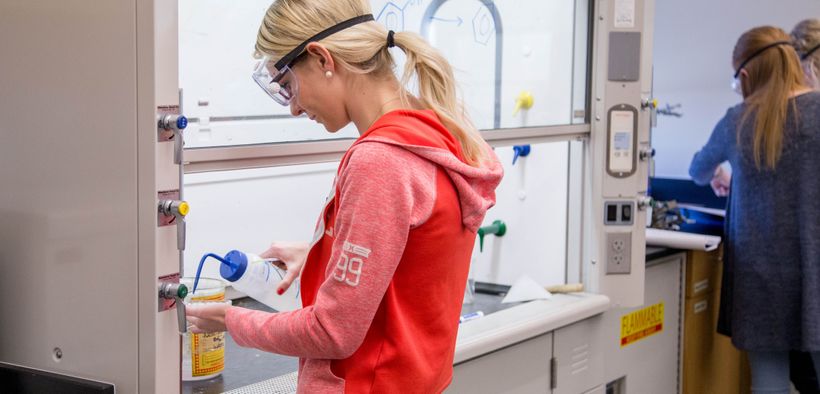
Microsoft Working to Close the STEM Gap
Even with a higher priority placed on science, technology, engineering, and math (STEM) throughout education in the US, only a fraction of girls are likely to pursue a STEM career. According to the National Center for Education Statistics, while more than 57 percent of college undergraduates are women, only 18 percent progress into STEM careers. With a clear gap, Microsoft set out to better understand what causes girls and women to lose interest in STEM subjects and careers, as well as what strategies have the greatest potential to reverse the trend. According to Microsoft, the goal of the study “was to inform our work in this area and to share learnings with schools, government leaders, nonprofits, employers and others. What we learned is that conditions and context can make a significant difference to girls, young women and their interest in STEM. And the solution doesn’t necessarily require a curricula overhaul.” Dr. Shalini Kesar, Associate Professor of Information Systems at Southern Utah University and advocate for women in technology, has known for years that girls and young women are a critical missing part of STEM studies and careers. “The stubborn gender disparity in STEM fields has sparked important debates on the underlying reasons,” said Kesar. “Some attribute the gender disparity to social and infrastructural factors, lack of mentors and role models, and lack of awareness about what these fields offer in terms of educational and career opportunities. Others point to studies that indicate traditional mindsets of computing as ‘boring’ and ‘only for boys’ as a major reason why girls and young women do not consider a degree or career in this field.” The study found that “we may be able to make significant strides just by showing girls and young women how STEM knowledge is applicable outside of the classroom, and how it can power their aspirations to make the world a better place.” “Recently, I was invited to collaborate with Microsoft on research which quantifies many of my observations from over 20 years of working to reduce the gender gap in STEM and computing,” said Kesar. “This work is an essential step forward in helping us learn more about how girls and young women currently perceive STEM.” Dr. Kesar was recently recognized by the Women Tech Council, receiving the Education Excellence Award at the 2016 Women Tech Awards. She is familiar with the media and available for an interview. Simply visit her profile.

Need to understand trade wars and tariffs? Goizueta's Jeff Rosensweig can explain. "These foreign nations that we're going to put these import taxes on, these tariffs, are not stupid," he tells NPR. "They're going to retaliate against our exports, and they're going to hit us where it hurts, which is often our farm exports." Source:

