
Experts Matter. Find Yours.
Connect for media, speaking, professional opportunities & more.

Watch your step…snake season is in full swing! Let our experts help with your questions!
In Georgia there are sure signs of spring - flowers are in bloom…and snakes are back in the grass. Now before you shriek or shirk away at the sound or sign of a snake, it is important to know that snakes play and important and vital role in the local ecosystem. They’re essentially nature’s pest control - keeping rats, mice, moles and other rodents at bay. In fact, seeing a snake is usually a sign of good environmental health for your garden, property or local environment. And now for the less than good news. Some snakes in Georgia are dangerous. In fact, there are six different venomous snakes slithering around the state. And it’s not just in the forests and countryside, copperheads are all part of the metropolitan urban landscape too. So, what precautions do people need to take? What are the simple do’s and don’ts if you encounter a snake? Are there easy ways to identify dangerous and non-dangerous snakes? And – this season seems to be producing a much more pronounced snake population– why is that? There are a lot of questions to be asked – and that’s where our experts can help. Lance McBrayer from Georgia Southern University is an expert in organismal ecology and snakes. He’s happy to talk with media - simply click on his icon to arrange an interview.


Battling Election Fatigue? Balance It Out with Other Important Things in Life, Baylor Expert Says
It’s happening. Again. Another U.S. presidential campaign. The contentious 2018 midterm elections are barely in the mud-encrusted rear-view mirror, and the next general election is nearly two years away, but telltale campaigning has already begun as presidential hopefuls emerge to take on each other and Donald Trump, who consistently talks and tweets about Election Day 2020. Does this ubiquitous campaigning make you weary? If so, you’re not alone, said expert Patrick Flavin, Ph.D., associate professor of political science in Baylor University’s College of Arts & Sciences. “Election fatigue is real in the United States,” said Flavin, who researches the impact of politics and policies on citizens’ quality of life. “The U.S. holds more elections than just about any other country in the world: primary elections, school board elections, city council elections and more. So, it’s not unreasonable for someone to say, ‘I’m tired of voting because it seems like I’m voting all the time.’” But it’s not just the number of elections that takes a toll. The presidential election cycles are longer now than in years past. Much of that is due to the race for resources, Flavin said. Over the past few weeks, potential Democratic candidates like former Vice President Joe Biden, former San Antonio Mayor Julian Castro, U.S. Sens. Elizabeth Warren, Kamala Harris, Bernie Sanders, Kirsten Gillibrand and Amy Klobuchar have been making moves – either announcing candidacies or testing the political waters. “Right now, we’re at the start of the ‘invisible primary’ for Democratic candidates whereby they compete for staff, endorsements from other politicians and party leaders, name recognition and fundraising sources,” Flavin said. “For relatively unknown candidates, in particular, it is important to get into the race early to give yourself a head start in trying to compete for those scarce resources. In contrast, a more well-known candidate like Joe Biden can afford to wait for a while before starting his campaign – if he does decide to run.” Flavin said it’s important for citizens to know what’s happening on the national political scene, but he advises people to take a break when it becomes overwhelming. “Being an informed citizen is good and to be admired, but I don’t think it’s healthy to obsess over every single day-to-day political development – especially in the era of 24/7 news,” he said. “Balance it out with other important things in life.” And if you’re in a position (a political science professor, for example) that doesn’t often afford the time to break away, Flavin advises taking the time to approach politics as an observer. “Just like anyone else, political science professors would go crazy if they focused on politics 24/7. So, balance is important. In addition, it is healthier, I think, to approach campaigns and elections as an observer who is interested in better understanding why the candidates take the positions they do, why voters support this candidate over that candidate, etc.” Flavin also said that focusing too much on the national landscape pulls people away from critical state and local issues. “There are important decisions being made at the state and local levels that we need to be aware of,” he said. Flavin’s newest research shows that Americans are happier in states where governments spend more on public goods, such as libraries, parks, highways, natural resources and police protection. ABOUT BAYLOR UNIVERSITY Baylor University is a private Christian University and a nationally ranked research institution. The University provides a vibrant campus community for more than 17,000 students by blending interdisciplinary research with an international reputation for educational excellence and a faculty commitment to teaching and scholarship. Chartered in 1845 by the Republic of Texas through the efforts of Baptist pioneers, Baylor is the oldest continually operating University in Texas. Located in Waco, Baylor welcomes students from all 50 states and more than 80 countries to study a broad range of degrees among its 12 nationally recognized academic divisions. ABOUT BAYLOR COLLEGE OF ARTS & SCIENCES The College of Arts & Sciences is Baylor University’s oldest and largest academic division, consisting of 25 academic departments and seven academic centers and institutes. The more than 5,000 courses taught in the College span topics from art and theatre to religion, philosophy, sociology and the natural sciences. Faculty conduct research around the world, and research on the undergraduate and graduate level is prevalent throughout all disciplines. Visit www.baylor.edu/artsandsciences.



2019's Hottest Content Marketing Trend
Content marketing has taken over the digital landscape and quickly become the strategy of choice for boosting online engagement. While many organizations want skin in the game, incremental tweaks to existing marketing plans will no longer deliver big returns. Over the past 18 months, audience behaviour has evolved and we need to make sure that we’re keeping up. Expertise Marketing is the next evolution of content marketing. Leveraging untapped expertise within your organization, it builds value by mobilizing the hidden people, knowledge and content you already have at your fingertips. This win-win solution not only gives audiences better quality content, but it also lets organizations show off their smarts. As the hottest content marketing trend of 2019, Expertise Marketing drives exponential return by: Promoting the content generated by internal experts in the manner that’s easily found by both search engines and media partners. Transforming invisible expert content that is already in your organization into lead-generating material. Using best-in-class content to nurture conversations and connections with audiences such as media, customers, partners, government and funding agencies. Download our FREE Whitepaper Expertise Marketing: The Next Wave in Digital Strategy On top of these attributes, Expertise Marketing can be easily deployed in weeks and improvements to ROI metrics can be seen almost instantly. Download our white-paper to learn more and step into this new world of opportunity and performance. Get Your Copy and Get Started Expertise Marketing: The Next Wave in Digital Strategy About ExpertFile ExpertFile is the world’s first Expertise Marketing Platform that helps organizations solve the challenge of creating, managing and amplifying expert content. Our software platform and services help you showcase your people and their insights to the audiences that matter across a range of channels including distribution through the Associated Press to over 15,000 newsrooms. Learn more about ExpertFile.





Baylor research reveals effects of time, age, education and income on birth mothers’ satisfaction following ‘life-altering’ decision research findings from Baylor University’s Diana R. Garland School of Social Work could change the adoption landscape for birth mothers struggling with the life-altering decision to place their children. There is consensus among adoption researchers that for many birth mothers the experience of placing their children for adoption brings feelings of grief, loss, shame, guilt, remorse and isolation. Any level of satisfaction (or lack thereof) in such a decision varies. But how is that level of satisfaction – that feeling that the right decision was made – affected by time? “Little is known about the interaction of these two variables,” said Elissa Madden, Ph.D., associate professor of social work at Baylor and lead author of the study, "The Relationship Between Time and Birth Mother Satisfaction with Relinquishment." Much of Madden’s research focuses on the birth mother experience in the adoption process – an area, she said, has historically been underrepresented. “This article seeks to address a clear void in the literature,” she said, “and we hope it has some implications for future practices and adoption policies.” The research, published in the journal Families in Society, centers on data from an online survey of 223 birth mothers who had relinquished an infant for adoption during the last 25 years. This time period was selected because it reflects an increased acceptance and emphasis on open adoption arrangements between birth and adoptive parents, according to the study. Of those surveyed, nearly seven out of 10 reported periodic contact with the adopted child; most parents (94 percent) reported only a single child relinquished; a majority (56 percent) parented other children after the relinquishment; and on a scale of 1 to 5, participants reported a mean satisfaction with relinquishment score of 3.11. Among the study’s findings: 1. Satisfaction is not static. While many birth mothers reported satisfaction with their decision, the findings show that the more time that has passed since the birth mothers placed their child, the less overall satisfaction some birth mothers felt. Some prior research suggests birth mothers’ grief and adjustment attenuates with the passage of time. However, the researchers note “the findings of this analysis highlight the importance of not confusing birth mother’s satisfaction with her decision and the feelings of loss that she may feel about the placement.” A birth mother may feel she made the right decision regarding placement and yet still experience ongoing feelings of loss and grief even years later, Madden said. 2. Age had an inverse relationship with satisfaction. “As with time since the relinquishment, age of the respondents predicted an incremental decrease in satisfaction for every year they have aged,” researchers wrote. “It may be that the distance afforded by time, along with the internal resources and perspective that often comes with age, may have provided an opportunity for birth mothers to look back and reflect on what could have been.” 3. Higher education and higher income led to decreased satisfaction. “It is possible that birth mothers who have achieved educational and/or financial success may now feel dissatisfaction with their decision to place their child as they now believe, in retrospect, that they would have been able to acquire sufficient resources necessary to successfully parent their child,” researchers wrote. Additionally, the researchers noted that some birth mothers may feel that educational and financial success may have been achieved “at the expense of their opportunity to parent their child.” 4. Birth mothers who have current contact with their child were more likely to express satisfaction with their decision. “Prior research suggests that for some birth mothers, having contact with the child helps reduce feelings of anxiety about the child’s life and well-being, worries they may be having about the child feeling abandoned, and/or guilt about their decision,” the researchers wrote. 5. Birth mothers who work full-time were more likely to express increased satisfaction. “While the rationale for this finding is not immediately clear,” the researchers wrote, “it is possible that birth mothers who are employed full-time have achieved personal fulfillment or otherwise found success through their employment. It is also possible that for some birth mothers, there is recognition that they have less time or perhaps fewer resources for parenting and thus are more satisfied with their decision to place their child.” What are the implications of this research? Madden said there are long-term consequences for all members of the adoption triad – birth mothers, those seeking to adopt, and adoptees. She said, specifically, that adoption professionals need to be well-versed in the positive and negative repercussions for birth mothers. “Adoption professionals must be especially attuned to the needs and concerns of expectant mothers who seek their counsel, as many lack a full understanding of their options,” Madden said, reflecting on her earlier research. Madden and her fellow researchers believe this study and others like it could lead to changes in the adoption process. They suggest: Annual “grief and loss” training for adoption professionals State and federal policies ensuring birth mothers have access to ongoing post-relinquishment support services Free grief support groups for all birth mothers Adoption of national standards to ensure that expectant mothers and prospective adoptive parents receive standardized information detailing the benefits of ongoing post-adoption contact Stipends for expectant mothers to hire independent legal counsel to represent the mothers at the relinquishment and during sensitive discussion regarding post-adoption contact ABOUT THE STUDY "The Relationship Between Time and Birth Mother Satisfaction with Relinquishment" is published in the journal Families in Society. Authors are Elissa Madden, Ph.D., associate professor, Diana R. Garland School of Social Work, Baylor University; Scott Ryan, Ph.D., professor and dean, School of Social Work, University of Texas at Arlington; Donna M. Aguiniga, Ph.D., associate professor, School of Social Work, University of Alaska – Anchorage; Michael Killian, Ph.D., assistant professor, School of Social Work, University of Texas at Arlington; and Brenda Romanchik, L.C.S.W., independent practitioner. ABOUT BAYLOR UNIVERSITY Baylor University is a private Christian University and a nationally ranked research institution. The University provides a vibrant campus community for more than 17,000 students by blending interdisciplinary research with an international reputation for educational excellence and a faculty commitment to teaching and scholarship. Chartered in 1845 by the Republic of Texas through the efforts of Baptist pioneers, Baylor is the oldest continually operating University in Texas. Located in Waco, Baylor welcomes students from all 50 states and more than 80 countries to study a broad range of degrees among its 12 nationally recognized academic divisions. ABOUT DIANA R. GARLAND SCHOOL OF SOCIAL WORK Baylor University’s Diana R. Garland School of Social Work is home to one of the leading graduate social work programs in the nation with a research agenda focused on the integration of faith and practice. Upholding its mission of preparing social workers in a Christian context for worldwide service and leadership, the School offers a baccalaureate degree (B.S.W.), a Master of Social Work (M.S.W.) degree and three joint-degree options, M.S.W./M.B.A., M.S.W./M.Div. and M.S.W./M.T.S., through a partnership with Baylor’s Hankamer School of Business and George W. Truett Theological Seminary, and a Ph.D. program. Visit www.baylor.edu/social_work to learn more.

Understanding the meaning of America’s monuments
As the debate continues with what to do with Confederate monuments that dot America’s landscape, the experts from the University of Mary Washington have been lending perspective, knowledge and opinion to the conversation. Professor of Geography Stephen P. Hanna is part of a team of scholars from universities across the South who are investigating how enslavement is incorporated in the landscape and narratives of Southern plantation museums. A key part of this work is to suggest ways these museums can rework their tours and exhibits to help the public understand that slavery was central to both the lives of everybody who lived at these sites and to the development of American political and economic systems. Says Hanna: “A year after white supremacists rioted in Charlottesville, it is clear that the underlying issues related to racial justice have not gone away. African-Americans face arrest for simply being in places where whites suspect they don’t belong. Police are more likely to escalate their use of force more quickly when dealing with black Americans. In addition, both Blacks and Latinos are fighting efforts to make it harder for them to vote while Latino Immigrants have to fear deportation and family separation.” He continues: “The struggle over Confederate Memorials and the narratives presented as “history” at southern plantation museums must be seen within this context. The good news is that more people understand that statues of Robert E. Lee and costumed tour guides at plantation museums describing a romanticized version of the antebellum South don’t represent our shared past. Instead they are efforts to write a particular history that denies that our nation’s roots include enslavement of African-Americans and that slavery’s legacy includes the injustices non-whites endure today.” Dr. Hanna is available to speak with media regarding this topic. Simply click on his icon to arrange an interview. Source:



Securitized loan modification and loan performance
After the collapse of the housing market, the wave of foreclosures in the US changed the economic landscape of many neighborhoods across the country. Some academics and policymakers have argued that the renegotiation of those loans was a much better alternative than foreclosure and that incentives should have been offered to financial institutions to encourage it. However, little research exists to understand the performance of loans that were modified. Gonzalo Maturana, assistant professor of finance, takes a close look at loan modifications made early in the recent housing crisis to better understand the value of offering incentives to modify securitized non-agency loans. According to Maturana, researchers contend that the small number of loan modifications added to the number of foreclosures during the subprime crisis. His analysis consisted of slightly more than 835,000 non-agency securitized loans that became delinquent between August 2007 and February 2009. Maturana found that loan “modification reduces loan losses by 35.8% relative to the average loss, which suggests that the marginal benefit of modification likely exceeded the marginal cost.” Additionally, modifications resulted in fewer liquidations. He also found that modifications were particularly useful “in preventing future loan losses in times of large increases in delinquencies when servicers are more likely to be working at full capacity.” Source:
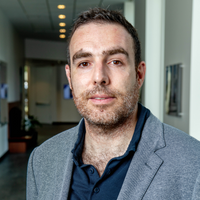


Baylor Adoption Expert Says Birth Mothers Need Increased Support During, Following Adoption Process
Dr. Elissa Madden's latest social work research centers on the experience of birth mothers who decide to place their children for adoption. Madden and her research team found that time impacts the level of satisfaction (or lack thereof) these women feel regarding their decision -- and that impact isn't always positive. While many birth mothers reported satisfaction with their decision, the newest findings show that the more time that has passed since the birth mothers placed their child, the less overall satisfaction some birth mothers felt. Some prior research suggests birth mothers’ grief and adjustment attenuates with the passage of time. However, the researchers note “the findings of this analysis highlight the importance of not confusing birth mother’s satisfaction with her decision and the feelings of loss that she may feel about the placement.” A birth mother may feel she made the right decision regarding placement and yet still experience ongoing feelings of loss and grief even years later, Madden said. Madden's multiple studies of birth mothers' experiences have shown that there's a need for more resources for these women. “Adoption professionals must be especially attuned to the needs and concerns of expectant mothers who seek their counsel, as many lack a full understanding of their options,” Madden said. Madden and her team suggest: • Annual “grief and loss” training for adoption professionals • State and federal policies ensuring birth mothers have access to ongoing post-relinquishment support services • Free grief support groups for all birth mothers • Adoption of national standards to ensure that expectant mothers and prospective adoptive parents receive standardized information detailing the benefits of ongoing post-adoption contact • Stipends for expectant mothers to hire independent legal counsel to represent the mothers at the relinquishment and during sensitive discussion regarding post-adoption contact Elissa Madden, Ph.D., associate professor, joined the Diana R. Garland School of Social Work in August 2016. Her primary research interest is in child welfare, with a particular focus on ways to promote permanency for children in foster care. Dr. Madden is a former child welfare conservatorship worker with Child Protective Services in Texas. She is a licensed social worker and has extensive experience working with children & families. Source:

New Star Wars, Same Political Landscape?
There’s been an enormous amount of hype leading into this Friday’s release of Solo: A Star Wars Story. Will the 10th installment of what is the most valuable franchise in film history live up to the lofty expectations of both fans and film executives? What does this latest epic tell us about current events here on Earth? The politics of Star Wars has proved to be an enduring fascination to many throughout the past 40 years. Equating current political events to the Star Wars saga is where the experts From the University of Connecticut can help. Stephen Dyson has dissected the politics of the "Game of Thrones," "Star Trek" and previous editions of "Star Wars." He can "read between the lines" of the movie dialogue and equate on-screen dialogue to what's happening now in the United States. Source:



Oculus Go is coming – the market is about to evolve
Oculus Go is an all-in-one virtual reality (VR) headset that will offer 1,000s of games, 360-degree experiences without wires or even a PC to attach to. It’s coming – according to Facebook in early 2018 - but Canadian availability remains somewhat of a mystery. But the marketing has begun. There is a lot of hype when it comes to virtual reality – but will this technology be the gamechanger that shifts the market towards virtual reality experiences without wires and away from screenless viewers (headsets that require users to insert their smartphone)? Or will it take longer for VR to become mainstream, altering how we all consume games, media and virtually every experience that requires or incorporates technology? Is Oculus set to be the next Apple or Amazon? What will the future look like – and who will benefit most from VR? Which VR experiences are of most interest to Canadian consumers? These are early days, what will VR look like in a decade? As the market evolves, it seems VR's market potential has been diminished by the emergence of mobile AR as a rival platform. Even with the market pushing towards standalone headsets, premium VR might not accelerate until second-generation, standalone VR headsets break out starting over the next few years. There are a lot of questions about virtual reality and that’s where the experts from IDC Canada can help. Emily Taylor is a senior research analyst in the areas of consumer service and technology markets. She also can provide unique and intelligent insight into new landscape of virtual reality and augmented reality technologies for both consumers and businesses in Canada. Watch her video for more information on the VR/AR market in Canada, then simply click on her icon to arrange an interview. Source:
