
Experts Matter. Find Yours.
Connect for media, speaking, professional opportunities & more.
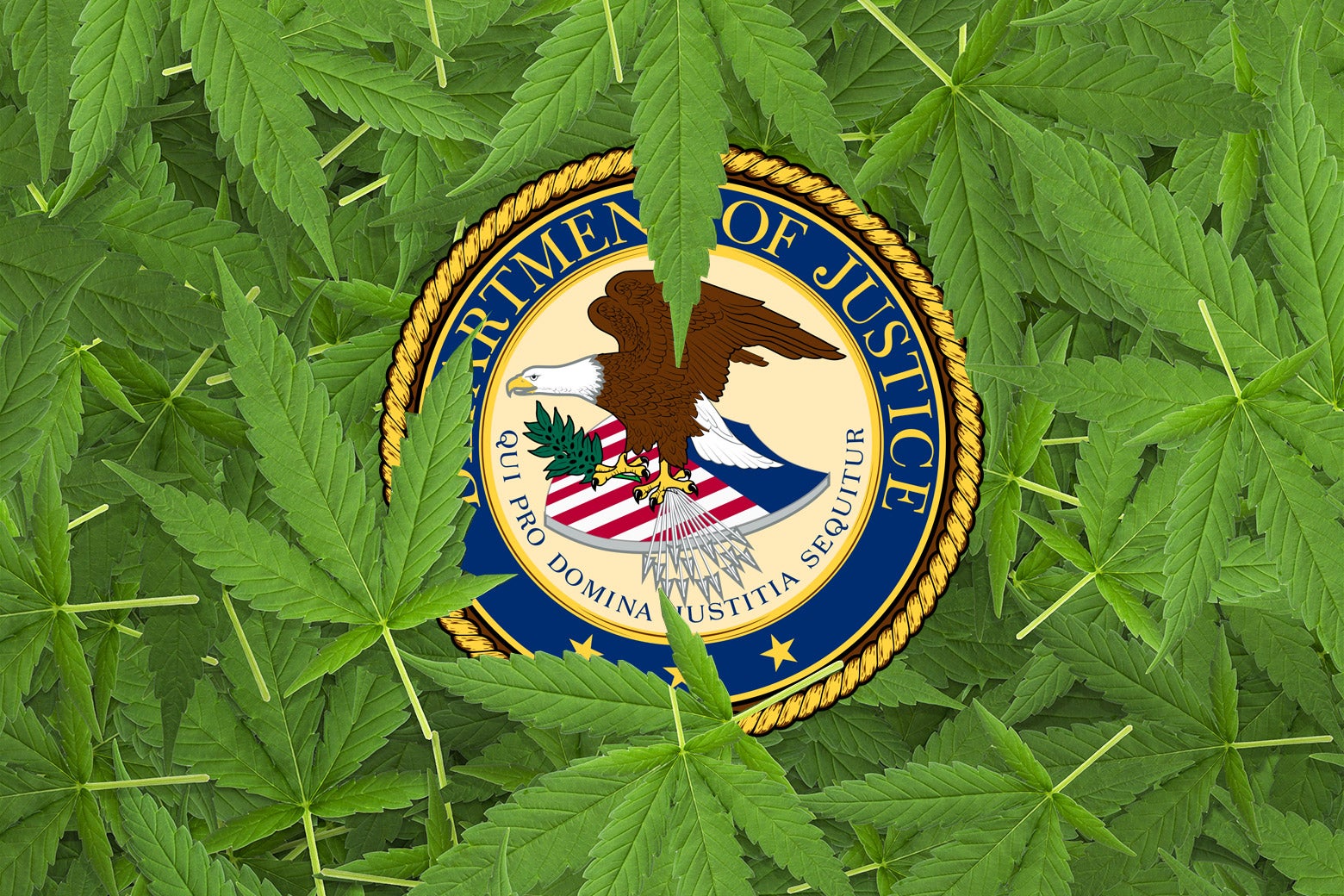
Earlier this year, the Drug Enforcement Agency (DEA) announced that it would move marijuana from Schedule I to Schedule III under the Controlled Substances Act (CSA), greatly reducing the restrictions on the drug. It represents a historic change in federal marijuana policy and a watershed moment for generations of activists that have sought legalization on a national level. While many advocates believe the shift bodes well for efforts to relax controls on other Schedule I drugs—including promising psychedelics like psilocybin, MDMA, and LSD– Vanderbilt Law professor Robert Mikos argues that the marijuana rescheduling decision will not pave the way for rescheduling any other drug. Mikos explains that the decision preserves the barriers that make it virtually impossible to remove drugs from Schedule I. He labels those barriers the “tyrannies of scheduling.” In his paper “Marijuana and the Tyrannies of Scheduling,” forthcoming in Fordham Law Review, Mikos lays out the core challenges posed by the existing scheduling process and offers a solution that would lead to “more rational scheduling decisions that better reflect the benefits and dangers of controlled substances, as Congress intended.” The Role of Currently Accepted Medical Use in Scheduling Decisions The CSA creates five Schedules (I-V). Scheduling dictates how a drug is regulated under the statute. Schedule I drugs are subject to the most restrictive controls, and those controls are steadily relaxed as one moves down the schedules. Congress made all the initial scheduling decisions when it passed the CSA in 1970, but it also empowered the DEA, working in conjunction with the Department of Health and Human Services (HHS), to reschedule drugs based on new information acquired after the passage of the statute. Agency scheduling decisions are supposed to be based on three core characteristics of a drug: its abuse potential, its dependence liability, and whether it has a currently accepted medical use (CAMU). Unfortunately, these characteristics do not always suggest the same schedule for a drug. But as Mikos explains, the DEA has grossly simplified the scheduling process by suggesting that CAMU determinations should trump all other considerations. In particular, the agency has insisted that a drug with no CAMU must be placed on Schedule I, regardless of its abuse potential or dependence liability. According to Mikos, the DEA’s simplification of the scheduling process places tremendous weight on agency CAMU determinations and how the agency chooses to define this particular scheduling criteria. The Tyranny of Science In the past, the DEA insisted that the only way to demonstrate that a drug has a CAMU was by completing multiple controlled trials (RCTs) demonstrating that a drug is effective at treating some medical indication, the same requirement for new drug approval under the Food, Drug and Cosmetic Act. As Mikos has noted in his past work, completing such trials is “notoriously expensive and time-consuming,” requiring strict parameters and a large number of participants. The challenge is even more daunting for drugs already on Schedule I, because the CSA restricts research on such drugs. Due to regulatory restrictions, marijuana advocates have struggled to complete even a single RCT demonstrating marijuana’s medical efficacy. Indeed, in the past 50 years, only one Schedule I drug (Epidiolex) has ever been able to satisfy the DEA’s CAMU test, leading Mikos to label the agency’s science-focused approach the “Tyranny of Science.” The Tyranny of the Majority In 2023, however, HHS devised an alternative CAMU test that emphasizes practical experience over scientific research. “Because more than 30,000 health care practitioners (HCPs) had already recommended the drug to their patients in the thirty-eight states with medical marijuana laws,” Mikos explains, “the agency concluded there was enough clinical experience to demonstrate that marijuana has a CAMU and thus could be rescheduled.” But while this alternative test does not require completing RCTs – and thereby eliminates the Tyranny of Science – Mikos demonstrates that it is no less tyrannical than the DEA’s original CAMU test. According to Mikos, the alternative CAMU test simply “imposes a different form of tyranny: the Tyranny of the Majority.” He explains that to accumulate the clinical experience needed to satisfy the new test, advocates must convince popular majorities in a substantial number of states to legalize medical use of a drug. It took decades to build the public support necessary to do that for marijuana, and Mikos points out that no other Schedule I drug currently commands the same level of public support as marijuana. “Despite growing interest in the therapeutic value of [psychedelics, . . . less than a quarter of all Americans support legalizing psychedelics like psilocybin,” Mikos writes. “By comparison, 90% of Americans support legalizing medical marijuana.” What is more, even if large numbers of states were to legalize medical use of a substance like psilocybin or MDMA, advocates will also have to convince large numbers of patients, their health care practitioners (HCPs), and their suppliers to risk federal sanctions in order to accumulate the clinical experience HHS demands to satisfy the new CAMU test. “While marijuana was finally able to run the gauntlet, no other Schedule I is likely to replicate that feat anytime soon. Other promising Schedule I drugs like psilocybin, MDMA, and LSD are likely to remain trapped on that schedule for the foreseeable future,” the paper states. A New Way Forward Mikos argues that the agencies did not need to create a new CAMU test to reschedule marijuana. He suggests that the DEA has placed too much emphasis on CAMU in scheduling decisions. The DEA “has no authority, and no good reason, to hold (or place) a drug on Schedule I solely because the drug lacks a currently accepted medical use.” Indeed, Mikos suggests the agency’s emphasis on CAMU runs contrary to the text of the CSA and provides insufficient information about a drug’s benefits and risks to make sensible scheduling decisions. Rather than propose yet another, less tyrannical CAMU test, Mikos suggests that the DEA should instead take a more flexible approach to scheduling, one that considers all 3 criteria – a drug’s abuse potential, its dependence liability, and whether or not it has a currently accepted medical use (CAMU)—to determine where a drug belongs among the statute’s five schedules. “Although my approach would not make it any easier to demonstrate CAMU, it would reduce the dominant influence CAMU determinations now wield over scheduling decisions,” Mikos concludes. It would enable the agency to remove drugs like marijuana, psilocybin, or MDMA from Schedule I, even if they lack a currently accepted medical use, if their abuse potential and dependence liability so warrant. “As a result,” he notes, “my approach would foster more rational administrative scheduling decisions going forward.”


More on VP Kamala Harris Speaking Out
Professor of Constitutional Law James Sample appeared on WNYW Fox 5 and on WABC-TV Eyewitness News to discuss next steps for the Democratic party and Vice President Kamala Harris’s first public appearance since President Joe Biden dropped his reelection bid and endorsed her for president. James is available to speak with media - simply click on his icon now to arrange an interview today.


The Vanderbilt Policy Accelerator for Political Economy and Regulation (VPA) is leading the way in research and policy recommendations on the governance of artificial intelligence. At the Third Annual Networks, Platforms & Utilities conference hosted by the VPA in June, the groundbreaking initiative was commended by FTC Chair Lina Khan for its impact on her work with the agency. As part of Discovery Vanderbilt, Vanderbilt Policy Accelerator for Political Economy and Regulation is a groundbreaking initiative to bolster innovative research and education at Vanderbilt. The mission of VPA is to swiftly develop and advance cutting-edge research, education and policy proposals at a pace that aligns with the urgency of today’s challenges. The VPA encompasses several projects, including one dedicated to revitalizing the study of the law and political economy of networks platforms, and utilities (NPUs) in transportation, communications, energy and banking. “Many of our country’s most pressing economic and social challenges are directly tied to how we govern network, platform, and utility industries, including airline flight cancellations, social media regulation, banking failures and electric grid crashes,” said Ganesh Sitaraman, the New York Alumni Chancellor’s Chair in Law at Vanderbilt Law School and director of VPA. VPA’s Project on Networks, Platforms and Utilities has developed a series of papers and policy proposals to improve the governance of these sectors. Among this work are a set of proposals to policymakers for regulating air travel, a plan for stabilizing and regulating the banking sector, and 40 recommendations to promote competition throughout the American economy. With growing interest in AI, VPA has turned its eye to how policymakers can address the harms that come from concentration in the AI technology stack. VPA’s papers have developed an antimonopoly approach to regulating AI, addressed public capacity for AI, and offered proposals on federal procurement of AI resources. VPA’s work in this field has gotten increasing attention. VPA director Ganesh Sitaraman participated in one of the U.S. Senate’s AI Fora in 2023. And during the Third Annual Networks, Platforms & Utilities conference hosted by the VPA in June, FTC Chair Lina Khan specifically noted VPA’s impact on the agency. “I think the work that VPA has been doing on AI has been so enormously useful,” said Khan. “It’s really striking how it took 15 years before the NPU toolkit was even discussed alongside the Web 2.0 giants. So, the fact that from the very get-go this kind of framework is being applied in the context of AI policy discussions really marks that forward movement.” During the June conference, participants—which included 64 attendees from 15 different countries— discussed how their jurisdictions of study approach the regulation of network, platform and utility industries. This year’s conference was structured around eight panels, one on general themes and seven featuring a specific NPU sector: railroads, electricity, banking & finance, airlines, social infrastructure, tech platforms and telecommunications. “Vanderbilt is a leader in research on these topics, and we were very excited to welcome scholars from around the world to Nashville and to Vanderbilt, in order to explore these issues from a comparative and global perspective,” said Sitaraman. In the coming months, the conference organizers intend to compile the papers presented at the conference into an edited volume. To learn more, visit the Vanderbilt Policy Accelerator website.


Hofstra Experts Weigh In on the 2024 Presidential Election
Hofstra University boasts a team of distinguished media-ready experts, ready to talk about the newest developments in the 2024 presidential race. They include presidential scholar Meena Bose, constitutional law professor James Sample, media expert and former NBC executive Mark Lukasiewicz, and Lawrence Levy, an expert in suburban studies and suburban voting trends More details on their expertise and recent media appearances are provided below, along with information on how to connect with them for interviews and commentary. Dr Meena Bose Executive Director of the Kalikow Center for the Study of the American Presidency & Professor of Political Science Dr. Meena Bose brings her extensive experience and frequent media presence to discussions on the historic nature of the 2024 presidential race. Recent topics she has been interviewed about include next steps for the Democrats now that President Biden has withdrawn from the 2024 presidential race, former President Donald Trump’s selection of J.D. Vance as his running mate, how the assassination attempt on Trump may have impacted the race, and the Supreme Court’s presidential immunity rulings View Profile & Connect Recent Media Dr. Meena Bose has recently been called on by media to discuss: CNN's Biden-Trump debate; how President Biden may recover from his poor debate performance; and the Supreme Court’s presidential immunity ruling. She has appeared on WABC-TV, WNYW Fox 5, Fox radio stations across the country, and Reuters TV. She is frequently interviewed by Newsday and Newsweek, and her expertise has also been prominently featured in The Washington Post and The New York Times. She is the author of the forthcoming book: Pragmatic Vision: Obama and the Enactment of the Affordable Care Act. James Sample Professor, Maurice A. Deane School of Law James Sample, a constitutional law professor, is a sought-after legal and political commentator on legal challenges facing former President Donald Trump, Supreme Court ethics, the broader implications of presidential immunity, and the guilty verdict delivered in the Senator Robert Menendez trial. He most recently was interviewed about President Biden leaving the race and throwing his support behind VP Kamala Harris. View Profile & Connect Recent Media James Sample is a regular commentator for Reuters, CNN, CBS, WNYW Fox 5, and WCBS on topics like the Supreme Court’s ruling on presidential immunity; ethics questions facing Supreme Court Justices Alito and Thomas; former President Donald Trump’s legal challenges, including the election interference case and the “Hush Money” trial. In addition to his broadcast media interviews, Professor Sample has been interviewed by The New York Times, The Washington Post, The Economist, U.S. News & World Report, the Los Angeles Times, National Public Radio, Salon, USA Today, and The National Law Journal, as well as in leading blogs and regional outlets throughout the country. Mark Lukasiewicz Dean of the Lawrence Herbert School of Communication Mark Lukasiewicz offers his expertise on media coverage of the presidential race, drawing on his vast experience in planning and supervising election coverage. Before joining Hofstra, Dean Lukasiewicz was senior vice president of specials at NBC News, planning and supervising coverage of major breaking news events, including presidential elections and debates from 2004 to 2016. View Profile & Connect Recent Media A former NBC executive, Dean Lukasiewicz is available to speak about media coverage of the 2024 presidential race. Recent examples include the June 27th debate and expectations for President Biden’s interview on July 5 with George Stephanopoulos. Before joining Hofstra, Dean Lukasiewicz was senior vice president of specials at NBC News, planning and supervising coverage of major breaking news events, including presidential elections and debates from 2004 to 2016. He has been interviewed in recent weeks by the Wall Street Journal, Newsday, Tribune News Service, Scripps Morning News, and the AP. Lawrence Levy Associate Vice President and Executive Dean of the National Center for Surburban Studies (NCSS) In his leadership role at NCSS, Dean Levy has worked with Hofstra's academic and local communities to shape an innovative, interdisciplinary agenda for interdisciplinary suburban study. He has commented on a variety of political issues – most recently President Biden dropping his reelection bid and what that means for down-ballot elections. View Profile & Connect Recent Media Prior to joining Hofstra, Dean Levy spent 35 years as a reporter, editorial writer, columnist and PBS host, winning many of journalism's top awards (including Pulitzer finalist) for in-depth works on suburban politics, education, taxation, housing and other key issues. As a journalist, he was known for blending national trends and local perspectives and has covered seven presidential campaigns and 15 national conventions. Visit our Expert Center for a full directory of Hofstra experts insights.


From Facial Recognition to Deepfakes: What Could Be Done With Your Image?
Facial Recognition: Convenience and Controversy Facial recognition technology is everywhere, making our day-to-day tasks faster and more convenient. It offers substantial benefits, from enhanced security measures to streamlined user experiences. Airports utilize it for faster check-ins, smartphones use it for secure authentication, and law enforcement agencies employ it for identifying suspects. However, the technology also raises considerable privacy concerns. The pervasive deployment of facial recognition without adequate oversight can lead to unwarranted surveillance, potential biases in profiling, and the erosion of personal privacy. The Rise of Deepfake Technology Meanwhile, deepfake technology has advanced rapidly, leveraging AI to create highly realistic synthetic, or "fake", media. These hyper-realistic videos, showing individuals doing or saying things they never actually did, have become a significant concern. The potential misuse of deepfakes ranges from spreading misinformation and manipulating elections to causing personal distress by enabling crimes like fraud and defamation. Dr. Derek Riley, a seasoned media expert, professor and program director of the B.S. in Computer Science program at Milwaukee School of Engineering, is available to discuss how these technologies work, how they're regulated, how they can be used in a positive manner, and how individuals can protect themselves.



Exploring Milwaukee and Wisconsin's Cultural and Urban Landscape
As the Republican National Convention 2024 approaches, journalists from across the nation and the world will converge on Milwaukee, not only to cover the political spectacle but also to uncover the rich cultural, architectural, and urban tapestry that makes this city truly unique. Milwaukee, often referred to as the "Cream City" for its distinctive cream-coloured bricks, with many historical and contemporary narratives is waiting to be explored. To help visiting journalists navigate and understand the depth of Milwaukee's heritage and modern vibrancy, our MSOE experts are available to offer insights. Discover the rich tapestry of Milwaukee and Wisconsin through the lens of two distinguished experts. Dr. Michael Carriere and Kurt Zimmerman bring unparalleled expertise in the fields of culture, architecture, and urban planning, offering deep insights into the region's unique historical and contemporary narratives. Dr. Michael Carriere Professor, Honors Program Director Expertise: Sustainability, American History, General Social Science, Honors Program, History, General Humanities, Student Affairs, Urban Studies View Profile Dr. Michael Carriere, a Professor and Honors Program Director, is an urban historian specializing in American history, urban studies, and sustainability. With a focus on the growth and challenges of Milwaukee's neighborhoods, Dr. Carriere provides valuable perspectives on urban agriculture, creative placemaking, and the Milwaukee music scene. His extensive knowledge of Milwaukee and Wisconsin history and politics makes him a key resource for understanding the region's evolving urban landscape. “To me, it’s a no-brainer,” says Carriere, now a professor of history at Milwaukee School of Engineering and author of The City Creative: The Rise of Urban Placemaking in Contemporary America. “Cities like Louisville, like Buffalo, like Boston have really leveraged the Olmsted spaces in their cities. … The reason I’m really excited about [the bicentennial] is that this could be the chance to have useful, and in some cases uncomfortable, conversations on how public spaces should look and operate in a 21st-century city like Milwaukee.” The Lasting Legacy of Frederick Law Olmsted and His 3 Signature Milwaukee Parks Milwaukee Magazine April 1, 2022 Kurt Zimmerman Assistant Professor Expertise: Deep Energy, Retrofit Integrated Project, Delivery Architecture, Design, Building Envelope, Building Science, Sustainability, LEED AP View Profile Kurt Zimmerman, an Assistant Professor, offers expertise in Milwaukee's architectural history, urban planning, and sustainable design. His insights into the city's architectural evolution and design principles contribute to a deeper appreciation of Milwaukee's unique urban fabric and sustainable development efforts. “If you’re trying to build buildings that are meant to last, look back in history and see what is still standing. Those are your models. It’s all about build it once, build it right, build it to last. I’m very conscious of the environmental aspects of our projects, whether the clients ask for it or not.” The Daily Reporter October 2, 2014 For further information and to arrange interviews with our experts, please contact: JoEllen Burdue Senior Director of Communications and Media Relations Phone: (414) 839-0906 Email: burdue@msoe.edu About Milwaukee School of Engineering (MSOE) Milwaukee School of Engineering is the university of choice for those seeking an inclusive community of experiential learners driven to solve the complex challenges of today and tomorrow. The independent, non-profit university has about 2,800 students and was founded in 1903. MSOE offers bachelor's and master's degrees in engineering, business and nursing. Faculty are student-focused experts who bring real-world experience into the classroom. This approach to learning makes students ready now as well as prepared for the future. Longstanding partnerships with business and industry leaders enable students to learn alongside professional mentors, and challenge them to go beyond what's possible. MSOE graduates are leaders of character, responsible professionals, passionate learners and value creators.


Opening the Debate on Enforcing Fireworks Laws
Lawrence Levy, associate vice president and executive dean of the National Center for Suburban Studies, talked to Newsday for a article about the challenges of enforcing the New York state law that says the use of fireworks by anyone other than a certified pyrotechnic is a Class B misdemeanor, punishable by up to 90 days in jail. “Broad enforcement of laws forbidding fireworks is virtually impossible for local police departments, and perhaps even perilous for politicians,” Levy said. “Cops and fire departments already have their hands full with serious emergencies, including some due to mishandling of illegal fireworks, plus everything else they need to do on a busy holiday when people are drinking too much.” Lawrence Levy is available to speak with media - simply click on his icon now to arrange an interview today.

Cosmetic or Drug? The FDA's Classification of Sunscreen Limits Which Products Hit US Shelves
As stifling rays of sunshine beat down across the United States, it’s the time of year citizens flock to the store to load up on sun protection. It’s also the time of year consumers and media raise the annual question of why Europe is able to market sunscreen that contains more potentially effective ingredients, but the U.S. isn’t. The answer is not related to sunscreen or its ingredients, but rather how the country’s regulatory body – The Food and Drug Administration (FDA) – legally operates. “In order for the FDA to legally regulate products, those products are given classifying labels,” said Ana Santos Rutschman, a professor of law at Villanova University who studies health law. “A toothbrush, for instance, is labeled a medical device. That’s because it has to fit in one of the sources of authority of the FDA and the FDA, per the law, regulates drugs or medical devices.” Here is where it gets tricky. The FDA does not have to approve cosmetics, aside from certain color additives, before those products go to market. In the European Union’s European Medicines Agency (EMA), sunscreen is labeled as a cosmetic. Many other countries also classify it as such. In the U.S., however, sunscreen is labeled a drug because it has a therapeutic effect, and thus falls under the authority of the FDA. To make the classification system even more convoluted, some items are labeled as both a cosmetic and drug by the FDA. Shampoo, for instance, is inherently cosmetic. “But if it’s anti-dandruff shampoo, then it’s also a pharmaceutical,” said Santos Rutschman. “It’s super common for this to happen with a lot of products that you and I would not think are classified as drugs. It’s very natural under the regulatory regime that we have, but then it is very hard to bring anything to market – harder than other countries.” Case in point, sunscreen used in the EU that contains ingredients which may be more effective against certain types of ultraviolet rays cannot simply just come to market in the U.S. “If sunscreen fits the definition of a drug, then it must meet drug requirements,” said Santos Rutschman. “If you want a new drug to enter the U.S., you have to show efficacy and safety. But in order to do that, there must be clinical trials, and if those trials happened elsewhere, they would not conform to our domestic protocols. “Even if another country performed their own clinical trials, the odds the FDA would utilize the data are not incredibly high. If you think another country recognizes something we should, based on their data, then immediately this is going to raise questions of why we are deferring to a foreign regulator.” The FDA could go through the process of approving ingredients in question – and has indicated it will do so – but it’s a complicated process, and there is “also a matter of risk,” according to Santos Rutschman. “The FDA has always been less risk averse than its counterparts in Europe. I understand the market concerns, but this seems about right from a regulatory perspective… We aren’t talking about a specific drug that people need and cannot access. Sunscreen is available for the average American to purchase.” Barring an overhaul to the regulatory system in the U.S. to include an agency for cosmetics – an idea some argue has merit, but Santos Rutschman described as “not feasible” with the available funding – the only way Europe’s sunscreen would be available for Americans to purchase is if the FDA moved forward in regulating the ingredients. And that will continue to take time. “The FDA has never moved quickly on anything,” said Santos Rutschman. “It just can't.”



Small Changes Can Save Lives: How a Police Officer’s First Words Can Transform Communities
Britt Nestor knew something needed to change. Nestor is a police officer in North Carolina. Unlike many in her field, who recite interview-ready responses about wanting to be a police officer since childhood, Nestor admits that her arrival to the field of law enforcement was a serendipitous one. Told by teachers to start rehearsing the line “do you want fries with that?” while in high school, Nestor went to college to prove them wrong—and even graduated with a 3.9 GPA solely to prove those same people wrong—but she had absolutely no idea what to do next. When a local police department offered to put her through the police academy, her first thought was, “absolutely not.” “And here I am,” says Nestor, 12 years into her career, working in Special Victims Investigations as an Internet Crimes Against Children detective. A Calling to Serve Community Brittany Nestor, New Blue Co-Founder and President Though she’d initially joined on a whim, Nestor stuck around and endured many growing pains, tasting some of the problematic elements of police culture firsthand. As a woman, there was particular pressure to prove herself; she resisted calling for back-up on dangerous calls for fear of being regarded as weak, and tried out for and joined the SWAT team to demonstrate her mettle. "It took time to realize I didn’t need to make the most arrests or get the most drugs and guns to be a good cop. What was important was recognizing that I was uniquely positioned and given opportunities every single shift to make a difference in people’s lives—that is what I wanted to focus on." Britt Nestor Nestor found she took great pleasure in interacting with different kinds of people all day. She’s deeply fond of her community, where she is also a youth basketball coach. One of her greatest joys is being on call or working an event and hearing someone hail her from the crowd by yelling, “hey, coach!” When she landed in the Juvenile Investigations Unit, Nestor truly felt she’d found her calling. Still, what she’d witnessed in her profession and in the news weighed on her. And she’s not alone; while there is continued debate on the urgency and extent of changes needed, 89% percent of people are in favor of police reform, according to a CBS/YouGov poll. A few weeks after George Floyd’s murder in 2020, Nestor’s colleague Andy Saunders called her and told her they had to do something. It felt like the tipping point. “I knew he was right. I needed to stop wishing and hoping police would do better and start making it happen.” Andy Saunders, New Blue Co-Founder and CEO That conversation was the spark that grew into New Blue. Founded in 2020, New Blue strives to reform the U.S. Criminal Justice system by uniting reform-minded police officers and community allies. The organization focuses on incubating crowd-sourced solutions from officers themselves, encouraging those in the field to speak up about what they think could improve relations between officers and the communities they serve. “Over the years I’ve had so many ideas—often addressing problems brought to light by community members—that could have made us better. But my voice was lost. I didn’t have much support from the police force standing behind me. This is where New Blue makes the difference; it’s the network of fellows, alumni, partners, mentors, and instructors I’d needed in the past.” Nestor and Saunders had valuable pieces of the puzzle as experienced law enforcement professionals, yet they knew they needed additional tools. What are the ethical guidelines around experimenting with new policing tactics? What does success look like, and how could they measure it? The Research Lens Over 400 miles away, another spark found kindling; like Nestor, Assistant Professor of Organization & Management Andrea Dittmann’s passion for making the world a better place is palpable. Also, like Nestor, it was an avid conversation with a colleague—Kyle Dobson—that helped bring a profound interest in police reform into focus. Dittmann, whose academic career began in psychology and statistics, came to this field by way of a burgeoning interest in the need for research-informed policy. Much of her research explores the ways in which socioeconomic disparities play out in the work environment, and—more broadly—how discrepancies of power shape dynamics in organizations of all kinds. When people imagine research in the business sector, law enforcement is unlikely to crop up in their mind. Indeed, Dittmann cites the fields of criminal justice and social work as being the traditional patrons of police research, both of which are more likely to examine the police force from the top down. Andrea Dittmann Dittmann, however, is a micro-oriented researcher, which means she assesses organizations from the bottom up; she examines the small, lesser-studied everyday habits that come to represent an organization’s values. “We have a social psychology bent; we tend to focus on individual processes, or interpersonal interactions,” says Dittmann. She regards her work and that of her colleagues as a complementary perspective to help build upon the literature already available. Where Dittmann has eyes on the infantry level experience of the battleground, other researchers are observing from a bird’s eye view. Together, these angles can help complete the picture. And while the “office” of a police officer may look very different from what most of us see every day, the police force is—at the end of the day—an organization: “Like all organizations, they have a unique culture and specific goals or tasks that their employees need to engage in on a day-to-day basis to be effective at their jobs,” says Dittmann. Theory Meets Practice Kyle Dobson, Postdoctoral Researcher at The University of Texas at Austin What Dittmann and Dobson needed next was a police department willing to work with them, a feat easier said than done. Enter Britt Nestor and New Blue. "Kyle and I could instantly tell we had met people with the same goals and approach to reforming policing from within." Andrea Dittmann Dittmann was not surprised by the time it took to get permission to work with active officers. “Initially, many officers were distrustful of researchers. Often what they’re seeing in the news are researchers coming in, telling them all the problems that they have, and leaving. We had to reassure them that we weren’t going to leave them high and dry. If we find a problem, we’re going to tell you about it, and we’ll work on building a solution with you. And of course, we don’t assume that we have all the answers, which is why we emphasize developing research ideas through embedding ourselves in police organizations through ride-alongs and interviews.” After observing the same officers over years, they’re able to build rapport in ways that permit open conversations. Dittmann and Dobson now have research running in many pockets across the country, including Atlanta, Baltimore, Chicago, Washington, D.C. and parts of Texas. The Rise of Community-Oriented Policing For many police departments across the nation, there is a strong push to build closer and better relationships with the communities they serve. This often translates to police officers being encouraged to engage with citizens informally and outside the context of enforcing the law. If police spent more time chatting with people at a public park or at a café, they’d have a better chance to build rapport and foster a collective sense of community caretaking—or so the thinking goes. Such work is often assigned to a particular unit within the police force. This is the fundamental principle behind community-oriented policing: a cop is part of the community, not outside or above it. This approach is not without controversy, as many would argue that the public is better served by police officers interacting with citizens less, not more. In light of the many high-profile instances of police brutality leaving names like Breonna Taylor and George Floyd echoing in the public’s ears, their reticence to support increased police-to-citizen interaction is understandable. “Sometimes when I discuss this research, people say, ‘I just don’t think that officers should approach community members at all, because that’s how things escalate.’ Kyle and I acknowledge that’s a very important debate and has its merits.” As micro-oriented researchers, however, Dittmann and Dobson forgo advocating for or dismissing broad policy. They begin with the environment handed to them and work backward. “The present and immediate reality is that there are officers on the street, and they’re having these interactions every day. So what can we do now to make those interactions go more smoothly? What constitutes a positive interaction with a police officer, and what does it look like in the field?” Good Intentions Gone Awry To find out, they pulled data through a variety of experiments, including live interactions, video studies and online experiments, relying heavily on observation of such police-to-citizen interactions. "What we wanted to do is observe the heterogeneity of police interactions and see if there’s anything that officers are already doing that seems to be working out in the field, and if we can ‘bottle that up’ and turn that into a scalable finding." Andrea Dittmann Dittmann and her colleagues quickly discovered a significant discrepancy between some police officers’ perceived outcome of their interactions with citizens and what those citizens reported to researchers post-interaction. “An officer would come back to us and they’d say it went great. Like, ‘I did what I was supposed to do, I made that really positive connection.’ And then we’d go to the community members, and we’d hear a very different story: ‘Why the heck did that officer just come up to me, I’m just trying to have a picnic in the park with my family, did I do something wrong?’” Community members reported feeling confused, harassed, or—at the worst end of the spectrum—threatened. The vast majority—around 75% of citizens—reported being anxious from the very beginning of the interaction. It’s not hard to imagine how an officer approaching you apropos of nothing may stir anxious thoughts: have I done something wrong? Is there trouble in the area? The situation put the cognitive burden on the citizen to figure out why they were being approached. The Transformational Potential of the “Transparency Statement” And yet, they also observed officers (“super star” police officers, as Dittmann refers to them) who seemed to be especially gifted at cultivating better responses from community members. What made the difference? “They would explain themselves right from the start and say something like, ‘Hey, I’m officer so-and-so. The reason I’m out here today is because I’m part of this new community policing unit. We’re trying to get to know the community and to better understand the issues that you’re facing.’ And that was the lightbulb moment for me and Kyle: the difference here is that some of these officers are explaining themselves very clearly, making their benevolent intention for the interaction known right from the start of the conversation.” Dittmann and her colleagues have coined this phenomenon the “transparency statement.” Using a tool called the Linguistic Inquiry & Word Count software and natural language processing tools, the research team was able to analyze transcripts of the conversations and tease out subconscious cues about the civilians’ emotional state, in addition to collecting surveys from them after the encounter. Some results jumped out quickly, like the fact that those people whose conversation with an officer began with a transparency statement had significantly longer conversations with them. The team also employed ambulatory physiological sensors, or sensors worn on the wrist that measure skin conductivity and, by proxy, sympathetic nervous system arousal. From this data, a pattern quickly emerged: citizens’ skin conductance levels piqued early after a transparency statement (while this can be a sign of stress, in this context researchers determined it to reflect “active engagement” in the conversation) and then recovered to baseline levels faster than in the control group, a pattern indicative of positive social interaction. Timing, too, is of the essence: according to the study, “many patrol officers typically made transparency statements only after trust had been compromised.” Stated simply, the interest police officers showed in them was “perceived as harassment” if context wasn’t provided first. Overall, the effect was profound: citizens who were greeted with the transparency statement were “less than half as likely to report threatened emotions.” In fact, according to the study, “twice as many community members reported feeling inspired by the end of the interaction.” What’s more, they found that civilians of color and those from lower socioeconomic backgrounds —who may reasonably be expected to have a lower baseline level of trust of law enforcement—“may profit more from greater transparency.” Talk, it turns out, is not so cheap after all. Corporate Offices, Clinics, and Classrooms The implications of this research may also extend beyond the particulars of the police force. The sticky dynamics that form between power discrepancies are replicated in many environments: the classroom, between teachers and students; the office, between managers and employees; even the clinic, between medical doctors and patients. In any of these cases, a person with authority—perceived or enforceable—may try to build relationships and ask well-meaning questions that make people anxious if misunderstood. Is my boss checking in on me because she’s disappointed in my performance? Is the doctor being nice because they’re preparing me for bad news? “We believe that, with calibration to the specific dynamics of different work environments, transparency statements could have the potential to ease tense conversations across power disparities in contexts beyond policing,” says Dittmann. More Research, Action, and Optimism What could this mean for policing down the road? Imagine a future where most of the community has a positive relationship with law enforcement and there is mutual trust. "I often heard from family and friends that they’d trust the police more ‘if they were all like you.’ I can hear myself saying, ‘There are lots of police just like me!’ and I truly believe that. I believe that so many officers love people and want to serve their communities—and I believe a lot of them struggle with the same things I do. They want to see our profession do better!" Britt Nestor “When I get a new case and I meet the survivor, and they’re old enough to talk with me, I always explain to them, ‘I work for you. How cool is that?’ And I truly believe this: I work for these kids and their families.” The implications run deep; a citizen may be more likely to reach out to police officers about issues in their community before they become larger problems. An officer who is not on edge may be less likely to react with force. Dittmann is quick to acknowledge that while the results of the transparency statement are very promising, they are just one piece of a very large story with a long and loaded history. Too many communities are under supported and overpoliced; it would be denying the gravity and complexity of the issue to suggest that there is any silver bullet solution, especially one so simple. More must be done to prevent the dynamics that lead to police violence to begin with. “There’s a common narrative in the media these days that it’s too late, there’s nothing that officers can do,” says Dittmann. Yet Dittmann places value on continued research, action and optimism. When a simple act on the intervention side of affairs has such profound implications, and is not expensive or difficult to implement, one can’t help but see potential. “Our next step now is to develop training on transparency statements, potentially for entire agencies,” says Dittmann. “If all the officers in the agency are interacting with transparency statements, then we see this bottom-up approach, with strong potential to scale. If every interaction you have with an officer in your community starts out with that transparency statement, and then goes smoothly, now we’re kind of getting to a place where we can hopefully talk about better relations, more trust in the community, at a higher, more holistic, level.” While the road ahead is long and uncertain, Dittmann’s optimism is boosted by one aspect of her findings: those community members who reported feeling inspired after speaking with police officers who made their benevolent intentions clear. "That was really powerful for me and Kyle. That’s what gets me out of bed in the morning. It’s worth trying to move the needle, even just a little bit." Andrea Dittmann Looking to know more? Andrea Dittman is available to speak with media about this important research. Simply click on her icon now to arrange an interview today.


#ExpertSpotlight: Who is Julian Assange?
In the ever-evolving landscape of digital information and cybersecurity, Julian Assange stands as a central figure, symbolizing the complex intersection of transparency, secrecy, and journalism in the modern world. This topic is not only newsworthy because of Assange’s controversial role in founding WikiLeaks and exposing classified information, but also due to the profound implications his actions have had on national security, international relations, and the ethics of journalism. Furthermore, Assange's ongoing legal battles and the broader debates they spark about freedom of speech, whistleblower protections, and government accountability are crucial for understanding the dynamics of information control in contemporary society. The story of Julian Assange offers multiple angles of interest, including: The Genesis of WikiLeaks: Exploring the foundation and mission of WikiLeaks, and how it has changed the landscape of journalism and whistleblowing. Major Leaks and Their Impact: Analyzing significant leaks published by WikiLeaks, such as the Iraq War Logs and the diplomatic cables, and their impact on global politics and public opinion. Legal Battles and Extradition: Investigating Assange’s legal challenges, including the charges against him, the extradition process, and the implications for international law and human rights. Freedom of Speech vs. National Security: Examining the debates surrounding Assange's actions, balancing the right to information with concerns over national security and the protection of sensitive information. Role of Journalism in the Digital Age: Discussing the ethical considerations and responsibilities of journalists and media organizations in handling leaked information. Assange’s Personal Journey: Delving into Assange’s personal life, his motivations, and the psychological and physical toll of his prolonged legal and diplomatic battles. The life and actions of Julian Assange provide journalists with a wealth of storylines that illuminate the complex and often contentious relationship between transparency, security, and the right to know in the digital age. Connect with an Expert about Julian Assange : Keith Werhan Professor Emeritus · Tulane University School of Law Samantha Bradshaw Doctor of Philosophy Candidate · Oxford Internet Institute Michael Moreland, JD, PhD University Professor of Law and Religion; Director, Eleanor H. McCullen Center for Law, Religion and Public Policy | Charles Widger School of Law · Villanova University Craig Albert, PhD Professor of Political Science and Graduate Director of the Master of Arts in Intelligence and Security Studies · Augusta University Michael S. Rogers Senior Advisor, Washington, D.C. · Brunswick Group Robert Anderson National Security Consultant & Intelligence Analyst · Altadena Group To search our full list of experts visit www.expertfile.com Photo credit: Markus Spiske
