
Experts Matter. Find Yours.
Connect for media, speaking, professional opportunities & more.

Aston University partners with Shoosmiths to open up opportunities to study a law degree
Pathways to Law in partnership with Shoosmiths will launch in September 2022 Up to 30 Year 12 students per 18-month cohort will complete the initiative Aston University will host information, advice and guidance sessions as well as law taster sessions at the University as part of the programme. A programme to support students from under-represented backgrounds towards a career in law has been launched by Aston University in partnership with leading law firm Shoosmiths. The Pathways to Law will launch in September 2022 with up to 30 Year 12 students taking part in an 18-month programme of activities to give academically-able, disadvantaged students the chance to develop important key skills in preparing to study a law degree. The government made an announcement about its plans for improving access, participation and outreach initiatives in November 2021, calling for more work style pathways from universities, schools and companies in the West Midlands. Aston University will host several information, advice and guidance sessions as well as law taster sessions on campus over the 18-month programme. Shoosmiths will host three core events: Routes in to Law (Year 12 Feb 2023), Professional Skills and Employability (Year 12 June 2023) and a networking event hosted by Shoosmiths (Year 13 October 2023). Saskia Loer Hansen, Interim Vice-Chancellor of Aston University, said: “This is a fantastic opportunity for prospective law students from across the West Midlands. “Aston University is proud of its track record on social mobility. Research by the UK government’s Social Mobility Commission shows that even when those from working class backgrounds gain access to professional occupations, they go on to earn an average of £6,000 less per year than colleagues from more advantaged backgrounds – a ‘class pay gap’ that persists even when they have the same education, training and experience. “We hope that initiatives like this will help close the class pay gap further and look forward to opening applications in summer 2022.” Alex Bishop, Partner and Co-head of Shoosmiths’ Birmingham office said: “Initiatives like Pathways to Law are an important part of our firm’s continued commitment to advancing social mobility. “It is wonderful to see Victoria Potts, one of our stellar Birmingham lawyers so passionate about driving forwards social mobility through this new programme to offer more potential opportunities for young people in our city who might otherwise feel a career in law is beyond their reach.” Victoria Potts, Associate at Shoosmiths who is leading on the creation and delivery of the programme said: “I am looking forward to partnering with Aston University to work to open up the legal profession for students who would not normally see their career within it. “All of the students who will be selected for the programme will meet widening participation criteria set by the higher education regulatory body, the Office for Students, and be based in the West Midlands area. “We are keen to develop a pathway which widens the social profile of candidates in the legal profession and is representative of the community it serves. “These activities will be a once-in-a-lifetime opportunity for the students and will help level the playing field for their progression into higher education and the legal profession.”


Expert available to discuss Holmes trial verdict
Elizabeth Holmes, founder of the failed blood testing start-up Theranos, was found guilty Monday of four of 11 charges of fraud, after a closely watched trial that lasted nearly four months. A jury determined that she deliberately misled investors. Todd Haugh, associate professor of business law and ethics and the Arthur M. Weimer Faculty Fellow in Business Law at the Indiana University Kelley School of Business, is available to comment on the verdict and future sentencing. Haugh’s research focuses white collar and corporate crime, business and behavioral ethics, and federal sentencing policy, exploring the decision-making processes of the players most central to the commission and adjudication of economic crime and unethical business conduct. He can discuss: • The size of the potential sentencing and the calculation the judge will make in determining it (the statutory maximum is high -- 20 years; the sentencing guideline will be very high -- maybe life imprisonment; but the actual sentence will be much, much lower); • The impact the acquitted conduct will have on the sentence (none -- the law allows the judge to consider all conduct, even counts she was acquitted of) • The impact of Holmes going to trial versus pleading guilty (significant because she loses cooperation credit, for example); • The larger business ethics and compliance implications of the case, which Haugh believes are significant, given the high profile nature of Theranos and Holmes, the culture of Silicon Valley, and the rarity of a criminal trial in a case like this); Haugh can be reached at thaugh@indiana.edu and 812-855-6539

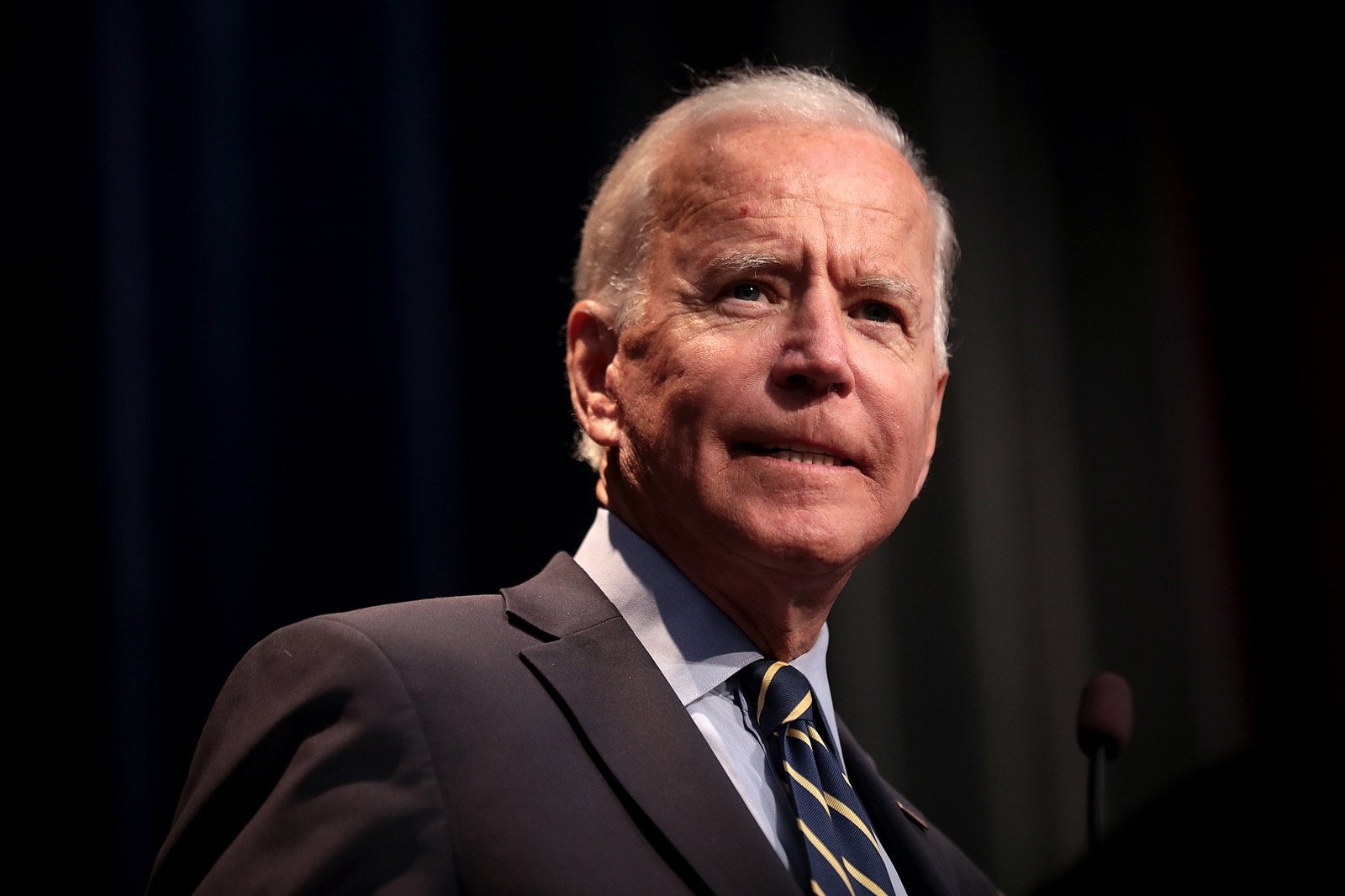
Will Biden’s Plan to Resettle Afghans Transform the U.S. Refugee Program?
Among the high-profile anti-immigration policies that characterized the four years of Donald Trump’s presidency was a dramatic contraction in refugee resettlement in the United States. President Biden has expressed support for restoring U.S. leadership, and increased commitment is needed to help support the more than 80 million people worldwide displaced by political violence, persecution, and climate change, says UConn expert Kathryn Libal. As Libal writes, with co-author and fellow UConn professor Scott Harding, in a recent article for the Georgetown Journal of International Affairs, the rapid evacuation of more than 60,000 Afghans pushed the Biden administration to innovate by expanding community-based refugee resettlement and creating a private sponsorship program. But more resources are needed to support programs that were severely undermined in previous years and to support community-based programs that help refugees through the resettlement process: Community sponsorship also encourages local residents to “invest” in welcoming refugees. Under existing community sponsorship efforts, volunteers often have deep ties to their local communities—critical for helping refugees secure housing, and gain access to employment, education, and health care. As these programs expand, efforts to connect refugees to community institutions and stakeholders, which are crucial to help facilitate their social integration, may be enhanced. As Chris George, Executive Director of Integrated Refugee and Immigrant Services in New Haven, Connecticut, has observed, “It’s better for the refugee family to have a community group working with them that knows the schools and knows where to shop and knows where the jobs are.” As more local communities take responsibility for sponsoring refugee families, the potential for a more durable resettlement program may be enhanced. In the face of heightened polarization of refugee and immigration policies, community sponsorship programs can also foster broad-based involvement in refugee resettlement. In turn, greater levels of community engagement can help challenge opposition toward and misinformation about refugees and create greater public support for the idea of refugee resettlement. Yet these efforts are also fraught with significant challenges. Sponsor circle members may have limited capacity or skills to navigate the social welfare system, access health care services, or secure affordable housing for refugees. If group members lack familiarity with the intricacies of US immigration law, helping Afghans designated as “humanitarian parolees” attain asylum status may prove daunting. Without adequate training and ongoing support from resettlement agencies and caseworkers, community volunteers may experience “burn out” from these various responsibilities. Finally, “successful” private and community sponsorship efforts risk providing justification to the arguments of those in support of the privatization of the USRAP and who claim that the government’s role in resettlement should be limited. Opponents of refugee resettlement could argue that community groups are more effective than the existing public–private resettlement model and seek to cut federal funding and involvement in resettlement. Such action could ultimately limit the overall number of refugees the United States admits in the future. December 11 - Georgetown Journal of International Affairs. If you are a journalist looking to know more about this topic – then let us help with your coverage and questions. An associate professor of social work and human rights, Kathryn Libal is the director of UConn's Human Rights Institute and is an expert on human rights, refugee resettlement, and social welfare. She is available to speak with media – click on her icon now to arrange an interview.


Christmas is here! And with the hustle and bustle of shopping and scouring the internet for that perfect gift or deal, odds are there are people lurking in the dark corners hoping to stuff their stockings with scams if you’re not too careful. At Thanksgiving, when the official start to the shopping season began – the experts from Indiana University’s Kelley School of Business were front and center answering media calls and doing interviews about this very topic Scott Shackelford, a professor at Indiana University specializing in cyber security, said there are some red flags to be on the lookout for while shopping online. “There’s some easy ones to spot right off the bat, including if on the URL,” said Schackelford. “If you see it just as HTTP and not HTTPS. That S stands for secure, which means your information is encrypted when you use that site.” Shackelford also said to be on the lookout for funny wordplay involved on the website. Maniscalo says most of these fake websites originate from outside the country. “English is not their native tongue, so they will a lot of times have misspellings, or say things in kind of an awkward way, not how we would say it, or how we would print it out there,” said Maniscalo. There is also the problem of what Shackelford calls Grinch Bots. These are automated bots that monitor major retail sites to see what items are the hottest and buy them out as soon as they are restocked. “There’s actually been bills that have been proposed in Congress to deal with example of that phenomenon. But of course, they’re not enacted yet, so it’s still up to consumers,” said Shackelford. November 25 – Fox News It’s going to be a busy holiday shopping season – and if you’re a journalist looking to cover this important top, then let us help. Scott Shackelford is an Assistant Professor of Business Law and Ethics at Indiana University’s Kelley School of Business. He’s an expert in the field of cybersecurity law and policy. Scott is available to speak with media about this subject – simply click on his icon now to arrange an interview today.
In any disagreement or dispute, sides are taken - by those involved, by those invested or sometimes just by those most interested in the conflict that is occuring. And when it comes to the matter of superstar athletes squaring off against billionaire owners, it's often the fans that speak the loudest and media are doing their best to cover both sides - and get to the root of the matter. Lately, experts from IU's Kelley School of Business have been front and center - providing expert perspective, opinion and analysis. And earlier this month as players were locked out - Nathaniel Grow was getting calls by reporters for insight. “The players have been seeing their financial position deteriorate over the last few cycles, and the last few years in particular, when the average player salary has declined, which is unprecedented for MLB,” said Nathaniel Grow, an associate professor of business law and ethics at Indiana University’s Kelley School of Business who has written extensively on baseball’s CBA topics and issues for several years. “Within that bucket is the service-time manipulation, which helps feed into some of these salary issues.” “The players don’t think they’re getting a fair shake, is a fair general consensus. The question becomes, where do they go and how do they try to improve their financial position?” December 02 - Sporting News The ongoing labor dispute between players and owners will be long, protracted and at times tense - and if you are a reporter looking to cover this trending topic, then let us help with your stories and questions. Nathaniel Grow is an Associate Professor of Business Law and Ethics and the Yormark Family Director of the Sports Industry Workshop. He's also an expert in the areas of sports and labor law. Grow is frequently quoted by media outlets such as The Washington Post, The Wall Street Journal and ESPN regarding current legal issues in the sports industry. Nathianiel is available to speak with media regarding the MLB lockout - simply click on his icon now to arrange an interview today.

Nathaniel Grow, a nationally recognized expert in the field of sports law and an associate professor of business law and ethics at the Indiana University Kelley School of Business, has published numerous articles on the application of federal antitrust and labor law to the professional sports industry, with a particular focus on Major League Baseball. He has been closely following developments and would glad to serve as an expert for reactions and analysis of developments. The author of 17 law review articles, as well as an award-winning book, Grow has received a number of prestigious research honors for his academic work. Grow is frequently quoted by media outlets such as The Washington Post, The Wall Street Journal and ESPN regarding current legal issues in the sports industry. He can be reached at grown@iu.edu and 812-855-8191.

UCI scientists study the effects of an oil spill on Orange County's coastline
Joana Tavares and Melissa Brock, a Ph.D student in ecology and evolutionary biology, are spearheading the newly formed Southern California Oil Spill Project at UCI. They are analyzing the composition and health of the phytoplankton and bacterial communities in the ocean and inland waterways, using samples collected before, during, and ultimately after the oil spill situation has played out. Also, the cleanup of the oil spill off the coast of Huntington Beach earlier this month is essentially complete, but responsibility for the spill has yet to be assigned. In the coming months, and possibly years, it will be the legal system that determines liability — and damages. Michael Robinson-Dorn, a clinical professor of law, co-associate dean for experiential education at the law school and director of UCI’s Environmental Law Clinic, joins the UCI Podcast to discuss how this spill compares to past ones, why simply shutting down offshore drilling is more challenging than it may seem and how society’s values will shape the future of oil drilling in California. For more information or to contact the researchers, email Brian Bell at bpbell@uci.edu.


International trade expert on U.S.-China trade relationship
Timothy Meyer, professor of law, is available for commentary on U.S. Trade Representative Katherine Tai's assessment of China's unfair trade practices. Tim is an expert in public international law, with a specialty in international trade. His current research examines how international economic agreements relate and respond to concerns about economic opportunity and inequality. He can discuss: Economists' longstanding monitoring of the data, which clearly finds that China is not living up to its commitments. How Tai's comments point to the Biden administration taking a hard line on China - potentially even a harder line than the Trump administration was willing to take regarding enforcement.


Employment law expert on COVID-19 vaccine mandates
Jennifer Shinall, professor of law, is available for commentary on employer and federal COVID-19 vaccine mandates. Shinall is an expert in employment law and discrimination and can speak to: Employers' rights to mandate the COVID-19 vaccine and enforce it as a term of employment Historical precedence of vaccine mandates Exceptions companies should consider for the unvaccinated, including masks, social distancing and testing Considerations for employees who do not want to receive the COVID-19 vaccine, including lack of unemployment benefits if terminated


Baylor Expert: 9/11 Reshaped Every Aspect of American Life – Not Necessarily for the Better
English professor, culture expert says terror attacks damaged America, but it’s not too late to recover sense of purpose and generosity The Sept. 11, 2001, terrorist attacks on the World Trade Center and the Pentagon continue – 20 years later – to have profound effects on everything from America’s political, religious and cultural polarization to American entertainment choices, said Baylor University faith and culture expert Greg Garrett, Ph.D., professor of English. “It shouldn’t surprise anyone that an event that shook our sense of security and our identity would be reflected in every aspect of American life,” Garrett said. “But what does surprise and alarm me is the degree to which 9/11 continues to shape our attitudes about race, religion, immigration and the Other, whether that Other is in Afghanistan or just across town. The United States initiated a perpetual war against terror in response to the 9/11 attacks, and the fear that took root in the American psyche has proven difficult to shake.” Garrett, author of more than two dozen books, is internationally recognized as an expert on faith, culture, race and story, and he argues that the reaction to 9/11 can be measured just as much through literature and culture as through accounts of executive orders and covert military operations. Country music, procedurals and reality TV after 9/11 “Initially, Americans supported the War on Terror across political, religious and cultural lines,” Garrett said. “Country musicians like Toby Keith leaned into militant songs about American greatness and righteous revenge. The top-selling act the Chicks (then the Dixie Chicks) was drummed out of country music for their public stand against going to war. The TV show 24 reflected the growing darkness of America’s extra-legal approach to that war—the willingness to use torture, rendition and the opening of a dark site in Guantanamo Bay to house suspected terrorists—and it actually shaped opinion and policy as it grew in popularity and influence.” Two other types of television shows became extremely popular as a result of 9/11, Garrett said. Procedurals (shows such as CSI, Law and Order and House, M.D.) gained a new popularity because they offered viewers something the ongoing War on Terror never could or will: closure. “A serious problem was introduced in every episode, grappled with and solved by the end of an hour,” he said. Another type of show that leapt in popularity in the months and years following the attacks – reality shows – offered “train-wreck escapism,” Garrett said. “The contestants on Survivor and The Bachelor, and the wayward souls on Jersey Shore and Keeping Up with the Kardashians, presented exaggerated versions of our present moment that allowed viewers to forget about the dark actuality of the times,” he said. Springsteen, Harry Potter and critiquing ‘moral failures of the War on Terror’ Not all popular culture offered reinforcement or escapism, Garrett said, adding that some of the most powerful pop culture from 2001 onward critiqued the “moral failures of the War on Terror and critiqued the American people for so readily accepting them.” “Punk rock, always a prime medium for protest, was one of the earliest forms of dissent,” Garrett said. Green Day’s 2004 album American Idiot reached the top of the charts in the United States and 18 other countries, ultimately selling 16 million albums. But mainstream acts like Bruce Springsteen also asked complicating questions about the attacks and their aftermath. “After primarily offering empathy and comfort in The Rising (2002), Springsteen realized that America had betrayed many of its most important ideals, as revealed by songs like ‘Your Own Worst Enemy’ on the No. 1 2007 album Magic,” Garrett said. “Later novels in J. K. Rowling’s Harry Potter series, the most popular fictional narrative of all time, introduce questions of torture and terror, and powerful TV dramas like Battlestar Galactica and the British import Doctor Who also criticize the choices made by the American government and its allies.” Zombies and the Apocalypse Perhaps the most significant byproduct of 9/11 in our culture is the resurgence in apocalyptic stories such as 28 Days Later, Sean of the Dead, The Walking Dead, Game of Thrones, World War Z and The Road, Garrett said. Stories about the Zombie Apocalypse – whether in games, books, comics, TV or movies – asked serious questions about what it means to be human, and about what moral compromises a person might be willing to take to stay alive, Garrett explained. They also reflected the new 24/7 sense of encroaching menace that “seeped into our culture and lit up our phones at all hours of the day and night.” “You could fight all day every day against this menace, these creatures who look like humans but seek your destruction. And then the next morning, you still have to rise and confront it again,” Garrett said. ‘Not too late’ “People 20 years ago said that 9/11 changed everything, and so it did.” Garrett said. “But 20 years later it is not too late to recognize that the fears those attacks brought to the surface don’t have to be the way we continue to live. In my faith tradition, Jesus constantly admonishes his followers not to be so afraid. We make bad and selfish decisions out of fear. We abridge hospitality, compassion and liberty when we believe we are endangered. That’s not the America I grew up in, and it’s not the America in which I hope to die. That America, the light of the world, the city on a hill, Lady Liberty lifting her torch to welcome all, is the America that our founders dreamed, and that we can dream once again.” ABOUT GREG GARRETT, PH.D Greg Garrett, Ph.D., is a professor of English at Baylor University and Theologian-in-Residence at the American Cathedral of the Holy Trinity in Paris. An award-winning professor, Garrett has written about 9/11 and its aftermath in a number of books, including One Fine Potion: The Literary Magic of Harry Potter (Baylor University Press), Living with the Living Dead: The Wisdom of the Zombie Apocalypse, and A Long, Long Way: Hollywood’s Unfinished Journey from Racism to Reconciliation (both Oxford University Press). ABOUT BAYLOR UNIVERSITY Baylor University is a private Christian University and a nationally ranked research institution. The University provides a vibrant campus community for more than 19,000 students by blending interdisciplinary research with an international reputation for educational excellence and a faculty commitment to teaching and scholarship. Chartered in 1845 by the Republic of Texas through the efforts of Baptist pioneers, Baylor is the oldest continually operating University in Texas. Located in Waco, Baylor welcomes students from all 50 states and more than 90 countries to study a broad range of degrees among its 12 nationally recognized academic divisions. ABOUT THE COLLEGE OF ARTS & SCIENCES AT BAYLOR UNIVERSITY The College of Arts & Sciences is Baylor University’s largest academic division, consisting of 25 academic departments and eight academic centers and institutes. The more than 5,000 courses taught in the College span topics from art and theatre to religion, philosophy, sociology and the natural sciences. Faculty conduct research around the world, and research on the undergraduate and graduate level is prevalent throughout all disciplines. Visit baylor.edu/artsandsciences.

