
Experts Matter. Find Yours.
Connect for media, speaking, professional opportunities & more.

Cancellation of non-conference college football games may lead to a new battle in the courtroom
The Big Ten Conference's decision to cancel all non-conference football games for the upcoming season -- and the possibility that schools in other major conferences may soon follow -- raises a number of potential legal issues, says Nathaniel Grow, associate professor of business law and ethics at the Indiana University Kelley School of Business. “Depending on the terms of the schools' college football scheduling agreement, the university cancelling the game may still owe the other school some level of compensation for breaking the agreement,” Grow said. “If the cancelling university refuses to pay, then it would not be surprising if the other school would elect to file a lawsuit.” A nationally recognized expert in the field of sports law, Grow studied has studied this issue, the subject of a 2010 article in the Journal of College and University Law. "The ultimate outcome of such a lawsuit would hinge largely on the specific terms of two affected schools' contract. In general, though, two provisions of the contract would likely prove to be the most important. First, most scheduling agreements will include some sort of liquidated damages provision, a clause that specifies that one side of the agreement must pay the other party a certain amount of money should the contract be broken. Often times, these contracts will provide that the breaching party must only pay the other school in the event that the opponent is unable to replace the cancelled game on its schedule with one against a sufficiently suitable alternative opponent. "The other relevant clause in these scheduling agreements is likely to be the force majeure provision, sometimes referred to as an ‘Act of God’ clause. Under these provisions, schools may be excused from cancelling a game without penalty if circumstances arise that make playing the game unduly difficult or impossible (for instance, a hurricane or other major weather event). The applicability of such a provision will also vary depending on the specific wording employed in the contract, and whether the clause permits a team to cancel a game on the basis of either a pandemic or a change in conference policy regarding the playing of non-conference games." Grow can be reached at 812-855-8191 or grown@iu.edu.


Clarifying the electoral college before this November’s election – let our experts explain
With a divisive and hyper-charged election on the horizon in America, the Supreme Court may have done the country a favor and avoided a constitutional crisis before it happened. The court delivered a unanimous opinion on faithless electors and how those who represent states are to cast their votes in the electoral college. The Supreme Court ruled unanimously Monday that a state may require presidential electors to support the winner of its popular vote and may punish or replace those who don’t, settling a disputed issue in advance of this fall’s election. Justice Elena Kagan wrote for the court as it considered for the first time the issue of “faithless electors” and whether the Constitution sees members of the electoral college — whose votes ultimately elect the president — as representatives of the intent of their state’s voters or as independent thinkers. The Washington state law at issue “reflects a tradition more than two centuries old,” Kagan wrote. “In that practice, electors are not free agents; they are to vote for the candidate whom the State’s voters have chosen.” In layman’s terms, it simply means representatives to the electoral college are not casting a vote of conscience, but a vote that follows the will and intentions of the popular vote of each specific state. Popular votes and the electoral college have been hotly debated topics during this century’s elections, and if you are a journalist covering this Supreme Court decision or have questions about the upcoming elections – then let our experts help. Dr. Craig Albert is an expert in American politics and he is available to speak with media – simply click on his name to arrange an interview today.


As China clamps down on Hong Kong – Is Taiwan next?
As protests erupt again across Hong Kong against the recent imposing of new security laws essentially giving Beijing unprecedented powers – it has some worried about what is next as China pursues it’s One-China policy. In Taiwan people are watching, and concern is growing. Professor Elizabeth Freund Larus teaches political science at the University of Mary Washington and is an #expert on China and the field of Asian studies. She has also been interviewed by media such as CNBC, The Diplomat and CBN News regarding this topic. She has noted that the developments in China, especially with regards to Hong Kong and Taiwan are catching global attention and will impact economies and governments across the globe. Beijing has taken an especially hard line towards Taiwan since the 2016 election of President Tsai Ing-wen of the Democratic Progressive Party (DPP), ramping up military, economic and diplomatic pressure. Tsai views Taiwan as a de facto independent nation and not part of "one China". But the pressure campaign has done little to endear China to Taiwan's 23 million people. In January, Tsai won a second term with a historic landslide and polls consistently show a growing distrust of China... Social media is filled with messages of support for Hong Kong's democracy movement. Some back Taiwanese independence, or highlight China's rights abuses in regions such as Tibet and Xinjiang. Wendy Peng, a 26-year-old magazine editor who said she often shared pro-Hong Kong democracy messages on social media, said she would now avoid visiting the city. "The national security law makes me wonder how far would China go. Right now I don't see a bottom line and there's probably none. I think it's possible they will target Taiwan next," she said. July -7 Yahoo! New/AFP If you are a reporter covering this progressing story – then let our experts help. Elizabeth Larus is available to speak to media, simply click on her icon to arrange an interview.



Overshadowed by COVID – The opioid pandemic is still taking its toll across America
For more than two decades opioids have been ravaging American cities, towns, and communities. It prompted national attentions and official commissions advising the President. But lately, as the world has turned almost all its focus on COVID-19, the opioid issue has been sitting in the shadows. Not necessarily idle or waiting, but just no longer the topic of a national conversation to find a cure. Before COVID-19 turned our nation upside-down, policymakers were taking steps to help patients access evidence-based treatment for opioid use disorder. This included focusing on removing health insurers’ barriers to medication and requiring insurers to provide parity for mental illness and substance use disorders — and holding them accountable for violations of the law in Massachusetts, Pennsylvania and New Hampshire, to name a few recent examples. While we continue to take steps to address COVID-19 to help keep the public safe, the American Medical Association has seen reports from more than 30 states concerning increases in opioid-related mortality, mental health crises, suicide and addiction-related relapse. Reports are from every region in the nation. This includes a 20 percent increase in calls to the Jacksonville, Fla., fire department concerning overdoses; an “unusual spike” in overdoses in DuPage County, Ill.; increased emergency department visits in coastal North Carolina and spikes in fentanyl-related overdoses in Seattle. Georgia, too, has not been spared, causing increased concern for many. - Dr. Patrice A. Harris is the immediate past president of the American Medical Association and chair of the AMA Opioid Task Force. So – at what cost or how far back have efforts been set by COVID-19? And how much harder will it be for America to regroup and take on its addiction to opioids? There are a lot of questions to be asked – and if you are a journalist covering this topic or looking to learn more about the state of the opioid epidemic in America – then let our experts help. Justin Cole is an expert in clinical pharmacy, Pharmacogenomics, and the pharmacy industry. Justin has been following this issue closely and is available to speak with media. Simply click on his icon to arrange an interview today.


What will the extradition of Meng Wanzhou mean for relations between Canada, China, and the U.S.?
There is the rule of law, and there’s politics – but what happens when you are a country like Canada stuck in the middle of an ugly legal battle between China and America? This Monday, in Vancouver – a hearing is underway that will see one of the world’s titans victorious and the other, probably quite angry. Legal arguments at the B.C. Supreme Court in the extradition case of Huawei executive Meng Wanzhou may stretch into next year. Crown lawyer Robert Frater told the court Wednesday that lawyers for both sides will propose a new schedule later this month that would bring the hearings to a close in early 2021 at the latest, instead of this fall. The Unites States wants Canada to extradite Meng over allegations she misrepresented the company’s relationship with Skycom Tech Co., putting HSBC at risk of violating U.S. sanction against Iran, a charge both she and Huawei deny. Associate Chief Justice Heather Holmes dismissed the first phase of arguments last week by Meng’s lawyers who claimed the case should be thrown out because the U.S. allegations against her wouldn’t be a crime in Canada. Global News - June 03 It has been a long and drawn out process and will likely stretch into this year, and odds are patience is wearing thin. Can any of the countries expect retaliation and what would that look like? Is the United State right seeking extradition of this official? Will a change at the Whitehouse see this effort dropped? And what are the underlying issues at play that may be attributing to this drama? If you are a journalist covering this topic – then let our experts help. Dr. Glen Duerr's research interests include comparative politics and international relations theory. Glen is an expert on this subject and is available to speak to media regarding this topic– simply click on his icon to arrange an interview.

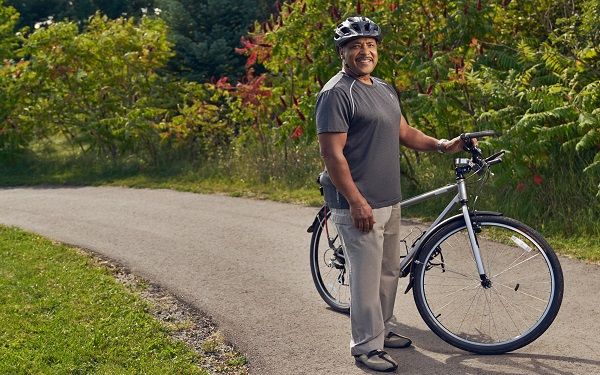
MEDIA RELEASE: Watch for Bikes: Top nine tips for cycling safety success
The summer months are fast approaching and with more cyclists and drivers expected to re-emerge on the roads, CAA South Central Ontario (SCO) is encouraging motorists to keep the safety of cyclists in mind when sharing the road. “Cycling is an excellent way to stay active during the pandemic and many more are picking up the activity, but as the province works towards reopening, we need to stay vigilant for everyone’s safety,” says Teresa Di Felice, AVP of government and community relations at CAA SCO. All drivers and cyclists are advised to follow public health guidelines, be predictable, be patient, communicate their intentions with signals, regularly check blind spots, and turn on their lights during dawn, dark and dusk. “In Ontario, there are tough penalties for those who do not follow the rules of the road, yet many remain unaware of what these rules are. Whether you’re on two wheels or four, get to know the following rules and best practices,”adds Di Felice. CAA is also reminding all motorists of these important rules of the road: Be aware. Do not use headphones or mobile devices while driving and pay attention. Yield to cyclists. Motorists should not be driving in a bike lane unless making a right turn. Watch for the approaching cyclists and never speed up and cut off a cyclist when making a right turn Keep a safe distance. Drivers must keep at least a one metre distance from other cyclists. If it is not possible, safely change lanes to pass. The penalty for not doing so is a $110 fine. Practice the Dutch Reach. Avoid “dooring” cyclists by doing the Dutch Reach. CAA launched a new Dutch Reach video for users to practice as more people out on their bikes. Some cycling-specific safety tips: Ride with traffic. Riding against traffic flow is dangerous, illegal and a leading cause of car-bike collisions. Protect yourself. Drivers, use your seat belts. Cyclists, wear your helmets. Be visible. Use reflectors and lights in dark and overcast conditions. It’s the law. Be predictable. Obey traffic signs and be clear with your intentions with other drivers. Under Ontario’s Highway Traffice Act (HTA), a bicycle is considered a vehicle, just like car or truck and must follow the same rules of the road. Ride close to home. As cyclists start to use their bikes for the first time in awhile, remember to stay close to home as you are starting out. Put your cycling safety knowledge to the test with CAA’s new cycling safety quiz. For all other cycling information, visit caasco.com/cycling. If you run into a problem that cannot be fixed on the spot, CAA Bike Assist will transport you and your bicycle to wherever you need to go. It's available as part of your membership 24 hours a day, 7 days a week, 365 days a year.



Privacy Issues in Using Facial Recognition Software by Law Enforcement
The Atlanta Police Department is just the latest in criminal investigation units across the U.S. that have adopted facial recognition software to assist in police investigations. But privacy experts are cautiously watching the acceptance of this type of software for possible infringements of a citizen's privacy. The software uses a person’s photograph to search the internet including social media accounts for additional images of a suspect. The process is called “scraping” and Deven Desai, associate professor for law and ethics at Scheller College of Business at the Georgia Institute of Technology expresses concern over the use of the controversial technique, which is becoming more commonly used by hundreds of police departments across the U.S. “The issue becomes one of what we like to call “technical accountability,” said Desai, who cites the reliability of the software, the privacy of citizens, and the length of time images are stored by the departments as just a few factors to consider. How long will a person's photograph be kept and for what means? These are just a few of the questions that continue to raise concerns among some experts who see this new technology as a potential for harm to the public at large. Before fully embracing facial software, the accountability for using this form of spying should be studied in more detail before the practice is adopted widely.


Unprecedented levels of partisanship vitriol threatens the health of democracy in U.S., globally
Voter-based political parties have played an integral role in American politics since their formation in the 1790s, yet it is difficult to remember any other time in history — other than perhaps the 1850s — when the level of divisiveness was this high and the polarity this profound between Republicans and Democrats. To add more fuel to the fire, the anti-democratic actions against the rule of law by President Donald Trump have become a primary threat to democracy in the U.S., said David Lynch, Ph.D., a professor of History and Social Sciences and Political Science program coordinator at Saint Mary’s University of Minnesota. The same action are also threatening how the government works and delegitimizing and undermining institutions that make and enforce laws,Lynch added. Those institutions include formal ones such as Congress and the political parties themselves, as well as less formal entities, such as the traditional news media. “You have to have free, fair, open media in order to have a democracy. If you do not have a free press, you do not have a democracy,” Dr. Lynch said. “And similarly, you need to have the rule of law where laws are carried out not for political ends, but based on the laws.” The recent impeachment proceedings were an attempt to curtail these actions, but the partisan response to the Senate’s impeachment trial allowed the violation of democratic norms to be rewarded, said Dr. Lynch. Furthermore, politicians who react strongly to anti-democratic actions threaten to further delegitimize the government, such as Trump’s refusal to shake the hand of House Speaker Nancy Pelosi, a Democrat, at his most recent State of the Union address and her subsequent action of tearing up his speech. “That helps both sides reinforce their own position that the other side is less legitimate and that we shouldn't cooperate with somebody like that,” Dr. Lynch said. Dr. Lynch pointed to how the indices that measure the health of democracy both in the U.S. and abroad have all gone down since Trump won the 2016 election. In addition, the most recent Economist Intelligence Unit’s Democracy Index reflected the worst registered global democracy score since its inception in 2006. In that report, the U.S. received a score of “flawed democracy.” Traditionally, the U.S. democratic system has been able to regulate such extreme partisanship before election day by not nominating candidates that violate democratic norms or are far from the ideological center. On election day, overly partisan candidates are vulnerable in swing districts and swing states. That ability for the public to express its collective voice, though, has eroded over the years as the number of swing districts has dwindled. "When people view through a partisan lens, it changes the incentives that elected officials have because they may be rewarded for partisan but anti-democratic actions,” Dr. Lynch said. “It also changes how average people view this whole debate.” To demonstrate the current political scene in the U.S., Dr. Lynch alluded to a 2017 study conducted by a group of political scientists at Yale University in which experimental surveys were sent to Venezuelans to see to what degree they would be willing to accept a less democratic candidate if he or she was a member of the political party they affiliated themselves with. The answer was quite a large degree. “The big message here is you can't necessarily rely on the public just to vote out an anti-democratic candidate because they might get a partisan advantage from that anti-democrat,” Dr. Lynch said. Are you a journalist covering this topic and interested in an interview? That’s where we can help. David Lynch, Ph.D., professor of History and Social Sciences and Political Science program coordinator, has taught political science at Saint Mary’s University of Minnesota since 1996. Dr. Lynch has also written over a dozen chapters on international relations, international political economy, and American foreign policy, including the chapter on trade in the United Nations Association of the USA’s “A Global Agenda” from 1996 to 2005. Dr. Lynch is an expert in political science, political economies, and international relations. He is available to speak with the media. To arrange an interview with him, simply click on his photo below to access his contact information.


Harvey Weinstein Found Guilty. What's Next?
Harvey Weinstein was found guilty on two charges but acquitted on three of the more serious charges in a New York courtroom on February 23. He will be sentenced on March 11, facing five to 29 years in prison. He also awaits criminal charges of sexual assault in Los Angeles. Michelle Madden Dempsey, professor of law at Villanova University's Charles Widger School of Law, says there are three main takeaways from this verdict: Prosecutors were right to take this case to a jury, and even if the jury had acquitted, it still would've been an important "win" simply because it went to trial. The jury seems to have taken the case seriously and delivered a fair verdict. We can't read too much into this verdict (as far as #MeToo is concerned). When women and girls of color, socio-economically marginalized women and girls, prostituted people and others who lack relative structural power receive justice from the criminal legal system, then we can start to celebrate. That is to say, there's still a lot of work to be done before all sexual assaults are taken seriously in our criminal justice system. Prof. Dempsey also says we shouldn't be too quick to assume that a social movement is driving this verdict. "The social movement, I think, is driving prosecutors to take these cases to a jury—which is a good thing. But I think juries typically try to reach verdicts based on the fact and particular law of the jurisdiction in which the alleged offense occurred."


New Data Protection Agency: Good or Bad? It Depends.
New York senator Kirsten Gillibrand has proposed legislation to create a new data protection agency. She cites the need as personal information is freely sold across the internet without users' knowledge. She specifically calls out Facebook and Google for their misuse of consumer information. Similar legislation has been proposed in California. But is this a good idea or a bad idea? Law professor and privacy expert Doris DelTosto Brogan says it ultimately depends. "It will depend on how well resourced the new agency is both in terms of human and financial resources, and whether it is truly independent," Prof. Brogan said. "The area is huge and complex and ever-changing. The problems are often under the radar until they explode, and the nature of the threats are often nuanced and subtle. So, a good idea to create a dedicated agency? Yes, to the extent the agency comes to the table with real independence, adequate resources and genuine expertise." But the answer isn't all that simple, she says. "In terms of expertise, the agency will need people who understand the threats, and the reality of how the organizations that are managing data work. It will also need the financial resources to pursue a broad range of matters across a wide landscape not only of subject areas (hotels, airlines, credit reporting agencies, social media, financial institutions, etc.) but also the technology of how data is obtained, and accumulated, stored, used, manipulated and 'shared' by the players. "One concern with a subject-specific agency is the tendency to become overly reliant on and enmeshed with the industry being regulated. This is always an issue (like the critiques of the FAA in the Boeing matter), but with the oversized influence of big tech, and the issues of understanding a dense, rapidly evolving, tech-heavy industry the risk is significant. "Finally, if we are going to take seriously an agency dedicated to protecting privacy, in addition to mastering the market and developing technical expertise the new agency, if it is truly privacy-focused, it will have to develop a robust understanding of privacy conceptually—that is, privacy as more than just a consequentialist understanding. "A dedicated agency, if properly created, will come to the task with a deep understanding of privacy beyond just the implications of my social security number being hacked—but rather an understanding of privacy as essential to humanness, to intimacy, to thought and to informed self-governance."